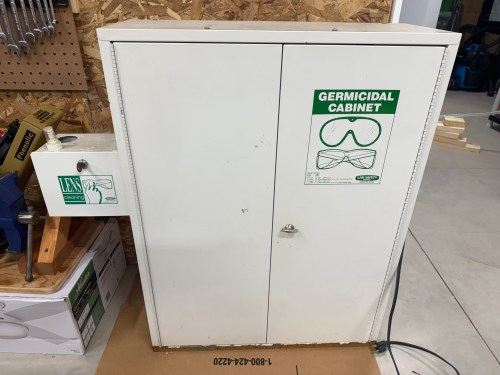
I’ve wanted some type of cabinet in my workshop for PPE and earlier this year I saw a cool cabinet that I thought might be perfect. Fast forward to the new house, the wall, and a new shop (post coming soon), so when I saw the Facebook Marketplace listing again I jumped on it.
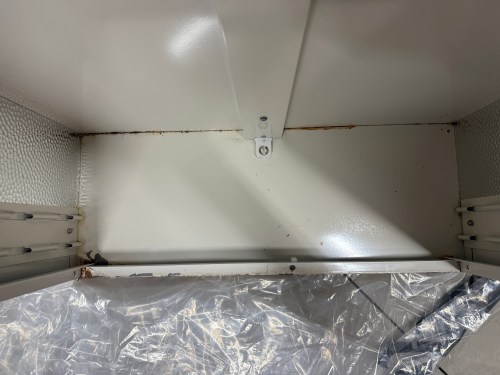
Aren’t the graphics great on those green stickers? I only paid $25 for this Sellstrom Model 2000 Germicidal Cabinet. A new one is currently 51% off on Amazon, which brings it down to $599 and replacement UV light bulbs cost over $100! This unit had some rust, like it had been sitting in a puddle, but otherwise it barely seemed used. The light bulb still works and so does the timer pictured below, which can be set to run for up to 5 minutes. You can also see the UV light bulb on inside the cabinet, through that tiny window.
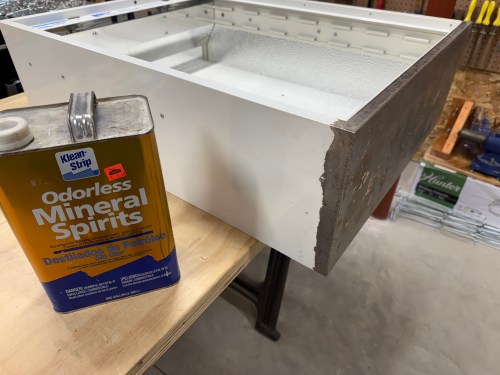
I used a razor blade to scrape as much of the rust off as I could and then used a sanding block. I cleaned the areas with mineral spirits and masked them off with painter’s tape. The bare metal got a coat of rusty metal primer.
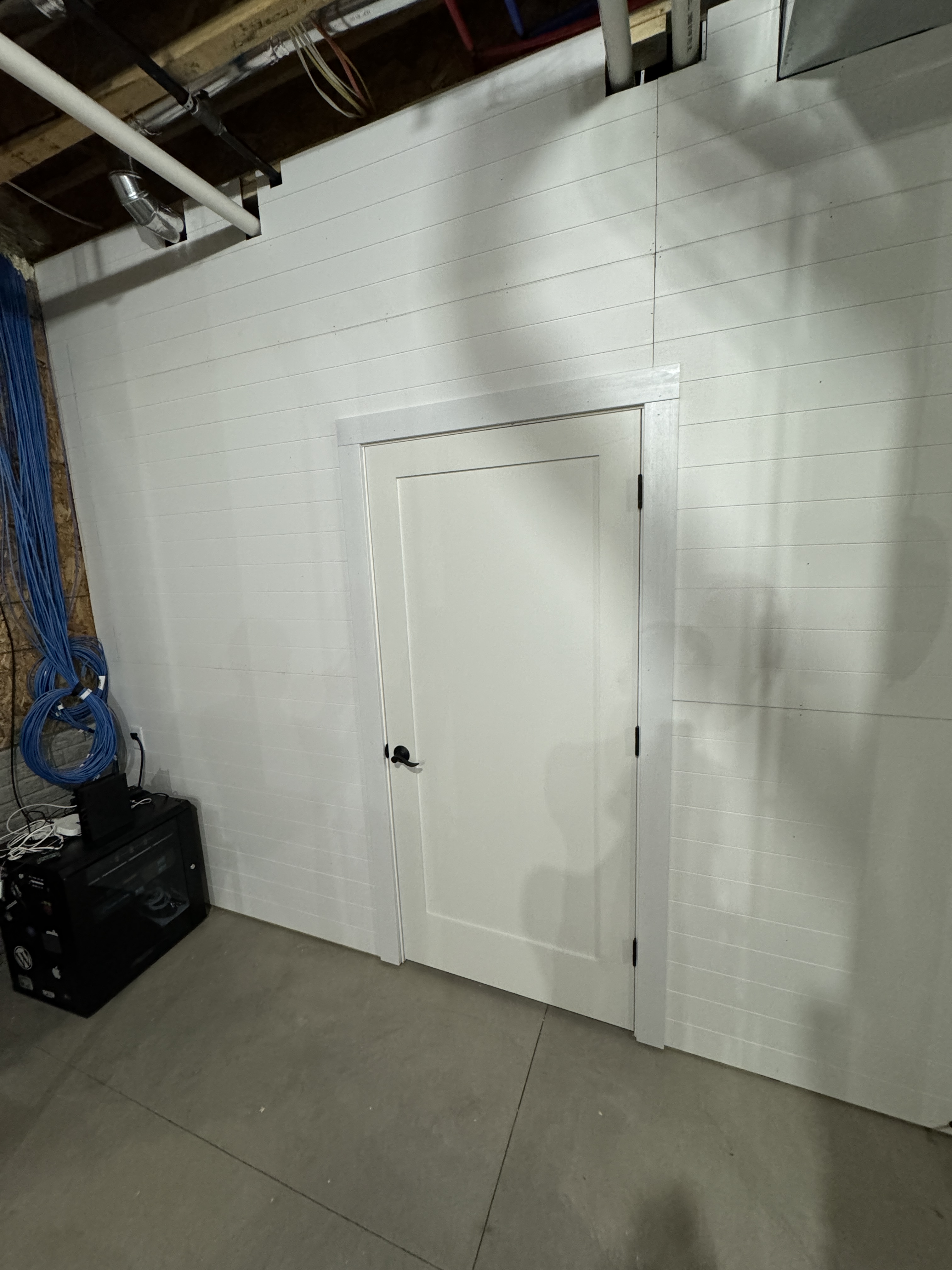
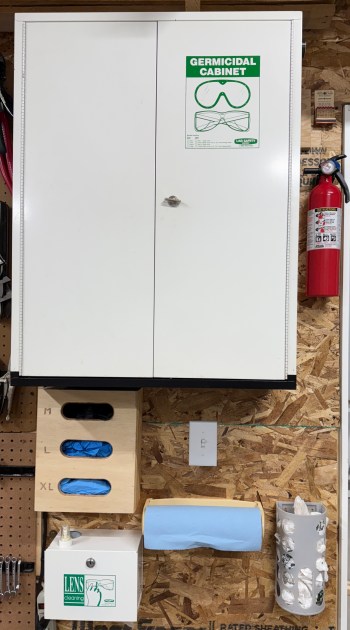
The few inside corners were painted with a non-matching white, which nobody will see. I painted the bottom exterior area with some black, which turned out great. I hung the cabinet near the door and surrounded it with my glove dispenser and other safety stuff.
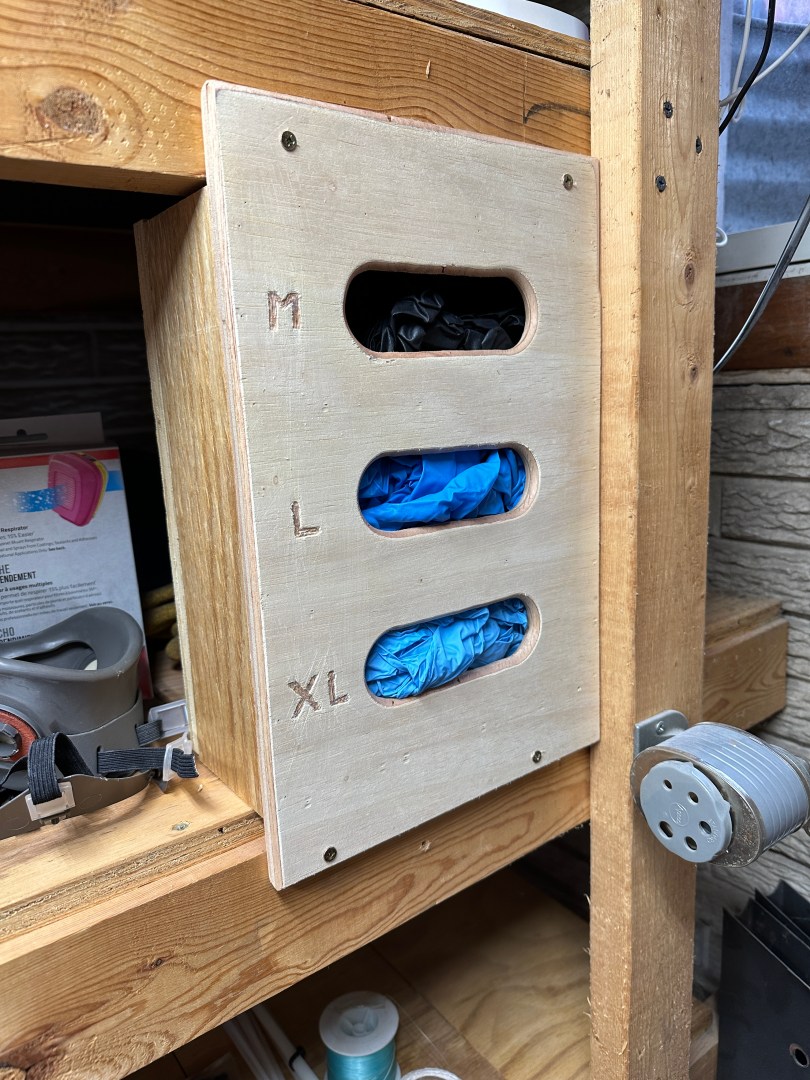
As I was finishing my closet reorganization I couldn’t help myself and had to make something. I have three sizes of nitrile gloves.
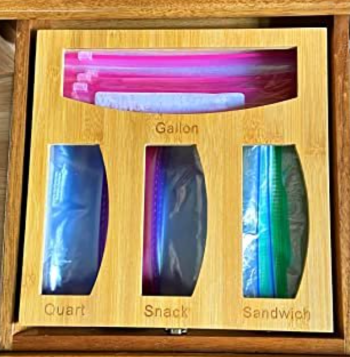
This gave me an idea based on plastic bag organizers I’ve seen on Facebook Marketplace.
I made a quick sketch, took some measurements, and grabbed plywood scraps.
It was a simple construction, using wood glue and pin nails to hold it together. I did screw on the back in case I ever need to get inside. I carved in the letters with whatever bit was on my rotary tool.
The top and bottom were made long so I could screw the unit in place.
I did finish organizing and cleaning the closet, so here are before and after pictures.
I’m glad that’s done. Time for some non-shop projects.
First up was upgrading the power cords on my table saw and jointer to be longer and beefier. I chopped a couple of 15 foot lengths off an old extension cord my Dad gave me years ago, which I still haven’t used. After wiring them in to the switch I installed a new plug on the end.
I also replaced the metal castors I had originally put on the table saw cart because they were horrible. The new ones roll real smooth.
I needed spots for more clamps and had empty space in the clamp storage area. I’ve wanted to redo that area anyway.
I got creative, using a couple pieces of copper pipe saved from the old shower and some old microwave mounting rods.
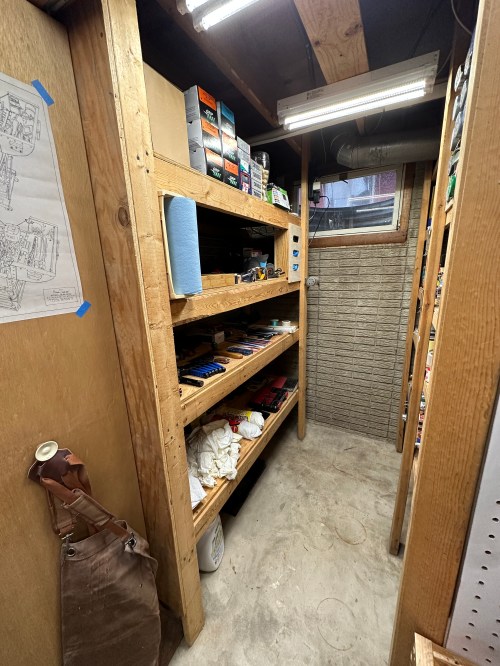
The shop closet is in need of a lot of love. The lighting has always bugged me and it was a good place to start so I’d be able to see when tackling the rest of the room. The pull string and single bulb had to go.
After wiring, I mounted the lights to a scrap of plywood and that to the joists. I had to add an outlet because my router and other network equipment are in here and they had been plugged in to the light fixture. There was an open ground, so I opened up the light in the adjacent furnace room and connected the ground wires.
What a difference!
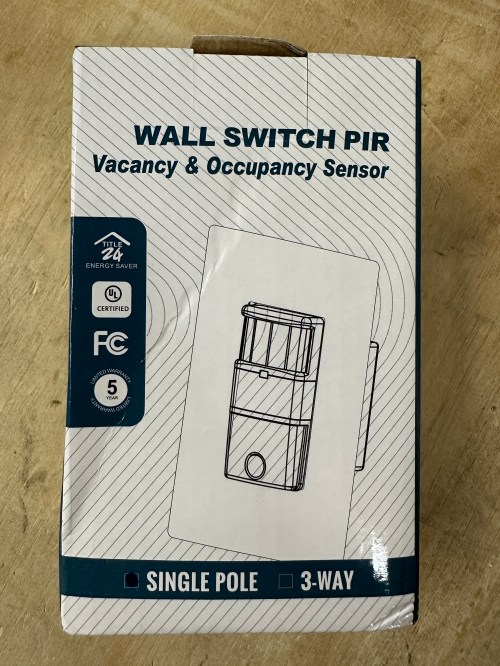
It’s very bright in the closet now and the motion sensing works great. I thought about wiring half of the outlet to the switch so I could mount LED strips under each shelf that would turn on with motion as well. Maybe a later project if I think it’s needed. After I reorganize and get everything accessible at the front of shelves I think it’ll be fine though.
The other part of the closet that really annoyed me was the spray paints because I could only see the front cans and had to move things out of the way to get to back rows. It was hard to know exactly what I had.
I cut out the shelf and cross supports above the cans and removed the sheet of plywood that was the can shelf. This allowed me to gain extra height and assemble an entire unit to drop in place. I cut rabbets in the surrounding plywood box and used interweaving hardboard to create the internal compartments.
Talk about a stressful glue-up! With space for 40 cans, it still wasn’t enough storage, but I have a lot of duplicates that’ll eventually get used up.
The rest of the closet is still a mess and an accumulation of junk. It needs a cleaning and complete reorganization, so I don’t have any plans to build anything. If plans change or anything seems useful, I’ll be sure to share.
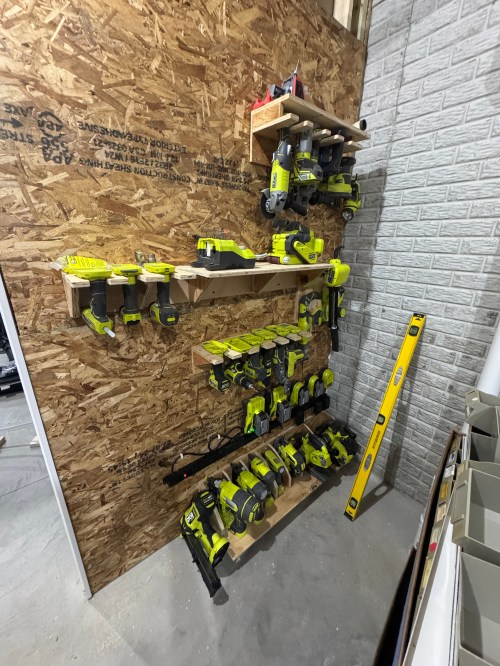
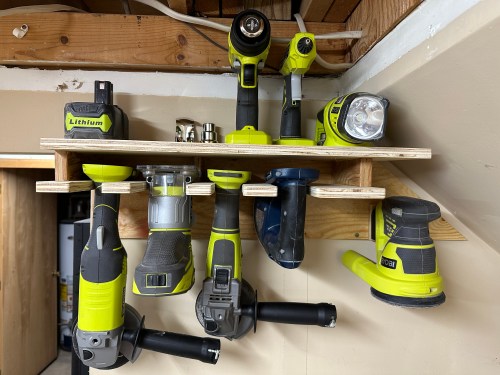
I’ve been keeping my Ryobi cordless 18v tools on some shelves on a wall next to a drain pipe.
As you can see, I outgrew the area. I also had several sanders in the drawers of my sanding cart and even more tools in a box on the floor.
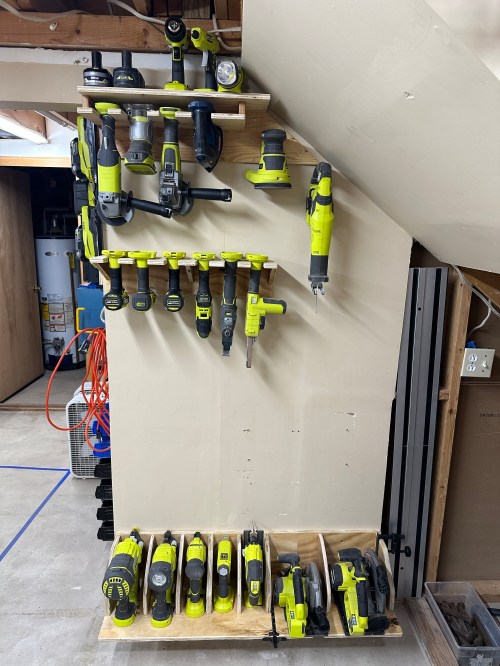
Look at that picture again. Wouldn’t that wall be a great place for cordless tool storage? It’s not in a weird location, is further away from the big tools that make all the dust, and in reach while working at the assembly table.
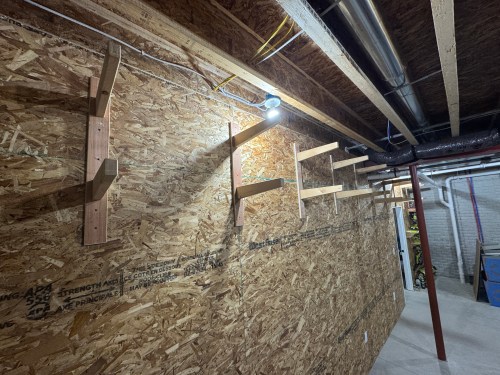
I took down the vise shelf, chopped and cleaned the plywood, and installed it on the wall entering the shop.
After taking down the nail bins I took the opportunity to spread them out on the backer board since I have more vertical space in the new location. Then I moved the nail bins around the corner, under the rest of my bin storage.
I had a blank canvas.
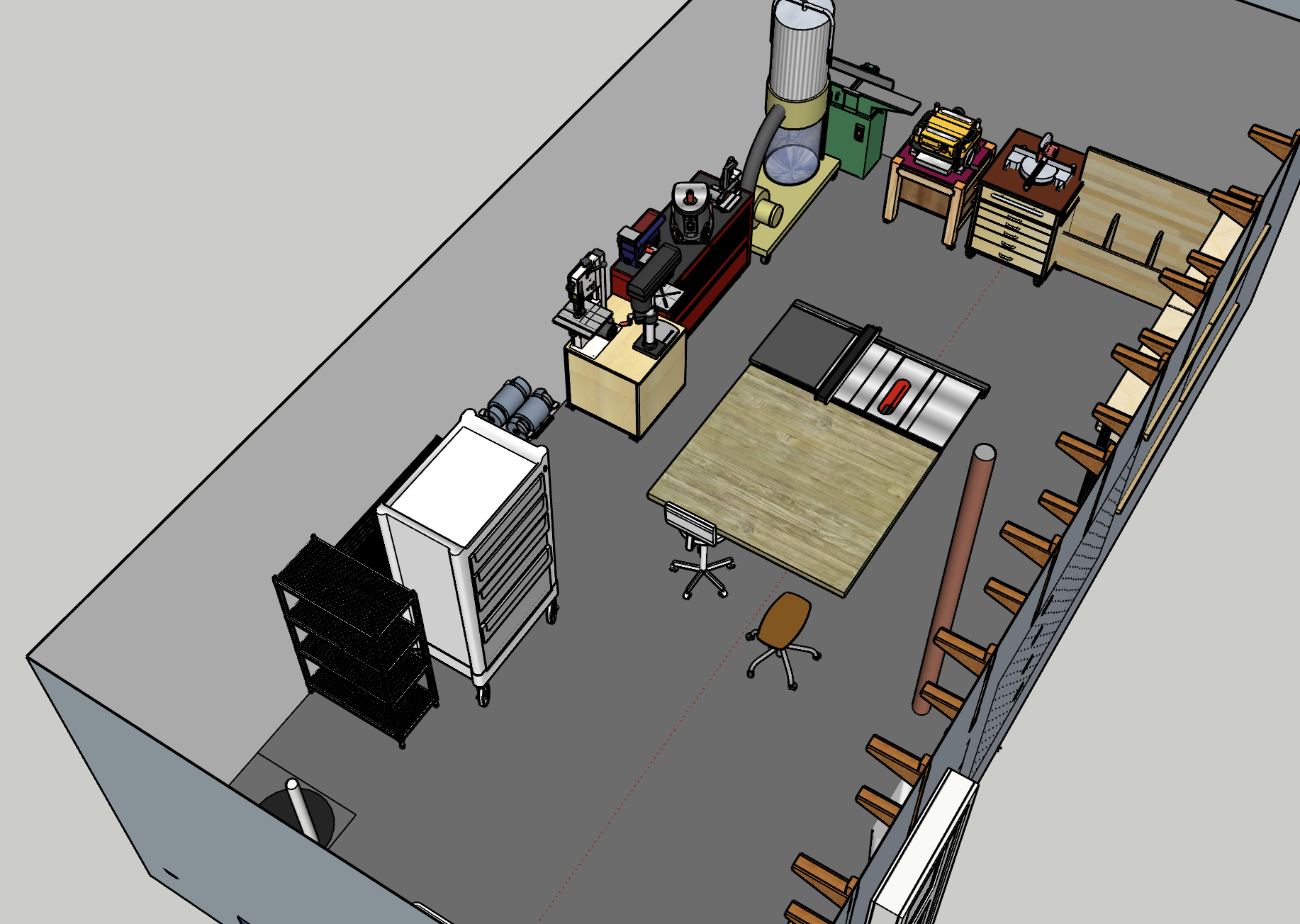
Before building anything I had to figure out tool arrangement, so I marked out space on the floor to match the area of the wall.
After gathering all of my tools I messed around with layouts and tool groupings.
When I had something I liked, I started making shelves one row at a time.
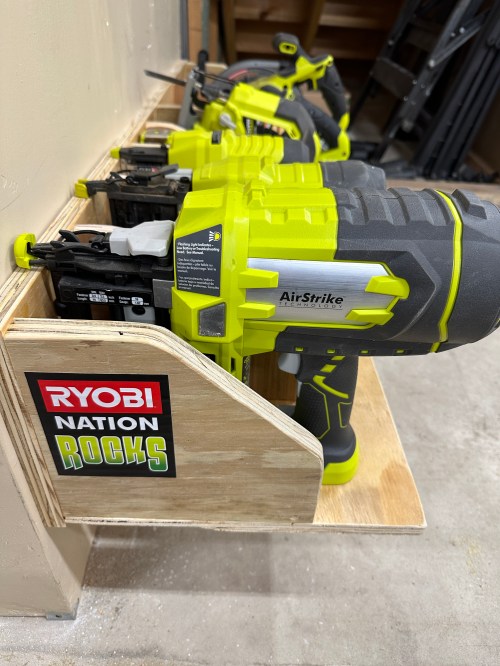
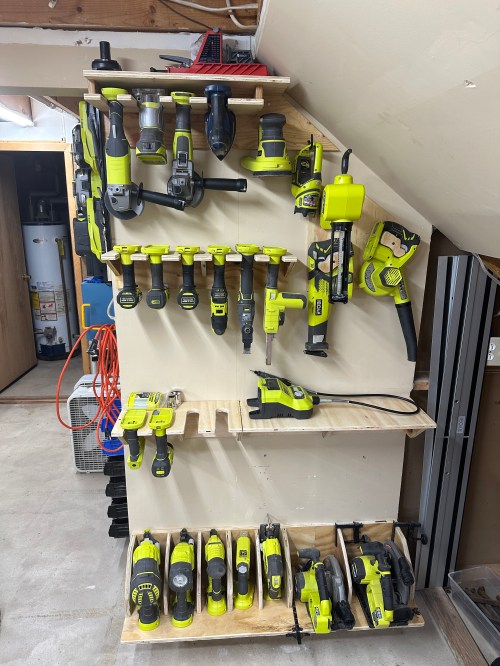
As you may have noticed from the photos, I kept changing things as I went, and there were a lot of iterations I didn’t get pictures of. When I was about 80% done with everything I remembered I had the rotary tool and my Armor Tool Auto-Jig Pocket Hole System stored in the drill press press cabinet. I definitely wanted both tools out in the open where I’ll be more likely to use them. All of the changes were worth it; every tool has a place and I love it. I’ve been wanting something like this for years.
As I was building, it was so handy to turn around and grab a tool or a battery that was already in its place. No more walking over to the other area and reaching around the corner. Little things like the magnetic strip for bits and accessories make a big difference too. Another bonus is this project used a bunch of odd scraps I had in my wood collection.
Are you a Ryobi fan? What are your favorite tools?
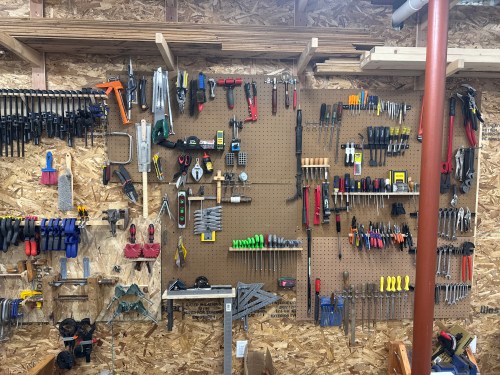
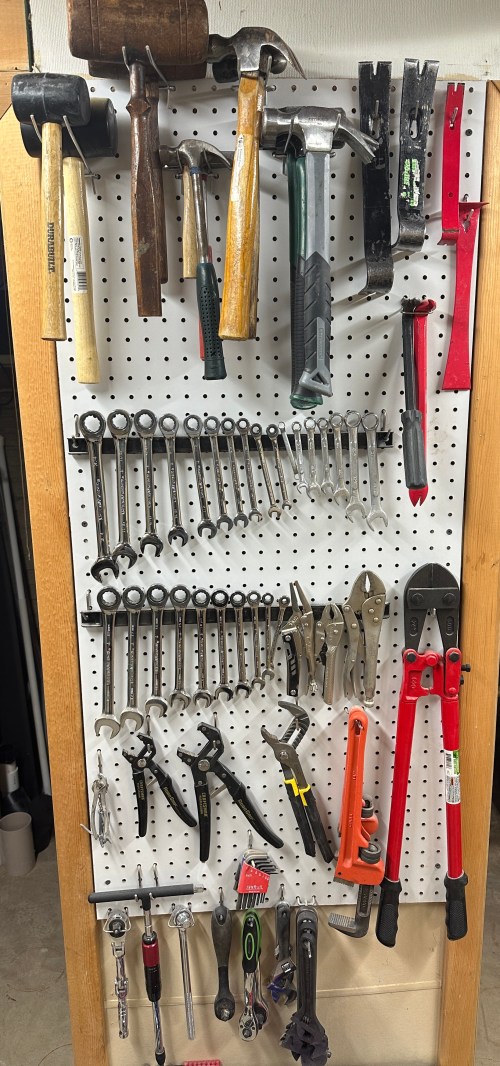
I’ve had a bunch of pegboards in my shop for over five years, and I’ve figured out what works and what doesn’t. I love that a lot of my tools are in direct view and can quickly be accessed. I didn’t love a few areas that I go to frequently though. The first wall I wanted to tackle looked like this.
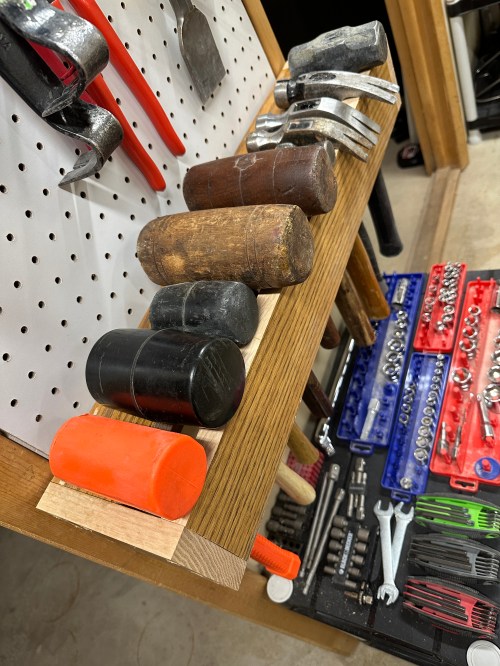
The main problem was the hammers. They’d become crowded and it was a pain to pull one out when it was second or third in line. I moved all of the other tools up on the wall and lined up my hammers on the assembly table.
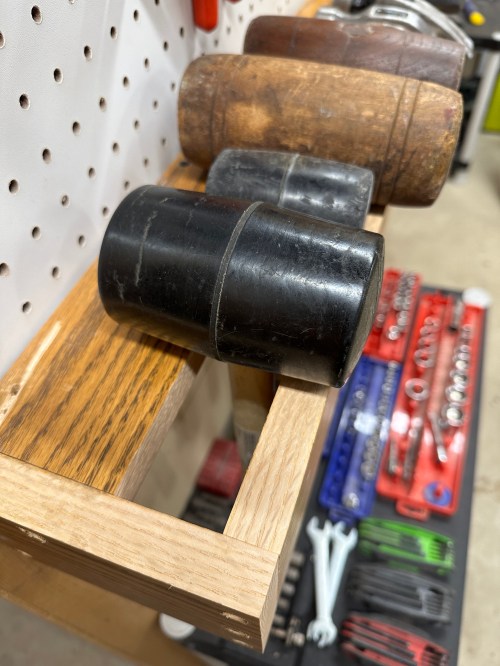
After taking measurements, I cut up oak pieces from my old kitchen light box. This storage shelf came together pretty quick and has room for even more hammers. Now I can quickly grab any hammer without disturbing the others.
Here’s the updated wall.
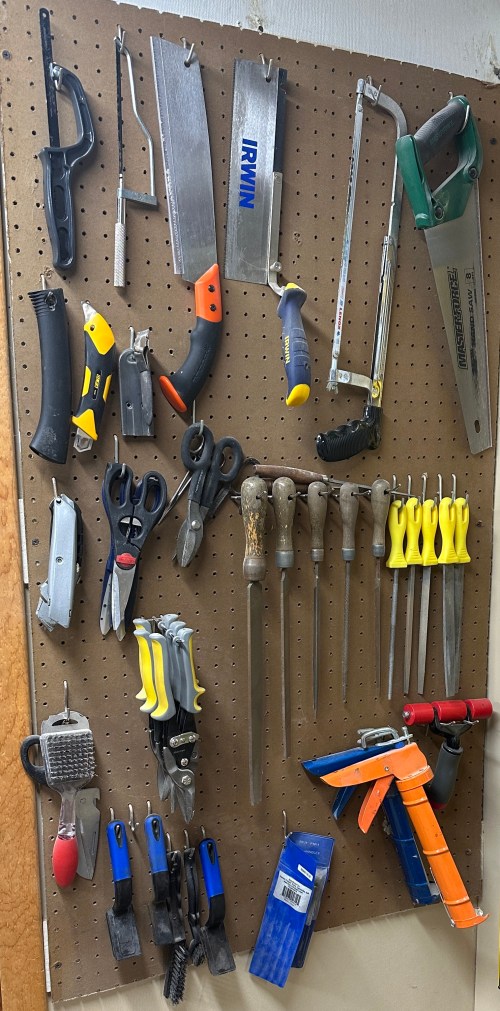
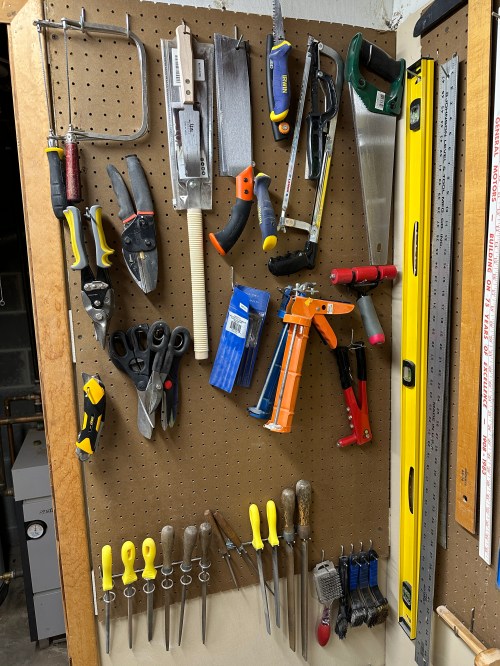
The next wall to the right was making poor use of space, especially since I don’t grab some of the saws very often. Take a look and see they were nearly occupying half of the wall. The files never worked well on those individual hooks either, which always pulled out of the wall.
By moving stuff around I was able to get several more saws, like my Japanese pull and coping, as well as other tools up on the wall.
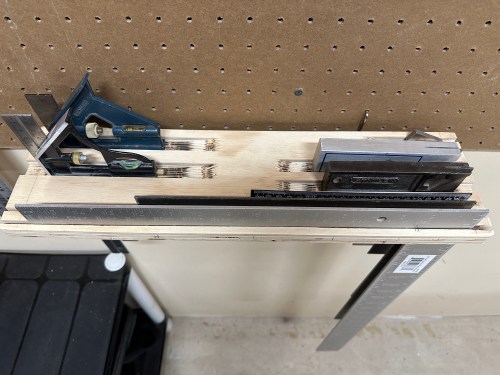
Over to the right again was tools used primarily for measuring and alignment. In February of 2018 I made a shelf for the squares, which has taken up way too much space. I really liked the grooves in that shelf, but the squares weren’t secure enough. Here’s how the wall looked before I touched it.
I reorganized everything else first and then made a new shelf that was longer so I could add slots in each groove to drop one of each square’s legs down.
Huge improvement and look how much extra space I have for more tools! I need to get myself a nice set of chisels.
Last up was the pegboard on my bench.
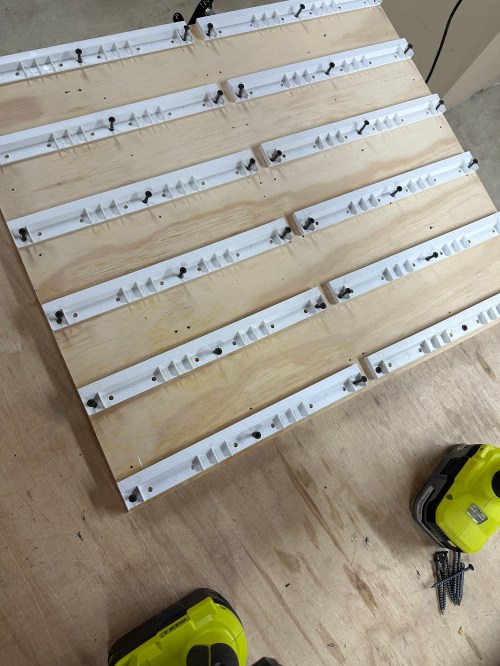
I’d been using four of the pegboard holders made for screwdrivers here and don’t care for them; the holes are too big and the spacing is too wide. All you need is scrap plywood with holes drilled in it, which allows you to run two deep and have plenty of expansion room. I also made a holder to store the wood carving set that had been unopened in a box buried on the bench for years.
So much better. Now I can tackle the reorganization of my shop closet.
I’ll have to create some adapters for tools with dust ports smaller than 4″, though the hose kit did come with some for use with 2.5″ ports. Now that I have a system with enough power I can build something around the miter saw.
I think it was time to finally knock this off my todo list!
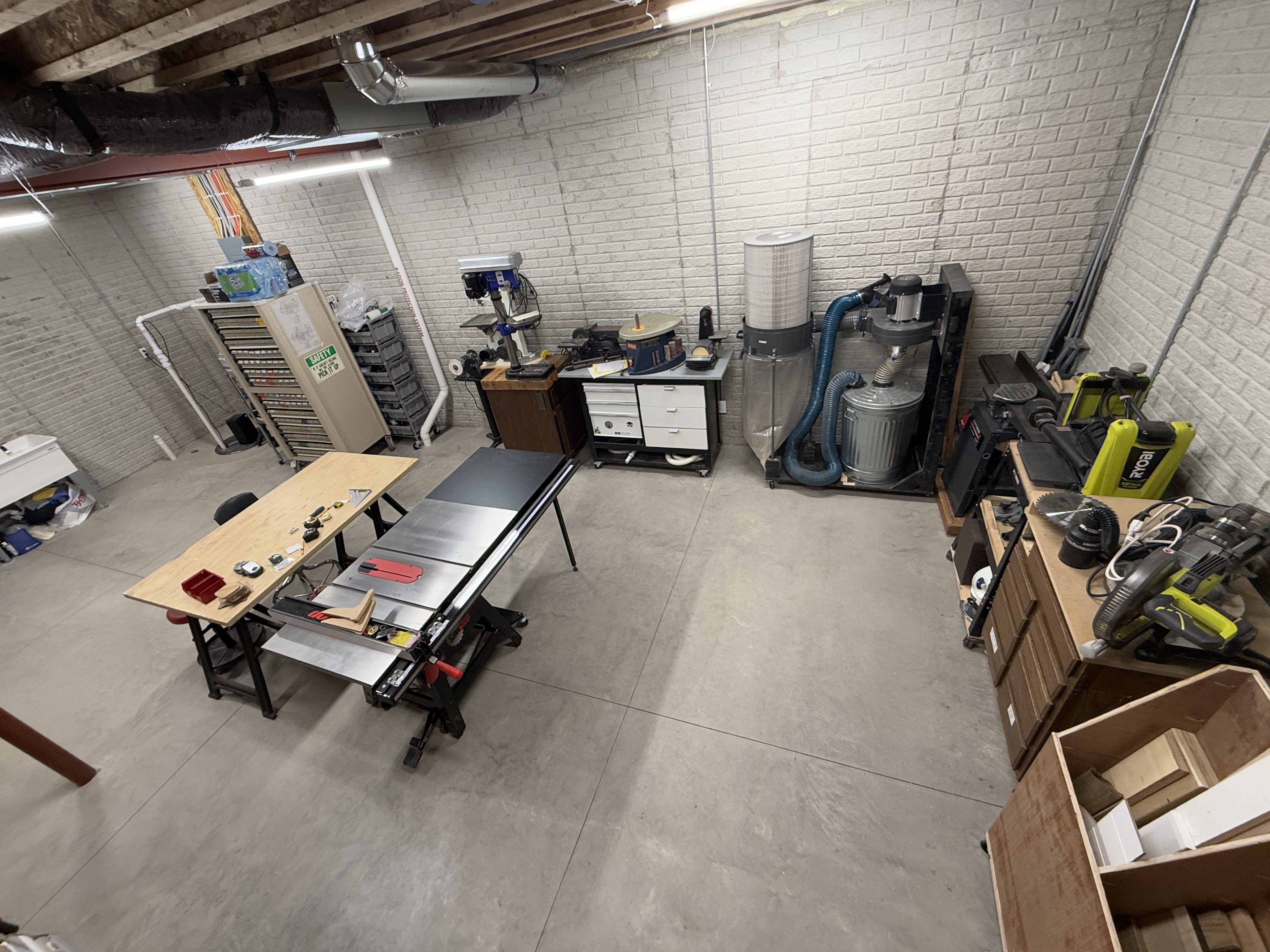
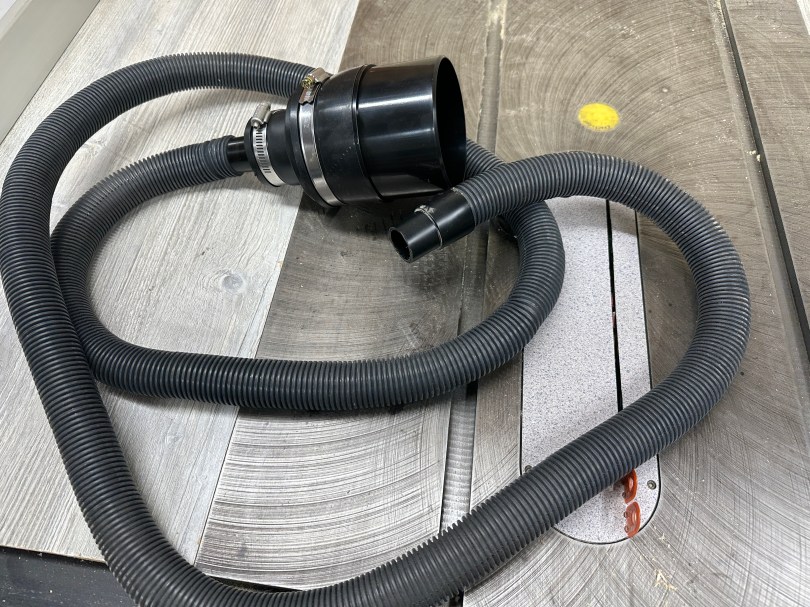
My table saw cart got dust collection built in, I set something up for the jointer, and my planer has an easy connection, but the rest of the major dust creation tools have been neglected far too long. Each machine needed a dedicated solution that was easy to connect to the main line or I wouldn’t bother to use any dust collection at all. I pulled out some hoses I picked up at estate sales years ago and bought couplers and connectors that would fit the main line.
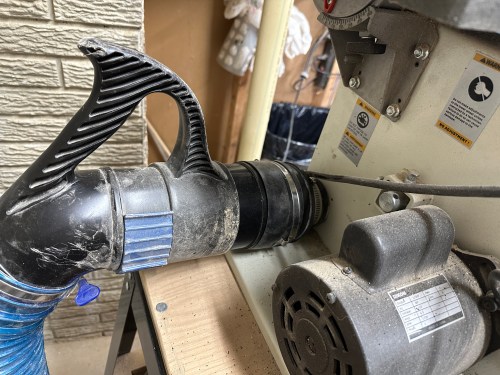
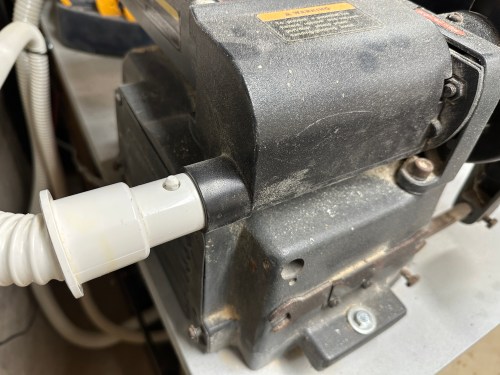
The band saw was a quick solution by using a coupler and a reducer on the port at the back.
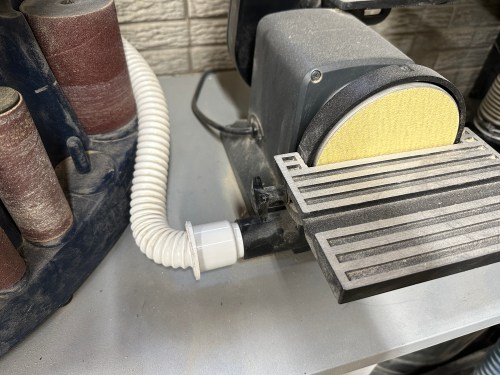
My sanding cart has three machines, four dust collection ports, and five places to sand. Three of those ports are the same size and after cutting away some excess plastic on a hose it was the perfect fit. I zip tied the hose to a bracket on the back of the station and routed the hose out to the bottom front. It’s easy to swap the small end of the hose from port to port. My spindle sander had a larger port, so I used a coupler and another old hose, feeding it under the drawers as well. I can easily connect the main line to either hose.
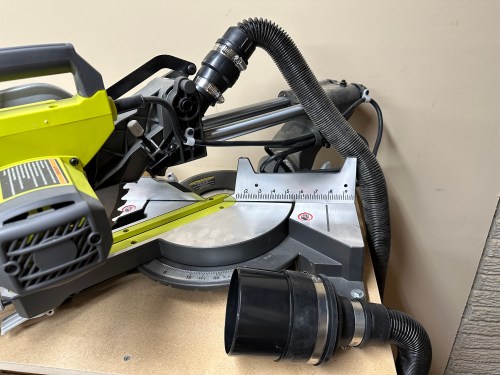
Some fittings on another hose got my new miter saw all set. Time will tell how well dust collection works here because miter saws are notoriously bad at it. I may have to build a shroud of some kind behind the blade.
The final hose got a fitting to work with my random orbital sander, track saw, and circular saw. It’ll remain a portable hose I pull out to use with those tools or for corner clean up around the shop.
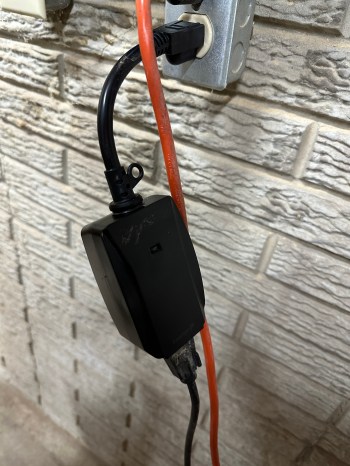
Even though I’m never more than a few steps away from the dust collector, having to go back and forth to turn it on and off was a nuisance. I’d seen several remote control solutions for $50-100, which always seemed like too much, so planned to build my own. Then a recent Amazon search came up with a $13 product so I bought one. It works great!
Feels good to finish this project. I’m looking forward to breathing less dust and not having to clean up as much.
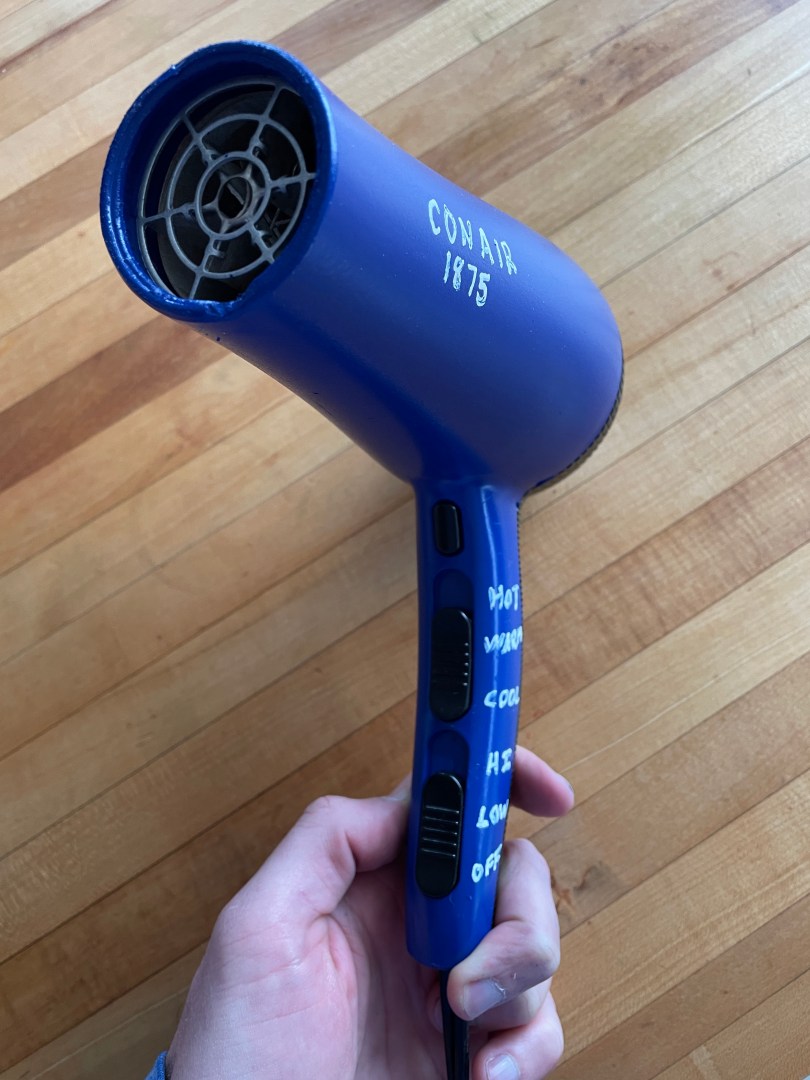
My newest tool isn’t one you’d usually think of for a workshop. When B was getting a new blow dryer for her bathroom I asked if I could have her old one. It was dark pink and caked with makeup, but I saw potential. After a simple disassembly, some cleaning, and a new paint job it’s new again.
A blow dryer is useful in a shop when you want to speed dry spray paint, make glue cure quicker, or even create an oven.
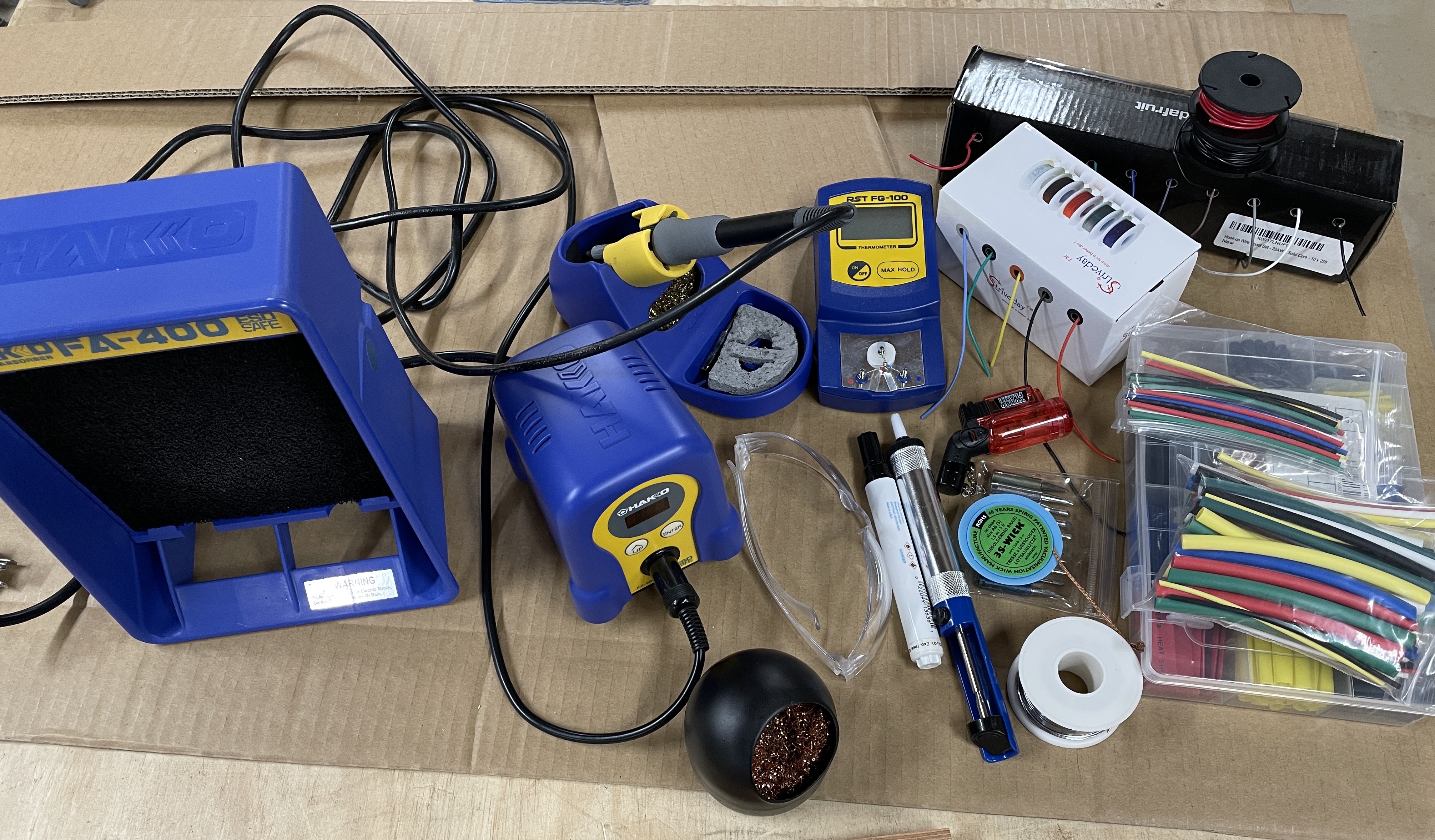
Following up on getting the new hobby desk and organizing the room, I needed something for all of my soldering tools. A lot of the stuff on these shelves needed to be easy to pull out and use at the desk.
The portable soldering station Adam Savage built gave me some inspiration. I could make something to live in the closet when not in use and being portable would allow me to take it to the basement if needed. I measured how much floor space I had available in the closet and hauled everything down to my woodshop.
I cut up some shitty scrap plywood and started playing around with ideas.
Being able to see things in space really helped with my design process. When I had something I was happy with, I made a sketch with rough details.
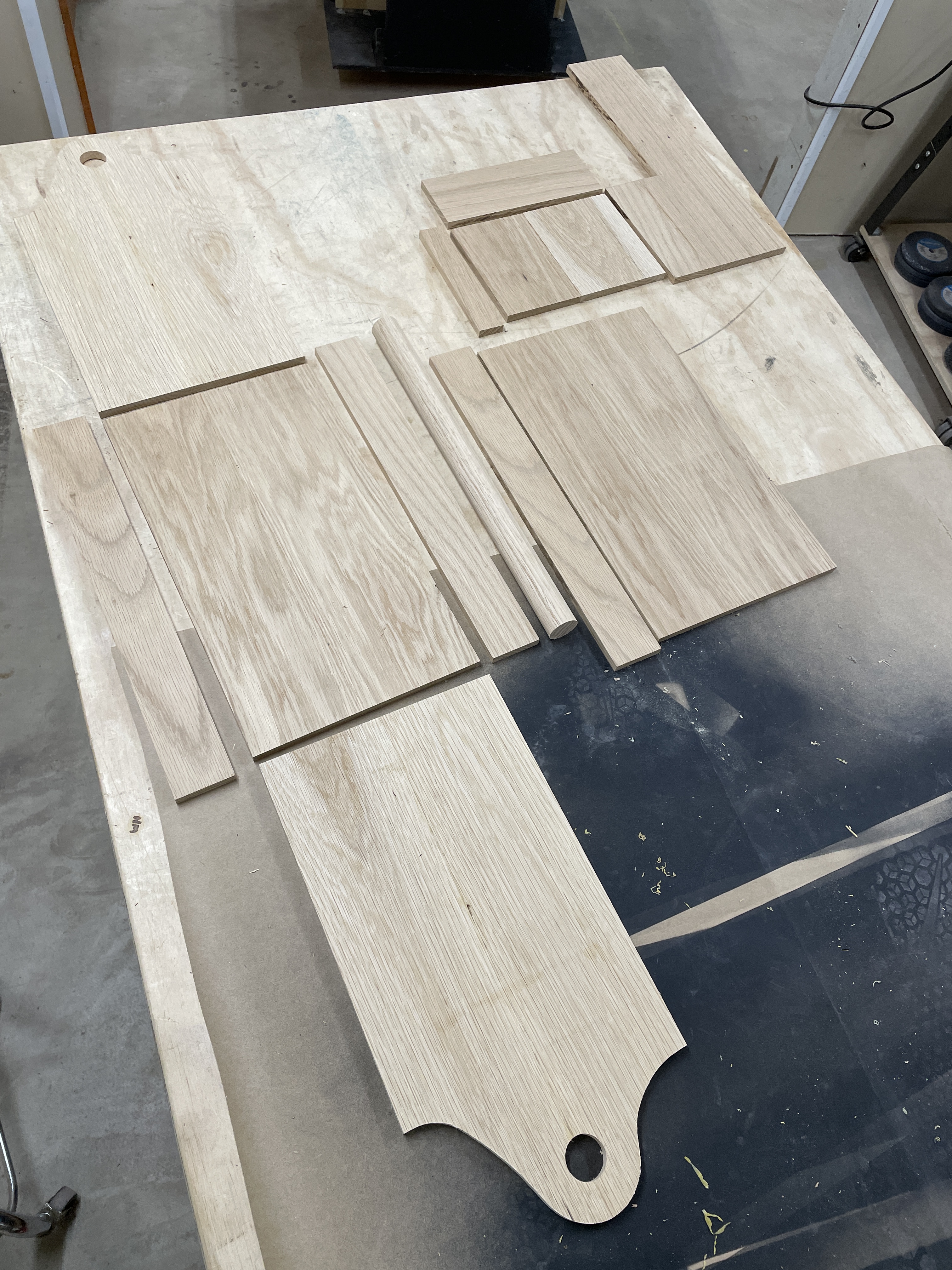
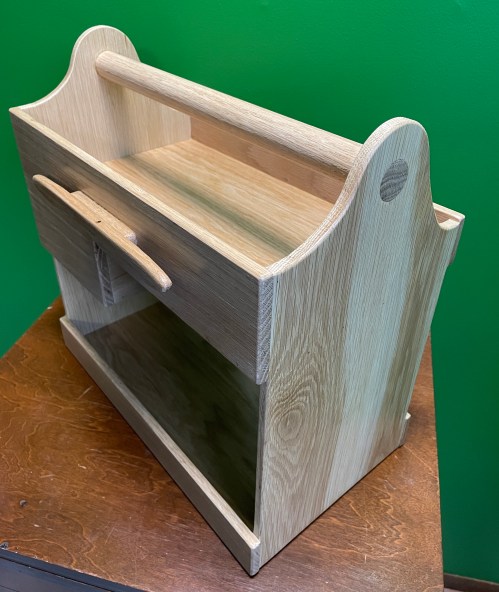
When I saw it on paper, it reminded me of a wood toolbox with a handle. Makes sense, I guess, since that’s essentially what I was building. I still have a large pile of old oak flooring, so I spent about two hours milling a few pieces down to 3/8″ thick boards. Then I glued some pieces to make panels for the sides, bottom, and shelf.
I picked up a piece of 1″ (it’s actually 1 – 1/8″) oak dowel from Menards for a handle. After letting the glue dry on those panels for a few hours I cut them to size, designed the side profile, and made other pieces. I realized I need to glue up two other panels for the small shelf bottom and a cross piece on the back. I think I only had to recut one small piece that was originally the wrong size. Eventually I had all of the parts.
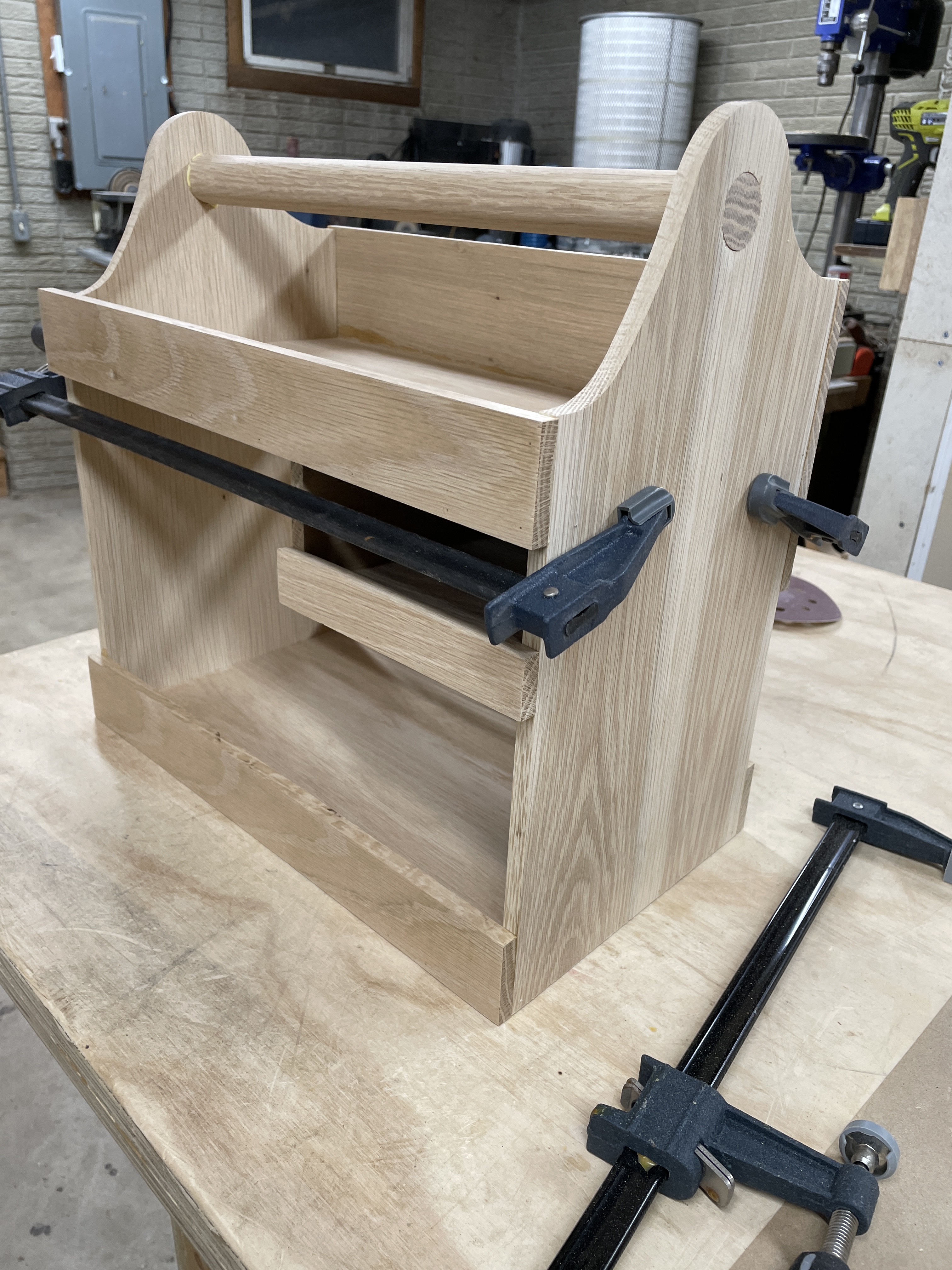
I sanded all of the faces with 80 grit and then used glue and a pin nailer for assembly. Since nothing here need to support a lot of weight, I went with simple butt joints.
After a quick fit check for all of the tools and supplies, it was obvious I need some way to organize the power cords, so I made a cord wrap from some scraps.
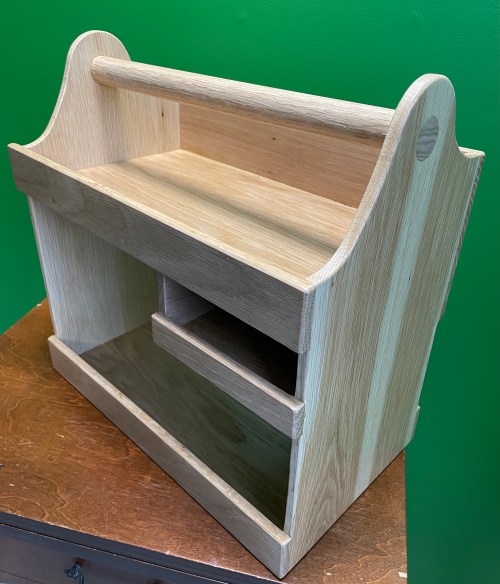
With a palm router I softened the edges everywhere and did a final sanding. Originally I was planning to use a dark stain to match the hobby room’s trim, but after seeing this put together I really liked the lighter colors and the wood grain. I skipped the stain and applied three coats of Minwax Water Based Polycrylic, sanding with a piece of paper bag after each.
I’m really happy with the decision not to use stain. The pieces I selected for the side panels have some great coloring and grain.
All of the tools and materials are easy to access and the station fits well in the closet.
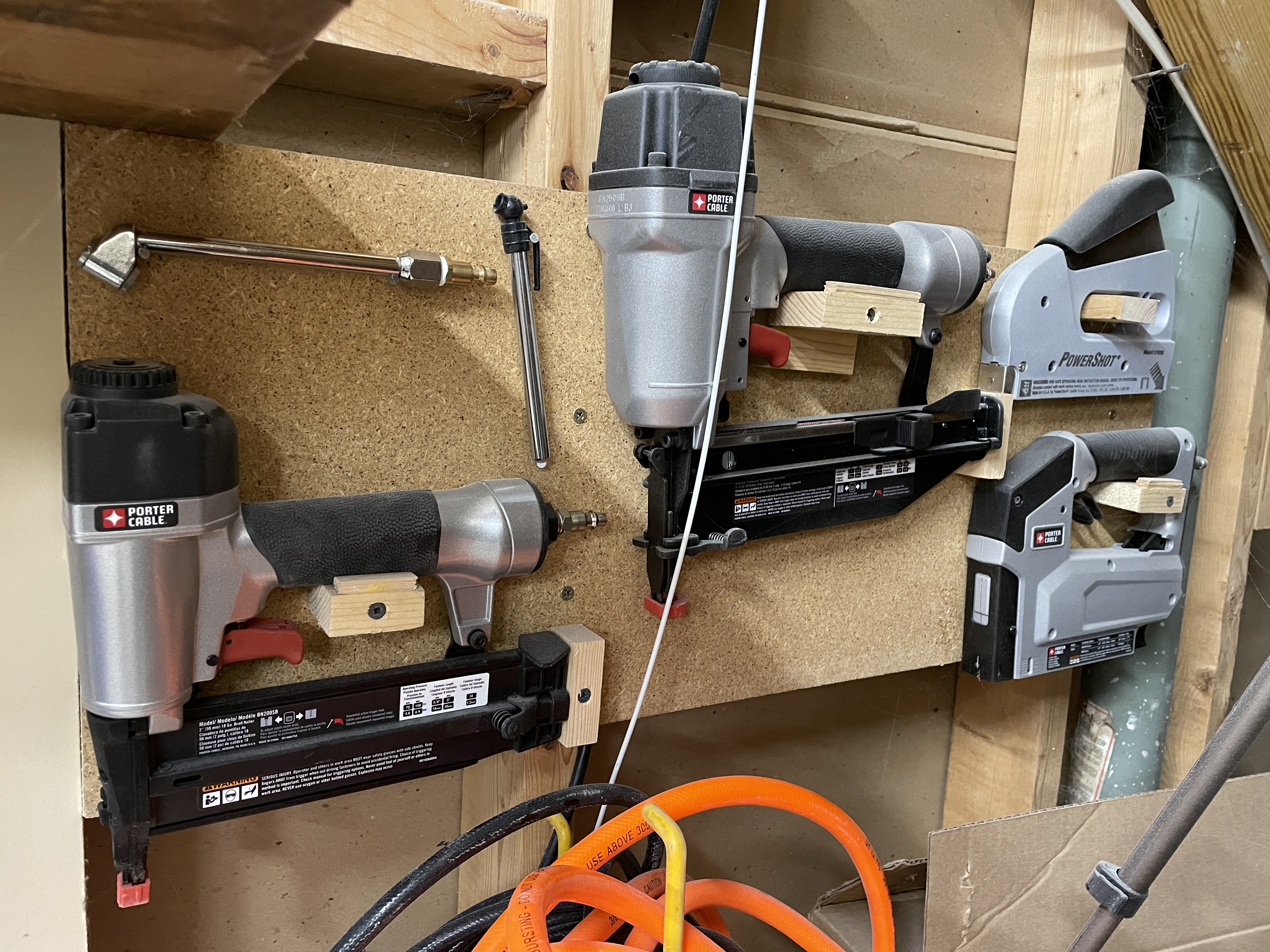
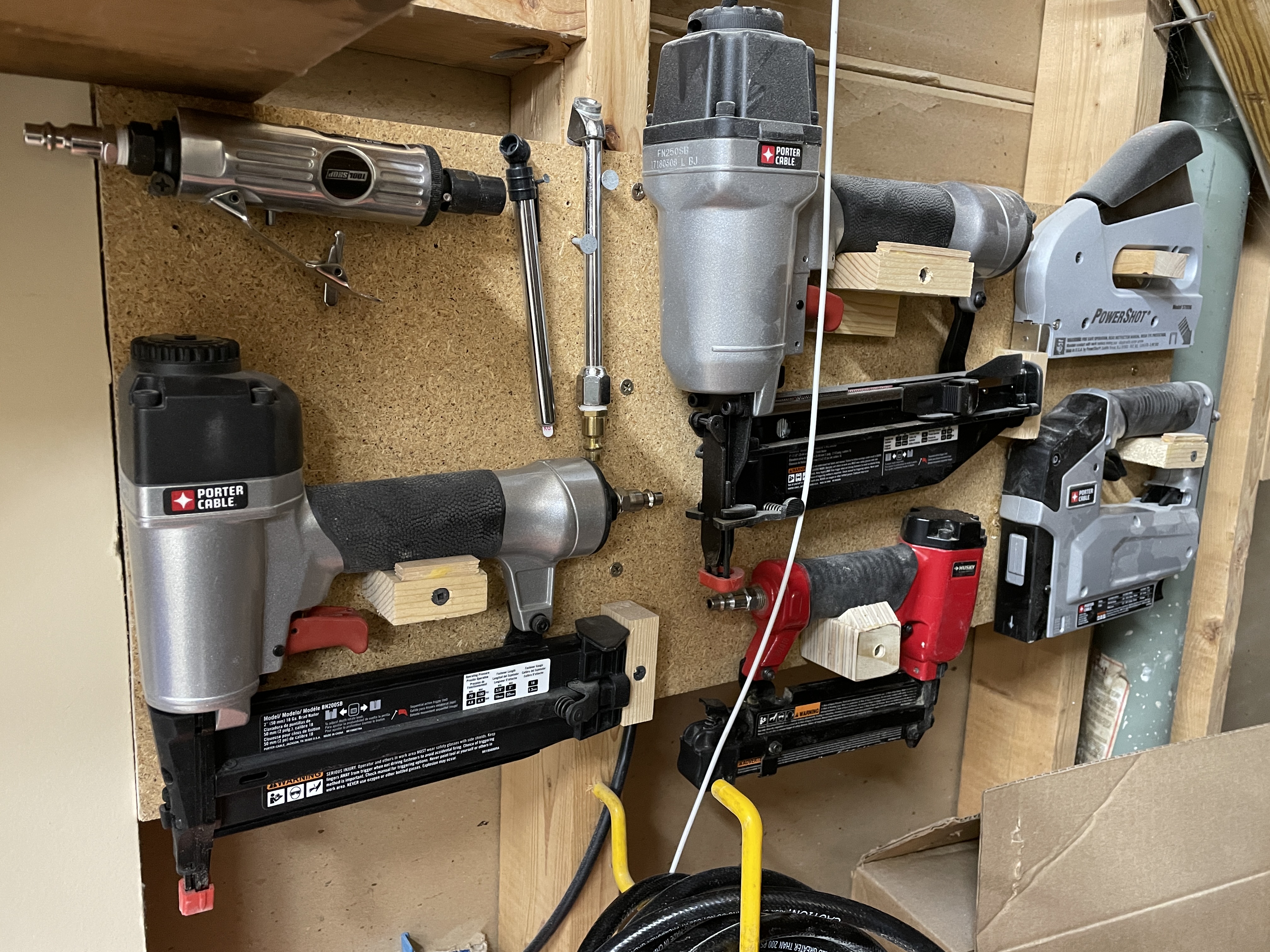
Yesterday I picked up a used 23 gauge pin nailer. I also used a mini die grinder for the first time, which had been sitting on a shelf in the package. Both tools needed places to live, so I made spots on my air tool wall.
Before
After
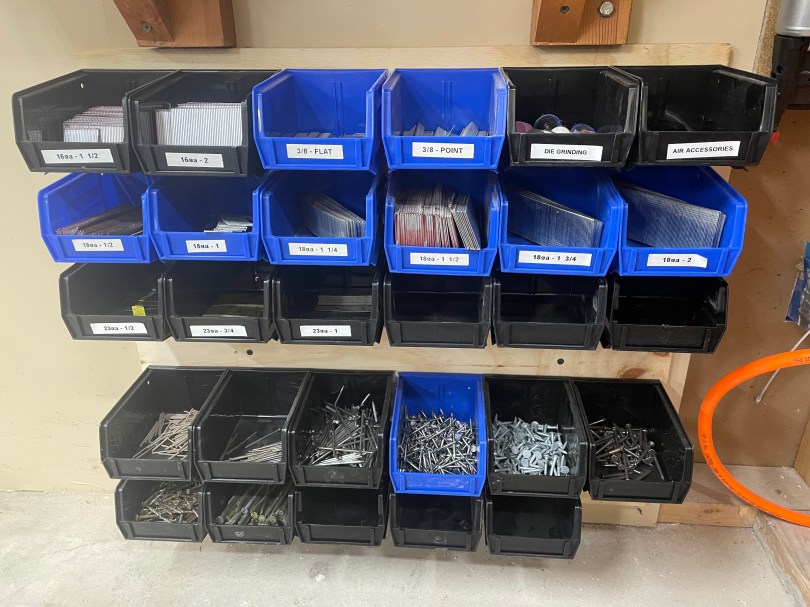
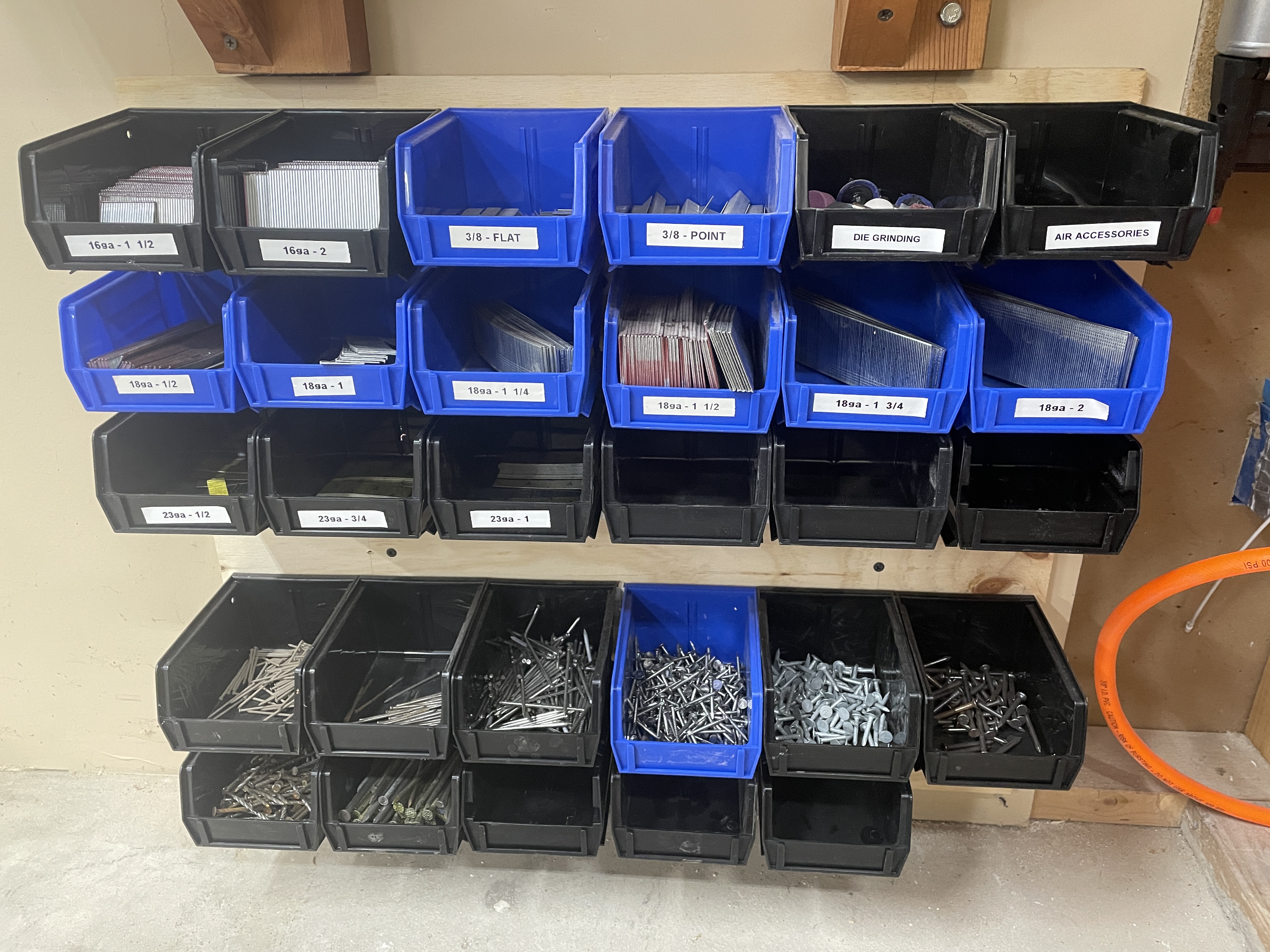
I stopped at Harbor Freight and bought 3 sizes of pins for the new nailer. I also had some unopened boxes of various brad nails sitting around. I took the opportunity to reorganize my bins and more than doubled capacity. Seemed like a good place to move all of the regular nails too.
I love when everything in the workshop has a home.
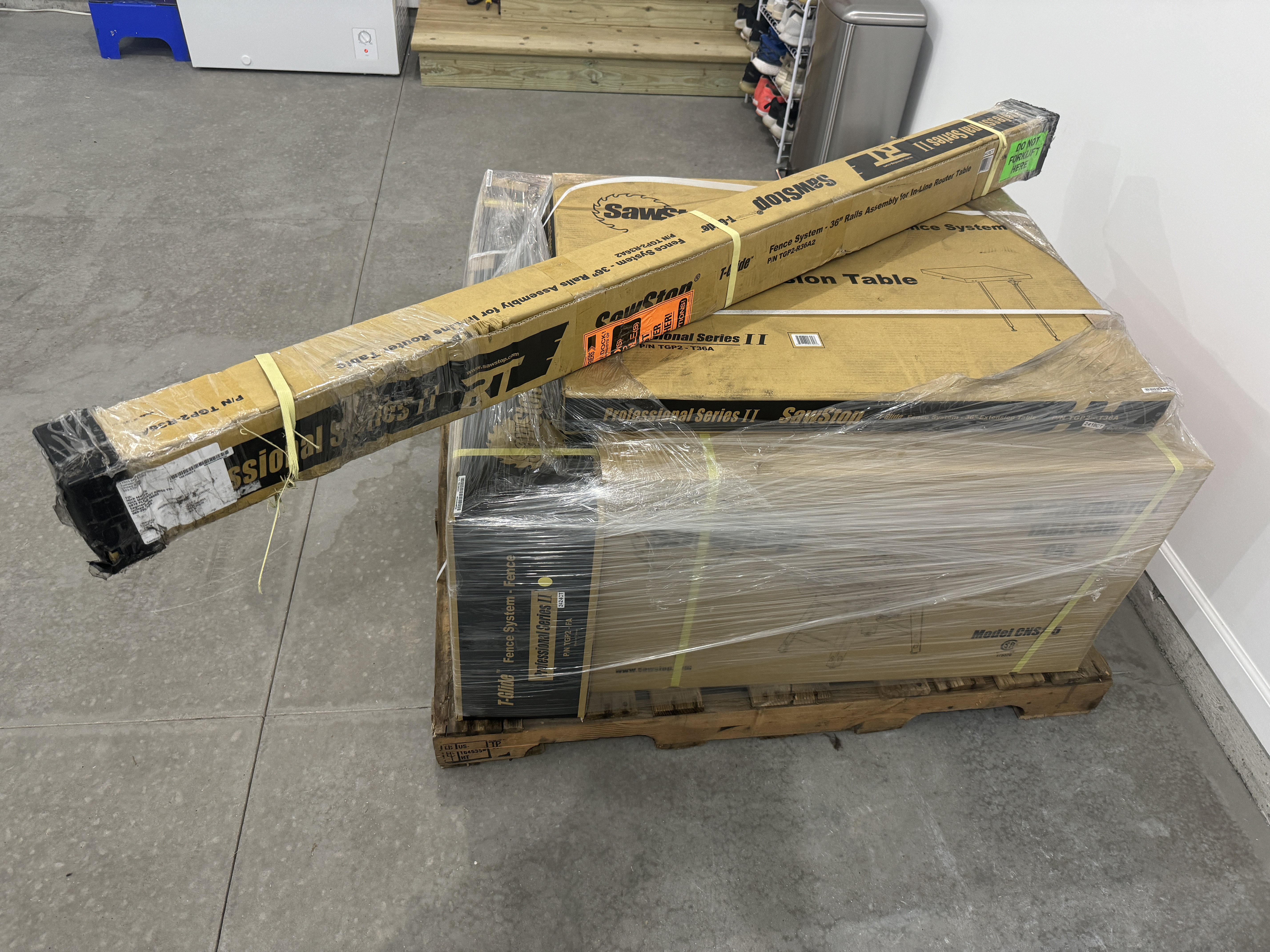
Now that I’ve been in my workshop again, it’s time for some table saw upgrades I’ve been wanting to do. The bigger project I had planned for yesterday couldn’t happen because of part damaged during shipping, so I went with the easy one. Here’s the old switch on my saw.
It worked fine, but I wanted something cooler and safer, so I ordered one from Amazon for about $13. The hardest part was finding an electrical box to would work with the location where I wanted to install the switch. Then I built a simple scrap wood box around it and wired everything.
The START button is recessed and you really have to push it, so there is almost no chance of accidentally turning on the saw. The STOP paddle is a big target and at knee height, which will make it easy to turn off the saw without moving my eyes or hands if an operation becomes dangerous.