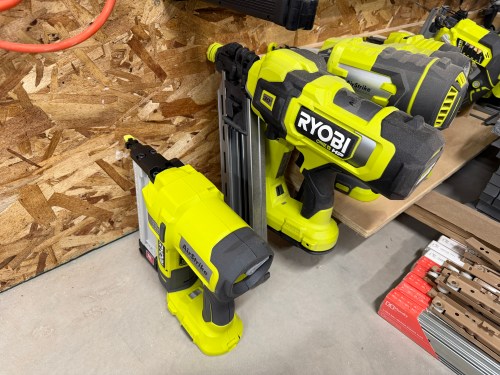
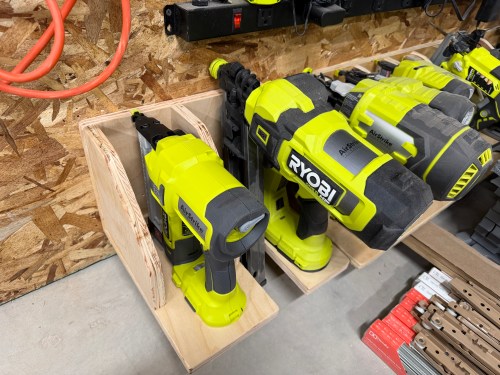
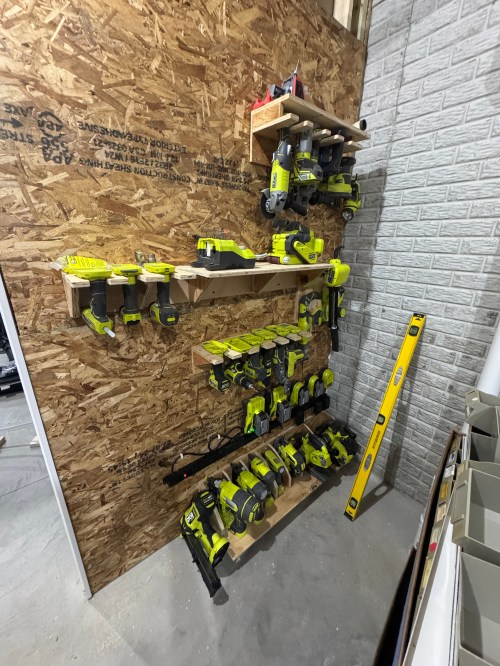
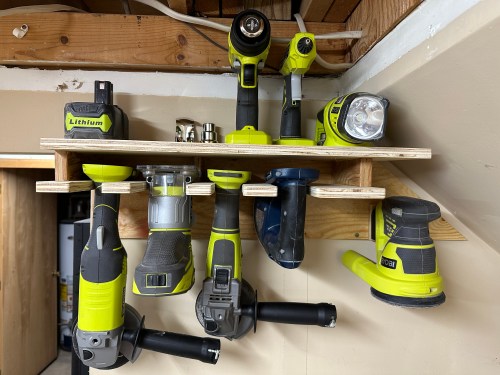
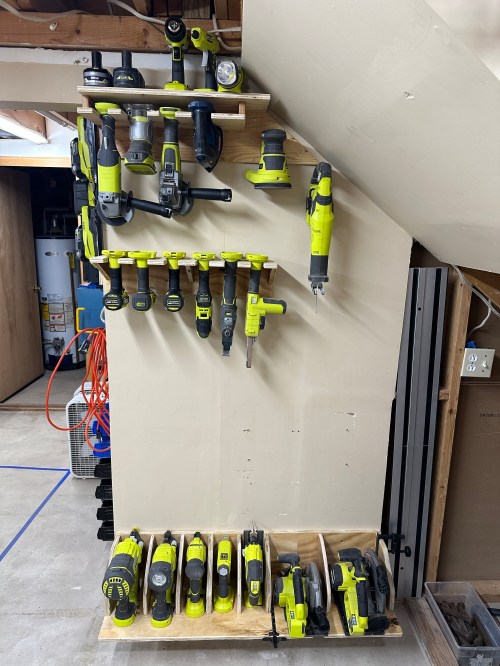
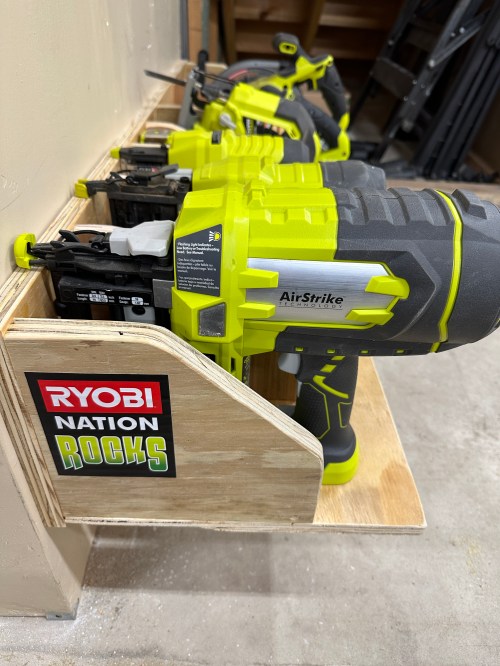
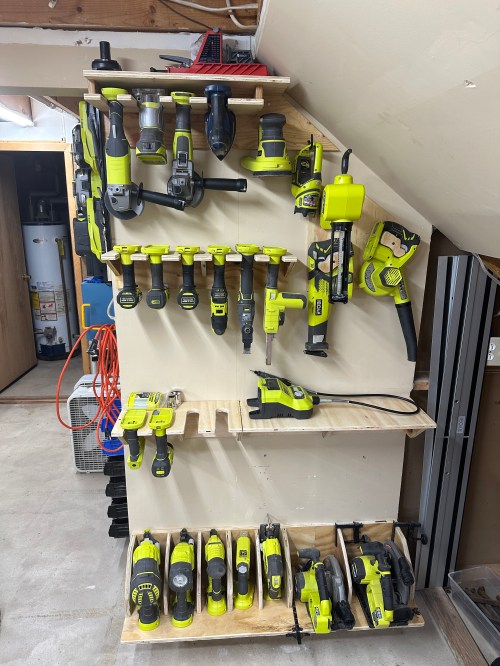
Quick build this weekend to expand my Ryobi tool storage wall (which moved to the new workshop) with spots for the framing nailer I got last year to build the shop wall and a narrow crown stapler I recently bought on sale.
As I’m writing this and seeing the pictures, I butt jointed the back and bottom incorrectly, which is why it’s too tall and not deep enough to match up with the old spots. Oh well!
It’s great to be back in the shop again and getting it more organized.
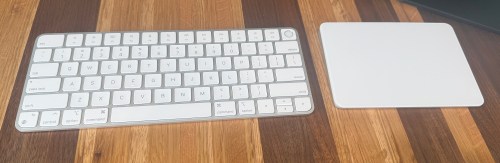
When I was building the PC for the golf sim, I had a temporary table in my office and I was turning my chair from my desk to the table and back while I installed and configured Windows. Each time I went from the mouse on the PC to the Apple Magic Trackpad I wanted the mouse again. I’ve been using the trackpad for about a year, since I built the desk.
Prior to this desk, I actually had the MacBook Air right in front of me and used its keyboard and trackpad. The trackpad on a MacBook is actually much better than this “magic” one. It really struggles with drag and drops, releasing the click action before I’m done. Maybe it’s user error, but I’d been struggling with that aspect since day one.
I ordered another mouse that same day.
This situation got me thinking. I know I’d been struggling with at least one aspect of the Magic Trackpad, yet I didn’t do anything about it. It took using the mouse to realize there’s a lot of performance to be gained.
Life is too short to struggle with the tools and processes we use. Is there anything else at work I’m struggling with? Maybe I could write more scripts to automate things I do frequently. How can I improve my woodshop processes?
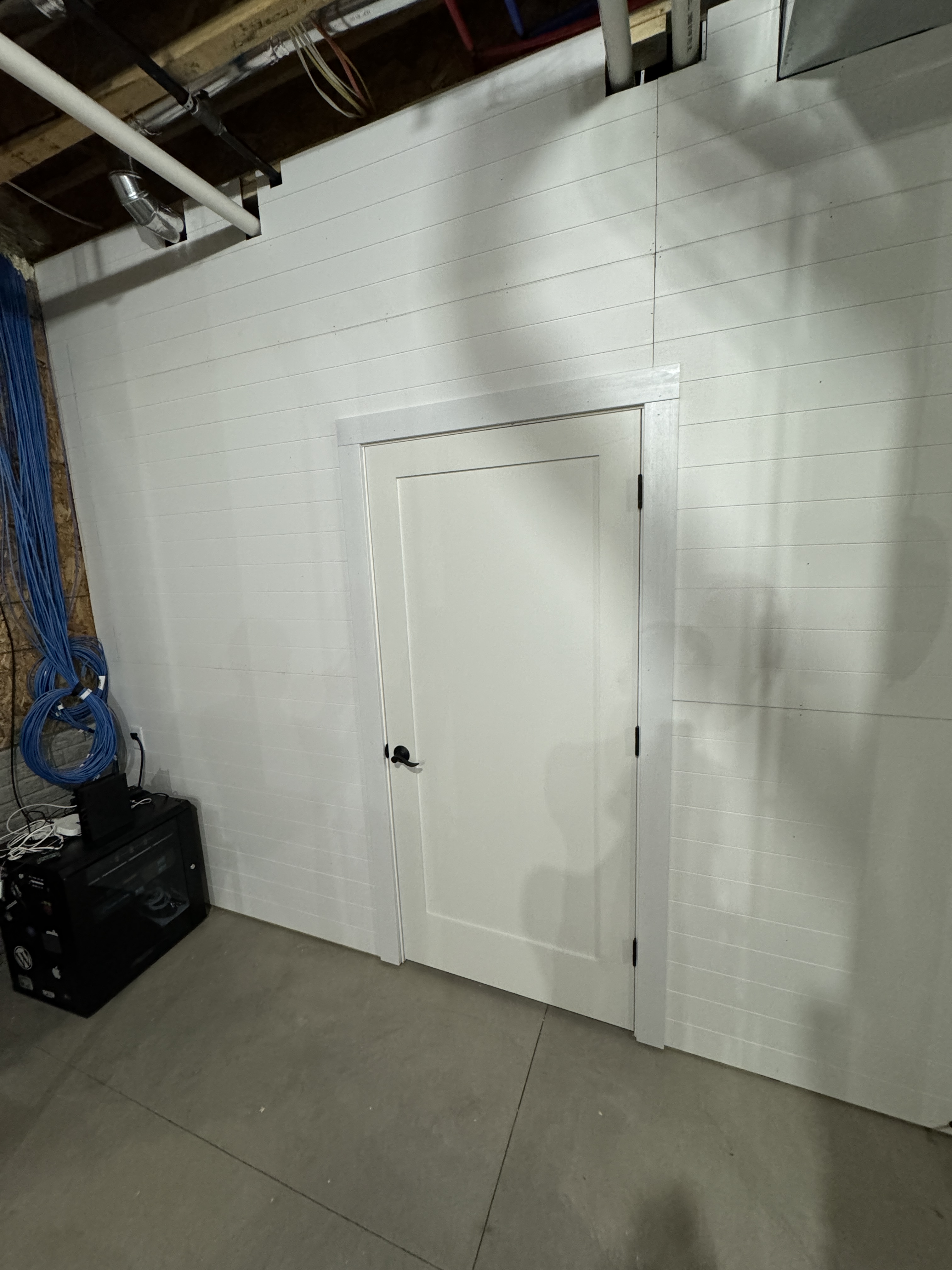
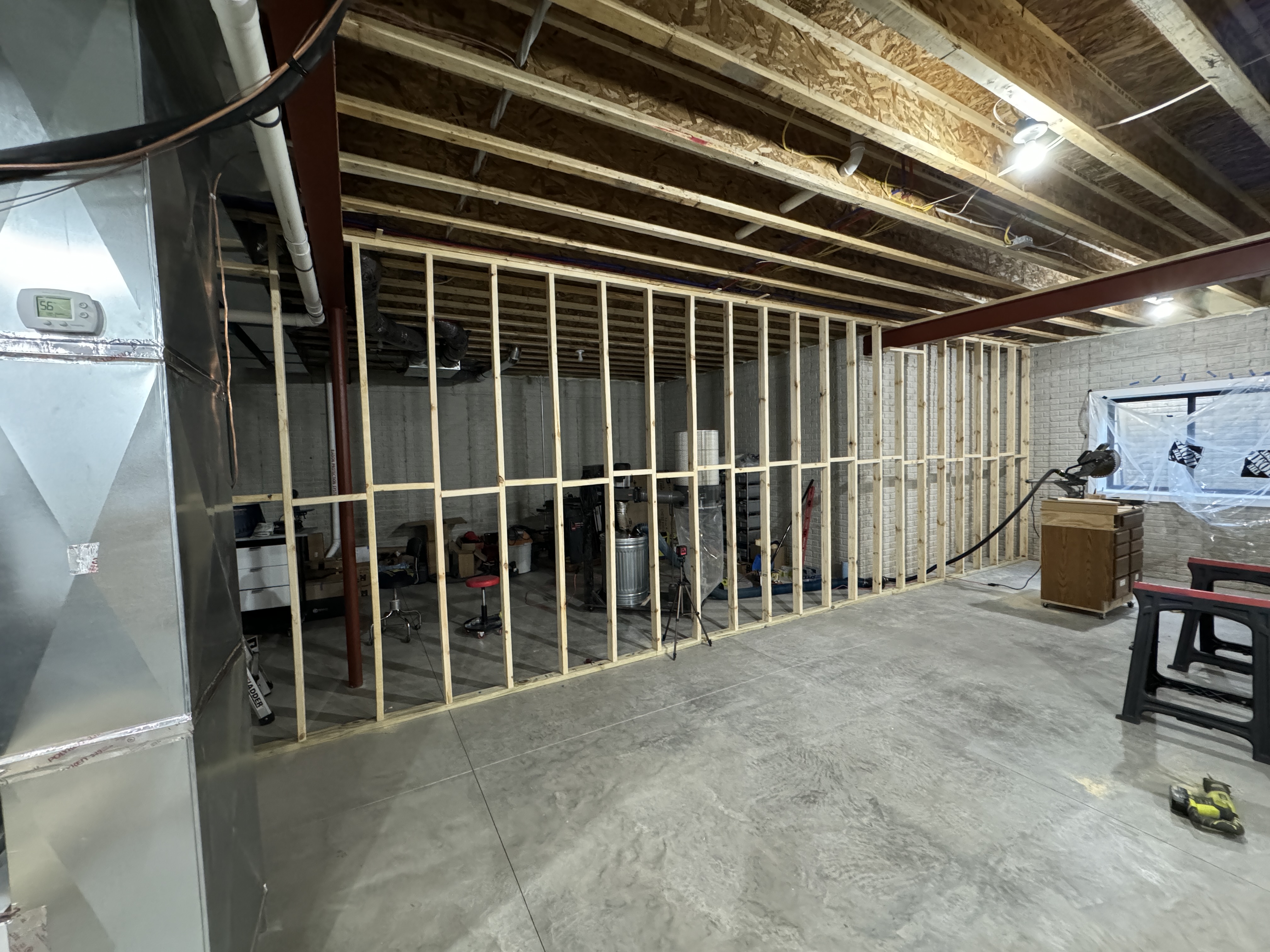
A week after moving in, Dad came down and we built a wall in the basement to close off the workshop and keep sawdust contained. I eventually finished the rest of the show side of the wall and added trim to the door.
The Cat6 cables and networking rack are a project I hope to tackle over the holidays.
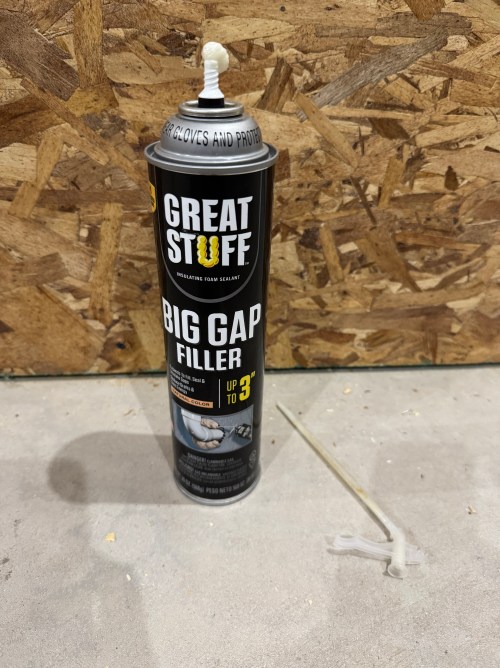
In order to keep as much dust as possible in the shop, I bought a can of spray foam to fill gaps around pipes, ducts, and beams. Since I hade some large gaps, I had to do two applications. I used wider painter’s tape to hold the foam back (picture below was taken during round two).
Then I wired all of the shop outlets and put up OSB for my wall material. It was a cheap option at about $15 a sheet, while allowing me to screw lighter things anywhere. The first things to go on the wall were all of my Ryobi storage, since the tools had been scattered across the floor for weeks. I absolutely love the 10 foot foundation, which allowed me to put wood storage high and out of the way.
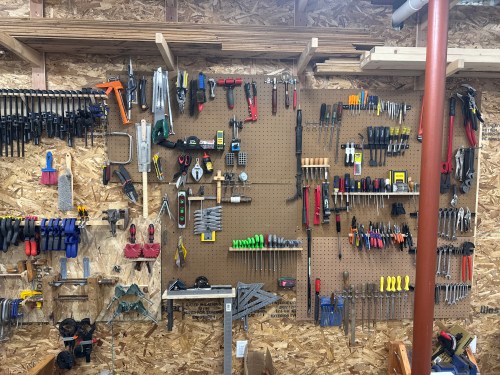
I put up my clamp racks and emptied a lot of boxes to organize my tool wall. The Allen key holder was a quick side project.
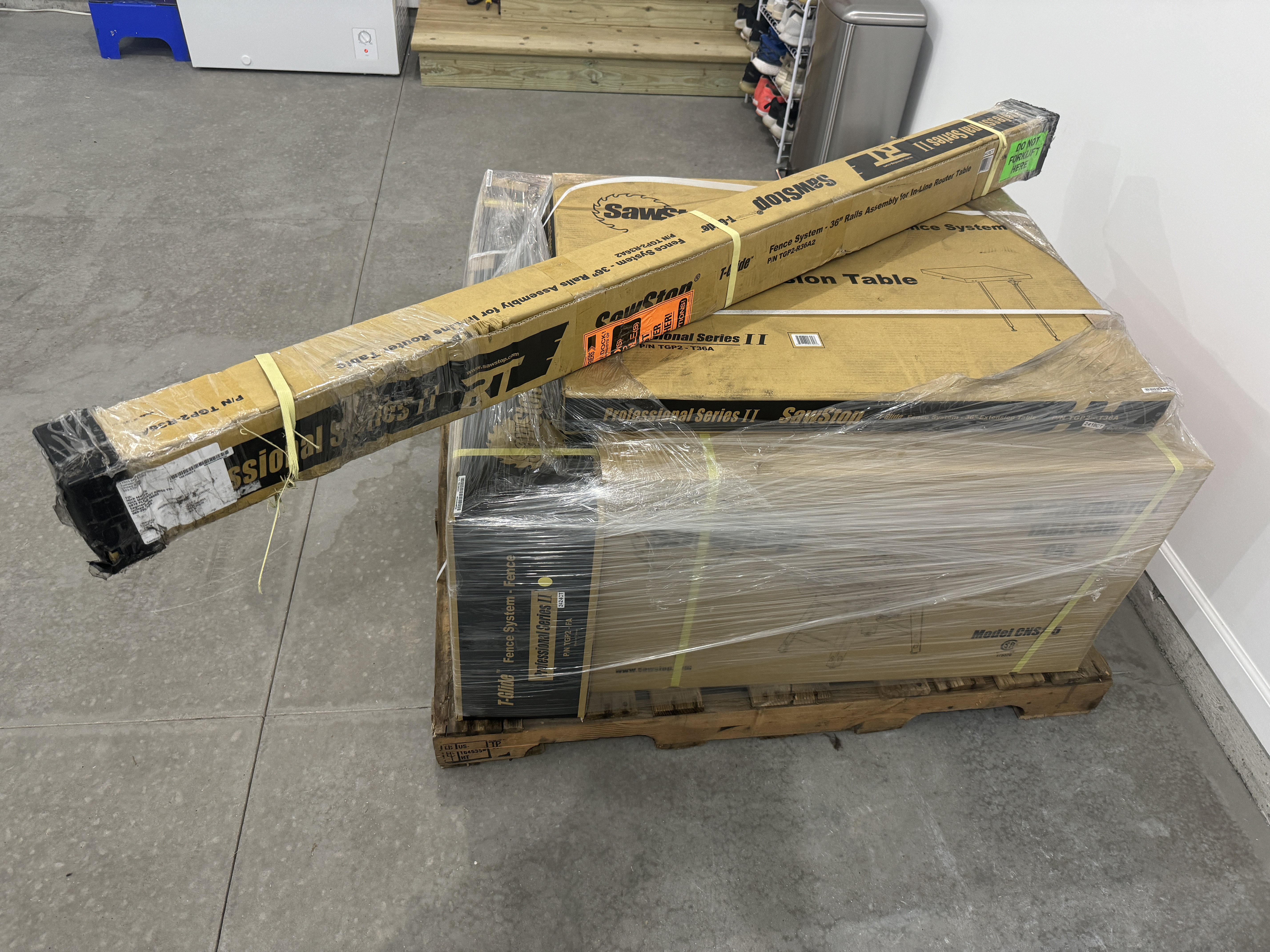
I had wanted a SawStop for years and the move seemed like good excuse to sell my old Craftsman table saw instead of hauling it to a new basement. I bought SawStop’s Contractor Saw with the 36” T-Glide Fence Assembly, Mobile Base, and Cast Iron Wings. She’s a beauty, a joy to use, and the safety features can’t be beat.
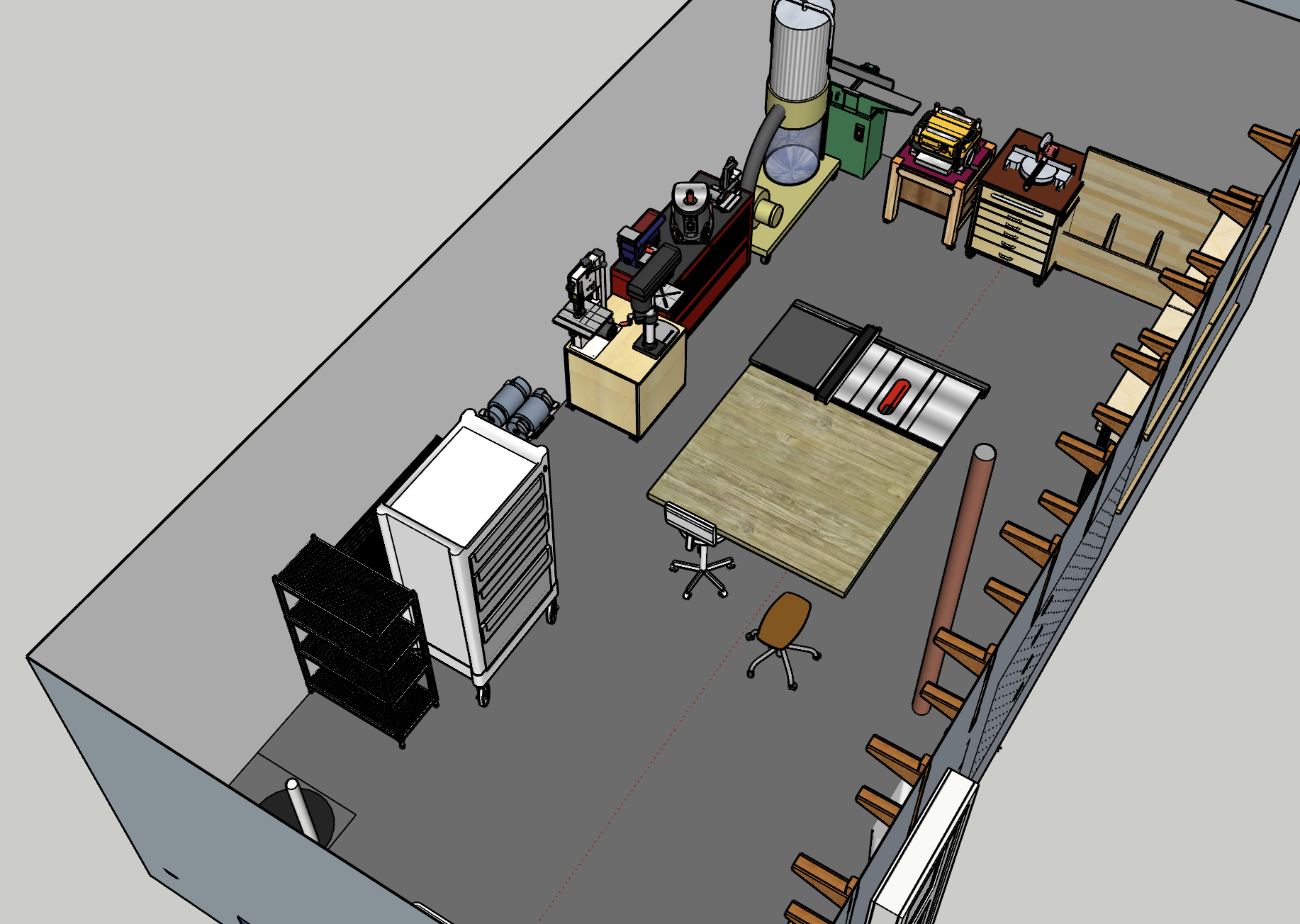
I had a general idea of the layout I was going for in the shop, but in order to get a feel for the space, I measured all of my carts and tools so I could model in SketchUp. I started with the structure, items on the main wall, and things that can’t be moved, like pipes and the shop sink.
Then I needed all of the tool and storage carts. I imported a lot of the items from SketchUp’s 3D Warehouse and scaled everything to the correct size.
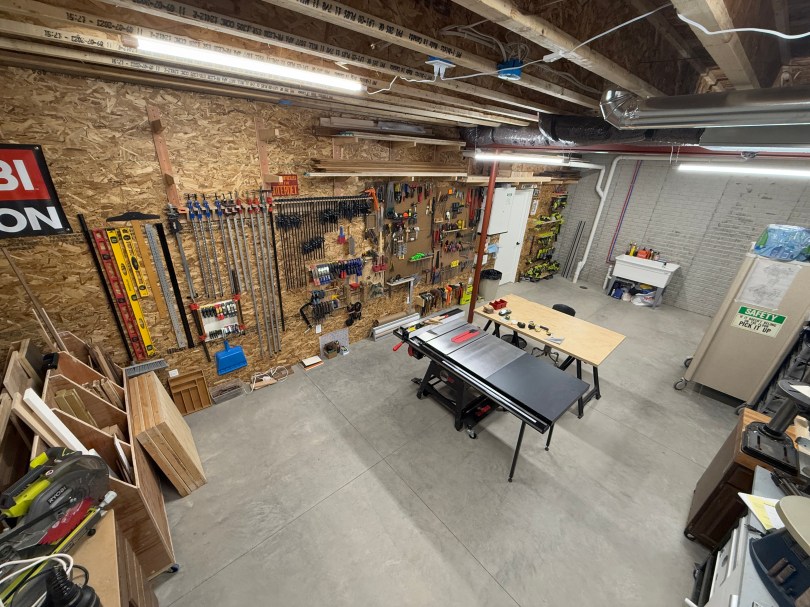
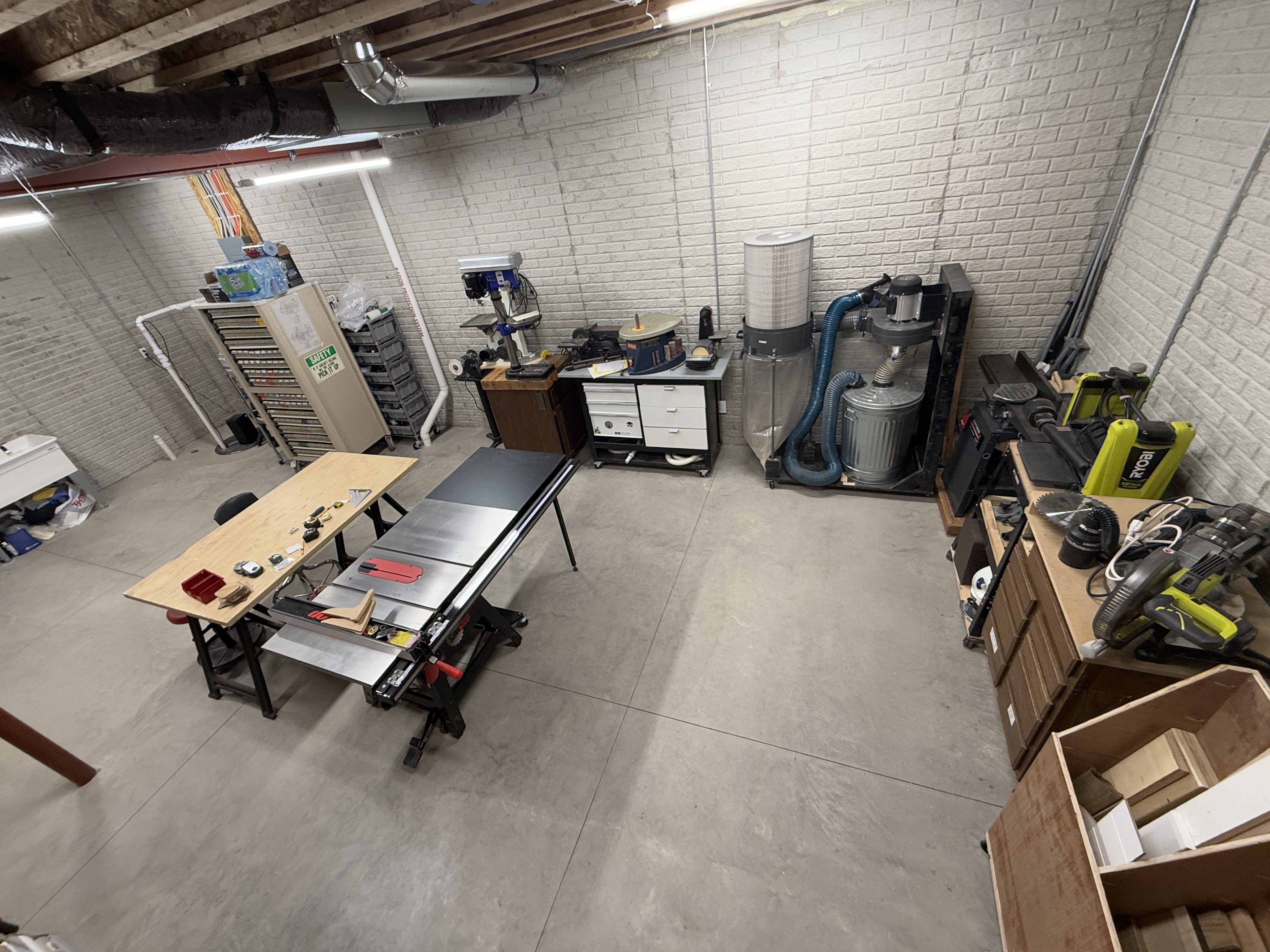
Eventually I got to a comfortable arrangement in the model and could physically put things in place. Over the course of several weeks I made a lot of adjustments. I even moved my band saw over to the drill press cart so I could repurpose it’s cart for my planer. I think I ended with a very good first iteration. Here are comparisons of the model and the actual room.
I can start making things again! One of the first builds is going to be an outfeed/assembly table for the table saw. It’ll have some neat features and storage. In the models I made a table top of about the correct size and in real life you see my old table top, which is too small and low, on saw horses.
It’s been a busy few weeks packing and moving to the new house. Actually, it’s been a busy year! Building a 40 foot wall before being fully unpacked is a great idea, right? My dad was up for it, so of course I was. I’d never build a wall before, so framing was a fun challenge. This new project meant buying a couple of new tools, which I always love.
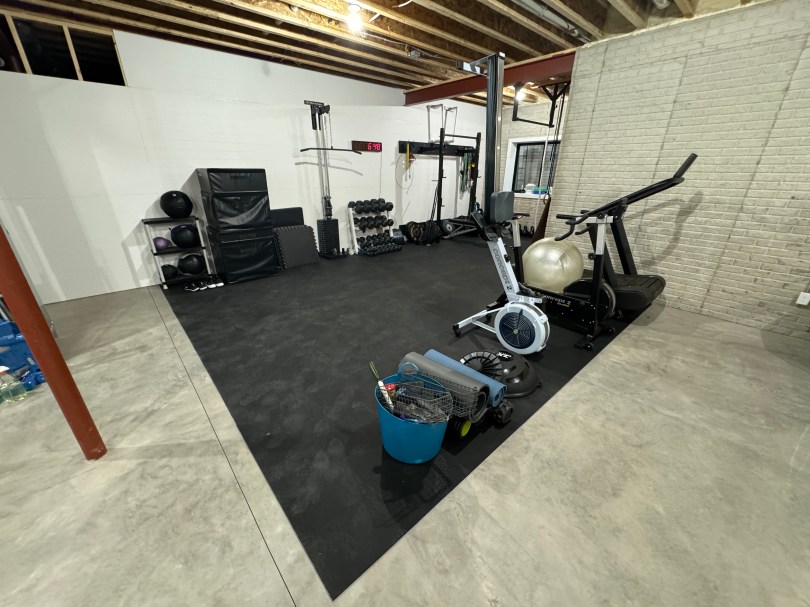
We’re very excited about this new gym area inside the house. No more garage gym for us, which was brutal in the Michigan summers and winters. There is still some organizing to do as we figure out how we use space. The wall isn’t actually finished yet either.
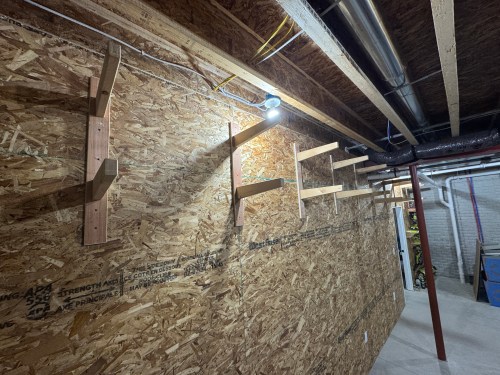
After I finish paneling this area I can get started on the other side of the wall. I picked up 1/2″ OSB for the shop’s wall material, to make it easy to screw small items in anywhere I want. You can’t beat $16 a sheet. Check out this cool storage space for sheet goods I gained by having the wall follow the floor joist.
I’m excited to get this mess of a shop organized, especially with all of my wood and large clamps at the other side of the basement for temporary storage. It’s going to be awesome.
I’ve been wanting to try box joints for years and had saved several plans to build a jig. A couple of months ago I saw Katz Moses Tools was releasing a box joint jig and I jumped on it because their video made it look so good. It was still a pre-order at the time and the web site said it could take 3-4 weeks, but mine was delivered in a week. Assembling the jig was a piece of cake.
I was very impressed by how snug the runner fit in my table saw’s miter slot. After a few pushes back and forth it wore in and then I added paste wax to make it slide like butta! I grab some scraps and my dado stack for a quick test.
The jig is easy to use and with some quick adjustments I’ll be able to dial in a better fit. My next project will be a monitor riser for my desk so I’m looking forward to doing some walnut box joints.
I’m a big fan of Adam Savage and Tested, so when I saw he was writing a book, I preordered it from Amazon.
That was four years ago. I’m embarrassed to say the book had been untouched on my Kindle since it was released in May of 2019. I finally turned the page on the flights to Madrid and easily finished it.
Putting something in the world that didn’t exist before is the broadest definition of making, which means all of us can be makers. Creators.
Everyone has something valuable to contribute. It is that simple. It is not, however, that easy. For, as the things we make give us power and insight, at the same time they also render us vulnerable. Our obsessions can teach us about who we are, and who we want to be, but they can also expose us. They can expose our weirdness and our insecurities, our ignorances and our deficiencies.
If you’re a creative of any type I highly recommend reading Adam’s book. I learned a lot and it felt good to know other people think the way I do about a lot of things.
One of the chapters focused on lists, which is something I use often. Usually I prefer Apple Notes because is syncs between my iPhone and MacBooks (work and personal), allowing me to quickly update the lists. Here’s a list I started partway through my bathroom remodel.
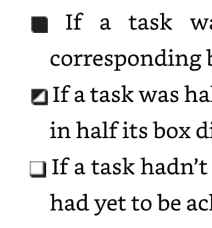
Adam writes out his lists and makes a checkbox next to each item. When something is halfway or mostly complete he splits the box diagonally and fills in the upper left area. On completion, the entire box is filled in. It’s such an important process for him that after the Lists chapter was another titled Checkboxes!
Whenever I put a list to paper I’m going to try this method.
I’ve been keeping my Ryobi cordless 18v tools on some shelves on a wall next to a drain pipe.
As you can see, I outgrew the area. I also had several sanders in the drawers of my sanding cart and even more tools in a box on the floor.
Look at that picture again. Wouldn’t that wall be a great place for cordless tool storage? It’s not in a weird location, is further away from the big tools that make all the dust, and in reach while working at the assembly table.
I took down the vise shelf, chopped and cleaned the plywood, and installed it on the wall entering the shop.
After taking down the nail bins I took the opportunity to spread them out on the backer board since I have more vertical space in the new location. Then I moved the nail bins around the corner, under the rest of my bin storage.
I had a blank canvas.
Before building anything I had to figure out tool arrangement, so I marked out space on the floor to match the area of the wall.
After gathering all of my tools I messed around with layouts and tool groupings.
When I had something I liked, I started making shelves one row at a time.
As you may have noticed from the photos, I kept changing things as I went, and there were a lot of iterations I didn’t get pictures of. When I was about 80% done with everything I remembered I had the rotary tool and my Armor Tool Auto-Jig Pocket Hole System stored in the drill press press cabinet. I definitely wanted both tools out in the open where I’ll be more likely to use them. All of the changes were worth it; every tool has a place and I love it. I’ve been wanting something like this for years.
As I was building, it was so handy to turn around and grab a tool or a battery that was already in its place. No more walking over to the other area and reaching around the corner. Little things like the magnetic strip for bits and accessories make a big difference too. Another bonus is this project used a bunch of odd scraps I had in my wood collection.
Are you a Ryobi fan? What are your favorite tools?
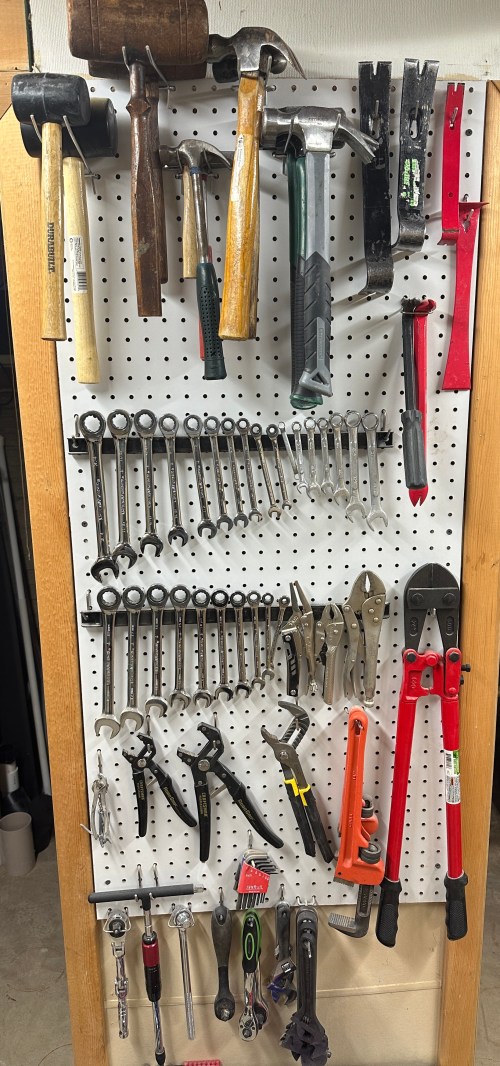
I’ve had a bunch of pegboards in my shop for over five years, and I’ve figured out what works and what doesn’t. I love that a lot of my tools are in direct view and can quickly be accessed. I didn’t love a few areas that I go to frequently though. The first wall I wanted to tackle looked like this.
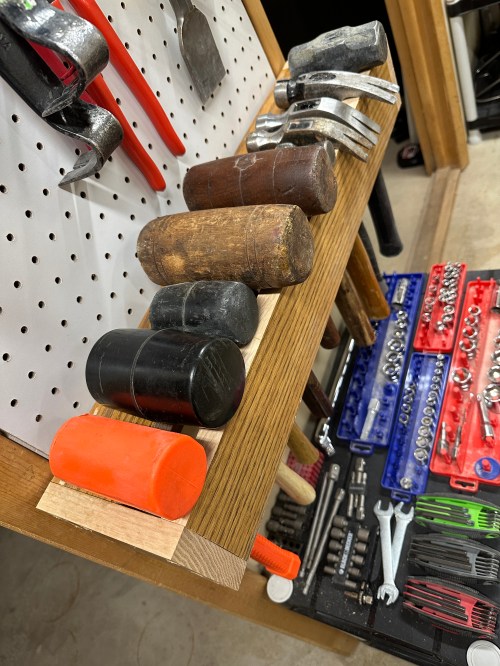
The main problem was the hammers. They’d become crowded and it was a pain to pull one out when it was second or third in line. I moved all of the other tools up on the wall and lined up my hammers on the assembly table.
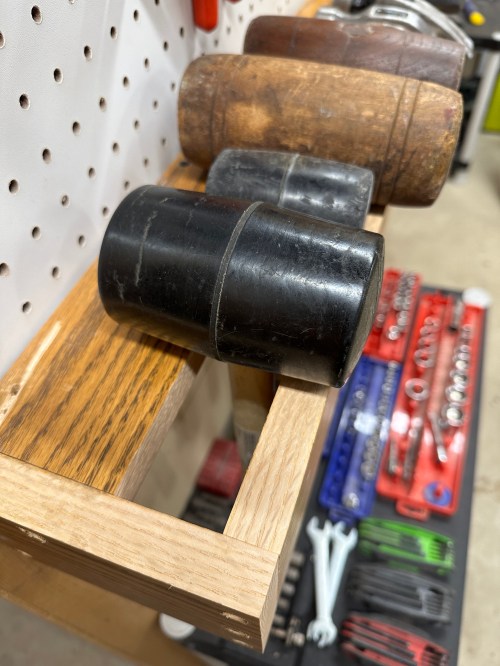
After taking measurements, I cut up oak pieces from my old kitchen light box. This storage shelf came together pretty quick and has room for even more hammers. Now I can quickly grab any hammer without disturbing the others.
Here’s the updated wall.
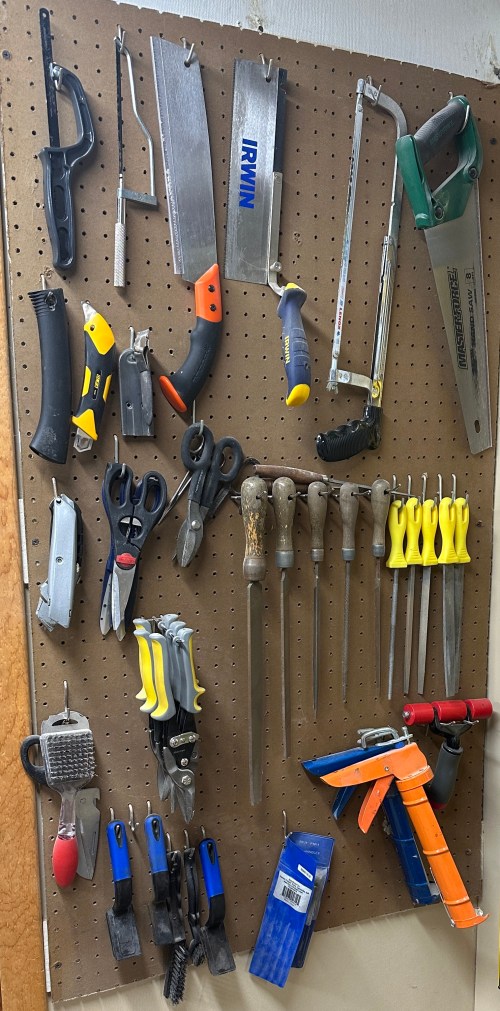
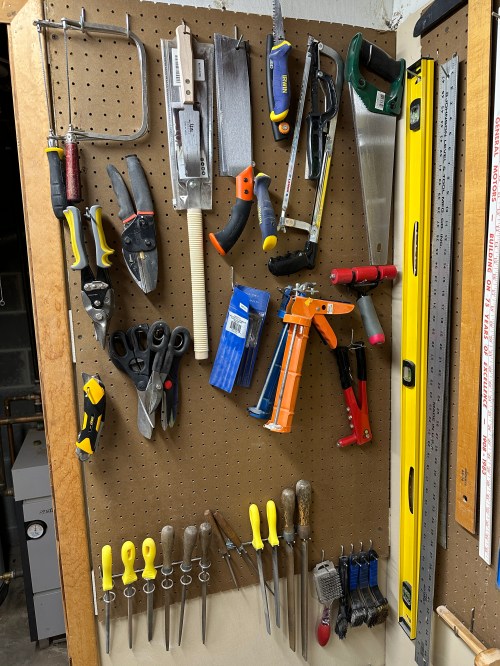
The next wall to the right was making poor use of space, especially since I don’t grab some of the saws very often. Take a look and see they were nearly occupying half of the wall. The files never worked well on those individual hooks either, which always pulled out of the wall.
By moving stuff around I was able to get several more saws, like my Japanese pull and coping, as well as other tools up on the wall.
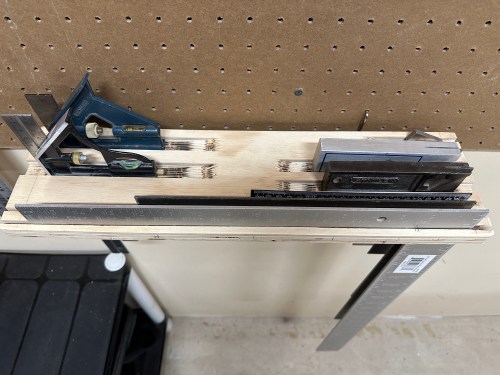
Over to the right again was tools used primarily for measuring and alignment. In February of 2018 I made a shelf for the squares, which has taken up way too much space. I really liked the grooves in that shelf, but the squares weren’t secure enough. Here’s how the wall looked before I touched it.
I reorganized everything else first and then made a new shelf that was longer so I could add slots in each groove to drop one of each square’s legs down.
Huge improvement and look how much extra space I have for more tools! I need to get myself a nice set of chisels.
Last up was the pegboard on my bench.
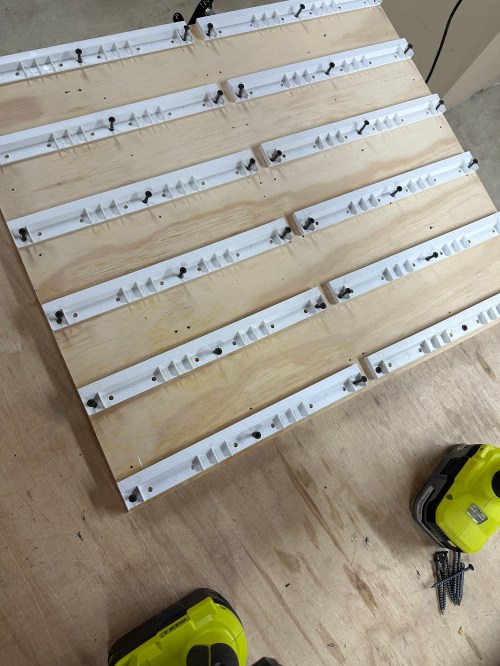
I’d been using four of the pegboard holders made for screwdrivers here and don’t care for them; the holes are too big and the spacing is too wide. All you need is scrap plywood with holes drilled in it, which allows you to run two deep and have plenty of expansion room. I also made a holder to store the wood carving set that had been unopened in a box buried on the bench for years.
So much better. Now I can tackle the reorganization of my shop closet.
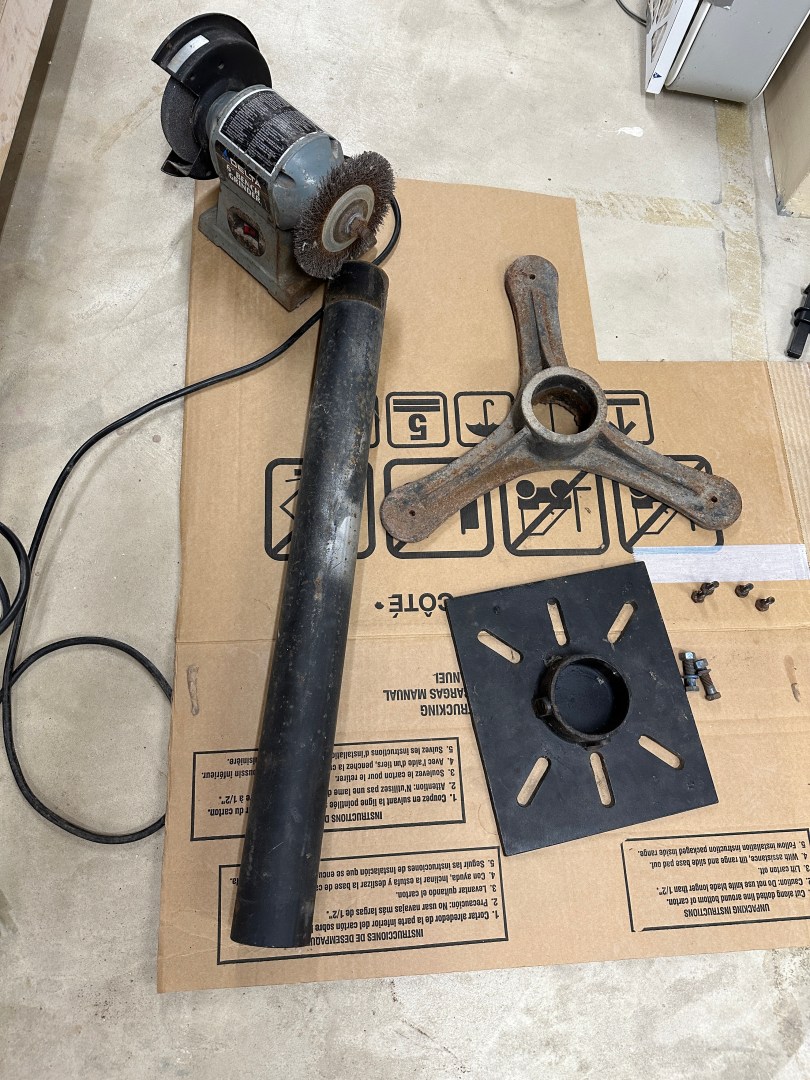
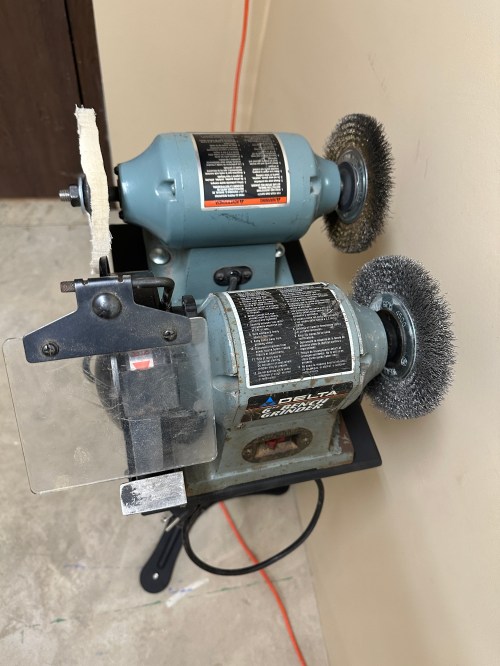
In early 2018 when I bought a band saw, I installed a bench grinder on the same cart and never liked how much vibration the grinder sent through the saw. I’d been been keeping my eye on Facebook Marketplace for a heavy grinder stand and found one about two years ago, along with a second grinder. It was finally time to clean things up and mount both grinders. I forgot to take a picture before disassembling things, but I did find a really small thumbnail from the Messenger chat that I zoomed in. You can kind of see how rusty things were.
I separated the parts and used a flap disc on an angle grinder and a brass wire wheel on a drill to clean up a lot of the rust.
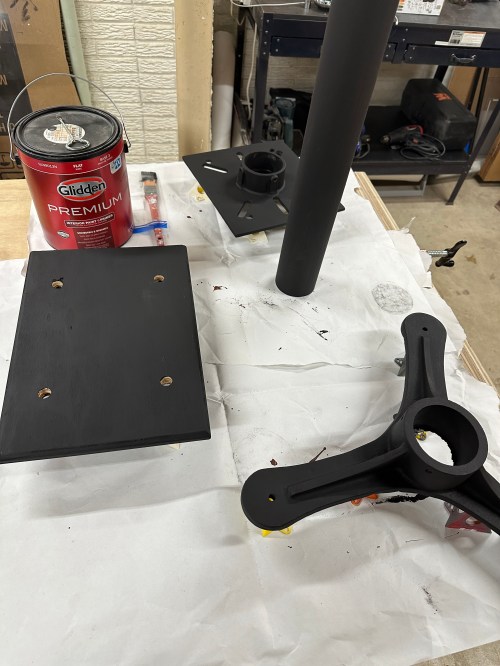
Then the stand parts got a coat of rusty metal primer.
Then I cut a larger top plate from 3/4″ plywood and chamfered the edges. I drilled out mounting holes for both grinders and transferred those to new holes in the metal top plate. It all got two coats of black paint.
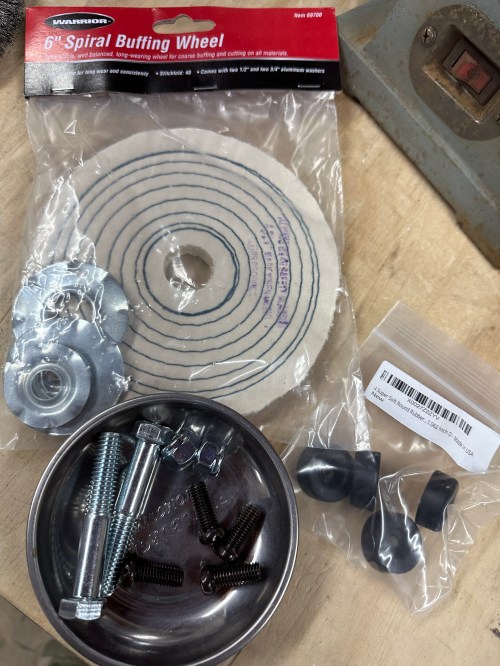
I cleaned up the grinder with a wire brush, but didn’t bother with a new paint job. I bought a new buffing wheel, mounting bolts, and some rubber feet (time will tell if they’re too small). I found some bolts in my bins that were the right size for tightening the stand’s top and bottom to the cylinder.
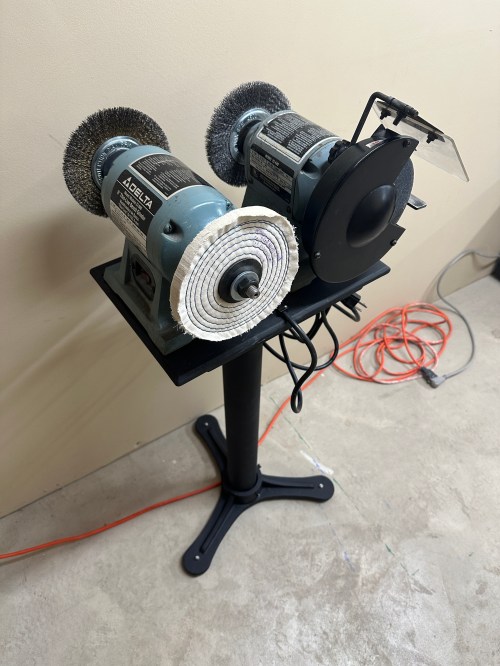
After the paint dried I installed clips and a hook for the power cords and assembled everything.
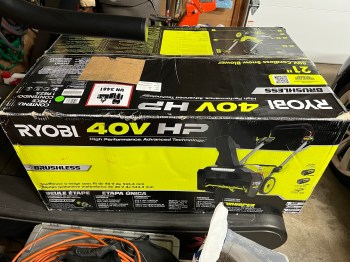
Last month I was messaging my brother, who said he loved his 40V Ryobi snow blower and lawn mower. I’ve had an Ariens 520 two stage snow blower for over a decade, but haven’t used it much the last few years. It used up a lot of space in the garage, took a long time to get started for the winter season, was slow to use, and left me smelling like exhaust. The thought of getting away from gas yard tools was exciting and I have a large collection of Ryobi’s 18V power tools, so they’re a brand I trust.
The only steps involved in assembly were to twist on the chute, secure it with a screw, and tighten the handle. I immediately loved how compact it folded up.
We got snow the next day, so I put it to a test.
The snow blower was easy to start with the push of a button. It was very quiet, light, easy to maneuver, and has a bright LED light. Right away I noticed it didn’t have the power to throw the snow very far as you can see in the video. I would be throwing the snow right in to an upcoming path, so would be moving the same snow 2-3 times! Not a good start.
The triggers on the handle that need to be held in order to keep it running were awkward to use and I accidentally let go multiple times. Then after less than 10 minutes of use, I let go and the motor wouldn’t start again. Both batteries had about 75% charge left and the LED headlight was coming on without a problem. I could hear a bit of a clicking sound from the motor.
I loaded it in my car and returned it to Home Depot the next morning.
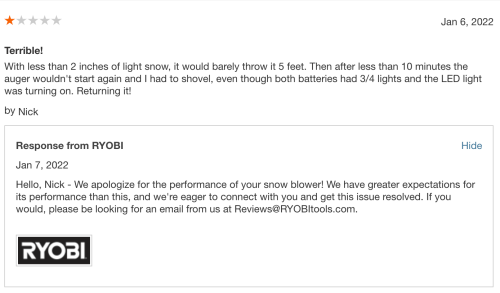
I was extremely disappointed in the machine and due to my positive experience with other Ryobi products, I felt the need to leave an online review, which I almost never do. To my surprise, I got a response the next day.
I also received the following email.
My name is Christian, and I am the Product Development Coordinator for RYOBI Snow Blowers.
We received your online review on the RYOBI 40V HP 21” Snow Blower. We understand you have had an issue with your RYOBI Snow Blower. It is our policy to make absolutely sure that 100% of our customers are pleased with their experience with RYOBI. Could you please call me at 864-642-8094? I would like to investigate this issue with you and make sure that your experience with our products moving forward is a positive experience and that you walk away understanding that our customer service is unmatched.
If you prefer you can reply to this email, and we can discuss your experience to find a solution that meets your needs.
I emailed back…
I returned it to Home Depot two days after it was delivered (the night after trying it). We had less than 2 inches of light snow and the unit was pretty terrible. It barely threw the snow 5-6 feet, so I would end up going over the same snow multiple times to do the driveway. Then after maybe 10 minutes of use, the auger wouldn’t start again. The LED light was on and both batteries had 3/4 charge. Maybe there was something wrong with the motor on this unit, but it seemed very under powered and I wasn’t confident it would be able to handle any real storm. It was quite disappointing because I have a lot of Ryobi hand tools and they all work great. I was hoping to replace my gas snow blower and lawn mower with Ryobi units for ease of use, space saving, and not having to deal with gas, but I’ll be sticking with them now.
Their next reply…
This issue your snow blower experienced has become know and we have since corrected the issue with our units in inventory!
I would like to offer to upgrade you to our brand new RYOBI 40V HP 21″ Whisper Series Snow Blower as I see you were not impressed with the previous models performance. This kit has an upgraded controller and 2x 7.5Ah batteries for increased power and runtime.
Would this be something you are interested in? I want to make sure you are taken care of.
The unit had some damage to the knob used to adjust the auger speed so I asked if they could send me a replacement part and I would fix it myself.
Apparently it’s not an easy fix, so they sent me another snow blower. FREE! Same model, fully complete with the batteries and charger. I was floored!
This new model is better in every way.
Build quality of the machine feels much sturdier.
Larger batteries provide more power and runtime.
The handle folds away in one step instead of two.
Triggers to keep it running were replaced with the more traditional bar you find on lawn mowers.
I’ve had the chance to use this snow blower during a few different sized Michigan snow storms and it did a great job. It throws the snow much better than the other model and it didn’t miss a beat. The machine maneuvers so much better than a heavy gas snow blower and is actually fun to use. There’s no worry about it starting up, so I can just throw in the batteries, push start, and be good to go.
I quickly sold my Ariens gas snow blower, gave the “broken” Ryobi to my brother, and am enjoying the extra space in the garage. Isaac had an older Ryobi model and said this one is awesome.
One minor negative is the snow blower doesn’t come with any kind of shovel tool to clear snow out of the chute or auger. I came up with my own solution though.
Before I purchase a lawn mower I’m waiting to see if Ryobi releases one in their Whisper series before spring. If they don’t, I’ll buy one of their current models. The mowers fold up better to save even more space, which will be great.
This whole experience with Ryobi’s customer service makes me happy I switched to Ryobi a few years ago. It even pushed me to buy their cordless nail guns to replace my pneumatic ones last week. One of my shop projects after the kitchen is finished will be to build a system to better organize and store all of my cordless tools, so I’ll share my Ryobi collection then.

















































 Nick Momrik