Drill Press Cart

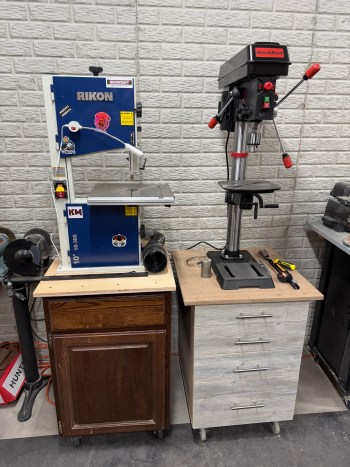
When I setup the new shop, I decided to finally put my planer on a cart and took over the one used by the bandsaw. Then the bandsaw needed somewhere to go, so I scooted the drill press over, added a piece of plywood to support the overhang, and screwed it down. It did not fit and had been terrible since day one. The sharp edges of the bandsaw table were an accident waiting to happen.
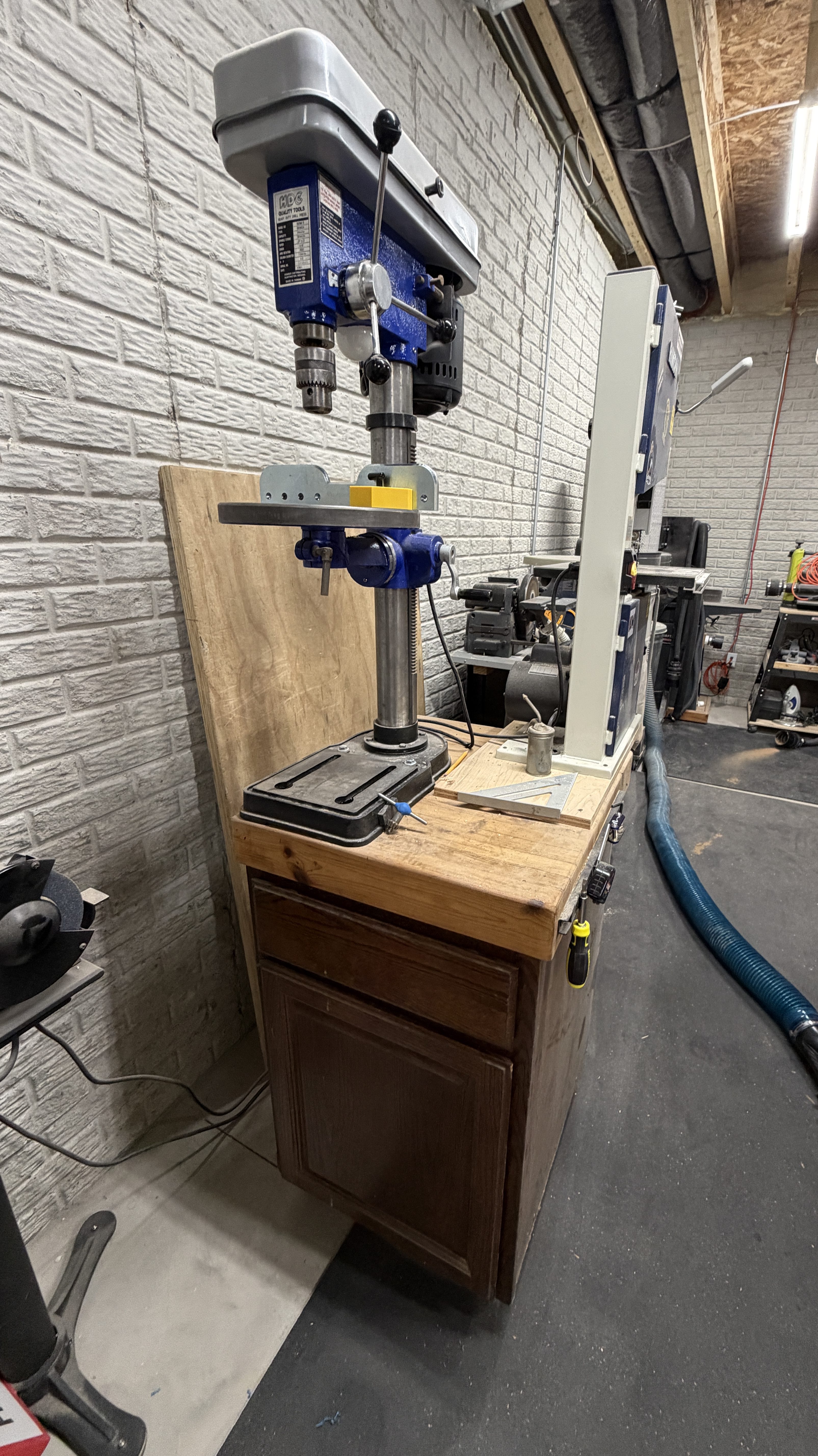
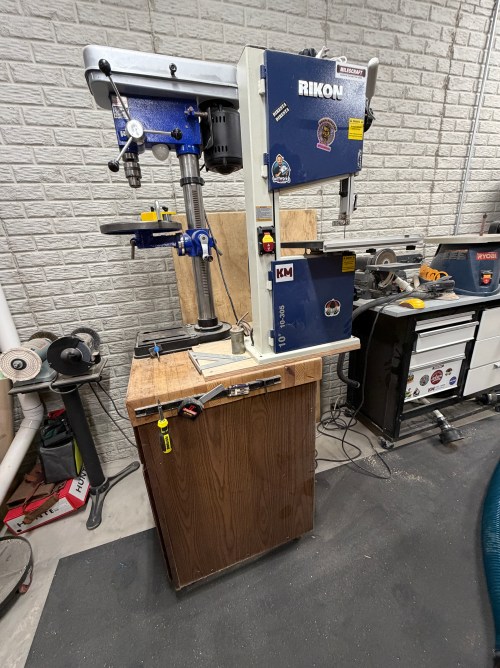
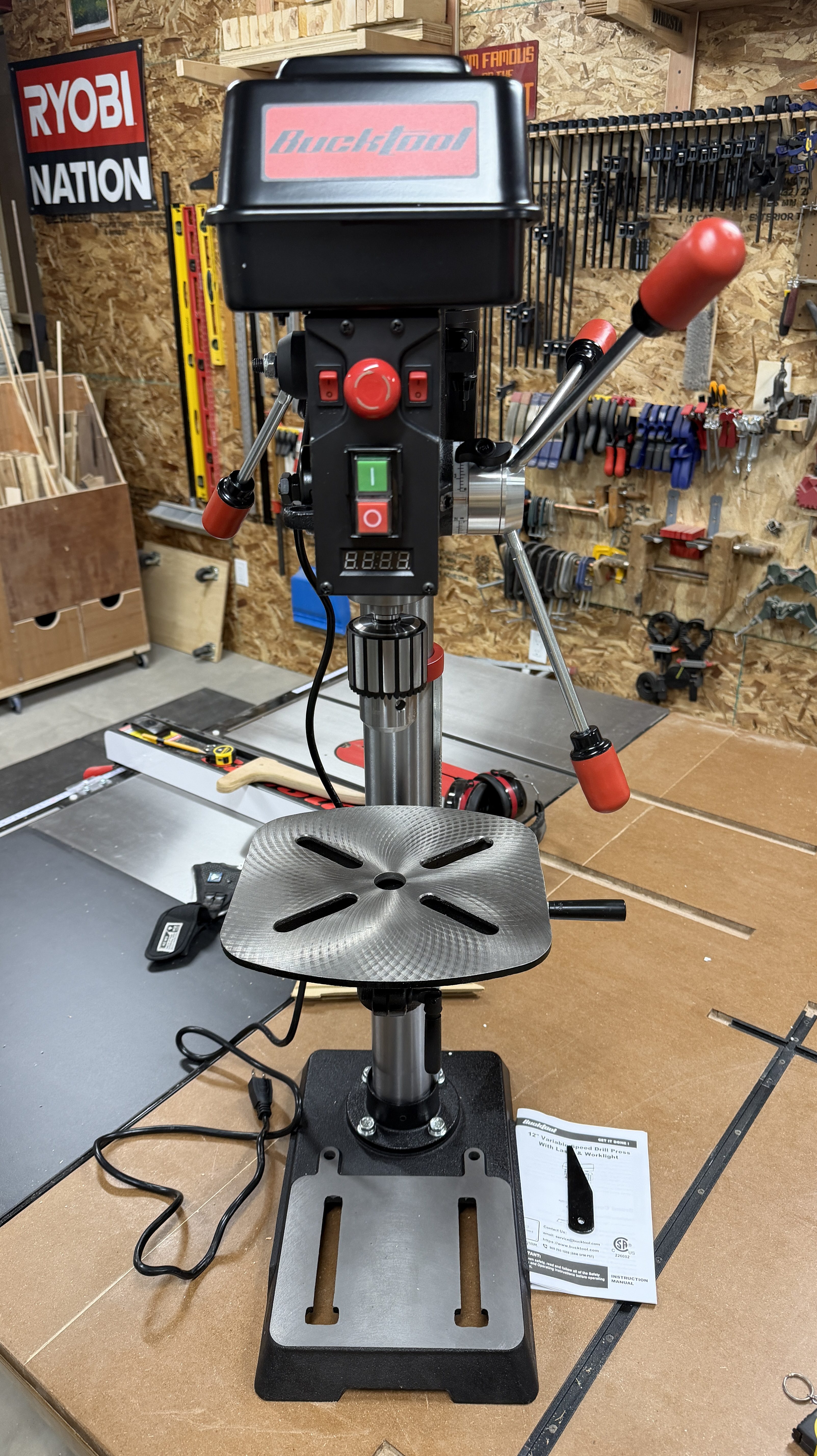
I did this because I’d been wanting a new cart for the old Homier Distributing Company BDM 5 Drill Press. It was too high and I needed more drawers so I could organize everything better. This move would surely force my hand, though it ended up taking over a year.

I’ll get to the cart in a minute, but there’s more to this story. For years, to change speeds on a drill press has required opening the top housing and moving belts. I restored that Homier over eight years ago and can’t ever remember changing the speeds, which isn’t good. Different materials and bits should be drilled at various speeds. The problem is almost always spinning too fast, which can dull bits and produce poor results. I saw the Nova Voyager drill press in a YouTube video and wanted one because of the digital features.

For what I do, I could never justify the cost. About two months ago I started searching for other options and found models where variable speed is adjusted by a handle. The popular budget version seemed to be the WEN 4214T (or the 6.2-amp WEN DP1263V). After more research I decided, when I was ready, I’d get the Bauer 12″ from Harbor Freight. Then on Christmas Eve morning a deal for the Bucktool DP12 popped up. I threw it in my cart and it was half off after discounts. Sold!
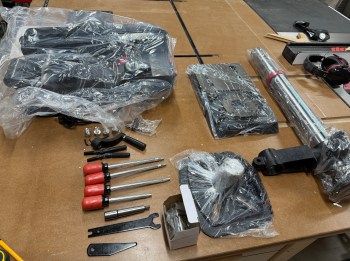
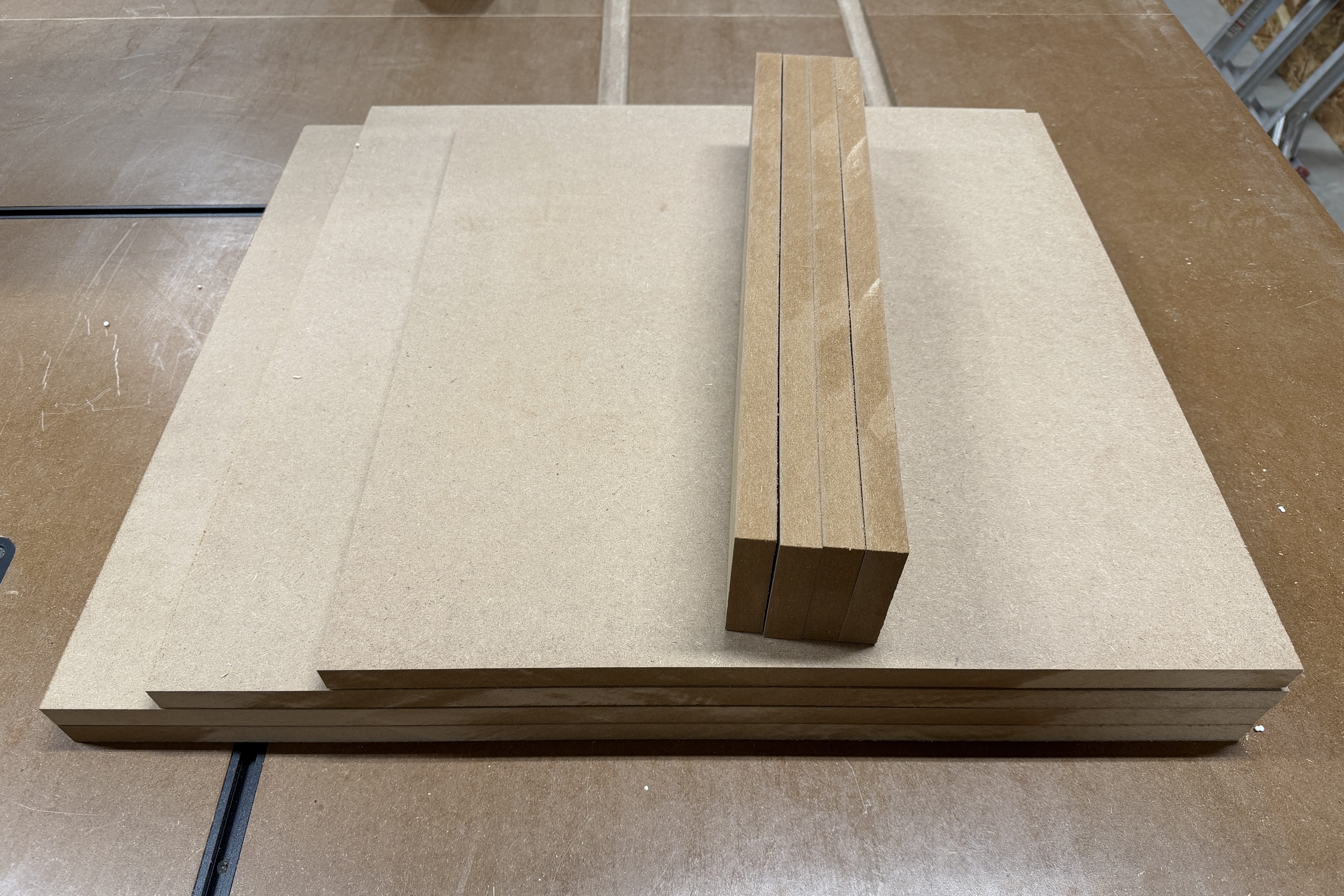
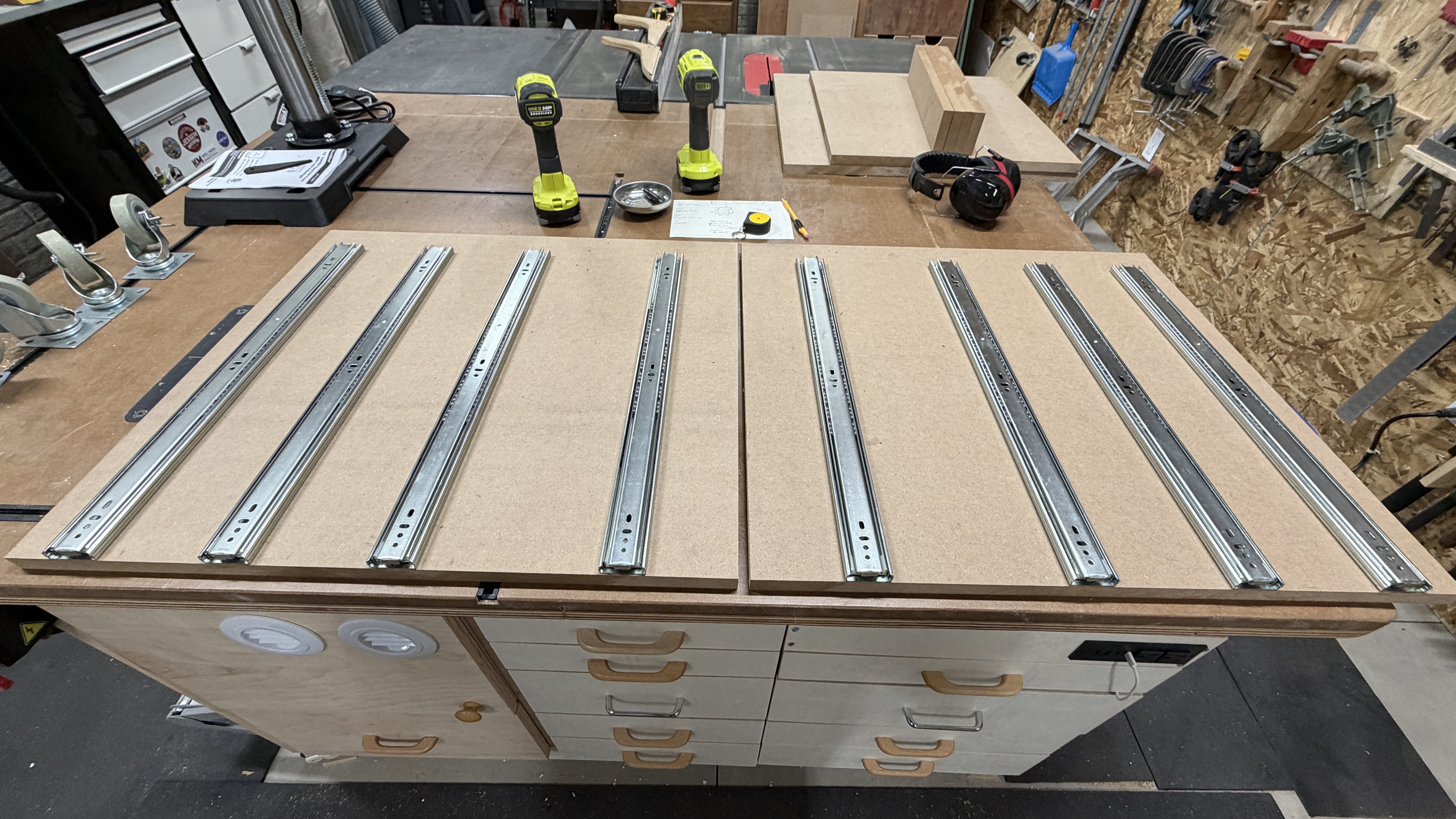
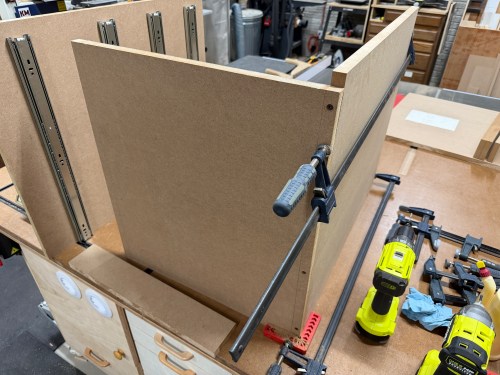
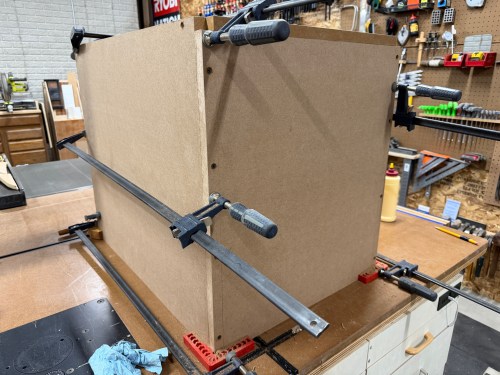
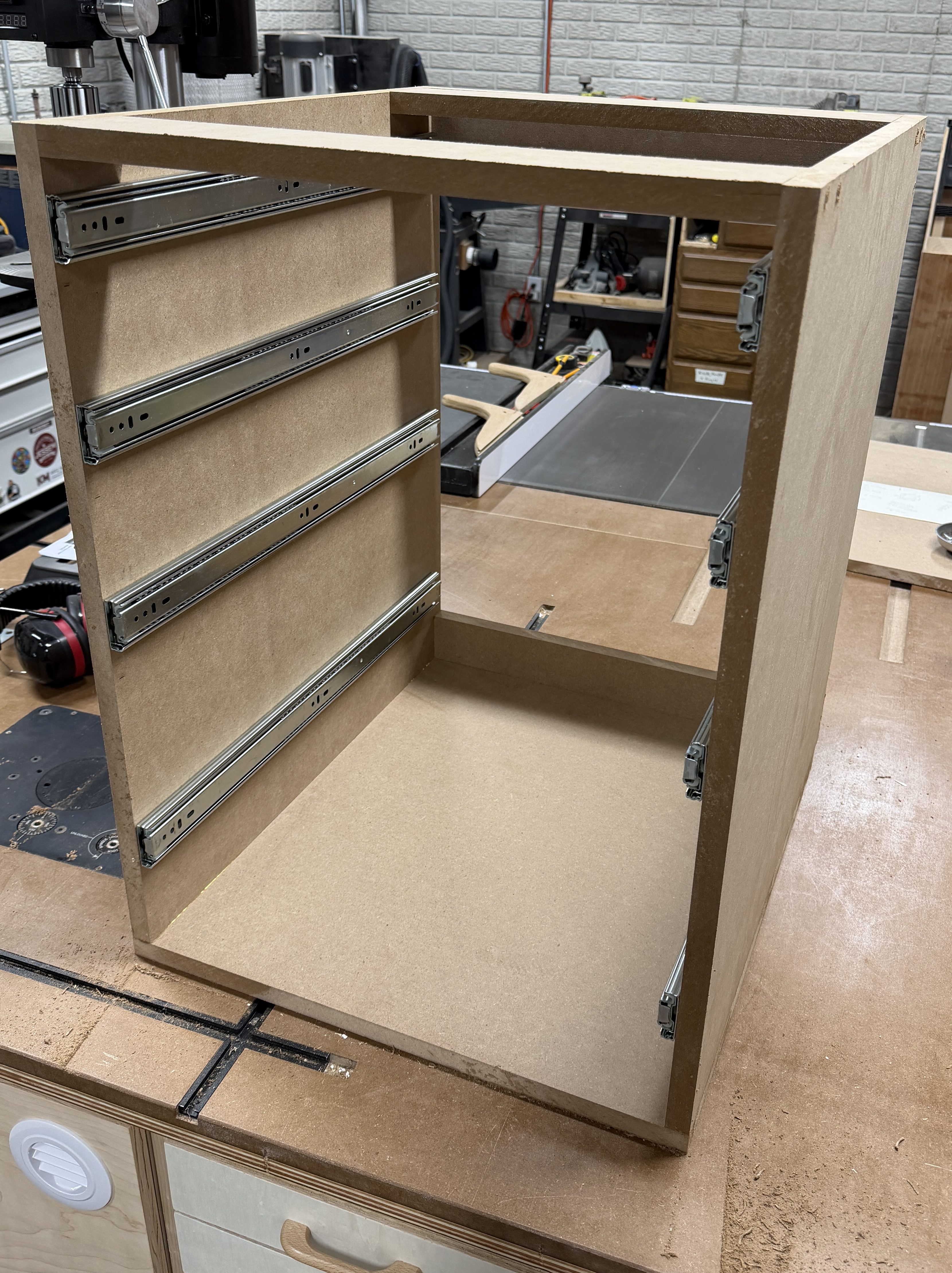
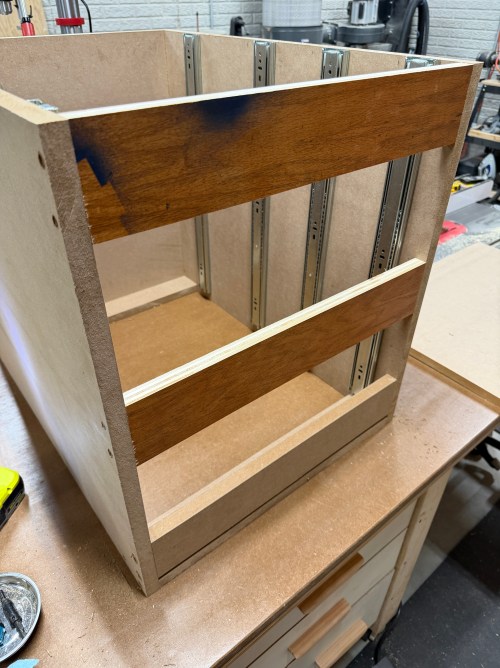
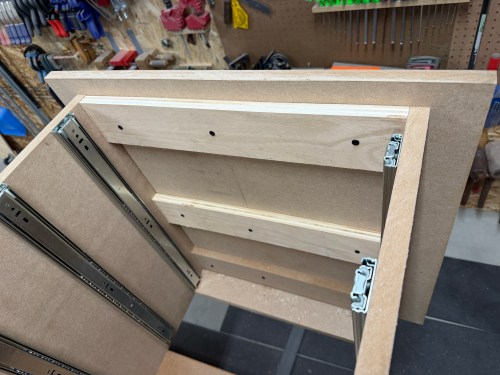
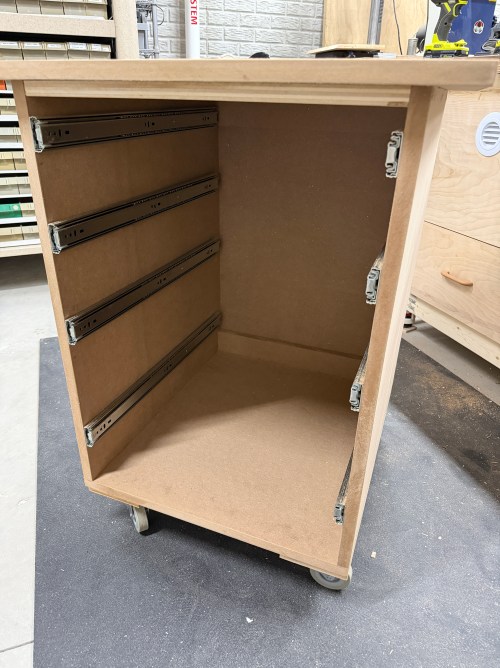
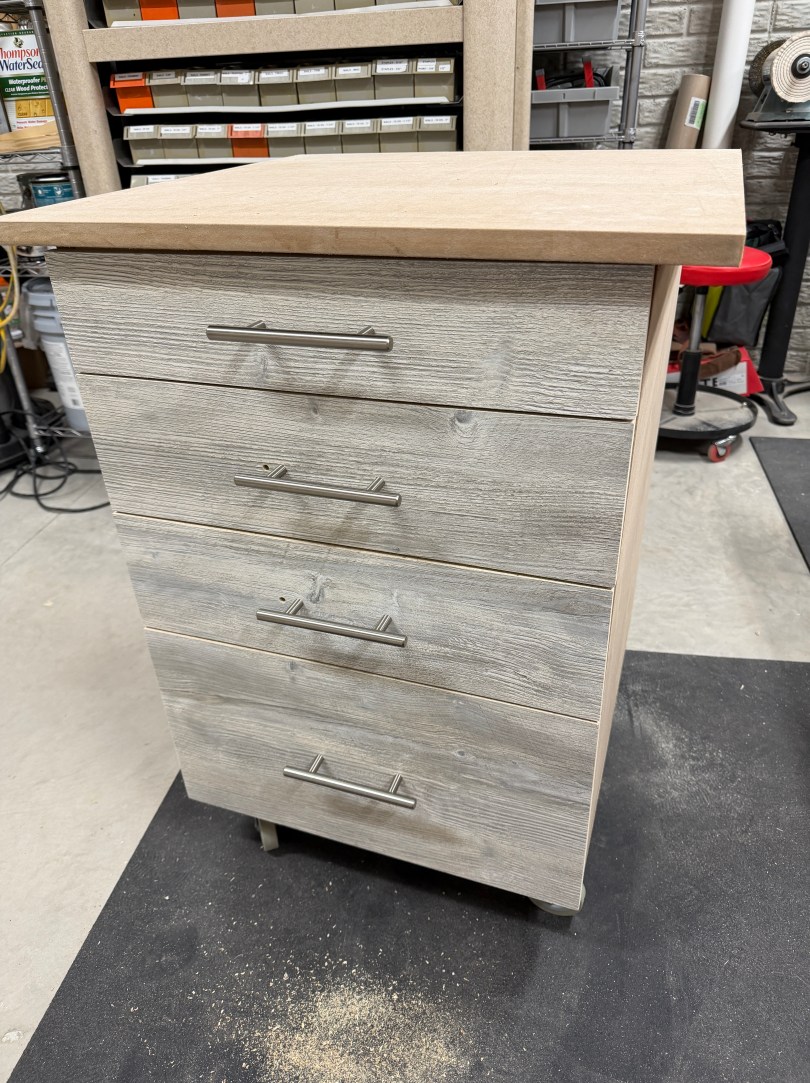
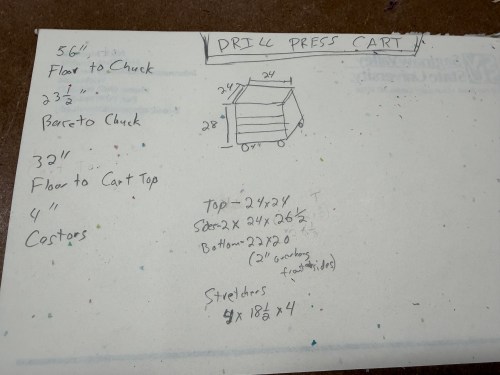
That new cart became a priority, so I determined a much lower height and the dimensions. I got out 4″ castors and 22″ drawer slides. I didn’t have enough 3/4″ plywood, so cut up MDF leftover from the outfeed table. Assembly was quick and attaching the slides to the cabinet before putting it together makes it so much easier.
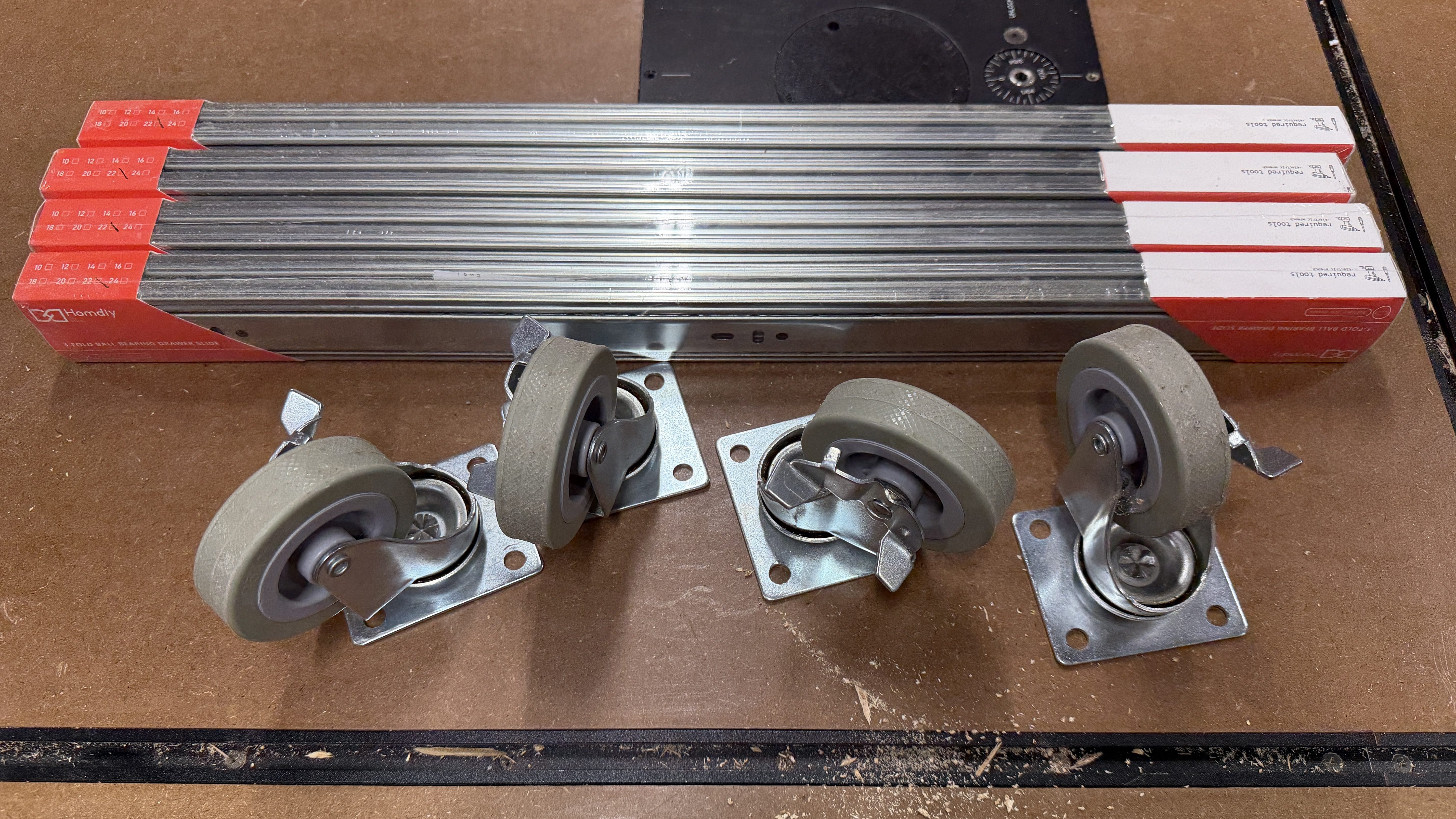
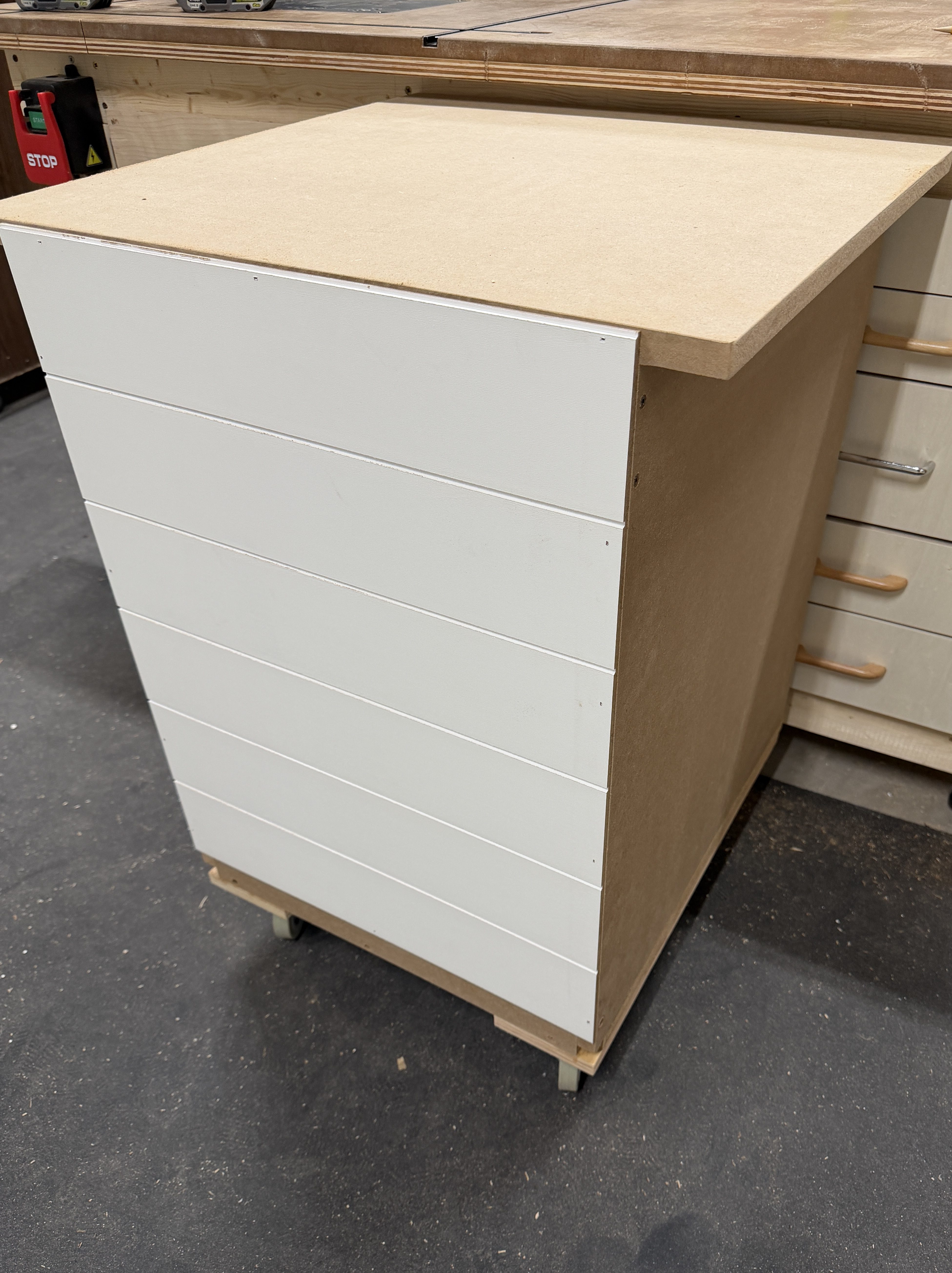
I was worried about the castor screws pulling out of the MDF, so I glued and screwed pieces of 3/4″ plywood to the bottom of the cart and then the castors. I also added more support across the middle of the top, where the bulk of the machine’s weight will be. Then attached the top and a shiplap paneling back.
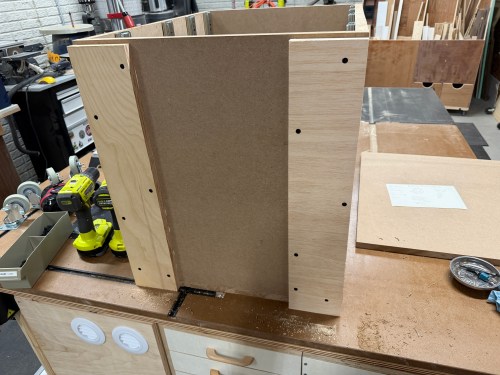
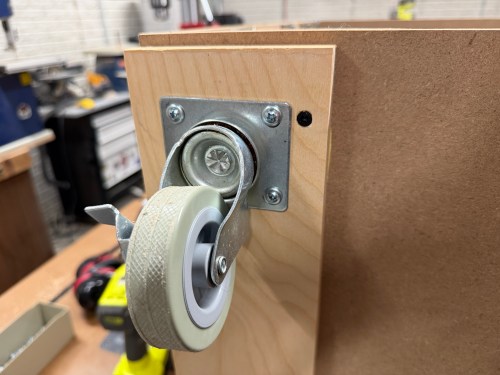
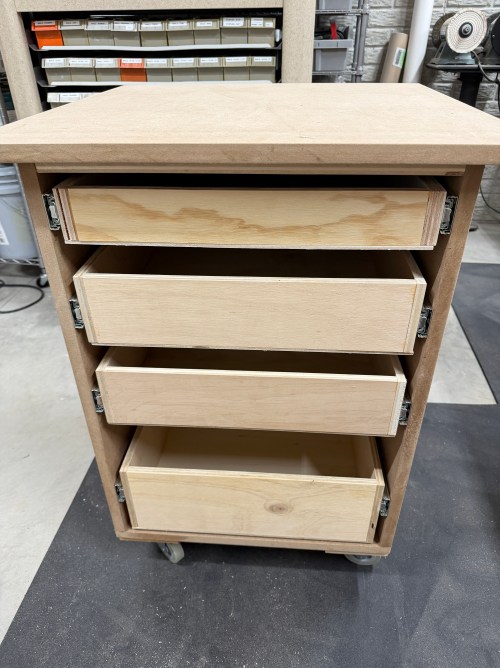
Next, I made four drawers.
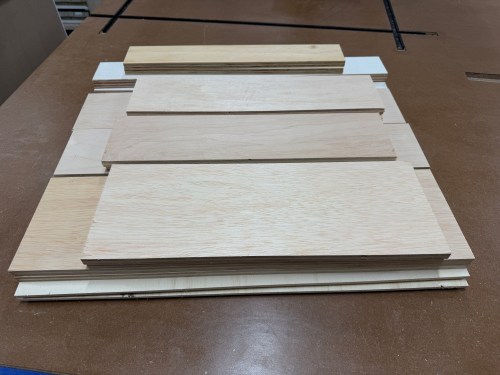
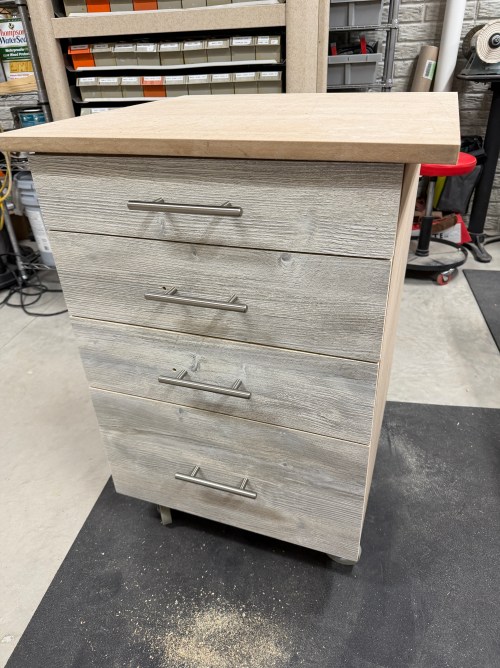
The final step was to mount the drill press. The height of this cart is a huge improvement!
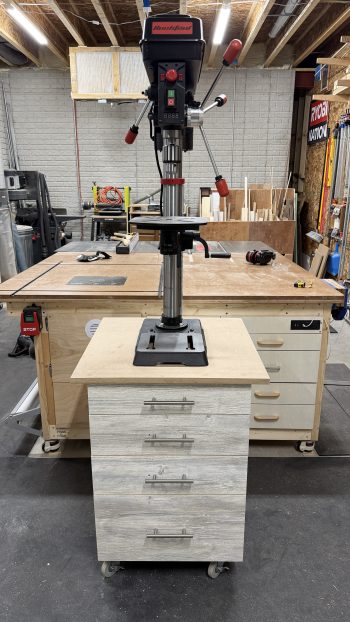
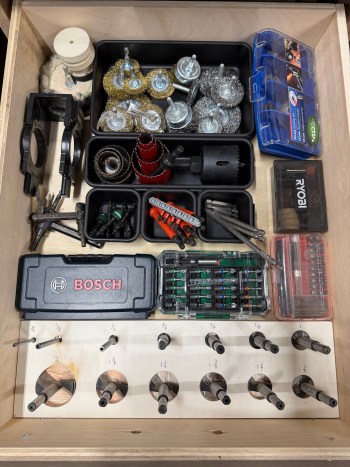
With everything done I organized the drawers and made a custom holder for my Forstner bits. I think I’ll eventually make a something for all the drill bits and everything that goes with the rotary tool.

Now the bandsaw could live by itself on the old cart. I removed the butcher block and replaced it with 3/4″ plywood to lower it as well. There isn’t much to go with it, so I was able to store other various plastic and metal materials in the cabinet. Those were the last boxes to unpack after the move!

Stay tuned for other cool drill press upgrades. Ideas are baking and parts have been ordered.

Network Rack Cart

Part of our plan for the house included Cat6 Ethernet ports all over so I can wire in as many devices as possible and keep Wi-Fi for devices that need it. My original plan for the network rack was to build a cabinet on the wall, but the space between the hot water heater and the wall is pretty tight.

I decided to build a cart instead, especially since there is enough slack on the Ethernet cables that’ll allow me to pull the cart out and turn it to get at the sides of the rack. When we moved I took apart my old work table, which left me with three plywood panels and pieces of 2×4 glued to them. I thought they would make a good top, bottom, and shelf for this cart and I was tired of moving them around the shop.

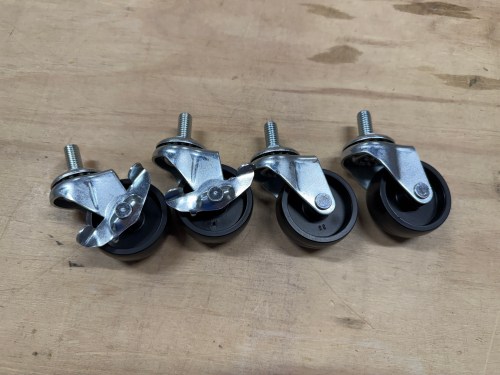
I pulled out castors, washers and nuts.

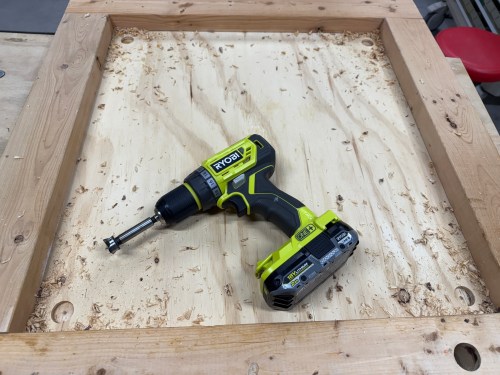
Then drilled recesses and holes in the base so I could attach the castors right away.

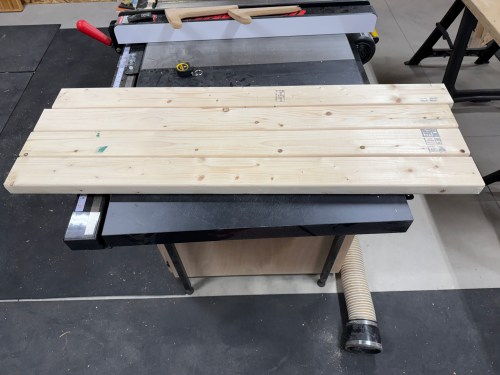
I cut notches out of the middle panel and squared up the edges on all of the panels.

I cut 2x4s for the vertical supports, assembled the frame, and put OSB on the back. I learned my lesson with the old work table and didn’t use any glue here since I’m treating this as a shop project and would like to have the option of taking it all apart if/when I want to change the design.

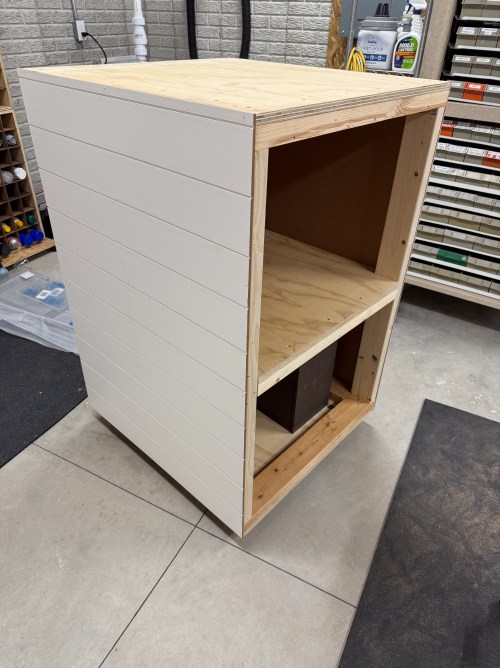
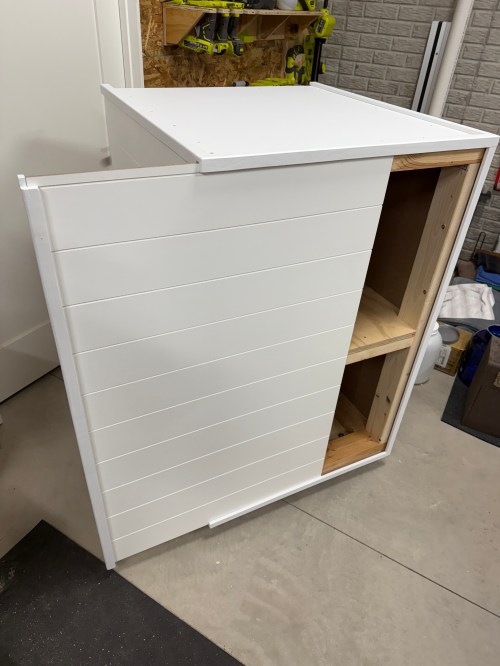
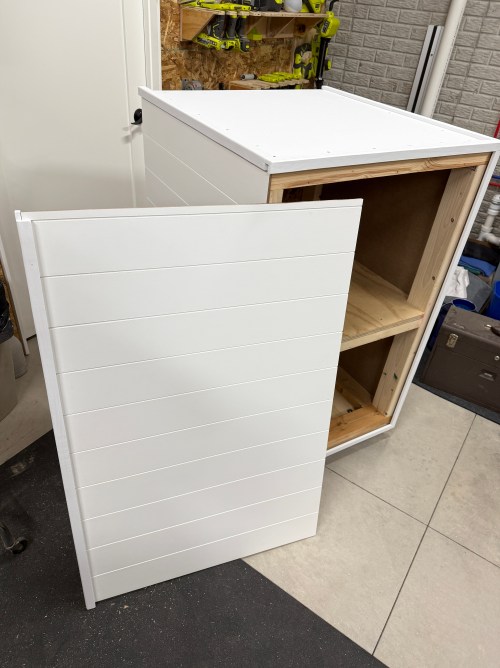
To blend the cart in to the wall, I cut and attached shiplap panels.

I made corner trim from 2x4s and painted it.

I didn’t want to make doors, so I had the idea to make a hidden siding door. I was going to have it slide up out of the top. Thankfully my wife suggested it slide to the side, which is much better.

I made a hole in the back for the power cable and a hole in the top to line up with the bottom of my network rack.

Then I screwed the rack down, wheeled it in place, and loaded it up.

Now I can start wiring up the Ethernet and configuring all of the network hardware.

Miter Saw Cart

I picked up a new Ryobi 10″ miter saw.

The used 12″ Delta had served me well, especially after all of the improvements I did:

Not having a blade guard always made me nervous and features of newer saws made me jealous. Things like a slider, positive angle stops, and a cut line are really nice to have. This new saw is beautiful and was definitely the right price!

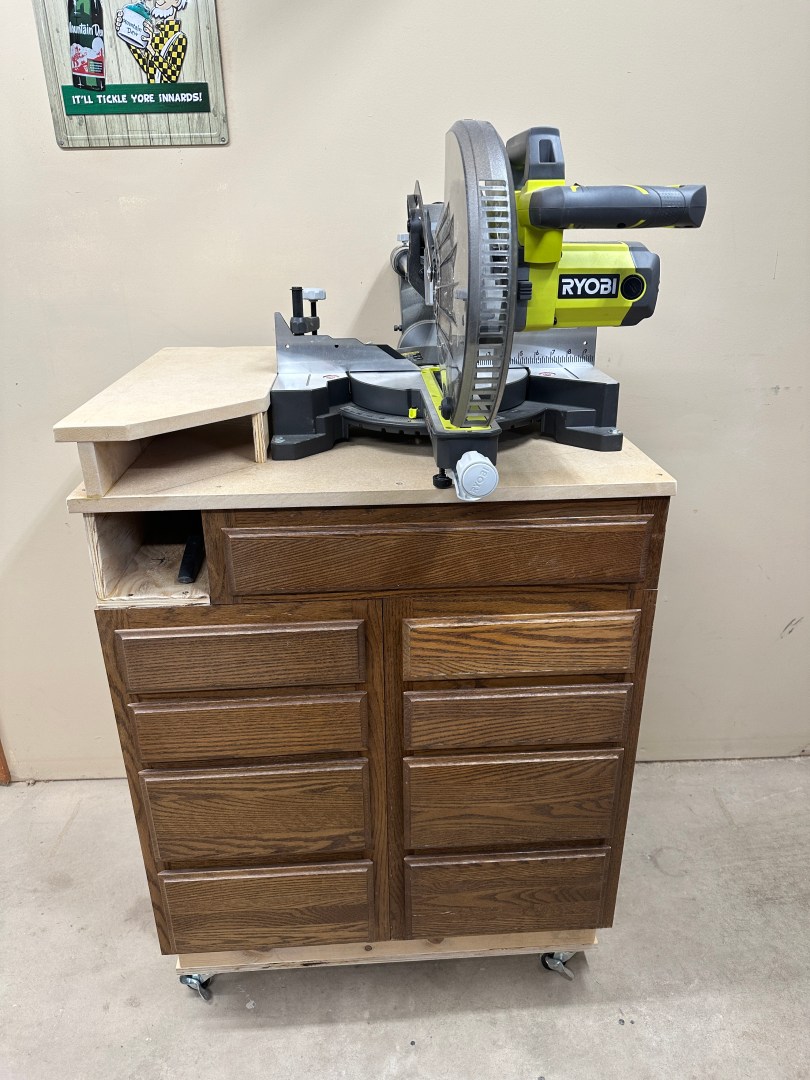
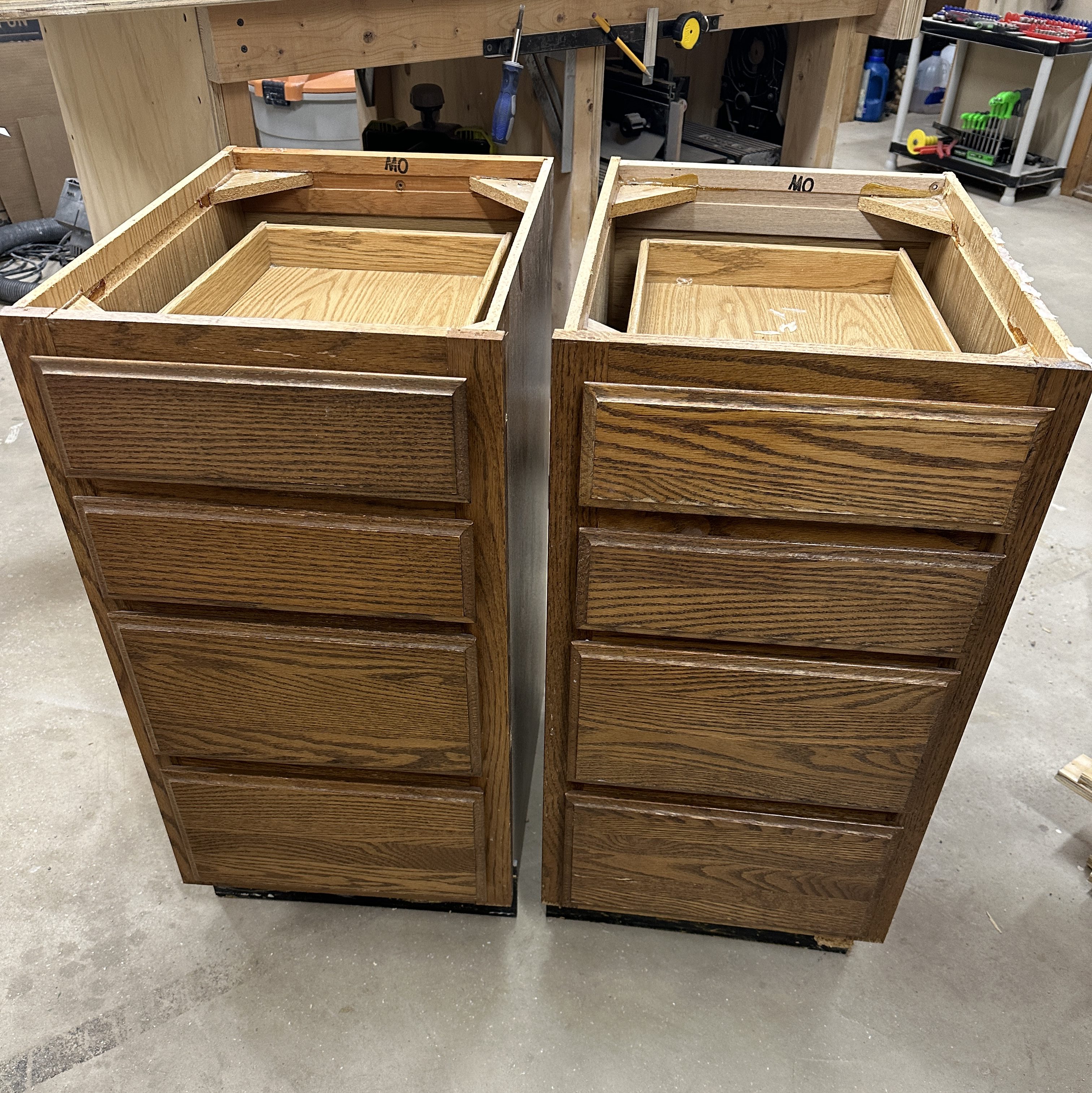
Due to the sliding feature, I needed a lot more depth in my space to use the saw. I also knew I wanted a mobile cart because the stand from the other one always stayed where it was, which was often in the way. I had saved the two side cabinets from the bathroom vanity and still had a wide drawer from the kitchen desk I removed.

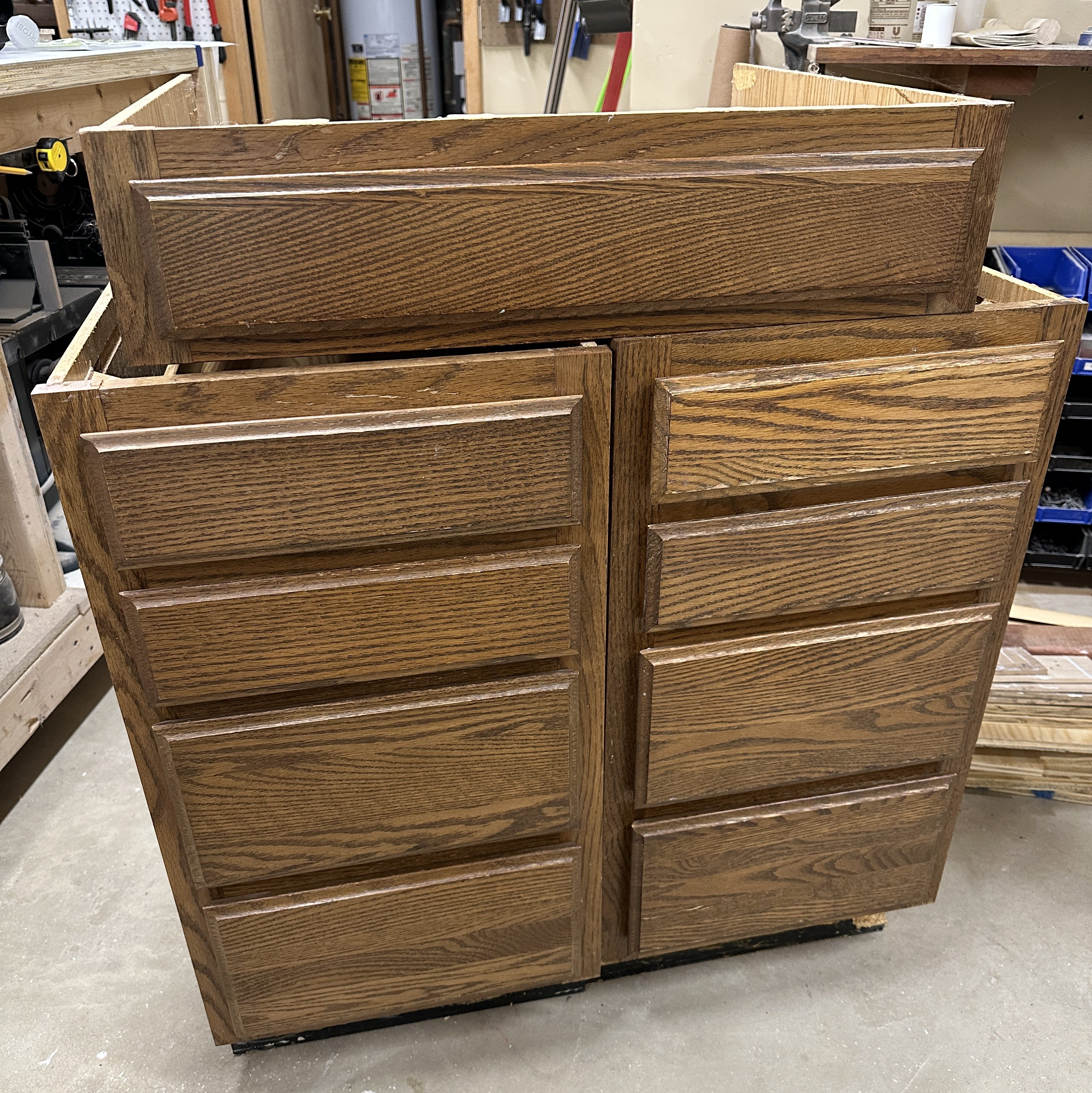
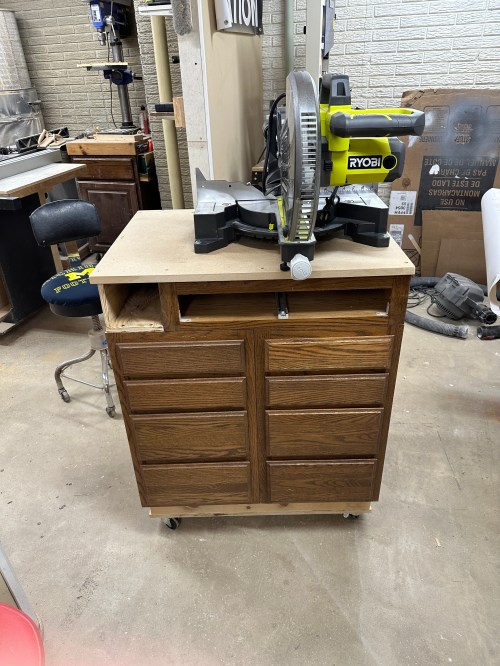
I combined the cabinets and added reinforcements all over to give more stability and connection points because the cabinet walls were so shitty. I made a base, replaced the toe kick, added casters, attached the drawer, and whipped up a little cubby.

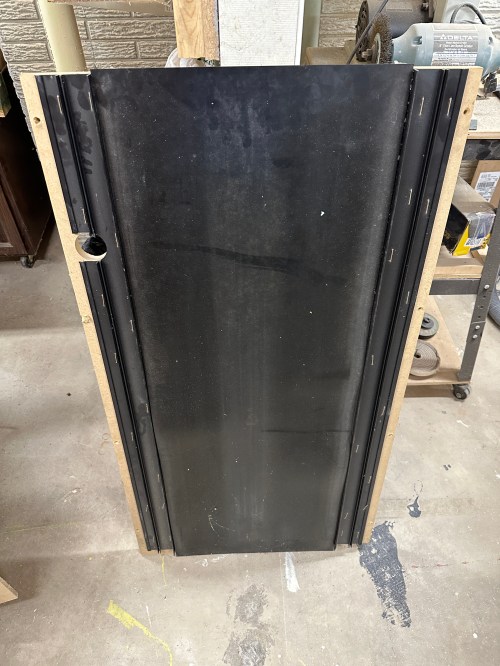
The base of an old treadmill has been sitting in my basement, which was a decent piece of MDF. I removed the plastic and chopped it up to make the top of my stand.

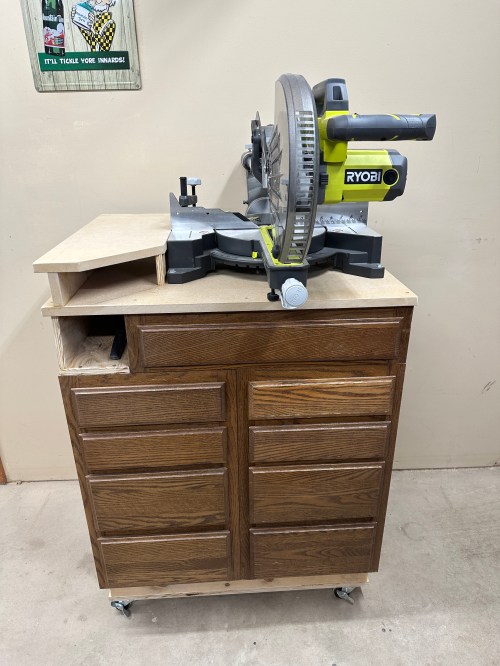
The final thing to do was make a riser to the left of the saw for more support while making cuts. The cart turned out great and is so easy to move around.
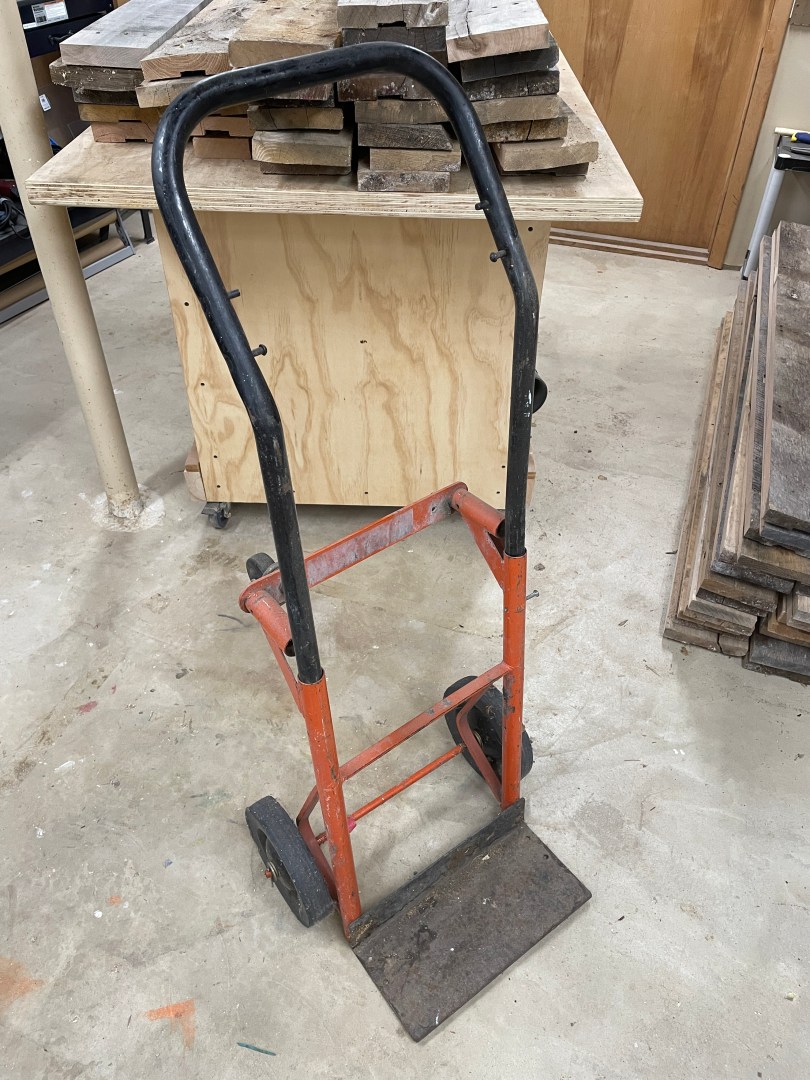
I took the opportunity to clean the shop and do some rearranging. I moved the drill press out of the dusty area and pulled the band saw in. I also moved the jointer out since it doesn’t get used much and is an awkward size, so it was also in the way. It feels like I have a whole new shop and being able to move the miter saw around is going to be a huge improvement to my workflows.

DIY Table Saw Cart

Following up on fixing my table saw crosscut sled, I decided it was time to build a new cart for the saw. The mobile base kit I used from Harbor Freight seemed like a good idea and worked ok in the beginning. Over time, the weight of the saw seemed to bend the base. With only two small swivel castors and the other two wheels being stationary, it became a real bitch to move around the shop, especially as I filled out the space with more tools.

I took a lot of inspiration from the Mobile Table Saw Cart by Woodworking for Mere Mortals. This is actually what pushed me to create the jig for the pocket hole jig, since I’d be using it a lot in this build.

The solid wood came from the cabinets I rebuilt, the plywood (except the one 3/4 piece) is from a truckload I got for free, the drawer is the same as the ones I upcycled for the sanding station, and I think I paid $10 for the casters at a garage sale.

Here are some planning measurements and sketches. Other than trying to keep the same height for my saw, the dimensions were based on the drawer.

table-saw-drawings

I took those and most of the plan from the mobile table saw cart I linked above to make a model in SketchUp. You can grab the plans off GitHub if you want them.

table-saw-cart-model-final.png

Creating a model really helps me find measurement errors and think about the assembly order. The Cut List extension in SketchUp is a huge time saver too.

table-saw-cut-list-with-sled-supports.png

Note that the cut list above isn’t the final one in case you want to make this. I made some modifications along the way. The Sketchup model should be pretty close to what I made though.

I really liked the assembly process for this build, which made it easy to square everything up. Makes a huge difference being able to move the saw around the shop better.

Of course I had to add one of the free Harbor Freight magnetic strips. Much better plate to store the tape measure and splitters than with magnets on the fence.


While I was at it, I attempted to seal up a bunch of gaps in the saw’s body with spray foam. What a mess! I also made covers for the front and back that’ll stay in place except when I need to make a bevel cut.

I ended painting them black to blend in. Hopefully these little things make a big difference with dust collection.

Watch Your Cart

I just went to purchase ER – The Complete Fourth Season from Amazon and made it all the way to the final step of checkout before realizing my total was over $1,500! My first thought was “That’s an expensive DVD.” Then I realized I still had an Apple iMac G5 in the shopping cart from a week ago. Kind of a neat little trick on Amazon’s part, but not very customer friendly if you ask me. A few clicks later the item was removed and my total price was normal again, but I would not have been a happy camper to find a new computer delivered to my doorstep (unless it was free).