At the Maple Grille.
“Do you need another spoon?”
To share? No.
At the Maple Grille.
“Do you need another spoon?”
To share? No.
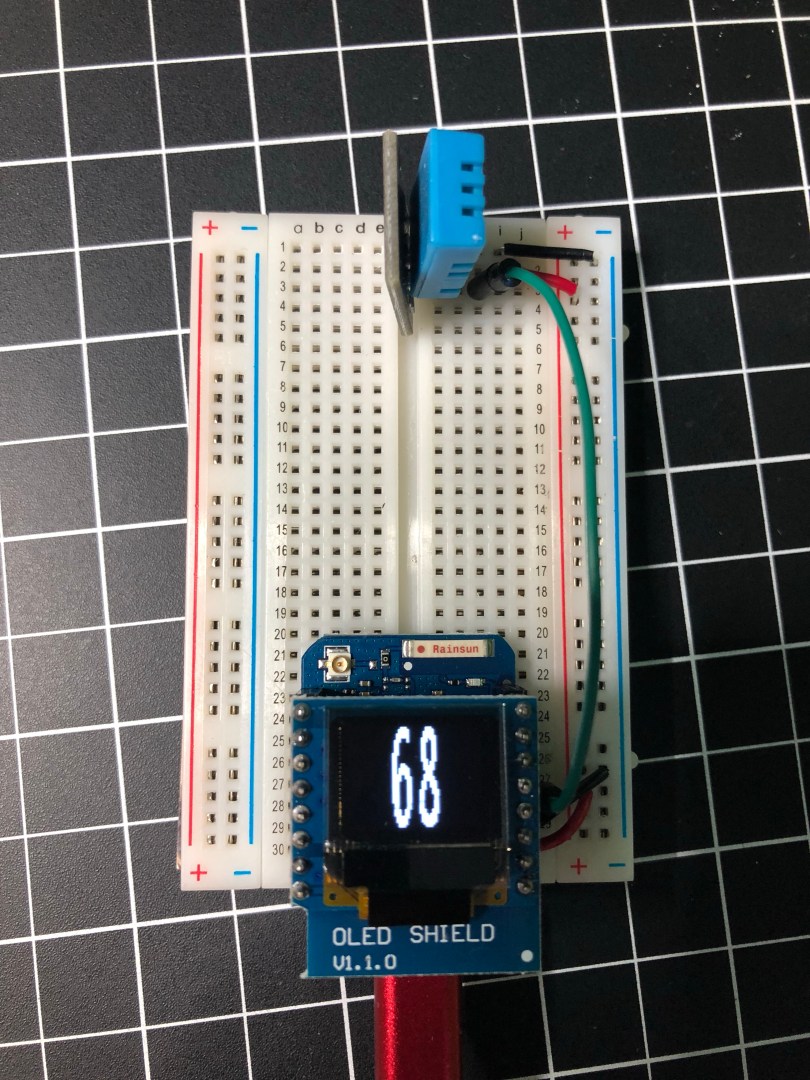
A couple of weeks ago I noticed the heat was staying on in my office pretty much all day. I have a boiler heating system with 4 zones and the thermostat that controls the front of my house is right there in the office. I wasn’t cold in there, but the thermostat wasn’t reporting that the temperature ever reached what I had set.
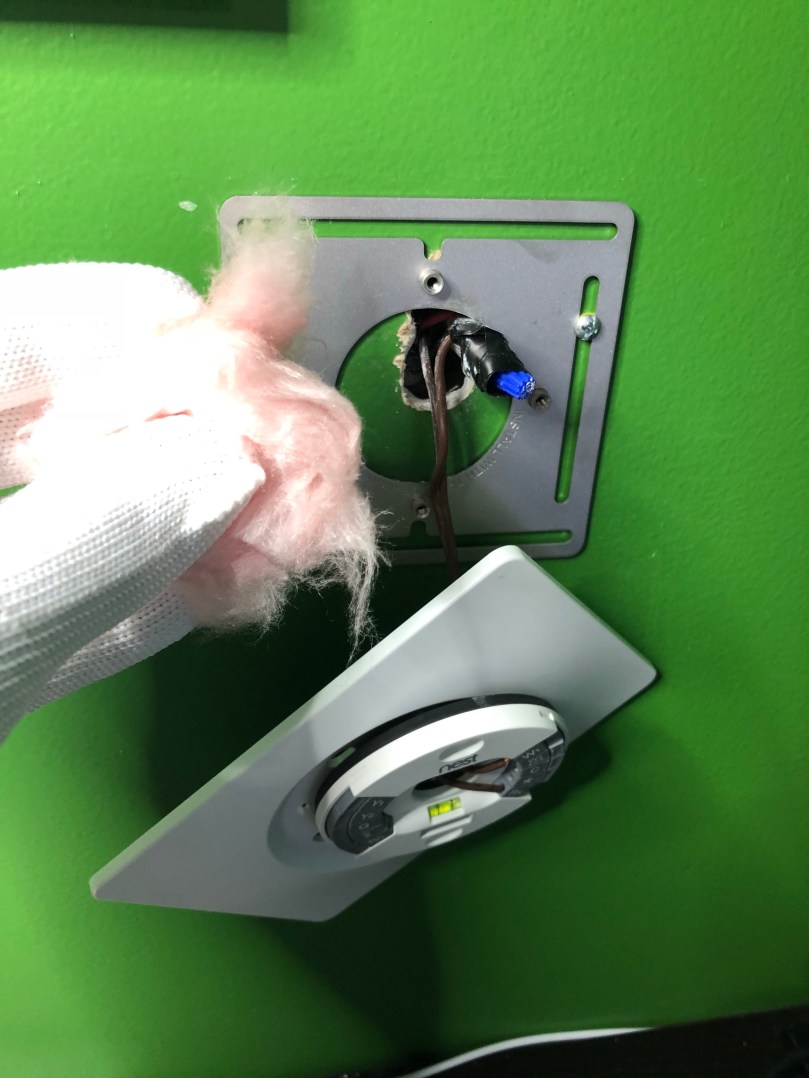
I pulled the Nest off of its mounting bracket, put my hand near the hole in the wall, and I could feel cold air. So I grabbed an instant read meat thermometer and stuck it through the hole. The reading inside the wall was 10° lower than a foot away from the wall.
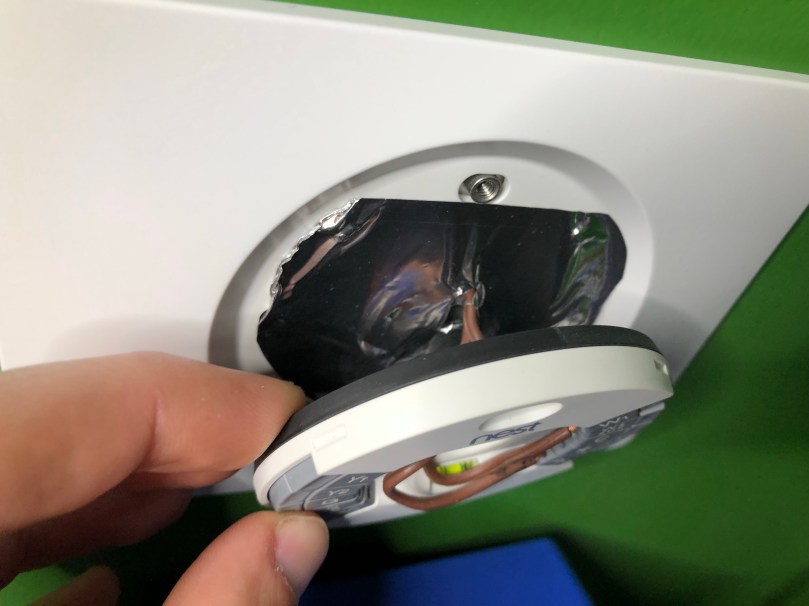
For a simple fix, I stuffed a bunch of insulation through the hole and covered it with foil tape.
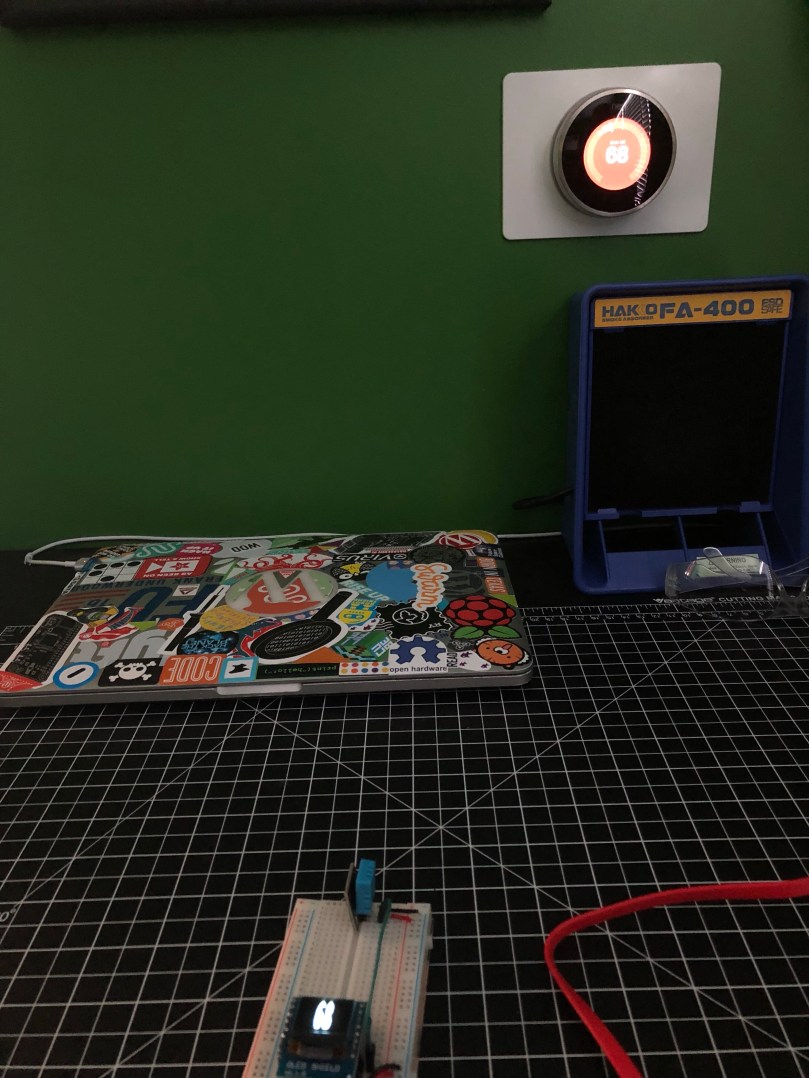
In order to monitor the effectiveness of the fix, I put together a quick temperature sensor instead of having to turn the meat thermometer on and off.
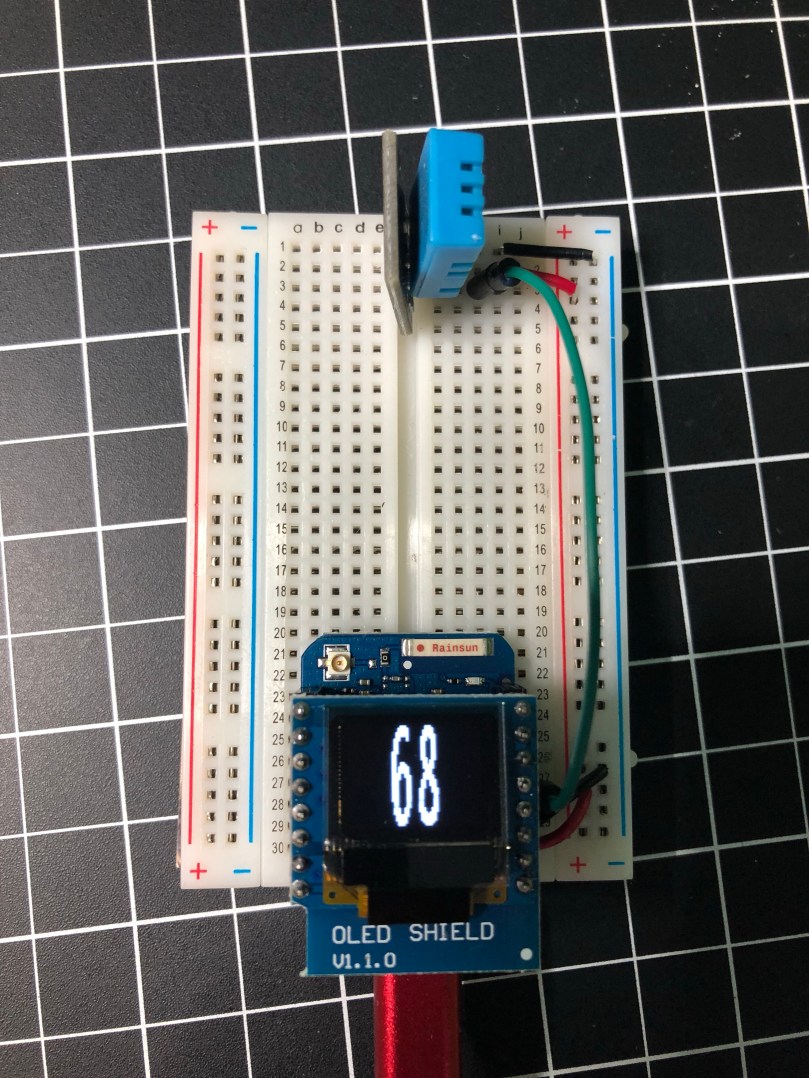
It worked!
Two or three years ago I had the opposite problem with this heating zone; it was always cold in the office. By feeling the wall I came to the conclusion that the thermostat had been installed right next to one of the pipes sending hot water to the upstairs registers. Brilliant! The fix that time was moving the thermostat over between the next set of studs.
After these two issues with the placement of a thermostat, I starting thinking. Why are we still basing our heating on measurements taken from a set position on the wall? With the Internet of Things we can do this much smarter.
Imagine each zone in the house having one or more mobile temperature sensors. Like the simple circuit pictured above, but in a small case. These could be battery-powered or plug-in. Windows, wind, and location of the sun can all affect the heating of different areas of a house. Being able to move the temperature sensor with you as you make dinner in the kitchen or watch a movie from your recliner would be awesome.
These temperature sensors would wirelessly report the temperature back to the home automation system. I use Home Assistant, which would make it easy to set the heating schedules for each zone. If a zone needed to go on or off based on the sensor’s reported temperature and the schedule’s target temperature, it would wirelessly trigger a relay module at the furnace or boiler. The relay would wire in to the furnace/boiler system in place of the wires that come from each thermostat and it would never know the difference. None of these pieces are hard to build and the parts are cheap.
This is all just something that ran through my mind as I was fixing my heating issue. I don’t have plans to build such a system, but if I did I could ditch my 4 Nest thermostats. For someone who works at home, often at random times of the day, I think Nest thermostats are overrated anyway because the learning and auto scheduling system doesn’t do much for me.
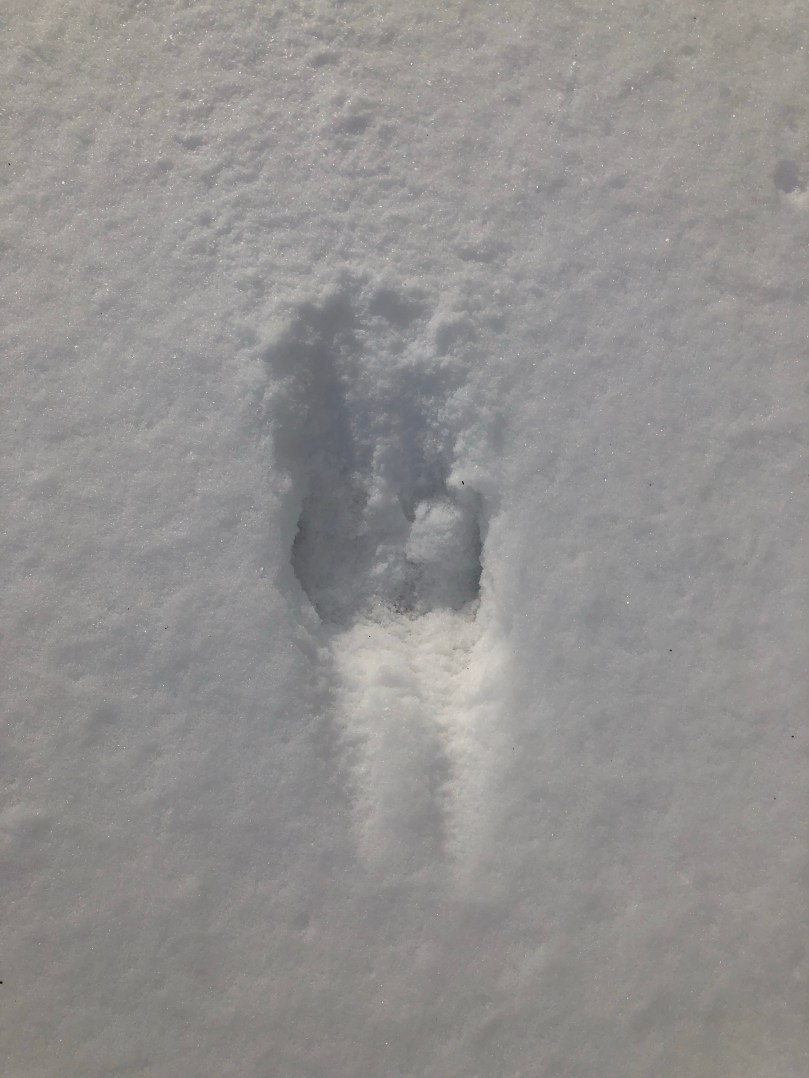
When I see an animal track in the snow I often think back about 20 years to rabbit hunts with my Dad. When you’re in the middle of the woods during winter, you don’t hear a thing. Or at least that’s how it is in Northern Michigan. Sound doesn’t travel because the trees are covered in snow. It’s the purest silence I’ve ever experienced. Maybe the most peaceful bit of nature too.
I’ve needed a workbench in my new shop since day 1. I finally got tired of working on the floor and built one. I created a little video to show the various ways I’ll use the table.
Let me walk you through the build. First I measured a bunch of stuff, especially the tools I wanted to be able to store under the table.
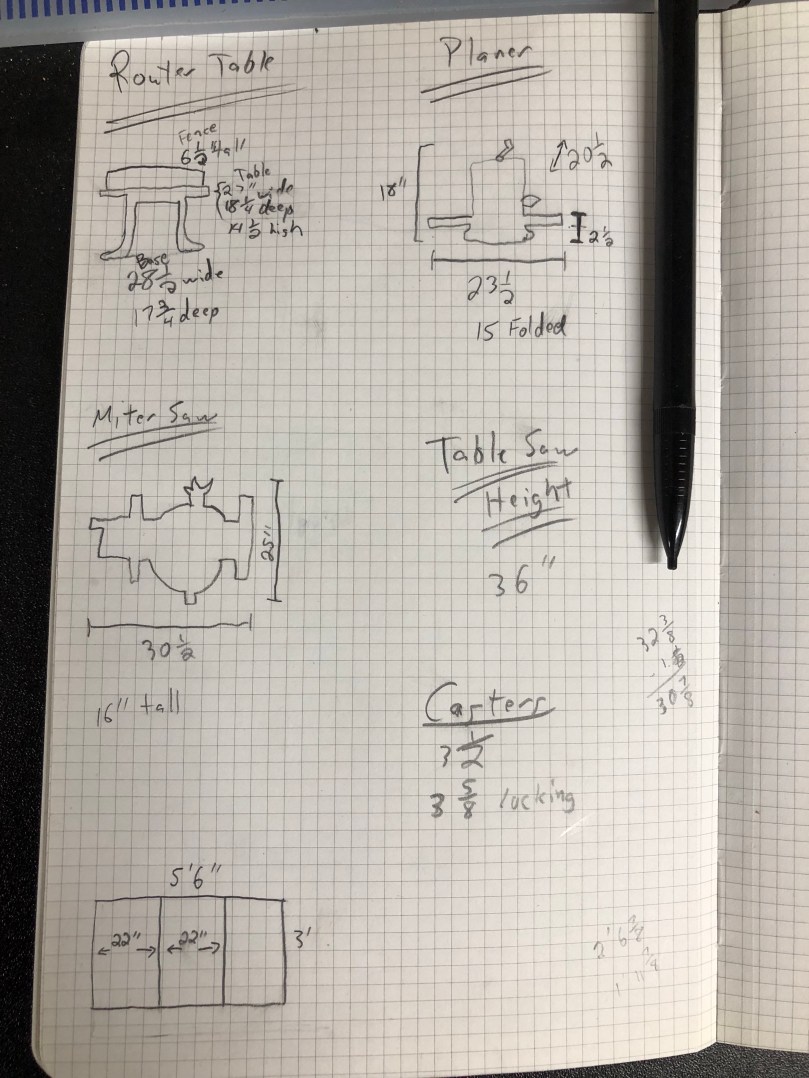
Then I did a quick framing mock-up to visualize the size.

The size felt pretty good so I spent some time in SketchUp. The model is free at my new Misc Plans repo on GitHub. Not everything in the model and the screenshot below are exact to the finished workbench, but they’re a good starting point if you want to build something similar.

At Home Depot I had them cut a sheet of 3/4″ plywood into 3 equal pieces. At home I trimmed them to size for the walls. Then I started cutting 2x4s (all from the walls I took down) for the rest of the framing. I set up an extended fence and a stop block on my miter saw.

That really made quick work so I didn’t have to measure each piece.

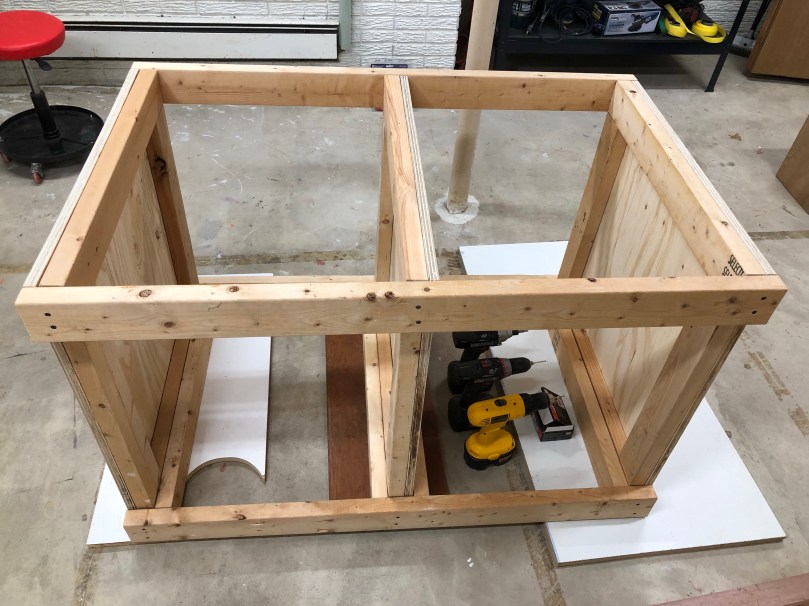
Then I countersunk and drilled holes, glued, and screwed the pieces of 2×4 to create a frame on each wall.
After assembling the 3 walls I started to line everything up and attached the rails. I was thrilled when the power went out as I was finishing up. Some battery lights allowed me to finish the remaining screws.

I couldn’t believe how level it turned out, considering my basement floor is not very flat.
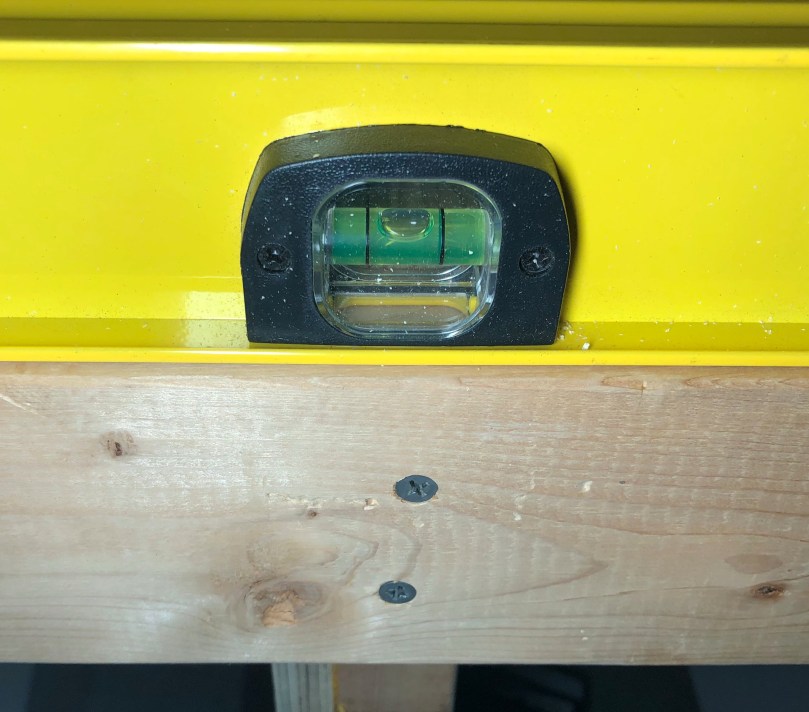
Here’s the frame after the power came back on.
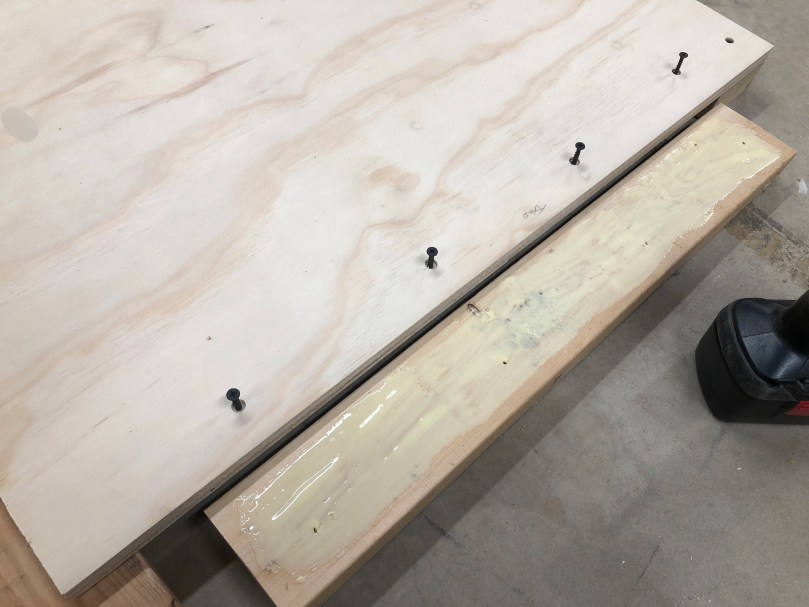
I made another trip to Home Depot. I had them cut 2 sheets of plywood to my exact size of 3×5 feet. Then I used a lot of glue (2-3 times what is pictured below) to laminate the two sheets together. I wanted a solid surface for the top of the workbench.

I hauled a bunch of weights down from the garage and clamped all around the edges. I think I counted 35 clamps being used! There weren’t many left on my clamp racks.
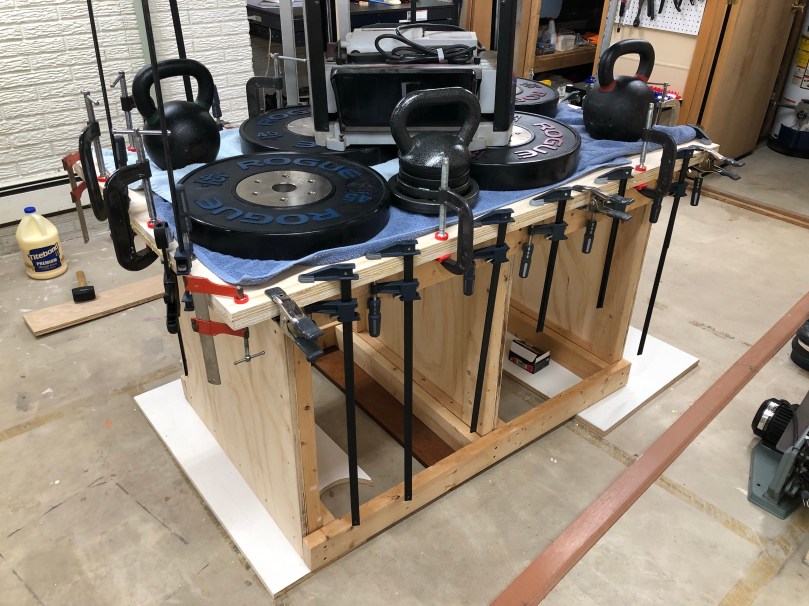
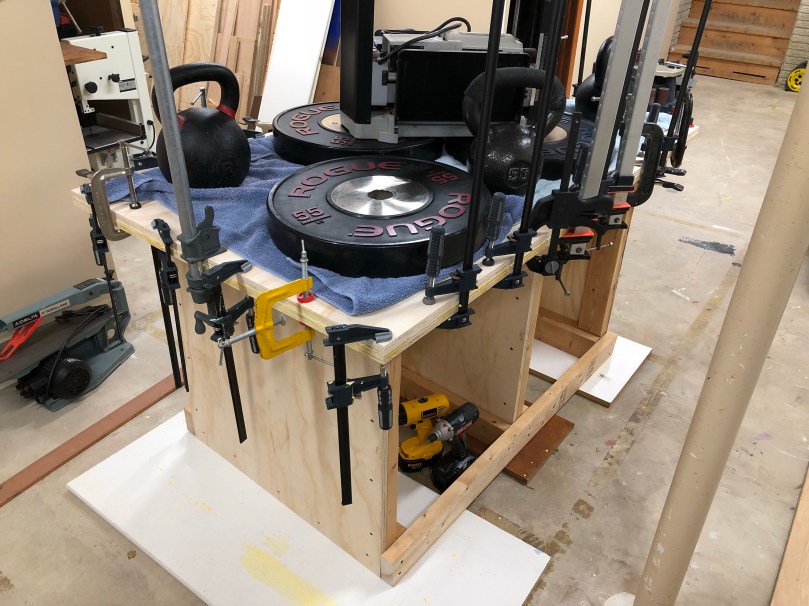
With so much glue, I gave it almost a full day to dry. Then I used my router with a flush trim bit along the edges to even up the 2 pieces, followed by a round over bit to get rid of the sharp edges
It was time to attach the top to the frame. I measured out the placement on one end and when I went to check the other side it was way off. I hadn’t been testing squareness enough or not in the right places when I assembled the frame. This is where experience and learning the order of operations is important. I measured the diagonals and there was about an inch difference between the two. Shit!
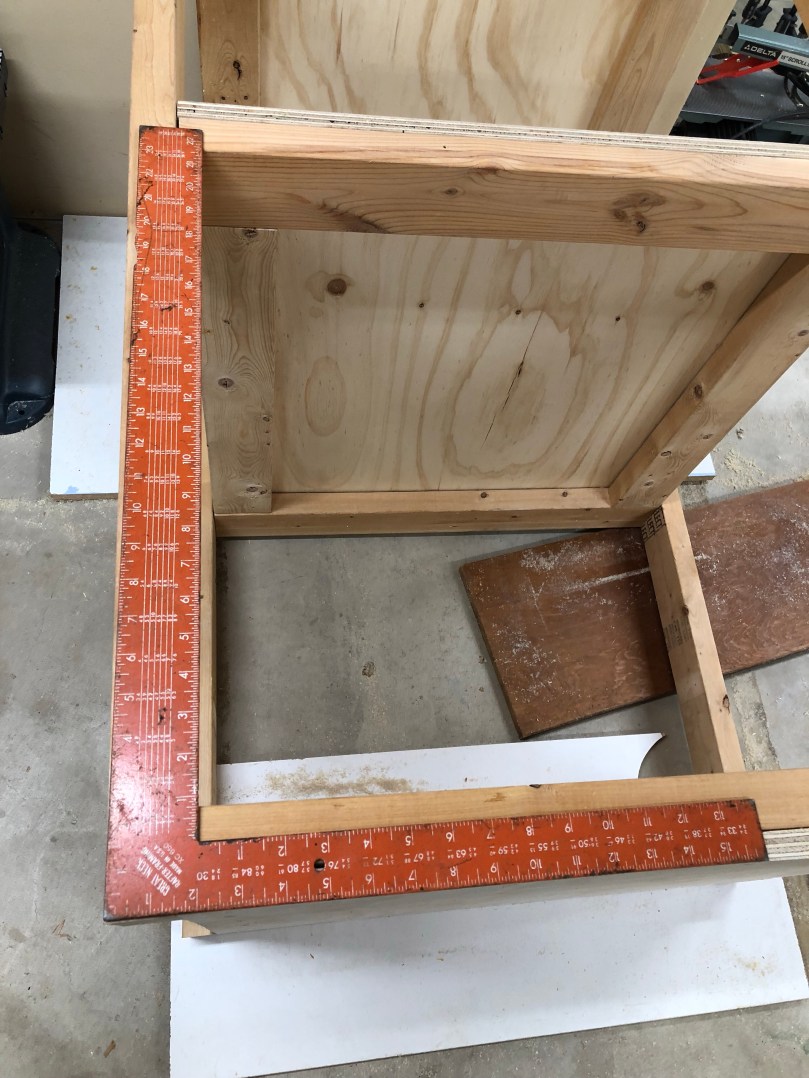
I pushed and pulled on corners and racked my brain trying to think of a good way to square it up. I decided to take the frame apart and go with a different approach. I’m glad I didn’t glue those rails to the walls!

I gave the entire table top a coat of paste finishing wax before moving on. Then I laid out some scrap plywood on the floor, set the top down, and used shims to get it as level as I could. I placed the wall on the end and used pocket holes to screw it in. From there I measured out where the two rails should go and I pocket holed them to the top as well. Then in went the other two walls. I made sure to test squareness of the walls to the top. I didn’t need to test horizontal square because I knew the top was a good rectangle. This was a much smoother way to assemble the frame.
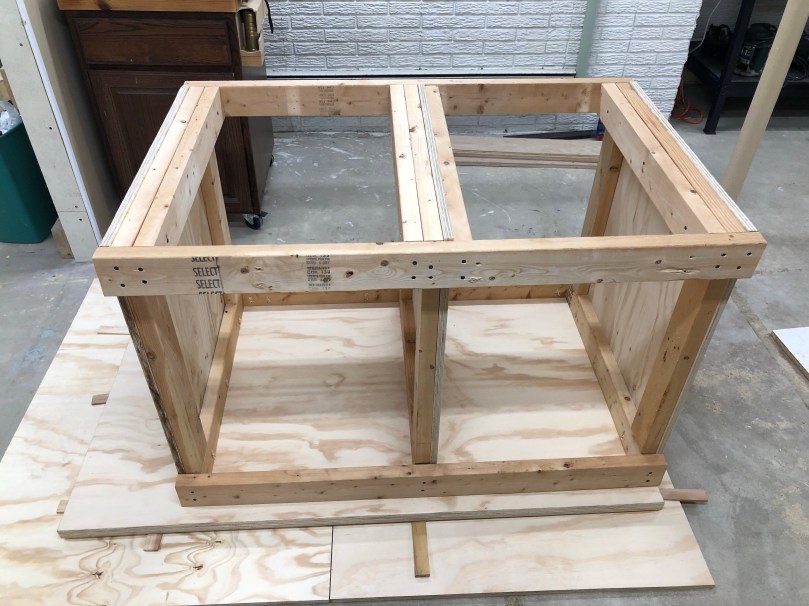
Before flipping it over, I attached 6 castors (3 locking along one side) to the frame. I cut a bunch of scraps to make shelves and attached a metal tool holder on each side.

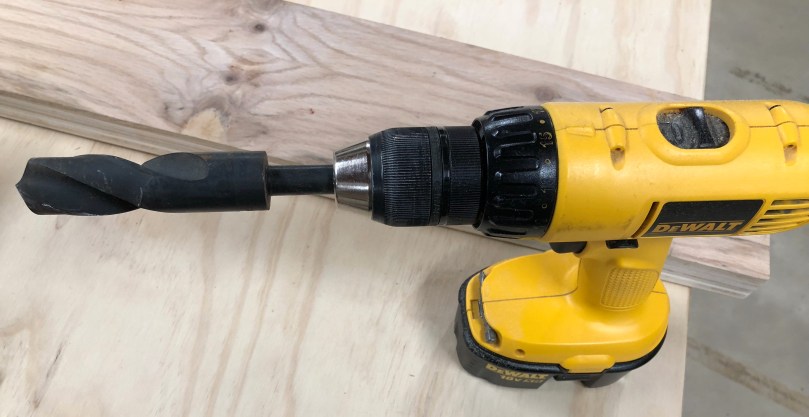
I had already cut and laminated the pieces for the vise somewhere earlier in this whole process. I also used flush trim and round over bits to route the edges of the vise jaws. In the drill press I used a Forstner bit to make the holes in the vise jaws for the pipes. Then I screwed the single vise jaw to the table and used its holes as guides to continue the holes through the side wall of the table. Unfortunately the Forstner bit wasn’t long enough to go all the way through. I found this massive drill bit in a box of bits my Dad had given me with the drill press. It wasn’t quite wide enough so I still had to file the edges of both holes.
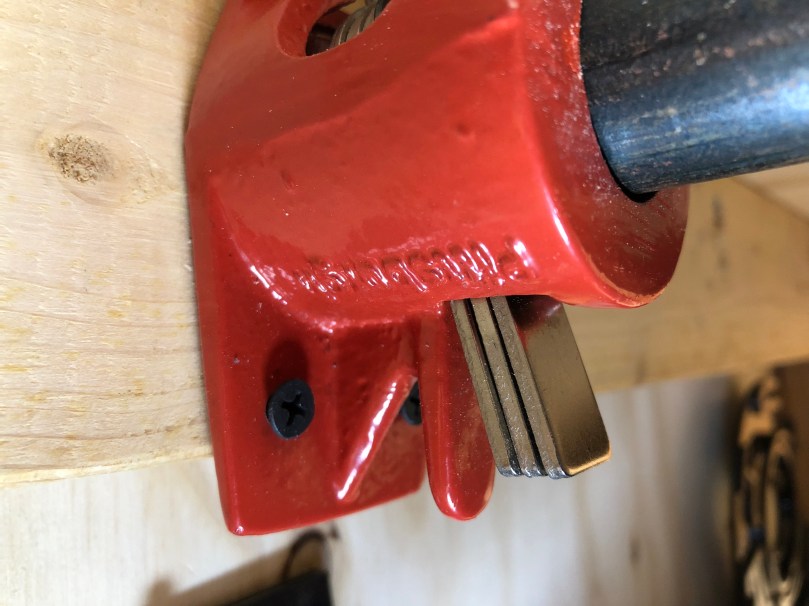
Here is a close-up of one piece of the pipe clamp under the table. I used the drill press to put some holes in the clamp and then locked it in place with some screws.
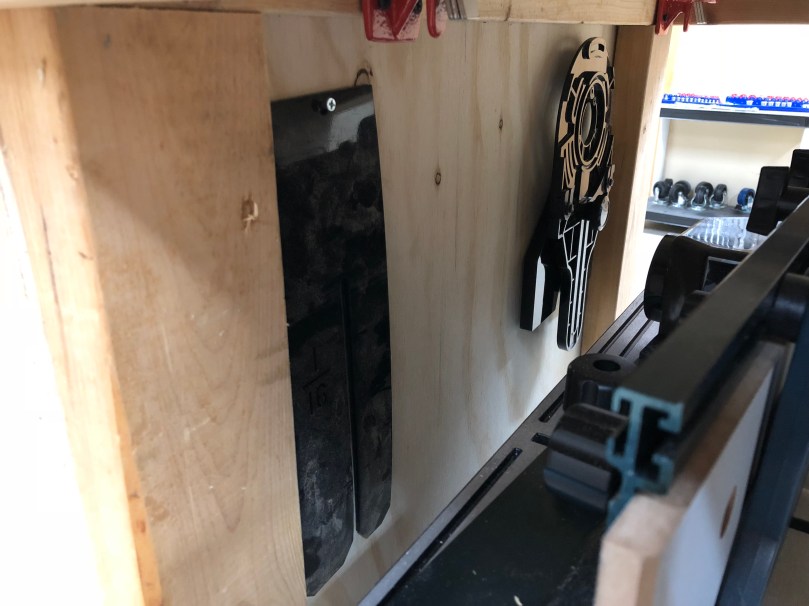
Hung up a couple of router accessories on the wall.
Voila!
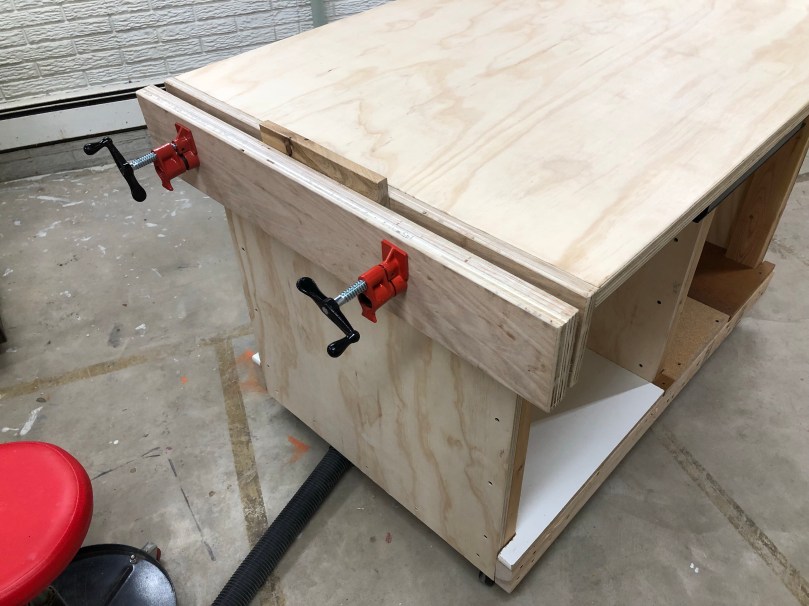
Isn’t she pretty? I don’t know how I lived without this thing. I’ve already used it so much. If you’re putting together a shop I recommend starting with a proper workbench before anything else.
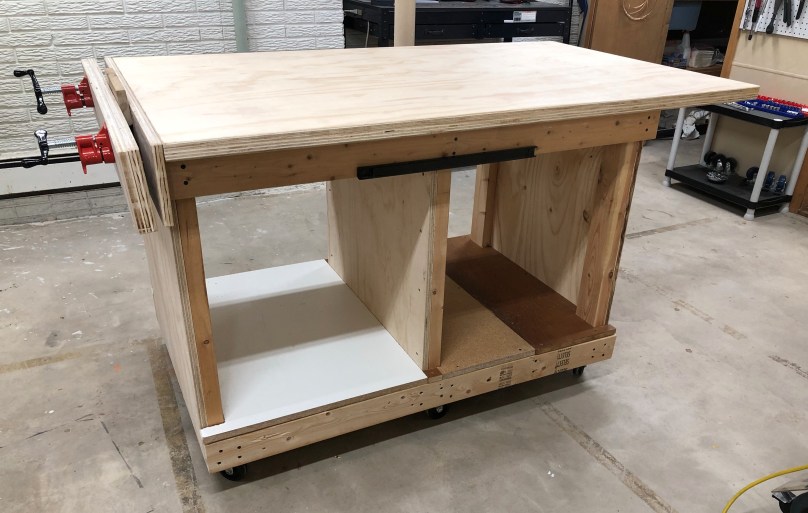
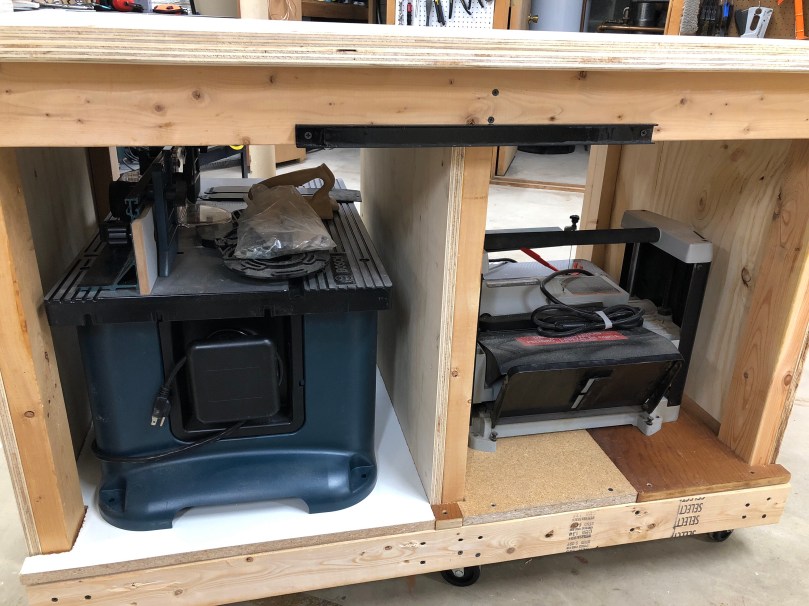
I bought this 36″ paper roll and holder so I could cover the table when doing a glue up or a quick paint or stain job.

It would stick out too much on the sides though. I also didn’t like the mounting method and how much space it would take up under my 12″ overhang. So I found a place on the floor under my tool bench (that you see in the picture) to put it.
The Google Arts & Culture app has a feature that matches your selfie with a piece of art. I’ve seen it mentioned a lot this week so I was curious to see my match.

Should I start answering to the name Count Edzard?
I paid $1 for this plumb bob at an estate sale last month.
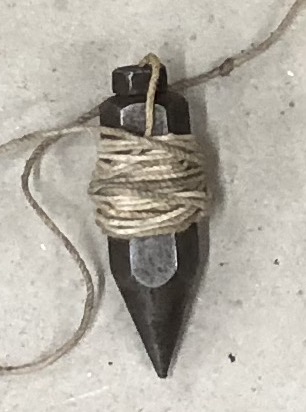
I was cleaning my shop yesterday when I noticed it hanging on the wall and figured I’d bring some new life to it. Didn’t take long.
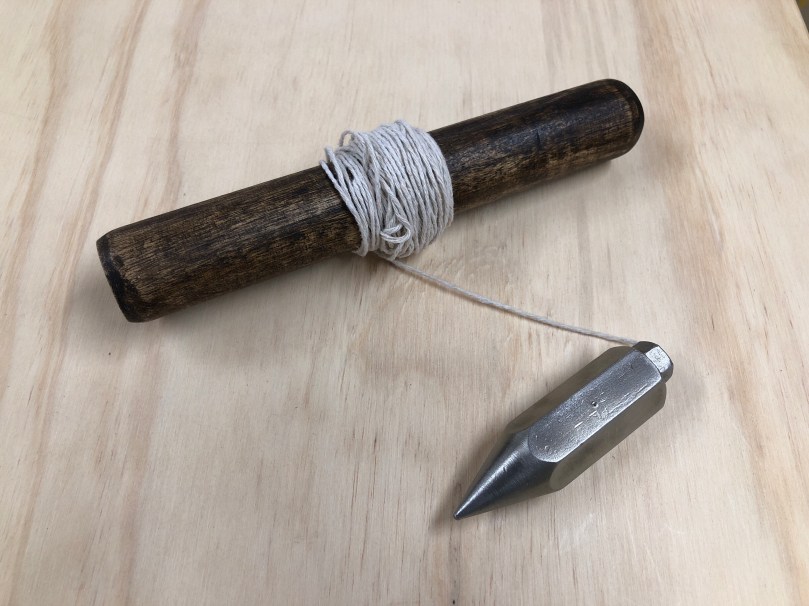
I removed the rust with a brass wire wheel on the grinder, replaced the string, and made a handle out of a piece of dowel.
I realized I have a lot of magnets around the workshop. They can be used for so many things.
These trays are invaluable for keeping screws, nuts, bolts, and washers from rolling all over my work area. Harbor Freight has a coupon making them a free item. I use them at my hobby desk too.

The rubber base is also magnetic.

Another Harbor Freight freebie are these tool holders. I’m using 4 on my pegboards instead of creating custom tool holders for this stuff.


There is another on my drill press cart for the chuck key, set screw allen wrenches, tape measure, and clamp.

I also put one on each side of a workbench I just finished building. I’ll post about that workbench later this week after a final accessory arrives.
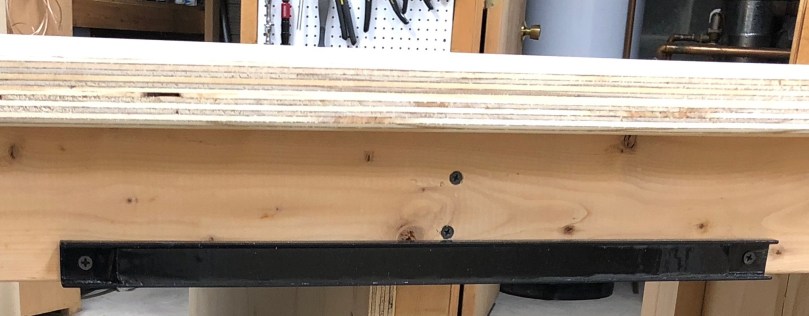
The final freebie from Harbor Freight are these LED lights. I’ve used them many times already.

I picked up this digital angle gauge on AliExpress for about $15, which is half the price I’ve seen anywhere else. With the floor of my shop being so uneven, the table tops of my tools are never level. I use this gauge to set a zero reference on the table top and then make sure my saw blades or drill press bit are square or set to any specific angle I want. Here it is on my miter saw.

I received these rare Earth magnets for Christmas. They come in a variety of sizes so I included my iPhone charge cable for reference. You can place these magnets in the corners of a custom box to hold the top closed or use them in many different ways in projects you might build. So far I’ve only used them to help organize things around the shop.

I stuck one inside the clip of the tape measure on the drill press tool holder shown above so it has a stronger attraction.

I also glued one to the back of this small tape measure so I could keep it to my table saw fence.

It’s always handy to have a tape measure within reach around the shop!

My Dad gave me his Dad’s old scroll saw. The lock key was missing so I hacked together my own out of a piece of metal, a piece of rubber, and some electrical tape.

Since it doesn’t snap in the switch like the normal key, I added a magnet to the back and stick it to the saw when it’s not being used. After I get my 3D printer I’ll create a proper key that snaps in the switch and won’t fall out.

I also have a random assortment of other magnets in case I need them.

Do you use magnets for anything creative?