Basement Bathroom Upgrades

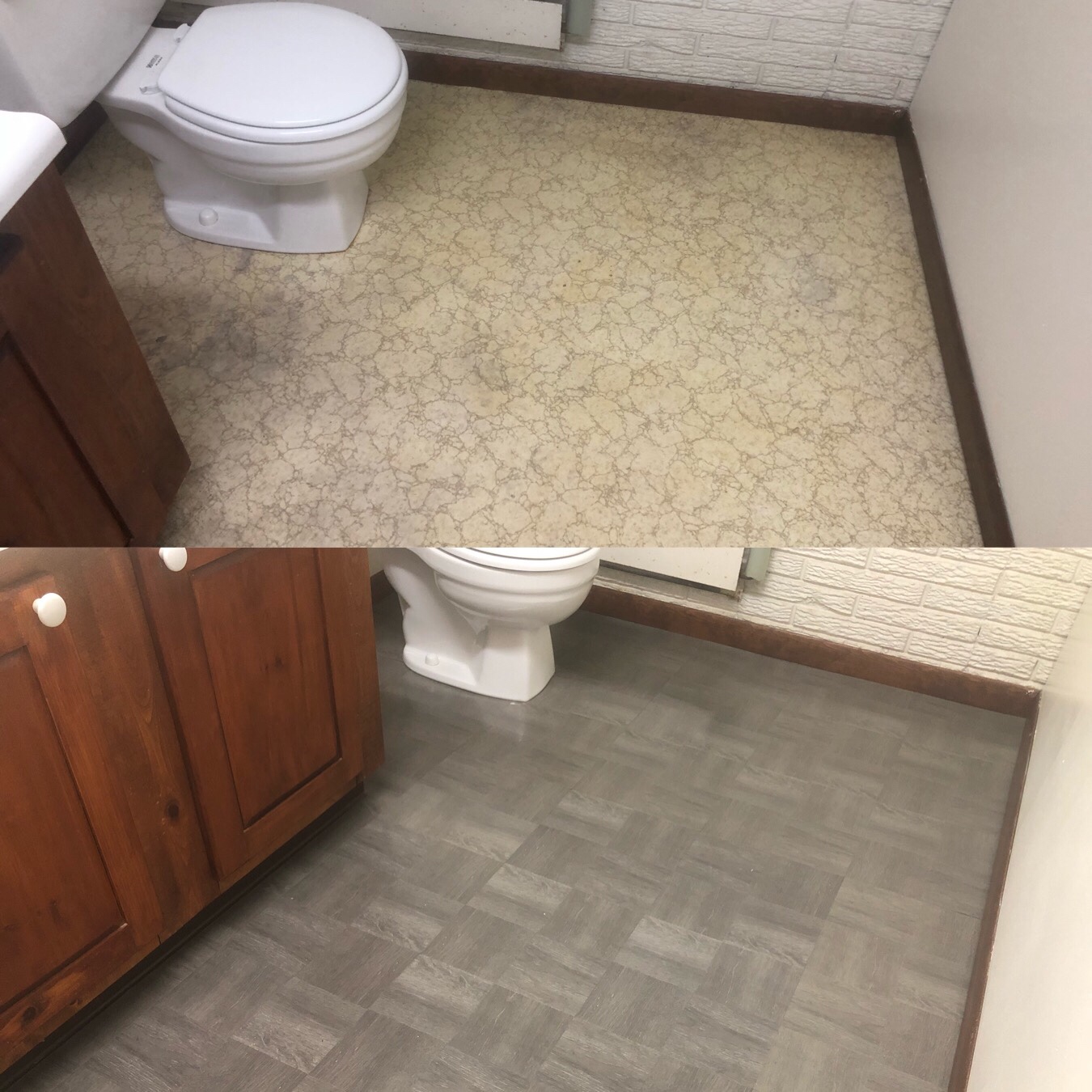
After putting in a new LED light in the bathroom next to my workshop I figured I’d give the place a “quick” makeover. The biggest need was to do something with the nasty floor. After a tip from Mom I picked up a few boxes of peel and stick floor tiles from Family Dollar.

Not bad for $30! Good enough for a basement bathroom. I also put in a quick release toilet seat and replaced the faucet and it’s supply lines.

Clamp Replacements at Harbor Freight

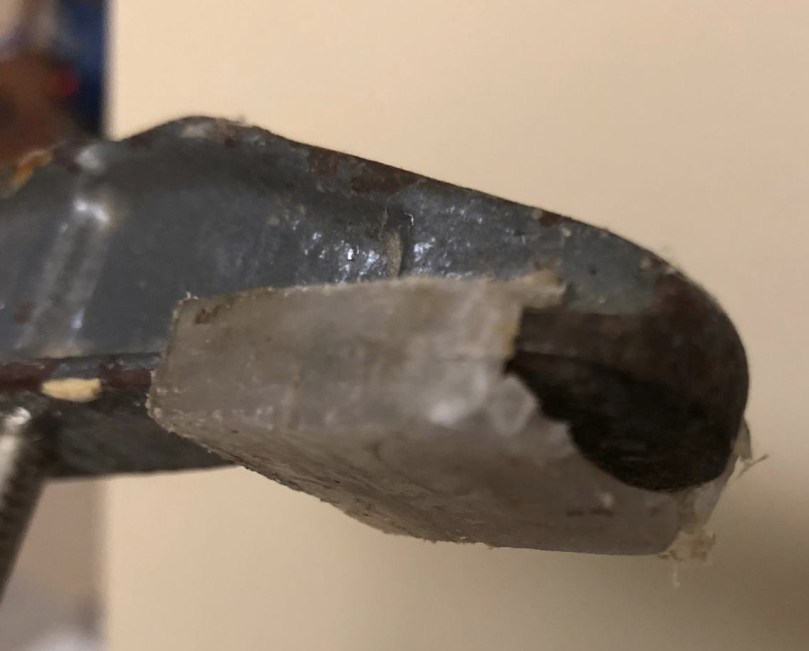
In the post about my DIY clamp storage racks last week I mentioned getting most of my clamps at estate sales. I put together a solid collection that way, with most of the clamps being really old. There was a Pittsburgh sticker and a Harbor Freight price tag on one of the clamps. Knowing they have a lifetime warranty on this stuff, I went in to Harbor Freight with 2 of the clamps which had beat up pads like this…

broken-clamp-pad

The sales associate said, “Yep, we’ll replace them. There doesn’t even need to be anything wrong with them.”

“Really?” I asked. “I have a bunch of these old clamps.”

“Yeah, bring them in and get new ones.”

I rushed home and grabbed the rest of the old clamps.

old-pittsburgh-clamps.jpeg

In total I had 4 each of the 6″, 12″, and 24″ old clamps. Now everything matches the others I had purchased new from the store.

all-new-clamps.jpeg

Harbor Freight gets a bad rap because their products can be pretty cheap (in price and quality). According to reviews you have to be careful with some of their tools, but these clamps are one of the most recommended products in the store. The almost identical clamps cost 3-4 times as much at Home Depot.

logo_hft.png

I like it when a company stands by their products and policies. I haven’t tried it yet, but I’ve heard that Sears does the same type of replacement on Craftsman hand tools.

Shop Lighting

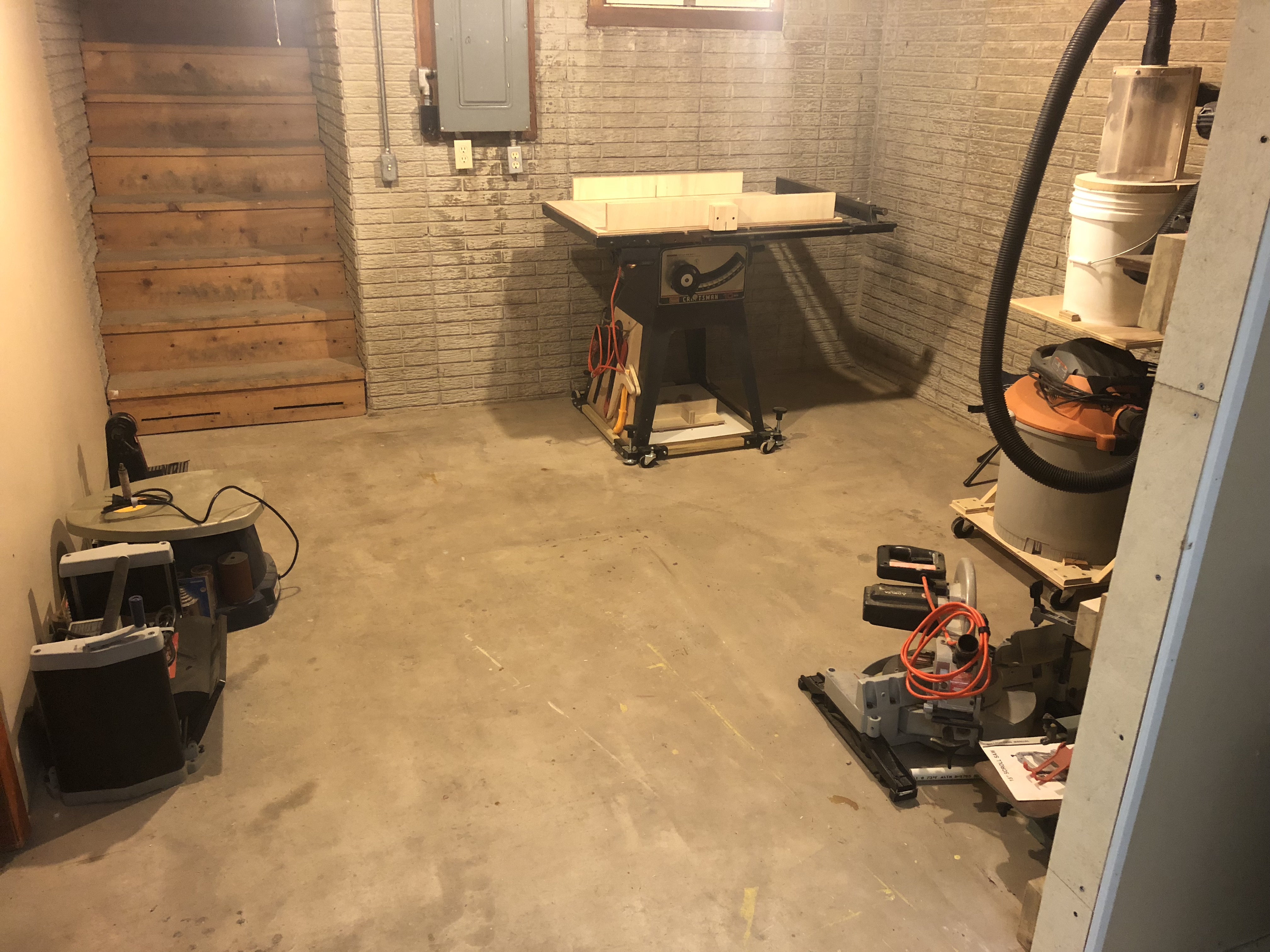
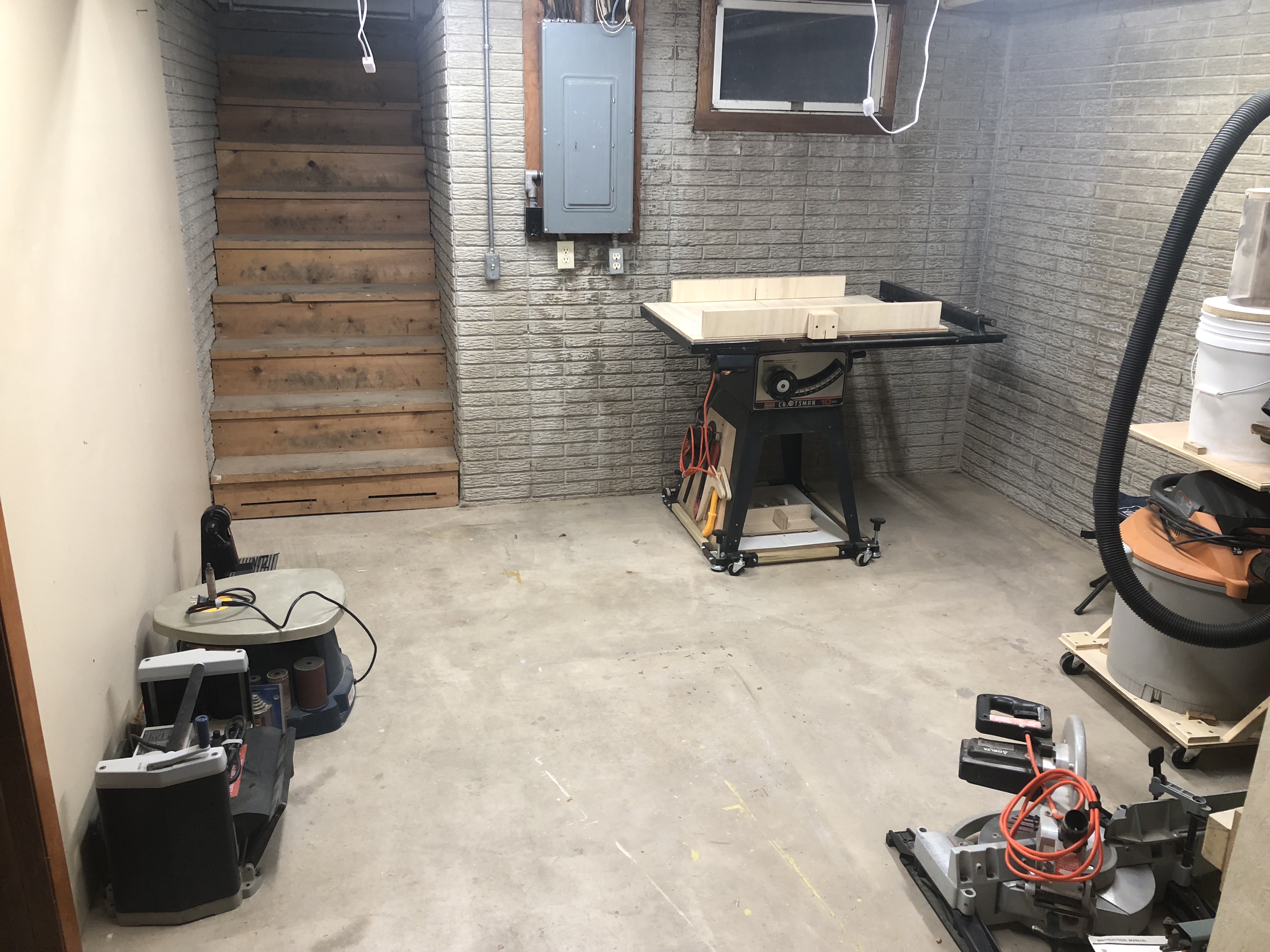
The lights in my basement were pretty bad. If you’ve watched any of the videos I’ve done in the workshop you’ve probably noticed. The area pictured below was lit by 2 light bulbs.

IMG_0221.jpg

Time to fix this so I ordered two sets of 4 LED lights off Amazon. At $20/light I didn’t expect much in terms of quality, but the reviews were solid. They are made with really cheap materials, but function fine. I put 3 of the new lights in this area. Incredible difference!

IMG_0224.jpg

Each light has a plug instead of wiring and the cord has a switch built-in, which is really nice. I won’t be stuck with my lighting placements if I change my mind and it’s easy to turn individual lights on and off as needed.

The other area of the shop was almost as bad, with some dark corners. It was lit with 3 of the typical tube lights you find in drop ceilings. Here are before pictures…

IMG_0222.jpg

IMG_0223.jpg

I wanted to remove the drop ceiling while I was at it so I’d get back about 8 inches of vertical space. I made a time-lapse of this part of the project. Over 6 hours of video at 80x speed to get it down to 5 minutes.

I used the other 5 LED lights in this larger area. When I showed pictures to my buddy he said, “Looks like you painted but it’s only lights.” He’s right! I’m really happy with the results.

I’ve already ordered another batch of lights for the laundry room and bathroom, though I’ll be keeping the ceiling in those locations.

Clamp Storage Racks

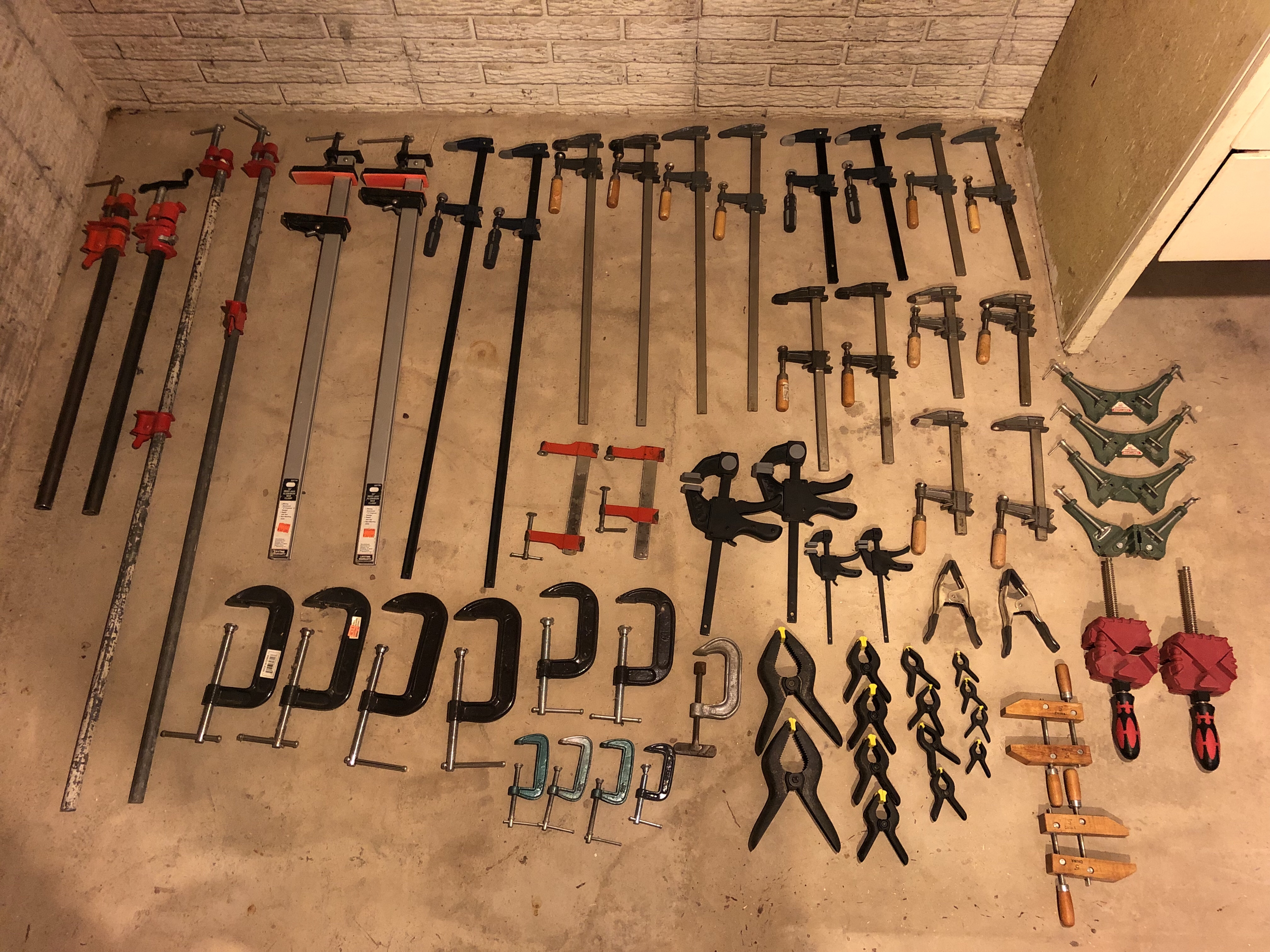
After organizing my hand tools, I wanted to continue with the same ideas to organize the clamps I’ve acquired. Everything should have a place to go with first order retrievability being key. Here are all of the clamps laid out (I actually got some more and replaced the pipes in the 2 on the left) before I started building anything.

As you can see, I’ve acquired a lot of clamps in a short period of time. Almost all of these were bought at estate sales, which I’ve found is a great way to build out a workshop for the first time. Once I could see everything I started looking at different ideas on Google Images and YouTube. Woodworkers love their clamps and there is no shortage of clamp rack designs out there.

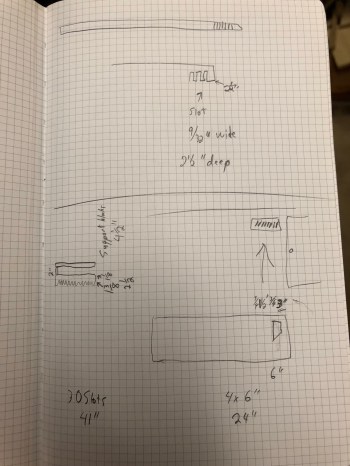
The first rack I wanted to build was for all of the F-style bar clamps. I measured various parts of my clamps and scribbled some sketches.

img_0195

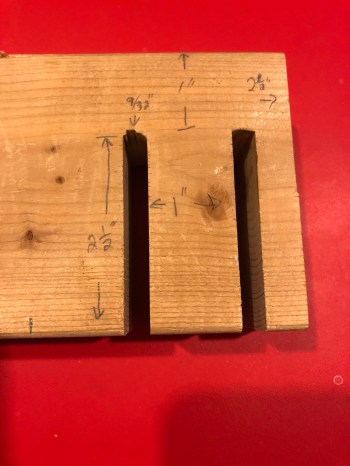
Then I mocked up a rough prototype on a scrap of 2×4.

img_0180

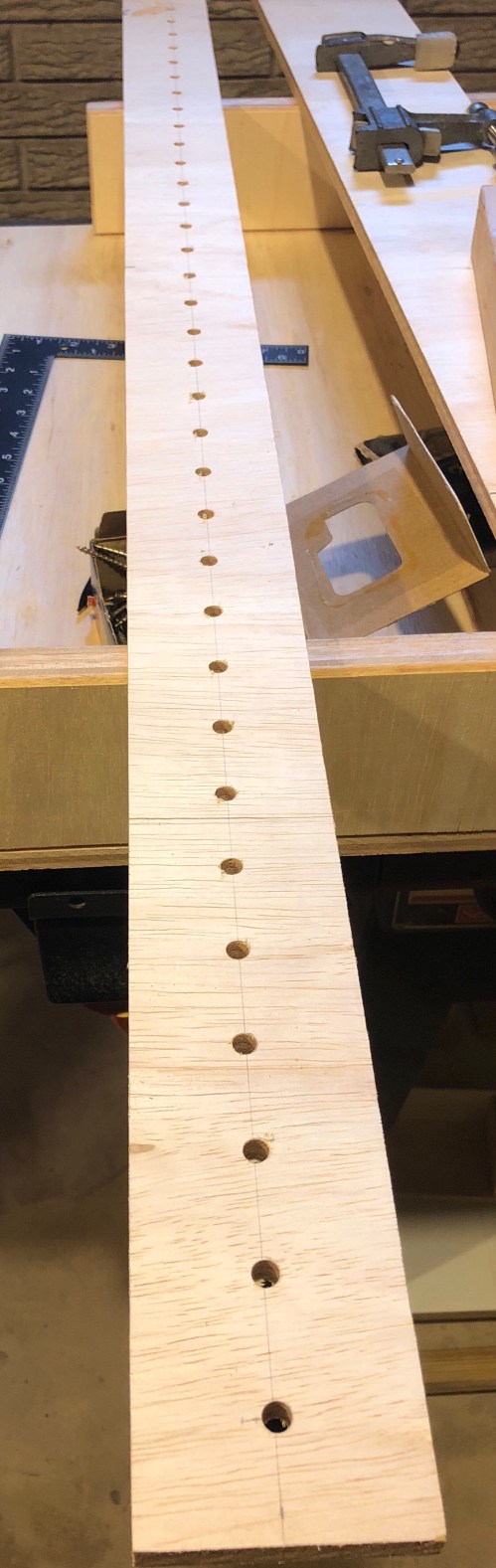
I felt good about the design, so I moved over to some 1/2″ plywood. I cut a piece to 48″ by 2 5/8″. Then I drew a line 1 9/64″ from the long edge and marked every 1 5/16″. Let me explain some of those weird measurements. Maybe you can read from the prototype, but I wanted the slots to be 9/32″ wide since the widest bar on any of the clamps was about 1/4″. Drawing the long line at 1 9/64″ came from a 1″ gap from the edge and half of the 9/32″ hole. I wanted about 1″ between each slot, but it was quicker to mark every 1 5/16″ because I had almost 40 marks to make. This also give me a little fraction of extra space between clamps. It probably makes more sense when you see how I drilled the holes.

img_0197

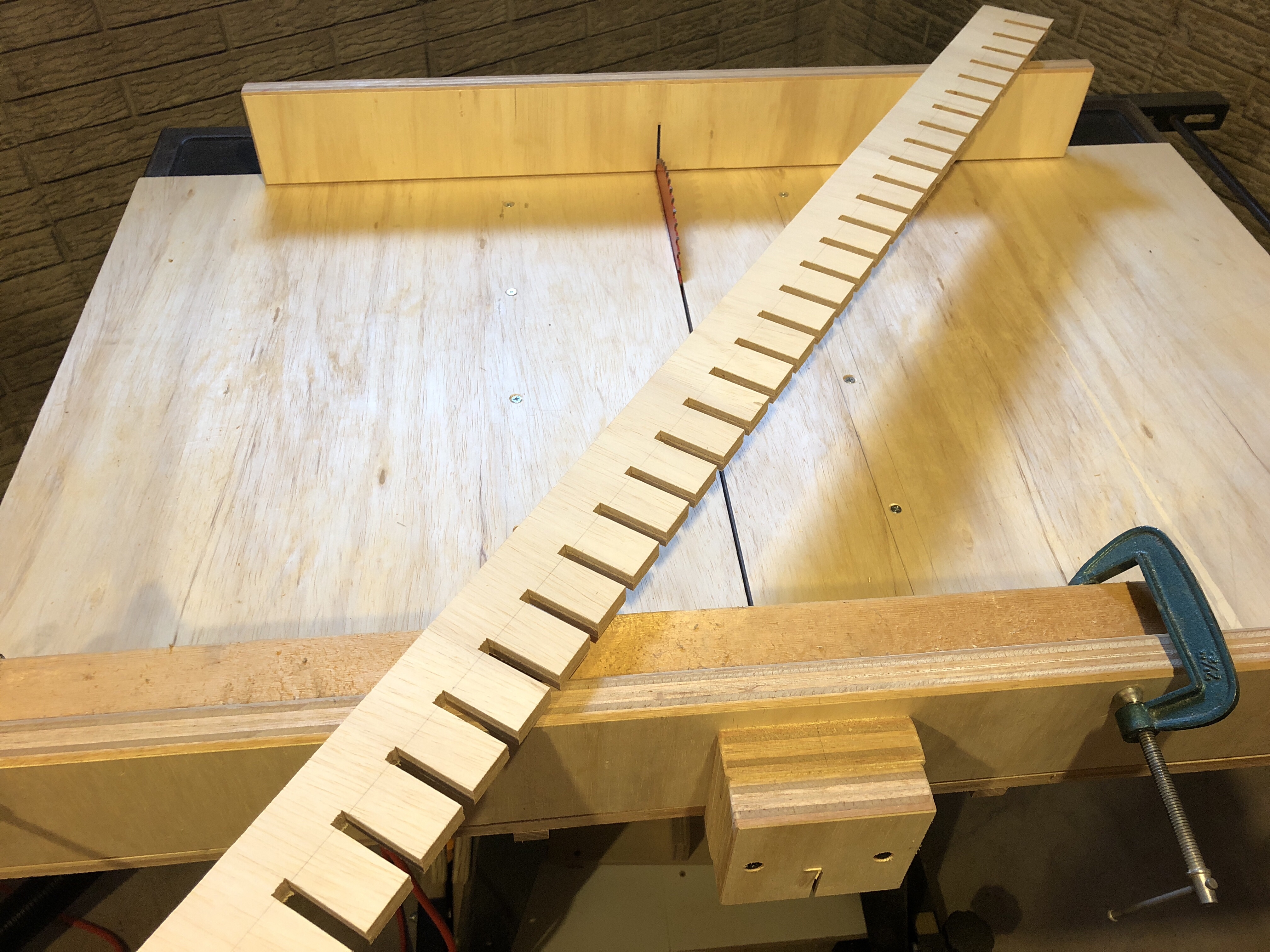
Then I drew lines to the edges of each hole, stood it up on the table saw, and cut out each slot.

You’ll notice the end of the slots aren’t rounded anymore. This is because I worked it across the blade after cutting to the second side of each hole. I took it to the router table and did a quick rounding of each slot’s opening so it will funnel the clamp in.

Most of this designs for this type of clamp use slots like this. Some people store these clamps with the bar at the back of the rack though and the pads facing out towards you. I decided on the opposite with the bars facing out because it makes it easier to grab a clamp.

I did do something I hadn’t seen by mounting this piece with a 1 5/8″ gap between it and other piece of plywood screwed to the wall. This allows the clamps to hang over the edge instead of having the top pad of each clamp sitting on top of the wood. Each clamp is a lot more secure like this and shouldn’t accidentally pop off. You can see this better in the video at the end.

The second rack I built was for miscellaneous clamps. There isn’t much to explain about this. For the C clamps I cut a bunch of 1″ inch holes and then sliced down the middle on the table saw. By the way, get a set of Forstner bits if you don’t have them; they work infinitely better than spade bits.

The 3rd rack would be for the wider bar clamps and pipe clamps. It was built similar to the first rack, but I wanted the bars/pipes along the wall because they’re heavy and would have more support this way. The holes I drilled for these slots were with a 1 1/4″ Forstner bit and 2.5″ from one hole center to the next. This little sketch shows I wanted the edge of the hole to be an inch from the back and each slot would be 3 inches deep. I left the rounded back side of each slot since it’ll mostly be used for pipe clamps. I once again used the router table on the slot openings and finished it off on the spindle sander since everything was a bit rougher with the thicker 3/4″ plywood and wider slots.

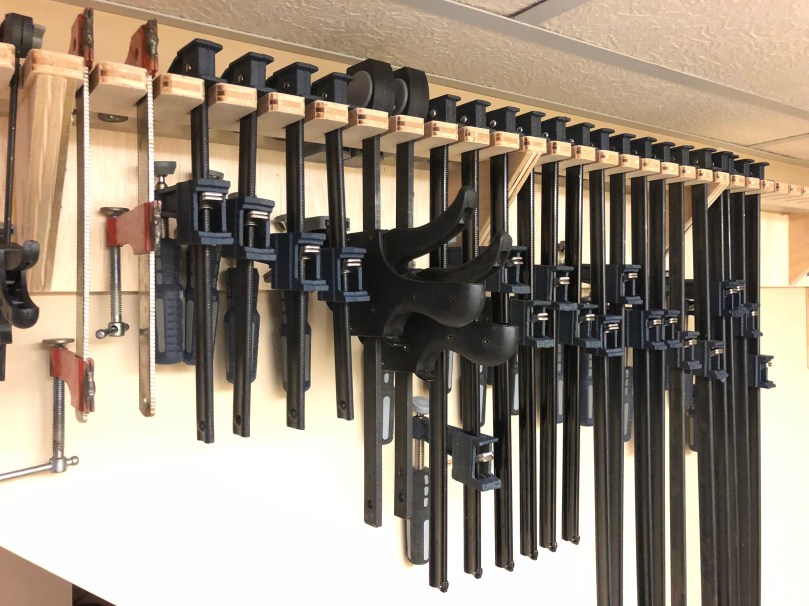
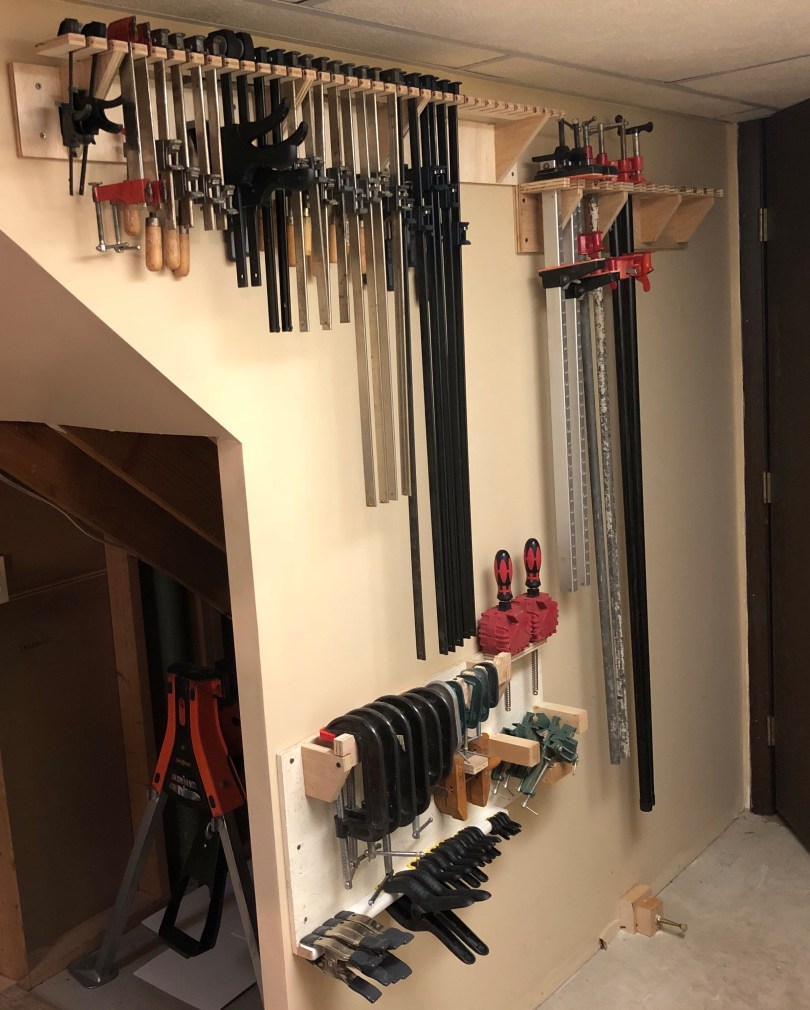
It’s hard to get a good picture since this is basically a hallway area, but here’s the finished project.

img_0189.jpg

Check out the video below for a walk through of how it all ended up.

Upgrading a Used Table Saw – Part 3

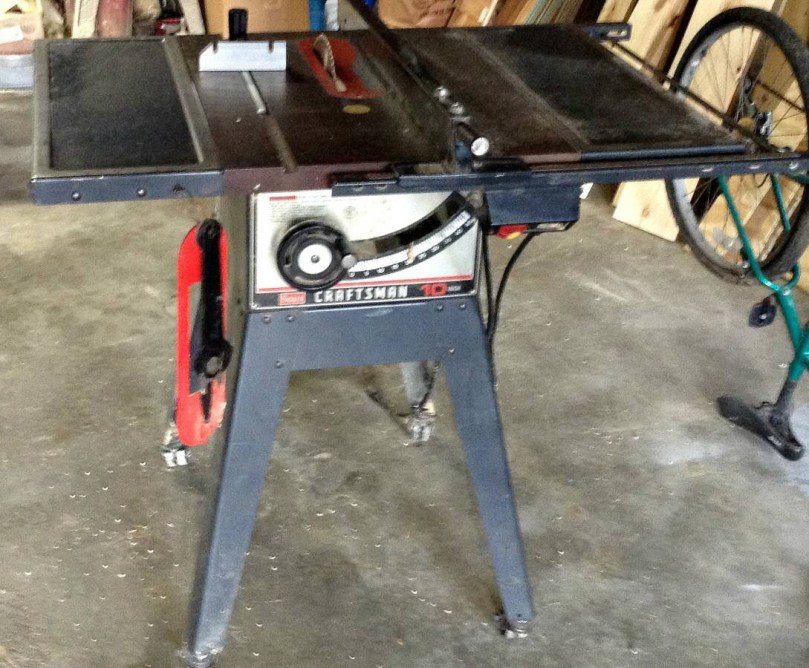
Following up on part 2 of upgrading the used Craftsman table saw (model 113.298032).

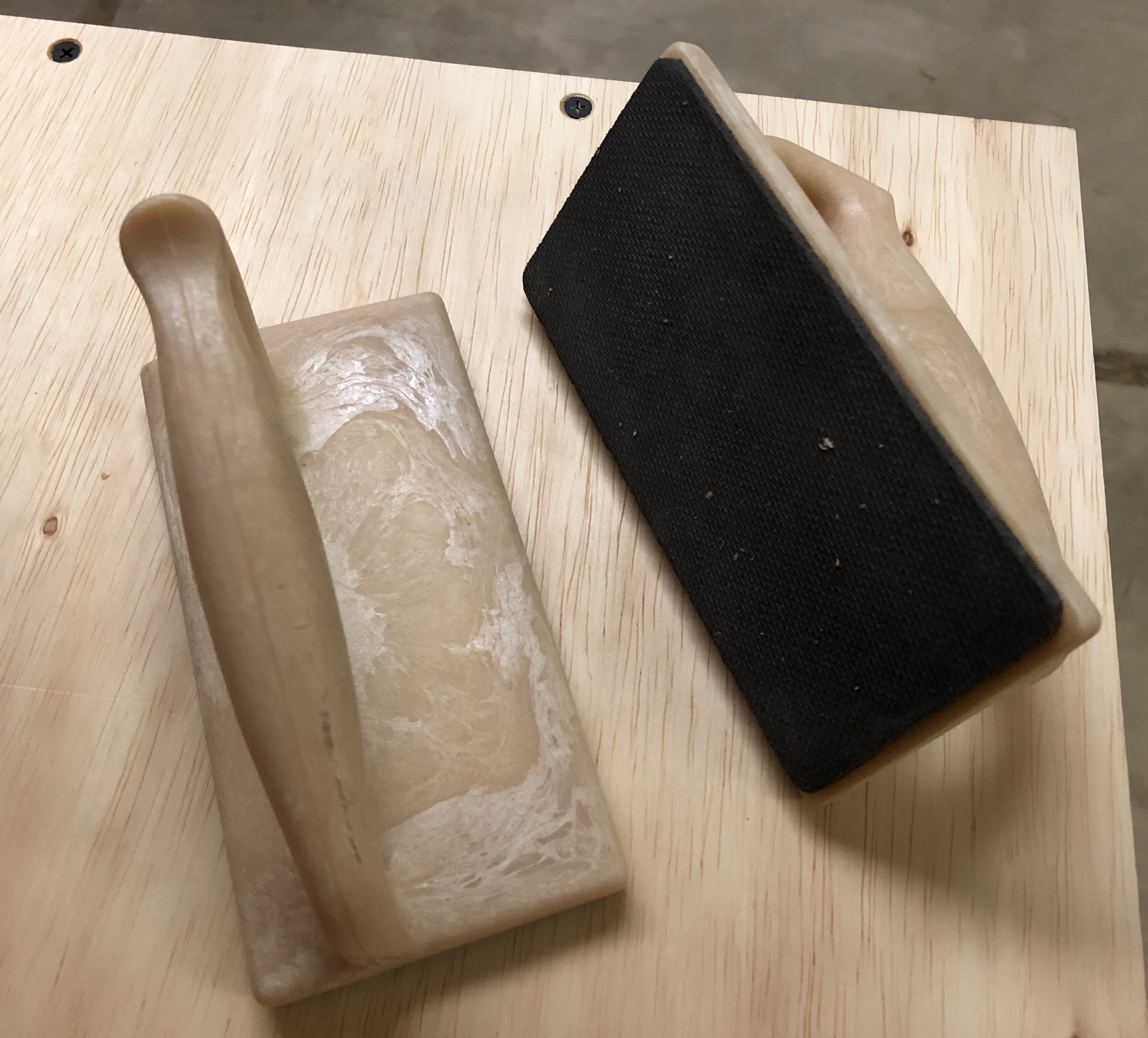
I found a couple of push blocks for $1/each at an estate sale. These will probably come in handy more for a router table when I build one and if I ever get a jointer.

After organizing all of my hand tools, I had floor space back and was able to spend some time building this weekend. I made a cross-cut sled, following most of the instructions from a build by The Wood Whisperer.

table-saw-cross-cut-sled.jpeg

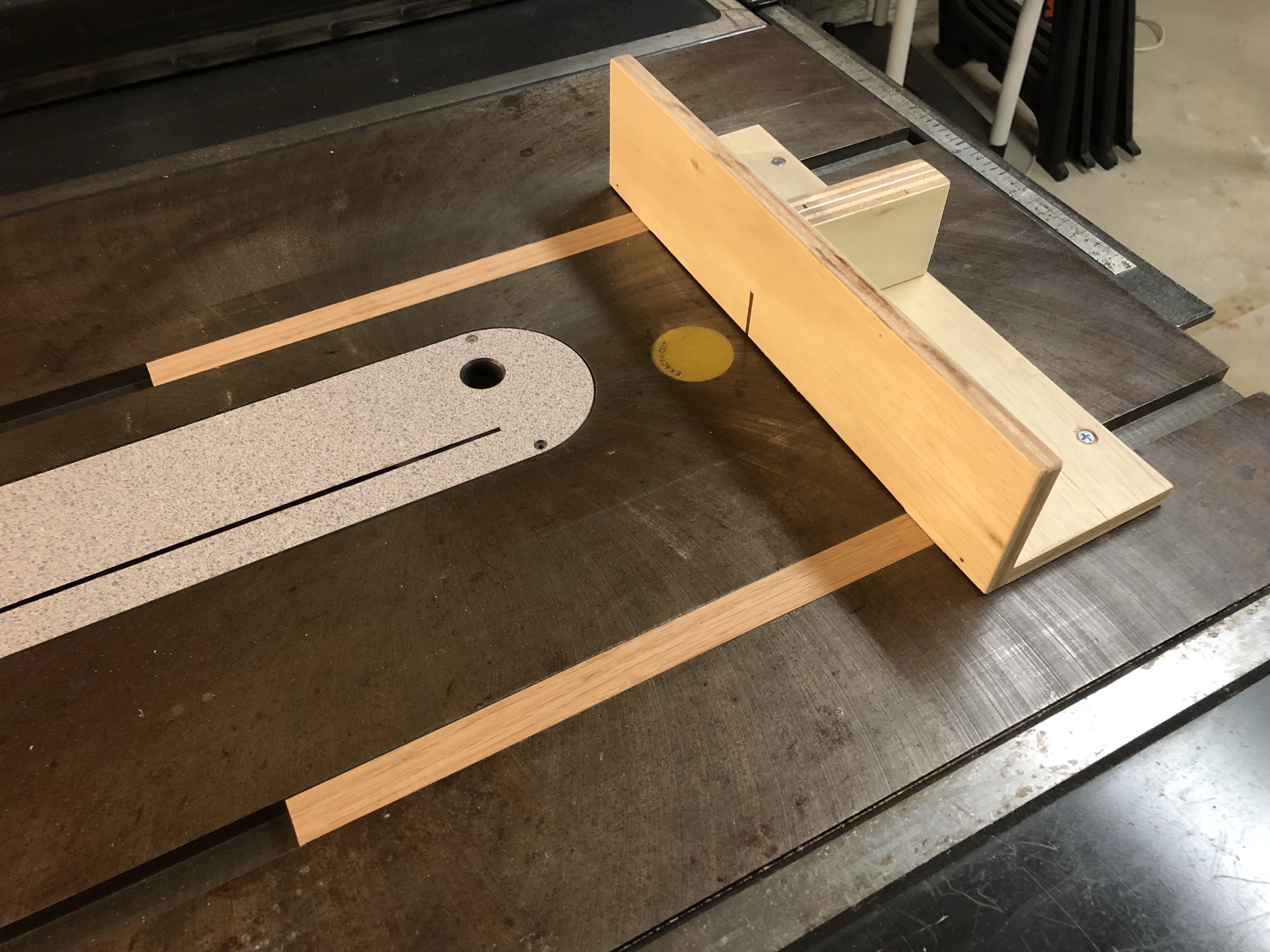
Since I had extra pieces of the oak runners already cut to size I made a mini sled too.

The sleds will make it easier and safer to use the saw. I already used the large sled to cut the pieces for the mini sled and then during the mini build I used it to cut the block that covers the blade when it goes through the back. Really handy accessories!

I gave a good coat of paste finishing wax to the table saw surface, miter slots, fence, rails, and the bottom of both sleds. Everything slides really well now.

I didn’t like how sketchy it was cutting the long thin runners, so I moved this push stick up in priority on my project list so I’ll have it the next time I need it. Figured I might as well make two because they’ll get chewed up over time.

Made some adjustments to the side storage to put the push sticks in each reach at the front.

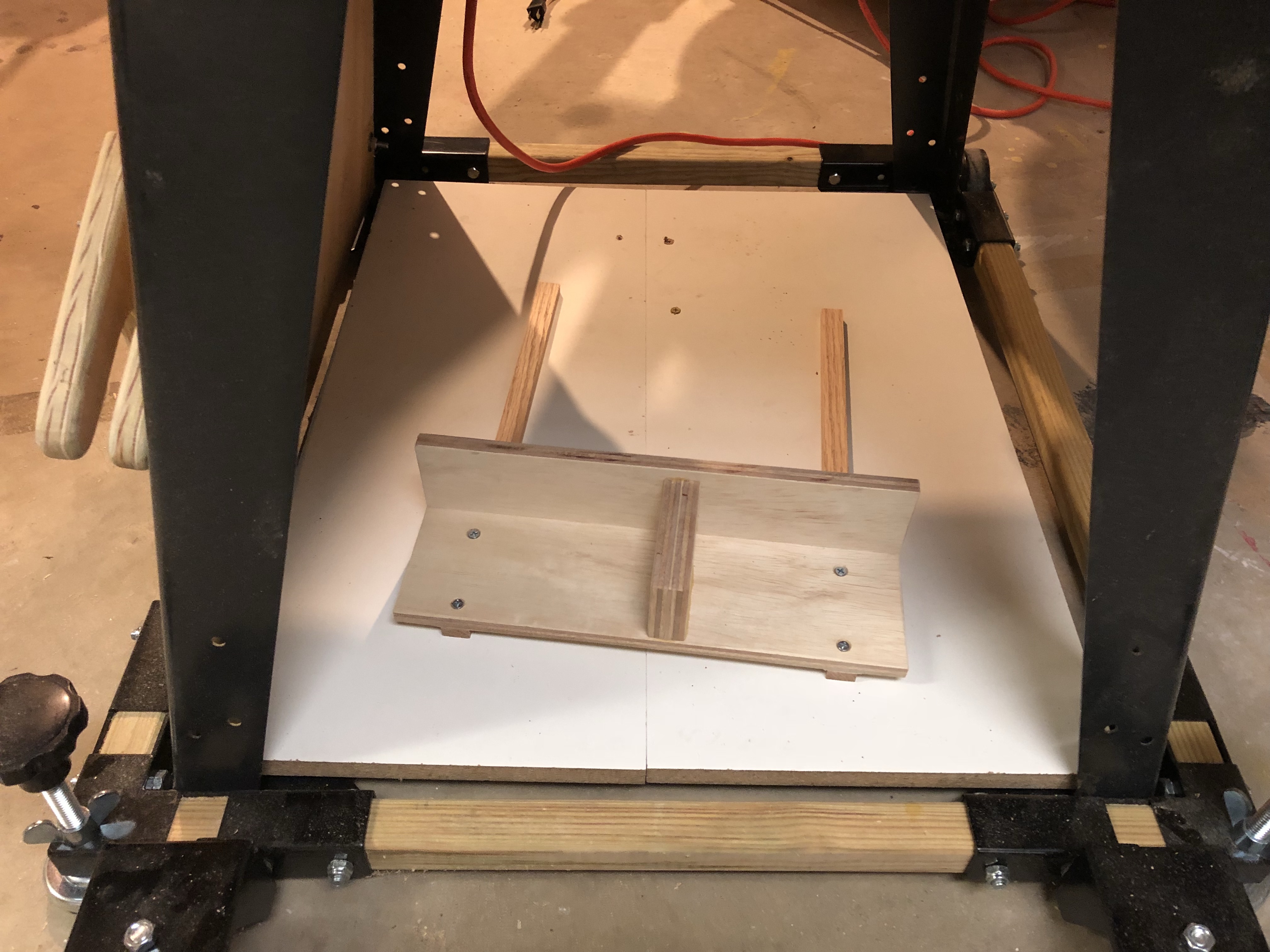
Added a platform underneath and felt dumb pretty dumb doing it. At first I cut a sized piece before realizing there is no way to get it in there without removing the saw from the rolling base, which I definitely was not going to do. I ended up ripping the piece in half and screwing in a couple of supports down the middle to connect the two sides. I may store my circular and jig saws here too.

More Hand Tools

Last night I completed a huge task in my new basement workshop by doing a first pass at organizing all of my hand tools. My toolbox (so to speak) has expanded a lot in the last few months. For reference, I posted the photo below in May of 2015 when I setup a tool bench in the garage.

2015-tool-bench.jpg

Fast forward 2 years to May of this year, when I added more pegboard.

expanded-tools-garage.jpg

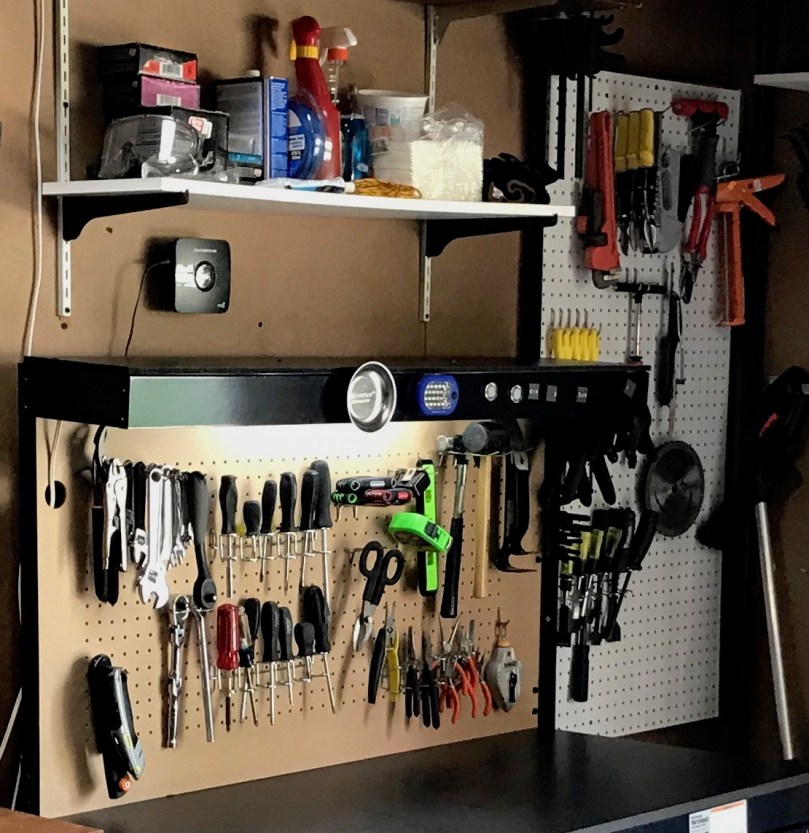
I’ve been acquiring a lot from garage and estate sales in the last few months. When I transplanted everything to the basement it was the perfect time to organize everything. Here is what I ended up with last night.

tools-basement.jpg

The lighting really is terrible down there. I think I’m going to take out the drop ceiling to give me more space and put in LED lighting. Anyway, as you can see my pegboard area more than doubled!

I kept thinking about two things as I was figuring out where to put everything. First, I wanted like things grouped together. Measuring tools like squares, levels, and tape measures are all together. Cutting tools like saws, knifes, tin snips, and scissors got grouped. You get the idea. The second thing was what Adam Savage refers to as first order of retrievability; almost every hand tool can be accessed without having to move something else.

I can’t even begin to explain how satisfying this process was. I’m not married to the result though. As I use the workshop I’ll see if it makes sense to move things around and iterate.

Walls Be Gone

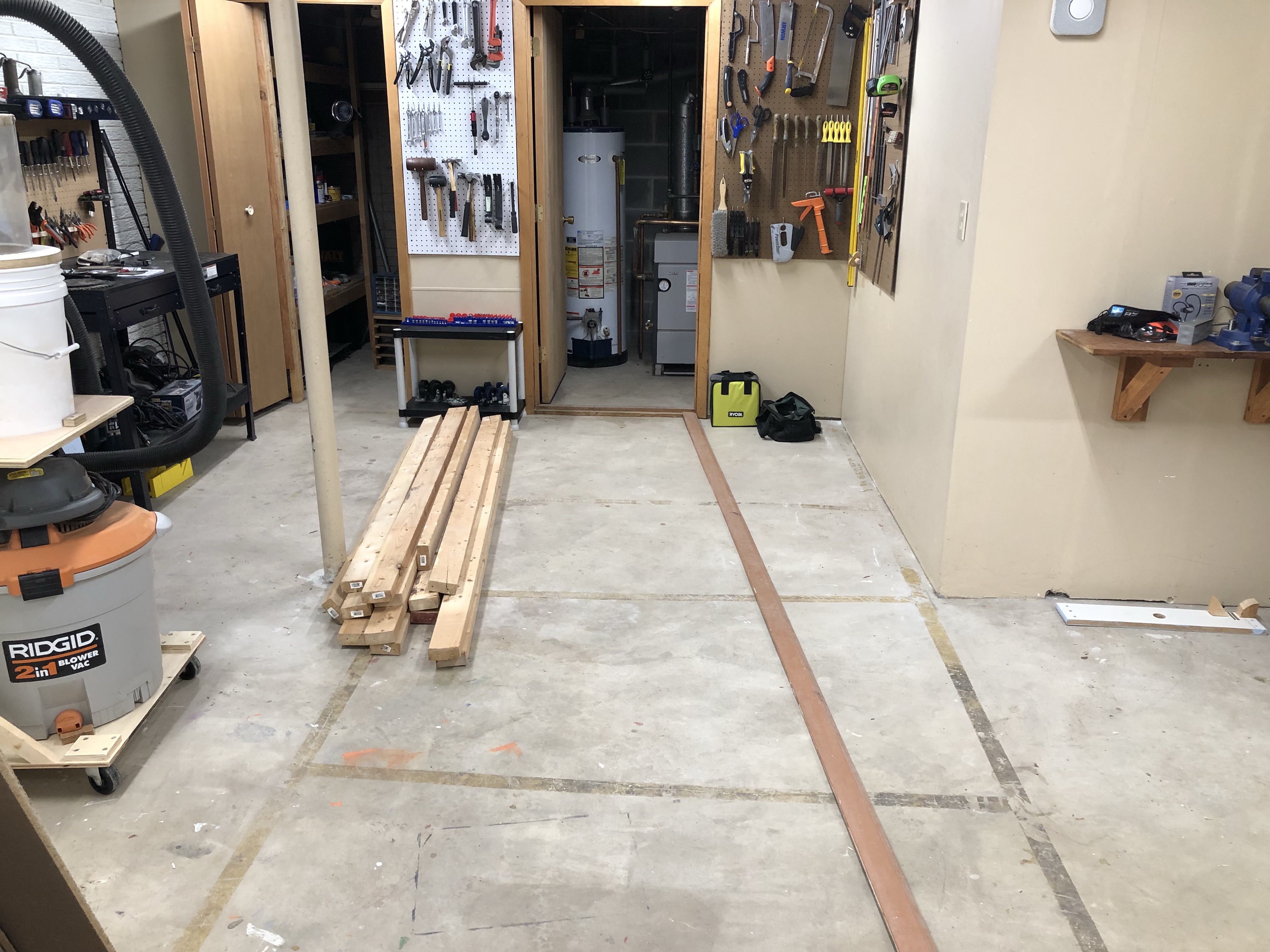
Yesterday I started cleaning up this weird wraparound area of the basement to prepare for moving my tool bench down and starting to put together the workshop.


Initially I was only going to remove the small wall, shelf, and hanging rod. The plan was to put my tool bench against the blue wall.


I loved how those small changes opened up the area. Then I noticed the other walls weren’t load-bearing, so I started demolishing.


What a difference! My mind is racing with so many new ideas on how to utilize the space.

As a bonus I ended up with a pile of nice 2x4s I can use for making shit.

Upgrading a Used Table Saw – Part 1

I found a used Craftsman table saw (model 113.298032) on Craig’s List last weekend. Most of the saws I’d been watching had significant rust and this one was in good shape, so I paid $125. I have a lot of ideas to improve the functionality of this saw and utilize it for the space in my workshop, so this will be the first in a series of posts.

Original image from the Craig’s List ad.

The power cord had exposed wire and a bunch of places wrapped in electrical tape. I paid $5 for a 10 foot extension cord from Harbor Freight, cut off the end I didn’t need, and wired it into the switch.

The belt had a little nick in it, which you can see on the right side of the picture. Probably would have been fine, but I wanted to replace it. After reading a tip, I went to Auto Zone and they easily matched up the belt with something in stock ($10).

The metal on the bottom of the stand was bent all over the place, making the casters virtually useless. It was like trying to push the saw down a bumpy dirt road. Harbor Freight sells an awesome mobile base kit, which was about $32 after a 20% off coupon. All of the reviews said it works better than the name brand kits which cost twice as much or more.

You have to supply your own wood for the frame, so I bought four 2x2x42″ exterior deck balusters, for $0.97 each. The instructions call for 1 1/4″ square material, but if you know lumber measurements, the 2×2″ is way off. The fit was snug and took some convincing with a rubber mallet, but these pieces worked great.

Rolls around nice and smooth now. Easy to lock in place too.

Future upgrades will include dust collection, fence customizations, a guide sled(s), a router table, and zero clearance inserts.

Read about more upgrades in part 2.