I finally put a salt shaker in the shop to help with glue-ups. I’m not sure why this salt shaker was made with holes so large though.

I finally put a salt shaker in the shop to help with glue-ups. I’m not sure why this salt shaker was made with holes so large though.
If you haven’t seen the other posts, check out part 1 and 2 of this series about improving a Delta Sidekick 12″ Compound Miter Saw (Model 36-235).
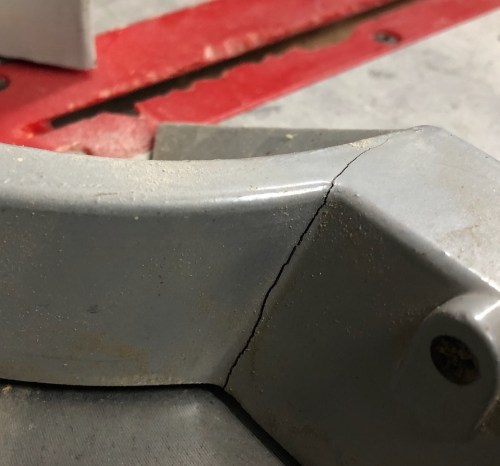
With a fresh zero clearance insert plate, I wanted to move on to making a new fence for the saw. In the previous post I mentioned the cracked fence. It’s a significant one, so there was no fixing this.

I forgot to take a decent picture of the fence before I took it off, but you can get the general idea from this old photo.

After looking around, I found a YouTube video where someone had built a new fence and the shape of theirs was very similar to mine. It looked pretty straightforward and I had a few upgrade ideas of my own.
I jumped in by cutting four pieces of 3/4″ plywood to 4×36″ and glued them together. I clamped them to the edge of my work table, hoping it would flatten everything out.

On the table saw I squared up the edge that’ll be the face of the fence. Then I used the old fence as a guide to mark the mounting holes and some of the areas I need to trim. I’m going to have a secondary removable zero clearance fence, so I also marked the 4 original holes in the face plus two more since I’m building a longer fence (the 6″ left extension isn’t pictured below) that’ll overhang the edges of the saw’s table.

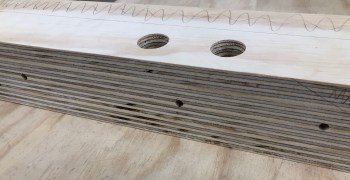
I moved over to the drill press and drilled all of the 1/4″ face holes. Then I used a 1″ Forstner bit with a depth stop to give the mounting bolt washers a place to rest. After that I was able to drill the rest of the way with a 21/64″ bit for the mounting bolts. I moved the bit over to a hand drill and made these holes oblong because they need adjustment room when aligning the fence.


Back at the table saw, I trimmed the sides. I also did most of the long cuts along the back. I switched to the band saw to finish cutting off the back pieces and then I did a little sanding with the oscillating single sander. While I still had the middle in tact, I figured it would be a good time to chamfer the edges, so I knocked that out on the router table.

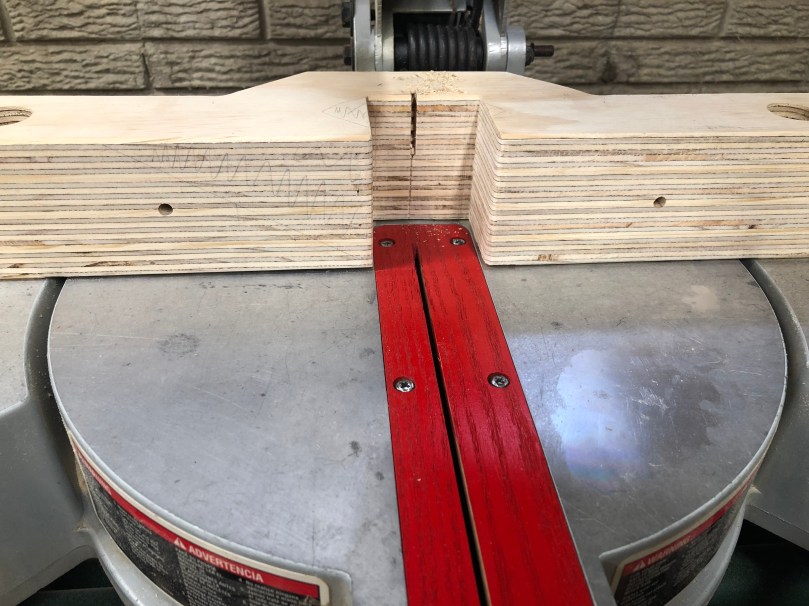
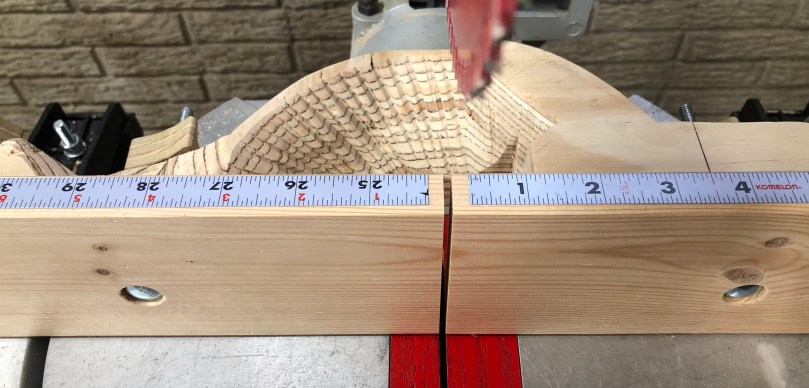
In the video that gave me this idea, he used a band saw to hog out the middle area. I thought I could use the miter saw itself to do this. It would give the area nice shapes, keep as much of the fence’s structure as possible, and hopefully provide a nice ramp for sawdust to be directed out the back. So I attached the fence, squared it up, and made the first cut.

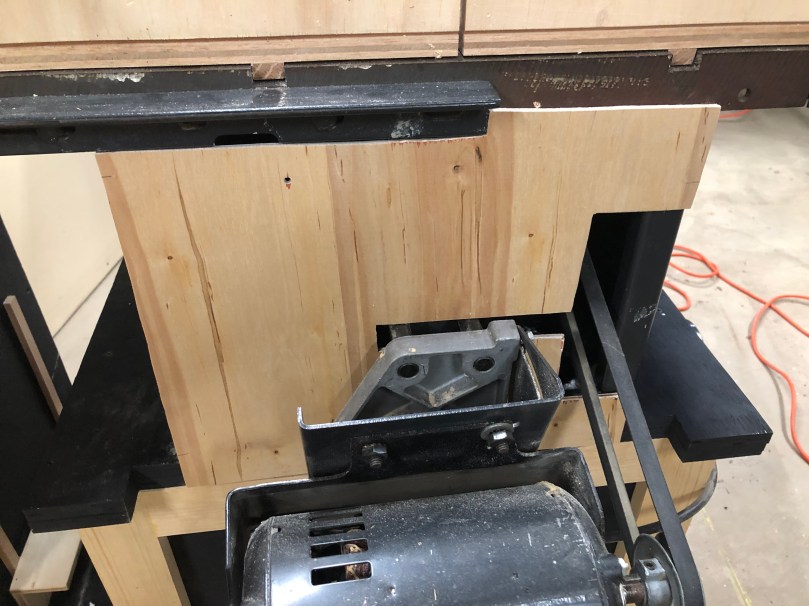
I immediately noticed I would need to remove the fence if I ever wanted to swap insert plates. I went to make the first miter cut and it wouldn’t rotate. I thought I might run in to this. I removed the fence and used the band saw to make room for insert plate removal. I also sanded off the bottom of the fence where it was making contact with the rotating part of the table.

That was all good but now the back of the saw was hitting the fence at 11 degrees each way because I went with angles around the back instead of curves. I made adjustments at the band saw and then still had problems with mitered bevel cuts. Instead of taking everything off again, I used a hand saw, chisel, and files on the left side. After a ton of adjustments, I was able to make all of the miter, bevel, and combo cuts.

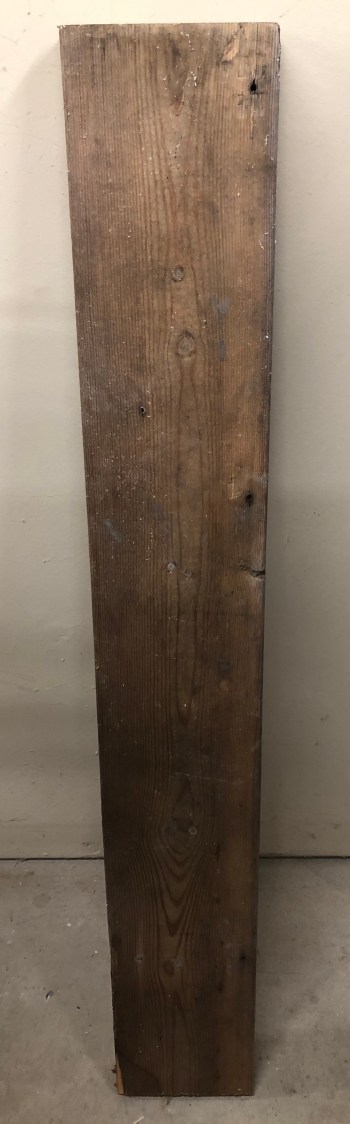
The final piece to this was creating the removable zero clearance fence. I started with an old piece of reclaimed wood.

I used my jointer to flatten the face and square an edge. Then I ripped it to 3-3/4″ and trimmed the sides with the table saw. I used the bandsaw to resaw it and then the planer got the rest of the way to the 3/4″ thickness I wanted. To finish it off, I chamfered the edges on my router table.

I clamped the board to the miter saw fence and drilled through the back of the original 1/4″ face holes to make marks in this board. I also drew lines on the left and right of both fences as a reference to make lining them up easier.

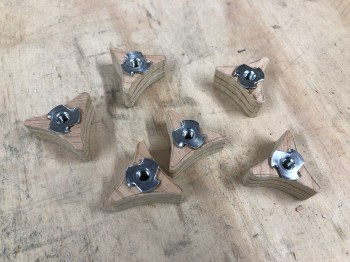
I shifted gears to make some knobs. I grabbed one from router table, traced it, and cut six of out of 3/4″ plywood on the bandsaw. Then I cleaned them up on the sander.

Over at the drill press I cut a 5/16″ hole through the center of each knob. I set a 1/4″ T-nut on top and hit it with a hammer so the prongs would leave marks where I could drill starter holes. Then I applied some cyanoacrylate and pounded each T-nut in.

I grabbed the zero clearance fence and drilled the 1/4″ holes all the way through on the drill press. Then I set a 3/16″ (I think) depth stop, switched to a 5/8″ Forstner bit, and drilled the same holes. This would make a recess for the head of the carriage bolt.
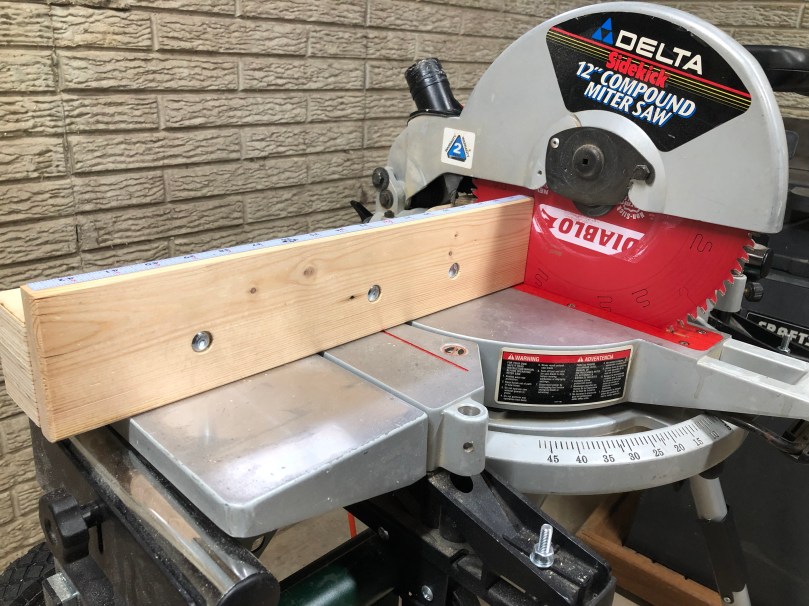
I put the zero clearance fence in place up against the big fence, fed the carriage bolts through their holes, added a washer, and tightened the knobs. Here is what they look like from the back.

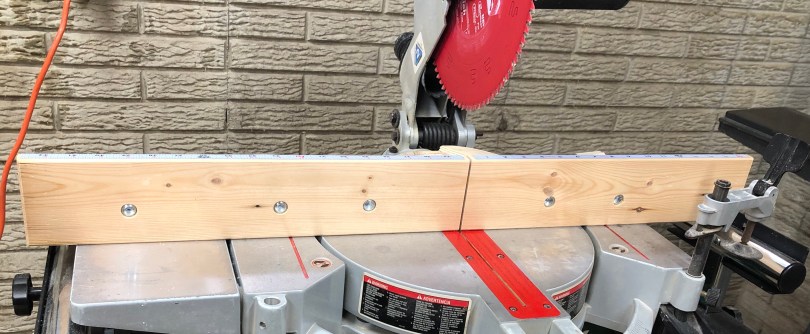
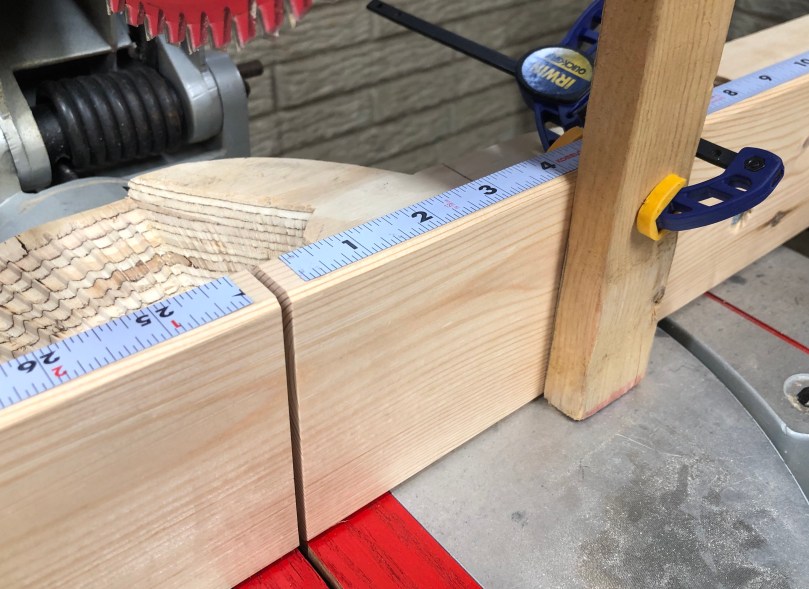
Tightened hard this first time so the square part between the head of the bolt and the threads would pull into the wood and the head would set into the recess. Everything was straight and square, so I made the first cut. After the cut was established in the fence, I was able to attach adhesive backed ruler to the top, based on the kerf.


I didn’t plan it, but a bonus of the higher secondary fence is a perfect place for clamping a stop block when making repeated cuts.

This was a really fun project and is going to be so much better than the old fence.
One more thing to improve on this saw is the dust collection, but that project is probably on hold for at least a couple of weeks.
If you haven’t seen it, check out part 1 of this series about improving a Delta Sidekick 12″ Compound Miter Saw (Model 36-235).
I’ve been keeping a list of improvements I wanted to make to the miter saw and haven’t made time to work on any of them. When I made a frame a few weeks ago I noticed the fence to the right side of the blade wasn’t square. After looking things over, I found a large crack, which I’ll share in part 3. Now I had an excuse to prioritize the improvements and give the saw some love.
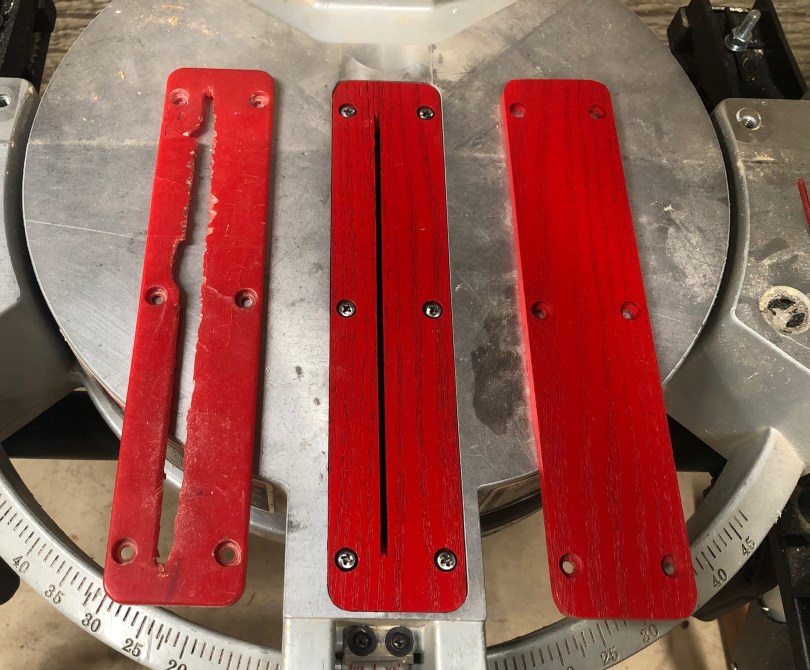
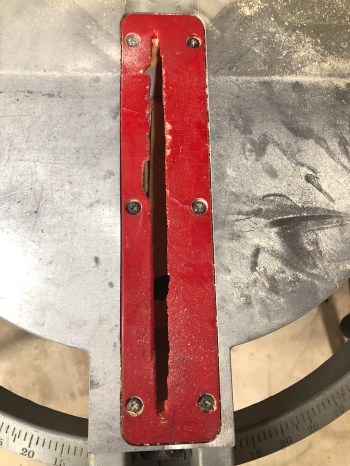
I removed several things from the saw and decided the first thing I’d build was a zero clearance insert plate. The original plate was a little beat up.

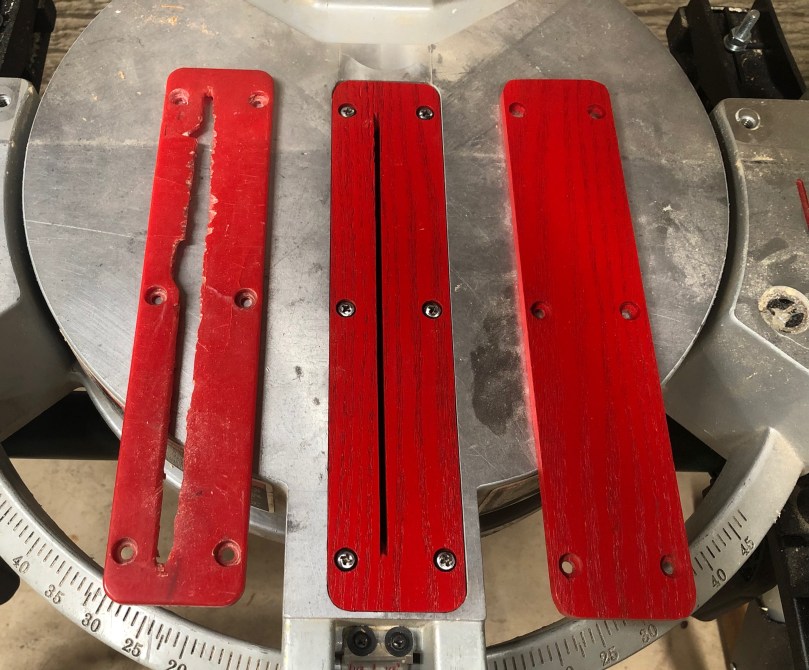
I actually made two plates since it’s not much extra work. I can either use the second one for bevel cuts, which I don’t think I’ve done once since I bought the saw, or keep it as a spare. I really liked the natural wood look, but it’s better to paint them red to signify the dangerous area.

Check out the difference in that slot! Cuts will be much cleaner and I’ll no longer have to worry about things clogging up underneath. The new inserts also fit much tighter than the original.
I used a piece of reclaimed pallet wood (oak I think) to make these. Here’s a video of the process, which took about 2 hours.
Check out part 3 of this series where I build a new fence.
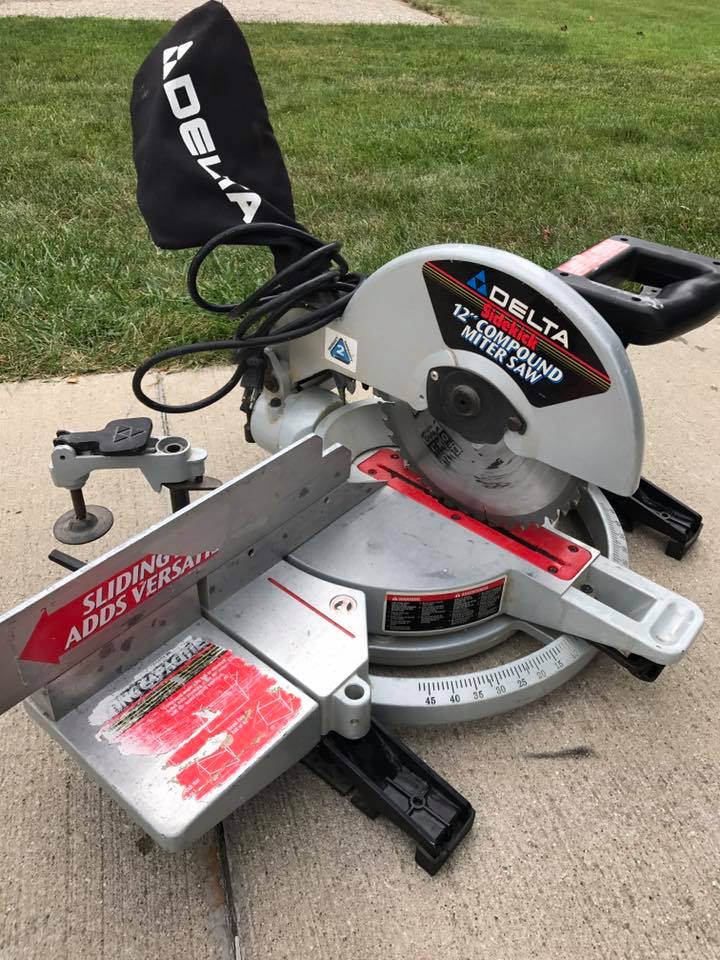
I’m starting on some improvements to my miter saw and realized I never posted anything about some of the things I’ve already done. I bought this Delta Sidekick 12″ Compound Miter Saw (Model 36-235) for $75 off someone on Facebook Marketplace last September. It’s not a sliding one, but the 12 inch blade is nice.

I immediately bought a quality 12″ Diablo blade since there was only a 10″ in the saw. I also took the handle apart and replaced the mangled power cord with a 10′ extension cord I bought at Harbor Freight.
A few months ago I picked up a Masterforce folding miter saw stand from Menards. I think it was less than $80 during a sale. It’s been so nice to have the saw ready to go at all times.

I recently cleaned up the sticker residue (was still there in the picture above) on the table and fence. I think that about covers it for what I’d done so far. Check out part 2, where I make new insert plates.
You can never have too many clamps!

I bought this t-shirt to support the I Like To Make Stuff YouTube channel, which I watch all the time for ideas and techniques.
If you want to see how I built my clamp racks, check out my post.
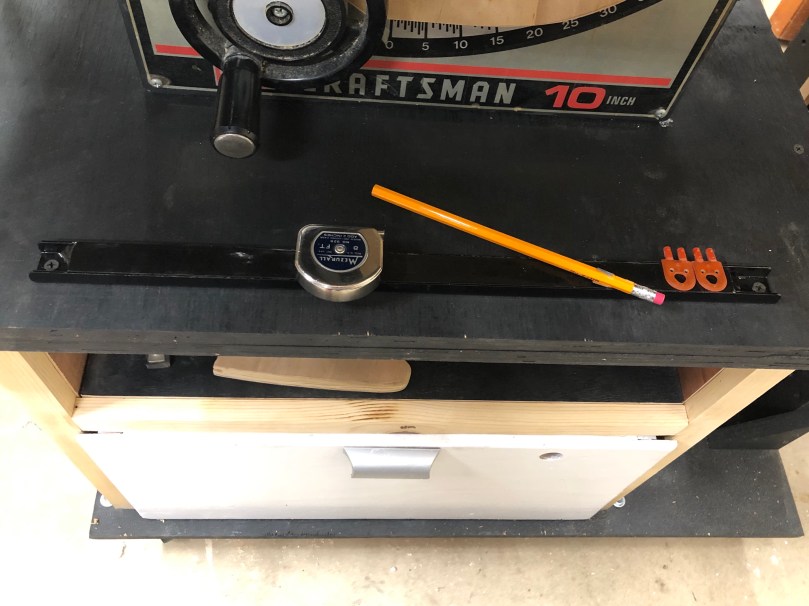
When I built my my workshop table I put a magnet tool holder on each side, but haven’t really used them. Finally making use of them with a 6′ tape measure and a pencil with a magnet glued in. I also used a nail for hanging a speed square there. Both sides of the table have the same setup.

I’m always trying to make things more efficient.
I built my crosscut sled for the table saw just over a year ago and one thing always bugged me. The piece of plywood I used for the original fence had a slight bow to it, so the cuts weren’t perfectly square. While it had served me fine for building shop furniture, it wasn’t going to work when building a couple of cabinets.
To fix the problem:


I should have fixed it a long time ago, especially since it was only a 30 minute job.
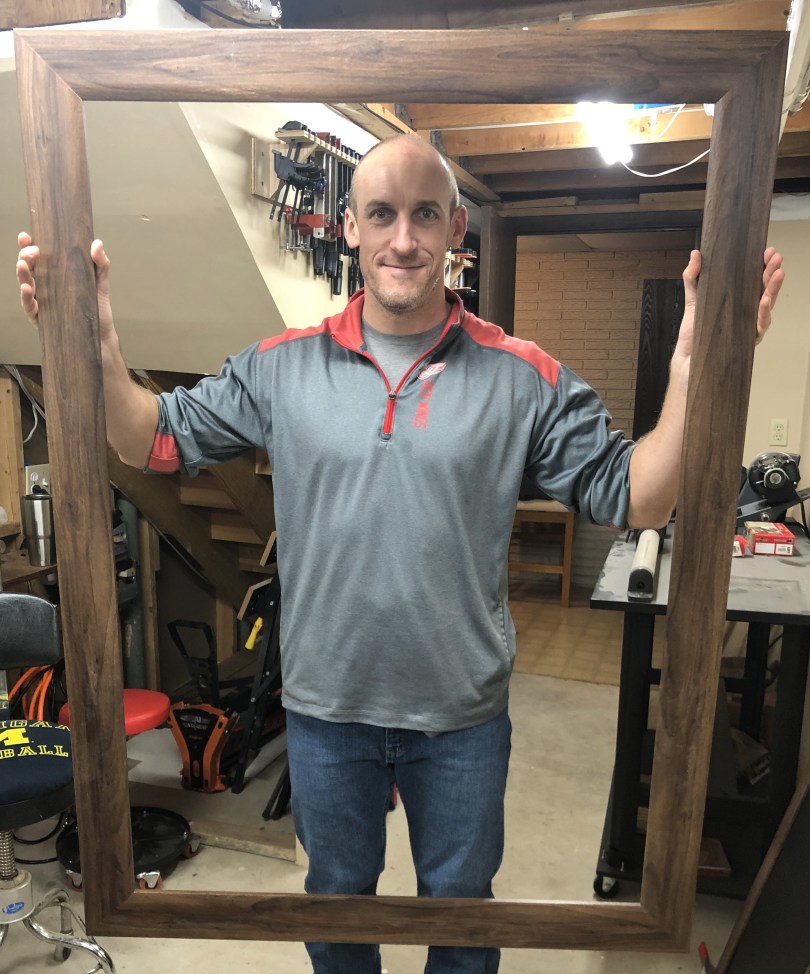
I bought this small poster from Jimmy DiResta’s shop, knowing it would be a good opportunity to make my first frame. When the poster is purposely printed crooked, there is no pressure to create a perfect frame and any build mistakes fit right in.

The wood is cut-offs from the sanding station drawer resizing. The plastic and backer board were cut from an old poster frame I had in a closet.
I experimented by using several router bits to make the frame profile and then burnt the wood with a torch to bring out the grain. I didn’t do any sanding and gave it three coats of spray lacquer.
I didn’t think I’d use all of the drawers in the sanding station, but I did.


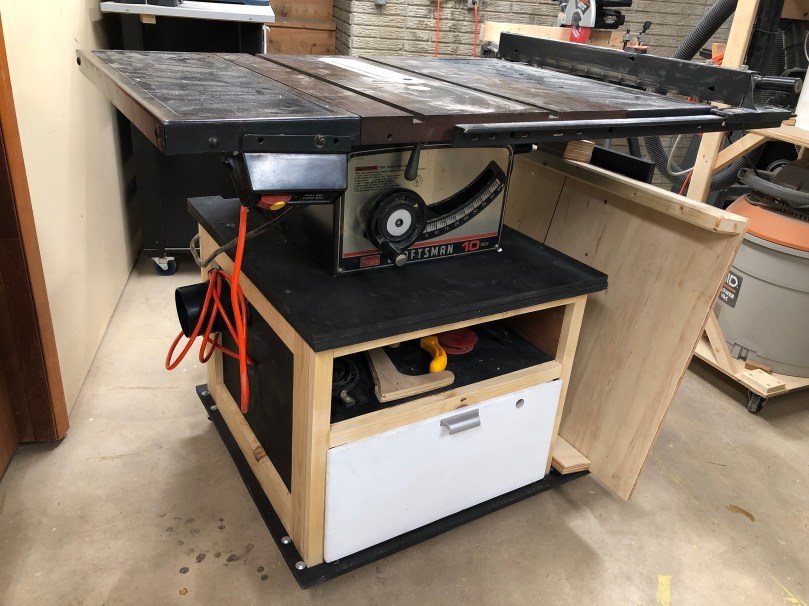
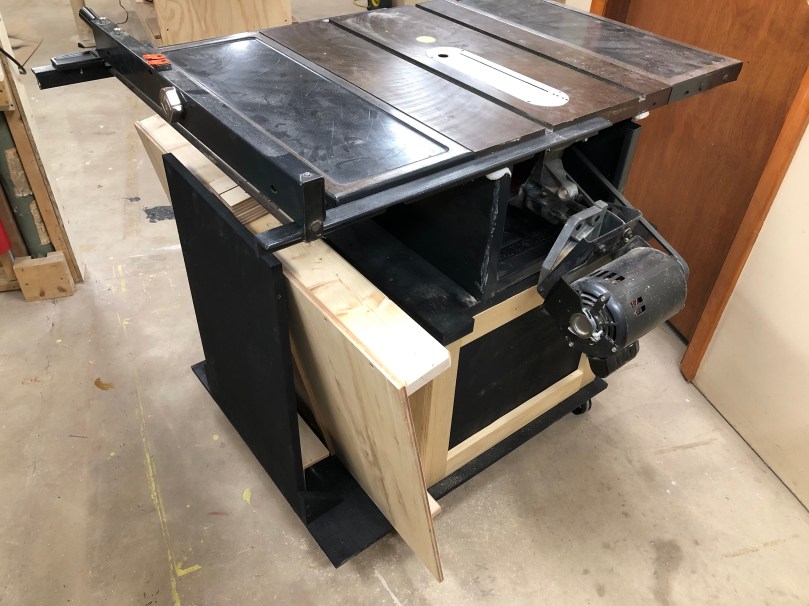
In the summer I snagged an old Craftsman workbench (model 706653800) for $30. I thought it would make a great sanding station for my workshop. Here is a before and after of just the table (near the end is a photo with my sanding machines attached). I’m really happy with how it turned out!

One of the first tasks was to make use of the right side. I started by cutting a couple of plywood panels and screwing them in.

If you look back at the post where I took out a couple of walls to open up my workshop, you can see a unit with five drawers. When I dismantled it, I saved the drawers and slides. This was the perfect project to use a few.

The drawers were too wide, deep, and tall, so I had to resize them in every dimension. Thankfully glue wasn’t used in the original assembly, so they were easy to break down.

It felt like I measured and checked my calculations 10 times before cutting anything to size. I didn’t want to rush it and cut too much from any pieses, so I ook my time and the assembly went well. Putting the drawer slides in was tricky, but I made everything fit.

I cut a plywood base and attached it to the frame. Then I screwed in some locking casters ($4/each at Harbor Freight). I drilled holes for the drawer handles before taking both sets of drawers out and removing all of the slides. After two coats of a glossy black on the body and base, I was finally able to move it to the basement and free up the space in my garage.

I sanded the wood drawers, wire brushed the original drawers, and cleaned all of the drawer slides with Brakleen. The faces got two coats of glossy white and the handles were sprayed with metallic aluminum.

I’m really glad I decided to paint everything. Having this and the lathe stand in more of a finished condition makes the shop feel much nicer. I might have to paint some of my previous shop projects.

I gave the galvanized metal top a good scrubbing with a soft brush according to what I’d read and it was still in rough shape. So I used a wire brush and a wire wheel on a drill. It ate up the rust, but went through some of the galvanizing. I found a product made by Rust-oleum to resurface the metal that looked promising for less than $5.

I did 3 good coats, screwed the metal back to the MDF, and attached it to the stand. Looked pretty sweet if you ask me!

I gave the galvanizing a full week to cure. I’d read about people having mixed results with it scraping off.
My original plan was to make some kind of hinging platform for the larger belt/disc sander so I could flip it on the side to use the belt for edge sanding. It couldn’t come up with a layout to make it work though, especially making sure I still had access to all of the dust ports. This configuration should work just fine.

From left to right:
I bought all three of these used and paid $25, $50, and $30. The smaller Craftsman sander was still sealed in its original box. If you buy the Harbor Freight versions of these three machines, the new prices are $70, $145, and $85 respectively or $56, $116, and $68 with 20% off coupons if you make separate trips to the store. I love buying used tools!
All of the power cords run along the back and then over to the right side where there is a power strip (free from Harbor Freight) and an extension cord ($9 at Harbor Freight) so I only have to deal with one plug.

My shop feels infinitely more organized without the three sanding machines scattered across the floor. All that’s left now is to fill up the drawers with my hand sanders, sand paper, and accessories.