Yesterday I posted about multiplexing 7 segment displays, but it’s actually been weeks since I got that circuit working. After 2 weeks of travel and a busy weekend, I finally got some time on Wednesday night to start moving the circuit from the breadboard to a more permanent home. I stocked up on a variety of different sized circuit boards, but unlike a breadboard each hole on these is independent. It was time to learn how to make solder bridges. After fumbling through about 10 bridges I started to get the hang of it. They won’t win any beauty contests, but they’re functional, which is what matters.

In round 2 last night I tried a couple of tricks. The first method is using a small wire or the discarded end of a lead (this happened to come from trimming off the ends of a resistor) to bridge pads together.
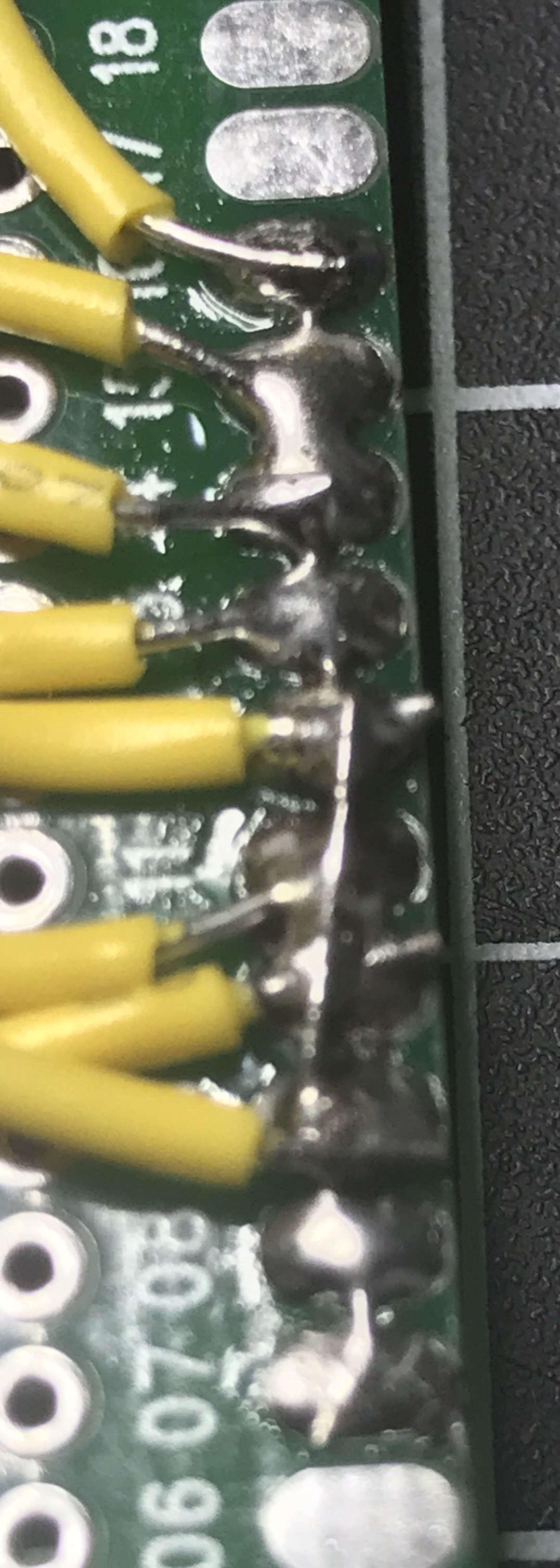
Another trick is to bend over the ends of leads to create a bridge. In the left and right columns you can see this type of bridge used. The middle column shows bent leads I’ll use when I connect more wires.
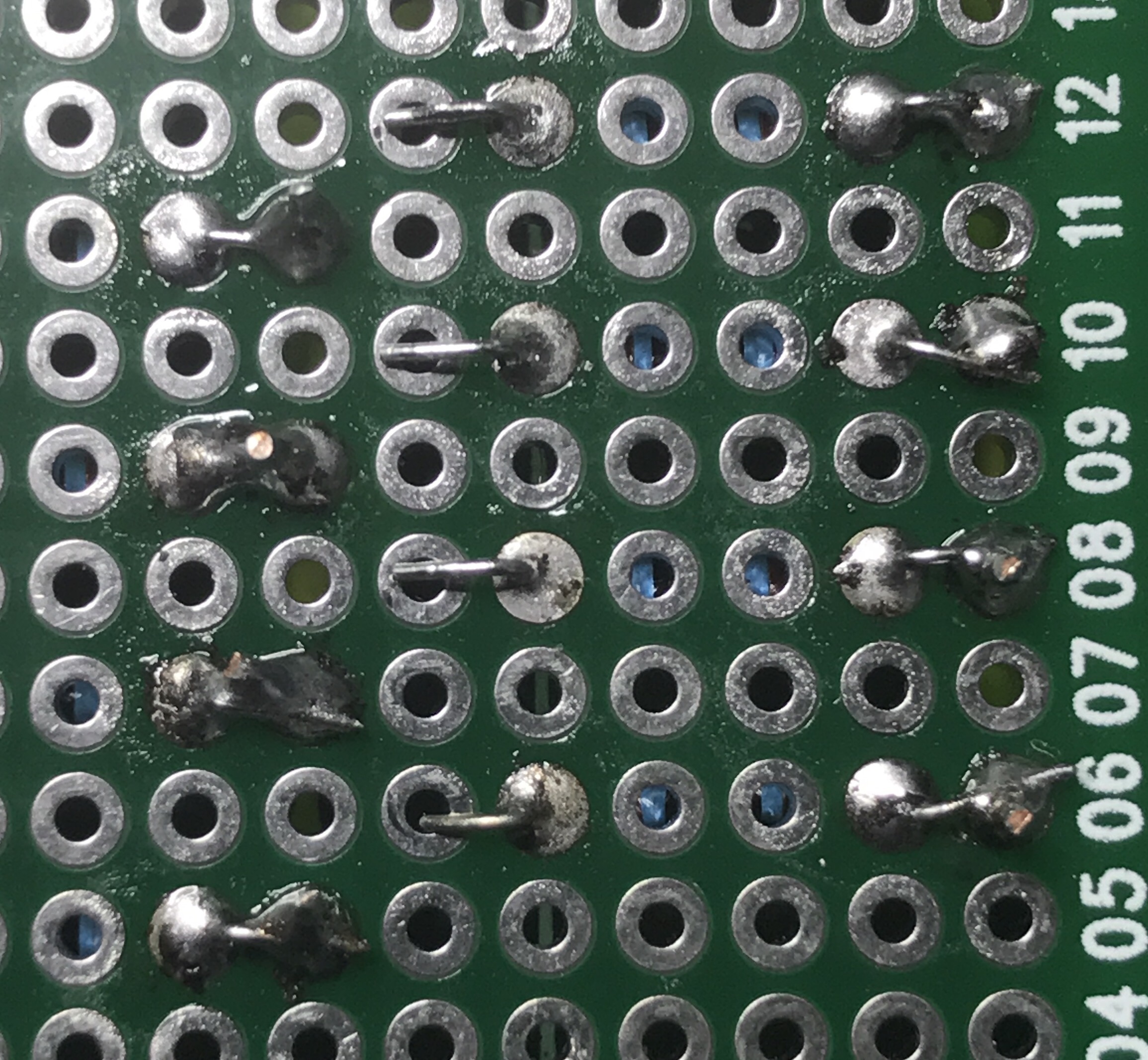
Both methods worked a lot better than trying to use mountains of solder to jump the connection pads.
By the way, I find soldering (no matter what it’s for) to be extremely relaxing. Maybe it’s something to do with the order of the entire process; physically connecting things to make a circuit work. I typically do it late at night with some music and a cold beer.
I’m glad I decided to upgrade my soldering iron, by getting a Hakko FX888D. It works much better than the entry-level iron I’ve been using.
 Nick Momrik
I’ve found it also helps if you have a flux pen to trace where you want the solder to go, and then the solder follows that.
LikeLiked by 1 person
I loved the photos, but the technical stuff …. was obviously not for me.
LikeLike
[…] failure to happen soon when I solder things the wrong way one of these days. Every one of my solder bridges worked. I did run continuity tests on all of the early bridges, which I’m sure was a big […]
LikeLike
[…] In order to get things going, a simple switch on the side turns on the first part of the game. When the correct code is entered, it flips a relay module, which then provides power to the rest of the circuits on the control panel. When I built this, I wrote posts about multiplexing 7 segment displays and solder bridges. […]
LikeLike