Drill Press Cart

When I setup the new shop, I decided to finally put my planer on a cart and took over the one used by the bandsaw. Then the bandsaw needed somewhere to go, so I scooted the drill press over, added a piece of plywood to support the overhang, and screwed it down. It did not fit and had been terrible since day one. The sharp edges of the bandsaw table were an accident waiting to happen.
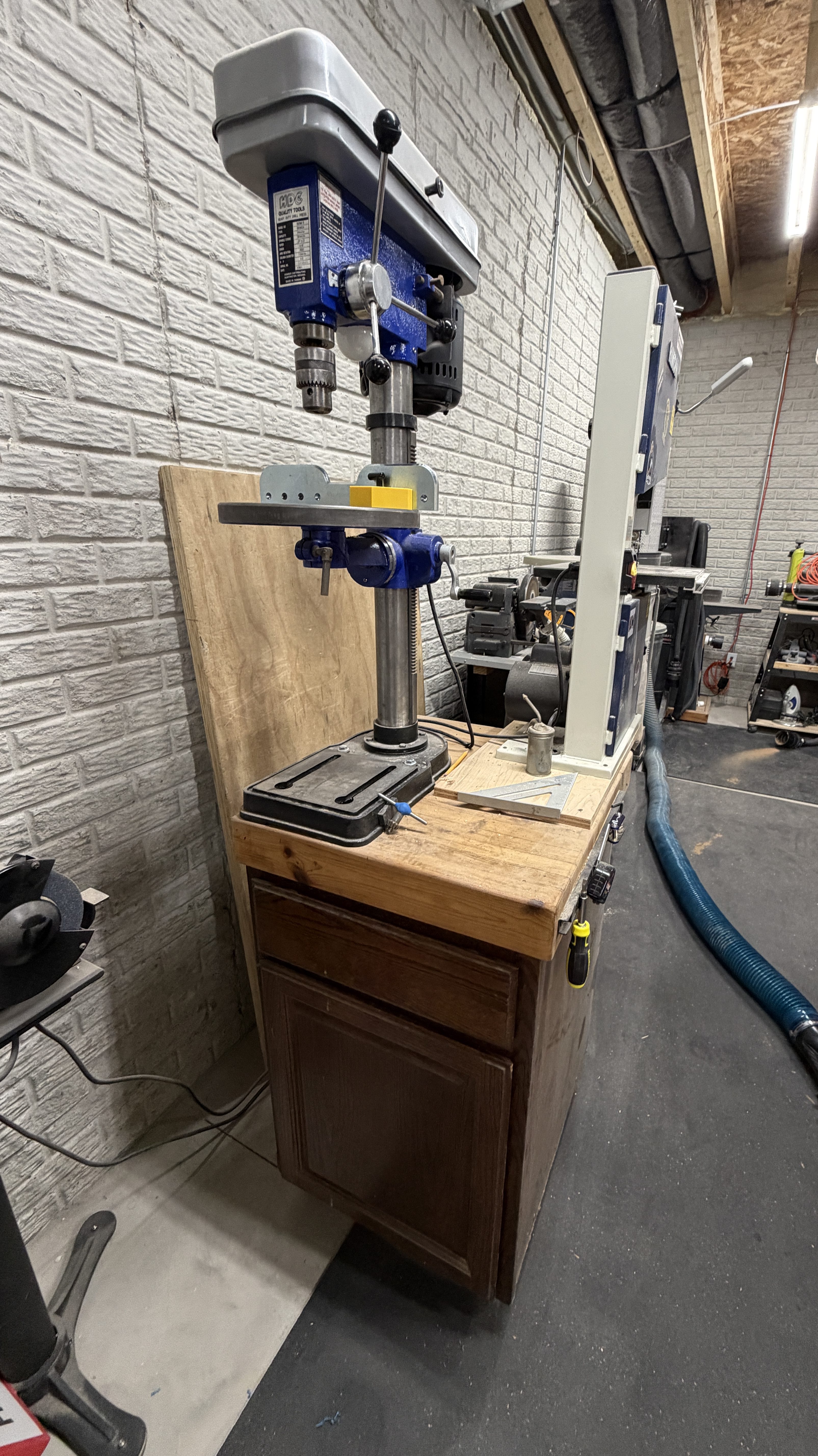
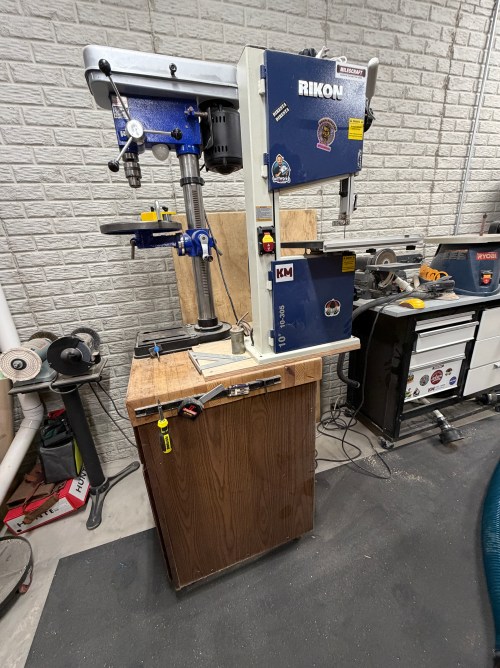
I did this because I’d been wanting a new cart for the old Homier Distributing Company BDM 5 Drill Press. It was too high and I needed more drawers so I could organize everything better. This move would surely force my hand, though it ended up taking over a year.

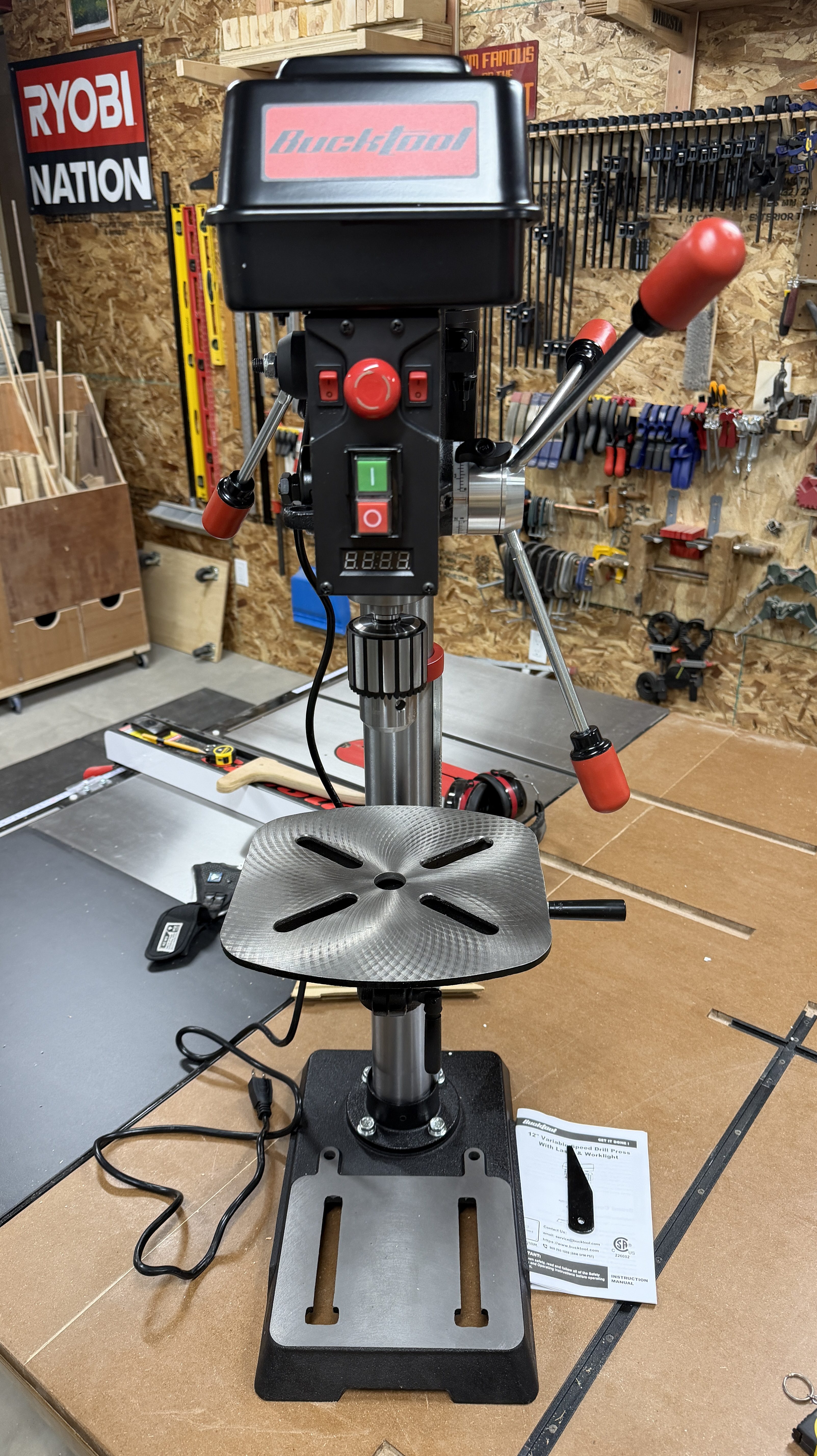
I’ll get to the cart in a minute, but there’s more to this story. For years, to change speeds on a drill press has required opening the top housing and moving belts. I restored that Homier over eight years ago and can’t ever remember changing the speeds, which isn’t good. Different materials and bits should be drilled at various speeds. The problem is almost always spinning too fast, which can dull bits and produce poor results. I saw the Nova Voyager drill press in a YouTube video and wanted one because of the digital features.

For what I do, I could never justify the cost. About two months ago I started searching for other options and found models where variable speed is adjusted by a handle. The popular budget version seemed to be the WEN 4214T (or the 6.2-amp WEN DP1263V). After more research I decided, when I was ready, I’d get the Bauer 12″ from Harbor Freight. Then on Christmas Eve morning a deal for the Bucktool DP12 popped up. I threw it in my cart and it was half off after discounts. Sold!
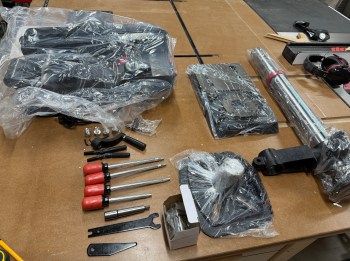
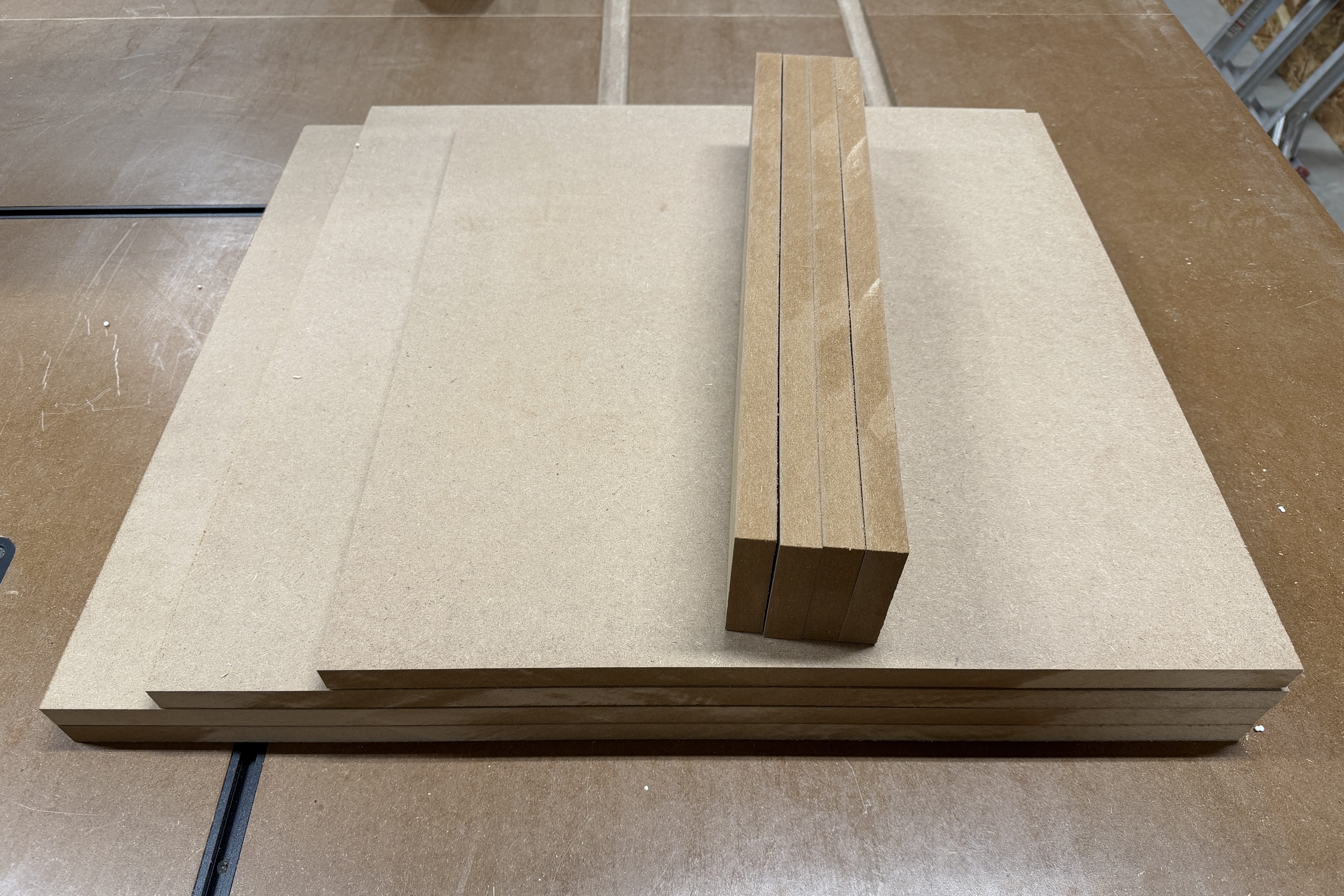
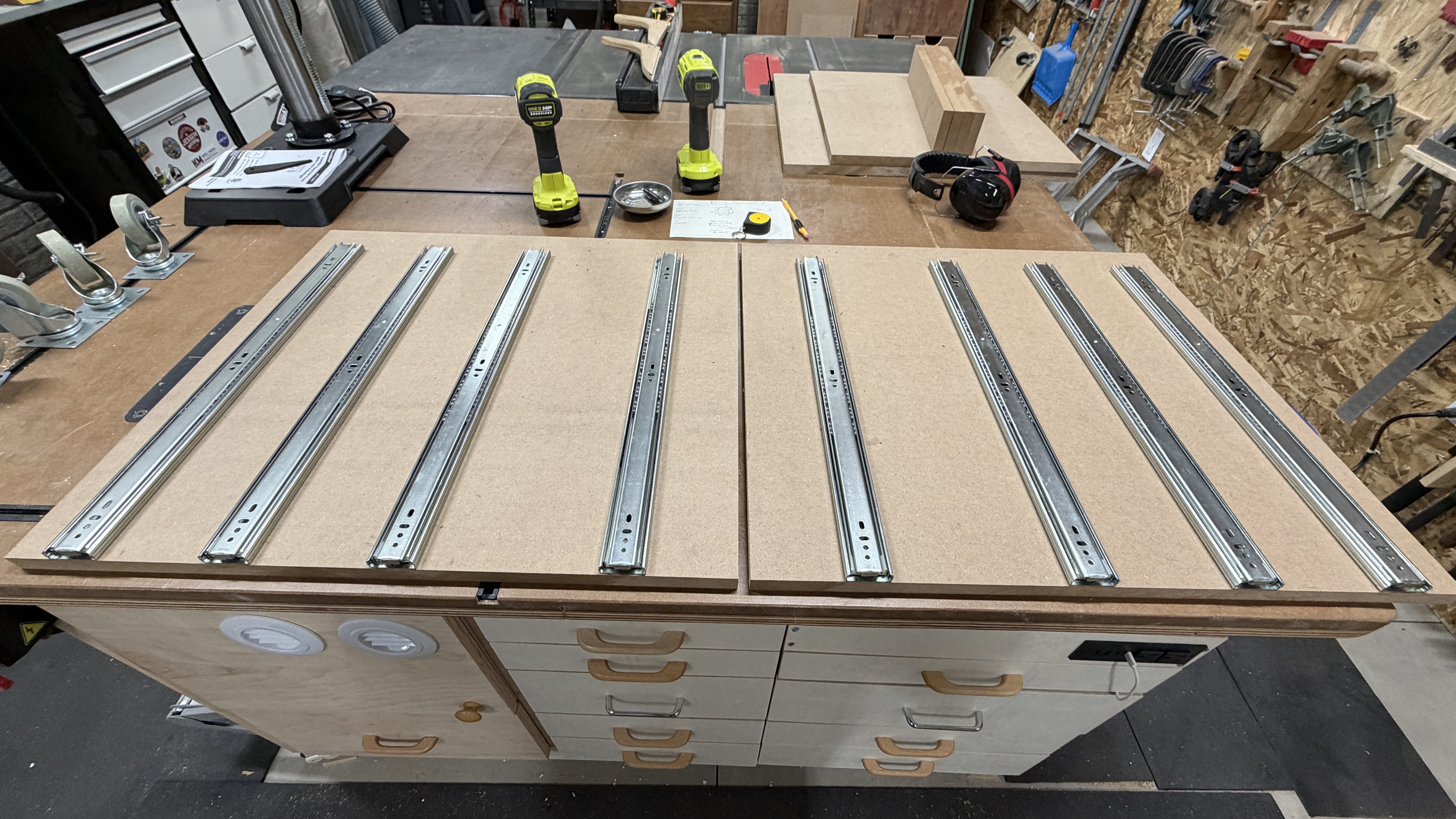
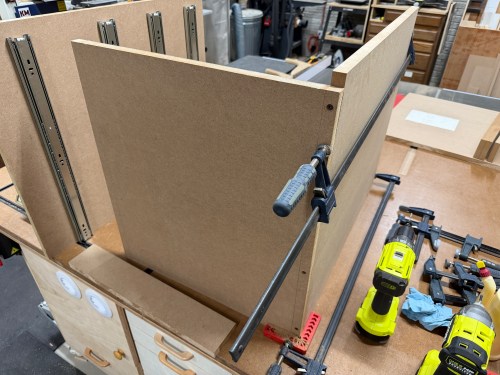
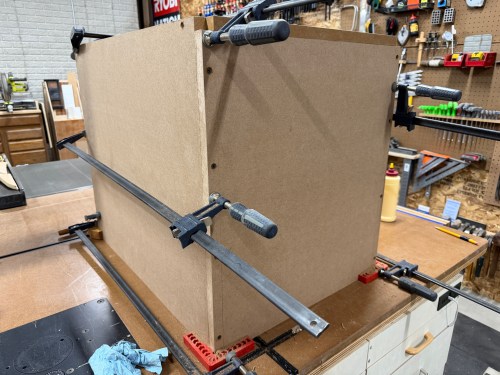
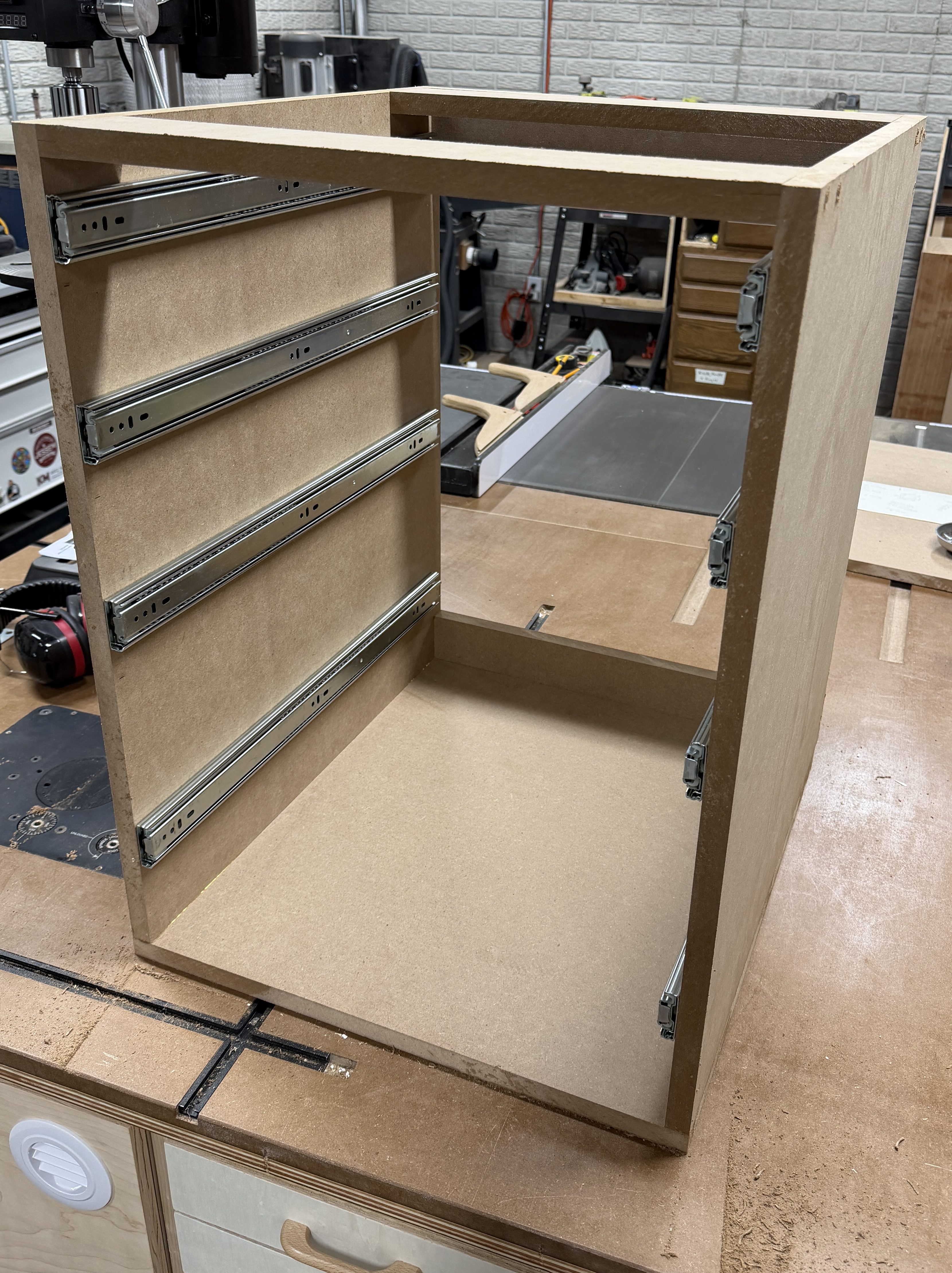
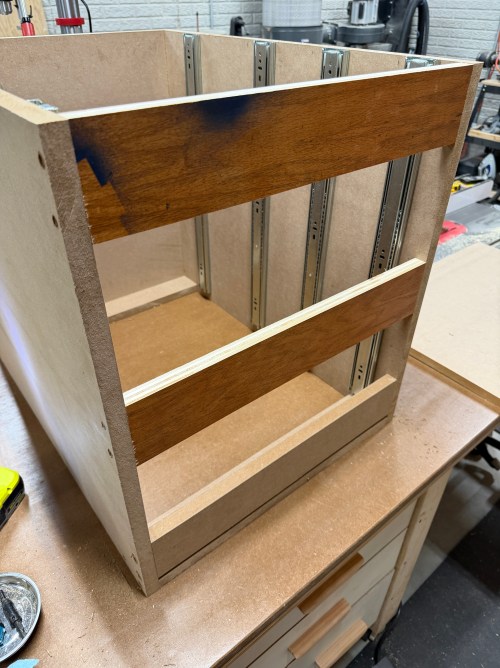
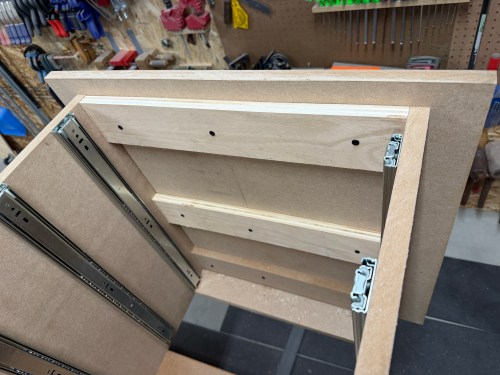
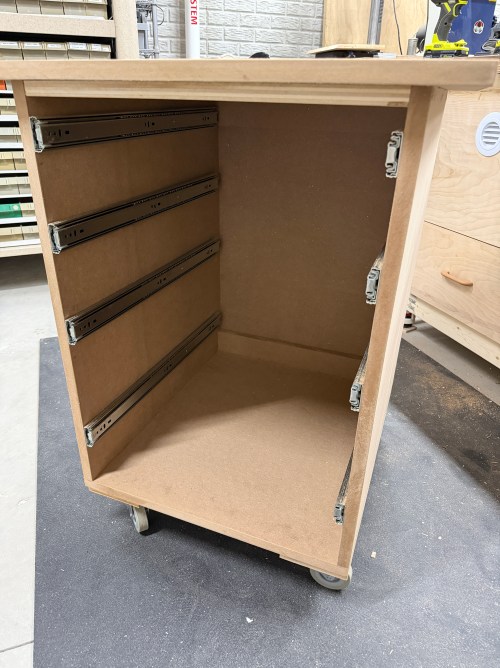
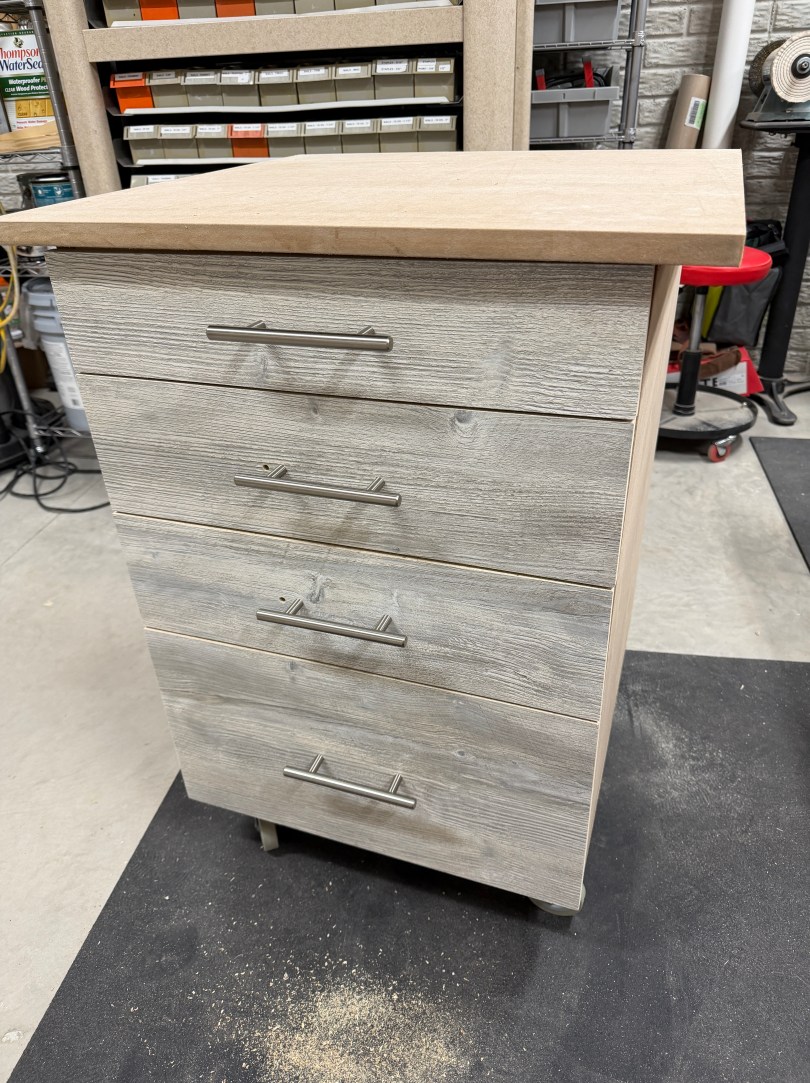
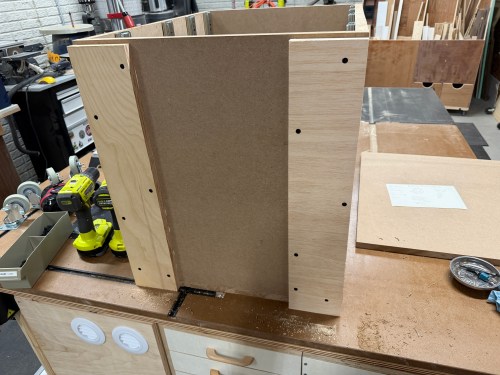
That new cart became a priority, so I determined a much lower height and the dimensions. I got out 4″ castors and 22″ drawer slides. I didn’t have enough 3/4″ plywood, so cut up MDF leftover from the outfeed table. Assembly was quick and attaching the slides to the cabinet before putting it together makes it so much easier.
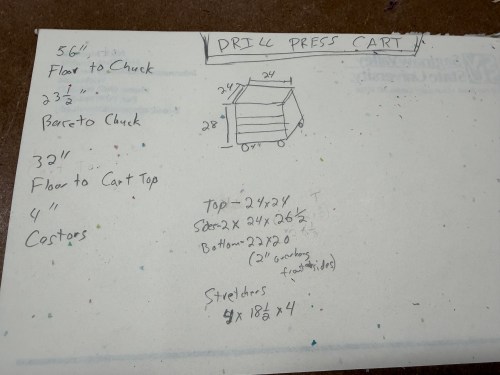
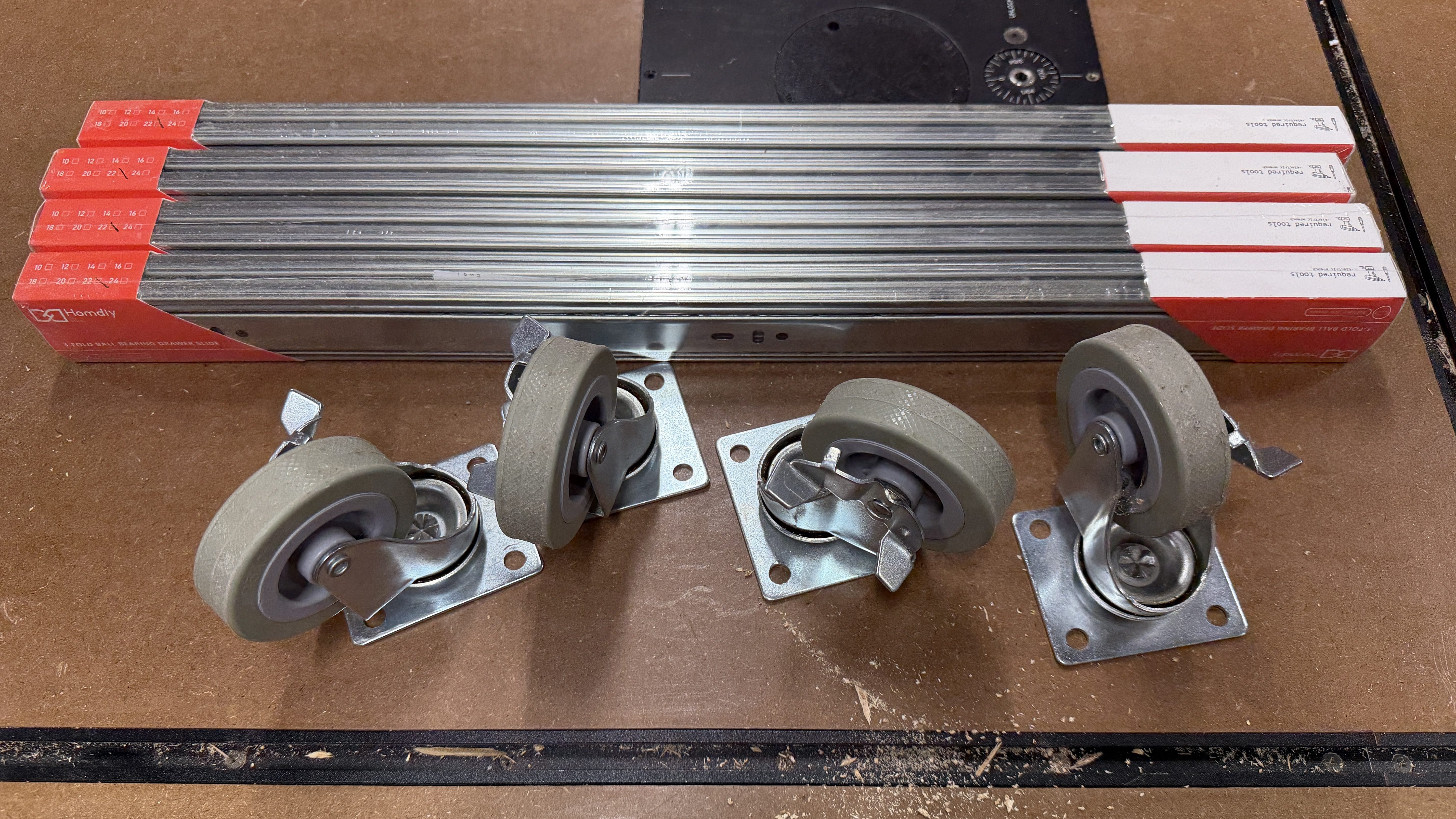
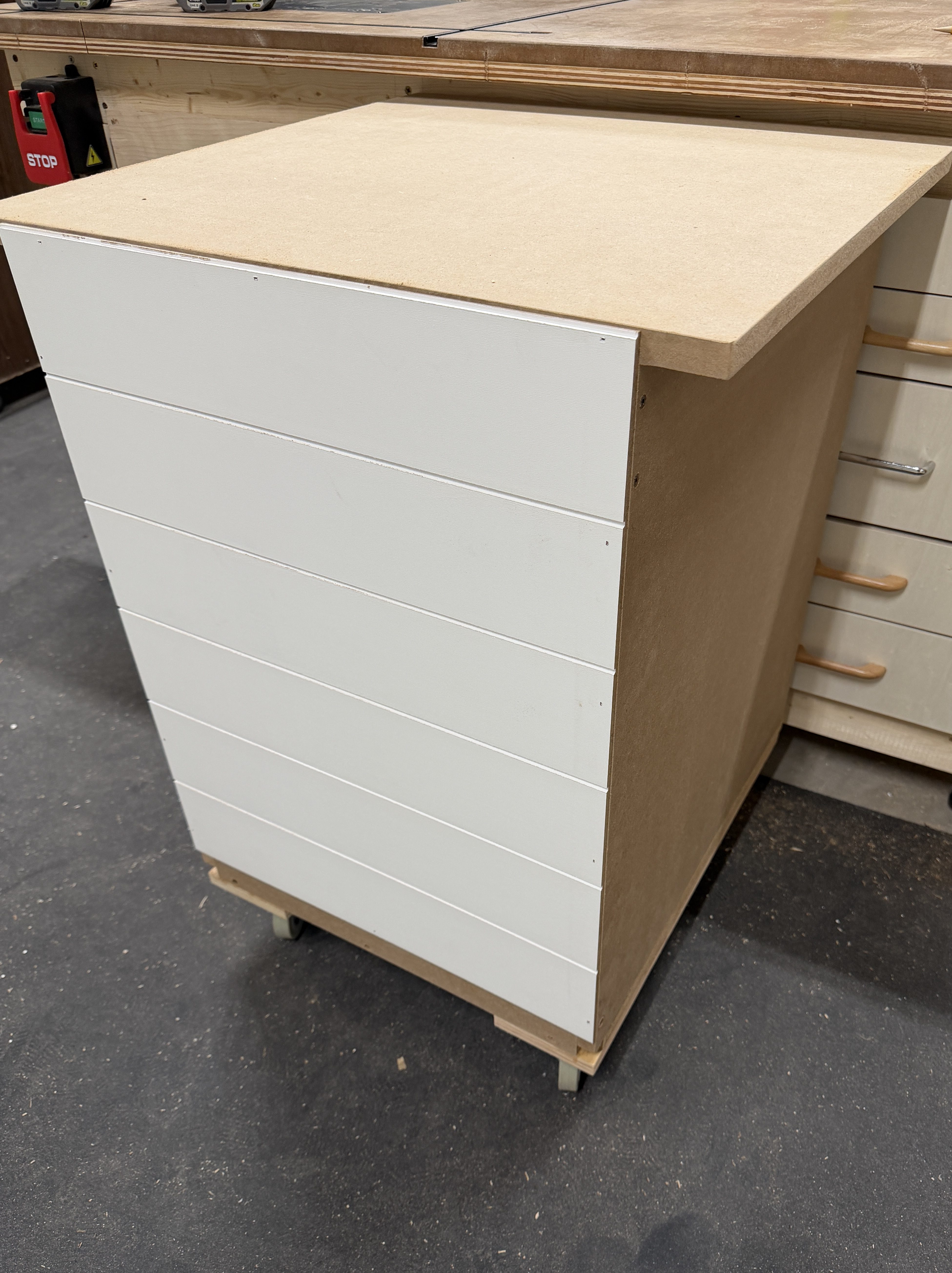
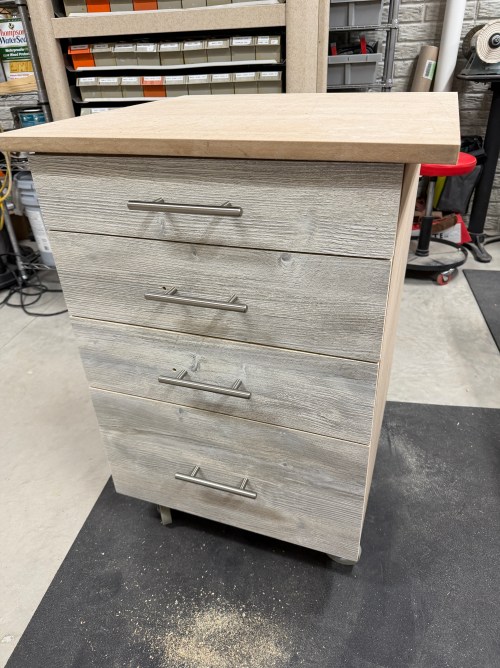
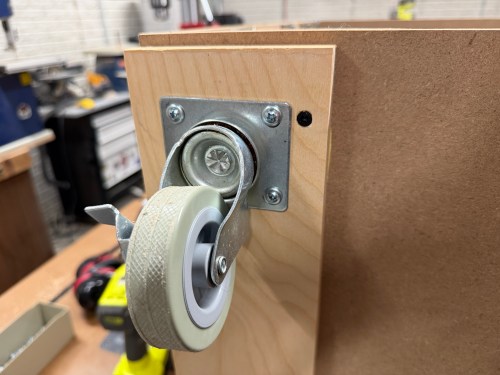
I was worried about the castor screws pulling out of the MDF, so I glued and screwed pieces of 3/4″ plywood to the bottom of the cart and then the castors. I also added more support across the middle of the top, where the bulk of the machine’s weight will be. Then attached the top and a shiplap paneling back.
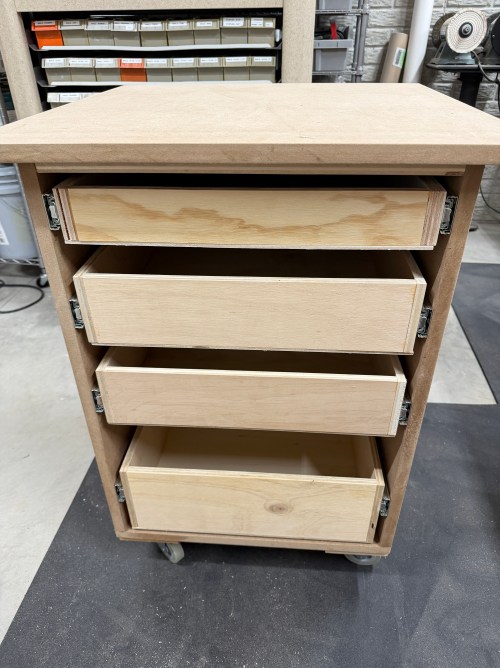
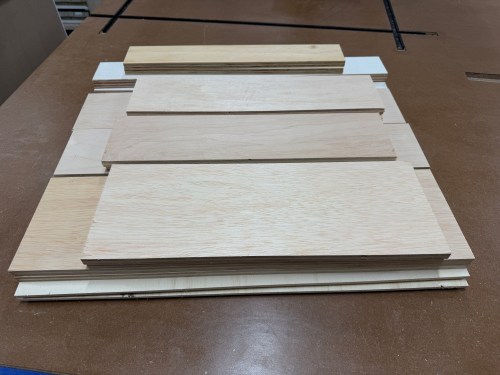
Next, I made four drawers.
The final step was to mount the drill press. The height of this cart is a huge improvement!
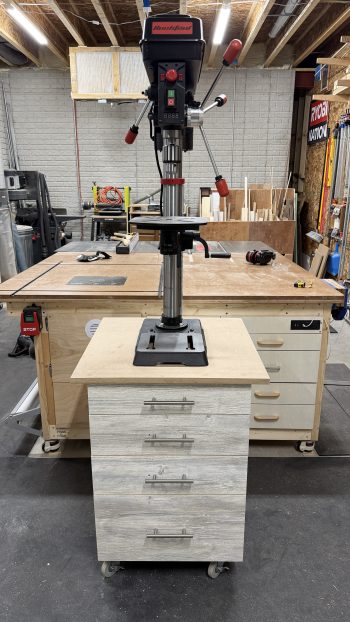
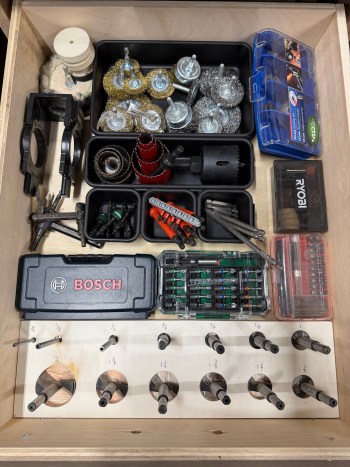
With everything done I organized the drawers and made a custom holder for my Forstner bits. I think I’ll eventually make a something for all the drill bits and everything that goes with the rotary tool.

Now the bandsaw could live by itself on the old cart. I removed the butcher block and replaced it with 3/4″ plywood to lower it as well. There isn’t much to go with it, so I was able to store other various plastic and metal materials in the cabinet. Those were the last boxes to unpack after the move!

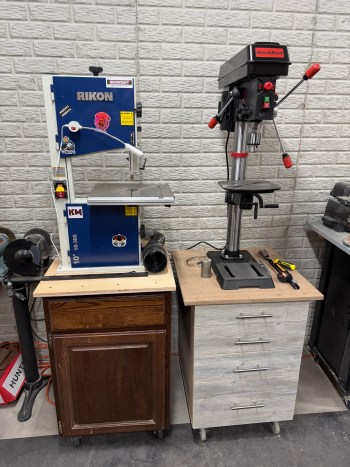
Stay tuned for other cool drill press upgrades. Ideas are baking and parts have been ordered.

DIY Shop Towel Bar

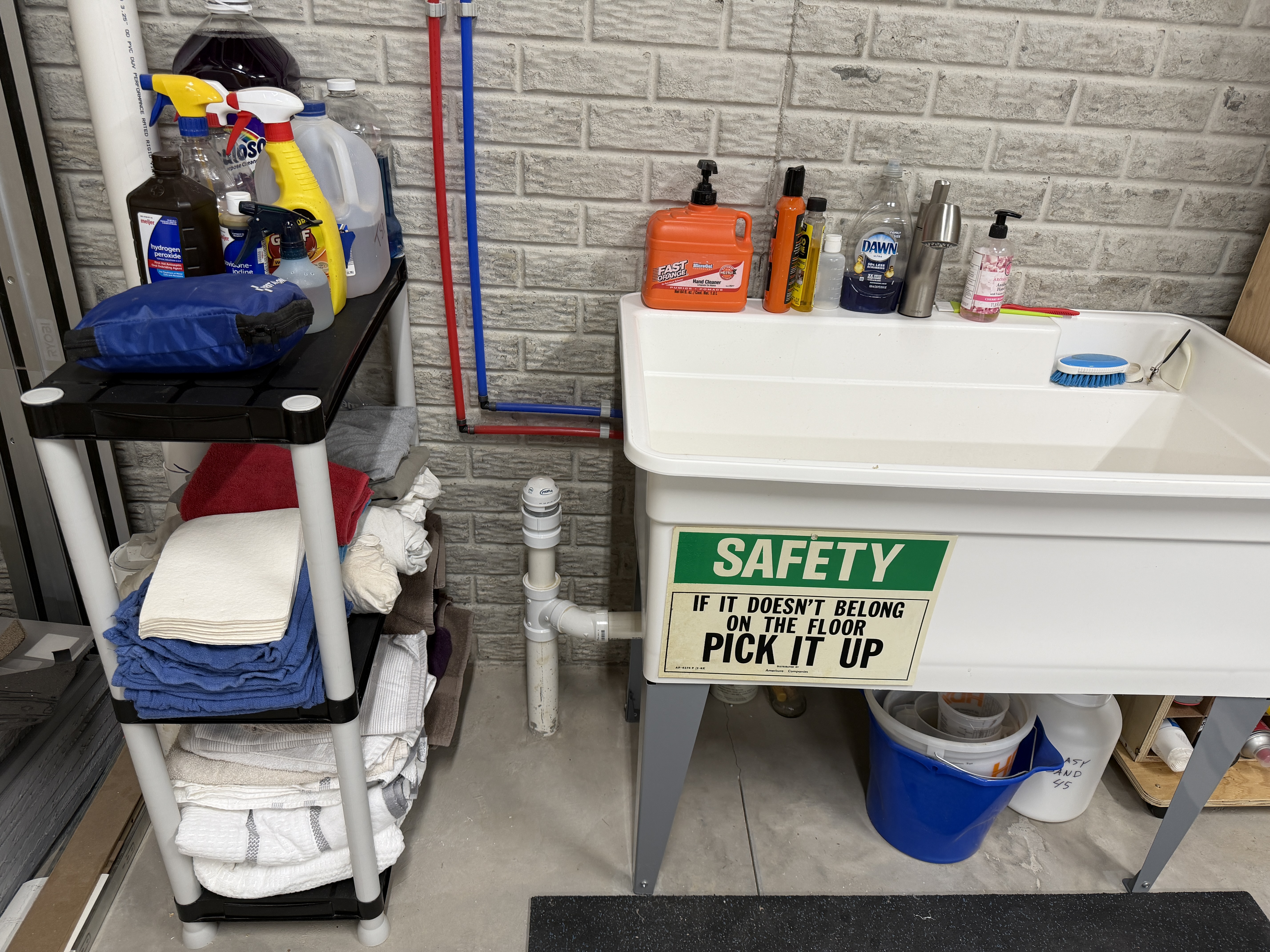
With my big shop table done and a lot of storage space to fill, I finally started to tackle the boxes and piles of things that have been sitting in the corner for nearly a year and a half. First up was towels, rags, cleaning supplies, and first aid. We had an unused plastic shelving unit, so I put it to use. It went between my Ryobi cordless tool wall and the utility sink.

Finally trying to pick things up!

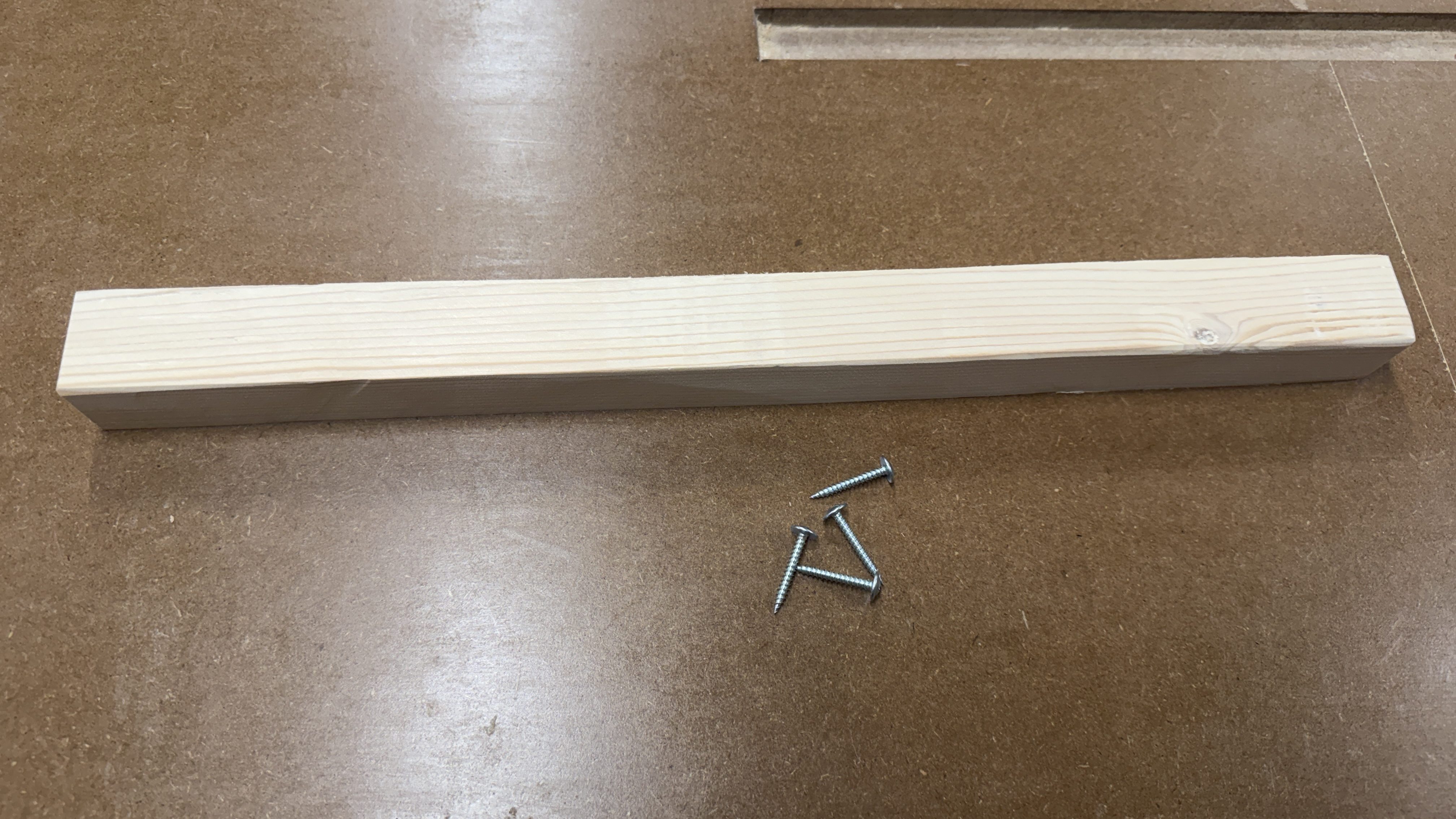
I’ve been draping a hand towel over the edge of the sink since moving in and now I had a place to mount a towel bar. I quickly cut some 2×4 to size, so it would fit between the edges on the side of the top shelf.

Truss head screws, so they’re less likely to pull through the plastic.

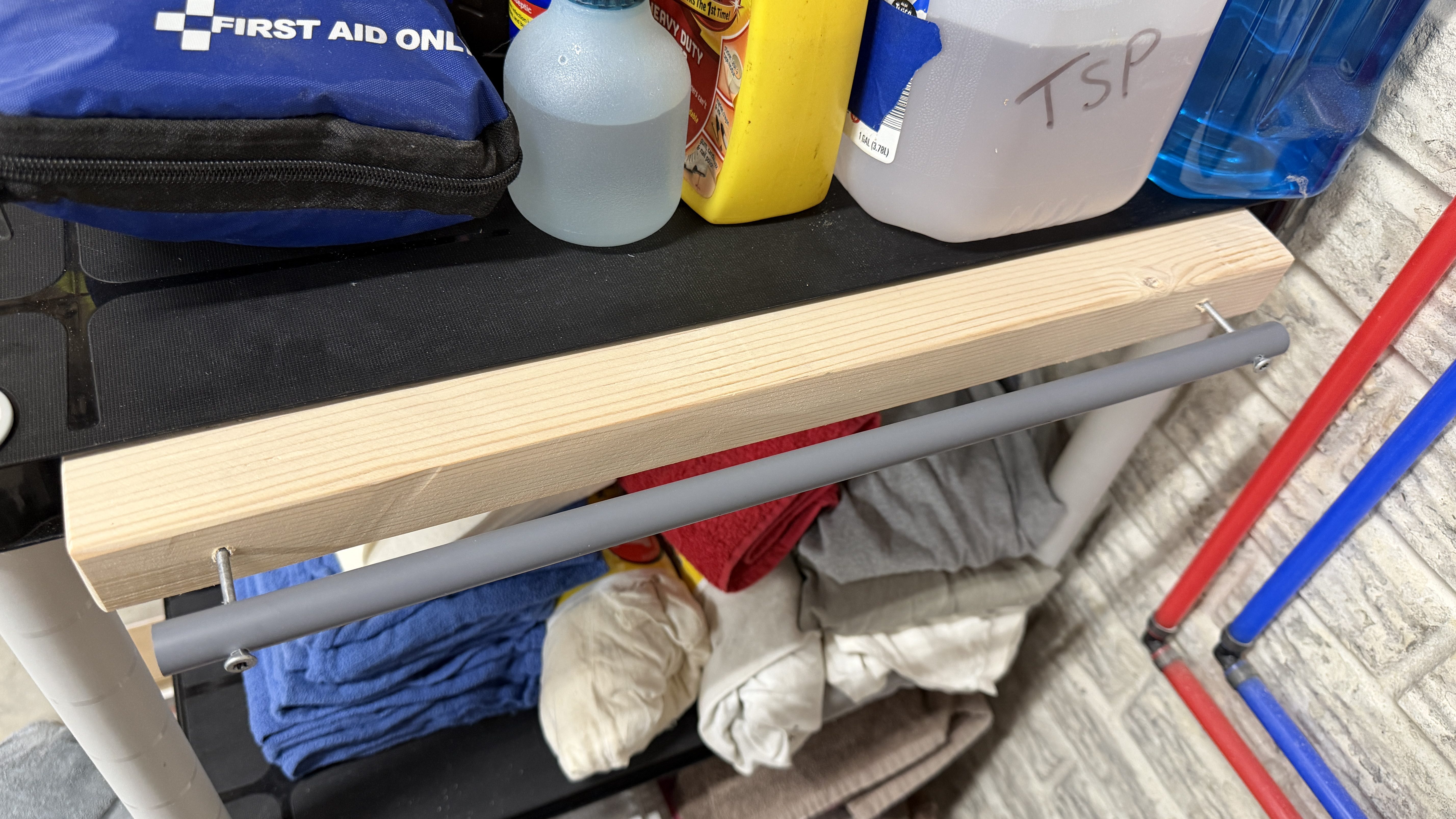
Then I drilled four holes in the edge of that shelf and mounted the piece of wood. I drilled two more holes in a piece of PVC and mounted it to the wood.

Ignore the sand marks.

This was a quick project and it’s extremely useful. I love simple shop builds where functionality is the most important requirement.

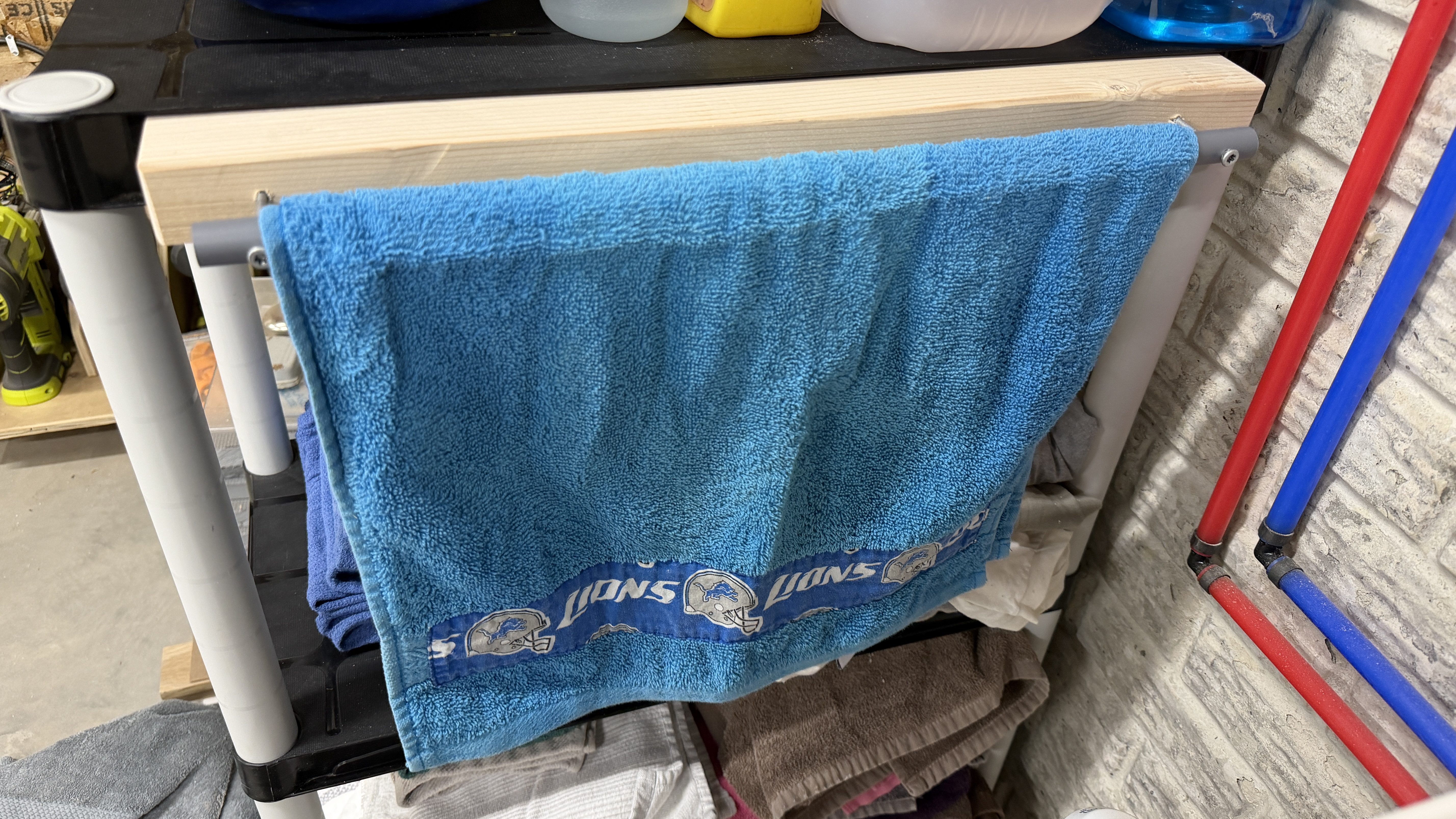
Several years ago my aunt made me Lions and Red Wings towels that I use in the shop.

If you’re looking for a much nicer towel bar/rack, check out the rustic ones with hooks I made for Brandi’s old house or the combo of black walnut and railroad ties for our old previous house.

Upgrading a Used Table Saw – Part 2

I’ve done a lot more to my used Craftsman table saw (model 113.298032) since the upgrades in part 1 of this series.

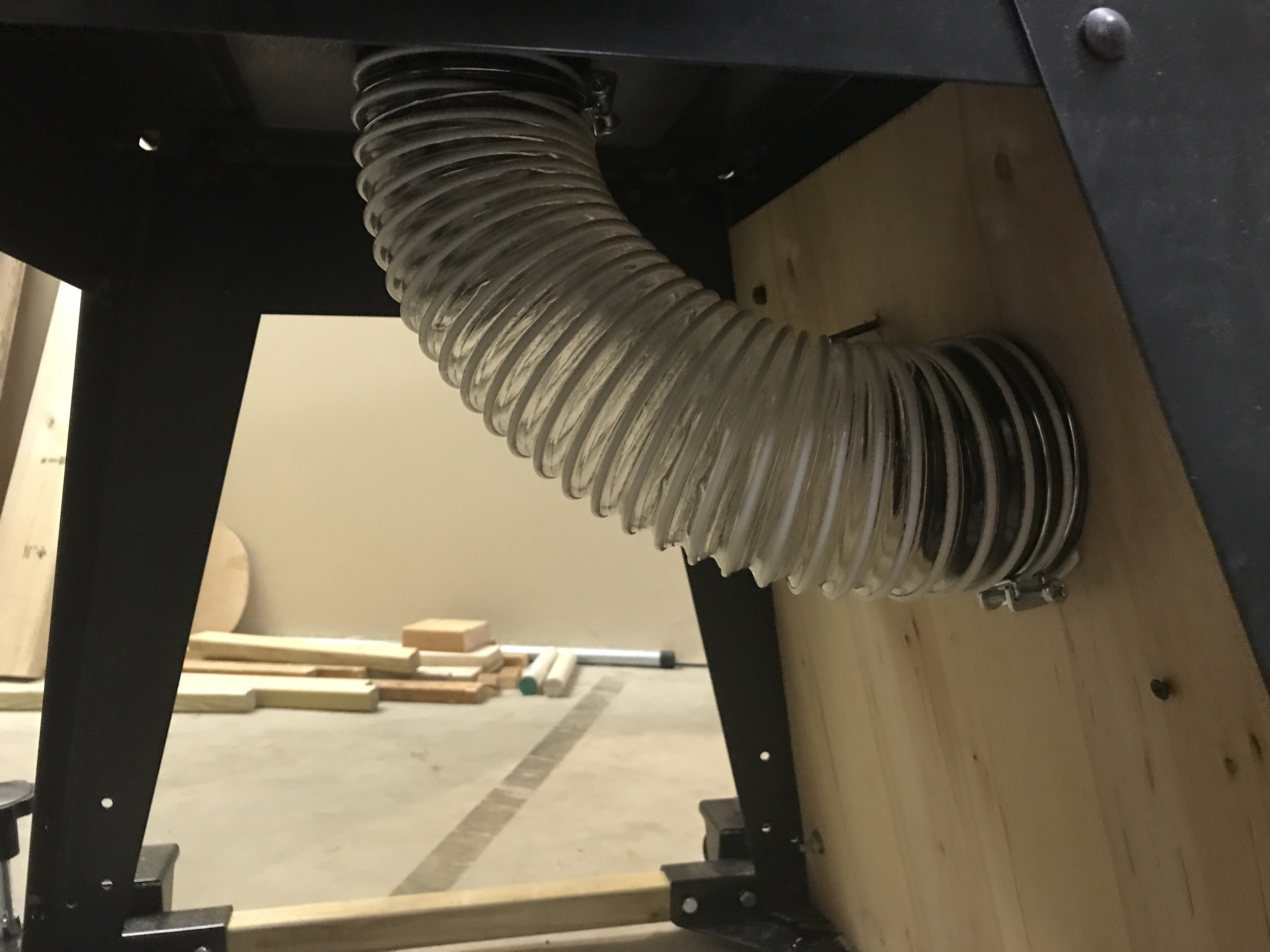
To go along with building my dust separator, I needed a way to connect it to the table saw. I used a dust hood ($8), 4″ hose ($20, with plenty extra for future uses), hose clamps (2x $1.29), 4 in.- 2 1/4 in. adapter ($1.78), and some scrap wood.

While I was grabbing parts from Menard’s I grabbed a push stick (yellow-orange in picture below) for $2. Eventually I’ll make one or two other versions on my own to use with different cuts or sizes of wood. Since I had to add the insert on a side for the dust hose, I add some places to hook stuff. I’ll probably add something similar to the other side of the stand and maybe put in a bottom for more storage space.

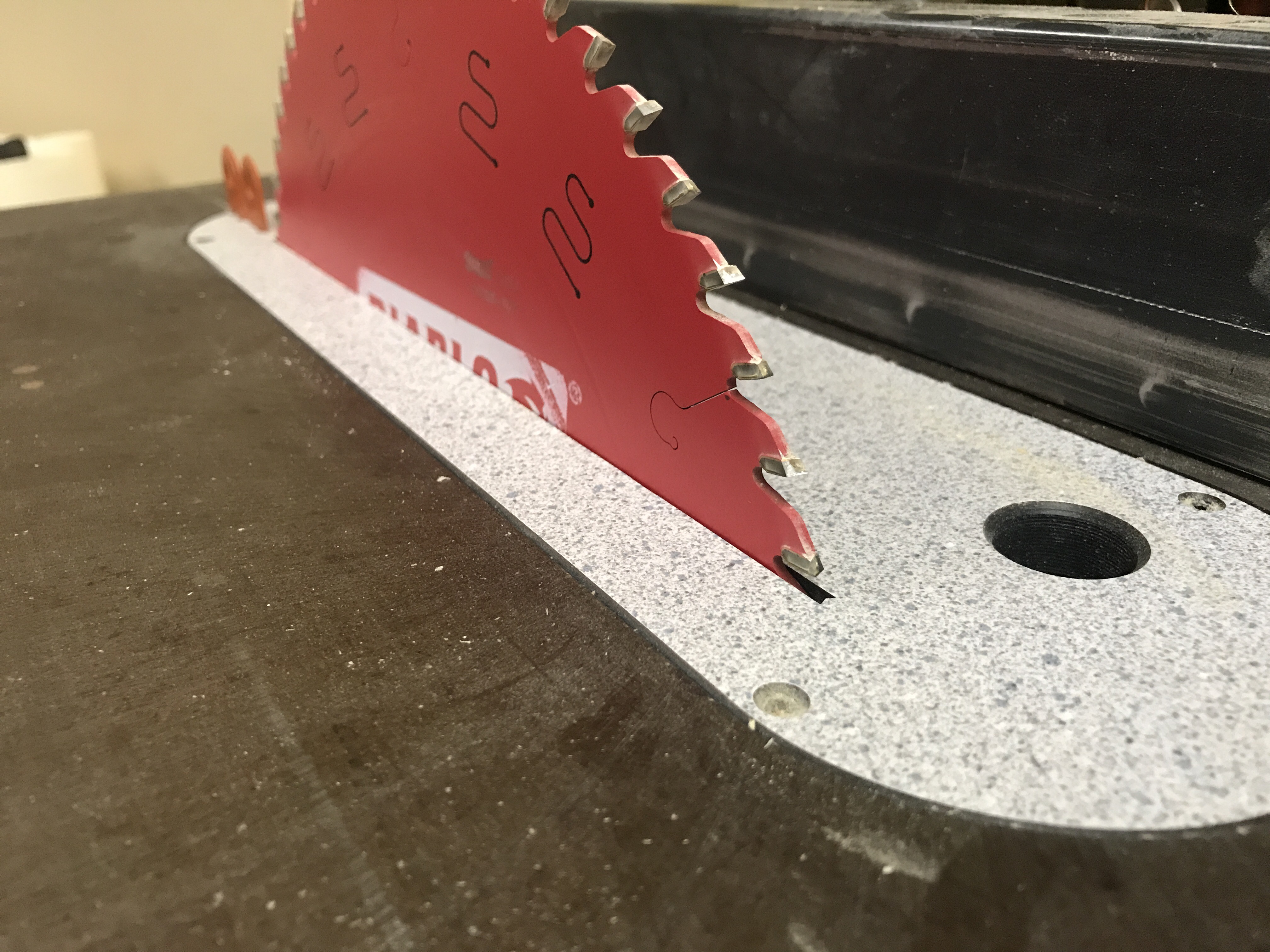
I grabbed a nice Diablo 60 tooth blade ($34) from Amazon, a zero clearance insert ($34), and a splitter kit ($35). After installing the blade, I tuned up all of the alignments on the saw following tips from parts 1 and 2 of a YouTube guide. Once everything was aligned properly I was able to install the insert and splitter. The combo will help prevent tearout, not give space for pieces of wood to fall down into the saw, and help prevent kickback since this old saw doesn’t allow a riving knife. You can never be too safe on these machines.

In part 1, I mentioned fence customizations. The plan there was mainly based on reviews I read about this saw before buying it. Many people said the fence was junk. After aligning everything, making sure to move the fence from the T end (not the end by the blade), and using the saw for a bit, I think it’ll work just fine for me.

At an estate sale I found a miter gauge that actually fits my slots. I bought a digital angle gauge ($15), which not only helps to make sure the blade is aligned properly with the table, but will allow accuracy when setting angled cuts.

Check out part 3.