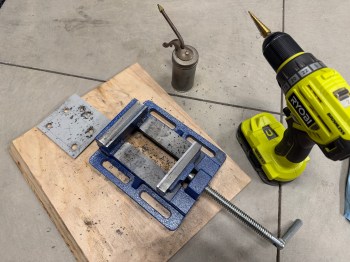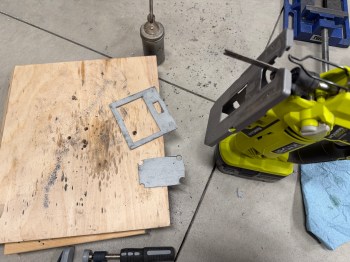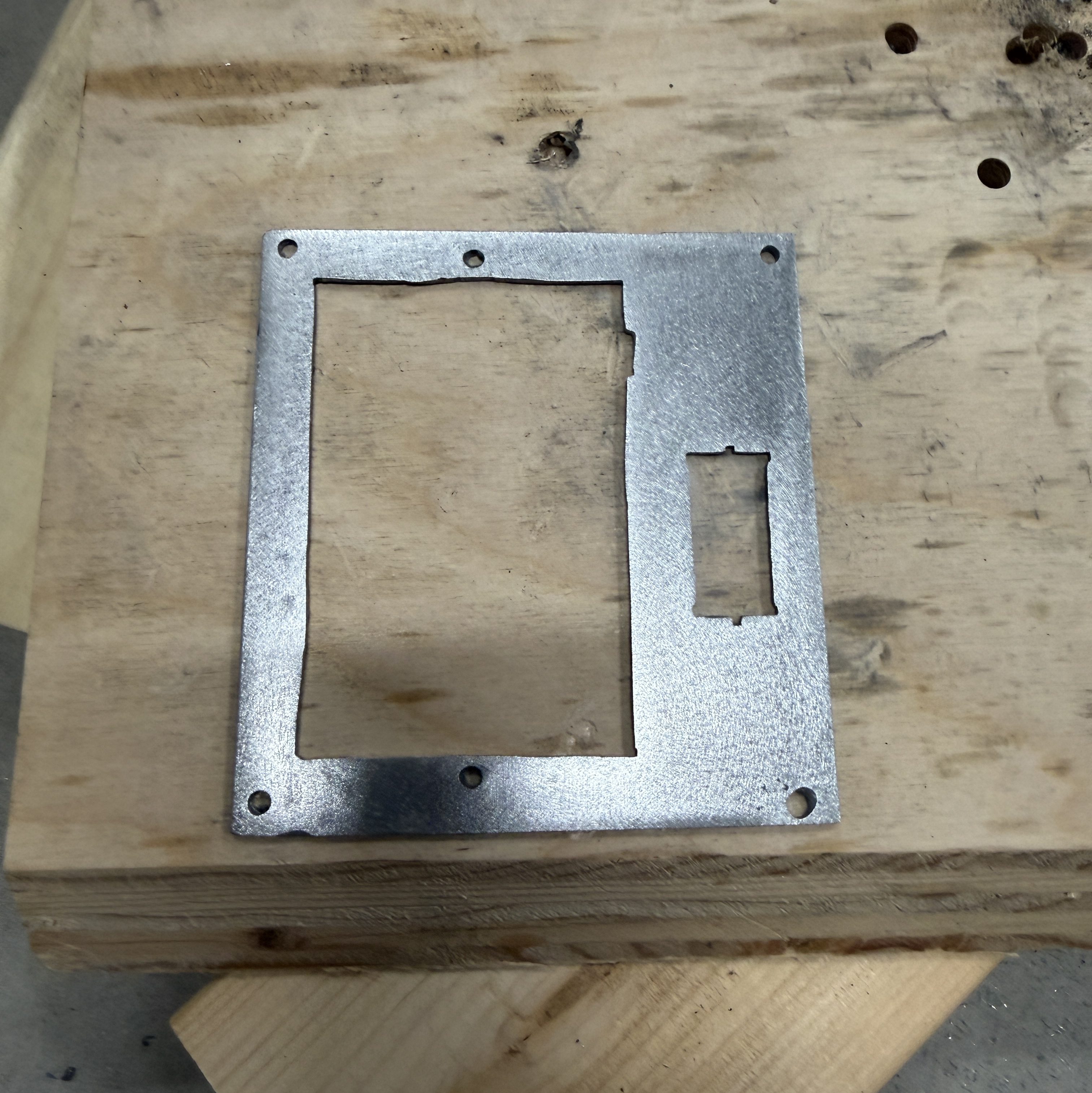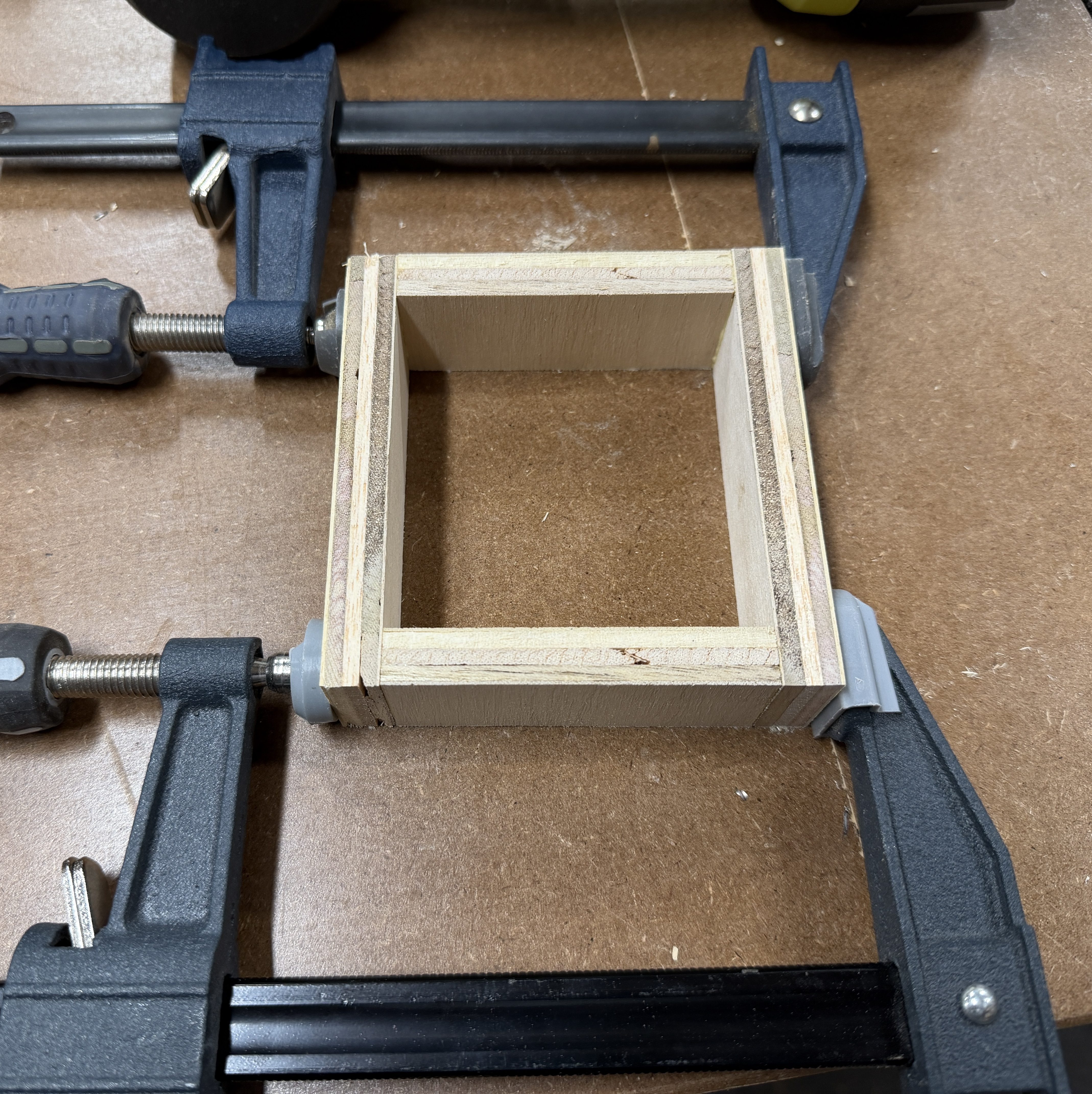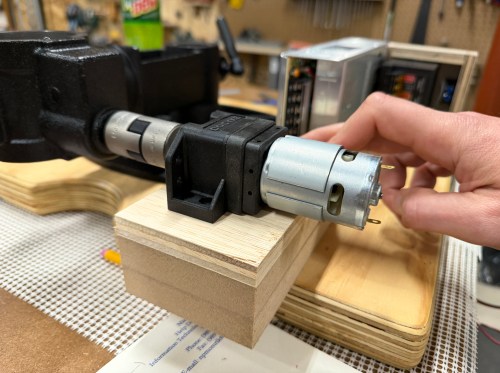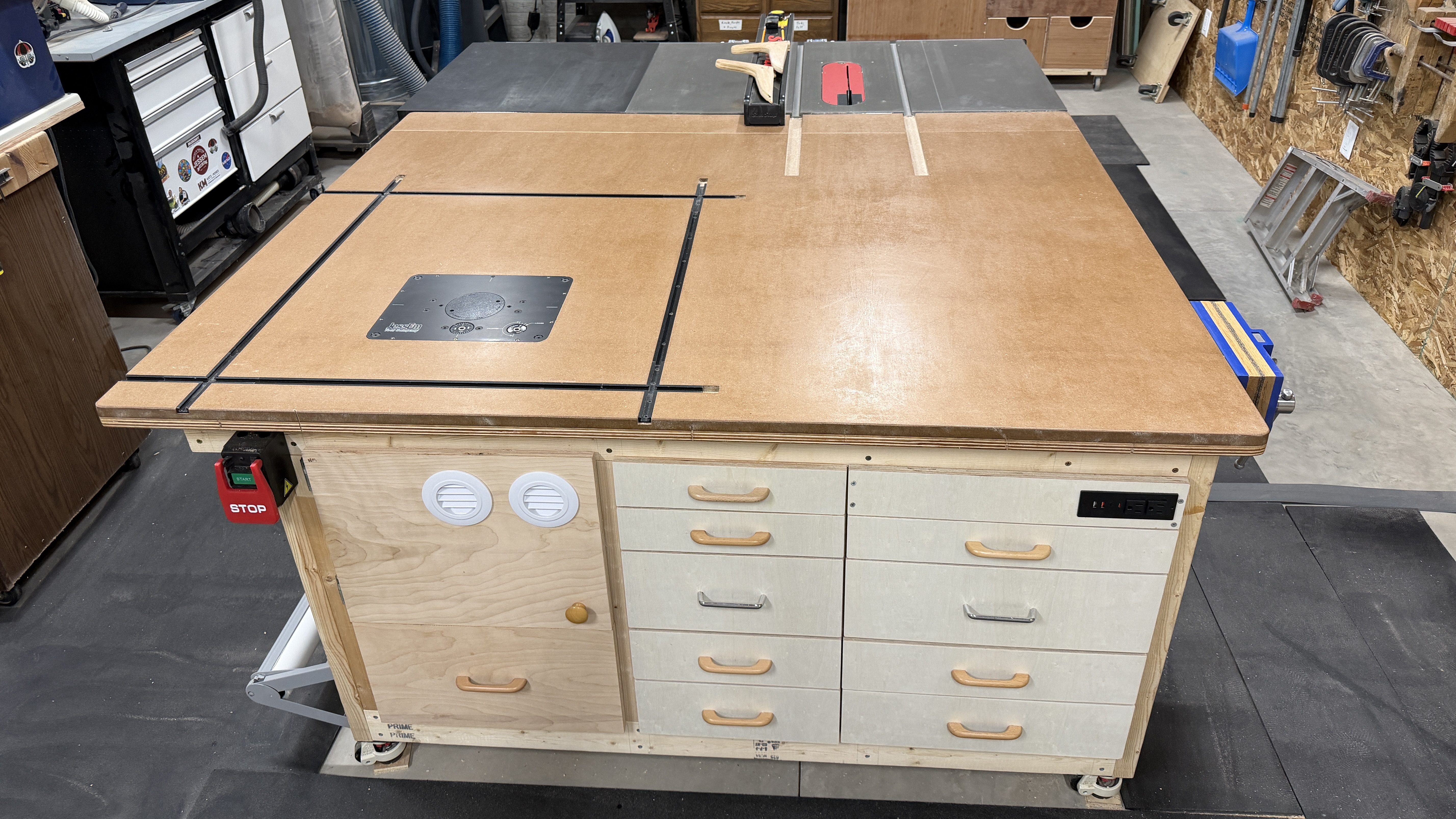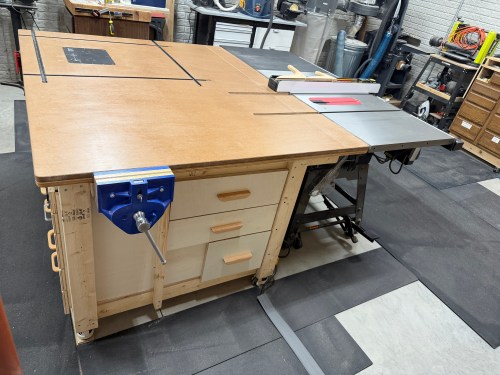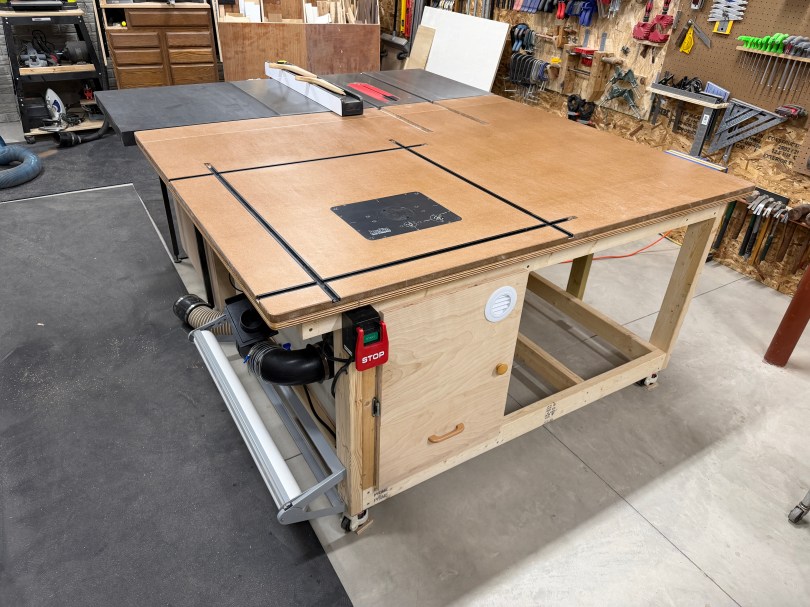
Outfeed Assembly Table – Part 2

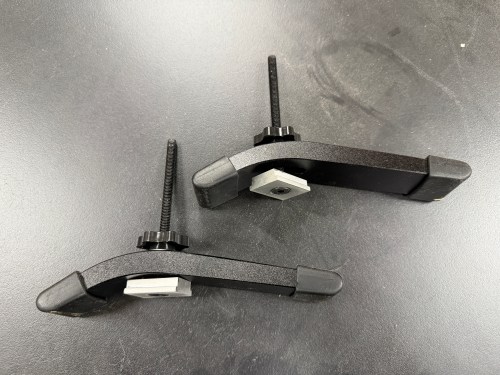
To keep the momentum going from part 1, I started the next phase of the build. This phase is the router station. I bought the Bosch 1617EVS router to use in a JessEm Mast-R-Lift II, with a POWERTEC 32″ fence. I also bought 2×48″ of T-track with four hold down clamps and a four pack of intersection kits.

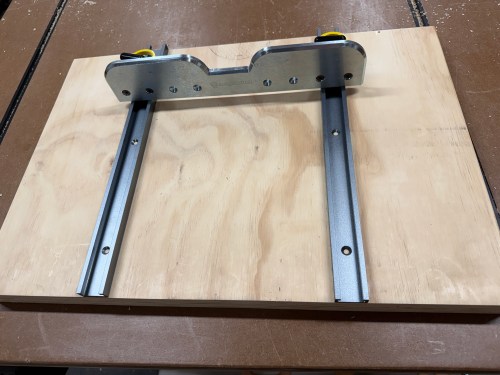
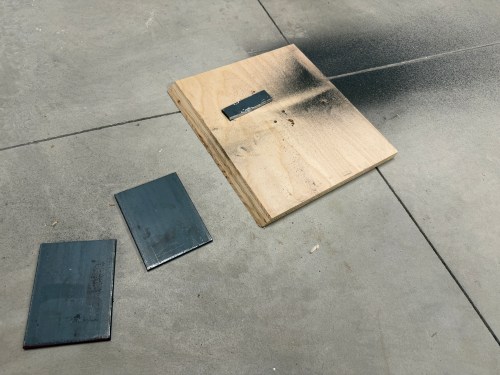
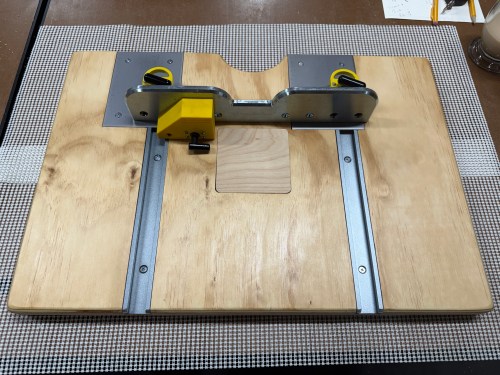
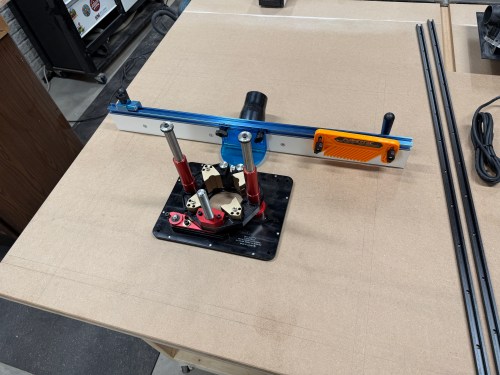
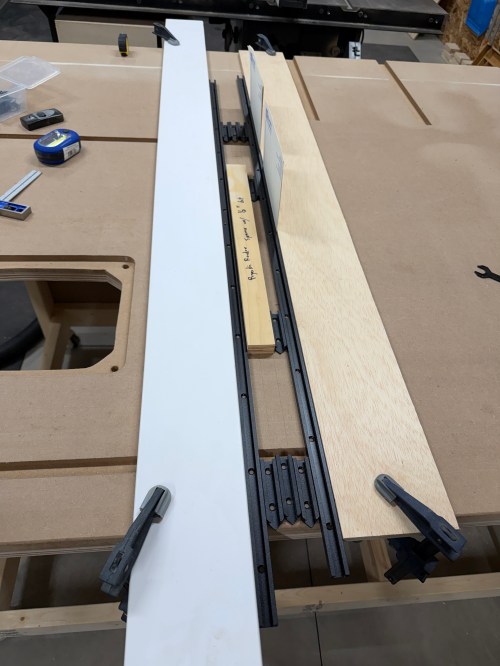
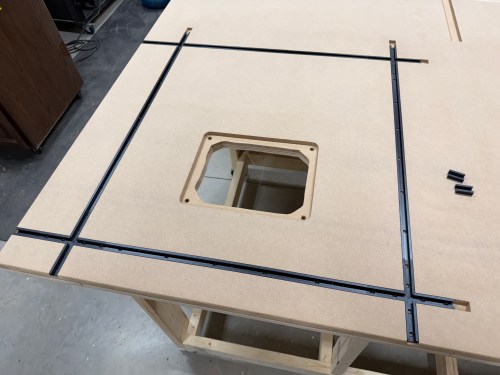
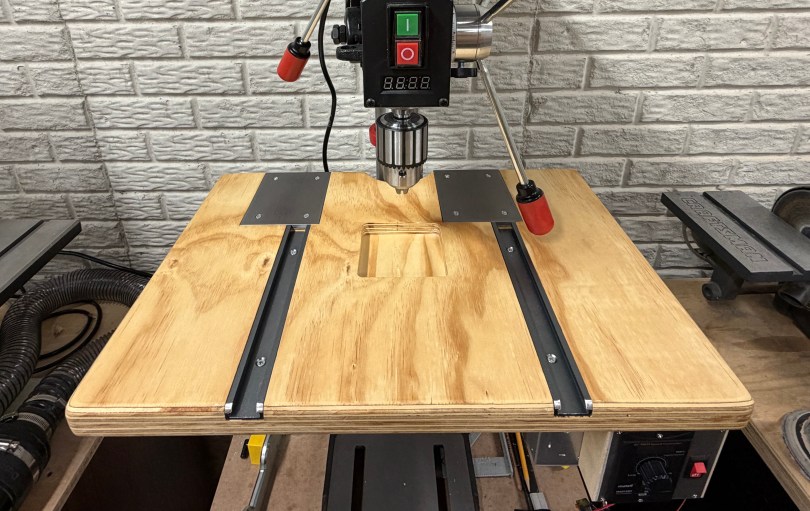
First, I had to figure out exactly where to install everything. I placed the fence and lift (upside down) on the table to get a feel for it. Then I outlined the lift and drew in the T-tracks.

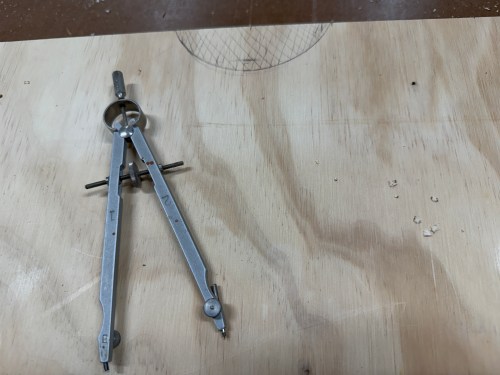
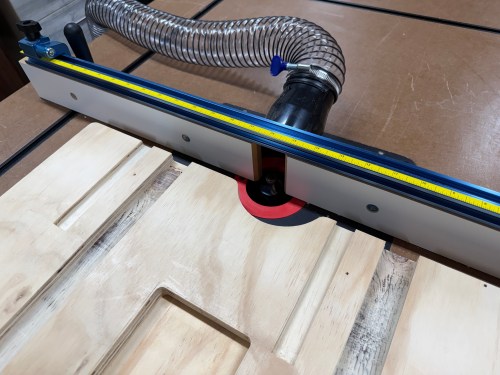
Router station setup with a lift and fence on a work table, showing precision tools and measuring instruments.

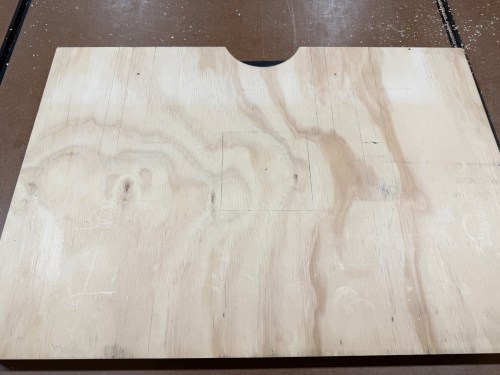
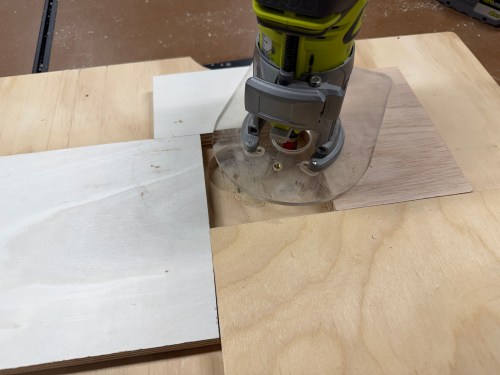
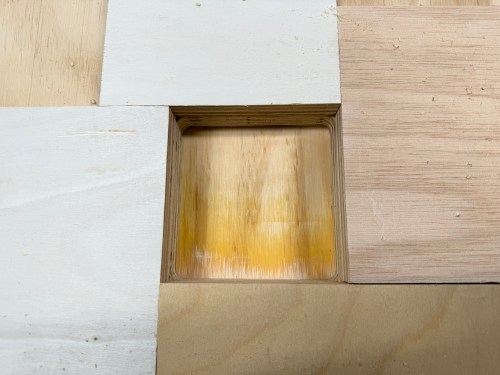
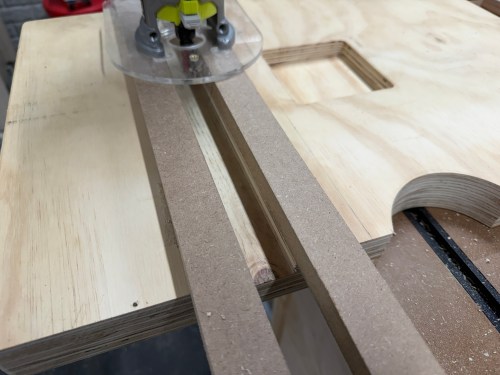
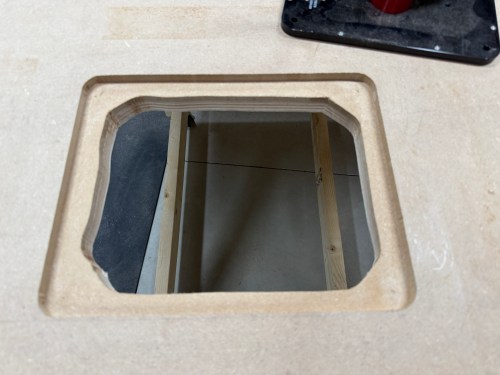
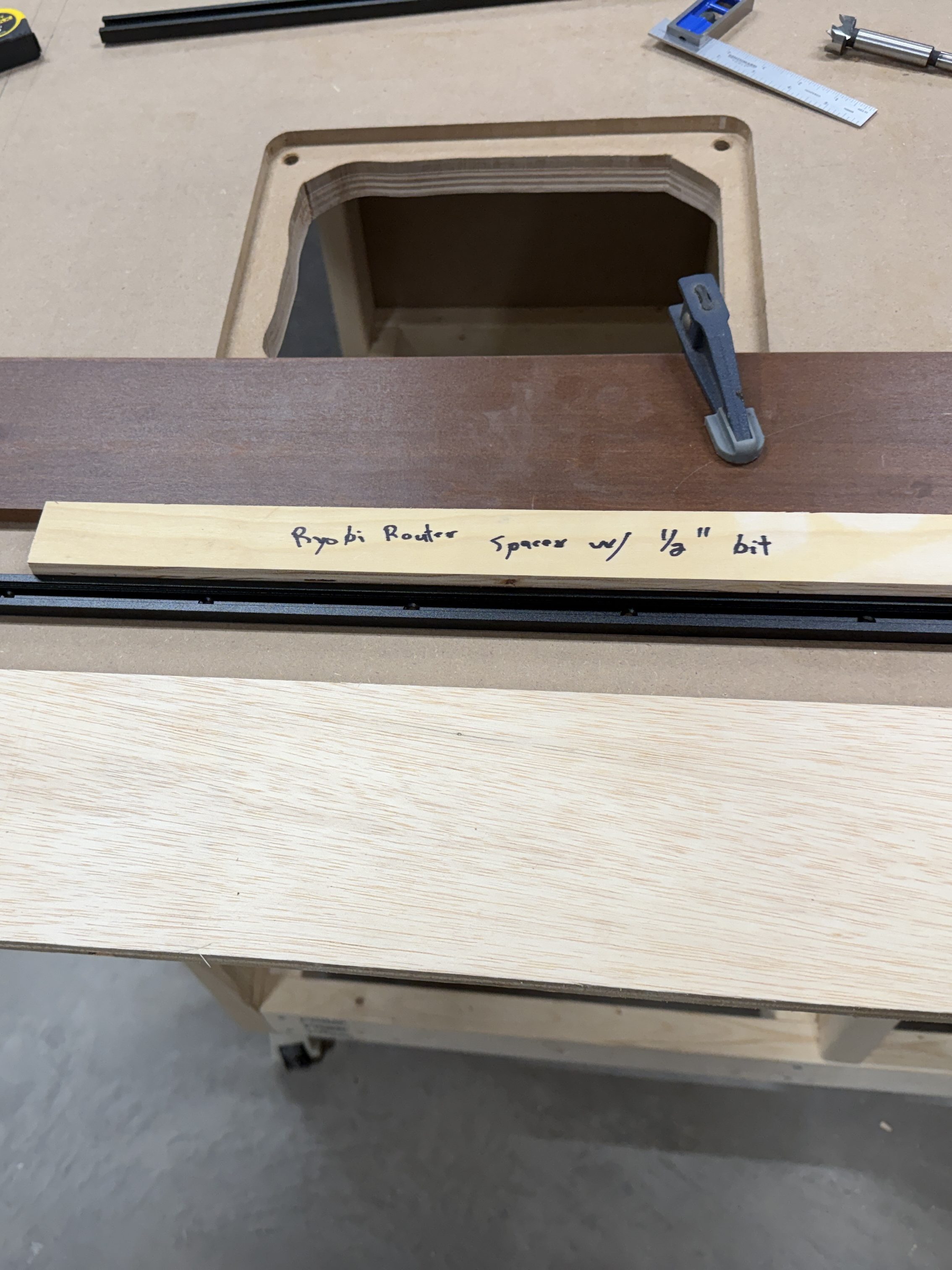
I cut a spacer equal to the distance from my router base to a 3/8″ straight bit. Then I used double-sided tape to secure the border pieces. I removed the material in two passes and cut out the middle with a jig saw. The radius on the corners was much larger than the router bit, so I free-handed those up to the pencil marks.

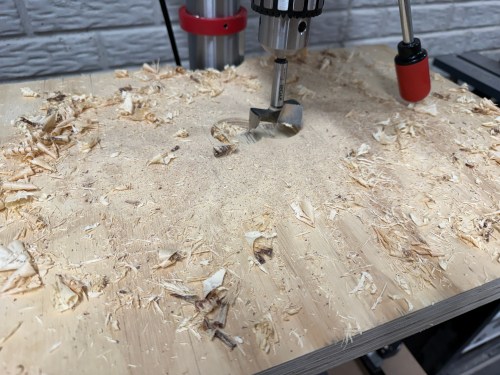
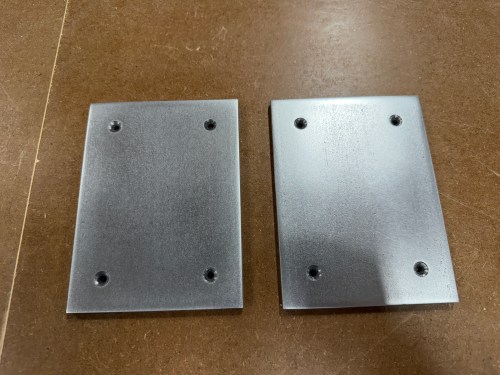
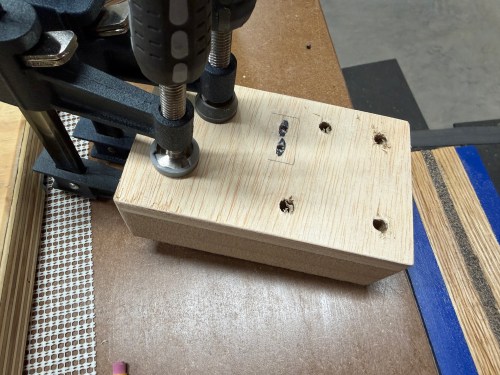
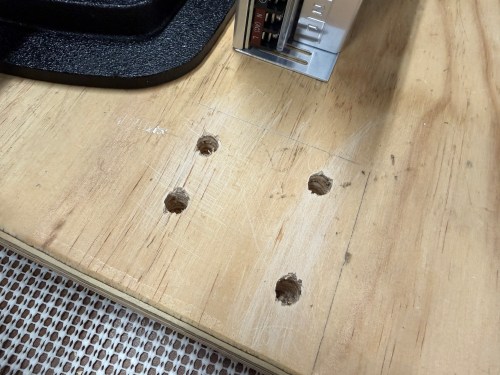
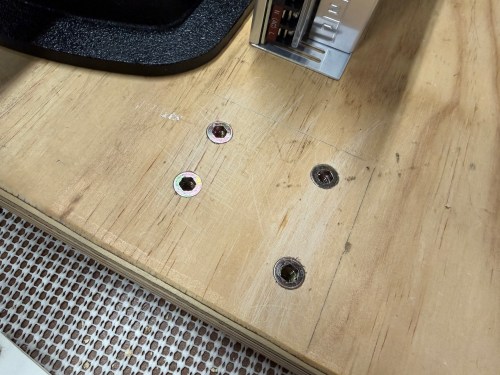
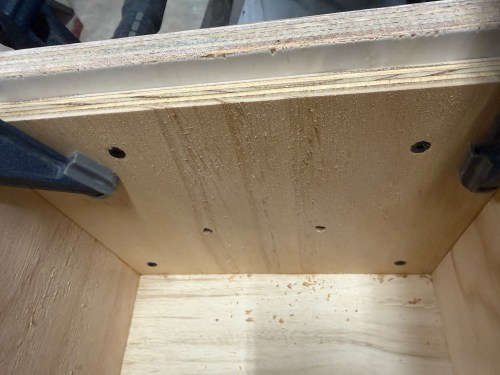
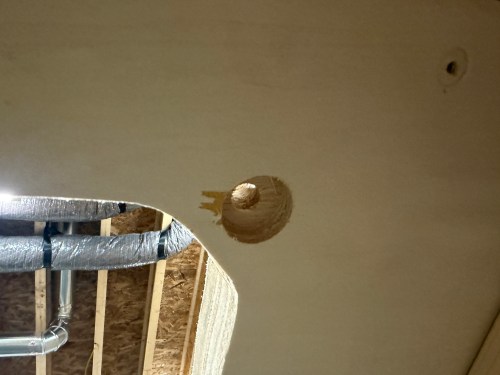
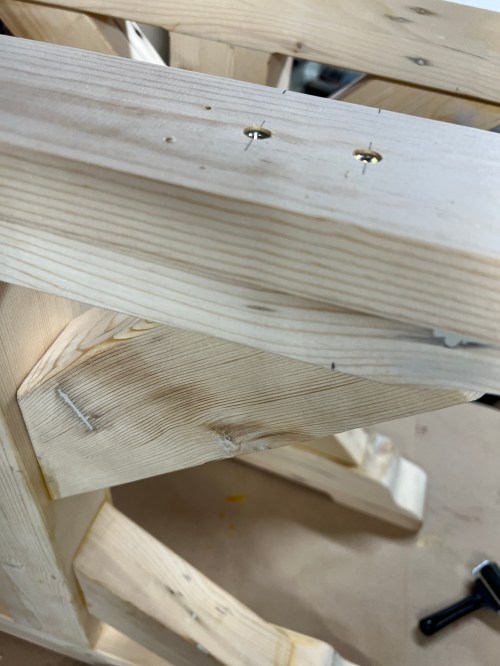
I installed threaded inserts for the four bolts that secure the lift. Yet my centering was off, so it didn’t work out. I removed the inserts and drilled through to use longer bolts with a washer and nut under the table. I had to drill a recess in the bottom because I couldn’t find long enough bolts.

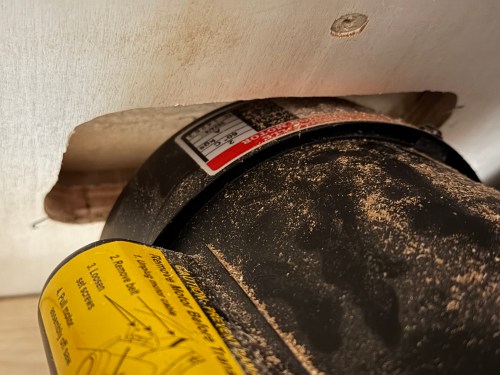
Close-up of a circular hole cut into a wooden surface, showing wood fibers and some markings around the edge.

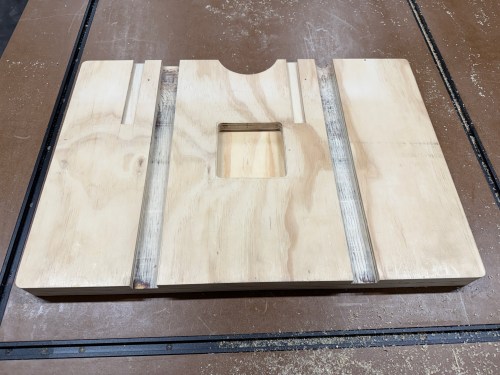
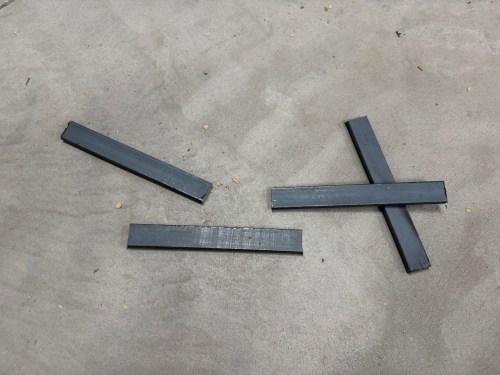
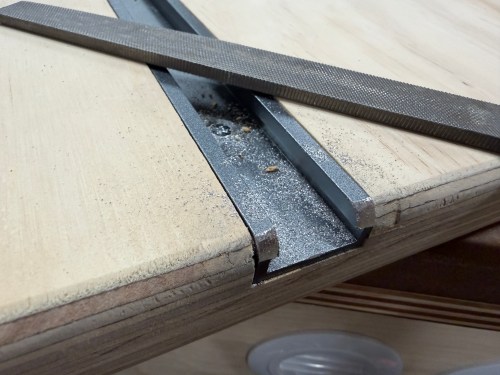
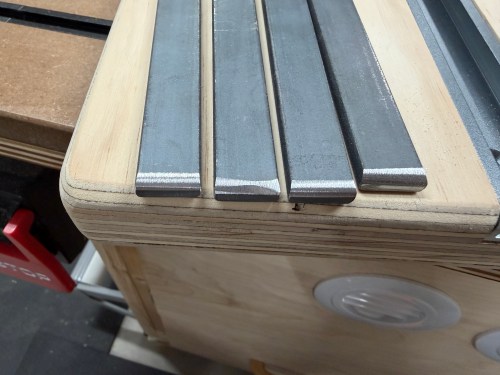
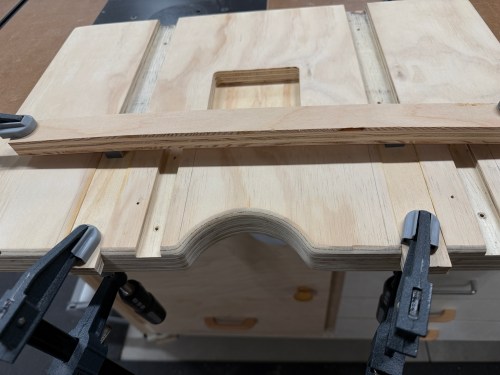
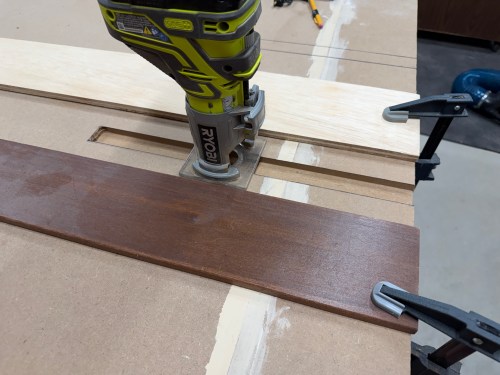
Setting up to route the first T-track took a long time, like when I did the miter slot extensions. I got faster with each one, as I figured out a process and all of the spacing. That same spacer came in handy, as well as pieces of the T-tracks. I measured and cut all of the T-tracks.

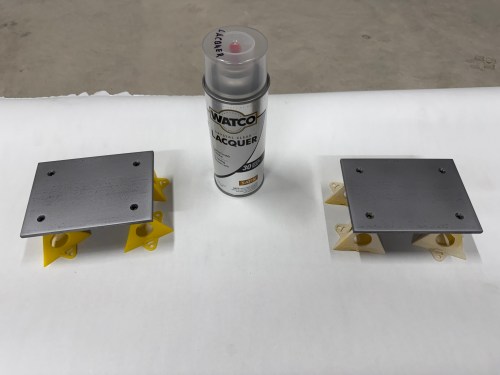
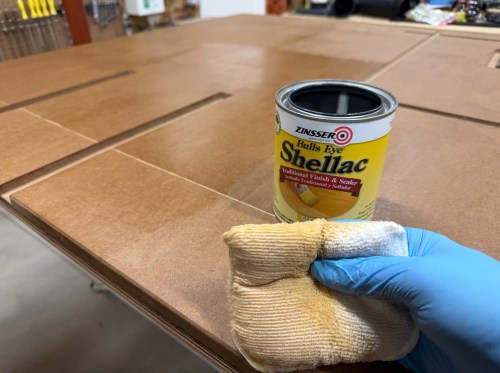
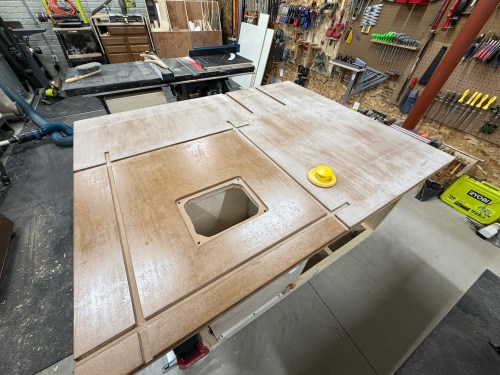
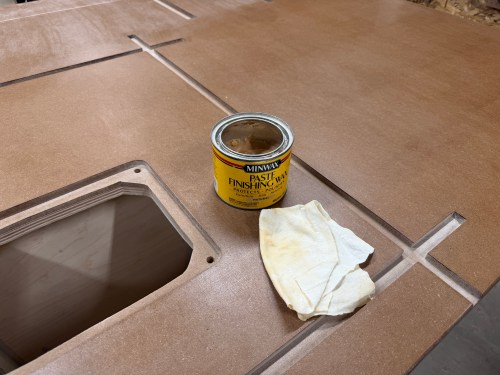
I sanded the top and edges with 80 grit using my random orbital sander .Then I applied four coats of Zinsser Bulls Eye Shellac. A day later I did a light hand sanding with 220 grit and applied paste wax.

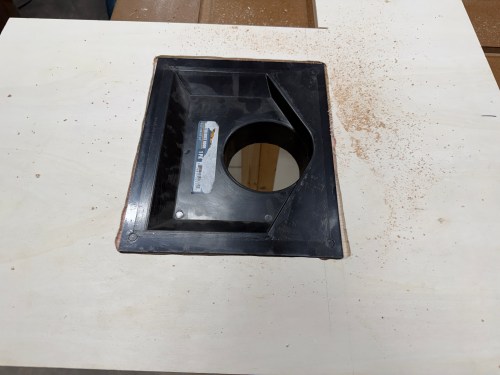
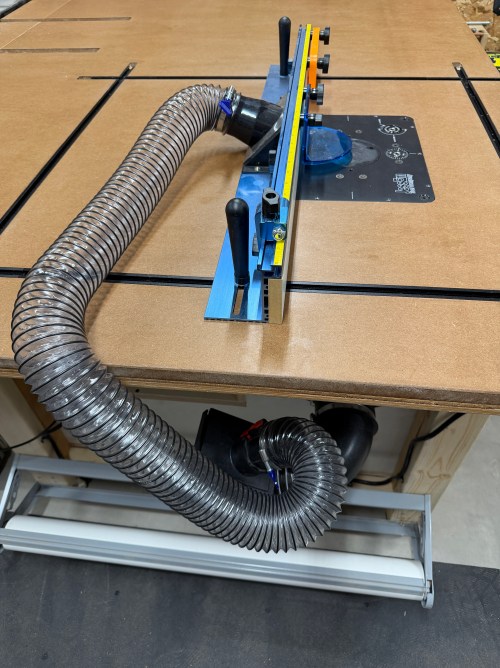
A good router table needs dust collection and here are the parts I used for mine:

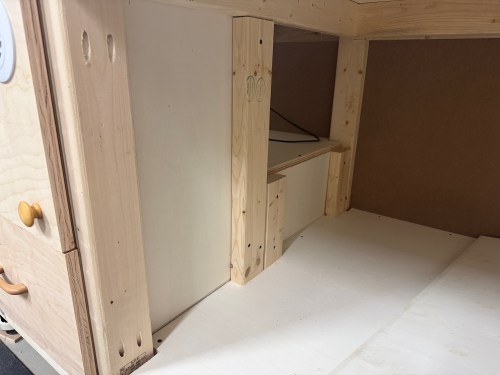
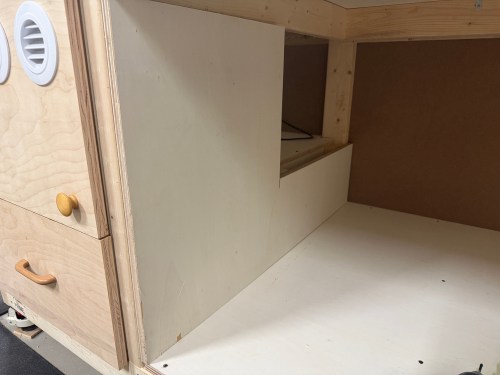
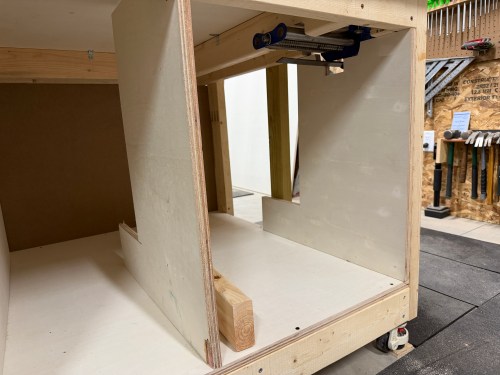
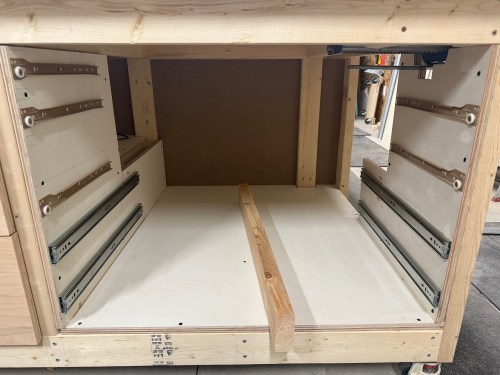
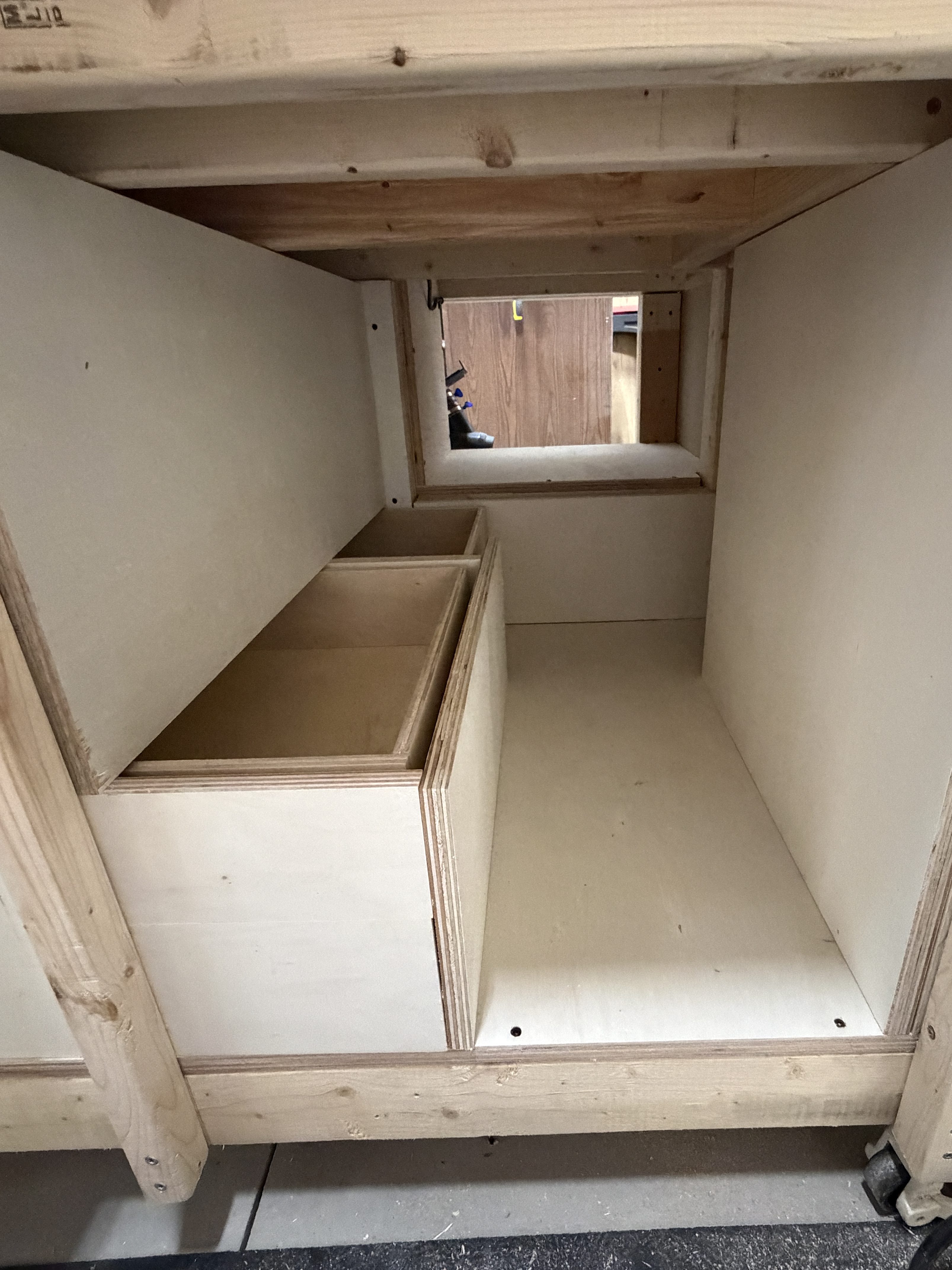
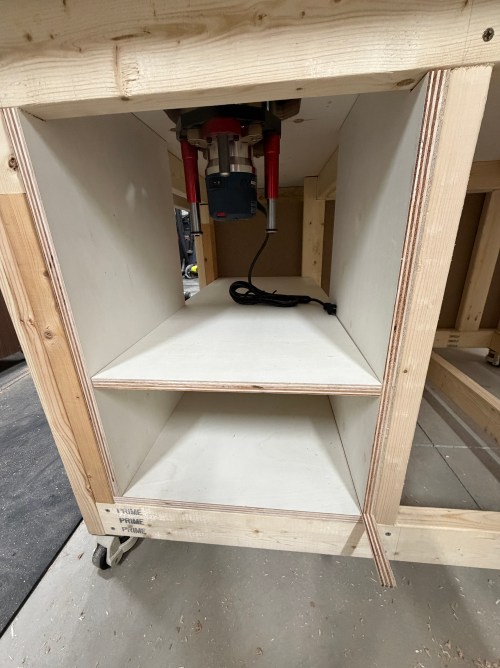
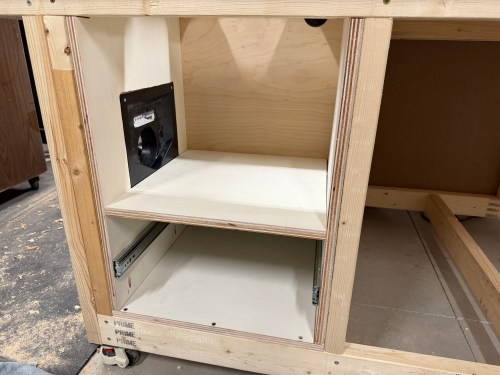
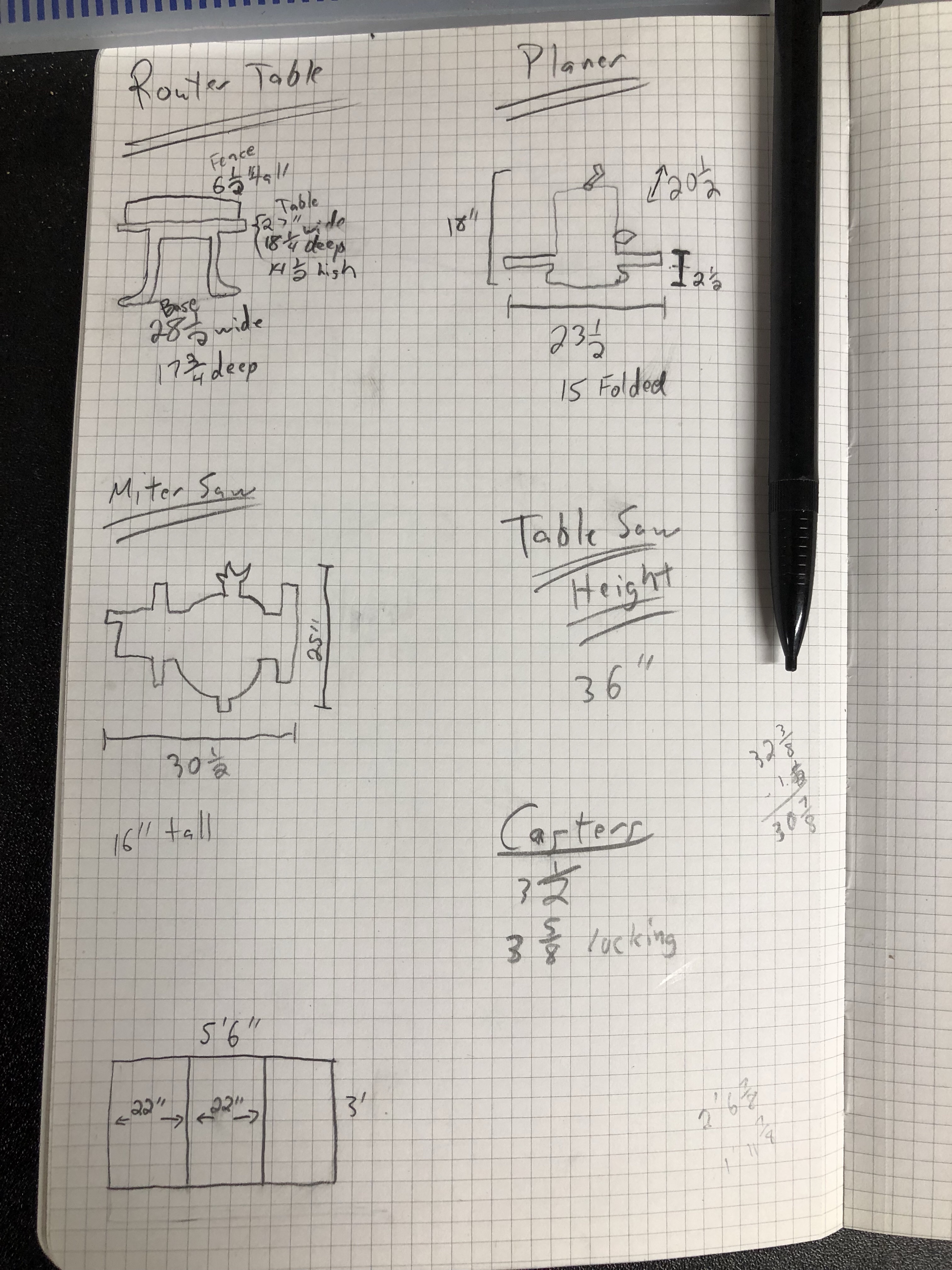
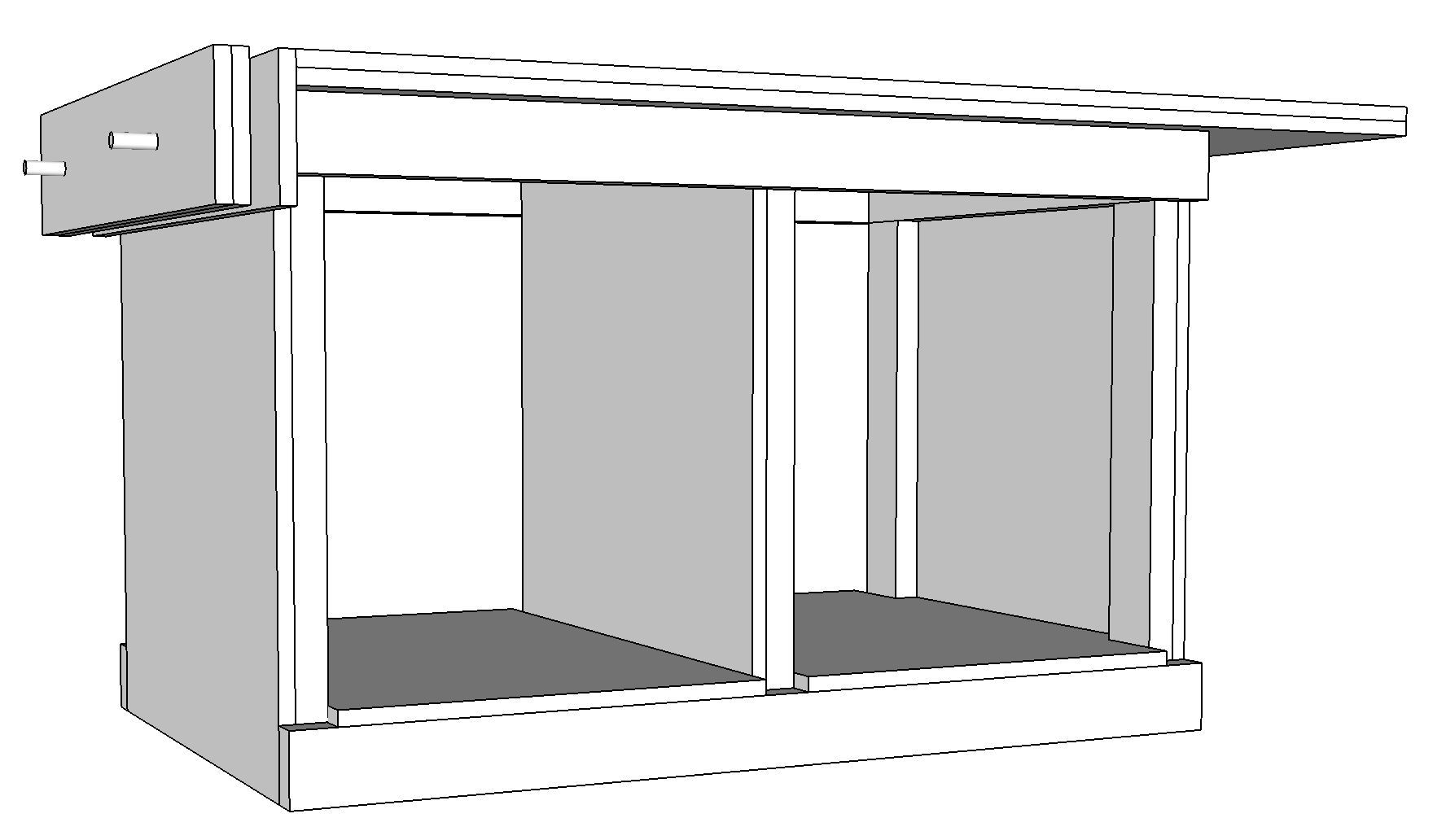
I had to build a cabinet to enclose the router lift, plus a drawer underneath. Due to the table’s frame and a need for the left side, I sketched out a plan. I was making a big version of the L-shaped Tetris piece.

Hand-drawn sketch of a cabinet design with labeled parts and notes, including measurements and assembly details.

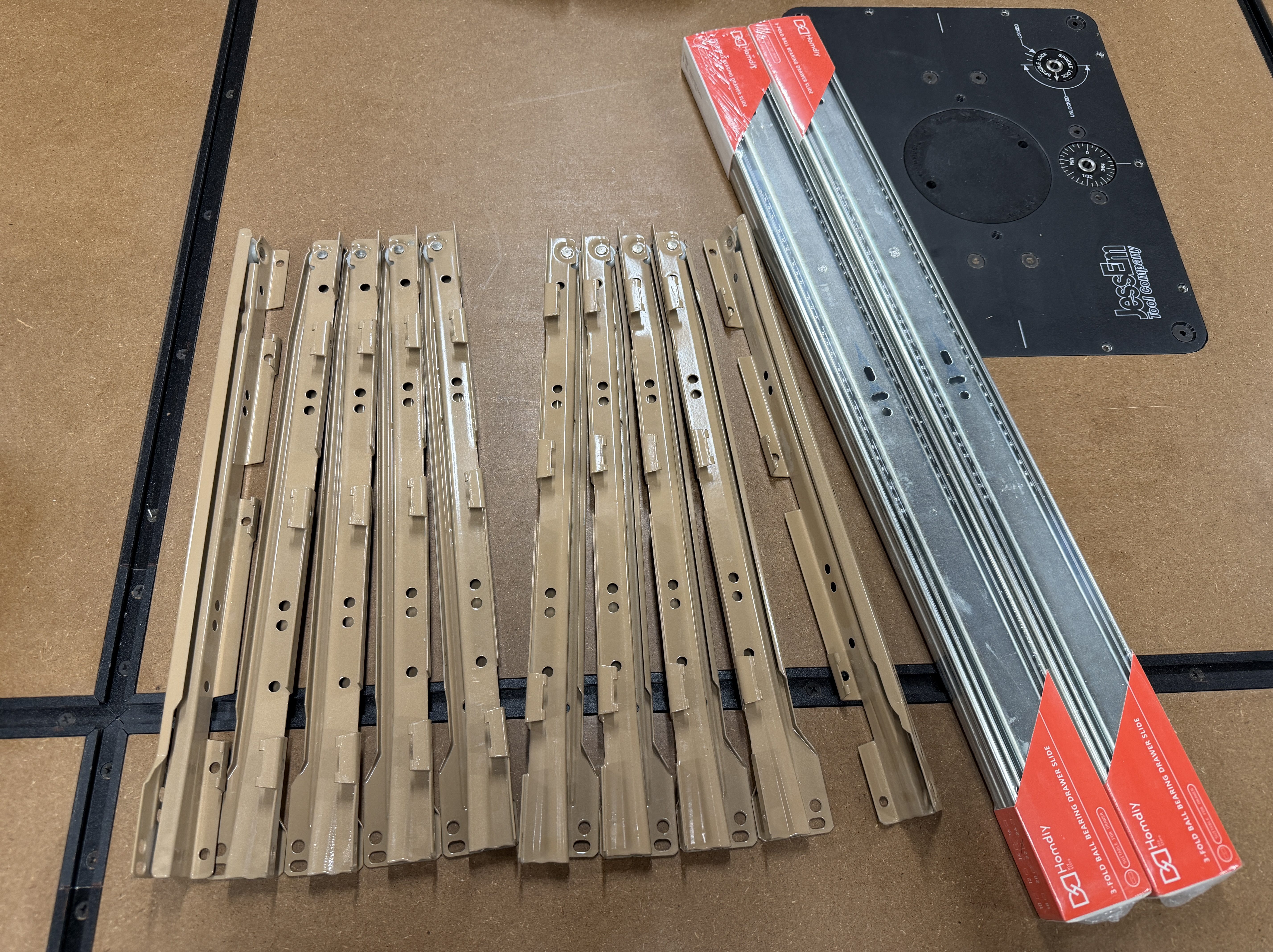
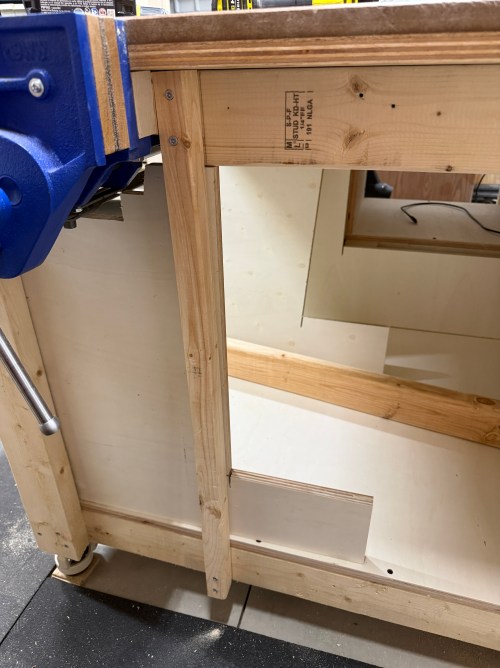
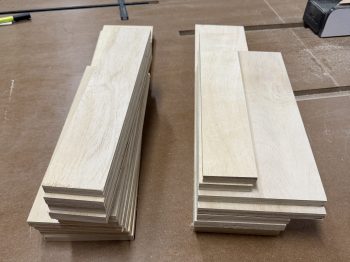
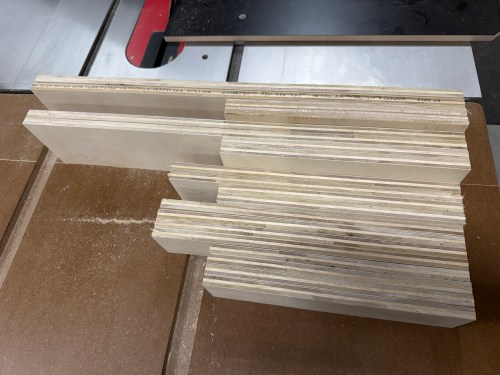
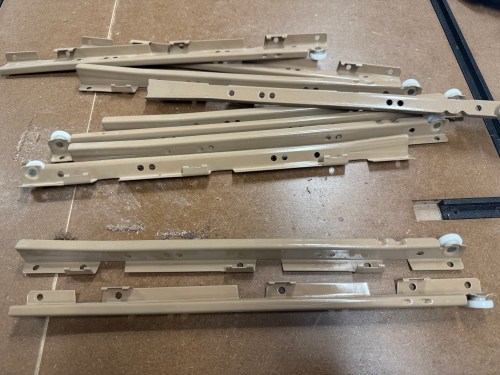
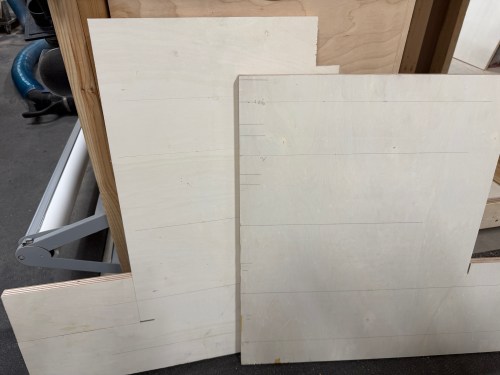
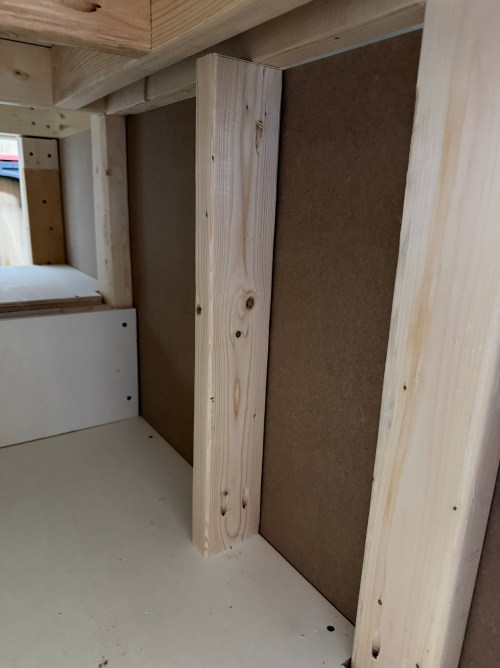
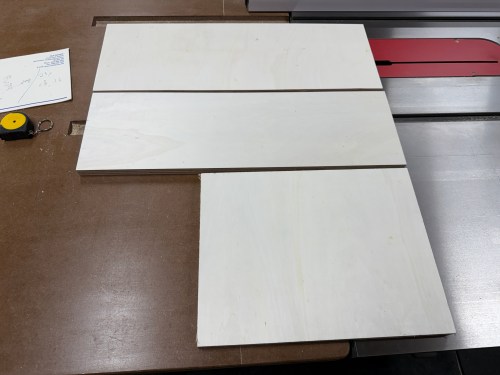
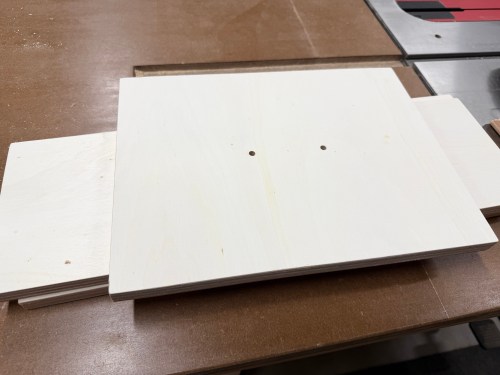
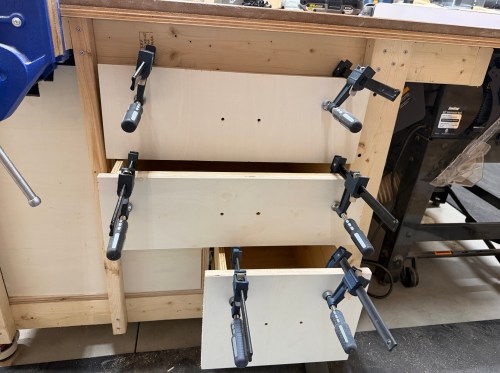
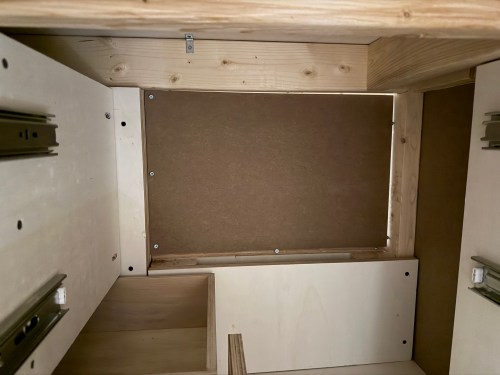
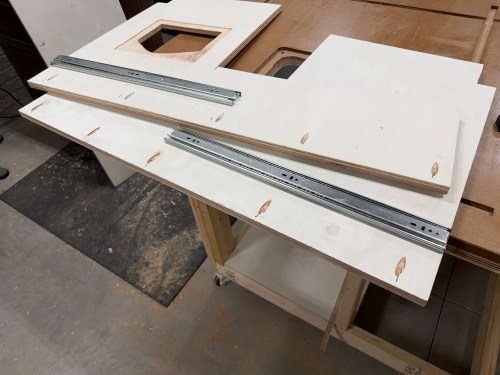
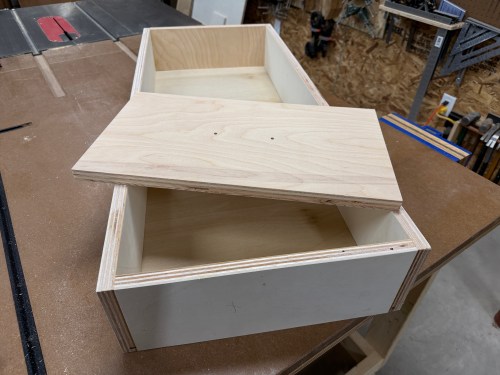
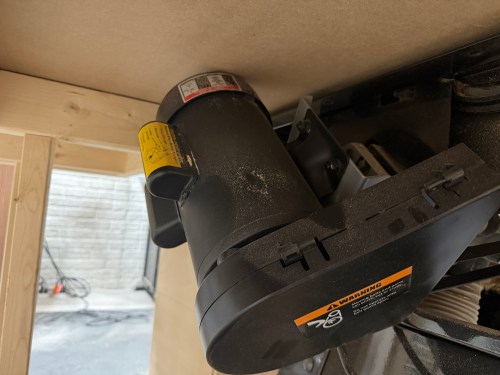
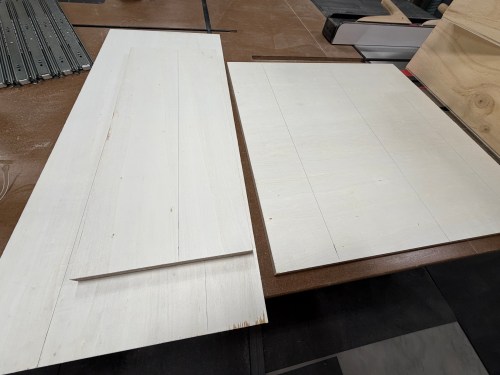
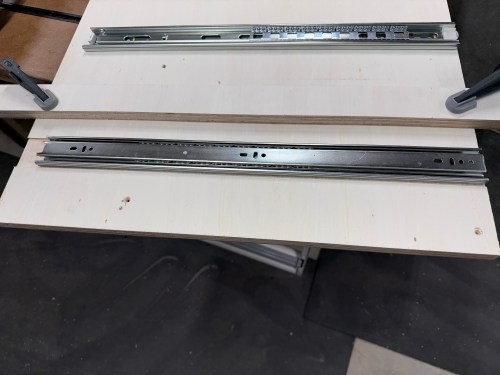
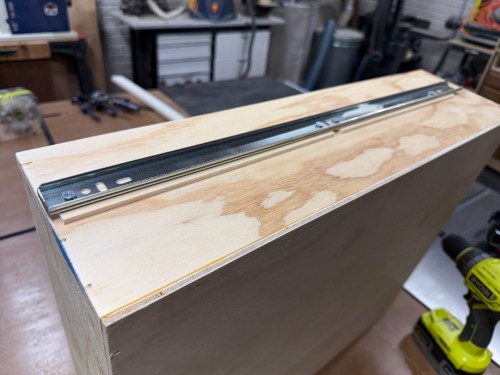
The assembly had to be done inside the frame, due to the cabinet nesting up through the frame. After getting plywood to size, I cut various holes, attached 22″ drawer slides, routed a recess for the dust hood, and drilled pocket holes. It all screwed together quickly.

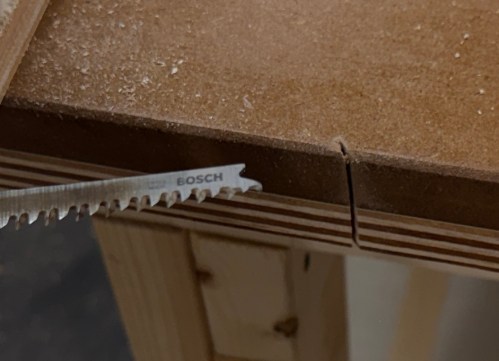
Of course, when using the jig saw, I accidentally cut in to the new table top! I’m the only one who does this, right?

Close-up of a saw cutting through a wooden surface, showing fine wood shavings and a Bosch blade.

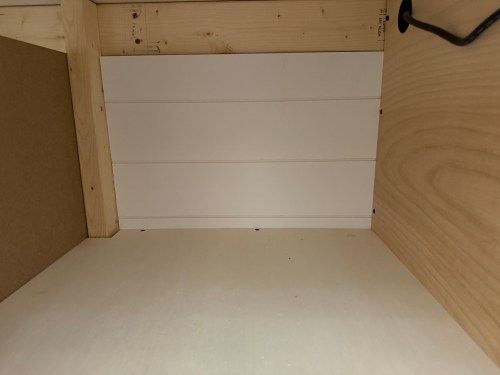
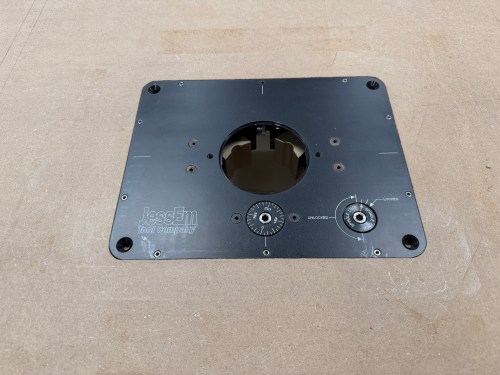
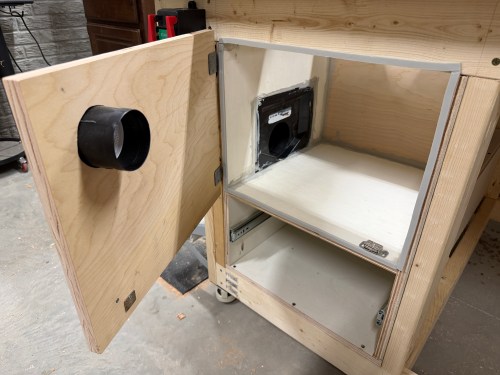
I caulked everywhere inside the dust box. Then I cut a door, mounted hinges, added a magnet close, and used weather stripping to seal it. The door got a hole with a vent cover to supply fresh air to the router and dust collection system. After some use I’ll see if I need to add a second vent. I mounted the lift, leveled it to the table, and bolted it in. The lift doesn’t came with a blank insert, so I bought one from an Etsy store.

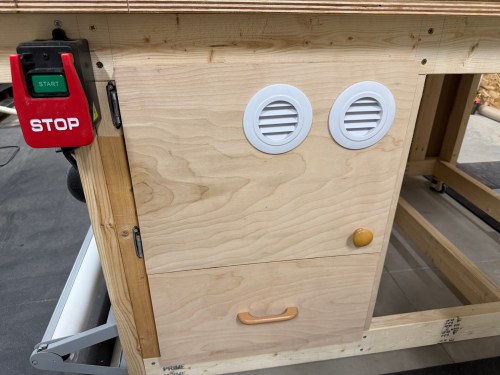
Update: I did end up adding a second vent.

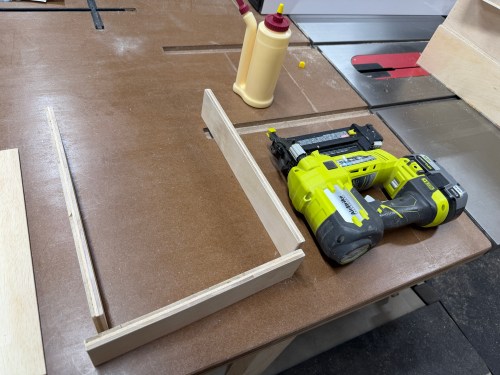
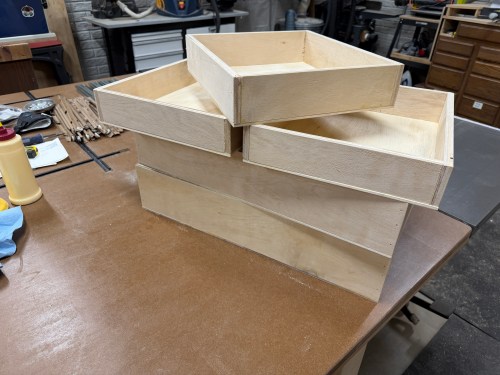
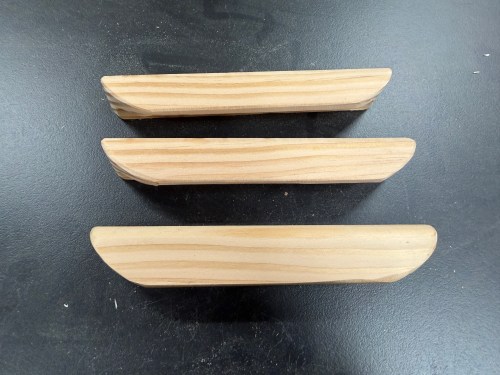
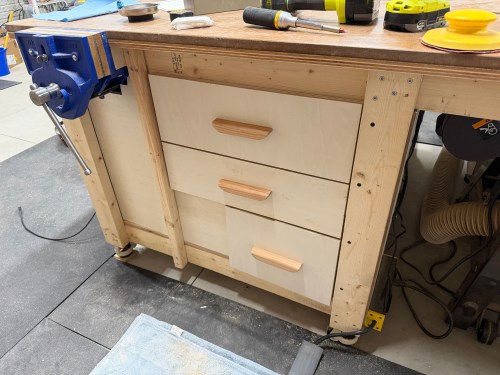
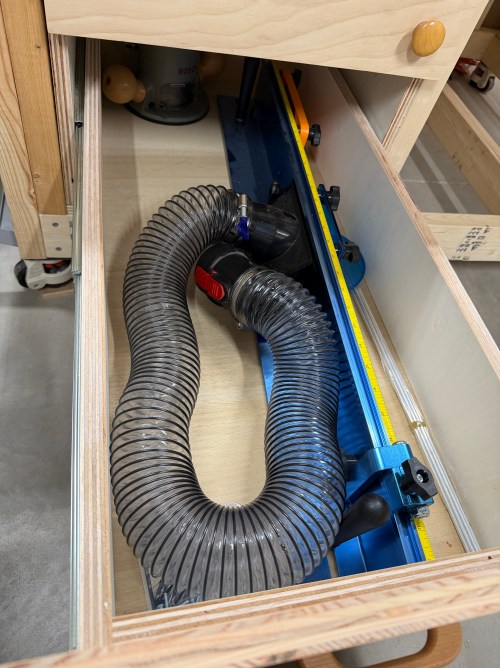
I cut all the pieces for the drawer, cut a rabbet where the bottom would slide in, and drilled pocket holes. Then I glued and screwed it together. Attached a drawer face and mounted a handle.

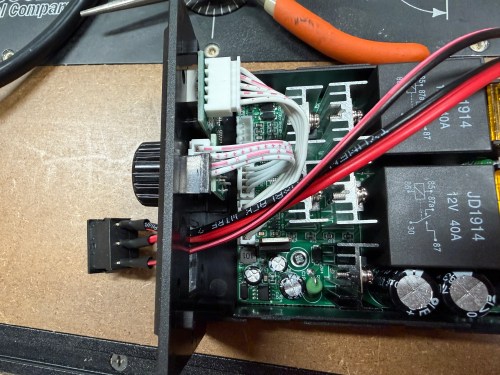
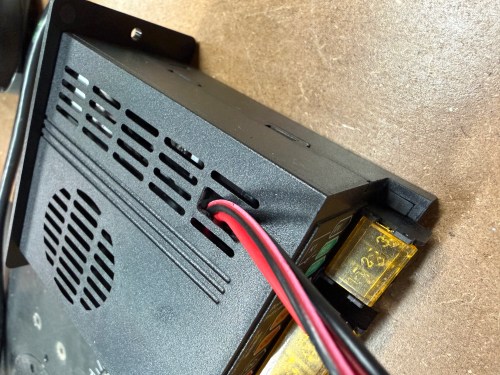
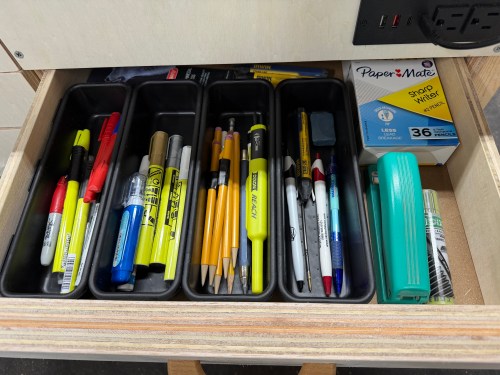
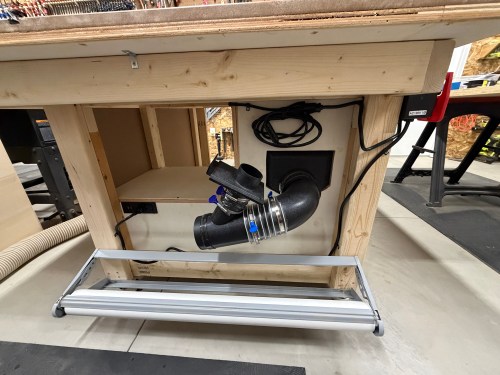
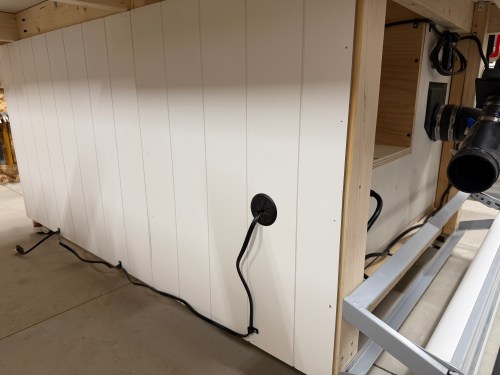
Along the left side of the table, I installed my paper roll dispenser. A 90° and then a Y-fitting connect to the dust hood. A 2.5″ blast gate is attached to the other side of the Y, for a hose up to the fence. The power cord went through a 2″ Desk Grommet on the back side. I screwed a POWERTEC Paddle Switch to the front. These switches makes it quick and easy to turn off the machine with my knee. I put in a recessed power strip with USB ports. Then I clipped in the wires and mounted a heavy duty surge protector power strip. This allows me to plug in the table saw as well.

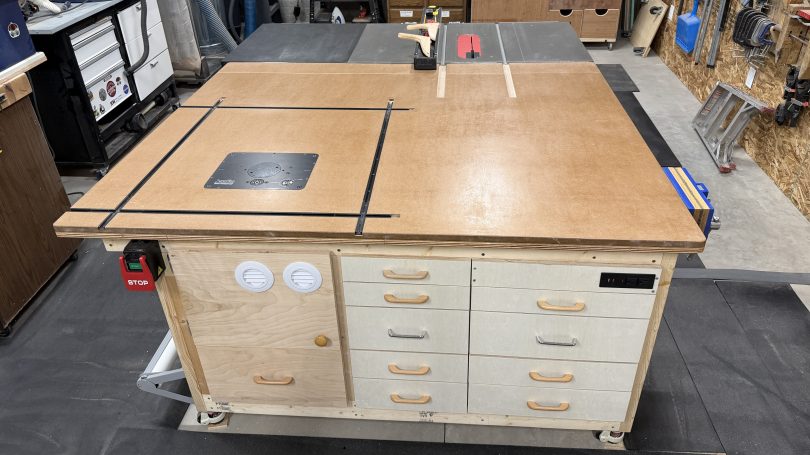
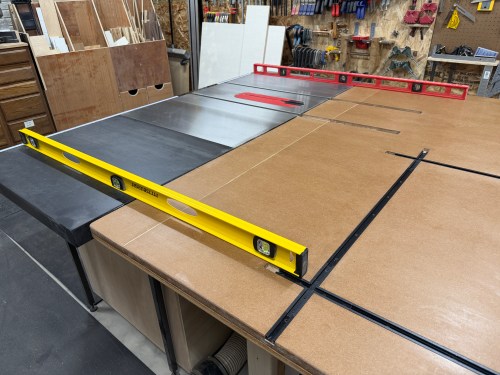
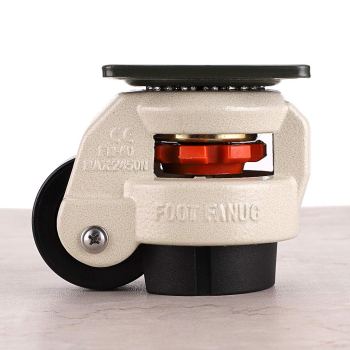
The final thing was to lower the castor feet to raise the table up to the saw.

A woodworking table with a level placed on top, showing the setup for a router station, including a saw and T-track system in a workshop.

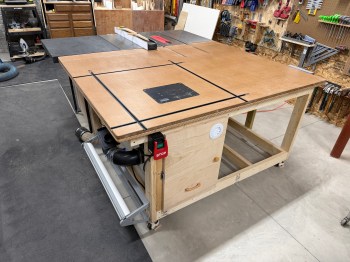
It’s so nice to have a large table table in the shop and I’m excited for the router, where it’s easy to use and always ready. Here are some more pictures.

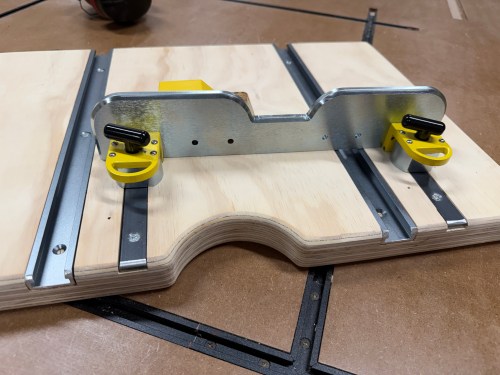
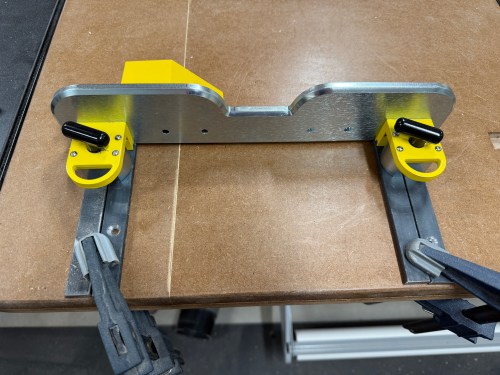
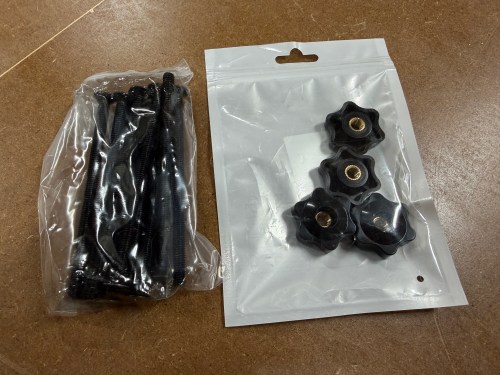
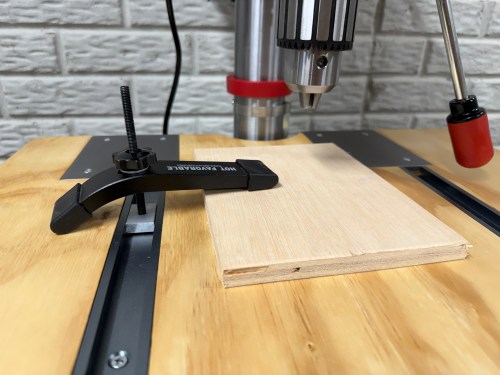
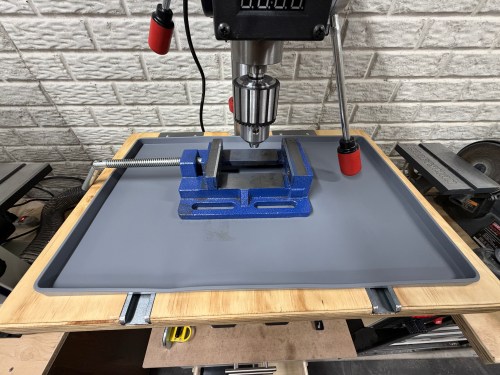
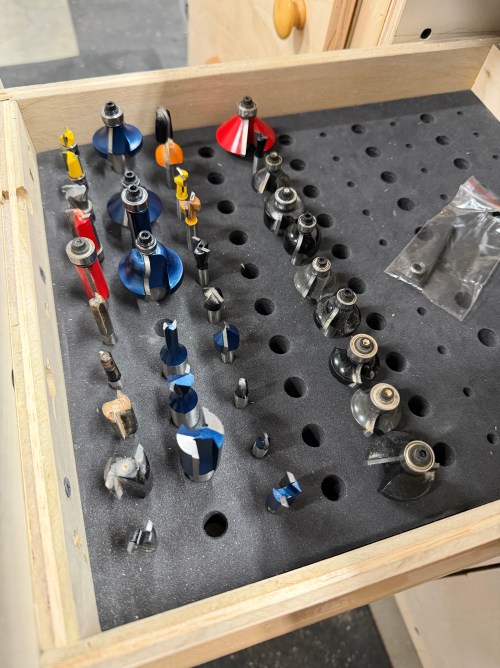
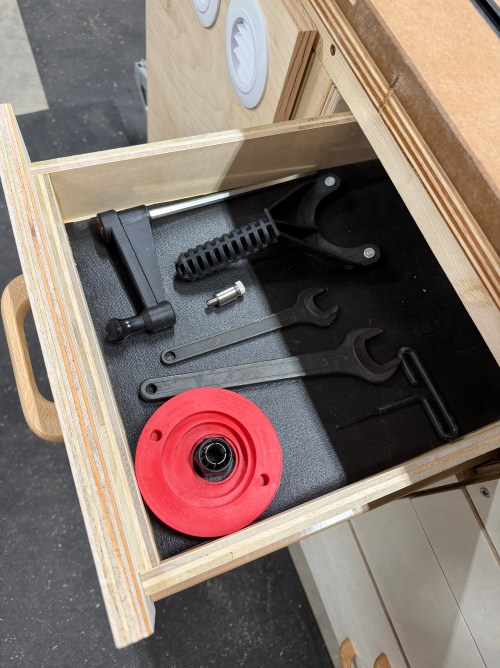
There are the other accessories I bought for the router station, some of which can also be used at the table saw:

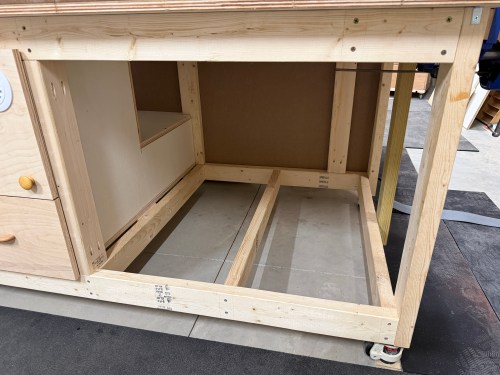
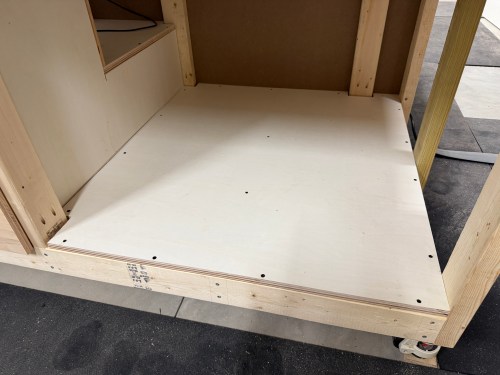
It’s going to be a bit until I finish, since I’m having hernia surgery this Friday. When I get the “go ahead” from the doc I’ll finish the rest of the storage space under the table.

Outfeed Assembly Table – Part 1

When we moved to the new house, I disassembled my workbench with the plan to build one for the new workshop. More than a year later I was still using the old top on sawhorses and everything I bought for the build was piled up in the corner.

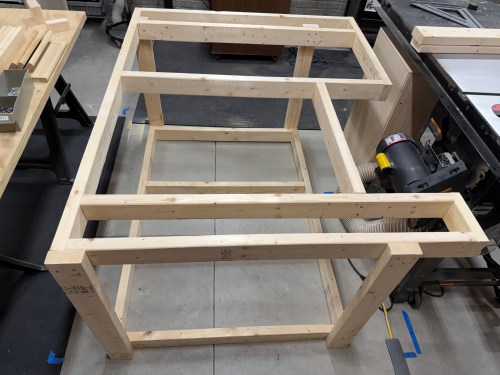
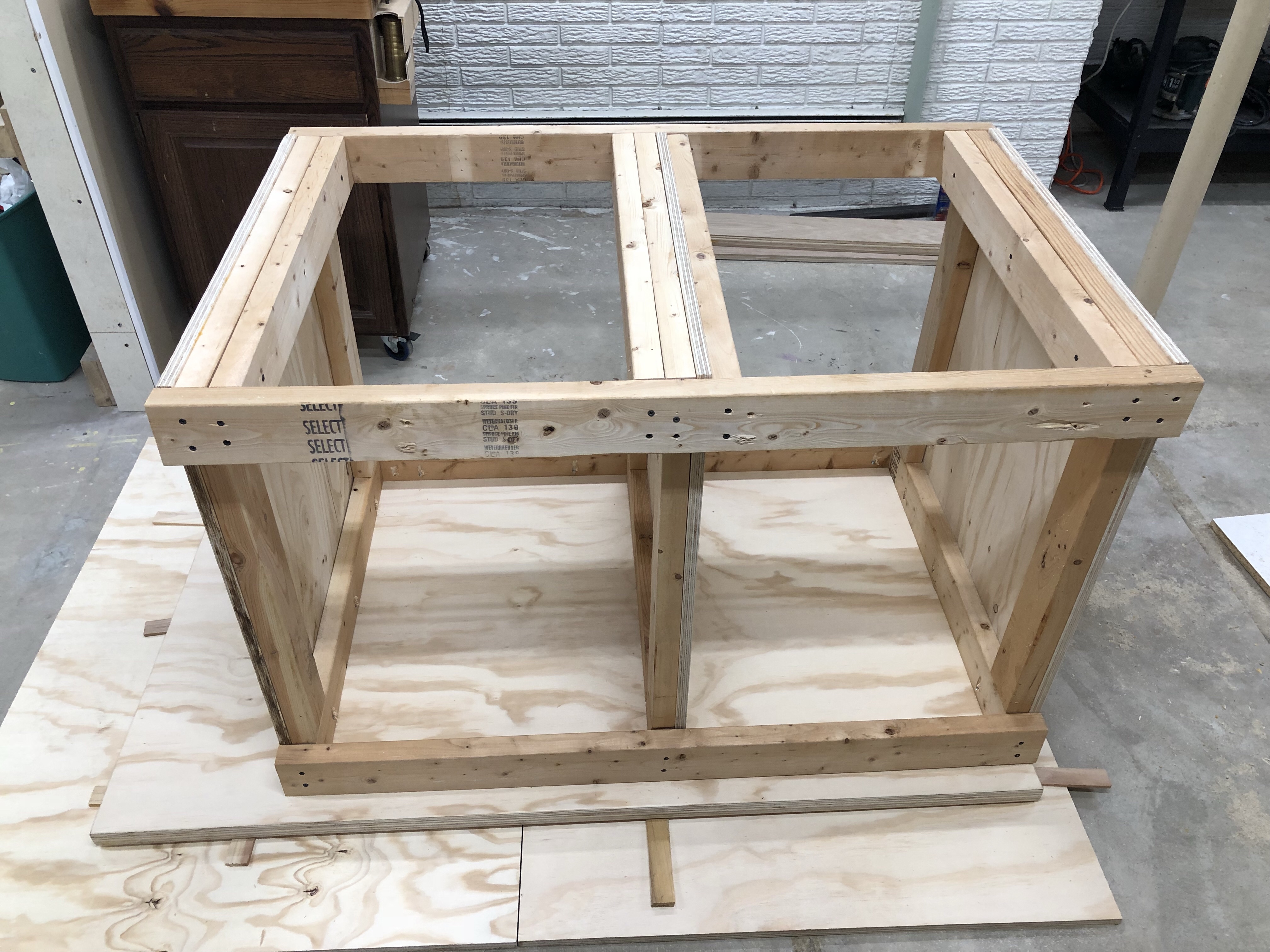
The planning notes and ideas I made last year were a good starting point. I took a bunch of measurements, adjusted to account for the motor when tilting the table saw blade, and mapped it out with blue tape. Made more adjustments, cut all of the pieces from 2x4s, and assembled the frame with 3″ screws. I’ve learned my lesson about not using glue for shop furniture because it’ll likely get taken apart in the future. By only using screws I can reuse the materials when an improved replacement gets made.

The castors I bought double as adjustment feet, making it easy to raise the height up to the table saw and will make the table stationary 99% of the time.

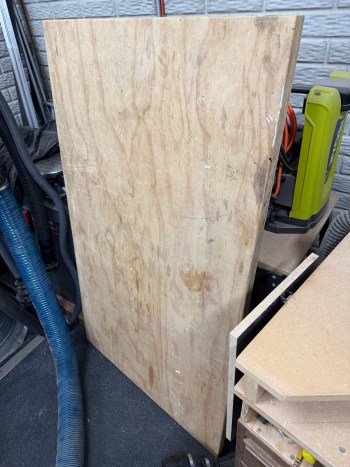
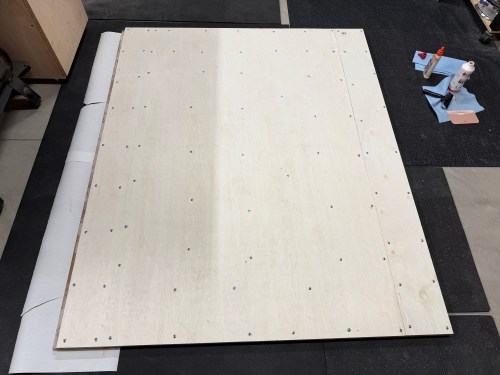
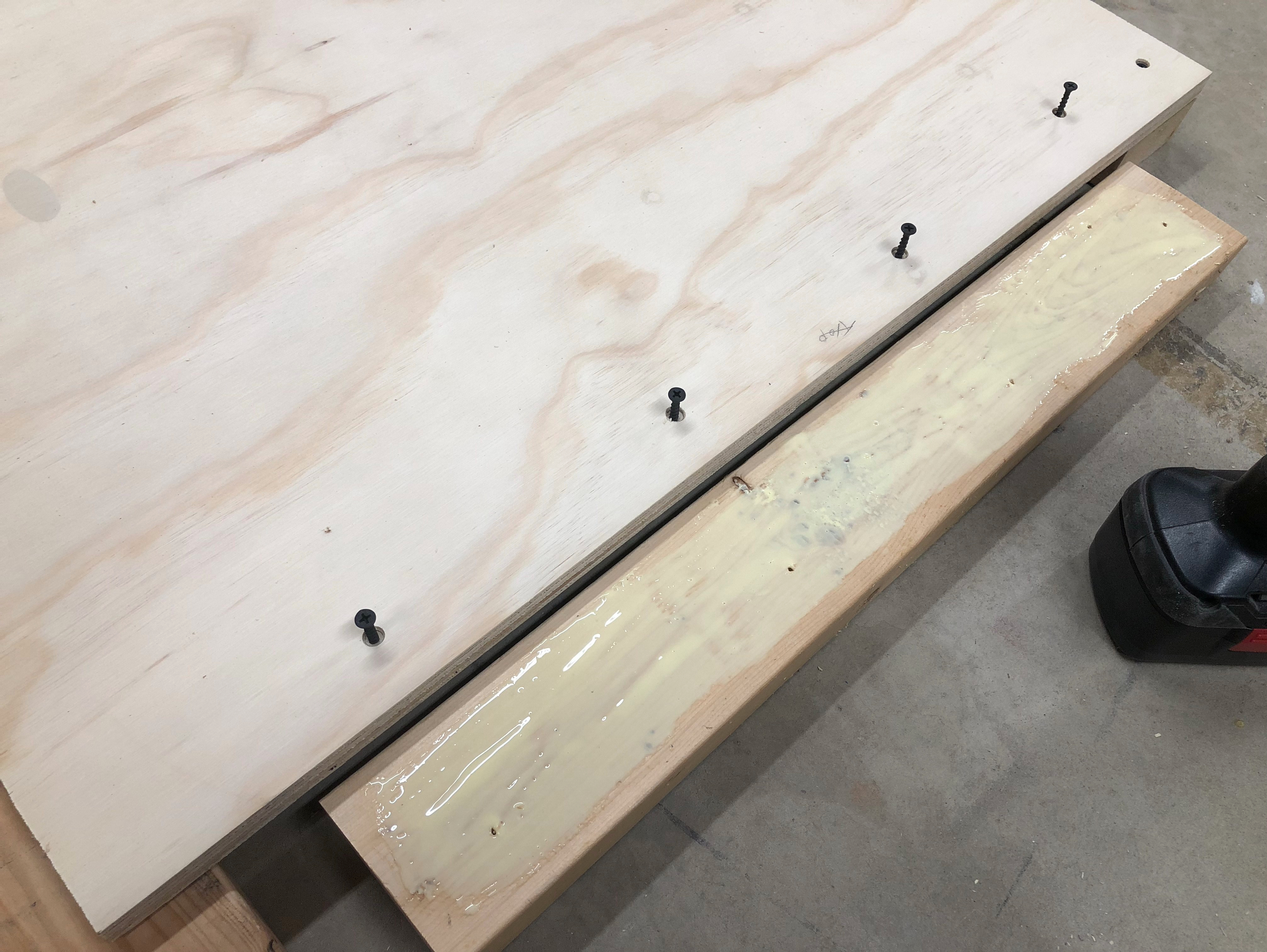
I cut plywood and MDF, then laminated them together, using screws for clamps. Since my top was going to be 66×54″ I had to splice in a six inch strip of each.

After the glue dried I removed all the of screws and got it up on the frame. Then I checked the height of my table compared to the table saw and it was going to work out well. With the blade at 45° and all the way down it was extremely close to the table top though.

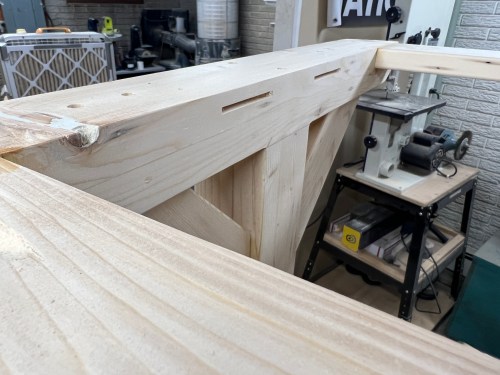
When maxing out the blade height the motor raised about an inch. So I created a clearance pocket with the router.

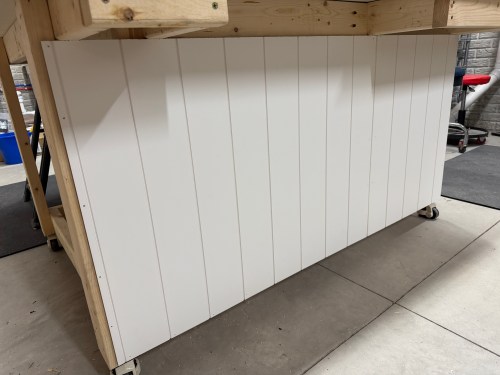
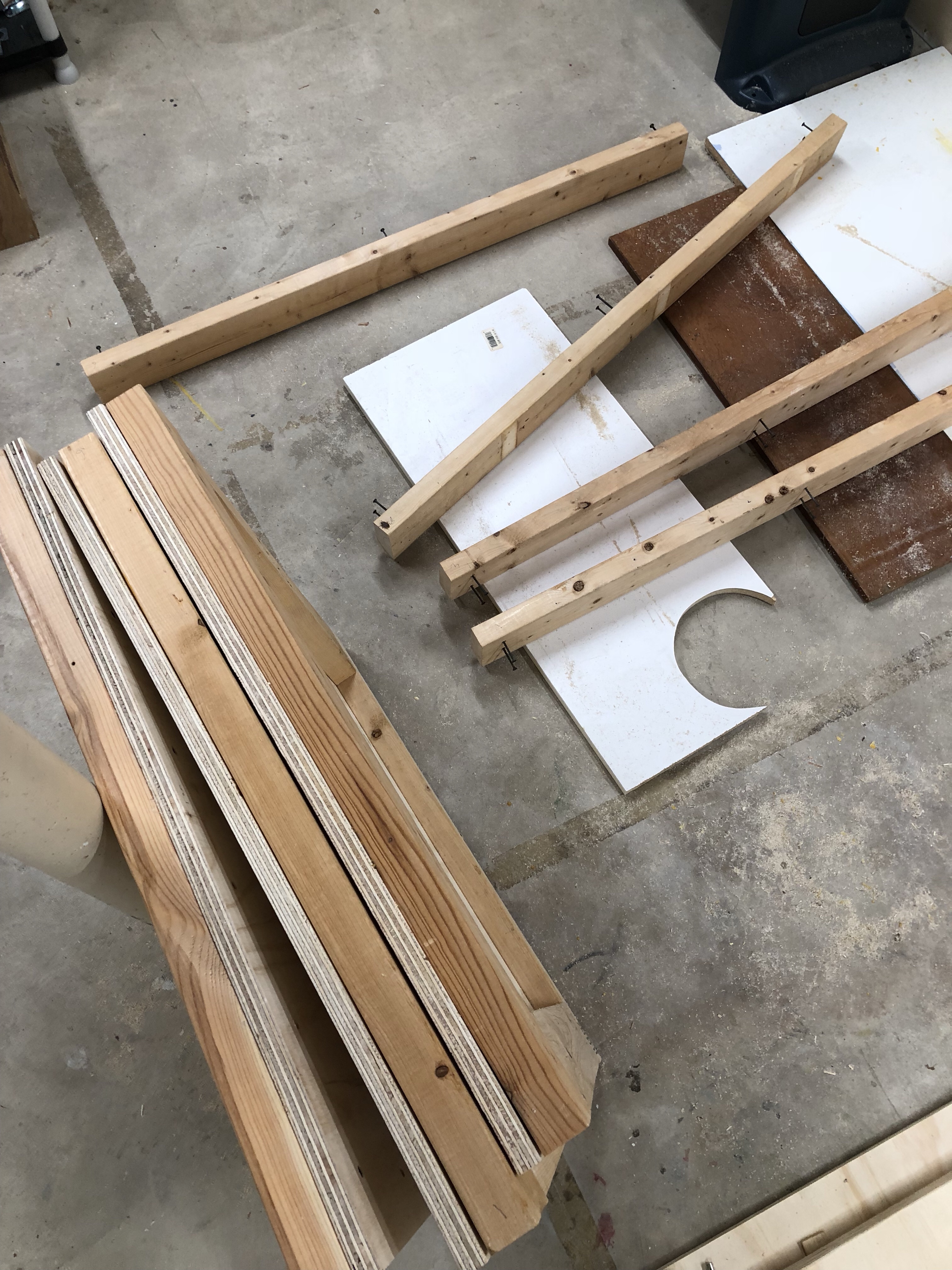
I added a couple more vertical supports along the back of the frame and cut scrap shiplap panelling to rigidify it and close it up.

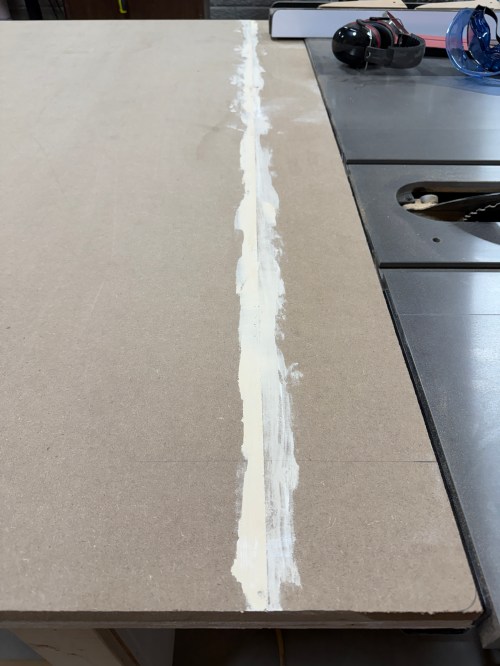
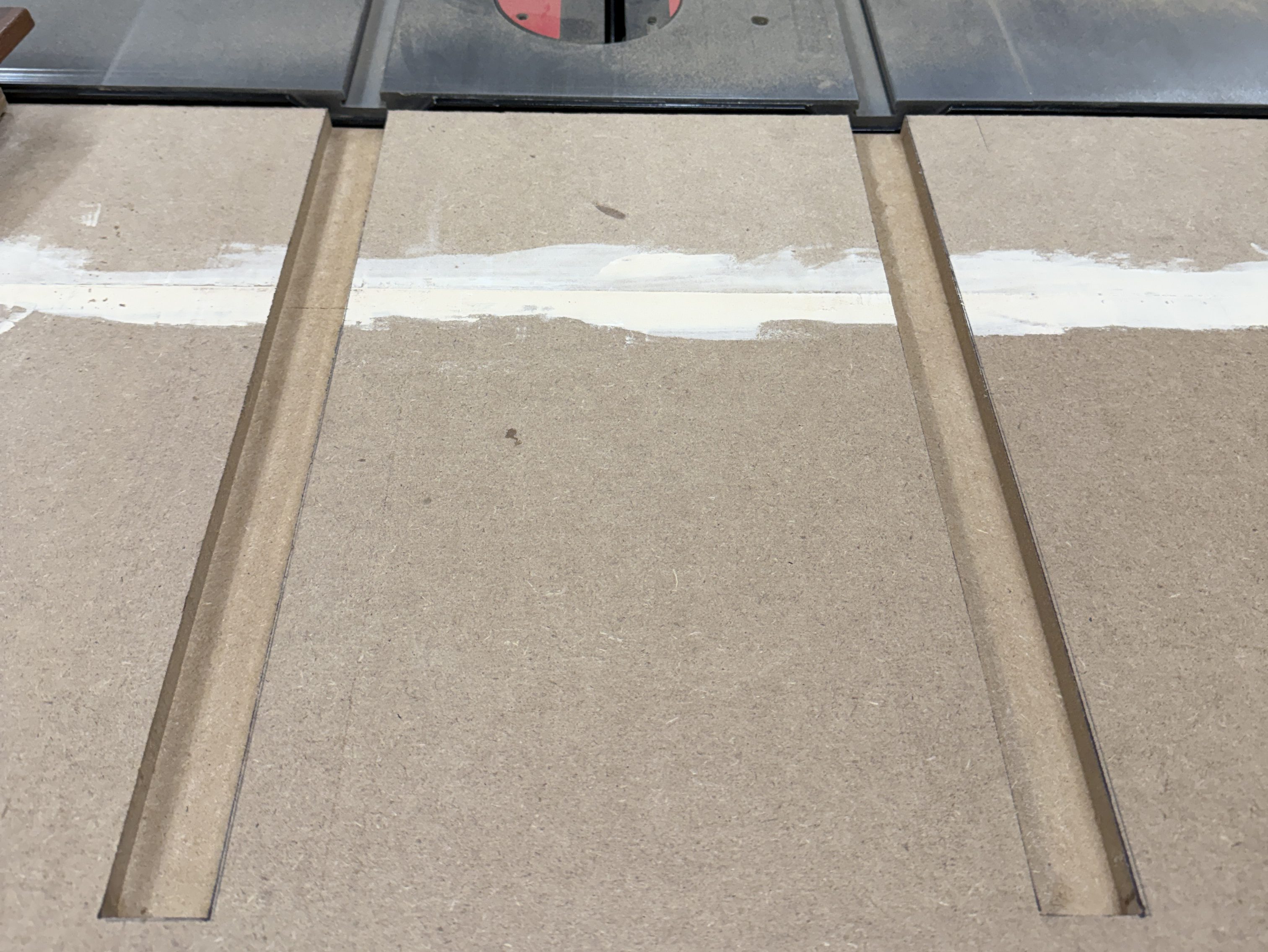
I trimmed all of the edges to size. There was a small gap between the spiced sections of MDF, so I used wood filler.

One inch corner braces with 1/2″ screws were used to attach the top to the frame.

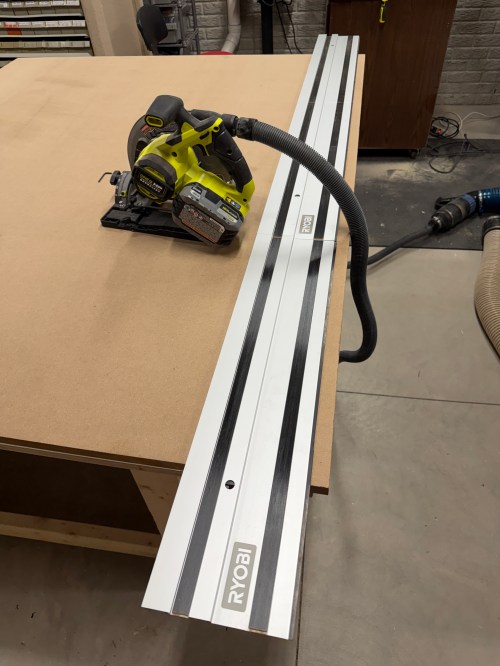
The miter slots were extended from the table saw. I made them wider and slightly deeper, so the outfeed table placement won’t need to be too exact.

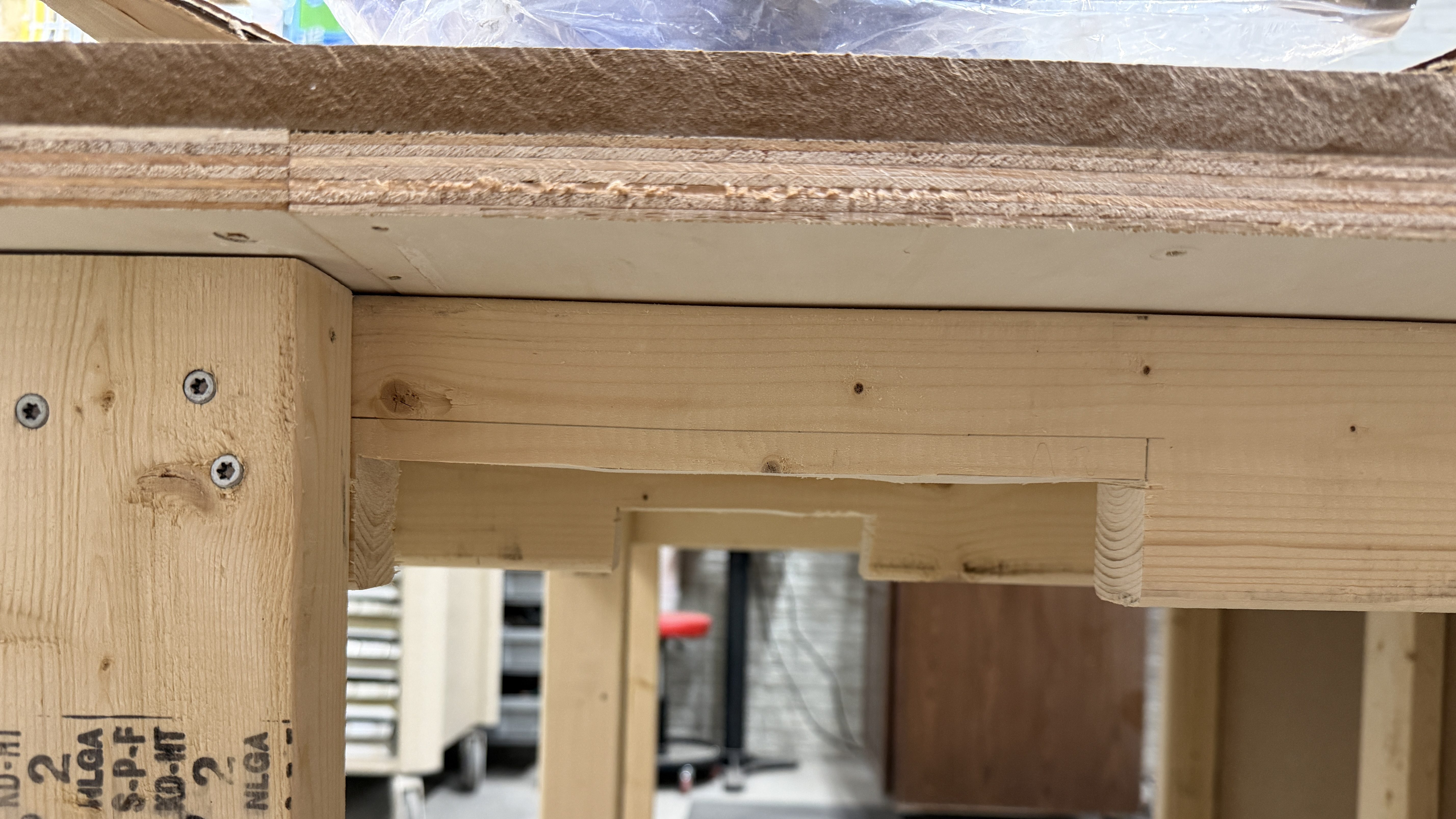
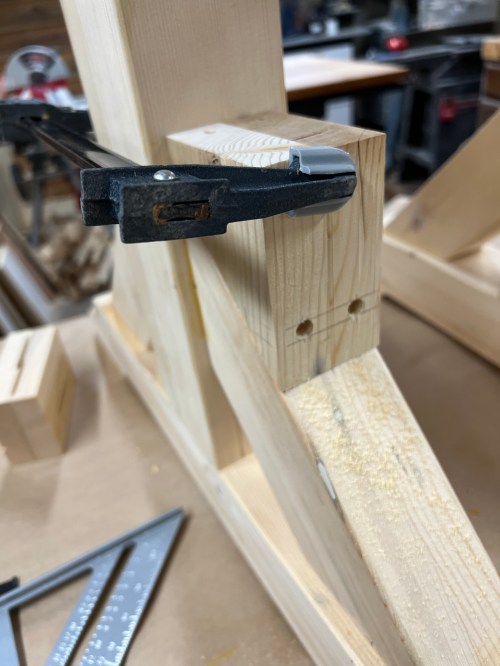
For my vice, I bought a Yost 9″ quick release vice. To mount it I had to remove part of the frame and add blocking.

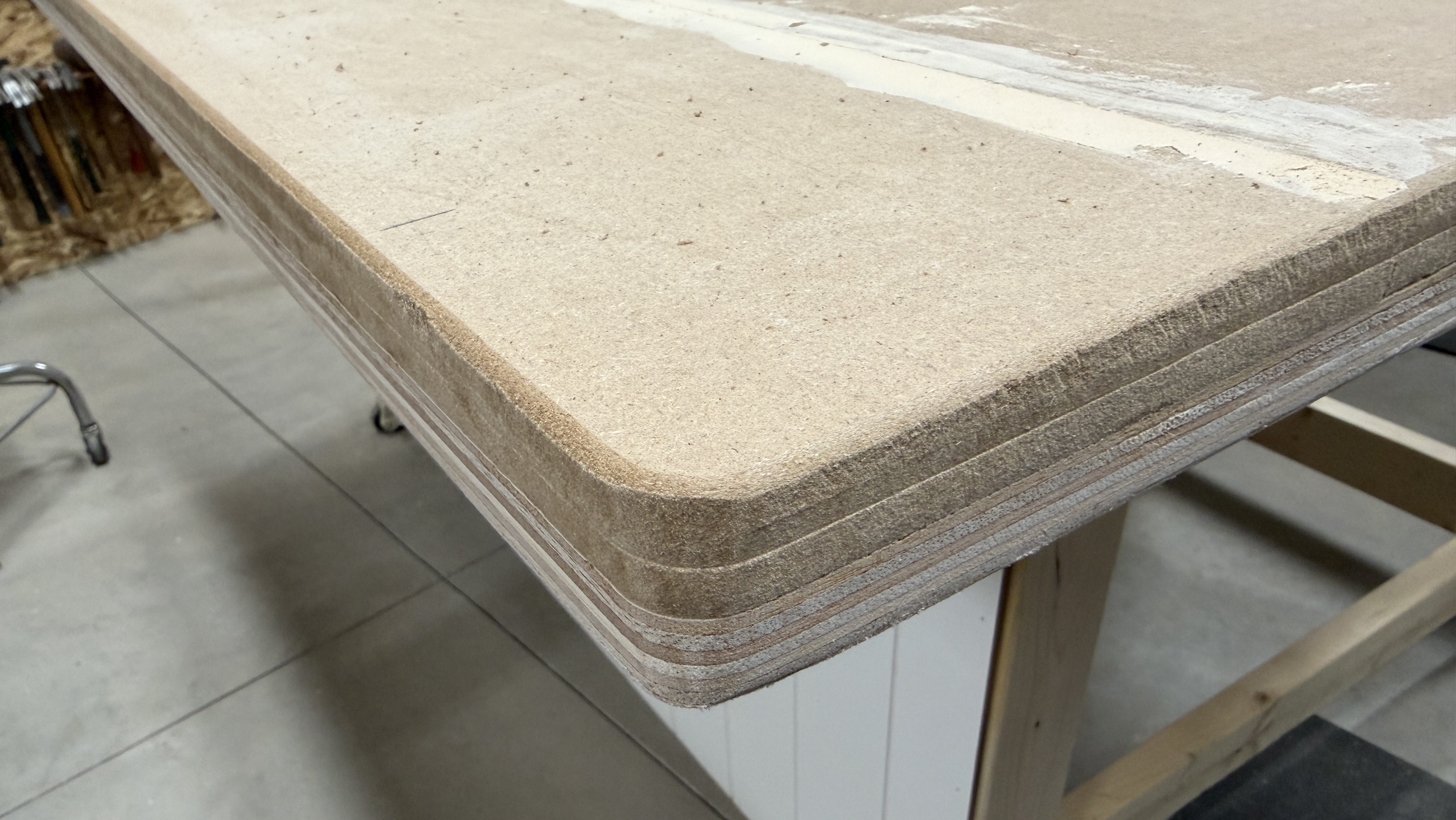
I realized I should finish up the edges of the table, so I quickly rounded the corners, sanded the edges, and added a roundover.

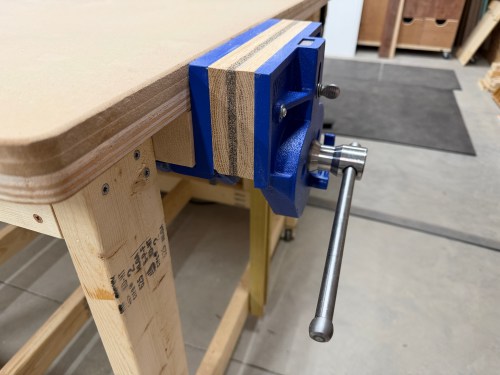
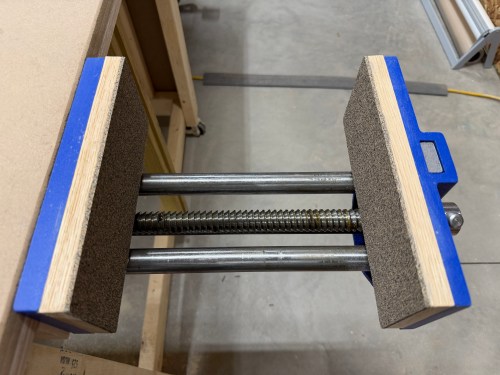
Then I mounted the vice and cut oak for the jaws. To finish it I attached cork rubber with 3M Hi-Strength 90 spray adhesive.

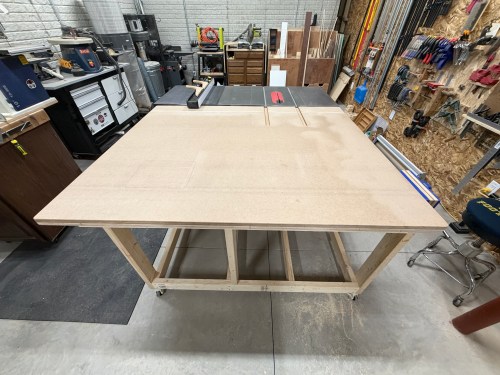
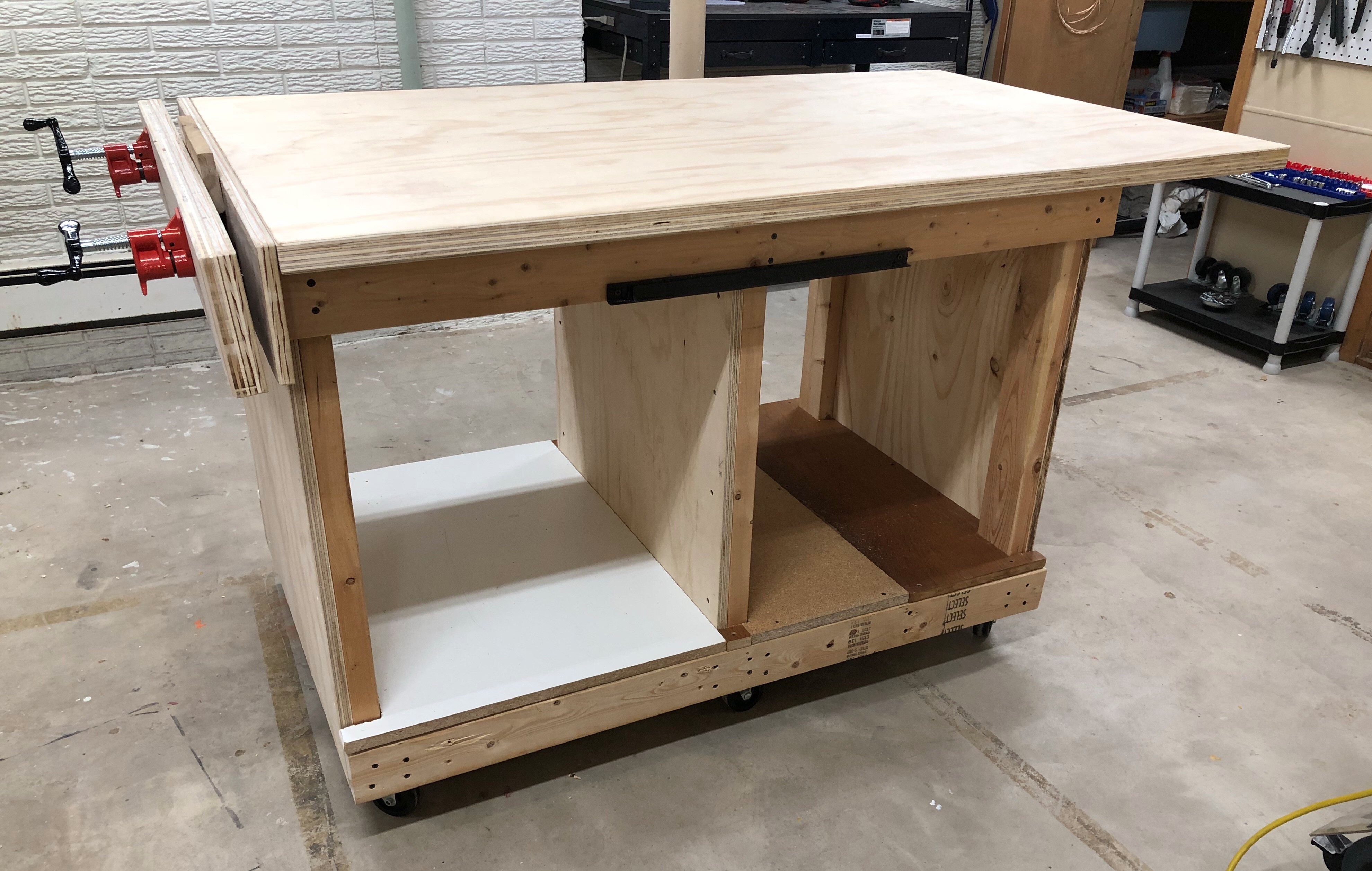
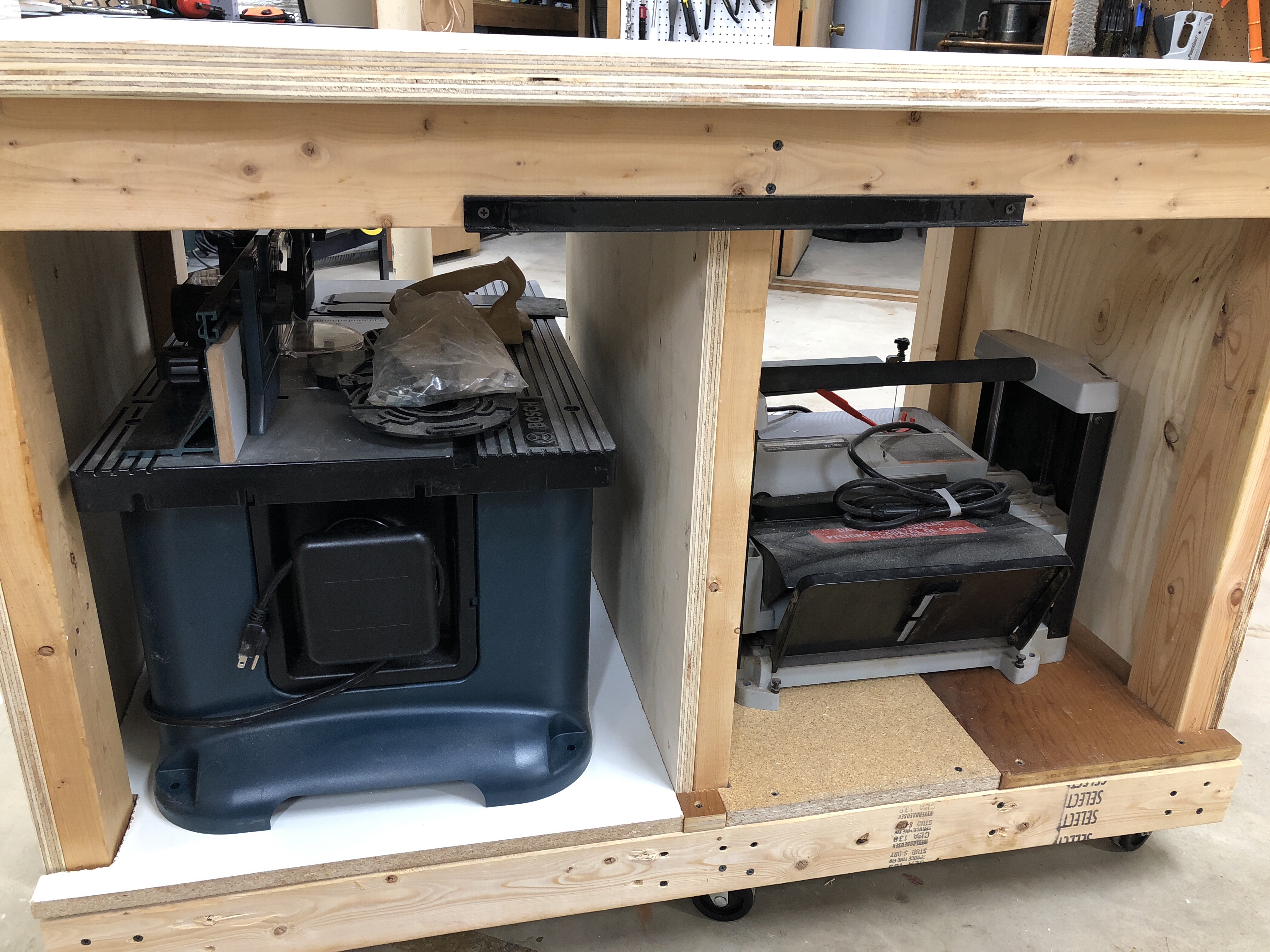
Look at this beauty! So much room for projects and a space underneath for storage.

Continue to Outfeed Assembly Table – Part 2, which is where I add a router station, complete with dust collection.

A Replacement Black Walnut Table Top

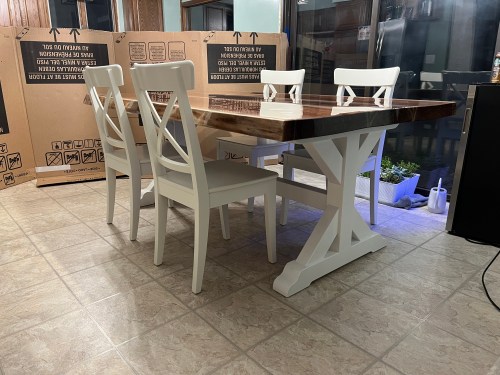
Last year I had a beautiful table top made for the kitchen.

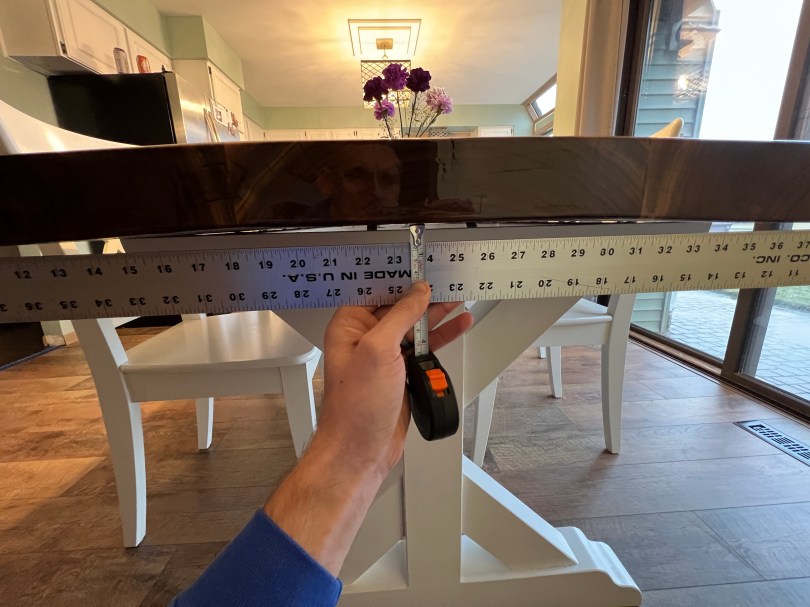
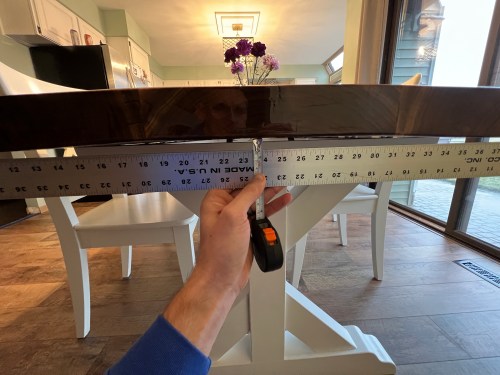
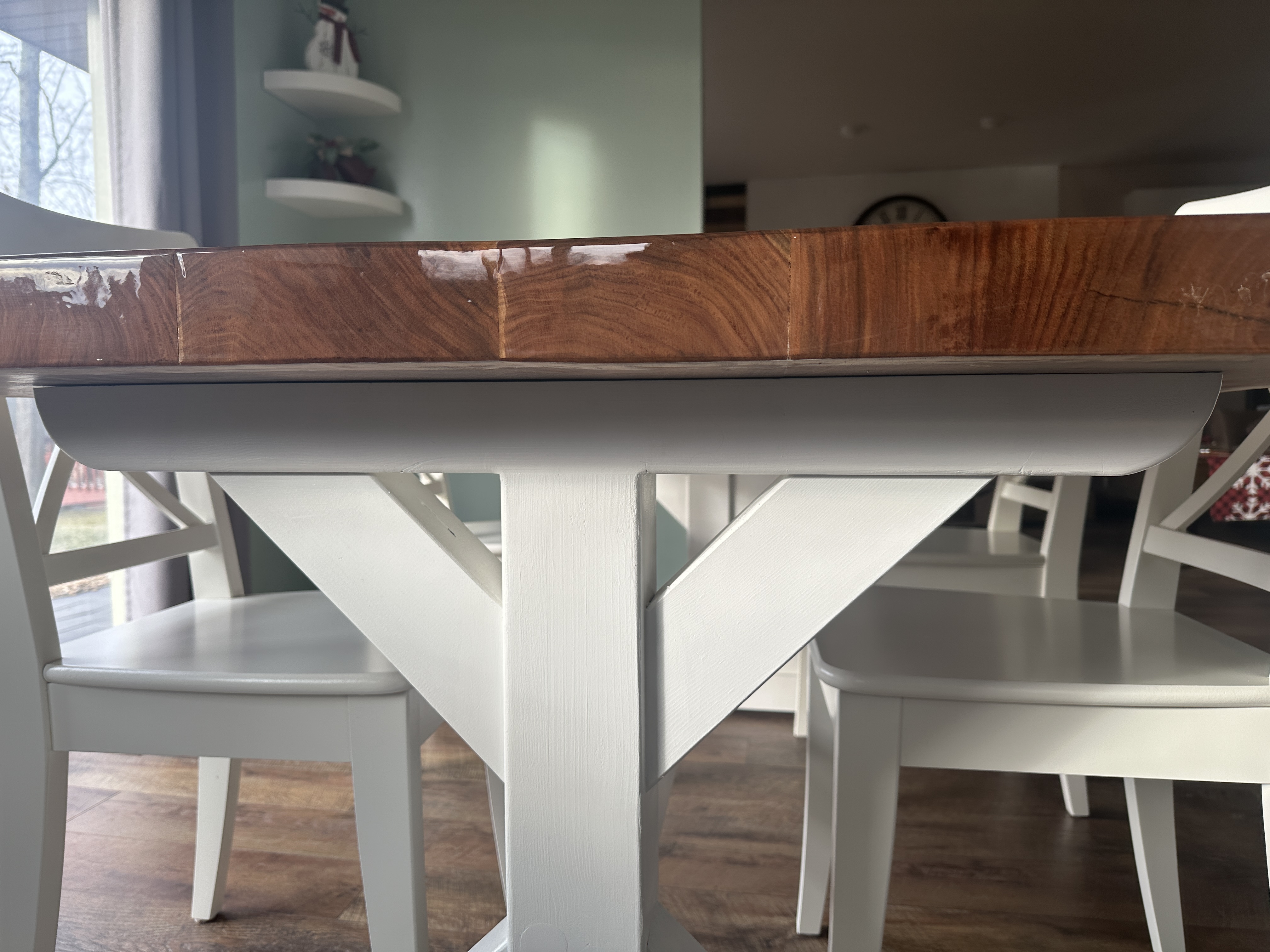
In late February, while we were making dinner, a glass of chocolate milk slid right off the table. What. The. Fuck! The grain of the wood caused the table to become extremely cupped with seasonal changes in humidity. When checking it against a flat edge it’s easy to see how much the wood moved.

I looked back at the original pictures and you can see the wood was already cupping.

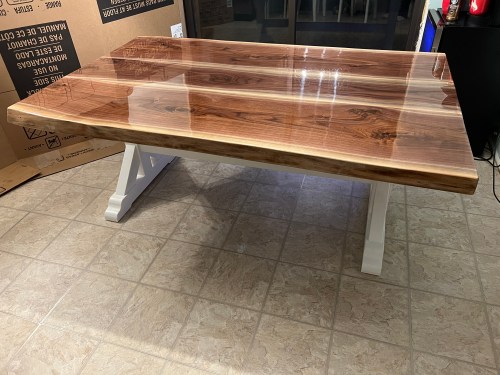
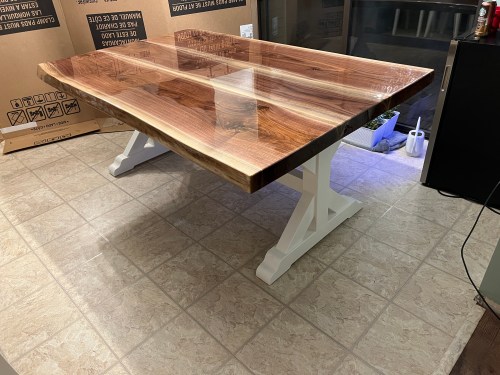
The maker agreed to do a new table top and I’m grateful. It took forever, but it was finally delivered and attached to the base. It’s much flatter than the previous top and still far from perfect. As a maker myself I wouldn’t feel right delivering something with some of the mistakes made here and it was a year between deliveries! I won’t be recommend him to anyone.

Black Walnut Live Edge Farmhouse Trestle Dining Table

When I bought my house I eventually got a tall dining table and I’ve hated it for years. It was a bitch to get in and out of the chairs and my legs bumped up against the apron when I sat down. It was definitely getting replaced during the kitchen remodel. After selling the table, we used a card table for a few weeks.

I don’t remember the first time I saw a live edge table, but I’ve wanted one for a long time. I would have loved to build one but as I started working on the kitchen, it was clear time wasn’t going to be on my side. Since the table would be the showcase of the space, I decided to have the top built for me. I found a local maker on Facebook Marketplace (business name removed because I can no longer recommend him), which showed some awesome work. I give him a call, visited his shop, and gave him the job. I love black walnut, especially with some of the sapwood, so that’s what I went with. A few weeks later he delivered this beauty!

It’s 2.5 inches thick, 73 inches long, and averages about 45 inches wide. It’s fucking heavy!

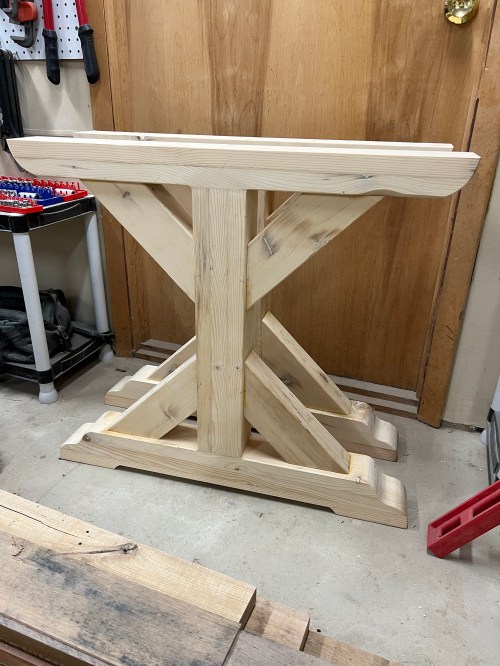
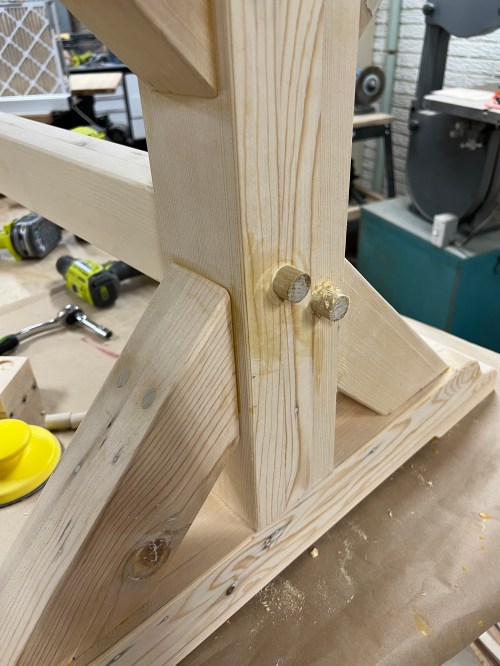
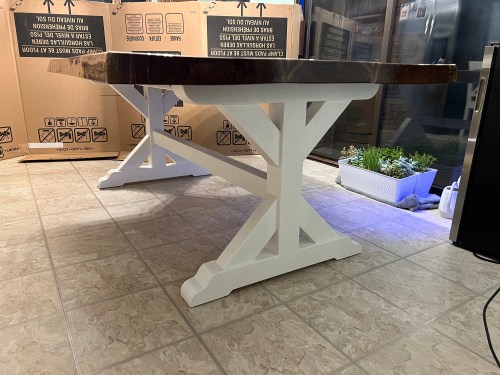
I thought about buying a table base kit online or having one made. We should have this table for a very long time and I wanted some part in it, so I decided to make the base. We’re going for a bit of a farmhouse kitchen vibe, so I went with a trestle base. I took ideas from these free plans as well as some custom tables I found on Etsy and Marketplace and I put my own twist on everything. For chairs we picked up four INGOLF from IKEA.

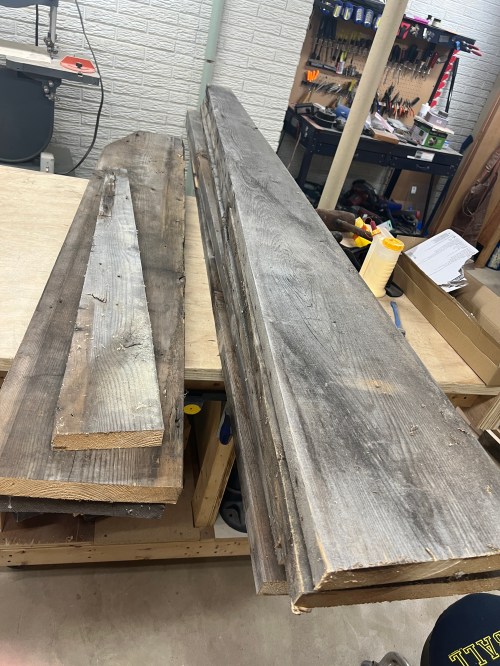
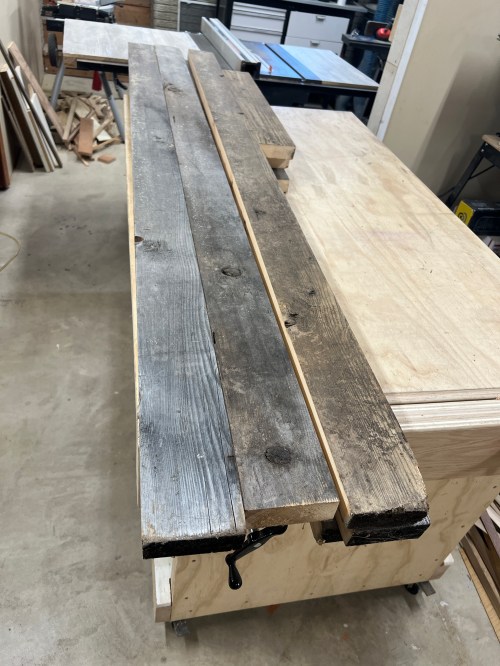
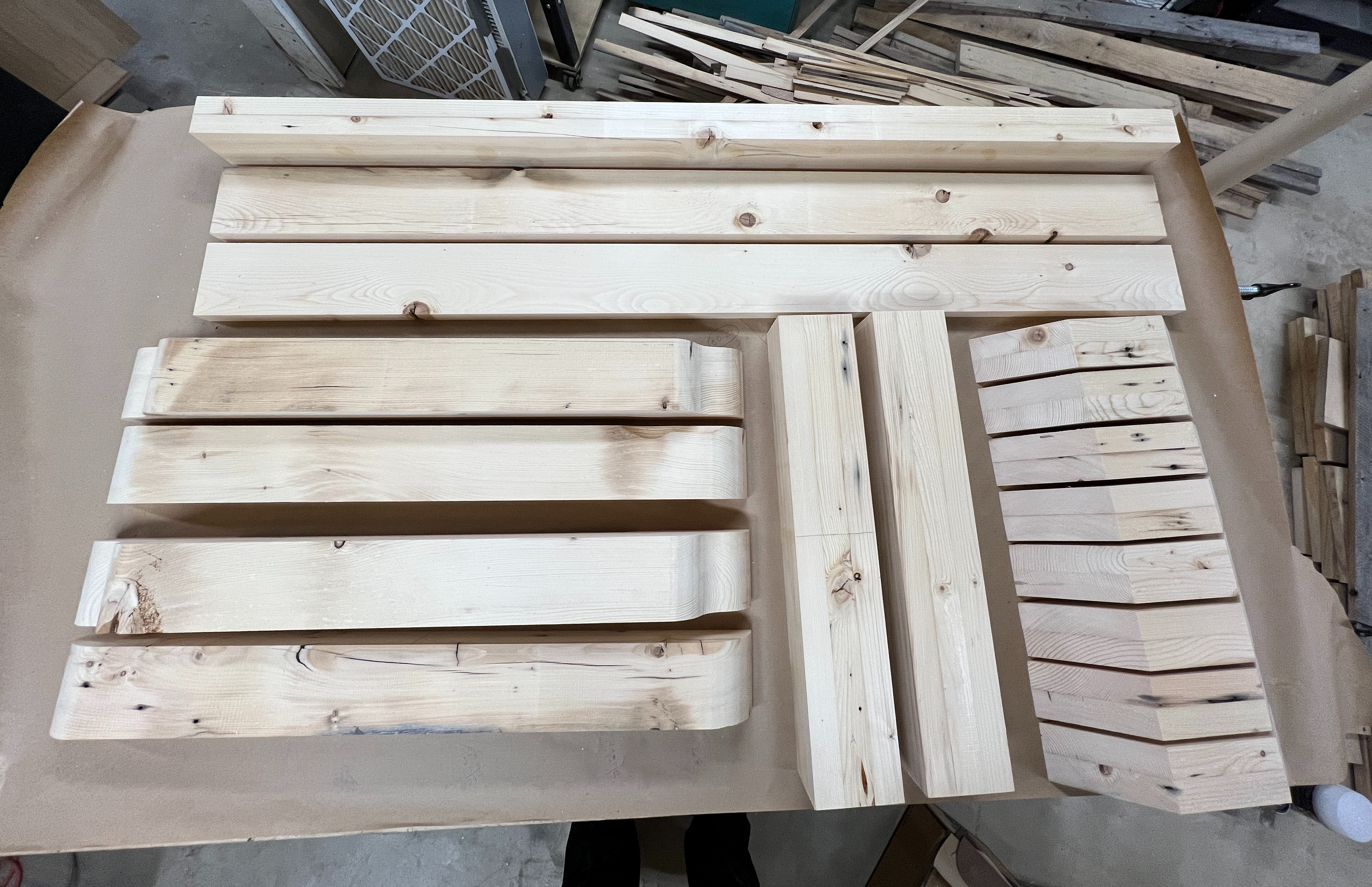
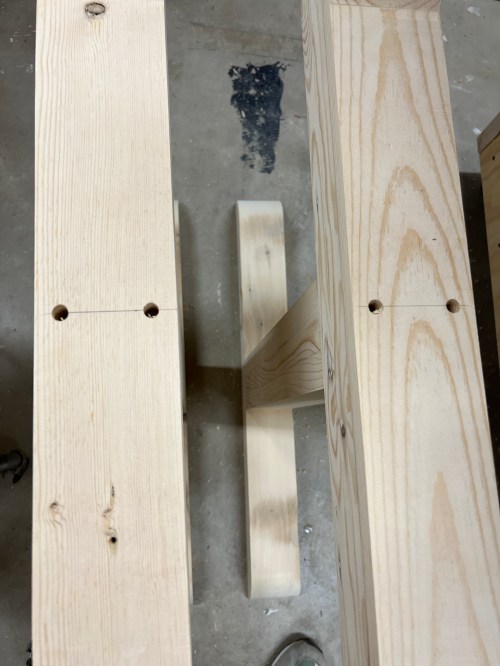
I still had a stack of the free reclaimed wood I picked up over three years ago and used up most of it for this project. Since there are so many different ways to do a build like this I’m not going to explain everything I did. Here’s a timeline of photos instead.

I bought a biscuit joiner, which I’d been thinking about getting for a couple of years anyway. It was my first time using one and it definitely got broken in. This was a fun project with a lot of challenges, so there were plenty of mistakes, solutions, and learnings. I’m glad I decided to do it myself.

What do you think of the result?

Upcycle: Sanding Station

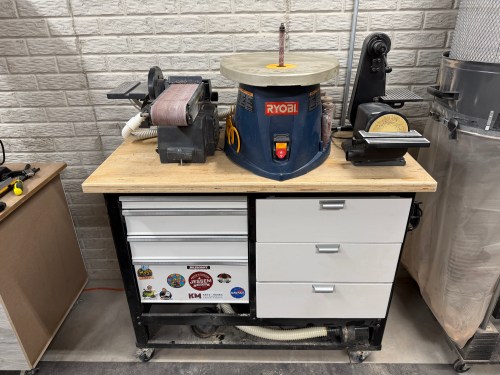
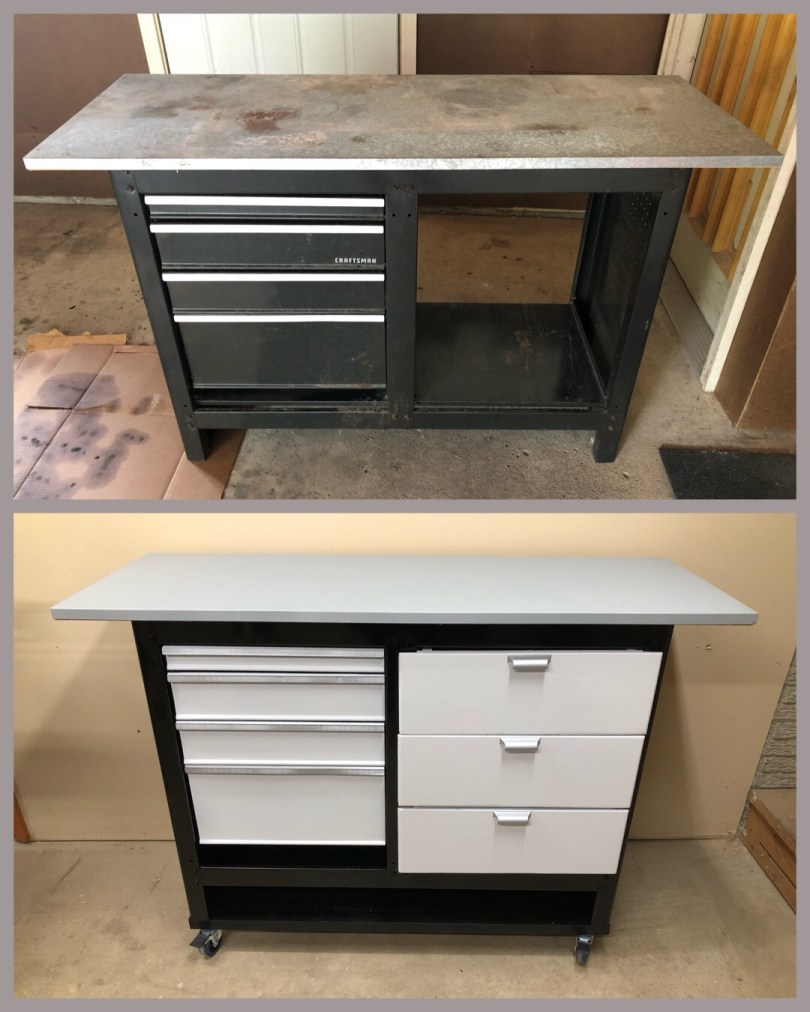
In the summer I snagged an old Craftsman workbench (model 706653800) for $30. I thought it would make a great sanding station for my workshop. Here is a before and after of just the table (near the end is a photo with my sanding machines attached). I’m really happy with how it turned out!

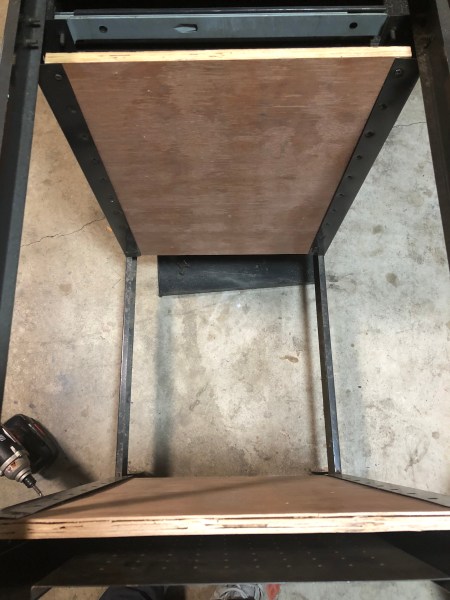
One of the first tasks was to make use of the right side. I started by cutting a couple of plywood panels and screwing them in.

img_1729

If you look back at the post where I took out a couple of walls to open up my workshop, you can see a unit with five drawers. When I dismantled it, I saved the drawers and slides. This was the perfect project to use a few.

img_1730

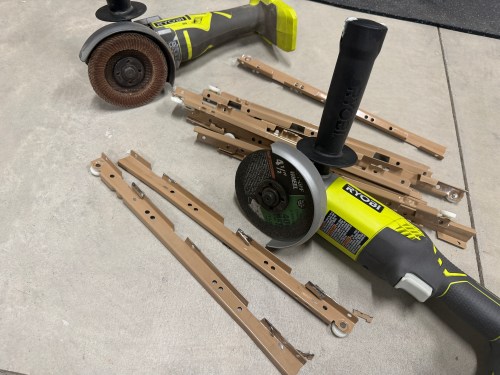
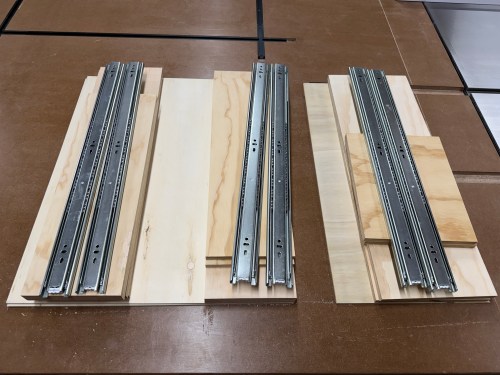
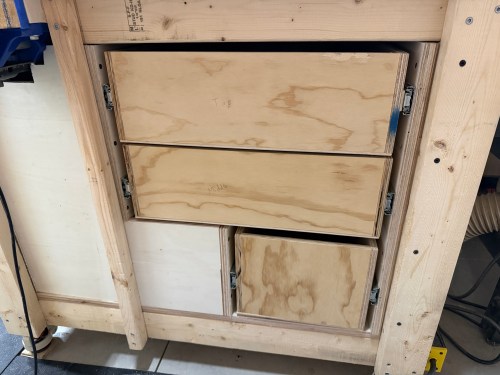
The drawers were too wide, deep, and tall, so I had to resize them in every dimension. Thankfully glue wasn’t used in the original assembly, so they were easy to break down.

img_1762

It felt like I measured and checked my calculations 10 times before cutting anything to size. I didn’t want to rush it and cut too much from any pieses, so I ook my time and the assembly went well. Putting the drawer slides in was tricky, but I made everything fit.

IMG_1763

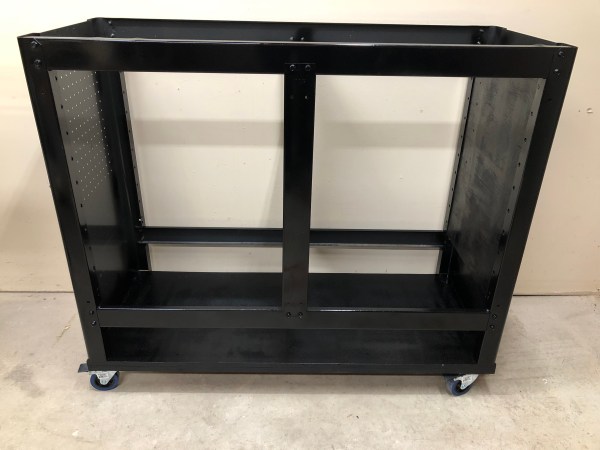
I cut a plywood base and attached it to the frame. Then I screwed in some locking casters ($4/each at Harbor Freight). I drilled holes for the drawer handles before taking both sets of drawers out and removing all of the slides. After two coats of a glossy black on the body and base, I was finally able to move it to the basement and free up the space in my garage.

img_1787

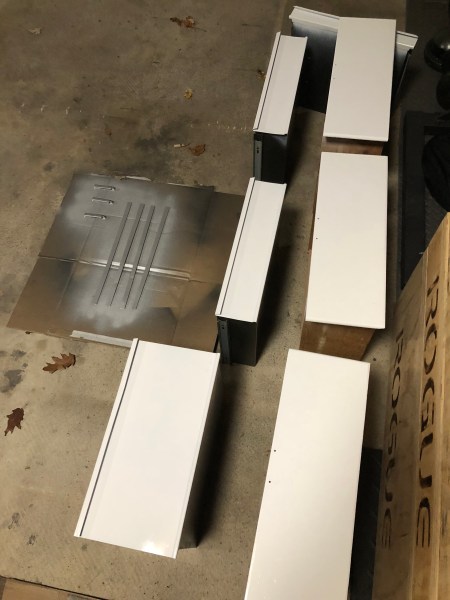
I sanded the wood drawers, wire brushed the original drawers, and cleaned all of the drawer slides with Brakleen. The faces got two coats of glossy white and the handles were sprayed with metallic aluminum.

img_1789

I’m really glad I decided to paint everything. Having this and the lathe stand in more of a finished condition makes the shop feel much nicer. I might have to paint some of my previous shop projects.

img_1792

I gave the galvanized metal top a good scrubbing with a soft brush according to what I’d read and it was still in rough shape. So I used a wire brush and a wire wheel on a drill. It ate up the rust, but went through some of the galvanizing. I found a product made by Rust-oleum to resurface the metal that looked promising for less than $5.

img_1799

I did 3 good coats, screwed the metal back to the MDF, and attached it to the stand. Looked pretty sweet if you ask me!

img_1800.jpg

I gave the galvanizing a full week to cure. I’d read about people having mixed results with it scraping off.

My original plan was to make some kind of hinging platform for the larger belt/disc sander so I could flip it on the side to use the belt for edge sanding. It couldn’t come up with a layout to make it work though, especially making sure I still had access to all of the dust ports. This configuration should work just fine.
img_1837.jpg

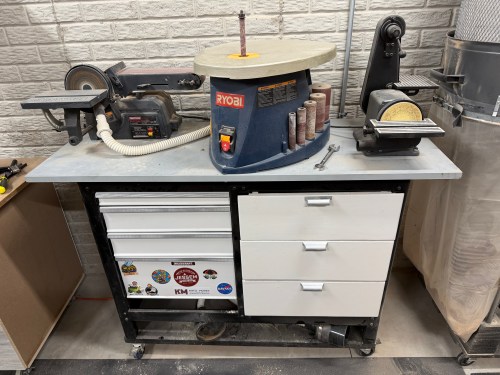
From left to right:

  1. Craftsman 4×36″ belt and 6″ disc (Model 137.215360)
  2. Ryobi oscillating spindle (Model OSS500)
  3. Craftsman 1×30″ belt and 5″ disc (Model 137.215150)

I bought all three of these used and paid $25, $50, and $30. The smaller Craftsman sander was still sealed in its original box. If you buy the Harbor Freight versions of these three machines, the new prices are $70, $145, and $85 respectively or $56, $116, and $68 with 20% off coupons if you make separate trips to the store. I love buying used tools!

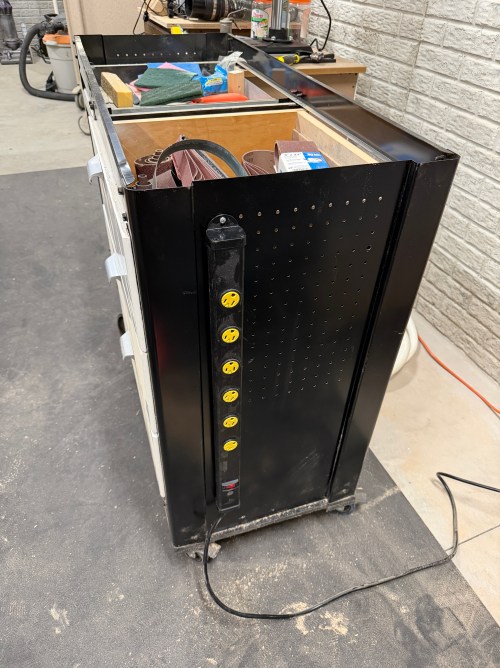
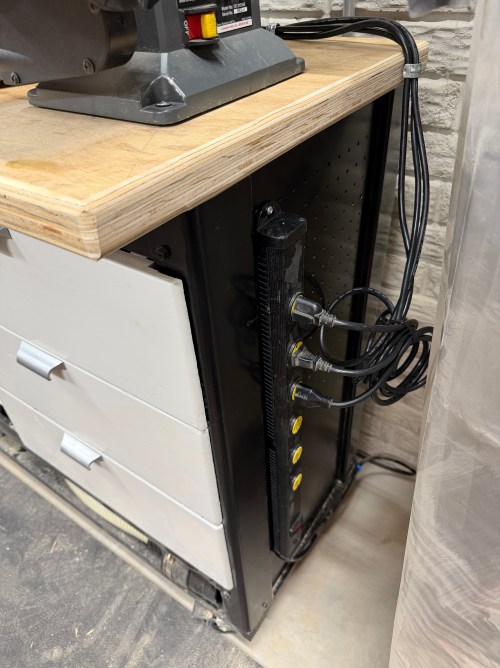
All of the power cords run along the back and then over to the right side where there is a power strip (free from Harbor Freight) and an extension cord ($9 at Harbor Freight) so I only have to deal with one plug.

img_1838

My shop feels infinitely more organized without the three sanding machines scattered across the floor. All that’s left now is to fill up the drawers with my hand sanders, sand paper, and accessories.

Custom Workbench

I’ve needed a workbench in my new shop since day 1. I finally got tired of working on the floor and built one. I created a little video to show the various ways I’ll use the table.
Let me walk you through the build. First I measured a bunch of stuff, especially the tools I wanted to be able to store under the table.
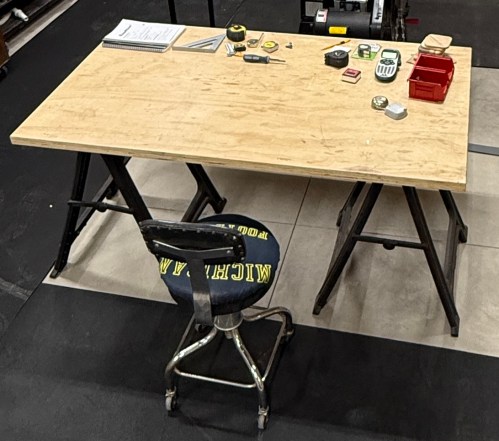
Then I did a quick framing mock-up to visualize the size.

workbench-tools-mockup.jpg

The size felt pretty good so I spent some time in SketchUp. The model is free at my new Misc Plans repo on GitHub. Not everything in the model and the screenshot below are exact to the finished workbench, but they’re a good starting point if you want to build something similar.

workbench-sketchup-screenshot-from-below.png

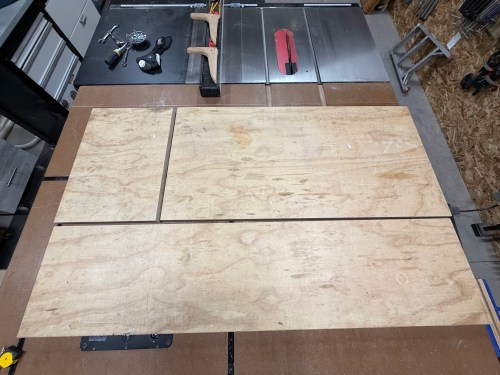
At Home Depot I had them cut a sheet of 3/4″ plywood into 3 equal pieces. At home I trimmed them to size for the walls. Then I started cutting 2x4s (all from the walls I took down) for the rest of the framing. I set up an extended fence and a stop block on my miter saw.

That really made quick work so I didn’t have to measure each piece.

img_0467

Then I countersunk and drilled holes, glued, and screwed the pieces of 2×4 to create a frame on each wall.

img_0468

After assembling the 3 walls I started to line everything up and attached the rails. I was thrilled when the power went out as I was finishing up. Some battery lights allowed me to finish the remaining screws.

I couldn’t believe how level it turned out, considering my basement floor is not very flat.

img_0472.jpg

Here’s the frame after the power came back on.

I made another trip to Home Depot. I had them cut 2 sheets of plywood to my exact size of 3×5 feet. Then I used a lot of glue (2-3 times what is pictured below) to laminate the two sheets together. I wanted a solid surface for the top of the workbench.

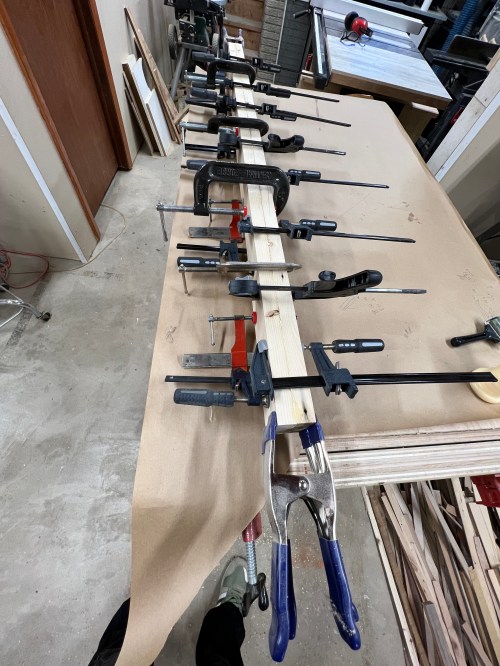
I hauled a bunch of weights down from the garage and clamped all around the edges. I think I counted 35 clamps being used! There weren’t many left on my clamp racks.

With so much glue, I gave it almost a full day to dry. Then I used my router with a flush trim bit along the edges to even up the 2 pieces, followed by a round over bit to get rid of the sharp edges

It was time to attach the top to the frame. I measured out the placement on one end and when I went to check the other side it was way off. I hadn’t been testing squareness enough or not in the right places when I assembled the frame. This is where experience and learning the order of operations is important. I measured the diagonals and there was about an inch difference between the two. Shit!

I pushed and pulled on corners and racked my brain trying to think of a good way to square it up. I decided to take the frame apart and go with a different approach. I’m glad I didn’t glue those rails to the walls!

I gave the entire table top a coat of paste finishing wax before moving on. Then I laid out some scrap plywood on the floor, set the top down, and used shims to get it as level as I could. I placed the wall on the end and used pocket holes to screw it in. From there I measured out where the two rails should go and I pocket holed them to the top as well. Then in went the other two walls. I made sure to test squareness of the walls to the top. I didn’t need to test horizontal square because I knew the top was a good rectangle. This was a much smoother way to assemble the frame.

Before flipping it over, I attached 6 castors (3 locking along one side) to the frame. I cut a bunch of scraps to make shelves and attached a metal tool holder on each side.

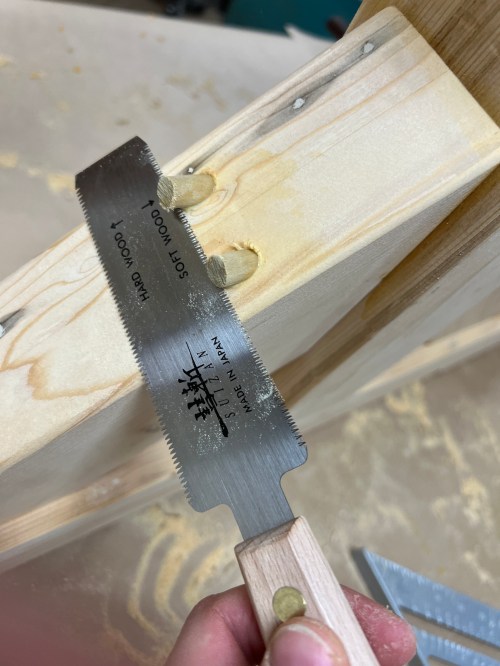
I had already cut and laminated the pieces for the vise somewhere earlier in this whole process. I also used flush trim and round over bits to route the edges of the vise jaws. In the drill press I used a Forstner bit to make the holes in the vise jaws for the pipes. Then I screwed the single vise jaw to the table and used its holes as guides to continue the holes through the side wall of the table. Unfortunately the Forstner bit wasn’t long enough to go all the way through. I found this massive drill bit in a box of bits my Dad had given me with the drill press. It wasn’t quite wide enough so I still had to file the edges of both holes.

img_0491

Here is a close-up of one piece of the pipe clamp under the table. I used the drill press to put some holes in the clamp and then locked it in place with some screws.

IMG_0501.jpg

Hung up a couple of router accessories on the wall.

IMG_0498.jpg

Voila!

Isn’t she pretty? I don’t know how I lived without this thing. I’ve already used it so much. If you’re putting together a shop I recommend starting with a proper workbench before anything else.

img_0493

I bought this 36″ paper roll and holder so I could cover the table when doing a glue up or a quick paint or stain job.

IMG_0527.jpg

It would stick out too much on the sides though. I also didn’t like the mounting method and how much space it would take up under my 12″ overhang. So I found a place on the floor under my tool bench (that you see in the picture) to put it.