
What is the ideal way to eat a large muffin without creating a huge mess? They are too big and crumble too much to eat like a cupcake.
In a bowl with a fork worked well.
What is the ideal way to eat a large muffin without creating a huge mess? They are too big and crumble too much to eat like a cupcake.
In a bowl with a fork worked well.
I’d been limiting myself to no more than one episode of The OA per night, which has allowed me to enjoy each episode more I think. Last night I was watching episode 8 and then all of a sudden, season 1 is over. What the fuck just happened?!
I hadn’t looked at the episode list, but was fully expecting 5 more episodes, which is typical for a lot of Netflix shows. Even towards the end of #8 I didn’t expect the end was coming. So much shit happened in that episode and now I have so many questions.
I’m hoping there was already a good plan for season 2 because the sudden end completely threw me off guard and it feels like a rush job.
I’m going to try something different with these link dumps. I’ll write a little about each link. Might be a sentence or it might be a paragraph.
…remember that your worldview isn’t a perfect house that was built to last forever.
The mind can’t separate the emotional cortex from the logical one.
Go back and read Part 1 if you want to the full story on this little project. I did decide to get rid of the PCB on the old phone keypad. Good thing I’ve been getting a lot of desoldering practice. In order to remove the PCB, I first had to remove the wires I had added to the column and row contact points. That was easy and getting the PCB off was a pretty smooth process as well.
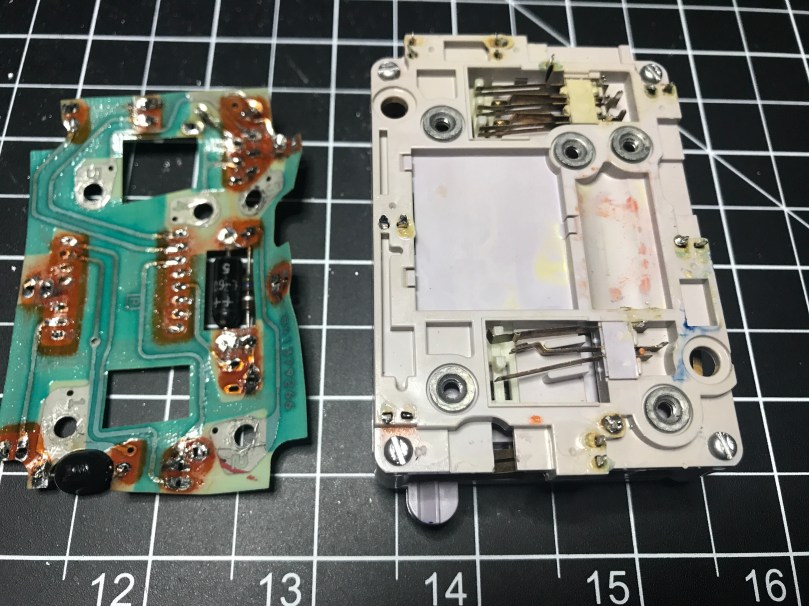
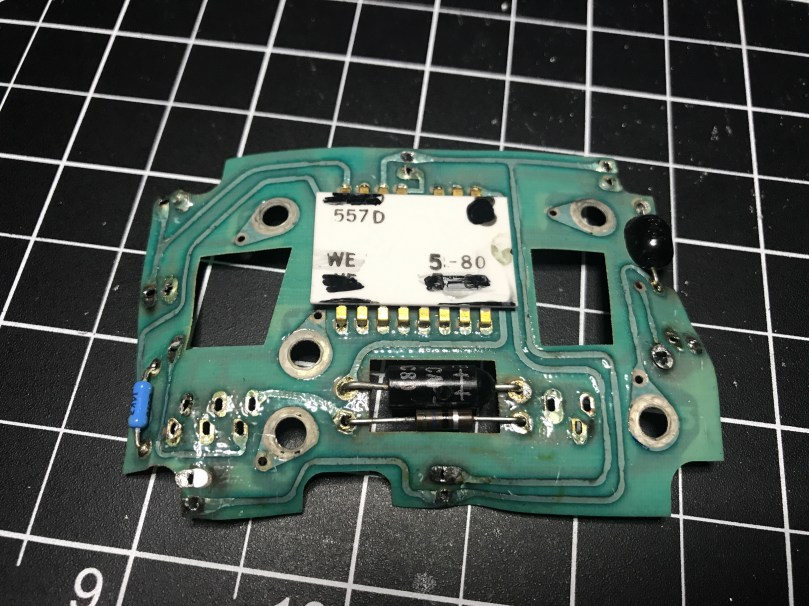
Now that I didn’t have the PCB to carry power and ground around everywhere, I had to solder in my own wires. I also had to solder back in all of my connection points to provide the outputs I’d feed into a microcontroller (I used an Adafruit Feather 32u4 Basic Proto).
Once all of the wires were in place and then connected to my microcontroller I wasn’t getting expected results from a simple little program I wrote to display the values. Took far too long for me to remember I needed to use pull down resistors to prevent floating values. I put 10k Ω resistors in each of the circuits…

Output from the pins couldn’t get any better…

I loaded an example from the Arduino KeyPad library, which gave me very weird behavior. After looking at the underlying code, I realized it wanted the outputs of the keypad to be HIGH when a key was not pressed and LOW when it was. Well, my circuit was doing the opposite, so I had to have to invert everything. I didn’t have any inverter ICs, so I used NPN transistors to create an inverter circuit on each output.

Progress. Now I was able to get the library to correctly recognize some key presses. 95% of the time it seemed to think everything was coming from column 1 (1, 4, 7, *) though. The library comes with a MultiKey example. When I ran that, it was reporting every key on the row as being pressed. WTF?!
For the life of me I could not figure out what caused this. I checked wires, measured voltages, did continuity tests, resoldered connections, changed boards, used different GPIO pins, and countless other things. Nothing made a difference. My own code was working beautifully though. Eventually I gave up on the library. It wasn’t worth the effort and I was out of ideas.
Update: Later on I went back and read the KeyPad library code again because it was bugging me. Turns out these keypads don’t actively read the column pins like they do the row pins. My assumptions about how they worked was very wrong because I hadn’t read far enough into the code before. When checking for key presses, typical keypads iterate through the columns to send a pulse which feeds over in to the rows, which are then read in. How a Key Matrix Works has a pretty good explanation with visuals. If I get my hands on another similar keypad maybe I’ll try to recreate this functionality.
I rewired everything to use the pull down resistors again (video of soldering). A huge benefit of the decision was it drastically simplified my circuitry. This would save me 49 solder points! I probably would have needed to use a half-size perma-proto board instead of the 1/4 size I ended up using.
I decided to put in a piezo buzzer to add sounds. I also used a tiny LED, which I had salvaged from some old computer speakers, to show when power is switched on to the backlight.
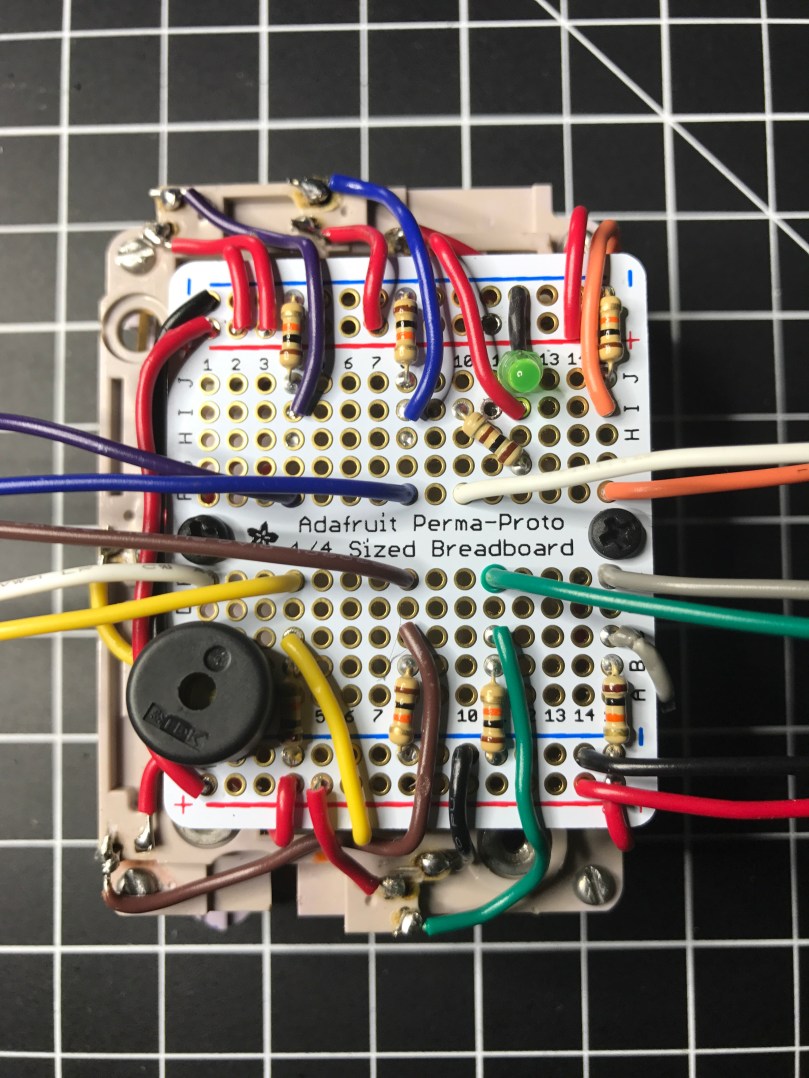

I tried a couple of different methods of producing touch tones (DTMF) to match up with each key, but with the microcontroller I’m using and the small piezo buzzer, the sound was terrible. I would need something a little more capable I think.
Here’s a demo video.
Hard to see the OLED screen in the video, but I was only using it to output each key press. Something like this…
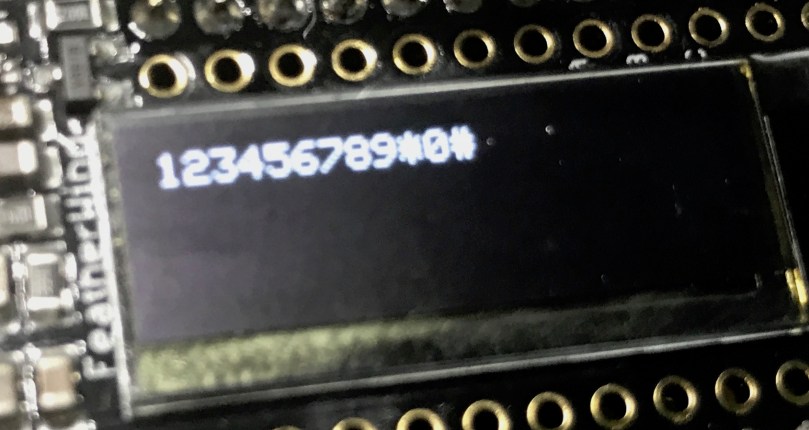
All of the code and Fritzing wiring are available in my phone-keypad repo on GitHub.
I even went out of my comfort zone and did a quick share of this on Adafruit’s Show and Tell. If the video doesn’t start at the right spot you can skip ahead to the 12:42 mark. Going back to watch, my demo kind of sucked since it’s hard to hold something up to the Mac camera and push buttons at the same time.
Update: Continue on to Part 3, where I create a matrix of buttons to act as a keypad.

A couple of weeks ago I came home to find this 2017/2018 Yellowbook thrown in my driveway. How is a physical phone book still a thing?
Remember the white pages where you could look up the phone number for anyone in your area? Seems like decades ago, though I couldn’t tell you the last time I called a personal land line.
Even at 8x speed my soldering skills are still slow.
Yes!
I’ve been patiently waiting for the Netflix Marvel shows to come together.
Good timing since I finished watching Iron Fist last weekend.
This morning when I saw the latest issue of The MagPi Magazine came with an exclusive Google kit, I wanted it. I was up early for a golf meeting and some errands so I stopped at Barnes & Noble to see if they had any copies. I was excited to find a couple on the shelf!

The woman working the register said she had just put them out and there was actually a 3rd copy that was coming apart so she was going to glue it back together.
At $15 for a magazine, I don’t think you can really call this a “free” kit, but it’s still a good value. I don’t think I’ve ever “unboxed” a magazine before…


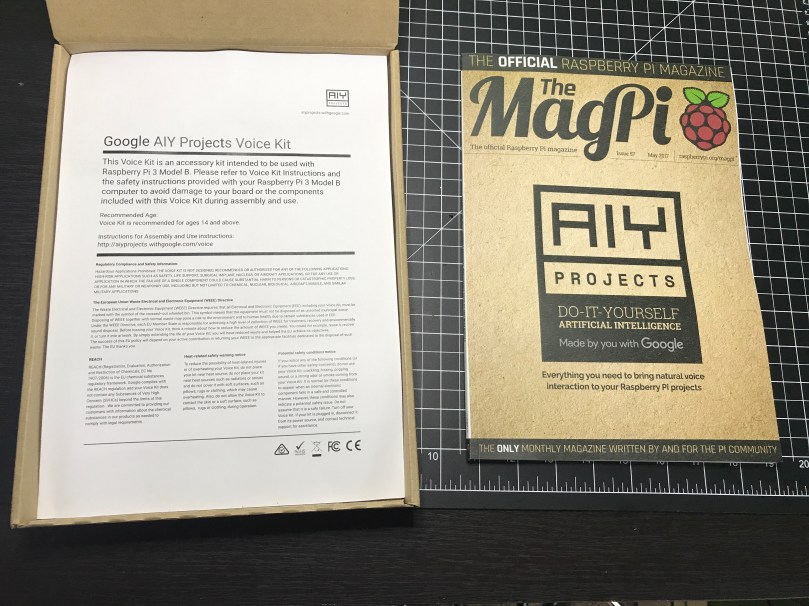
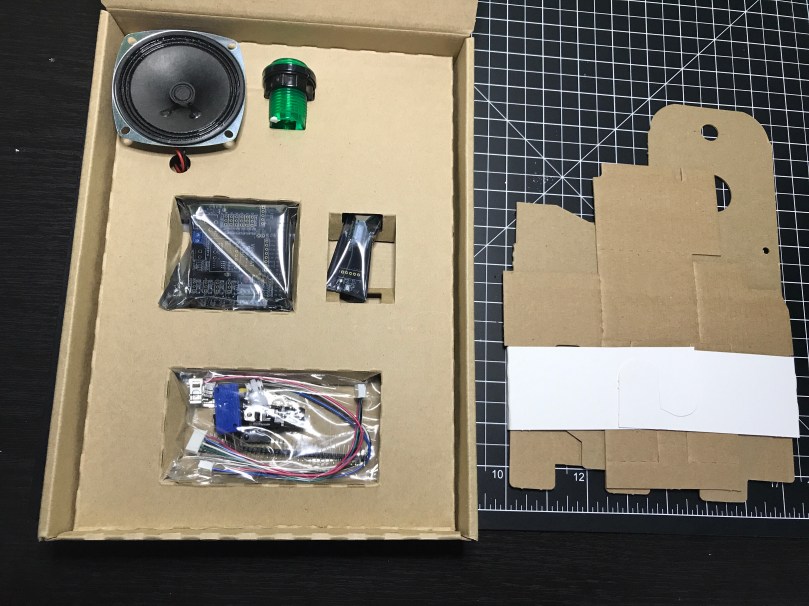
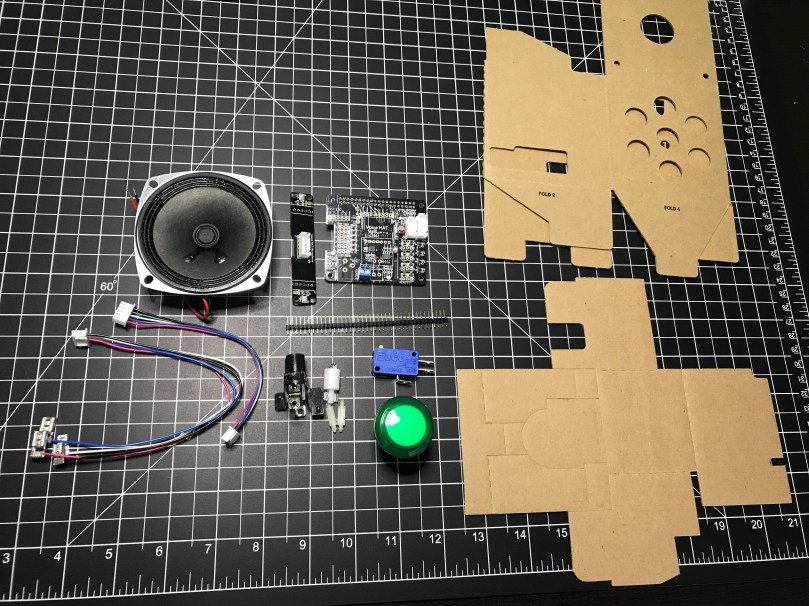
This will be neat to mess around with. I’ve thought about turning one of my Pis into an Alexa type device to put in my office or bedroom and could easily do it now. If you have any project ideas involving voice, let me know.
My Twitter followers are leet!