After making coasters to go with my desk, I had the idea to make some as gifts for my Automattic team members, since we had a meetup coming up. Brandi also wanted to make a couple for a gift, so she helped a lot. Unfortunately I didn’t take many pictures during the process.
I’ve been wanting to try box joints for years and had saved several plans to build a jig. A couple of months ago I saw Katz Moses Tools was releasing a box joint jig and I jumped on it because their video made it look so good. It was still a pre-order at the time and the web site said it could take 3-4 weeks, but mine was delivered in a week. Assembling the jig was a piece of cake.
I was very impressed by how snug the runner fit in my table saw’s miter slot. After a few pushes back and forth it wore in and then I added paste wax to make it slide like butta! I grab some scraps and my dado stack for a quick test.
The jig is easy to use and with some quick adjustments I’ll be able to dial in a better fit. My next project will be a monitor riser for my desk so I’m looking forward to doing some walnut box joints.
With our new house having a big walk-in closet we won’t need dressers, so we’ll be selling our bedroom set, which meant it was a good time for new nightstands. Here’s a photo dump of the build.
These will be floating on the wall in the new house, with about five inches of space under them. I did a lot of things in this build I’ve never tried before, so I learned a lot. I love how the decorative grooves turned out on the drawer fronts, which was inspired by something Michael Alm did on his kitchen cupboards. The oak handles were made with inspiration from a couple we liked on Etsy (1 & 2).
I can’t wait to get moved in this summer and mount these on the wall!
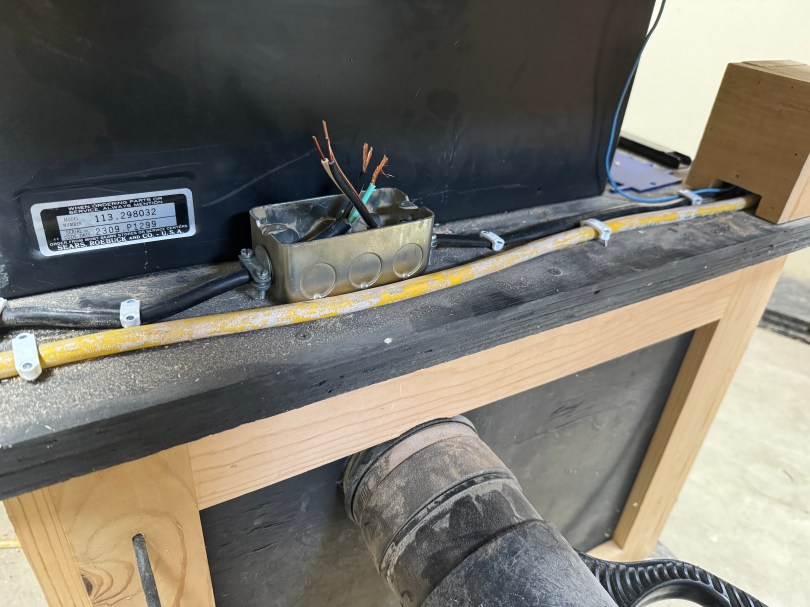
Yesterday I went to make some 45° cuts on the table saw and couldn’t get it past 30°. After a few minutes of tinkering around, I realized there wasn’t enough slack on the wire going to the motor. I guess I wasn’t thinking about when I installed the new switch several years ago.
Instead of replacing the entire wire all the way back to the motor, I added a junction box and an extension to the switch.
The saw still wouldn’t get to 45° though, because I had another issue. I guess I’d never done that much of an angle, so the threaded rod to guide the tilting mechanism was caked with saw dust. After some WD-40, a wire brush, and cranking it back and forth, it was moving well.
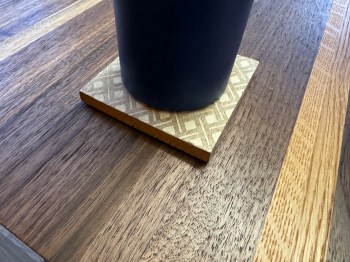
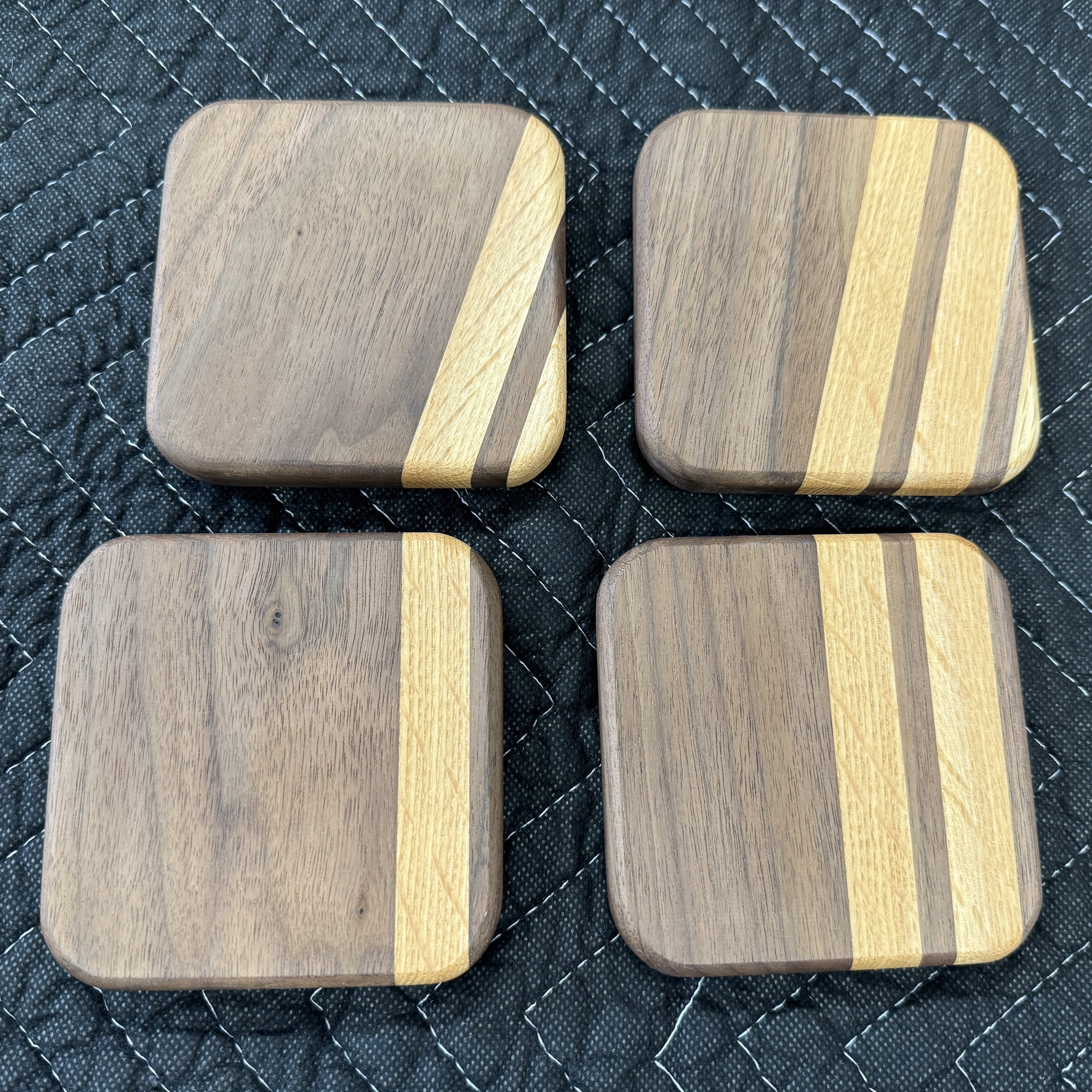
I’m loving my new desk. There are a couple of needed improvements though. First, I always have a water bottle, coffee, pop, or several on my desk when working, so I had grabbed this coaster from the living room. It bugged me all week.
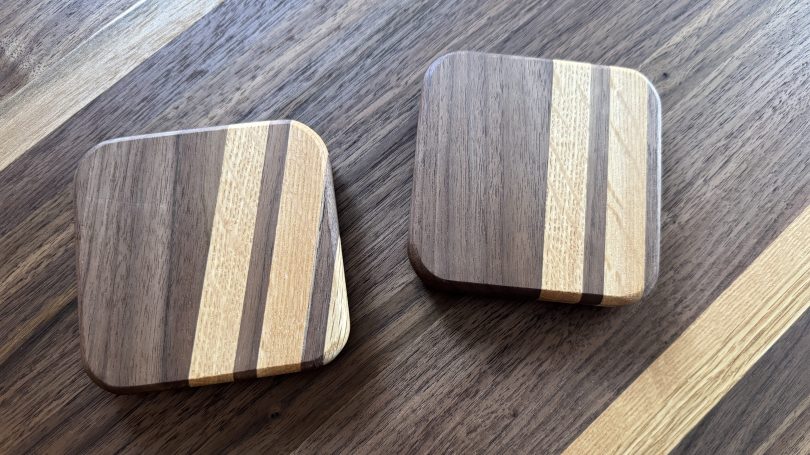
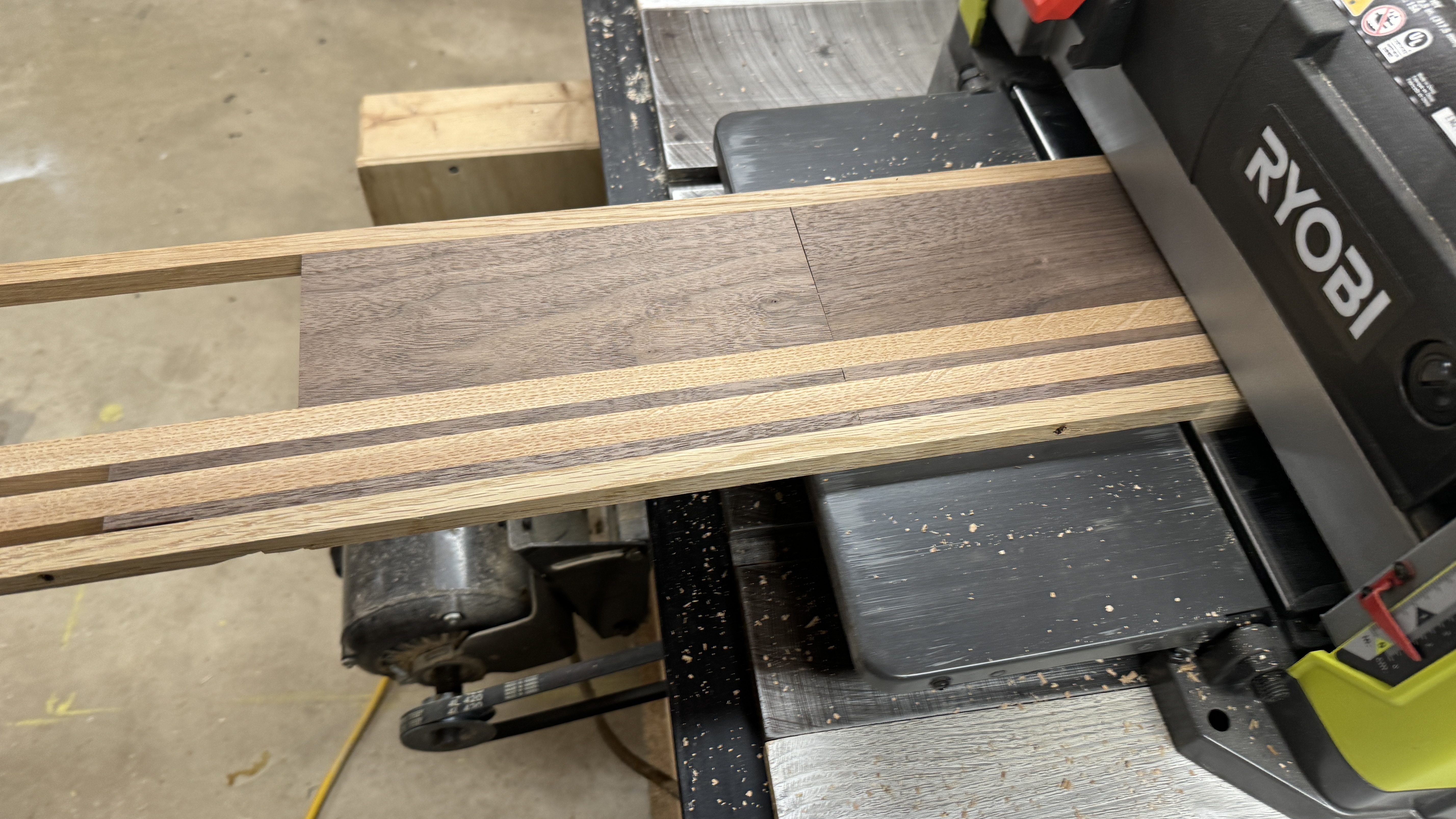
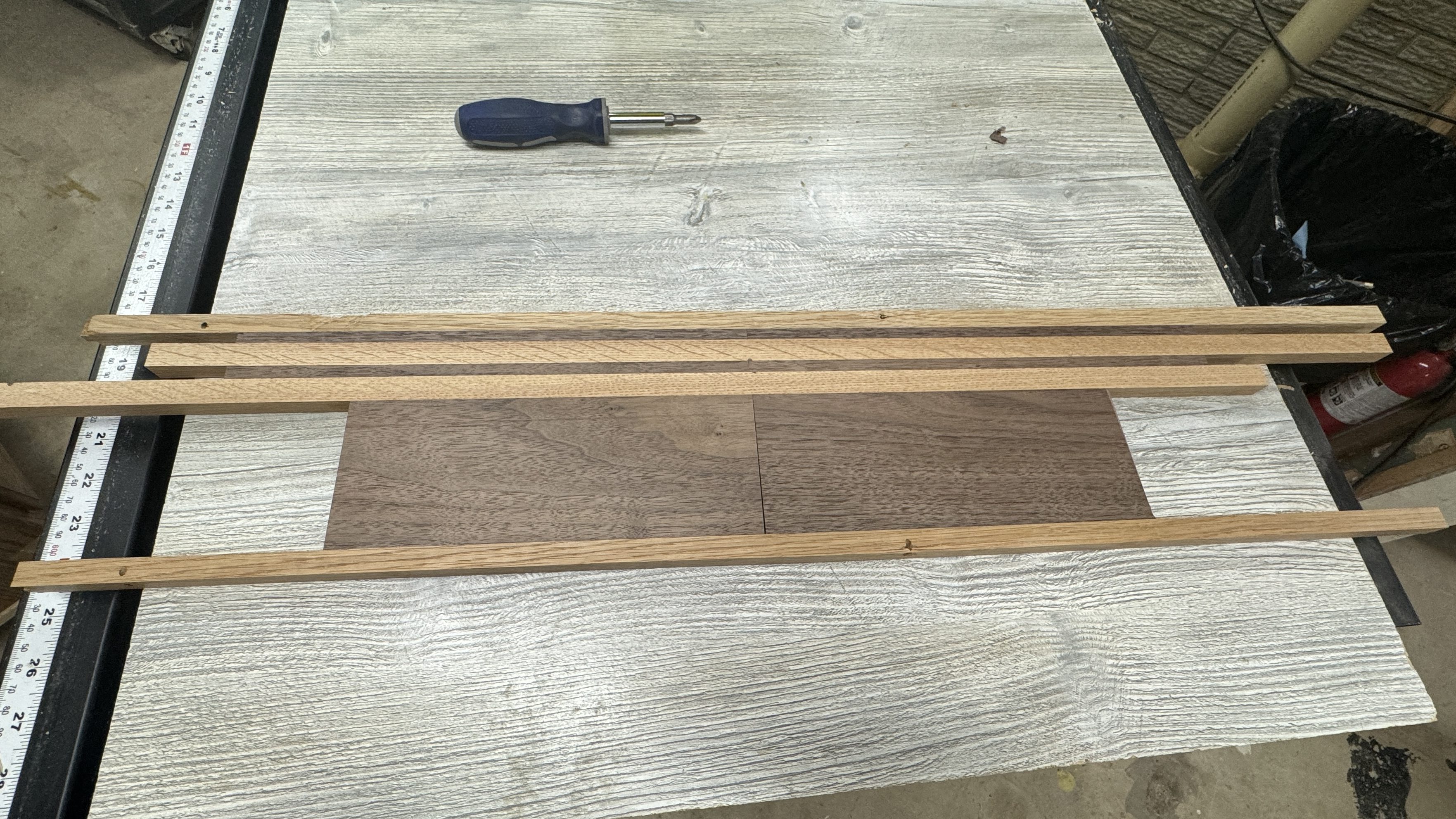
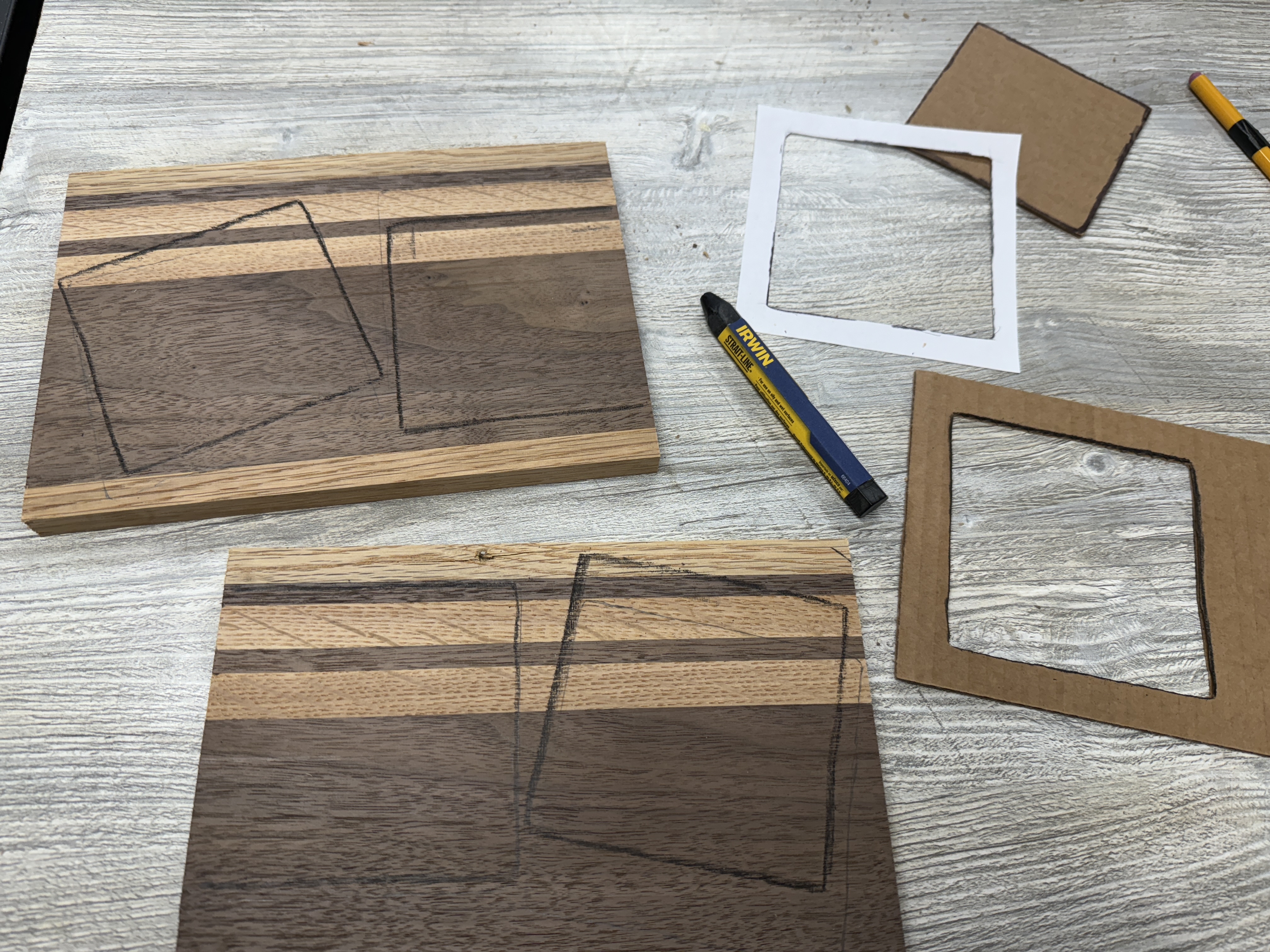
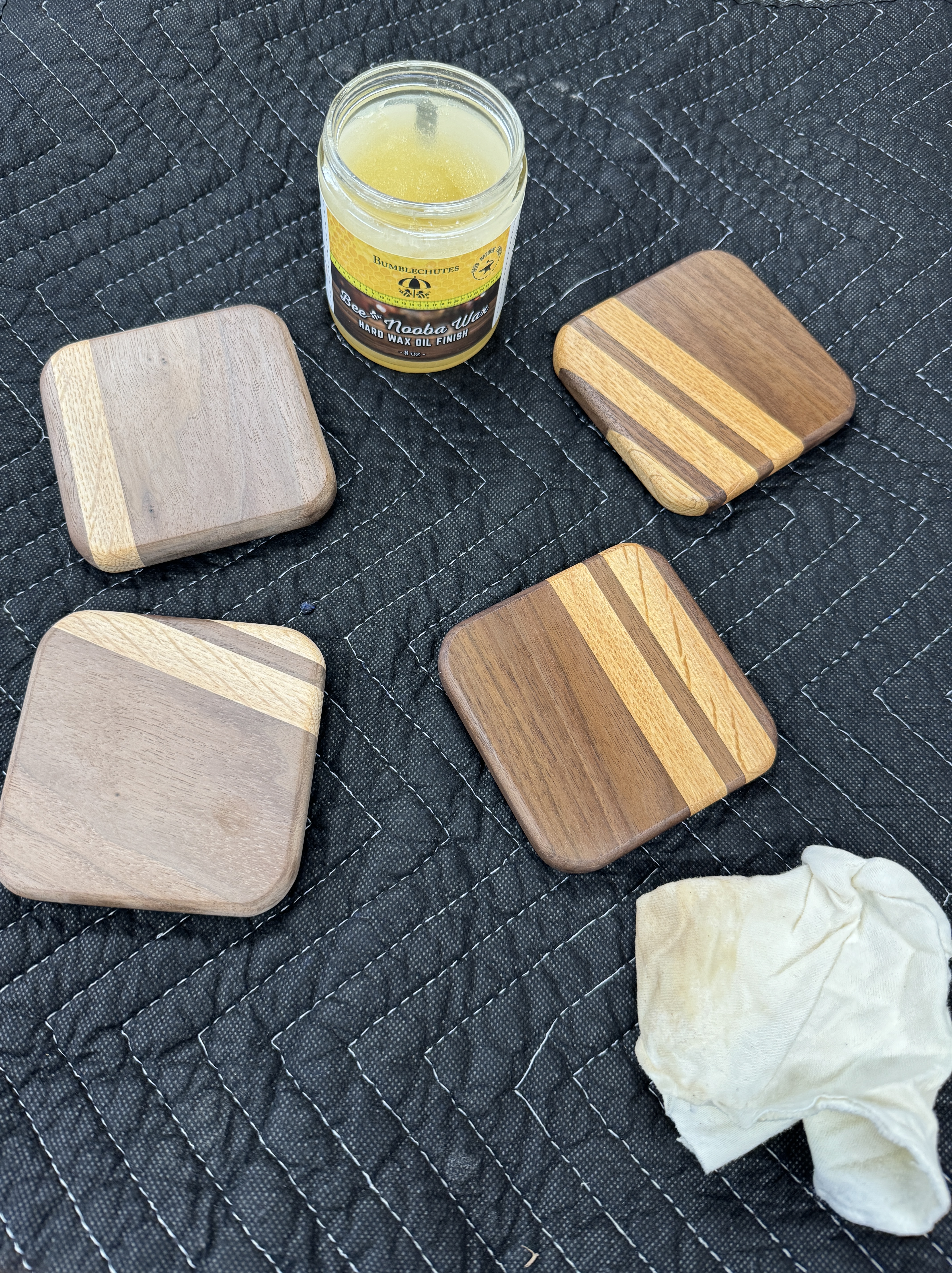
Can you believe I’d never made a set of coasters? Time to fix that.
This was a simple project and a lot of fun to knock out something small. I’ll keep two of the coasters in the office and put the other two in the living room.
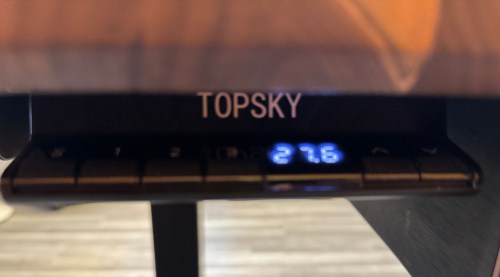
Over the years, without success, I’ve tried to stand some while working. Hopefully a motorized adjustable base will encourage me to stand for certain tasks and even if I can do a couple of 20-30 minute sessions each day it’ll be a big help.
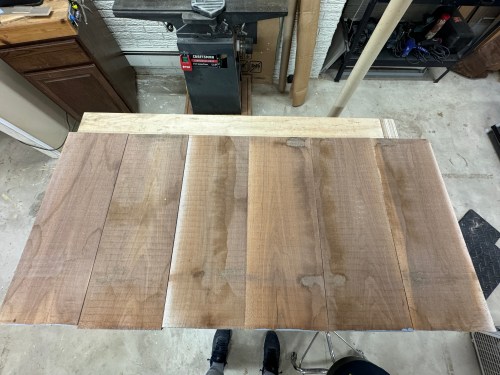
I got to work processing walnut boards and white oak flooring.
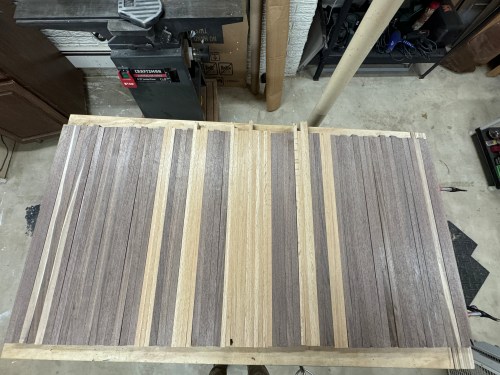
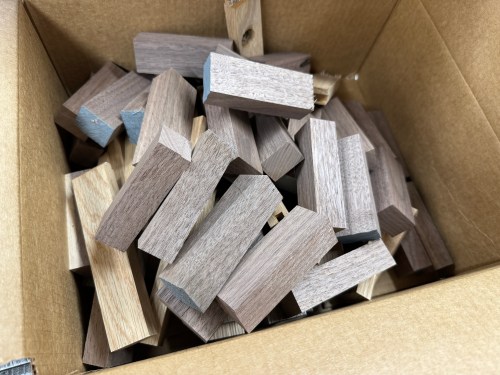
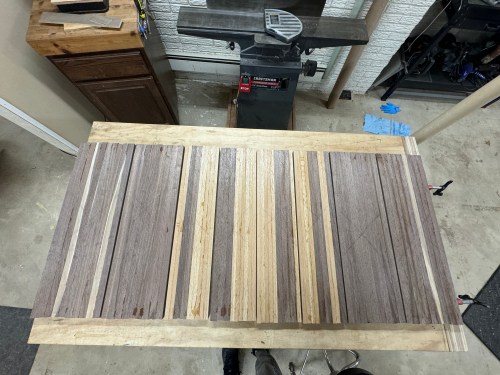
There was a lot of jointing, cross-cutting, ripping, planing, more ripping, and trimming. I’m excited to use that box of off-cuts to make an end grain cutting board or two! I felt like the key to this build was going to be the glue-ups. I started with sections of 9-10 pieces and ended up with eight of those.
I ran each section through the planer, with the help of some shimming for a couple, to flatten them. I made a temporary sled to square up the sides to the faces.
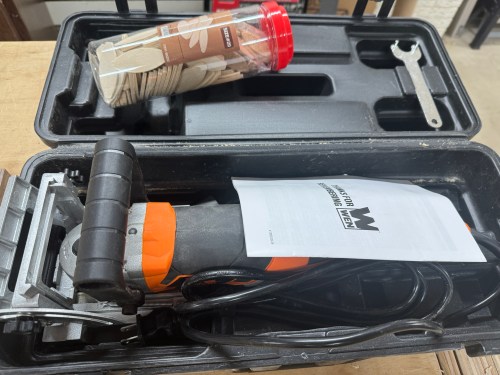
To help assemble the sections, I used a couple of biscuits on each glue joint.
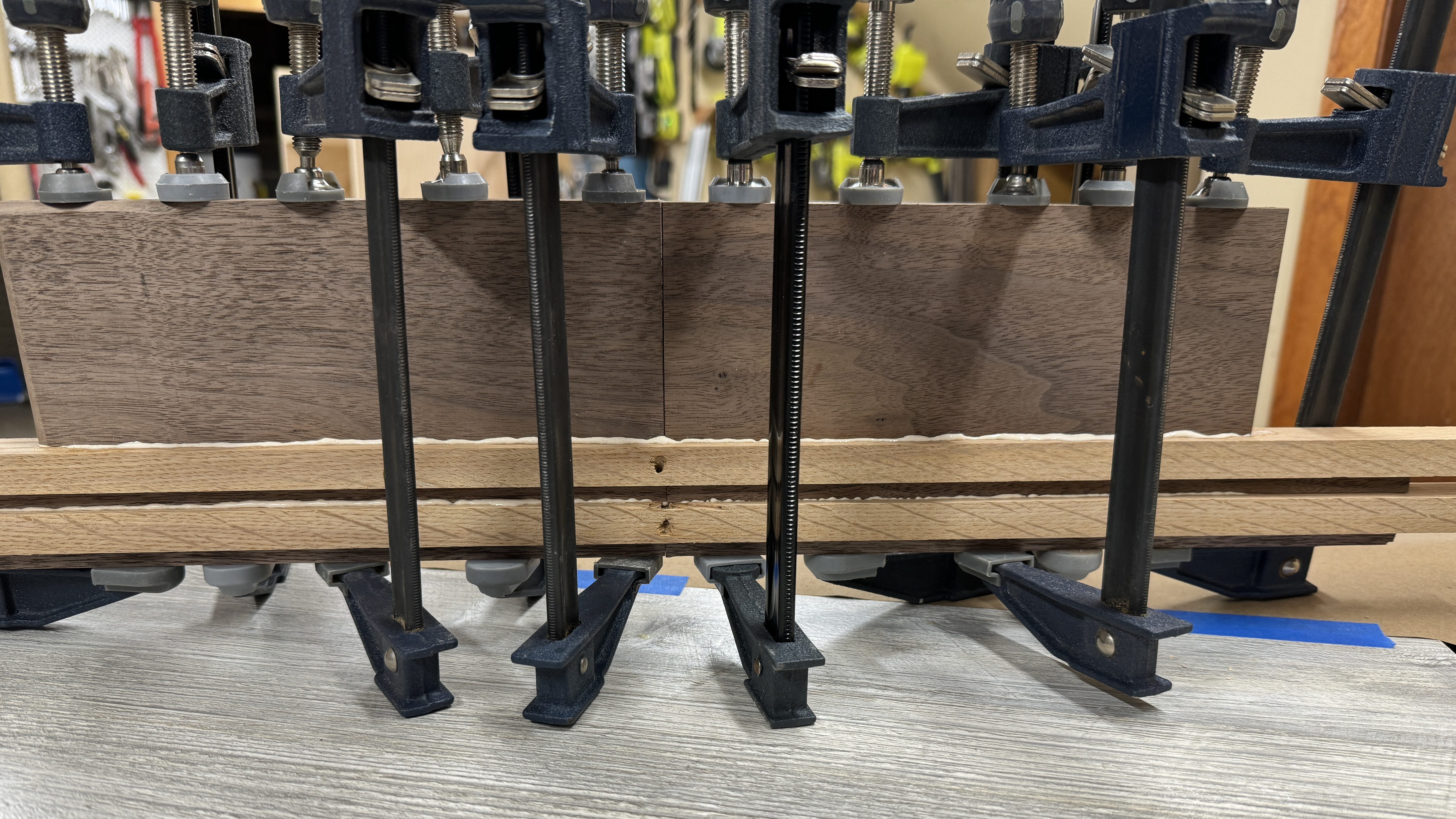
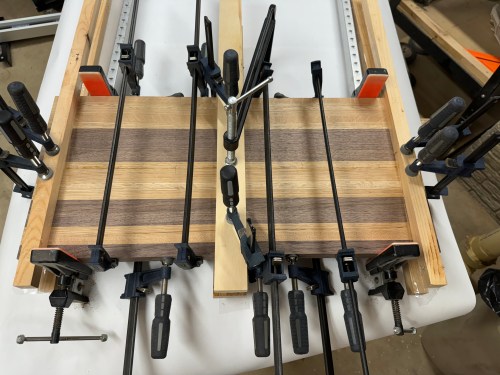
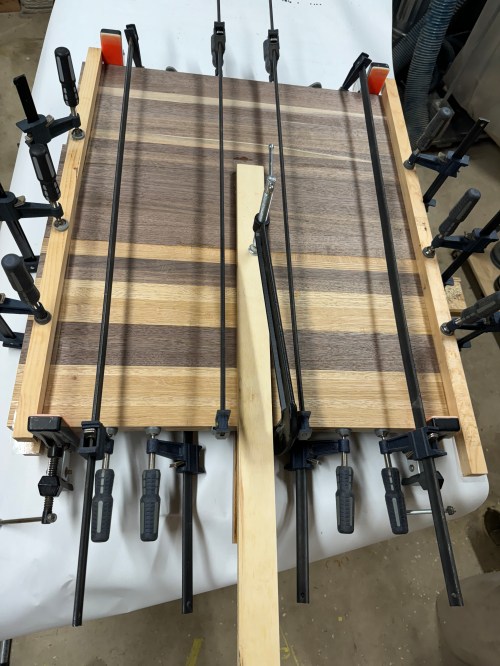
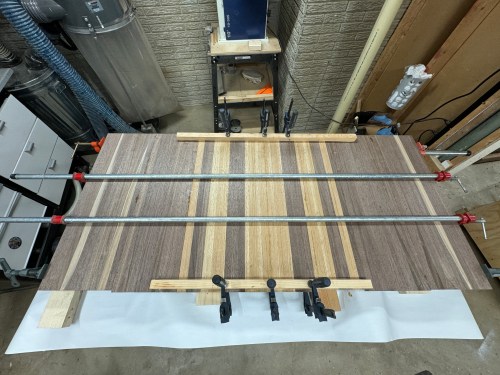
I glued up two sections at a time, which gave me four bigger sections. Then I glued up two of those at a time and one final glue up.
I drilled and put in all of the bolt inserts, which will attach the top to the desk base.
I took three passes with the router to put a big chamfer along the bottom edge.
With a jigsaw, I rough cut out a spot in the back to pass cables through. Then I did some sanding to smooth it out and added a chamfer with the router. Here is it, viewed with the desk bottom facing up.
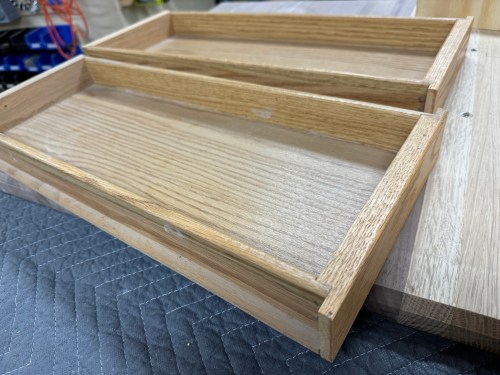
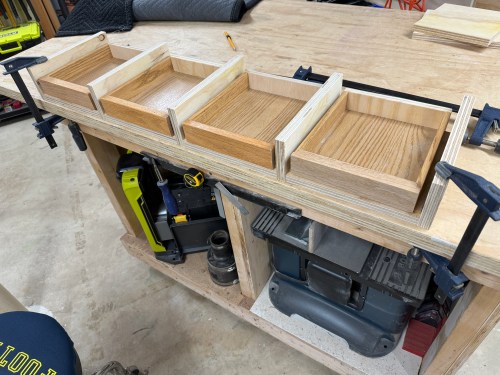
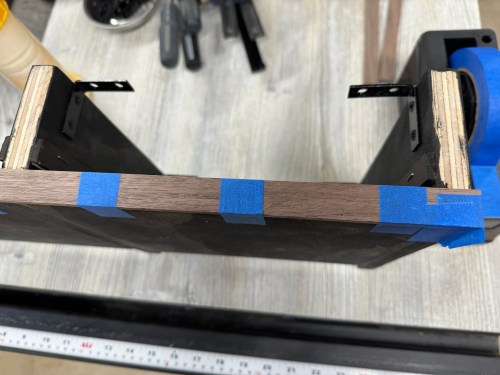
Due to the base’s cross support, there’s was limited depth for drawers, but there was width for them. I took some old kitchen cabinet drawers, chopped them in half, and closed them up with scrap plywood.
Then I worked on what I’m calling the drawer box even though it’s not a box. I also cut top rails from hardboard and oversized drawer faces from walnut. Grabbed strips of walnut for face-framing and glued together pieces of oak to make drawer pulls.
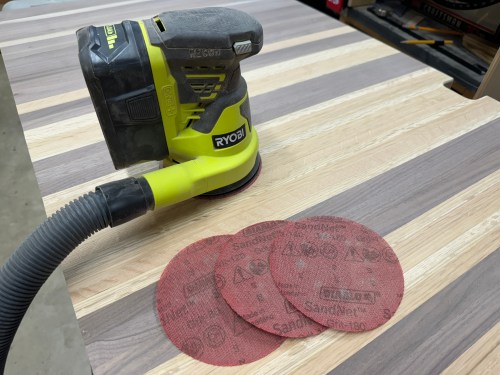
All the sanding! I went through 80, 120, 180, and 220 grits on the top and sides of the desk.
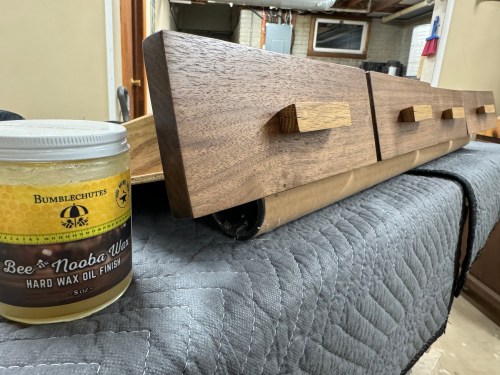
Time to put some finish on, which is always a favorite step to see how it’s really going to look. It was my first time trying out a hard wax oil and I used Bee Nooba Wax from Bumblechutes. It was very easy to apply and I’ll definitely be using it on future projects. I applied one coat to the bottom and three coats to the sides and top.
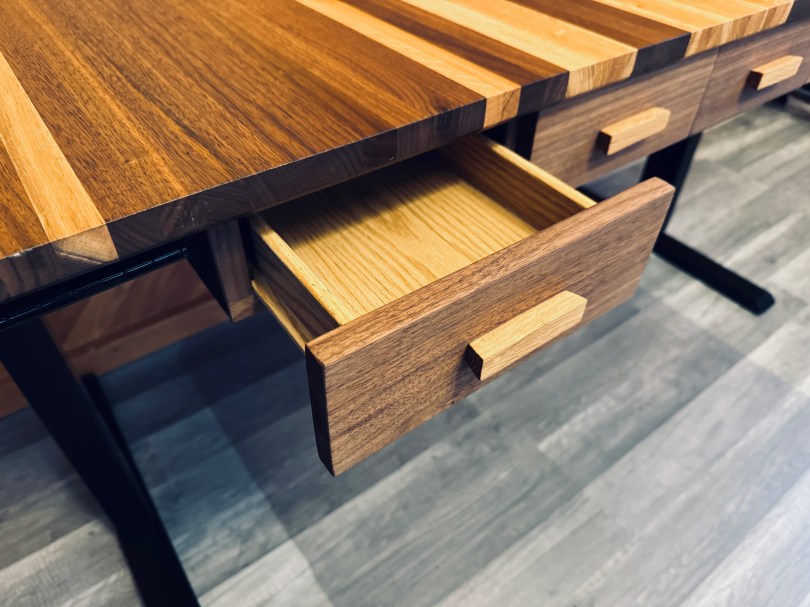
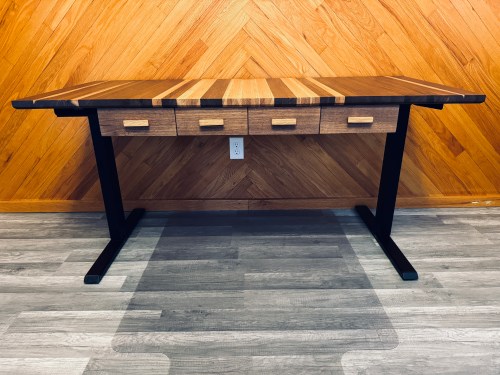
Then it was back to the drawers. I stained the “box” black and ended up having to trim some things to fit better around the rail of the desk base. I sized the drawer faces, made oak handles with 10° angles, assembled everything, and applied finish.
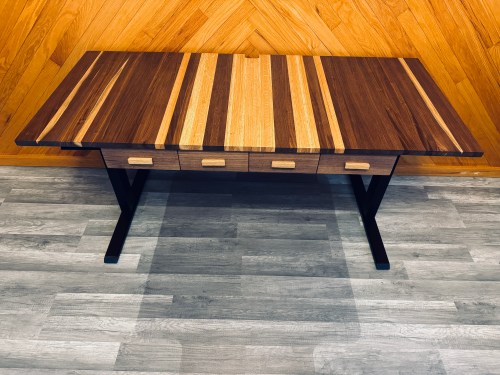
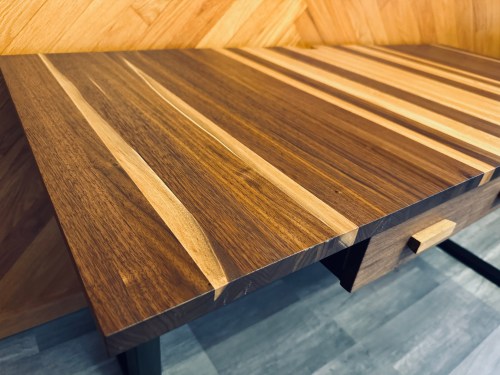
It turned out great! I can’t wait to see it in our new house later this year!
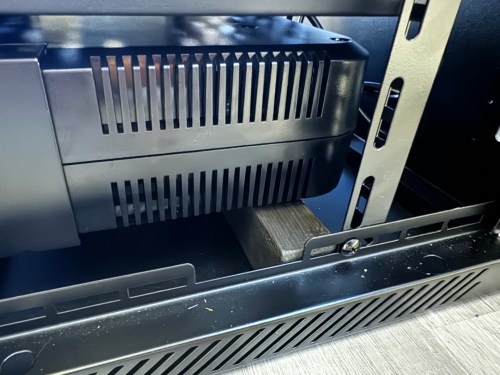
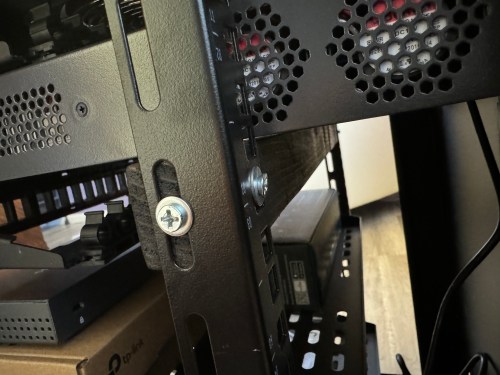
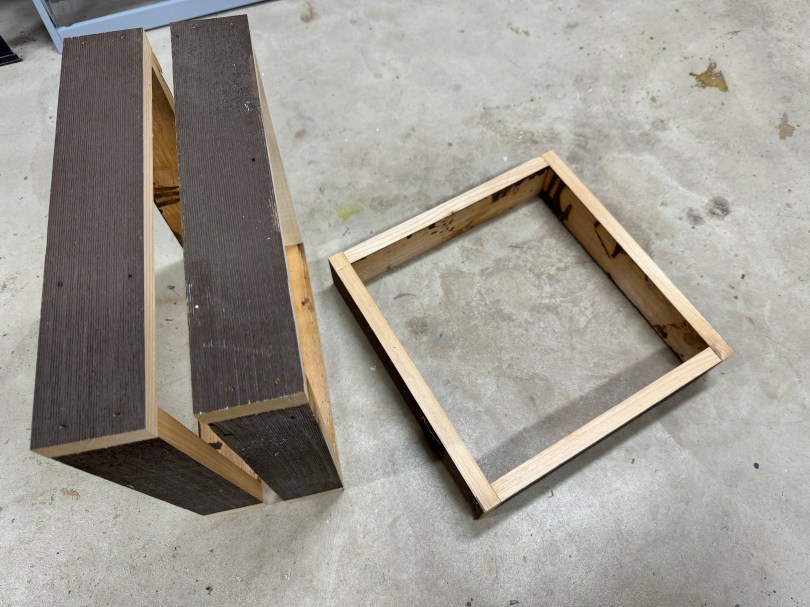
We’re having a house built next year and it’ll have ethernet ports all over. I’ve already started gathering equipment and setting up a network rack cabinet (from Amazon), so I can start playing around with the stuff in our current house over the winter. The rack will do the job fine, but it’s not super high quality. Since the components usually only mount to the front rails, the heavy equipment can sag quite a bit in the rear. I cut and stained a couple of pieces of scrap wood.
The UPS is the heaviest piece of gear, so it’s mounted at the bottom of the rack. I used a couple of pieces of VHB tape to stick the support beam to the rack floor. The rear of the UPS simply rests on that piece of wood.
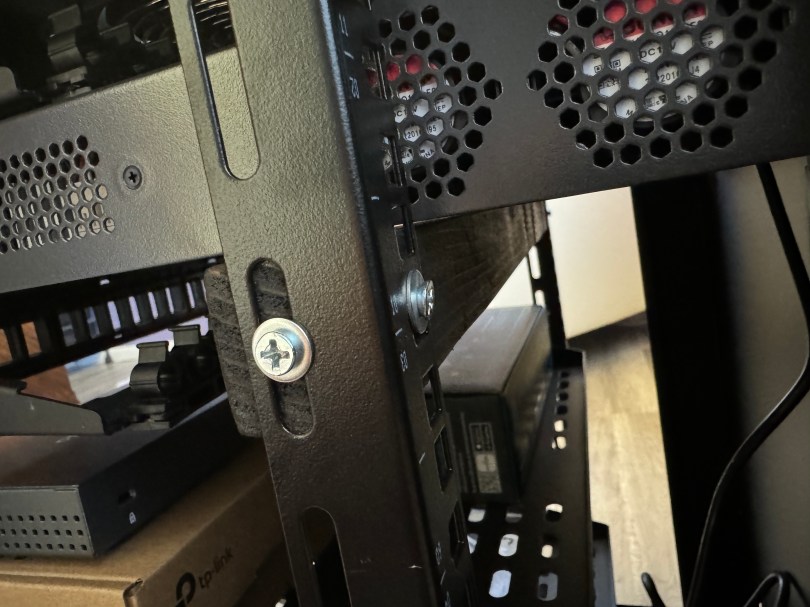
The other support piece mounts to the rear rails with washers and screws, propping up the back end of the switch.
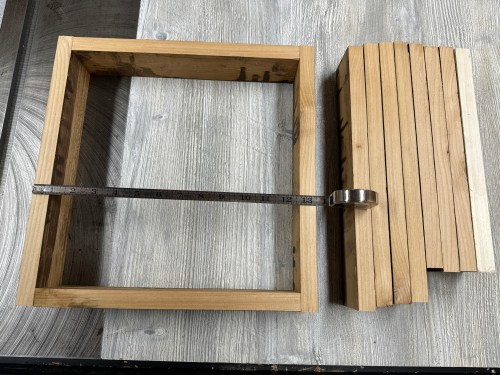
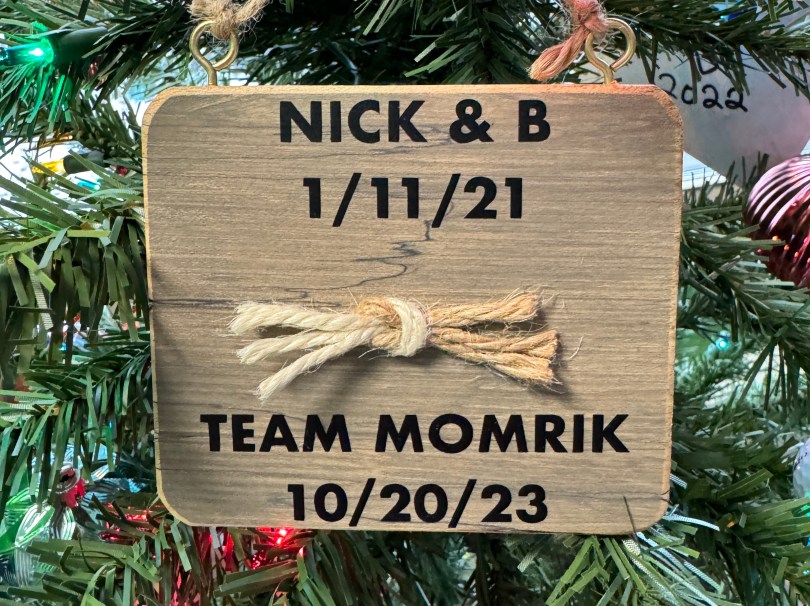
After getting married in October, of course we were going to center our ornament around that this year. We took some leftover pieces that didn’t get used for the kitchen backsplash, glued two together, cut it to size, rounded the corners, softened the edges, and added a couple of screw eyes.
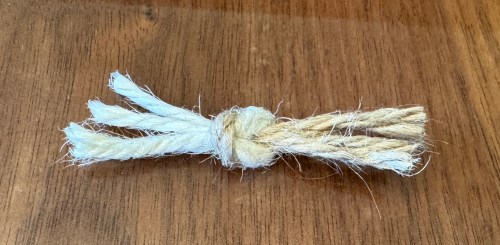
We bought two different colors (hard to tell in this photo) of twine and tied a square knot. Obvious symbolism.
After having a Cricut for almost two years, we finally cut vinyl on it.
A little super glue gel to attach the knot.
Then we sprayed three coats of lacquer to help set it and hopefully hold on to the vinyl better.
We also have some bonus ornaments this year. I drilled a hole through one of the golf balls Brandi had made for some twine. The other two were Huichol art we did on our honeymoon in Playa Mujeres. Can you guess who did which one?
Making ornaments is a yearly tradition for us. Check out 2021 and 2022.
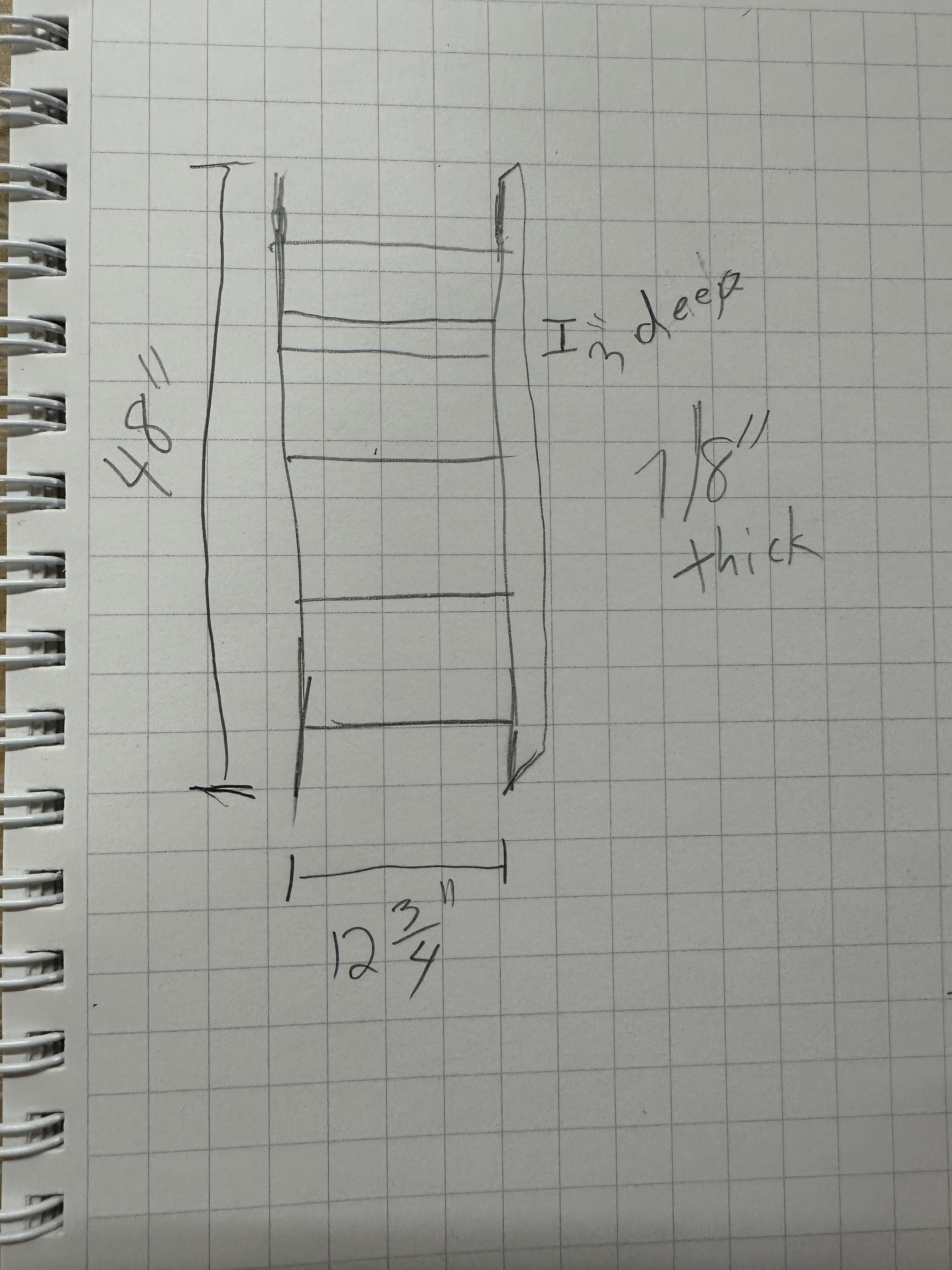
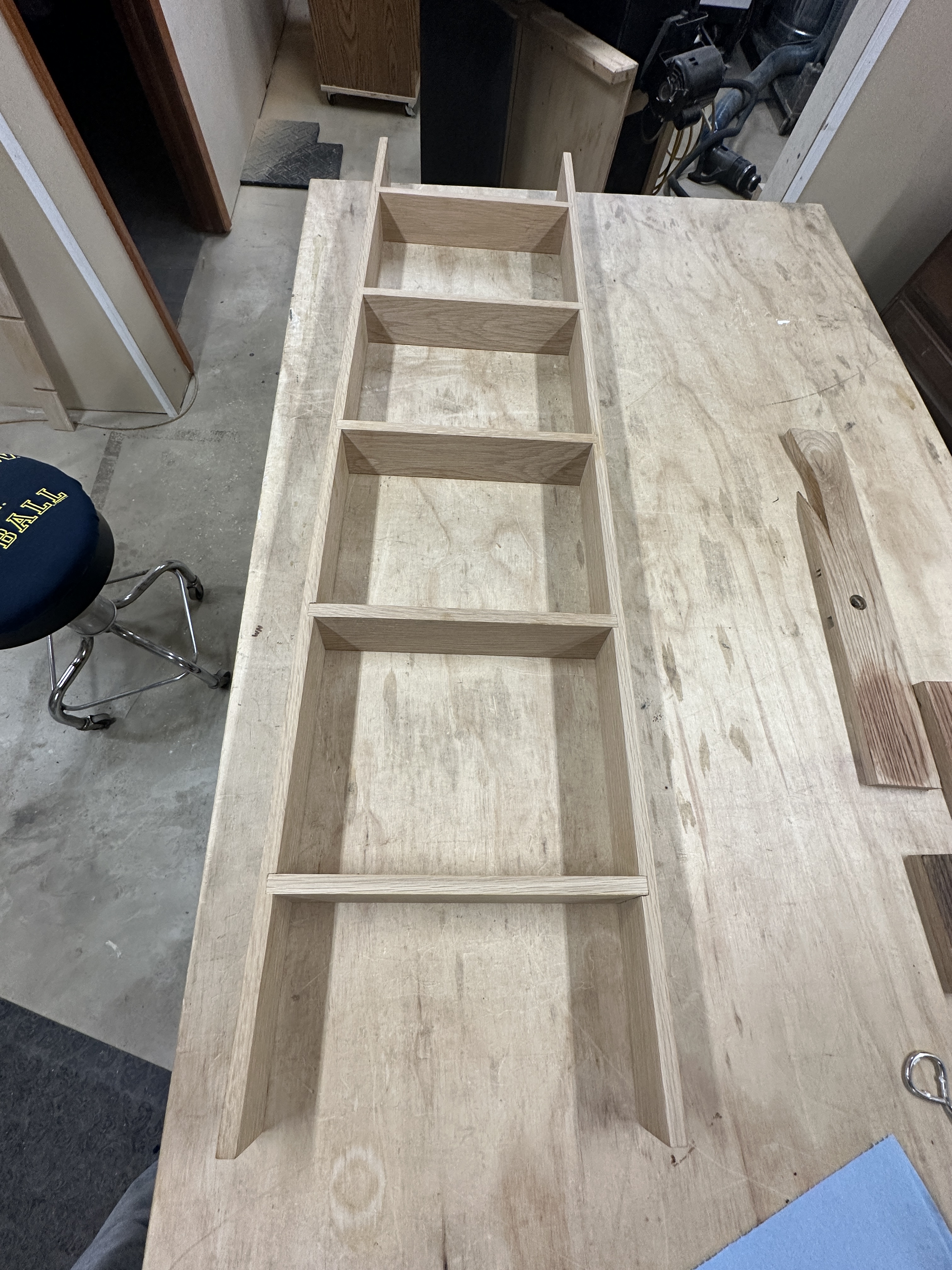
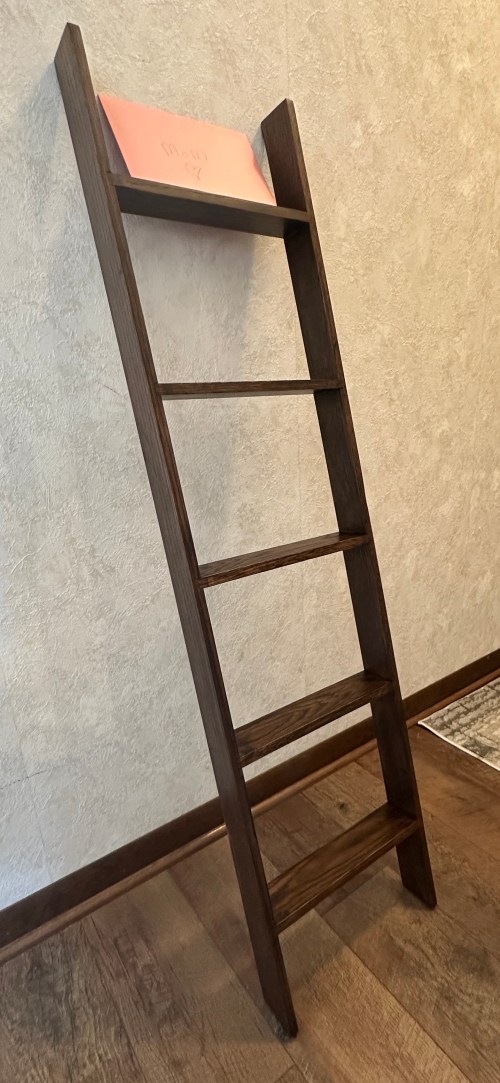
So I whipped one up for Mother’s Day. Very similar process and dimensions. I used pieces of old oak flooring and stained it.
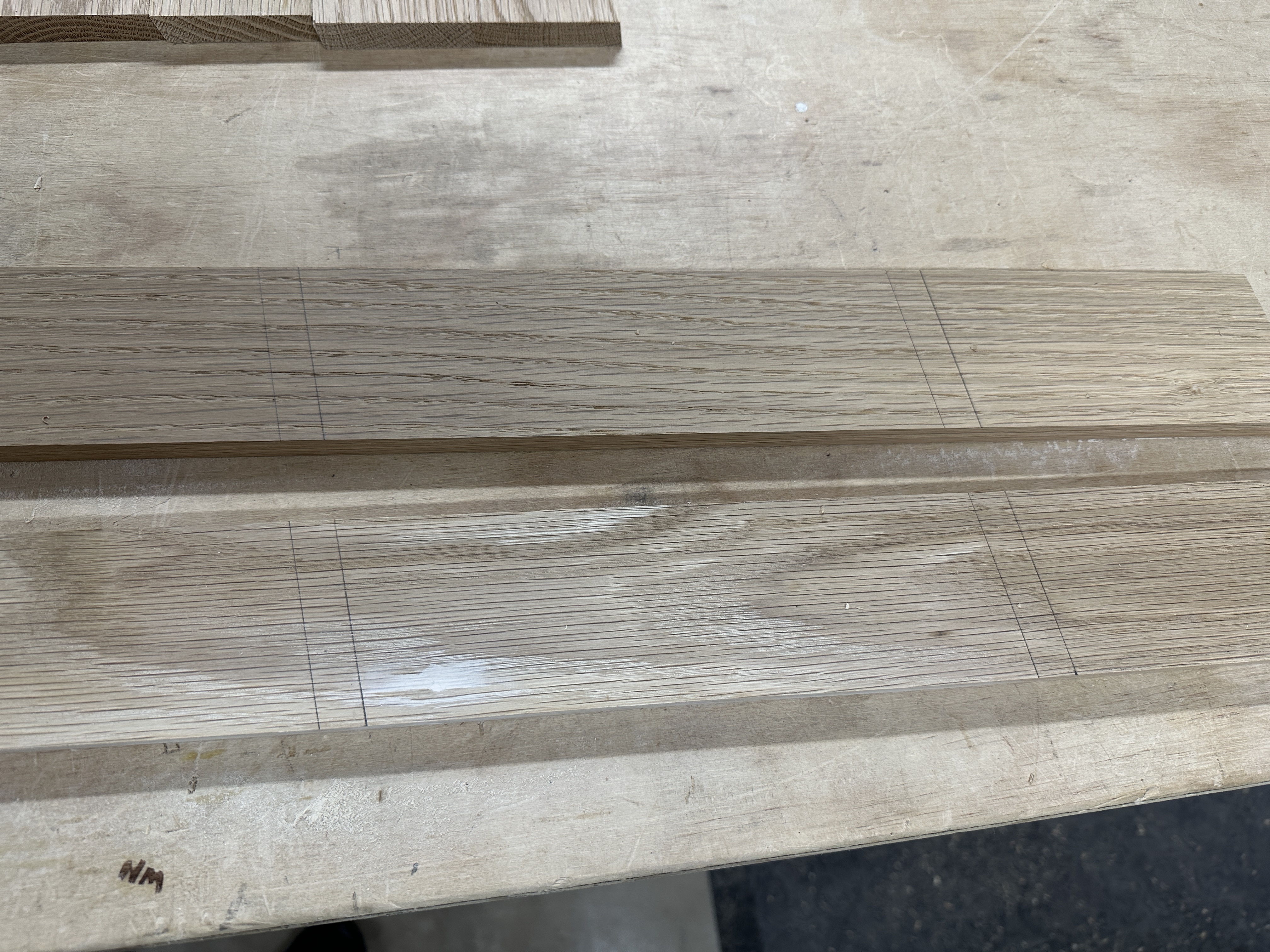
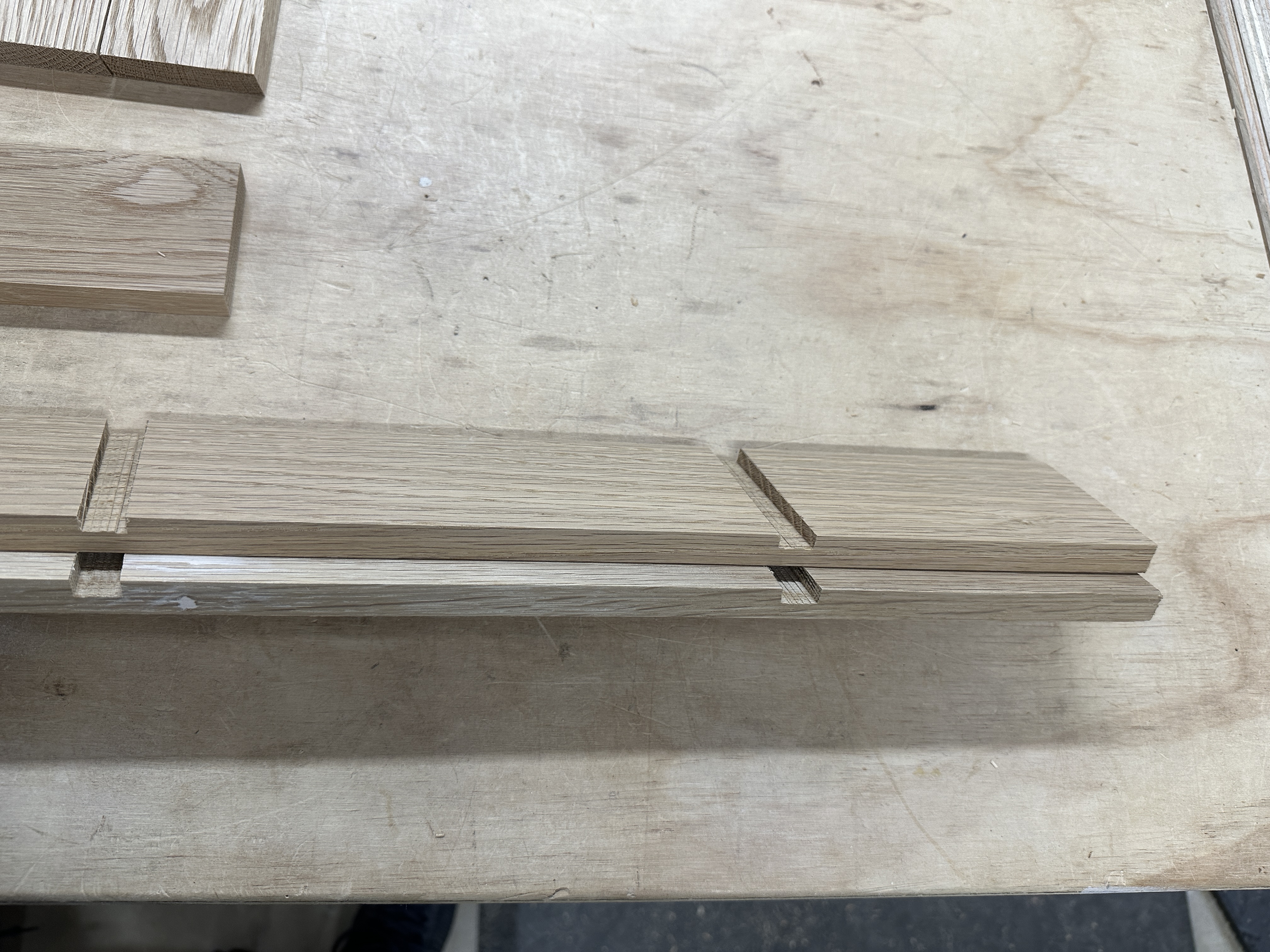
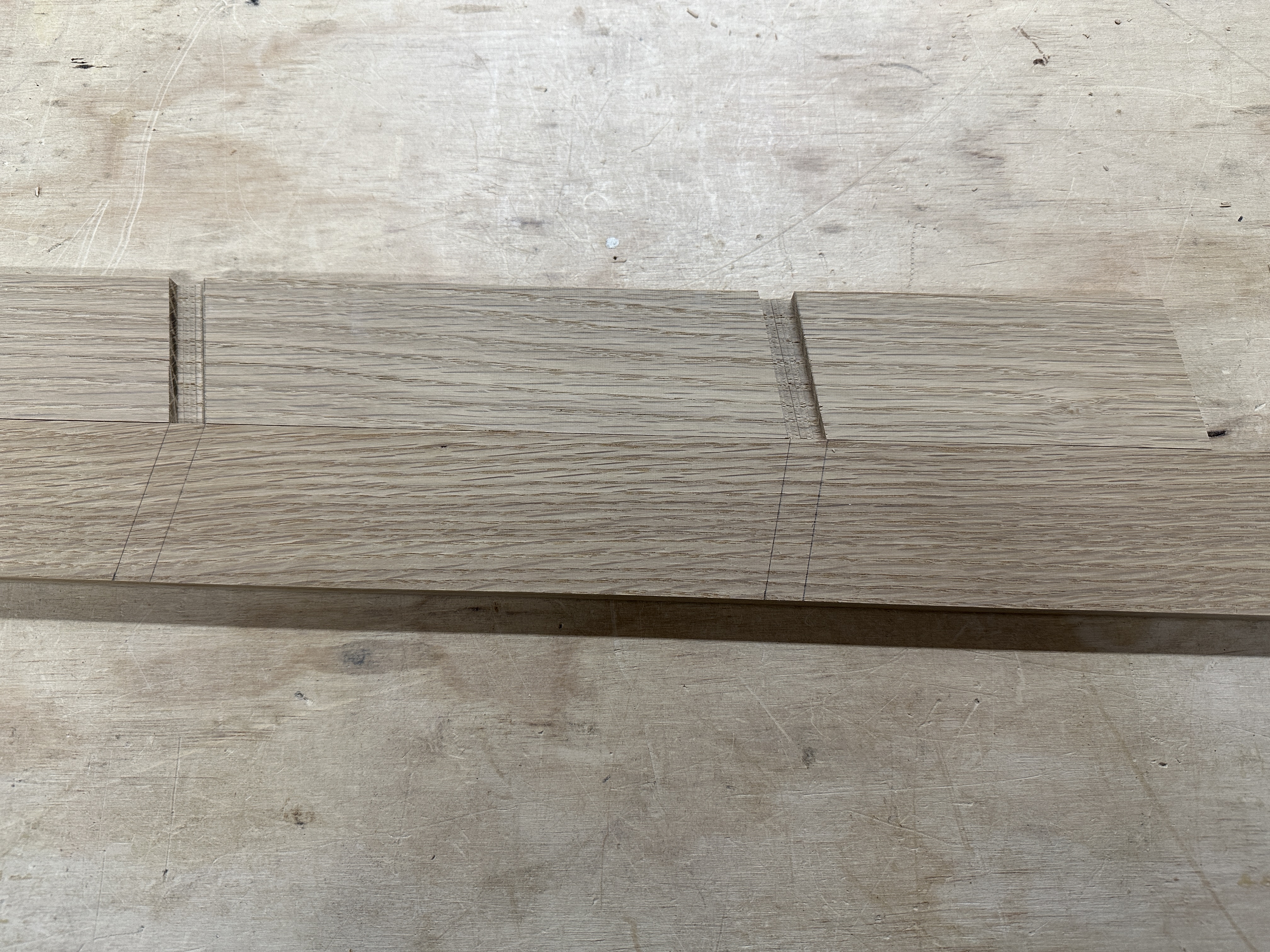
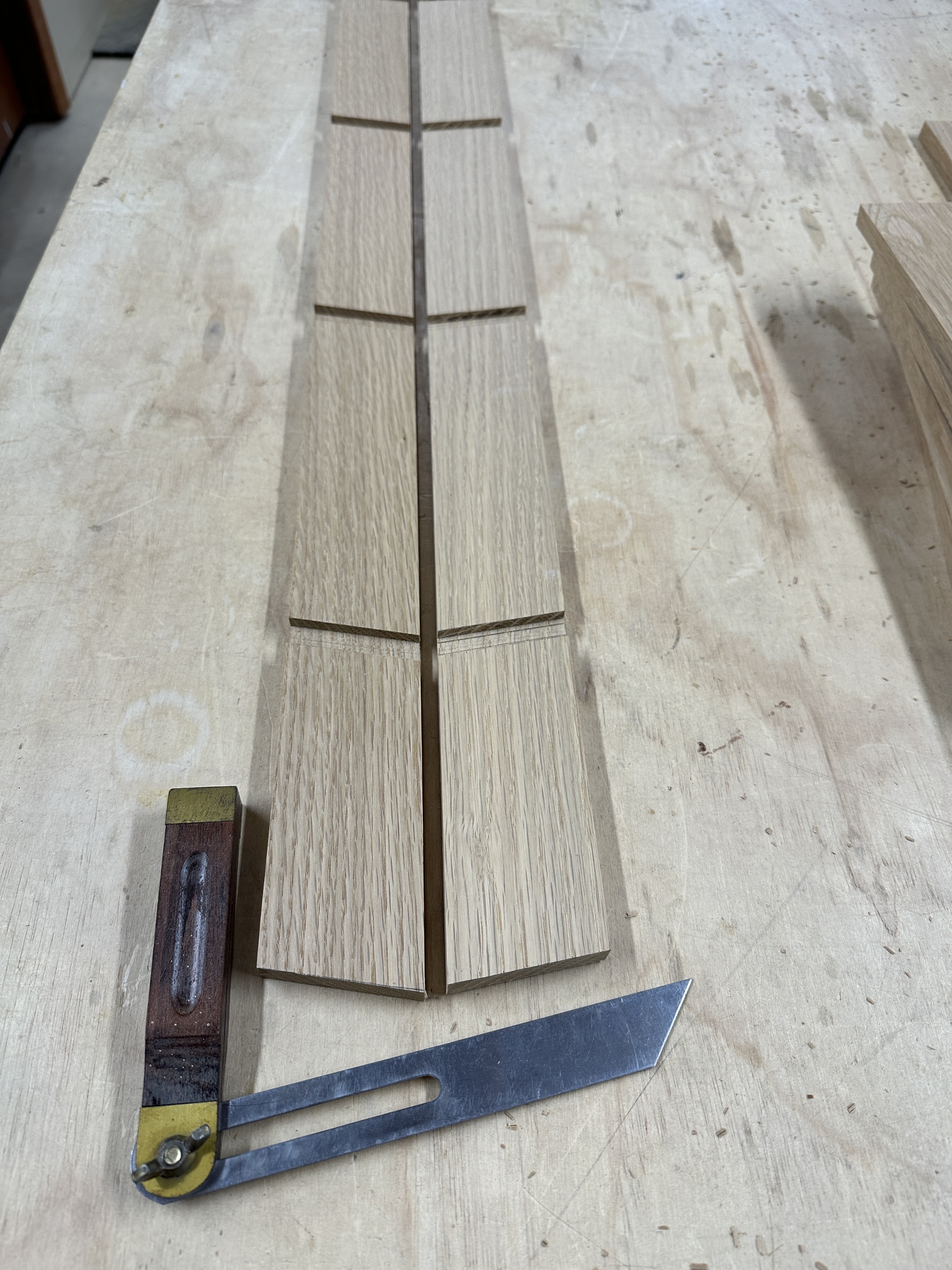
My new sliding miter saw has a depth stop, so I used that to the dados and cleaned them up with a chisel. Can you spot the huge mistake though? I marked and cut the dados the same way in both sides of the ladder. Since everything is on a 10° angle, I couldn’t rotate the pieces to work, and ended up with two left sides. Milled up a board for a new right side, which went much quicker.






































 Nick Momrik