Delta TP305 Planer Dust/Chip Collection

Back in early November I found this Delta TP305 planer for $100 on craigslist.

It was obvious the owner took care of his tools, he had just replaced the blades, and also had a set of new blades, so the price was a steal. It didn’t have any type of dust/chip collection though.

delta-planer-dust-chuteWhen Delta produced this planer, the dust collection attachment was an extra accessory. I decided to make my own because I don’t understand this design. Why would you want your hose hanging over the outfeed? Too much risk of the work piece getting jammed on the way out, which is extremely dangerous.

I found a neat idea on YouTube and went with a similar plan. Here is what the outfeed looks like normally.

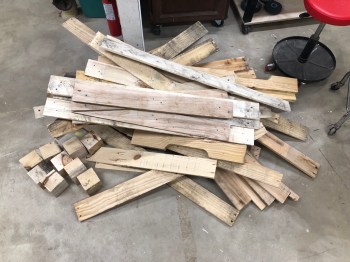
I first cut some pieces to make the sides and bottom of a box.

img_0706.jpg

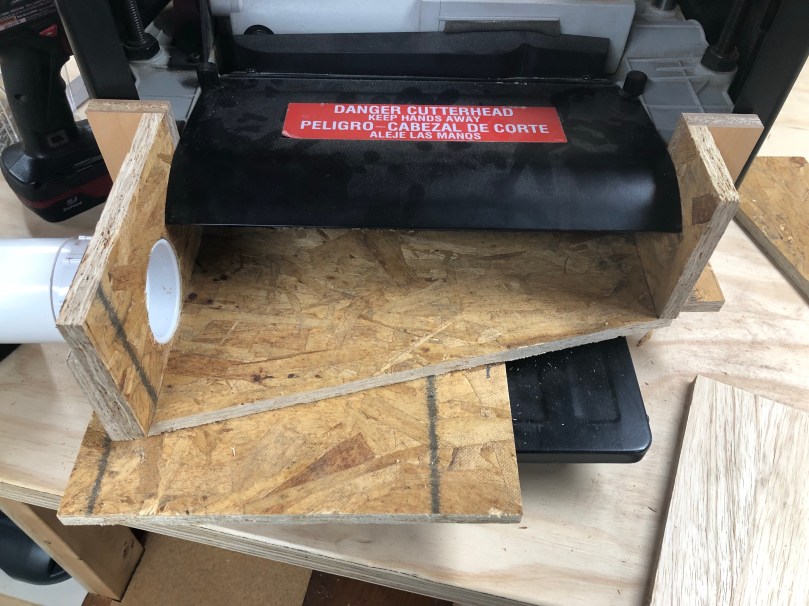
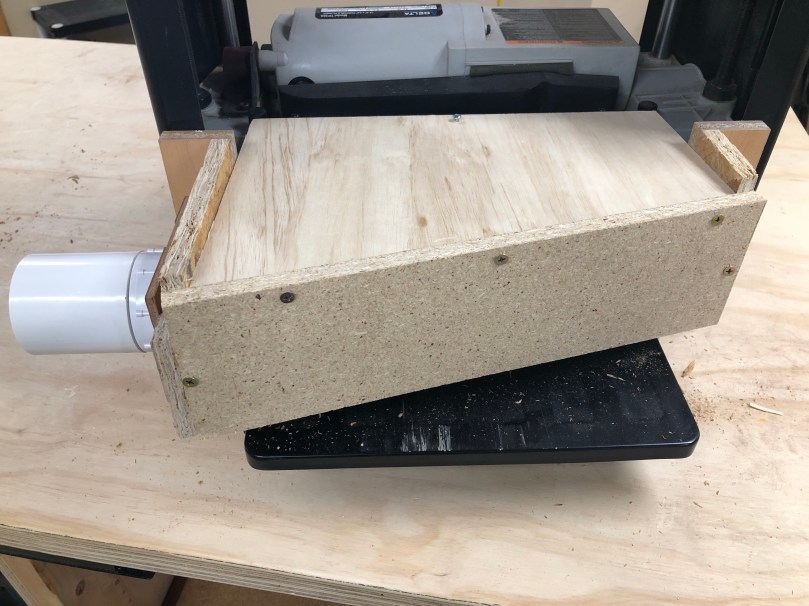
I screwed the right side together. Then I held it up against the planer to get the exact positioning before screwing in the left side. I wanted a snug fit.

img_0708.jpg

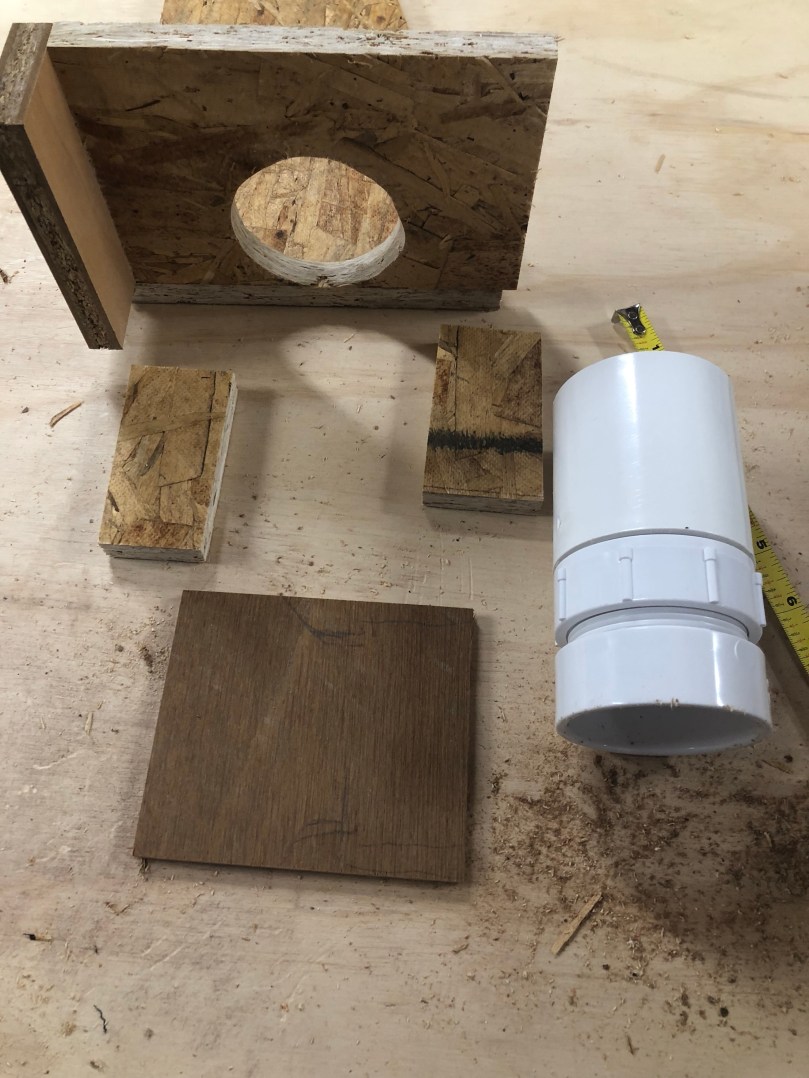
I cut and sanded a hole in the side for some PVC parts.

Grabbed a few scraps that would be used to hold the PVC in place.

Cut a hole in the thin piece, boxed in the male PVC part, and screw it all together.

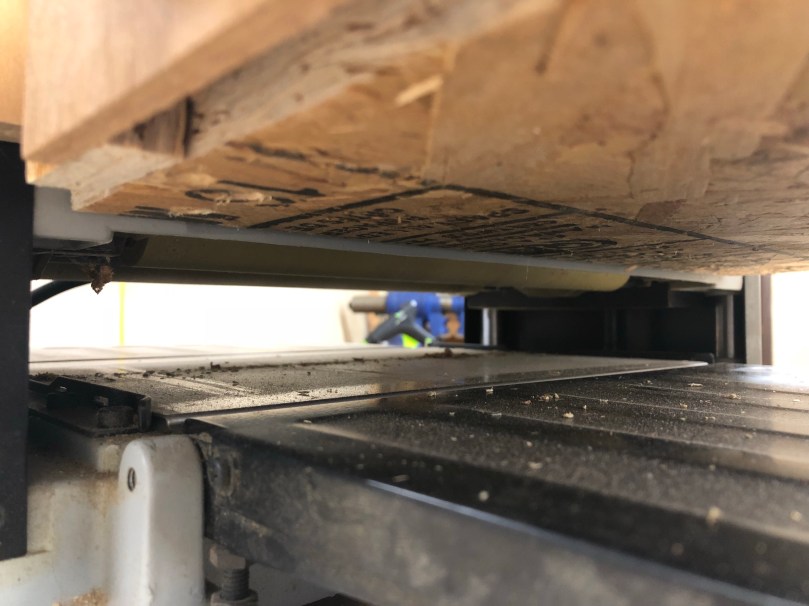
Then I put a spacer under my in-progress box and adjusted the planer’s height. It was important to use a spacer for these next steps because I don’t want the bottom of the box to have any chance of jamming up the wood coming out of the planer. I gave it about 1/8″ of breathing room.

I cut a piece for the top. Then while putting pressure on the edge that makes contact with the planer dust chute I screwed this piece to the sides. At this point I was able to remove the spacer because the tight fit was able to hold the box in place.

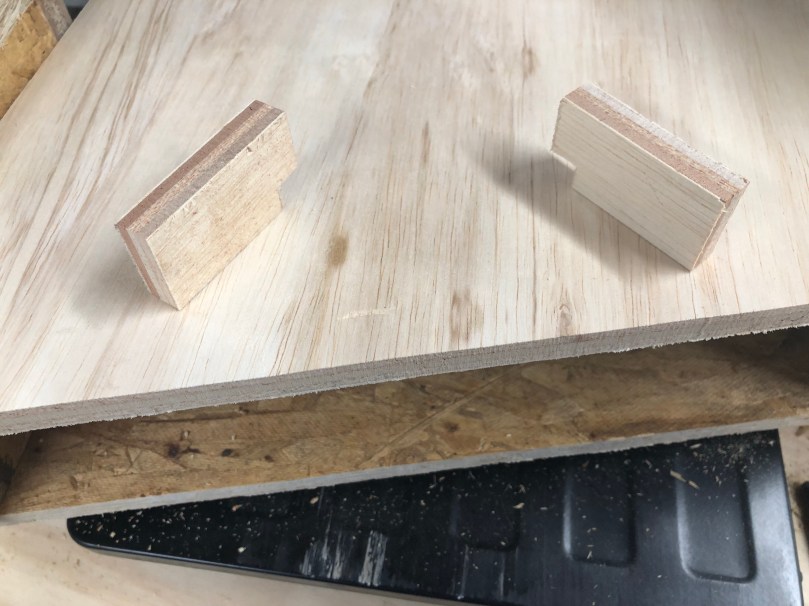
I wanted to prevent the box from sagging or shifting down during use though. So I cut two little pieces.

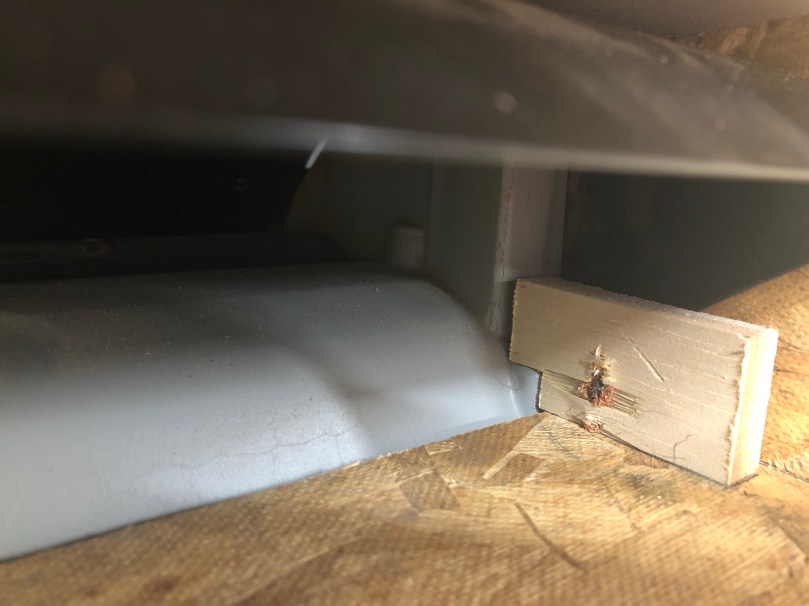
Screwed them in from the bottom on each side.  Notice how the kind of grab on to some ledges of the planer. This is a simple way to prevent the bottom of the box from going any lower.

I drilled a hole in the top and through the metal chute. Combined with the tight fit and those blocks, now this thing can only shift up and away from the outfeed path.

The final step was to square up the back edges, cut a piece, and screw it in. There are no screws on the bottom of the back face because I used a scrap piece that wasn’t tall enough to have room for screws there. I did use some glue though.

Here you can see the clearance between the box and the outfeed I mentioned earlier.

Due to the materials I skipped using any wood glue except when I put the back face on. I did go back and hot glue all of the joints so it would be sealed for a better vacuum.

This was an easy build. The only modification to the planer was the screw hole and the whole unit can be removed by taking out that screw.

How well does it work though? You be the judge…

Craftsman 113.232240 Jointer Dust/Chip Collection

It took a few weeks after restoring the Craftsman Jointer (model 113.232240) to get going on a dust/chip collection upgrade, but now it’s done. It’s not going to win any beauty awards, but it’s functional and works awesome. Not bad for making it up as I went.

jointer-dust-collection.jpeg

The previous owner had installed these two side panels and basically let everything fall to the bottom of the stand. Not sure how well it worked, but I knew I could do better.

img_0588

I figured I could build some type of chute that would fit up between the motor and the bottom of the machine.

img_0565-1

My first idea was to create some type of cardboard model that I could reference for building a real box. This was a terrible idea trying to work up under the machine and as soon as I took it out, it basically fell apart.

img_0570

Then I had an idea to cut up this popcorn tin and build the dust chute out of it.

img_0571

I’m still not sure how I managed to keep all my fingers or not even draw a single drop of blood; those edges get extremely jagged and sharp.

In the mean time I made a trip to Home Depot and found some PVC pieces that would work with my dust collection hose.

img_0585

img_0584

The tin pieces worked ok, but I wasn’t confident in the duct tape holding up, especially as a means of keeping it connected to the stand. It was not a wasted effort though because I ended up using the pieces as you’ll see in the video.

img_0586

While working on this project, I realized I really enjoyed the engineering process and solving problems when I made a mistake. I didn’t include footage of the mistakes but there were some epic ones. At some point in the build I stopped checking the fit inside the stand, so when I put it in place I shouldn’t have been surprised that some of the lower parts were smacking into the motor. After fixing that problem, the box for the power switch was in the way, which is why I moved it to the other side of the stand. Finally I forgot the motor needed to be raised in order to get the belt back on and there was no room to spare. Luckily this last problem was the easiest to fix because the motor mount could be flipped over, getting me 3-4 inches of clearance. I picked a 6 inch longer belt at AutoZone.

I imagine you could build something similar for most jointers. If you come across this post and it helps you out, let me know.

Walnut Bandsaw Box

My buddy Kevin told me about a local shop that sells woodworking tools, supplies, and wood so we took a ride out to Barn Door Lumber Company a few weeks ago. While looking through their scrap pile, this butcher block cutoff caught my eye. It was roughly 1.5 x 6 x 23 inches.

img_0496

I had bought a 10″ bandsaw (RIKON 10-305) not too long before and hadn’t used it yet.

img_0640

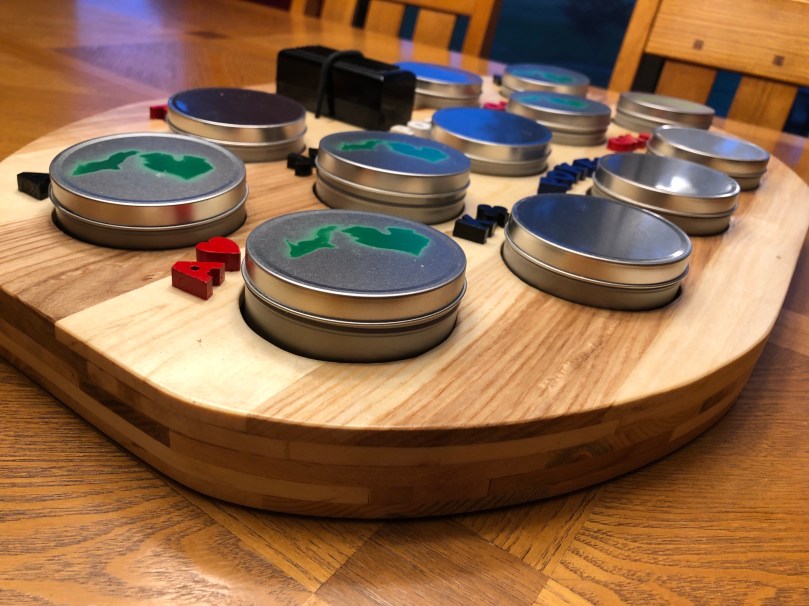
I thought it would be a fun project to chop up this piece on the table saw, glue it into a large block, and then create a bandsaw box. That’s when you create a box out of a block of wood by only making cuts with a bandsaw. Seemed like a good project to get my feet wet. My sister’s birthday was coming up so it would also make a good gift.

The first thing I did was square up the edge.

img_0518

Then I sliced 5 pieces. I’m still learning a lot and forgot to set a stop block on my sled, which would have helped with getting pieces that were exactly the same size. The order of operations and remembering little tricks like that are what I’m struggling with the most on this woodworking adventure.

img_0519

I glued each piece.

img_0521

Quickly realized I only needed glue on 4 pieces. I told myself the last two pieces would just get a really good bond. Then I clamped everything together.

img_0522

Of course I forgot to flip that last piece around so that 2 glued sides were facing each other. The glue side ended up facing out and I put 3 clamps in place before remembering. So I backed off the clamps and added a piece of parchment paper.

After squaring up an edge on the table saw I was ready for some work on the bandsaw. Or so I thought…

img_0566

After another trip to the table saw I finally had my block of wood. I was ready for the bandsaw!

I quickly found out the blade that came with the saw wasn’t up for the job because it couldn’t make the turns I wanted. I got everything cut but there were several mistakes. Learned a lot though and had fun with the project.

finished-bandsaw-box

Craftsman Jointer Restoration

When I saw this Craftsman Jointer (model 113.232240) for $100 I couldn’t pass it up. Most jointers I’ve seen in the $100-150 range are shit.

img_0534

The manual is dated 5/97, so it’s over 20 years old. My Internet searching suggests this model originally sold for around $600. The only original parts that appear to be missing are the side panels, blade gauge, and push block. I bought a couple of push blocks this summer at an estate sale, so I’m set there.

They don’t make many tools like this anymore. This thing is a beast of solid metal and weighs a ton. Here it is in my basement. It had some rust, but otherwise it was in good shape and the rolling base was built well.

img_0529.jpg

I went at the table and fence with a razor blade, which easily removes most of the surface rust. I sprayed everything with WD-40, let it soak, and then did another pass with the razor blade. I love that feeling when you start to see some shine.

img_0533

Then I cleaned up the stand and the base. The leveling feet in the stand were rusted and beat to shit, so I trashed them. Drilled holes in the base and properly attached it to the stand with bolts instead of tape like the previous owner.

I replaced the bolts on the belt guard which were rusted really bad. A little elbow grease and a brass brush cleaned up some of the rest on other bolts throughout the stand. I removed the screws for the switch and ran them over a brass wire wheel on the grinder. I also took apart a lot of the fence assembly one piece at a time and used the brass wire wheel to clean it all up.

To continue cleaning the tables and fence I had to order a brass wire brush set for the drill. Everywhere in the area sells the steel wire set, which eats at the metal too much.

Look how much of a difference a few seconds makes.

I went over both tables and the fence with the brass brush and followed up with a polishing wheel. Then I put it all back together and applied a coat of paste finishing wax to those surfaces. Look at that shine! I love that you can see the reflection of the blade guard.

I could see a few nicks in the knives and they had some rust. I’d rather start with a fresh set, especially since they were only $17.

I’m going to add a dust/chip collection chute I can hook my hose up to, but that’ll be an upcoming project. Will wait until that’s completed to do final adjustments to the tables and knives since I’ll be removing the tool from the base several times.

Custom Workbench

I’ve needed a workbench in my new shop since day 1. I finally got tired of working on the floor and built one. I created a little video to show the various ways I’ll use the table.

Let me walk you through the build. First I measured a bunch of stuff, especially the tools I wanted to be able to store under the table.

Then I did a quick framing mock-up to visualize the size.

workbench-tools-mockup.jpg

The size felt pretty good so I spent some time in SketchUp. The model is free at my new Misc Plans repo on GitHub. Not everything in the model and the screenshot below are exact to the finished workbench, but they’re a good starting point if you want to build something similar.

workbench-sketchup-screenshot-from-below.png

At Home Depot I had them cut a sheet of 3/4″ plywood into 3 equal pieces. At home I trimmed them to size for the walls. Then I started cutting 2x4s (all from the walls I took down) for the rest of the framing. I set up an extended fence and a stop block on my miter saw.

That really made quick work so I didn’t have to measure each piece.

img_0467

Then I countersunk and drilled holes, glued, and screwed the pieces of 2×4 to create a frame on each wall.

img_0468

After assembling the 3 walls I started to line everything up and attached the rails. I was thrilled when the power went out as I was finishing up. Some battery lights allowed me to finish the remaining screws.

I couldn’t believe how level it turned out, considering my basement floor is not very flat.

img_0472.jpg

Here’s the frame after the power came back on.

I made another trip to Home Depot. I had them cut 2 sheets of plywood to my exact size of 3×5 feet. Then I used a lot of glue (2-3 times what is pictured below) to laminate the two sheets together. I wanted a solid surface for the top of the workbench.

I hauled a bunch of weights down from the garage and clamped all around the edges. I think I counted 35 clamps being used! There weren’t many left on my clamp racks.

With so much glue, I gave it almost a full day to dry. Then I used my router with a flush trim bit along the edges to even up the 2 pieces, followed by a round over bit to get rid of the sharp edges

It was time to attach the top to the frame. I measured out the placement on one end and when I went to check the other side it was way off. I hadn’t been testing squareness enough or not in the right places when I assembled the frame. This is where experience and learning the order of operations is important. I measured the diagonals and there was about an inch difference between the two. Shit!

I pushed and pulled on corners and racked my brain trying to think of a good way to square it up. I decided to take the frame apart and go with a different approach. I’m glad I didn’t glue those rails to the walls!

I gave the entire table top a coat of paste finishing wax before moving on. Then I laid out some scrap plywood on the floor, set the top down, and used shims to get it as level as I could. I placed the wall on the end and used pocket holes to screw it in. From there I measured out where the two rails should go and I pocket holed them to the top as well. Then in went the other two walls. I made sure to test squareness of the walls to the top. I didn’t need to test horizontal square because I knew the top was a good rectangle. This was a much smoother way to assemble the frame.

Before flipping it over, I attached 6 castors (3 locking along one side) to the frame. I cut a bunch of scraps to make shelves and attached a metal tool holder on each side.

I had already cut and laminated the pieces for the vise somewhere earlier in this whole process. I also used flush trim and round over bits to route the edges of the vise jaws. In the drill press I used a Forstner bit to make the holes in the vise jaws for the pipes. Then I screwed the single vise jaw to the table and used its holes as guides to continue the holes through the side wall of the table. Unfortunately the Forstner bit wasn’t long enough to go all the way through. I found this massive drill bit in a box of bits my Dad had given me with the drill press. It wasn’t quite wide enough so I still had to file the edges of both holes.

img_0491

Here is a close-up of one piece of the pipe clamp under the table. I used the drill press to put some holes in the clamp and then locked it in place with some screws.

IMG_0501.jpg

Hung up a couple of router accessories on the wall.

IMG_0498.jpg

Voila!

Isn’t she pretty? I don’t know how I lived without this thing. I’ve already used it so much. If you’re putting together a shop I recommend starting with a proper workbench before anything else.

img_0493

I bought this 36″ paper roll and holder so I could cover the table when doing a glue up or a quick paint or stain job.

IMG_0527.jpg

It would stick out too much on the sides though. I also didn’t like the mounting method and how much space it would take up under my 12″ overhang. So I found a place on the floor under my tool bench (that you see in the picture) to put it.

Making a Bluetooth Speaker

It’s been too long since I posted about designing a speaker in SketchUp, but other projects moved up on my priority list between then and now. Well, over the last few days I finally made the speaker. In the end, the delay was worth it, because several of the steps were a lot easier with tools I’ve acquired over the last few months.

Other than the design, the first step was to get a board. I ordered the INSMA TDA7492P Chip 25W+25W Wireless Bluetooth 4.0 Audio Receiver Digital Amplifier Board on Amazon after watching 2 otherbuilds with the same board. To make sure it was going to work, I hooked up my speakers for a quick test. I salvaged the speakers out of on old set of computer speakers I had in college.

insma-tda7492p-test

led-button-test

I ordered a couple of different button styles from AliExpress, so I tried both types out, ultimately deciding to use the larger buttons which also had a blue LED ring. The smaller buttons were nice but not right for this project.

I did those tests around the same time I was designing the speaker. Several months passed before I touched any of the components again. Since I wanted to use my own buttons, switch, and LEDs I needed to figure out the best ways to connect in to various points on the board. This involved a lot of poking and prodding with a multimeter. I figured everything out and did all of the soldering and wiring prep work to help with assembly once the box was built.

speaker-wire-prep.jpg

I had taken some general measurements when iterating on the design, but I thought it would be a good idea to create a cardboard model before cutting any wood. This mockup of the walls was an inch too short, but it let me get an idea of what kind of space would be on the inside. Knowing that the 1/2″ plywood would use up a lot more area, I increased several dimensions and changed the angles on the 3 front pieces.

img_0419

After cutting the 3 front pieces and two sides, I measured and marked all of the spots where I needed to drill holes.

Then I spent a lot of time with the drill press. There was a lot of measuring and calculating because pretty much everything going on the front face needed some kind of recess.

53620753921__743038a1-638e-44a3-8292-07a65bf07b3c

It was looking pretty good!

53620784125__2c8f8971-f707-4b1b-9a03-b54b7963dd45

Since I hadn’t updated my SketchUp plans for the changes, it was tricky getting the correct sizes for the top, bottom, and back pieces. I ended up screwing some parts together in a step-by-step process and then making small cuts on the new pieces to inch up on the fits. At the end I had to do a bunch of sanding on the front face, which was the last piece I screwed together. It was really cool seeing the design come to life.

img_0431

Time for some finishing work. I sanded edges and cleaned off all of the dust before I did a quick coat of spray paint. I wanted to try a neat technique I’d seen, so I did a bunch of sanding to rough up the paint. Then I coated everything with 2 coats of stain/poly, while doing a light sanding in between. After the first coat of stain, I unscrewed everything to apply the final coat because I wanted to make sure nothing was stuck together on the joints.

img_0434

After letting everything dry it was time to work on the guts. I used the time-lapse recording option on my YI 4K Action Camera for the first time, which worked well, so here it is with voice-over to explain what I’m doing during the assembly process.

I wanted to give it a coat of Minwax paste finishing wax when I was done, but with all of the buttons and speakers in the way it would have been too hard to work around them. Should have done it before. I’m pretty thrilled with how the paint and stain combo turned out.

img_0436

img_0437

img_0438

img_0439

The dimensions ending up being 5″ tall, 10″ wide, 4.5″ deep at the sides, and 5.75″ deep in the middle. It weighs just under 4 pounds with most of that coming from the 2 speakers. It’s hard to get a sense for the size in the cropped images above, so for scale here is a comparison with a beer bottle.

speaker-vs-bottle.jpg

I’ve been using an old Jawbone Jambox for music in my garage gym. This is so much more convenient because it plugs in and has a permanent spot. No more worrying about a dead battery or trying to find the Jambox when it’s time for a workout.

Whenever I was using the Airdyne or Ski Erg, it was hard to hear the Jambox. Judging by the test below, I should be able to crank the tunes now. I played 30 seconds of “Welcome to the Jungle” with both speakers, starting at the 1:00 mark, and increasing the volume every 5 seconds.