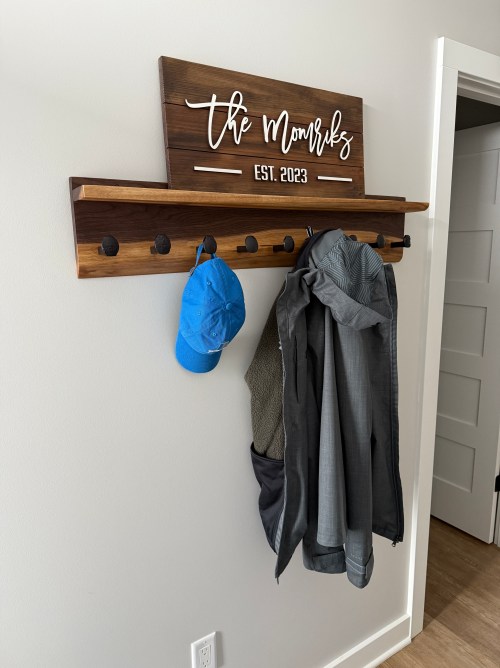
Walnut & Railroad Spike Coat Rack with Shelf

We left our foyer empty in the house design so I could build some things for it.
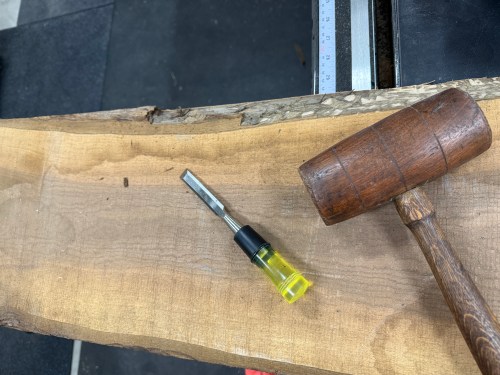
First up was a coat rack. I pulled out a piece of walnut and got the bulk of the bark off the live edge. This piece has a lot of sapwood, which should turn out sweet.
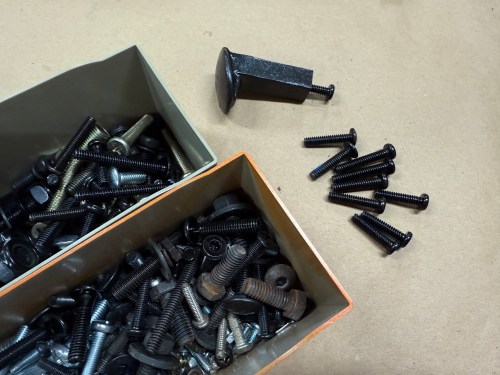
Before getting ahead of myself by sizing the board in any way, I wanted to make the hooks from railroad spikes so I could see how much space they’d need. I bought about 20 of these on Facebook Marketplace a few years ago and still have a bunch.
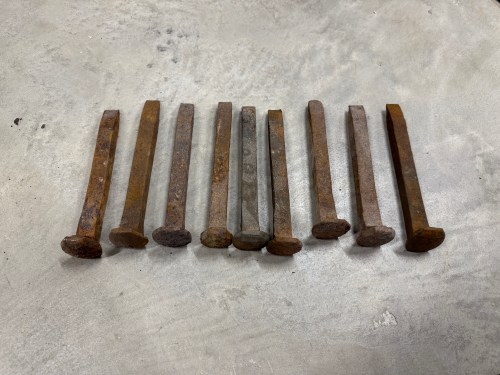
I don’t have much for metal working tools, so I knew I wouldn’t be able to get consistent length by cutting with an angle grinder. In order to give myself a decent chance at success, I screwed a couple pieces of plywood to my drill press vise and drew a reference line. Then I cut all nine spikes.

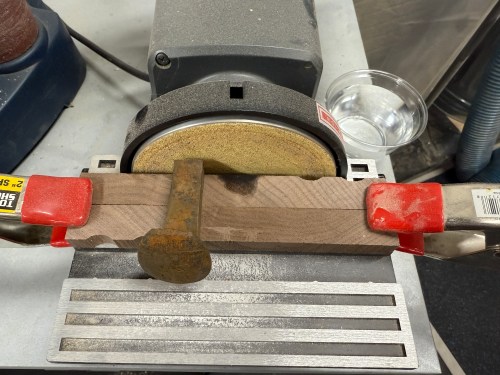
At the disc sander I flattened the ends. For the spikes to lay square to the sanding surface I propped them up on some wood.
I soaked the pieces in a 50/50 mix of white vinegar and water overnight.
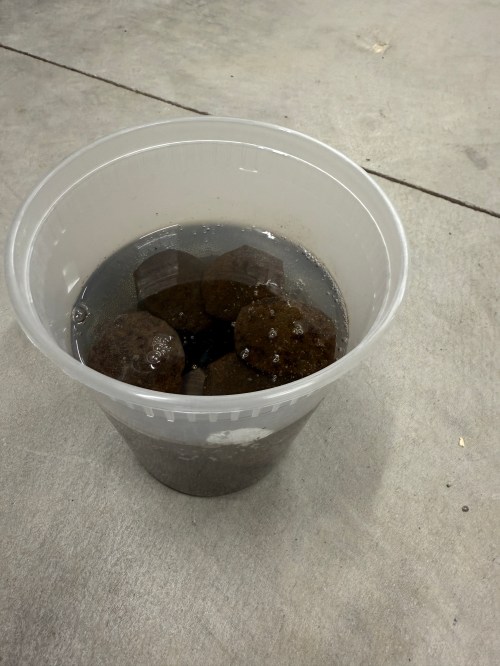
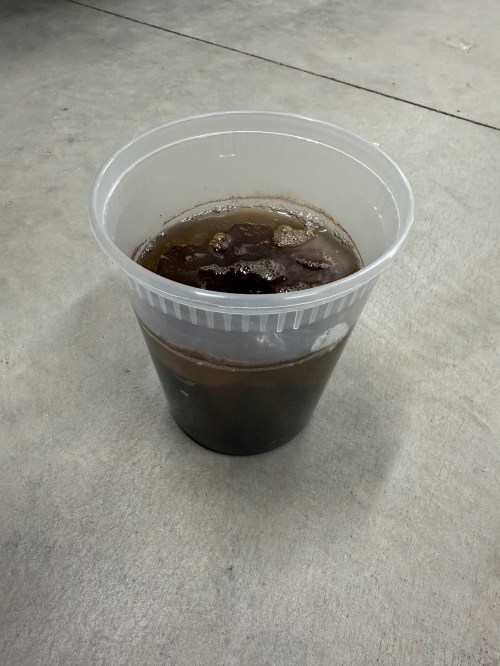
Rinsed and wiped them off.
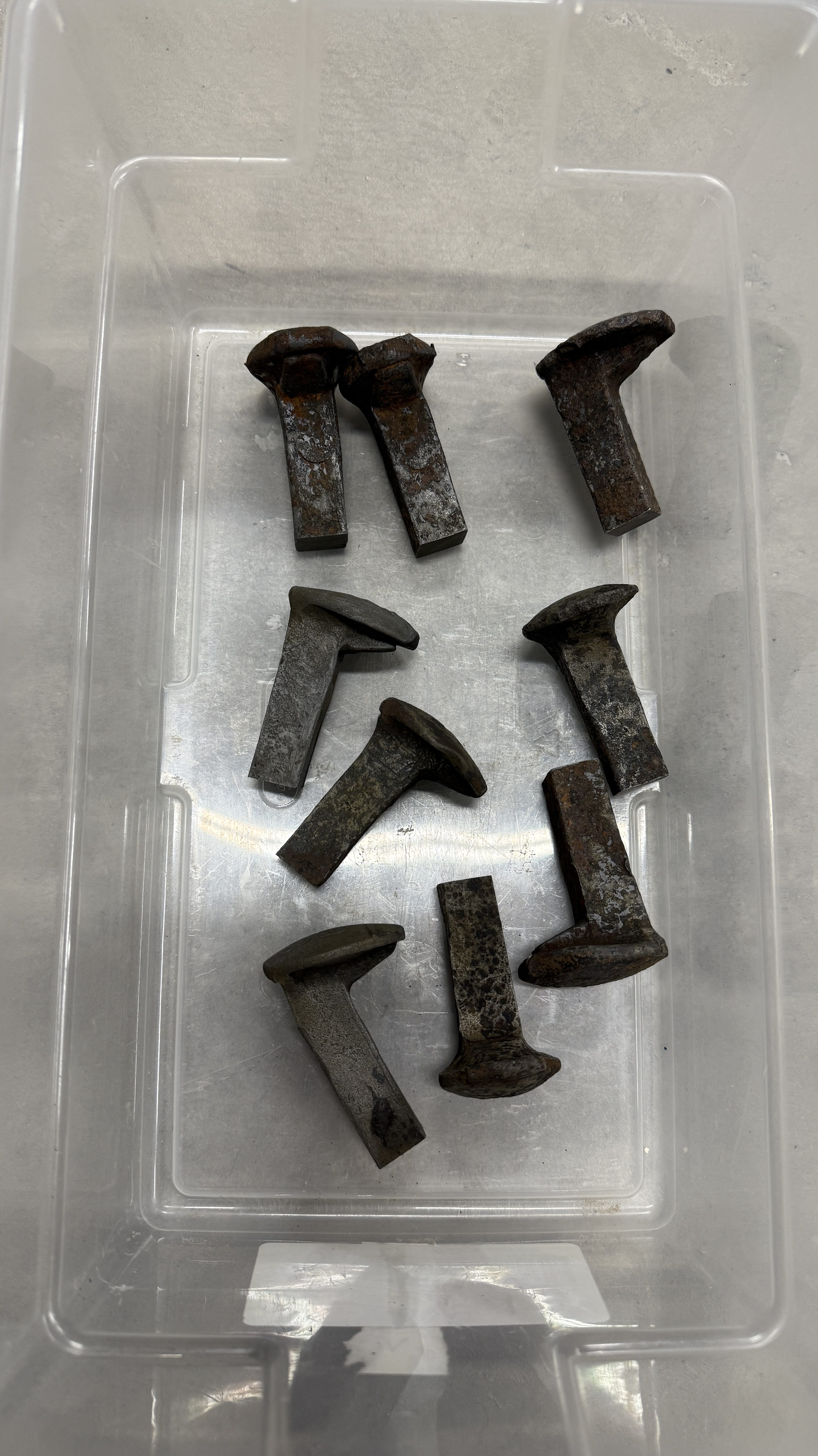
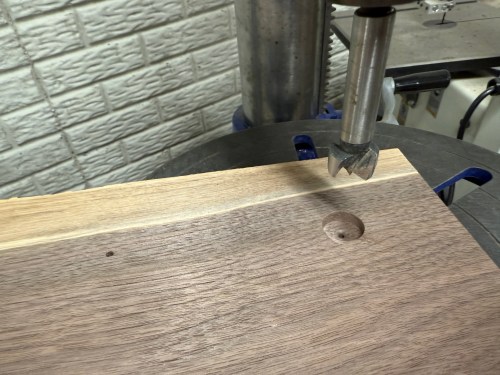
Marked the centers as best I could. Then I stepped through 3/32, 5/32, and 13/64 drill bits on each part. I broke one 3/32 bit and luckily it was deep enough in the hole where it wouldn’t matter.
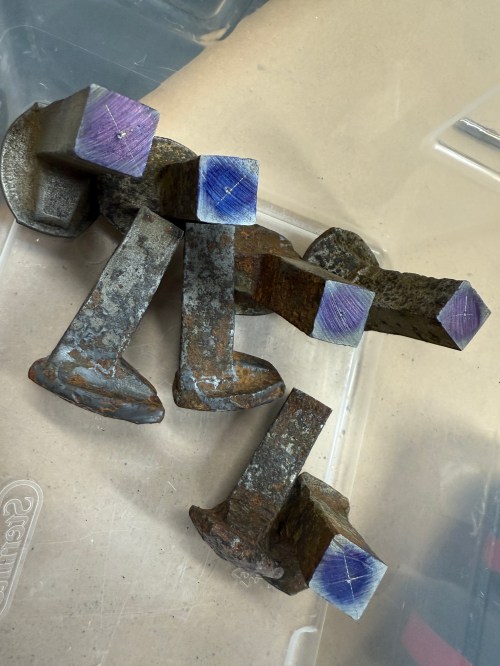
Then came my favorite part, adding threads in the holes. I used a 1/4-20 tap.

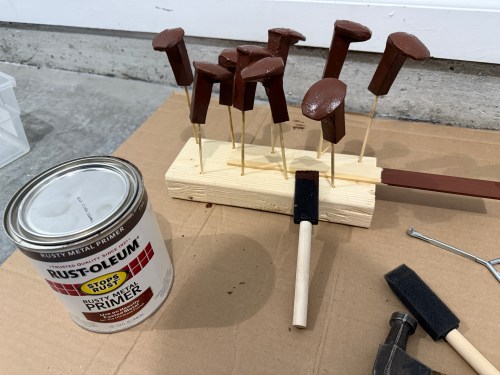
I cleaned up the rest of the rust on a bench grinder wire wheel. Then primer and paint.
Back to the wood. After doing a rough mockup, I cut a length of the larger board and ripped it to create pieces for the shelf and main.

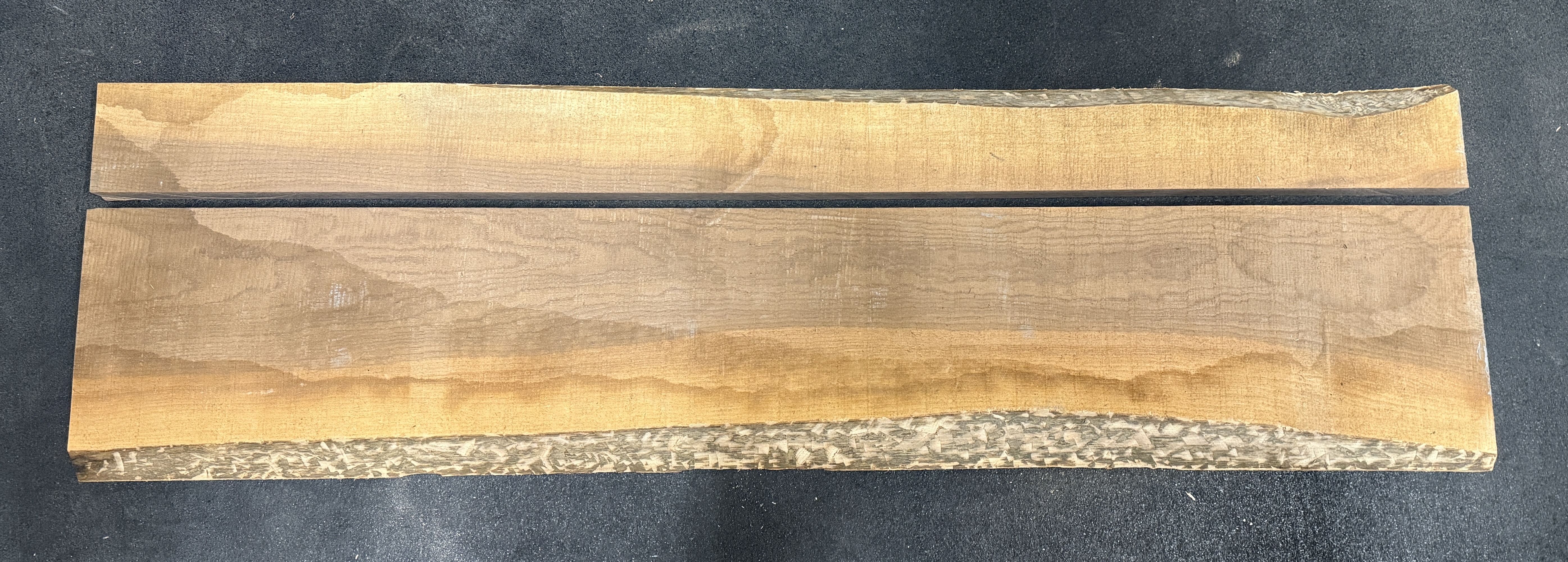
Then they went through the planer.

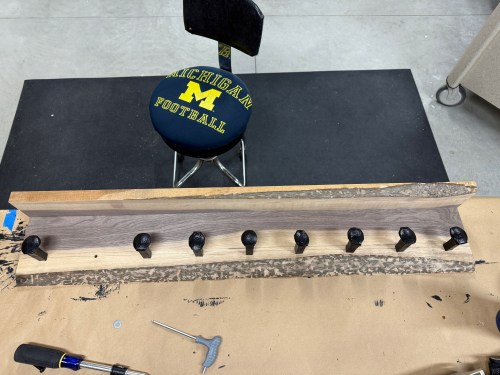
Drilled a bunch of holes, found some bolts in my collection, and did a dry fit.

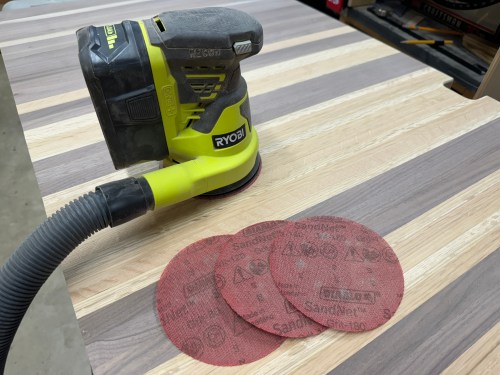
I recently bought a corded 6″ random orbital sander, protection pads, and 3M Xtract Net discs, which make sanding much easier. After wiping with a tack cloth, I glued and screwed the pieces together.

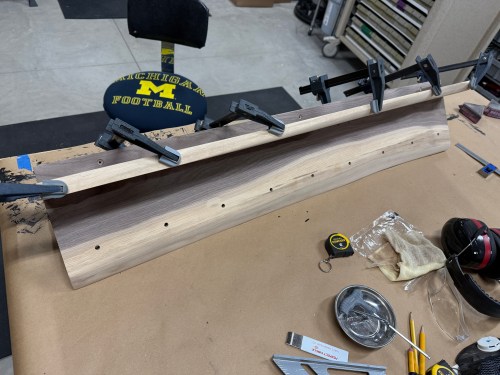
I applied three coats of the All-Natural Wood Finish from Bumblechutes mixed 1:1 with Citrus Solvent. It was the first time I’d used this on a project and I’ll definitely be using it more. It went on easy with a foam brush and light sanding with 400 grit between coats. Then to finish it off, one coat of their Bee’Nooba Wax, which I’ve used before.

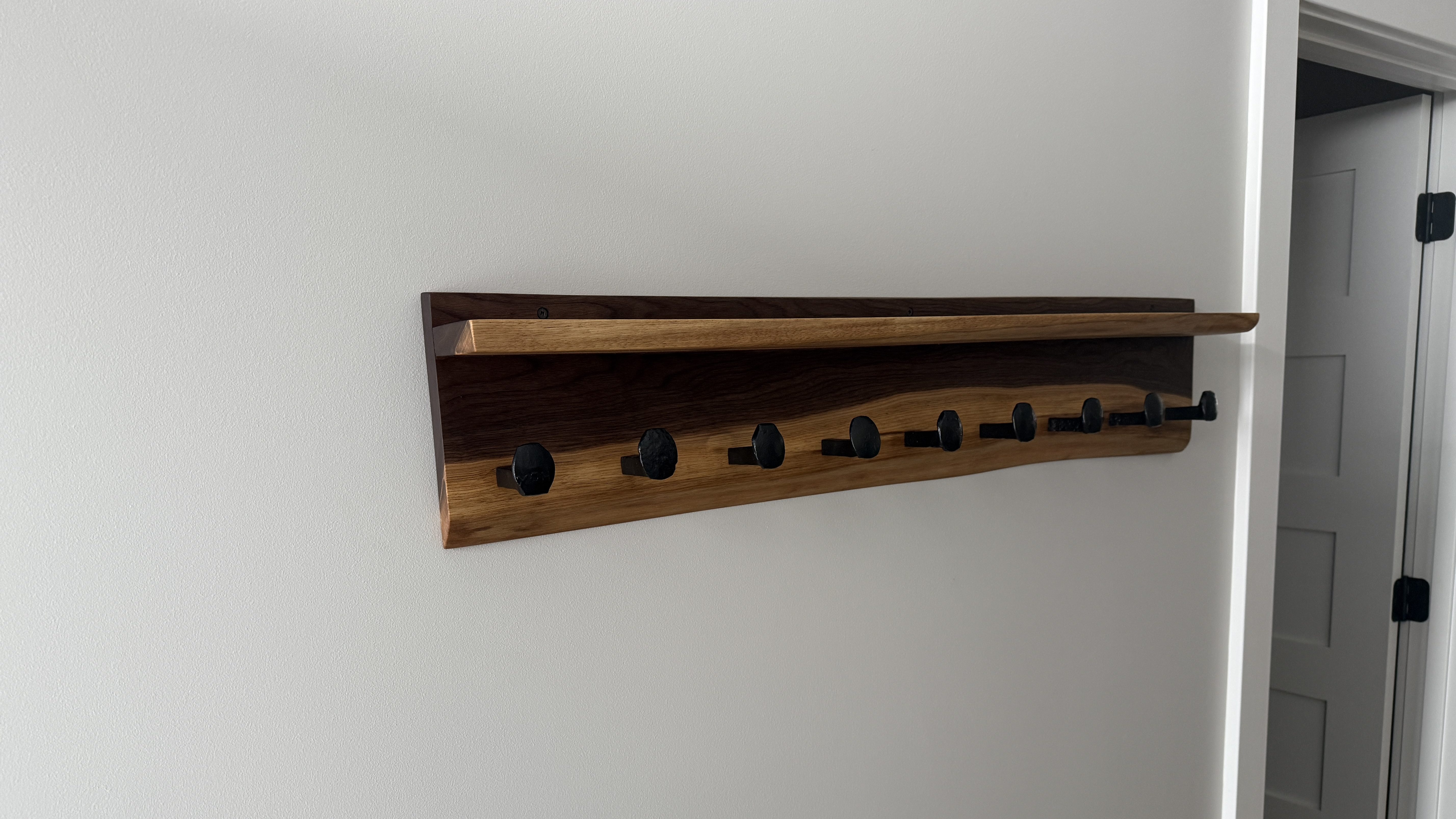
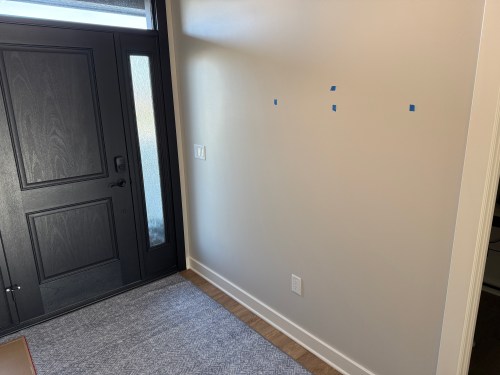
When bolting on the railroad spikes I applied a little thread locker. I mounted it to the wall and put up a sign my sister gave us.

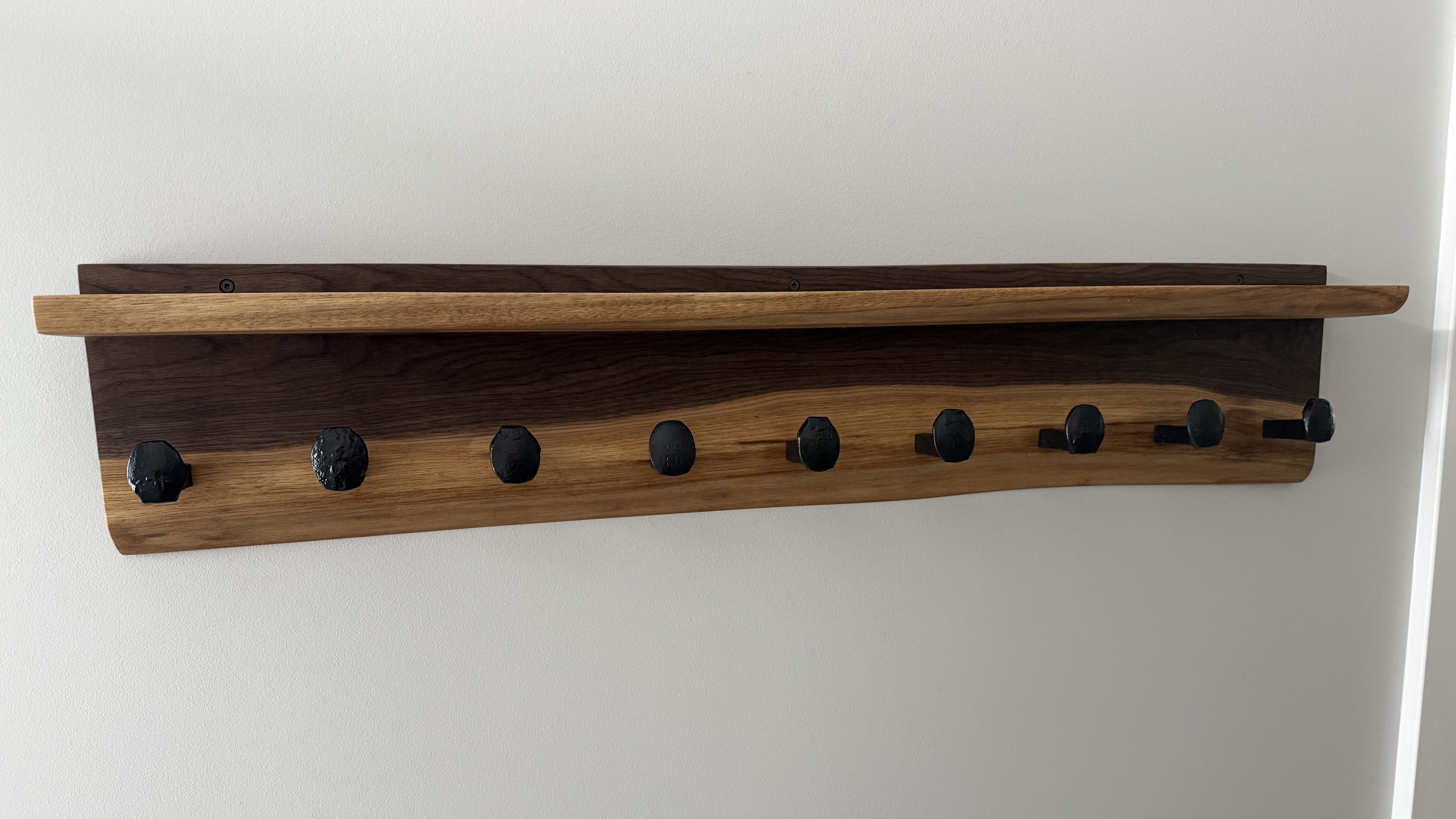
Now I need to figure out what kind of bench to build.

Floating Walnut Nighstands

With our new house having a big walk-in closet we won’t need dressers, so we’ll be selling our bedroom set, which meant it was a good time for new nightstands. Here’s a photo dump of the build.

These will be floating on the wall in the new house, with about five inches of space under them. I did a lot of things in this build I’ve never tried before, so I learned a lot. I love how the decorative grooves turned out on the drawer fronts, which was inspired by something Michael Alm did on his kitchen cupboards. The oak handles were made with inspiration from a couple we liked on Etsy (1 & 2).

I can’t wait to get moved in this summer and mount these on the wall!

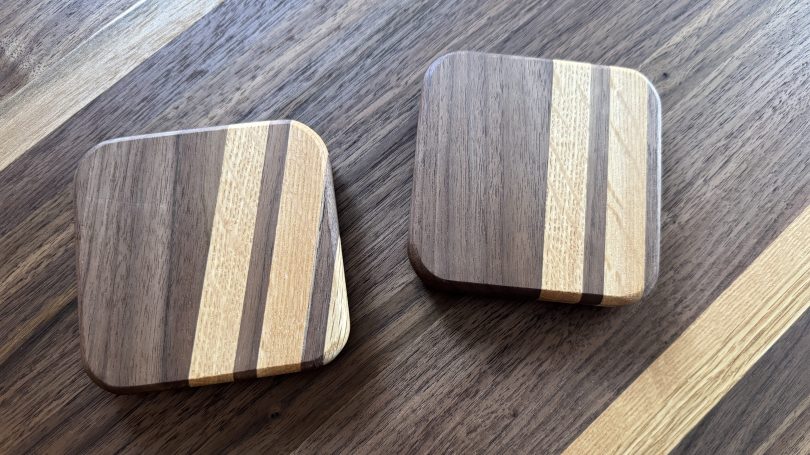
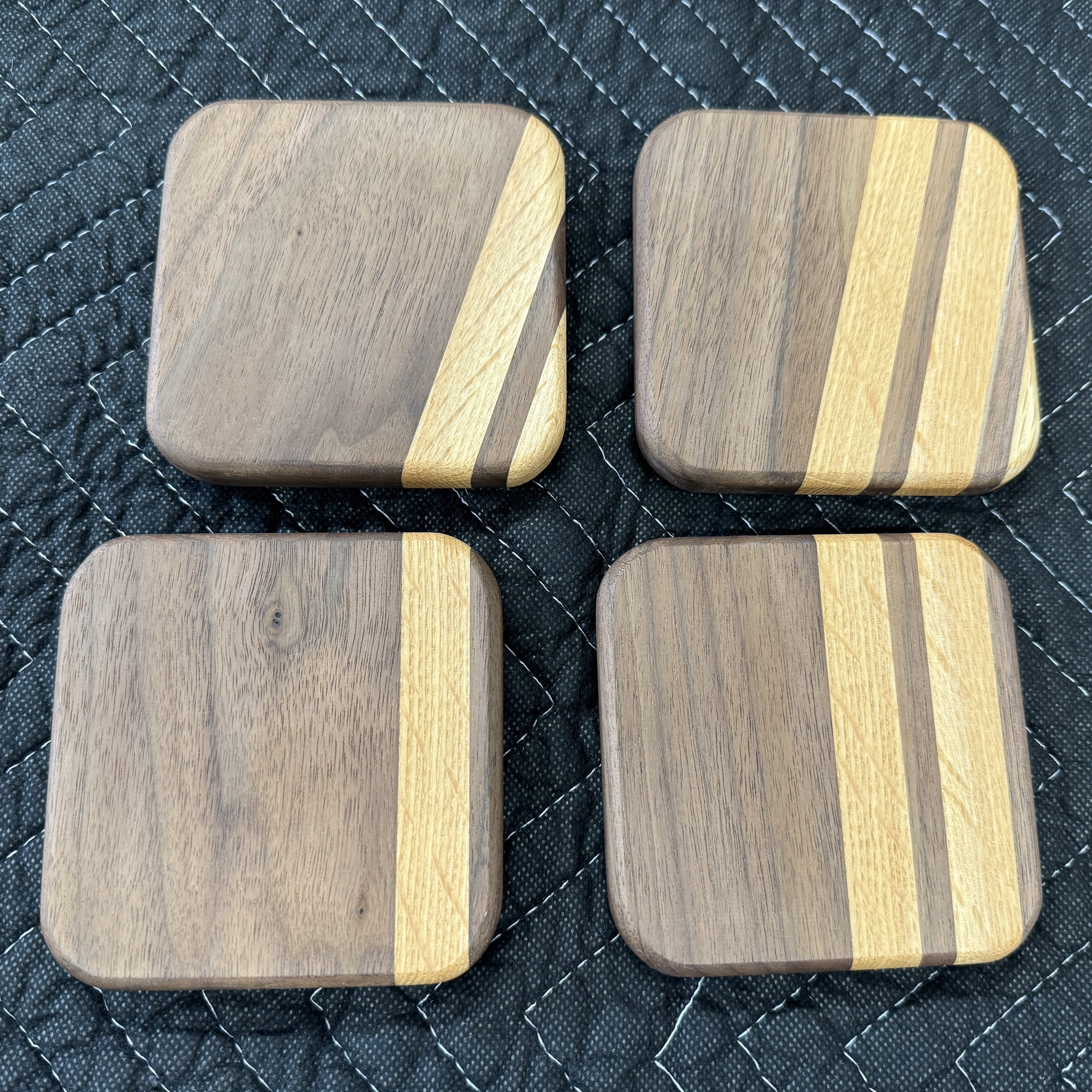
Walnut & Oak Coasters

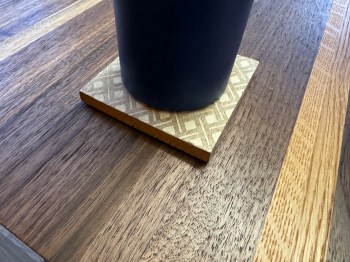
I’m loving my new desk. There are a couple of needed improvements though. First, I always have a water bottle, coffee, pop, or several on my desk when working, so I had grabbed this coaster from the living room. It bugged me all week.

Can you believe I’d never made a set of coasters? Time to fix that.

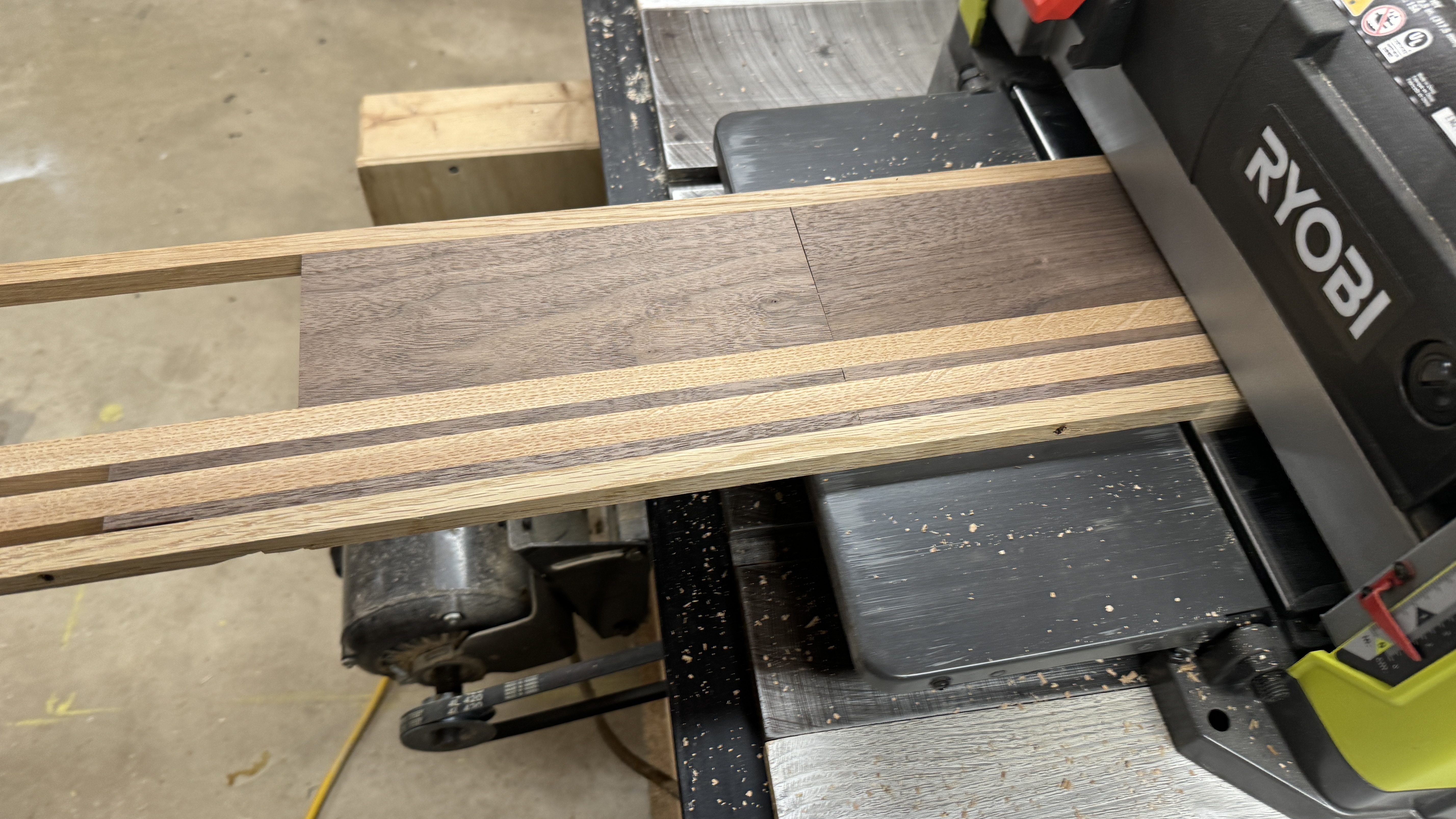
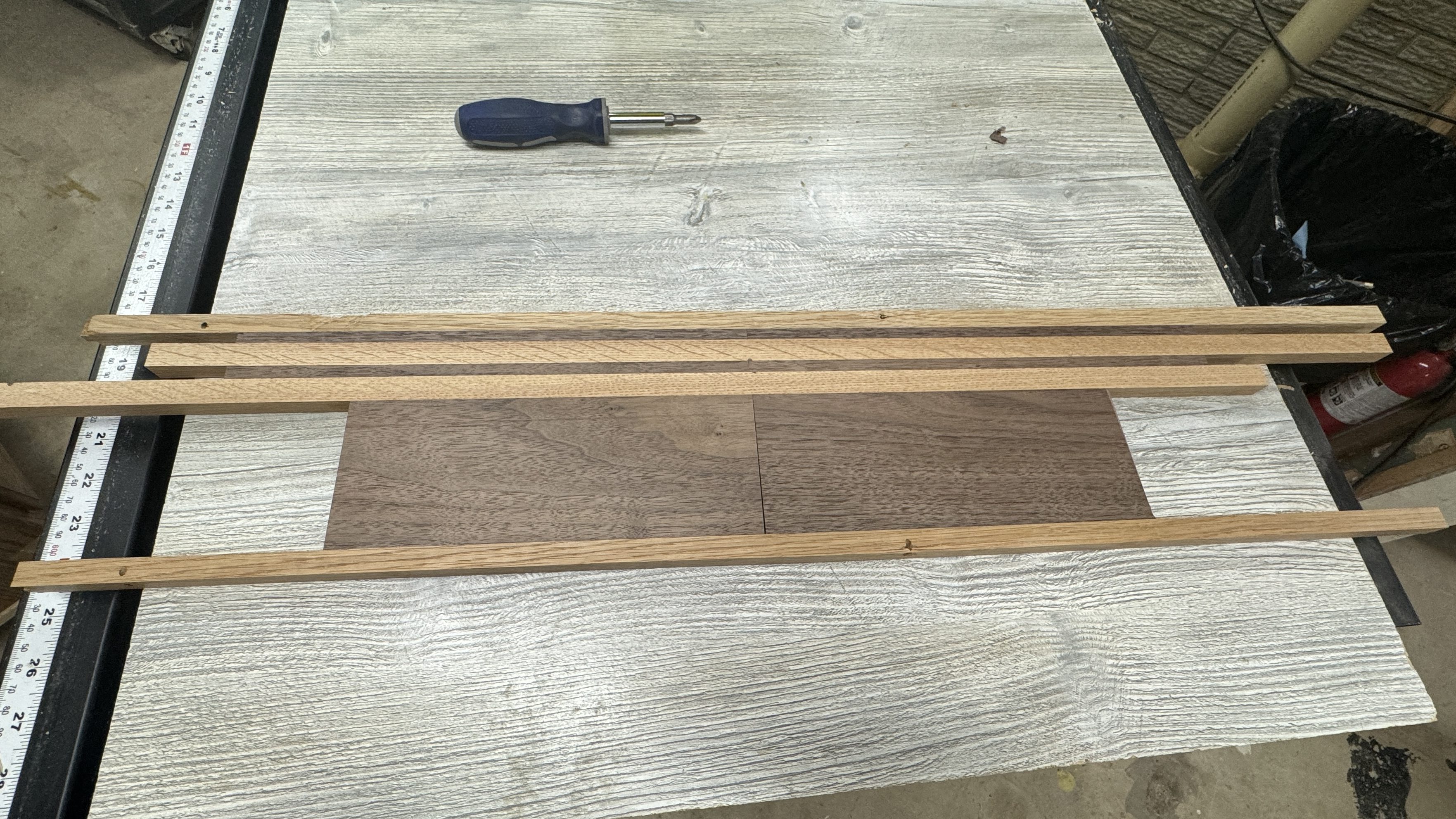
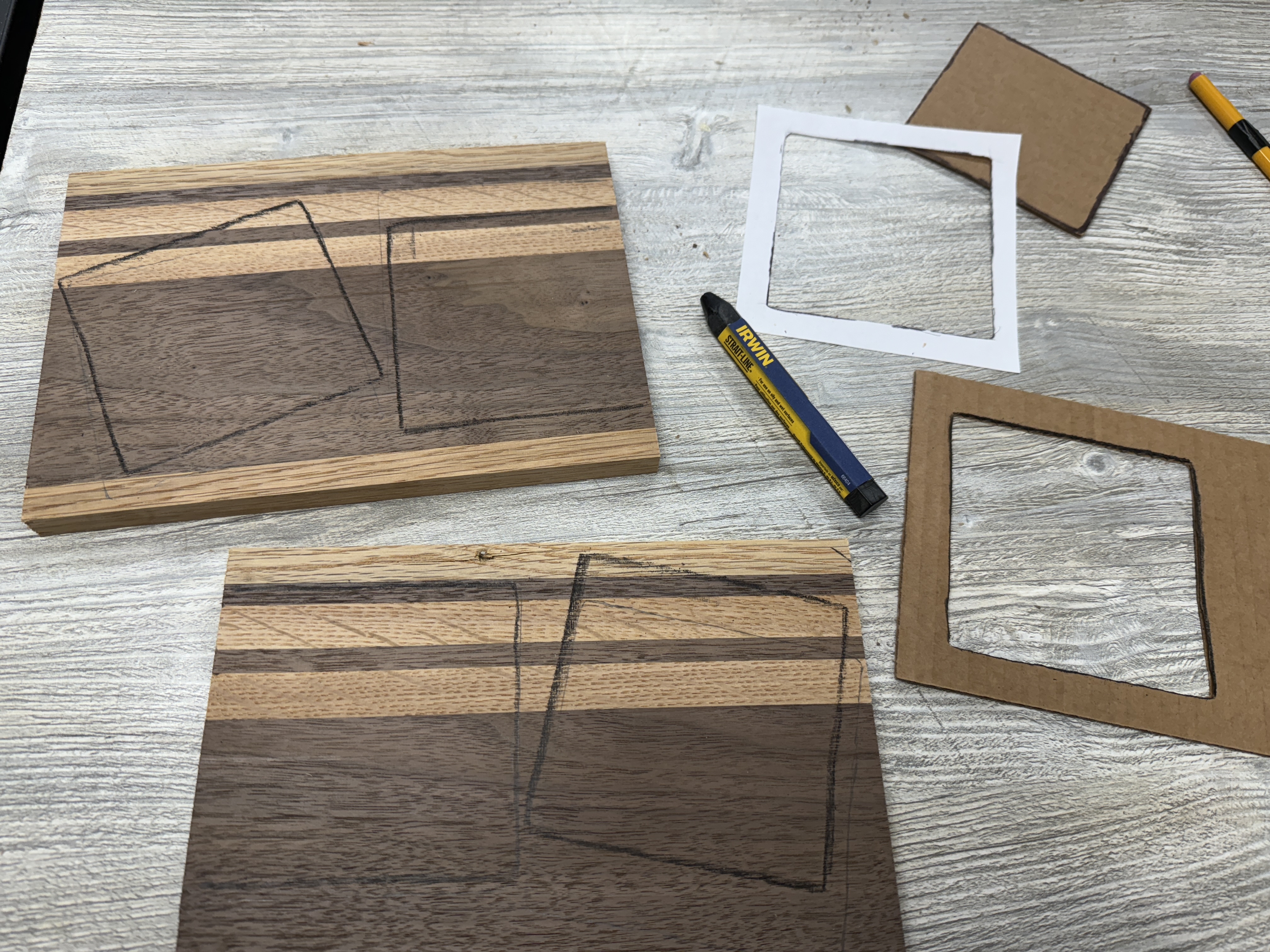
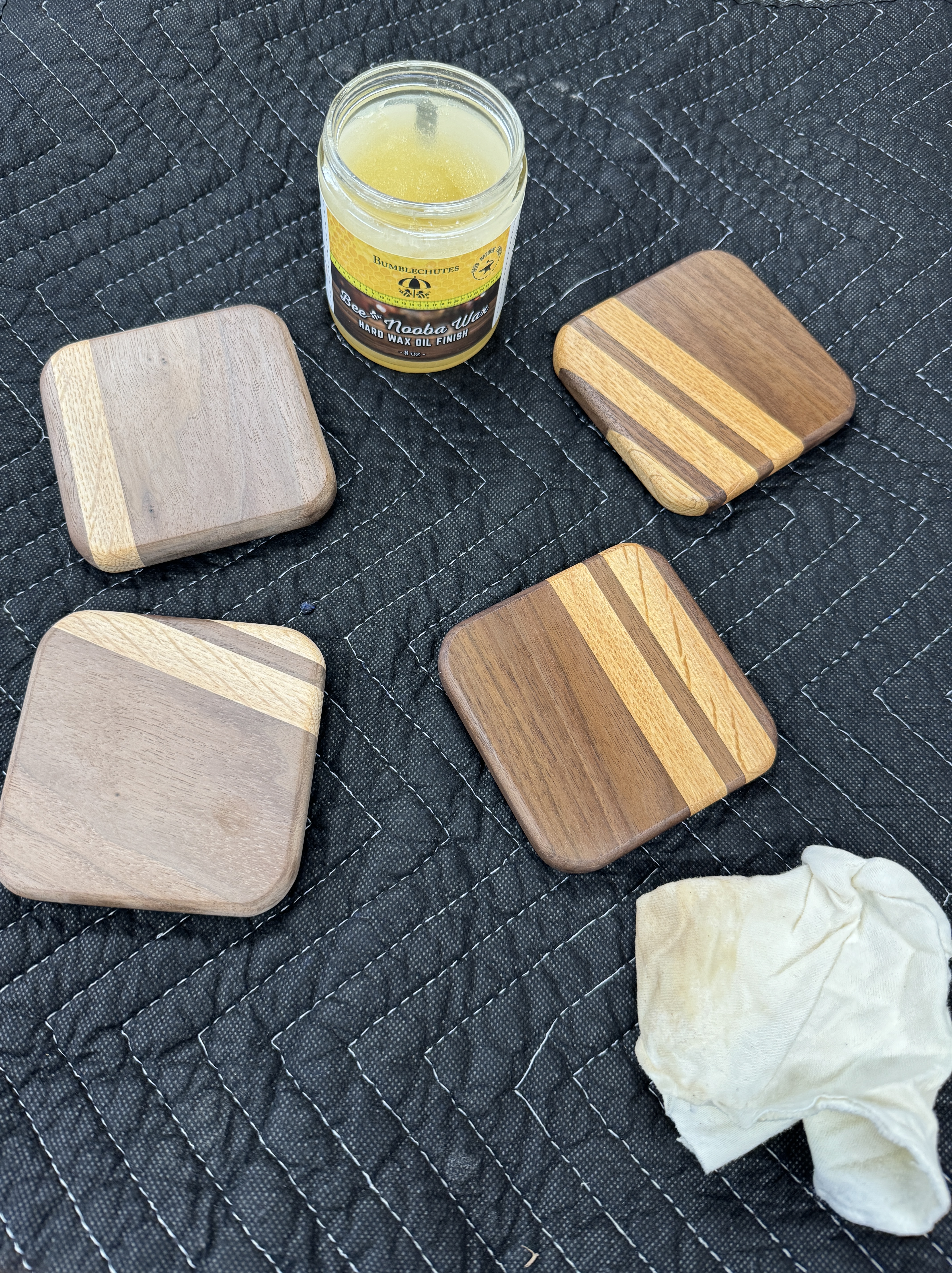
This was a simple project and a lot of fun to knock out something small. I’ll keep two of the coasters in the office and put the other two in the living room.

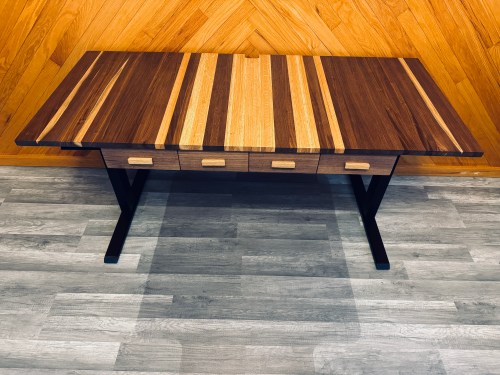
DIY Walnut & Oak Desk with Adjustable Base

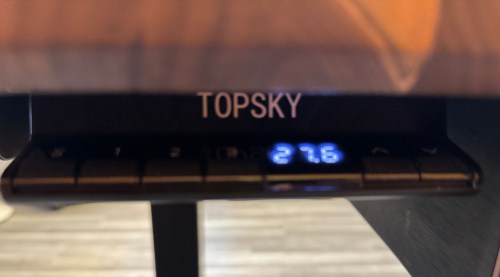
It was time for a new desk for my home office. I ordered this TOPSKY desk base on Amazon for $220.99.

Over the years, without success, I’ve tried to stand some while working. Hopefully a motorized adjustable base will encourage me to stand for certain tasks and even if I can do a couple of 20-30 minute sessions each day it’ll be a big help.

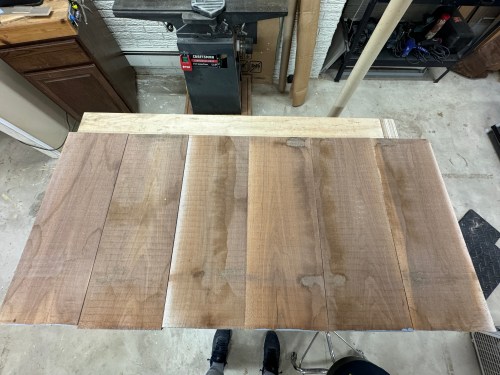
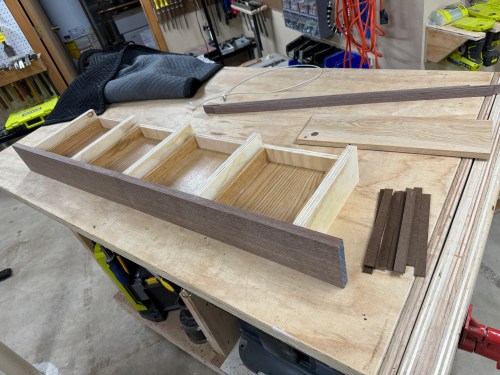
I got to work processing walnut boards and white oak flooring.

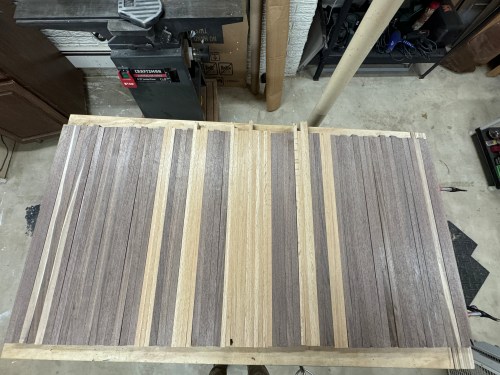
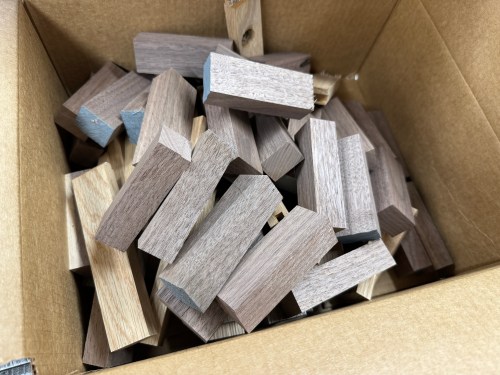
There was a lot of jointing, cross-cutting, ripping, planing, more ripping, and trimming. I’m excited to use that box of off-cuts to make an end grain cutting board or two! I felt like the key to this build was going to be the glue-ups. I started with sections of 9-10 pieces and ended up with eight of those.

I ran each section through the planer, with the help of some shimming for a couple, to flatten them. I made a temporary sled to square up the sides to the faces.

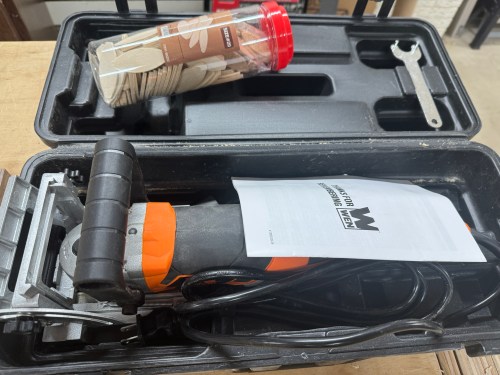
To help assemble the sections, I used a couple of biscuits on each glue joint.

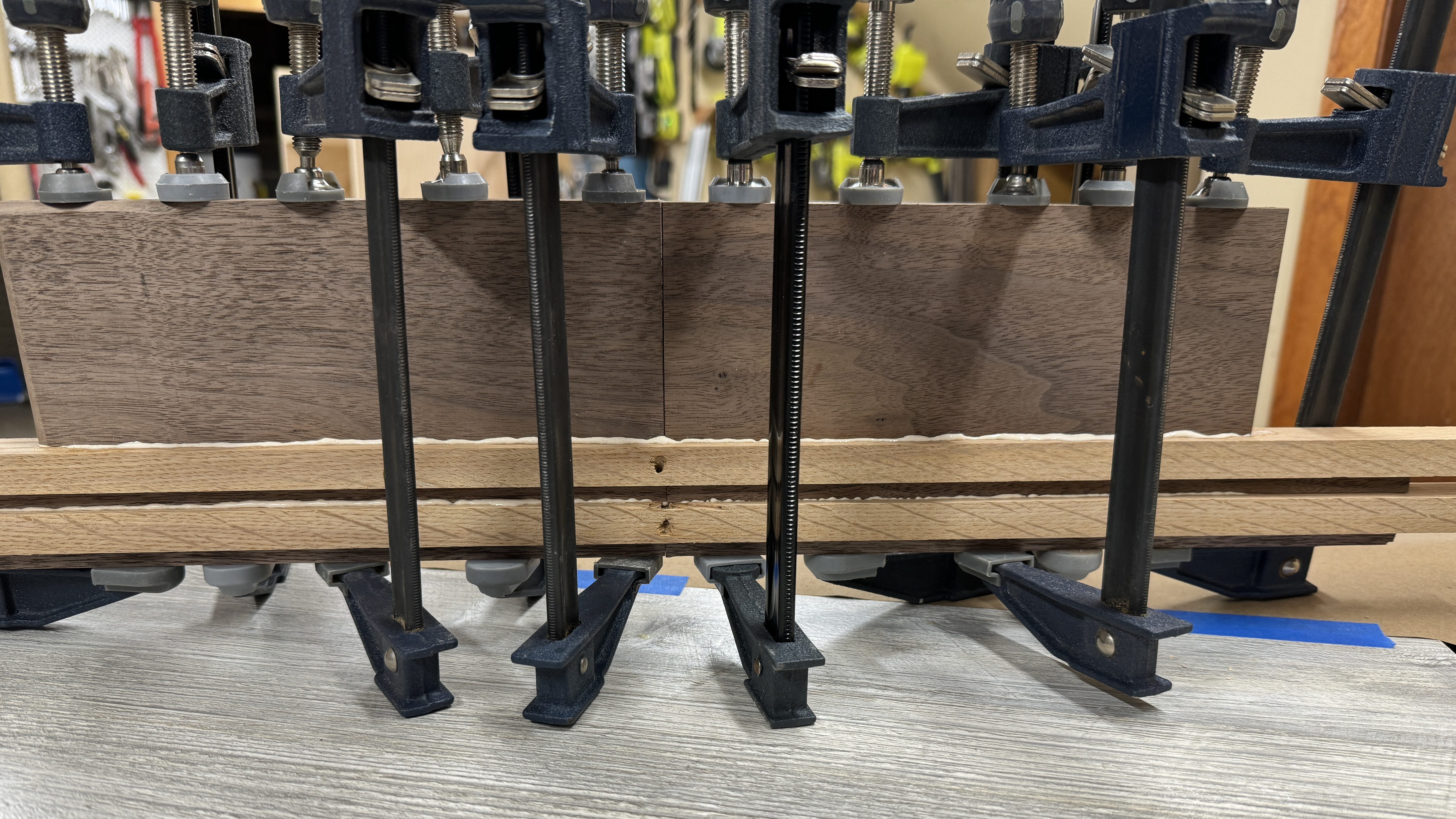
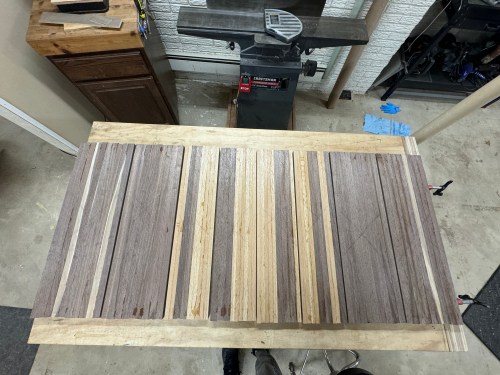
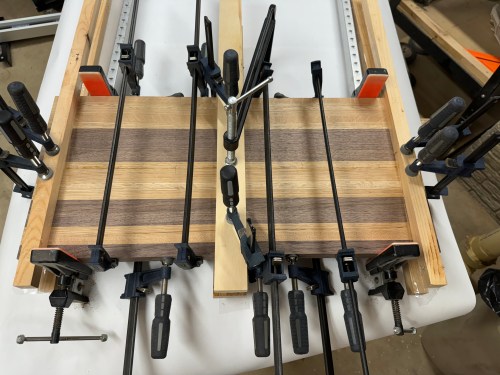
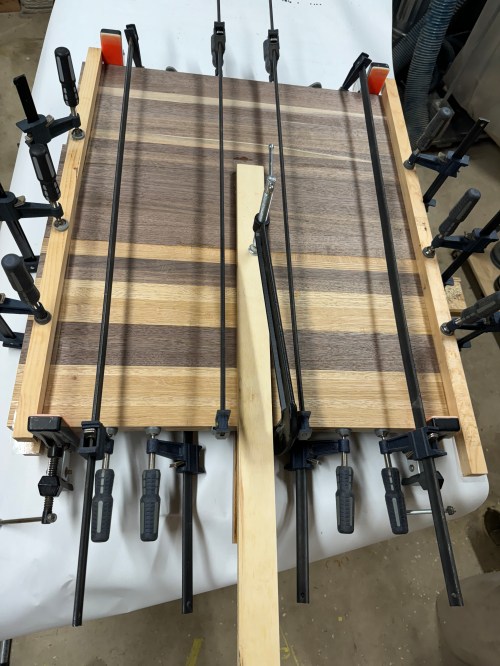
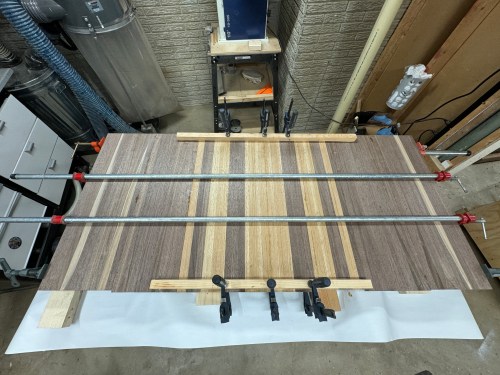
I glued up two sections at a time, which gave me four bigger sections. Then I glued up two of those at a time and one final glue up.

I drilled and put in all of the bolt inserts, which will attach the top to the desk base.

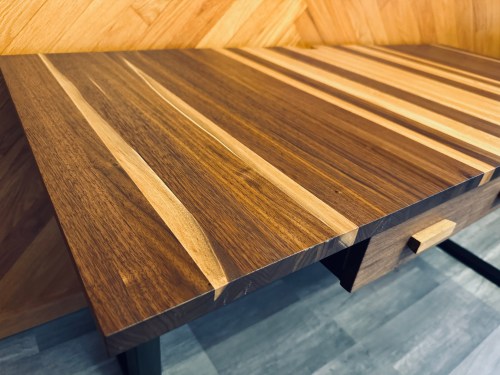
I took three passes with the router to put a big chamfer along the bottom edge.

With a jigsaw, I rough cut out a spot in the back to pass cables through. Then I did some sanding to smooth it out and added a chamfer with the router. Here is it, viewed with the desk bottom facing up.

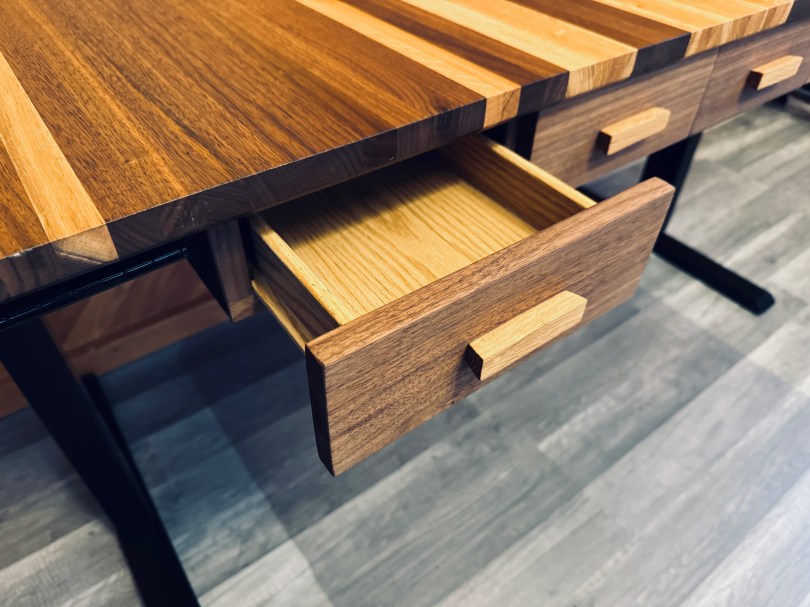
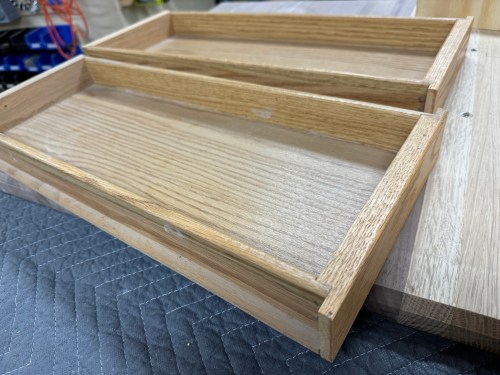
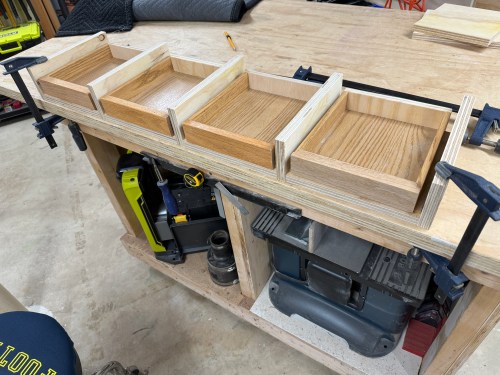
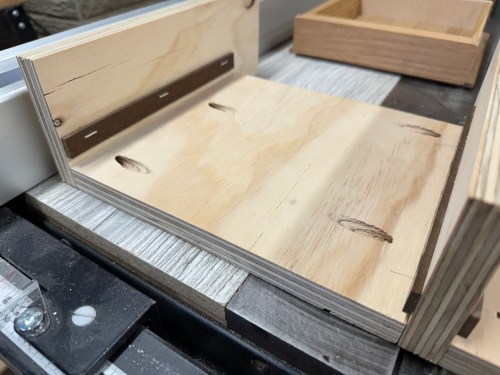
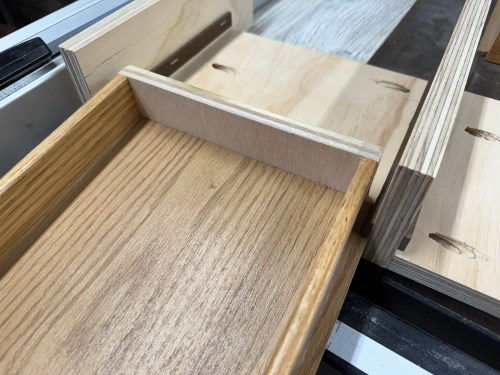
Due to the base’s cross support, there’s was limited depth for drawers, but there was width for them. I took some old kitchen cabinet drawers, chopped them in half, and closed them up with scrap plywood.

Then I worked on what I’m calling the drawer box even though it’s not a box. I also cut top rails from hardboard and oversized drawer faces from walnut. Grabbed strips of walnut for face-framing and glued together pieces of oak to make drawer pulls.

All the sanding! I went through 80, 120, 180, and 220 grits on the top and sides of the desk.

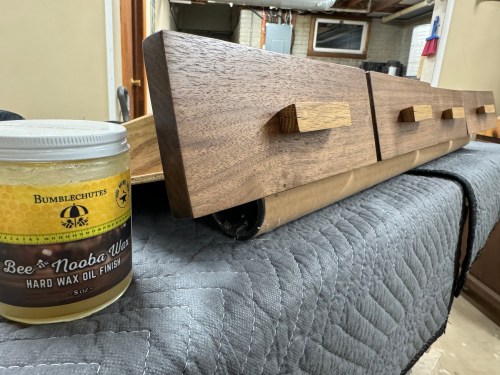
Time to put some finish on, which is always a favorite step to see how it’s really going to look. It was my first time trying out a hard wax oil and I used Bee Nooba Wax from Bumblechutes. It was very easy to apply and I’ll definitely be using it on future projects. I applied one coat to the bottom and three coats to the sides and top.

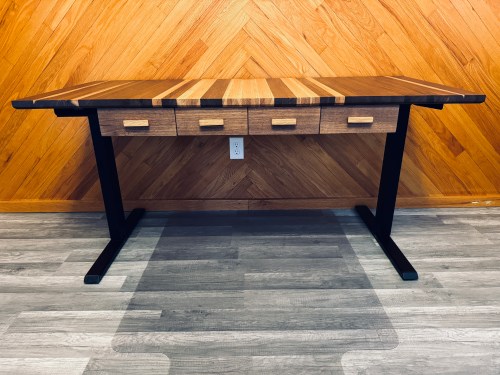
Then it was back to the drawers. I stained the “box” black and ended up having to trim some things to fit better around the rail of the desk base. I sized the drawer faces, made oak handles with 10° angles, assembled everything, and applied finish.

It turned out great! I can’t wait to see it in our new house later this year!

A Replacement Black Walnut Table Top

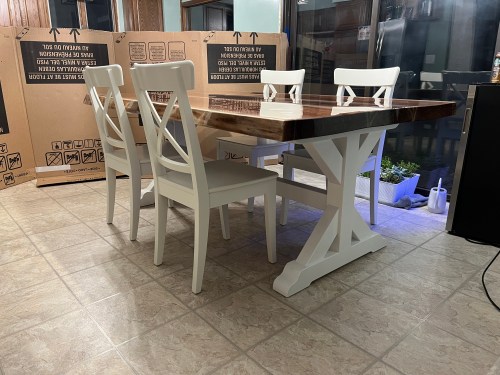
Last year I had a beautiful table top made for the kitchen.

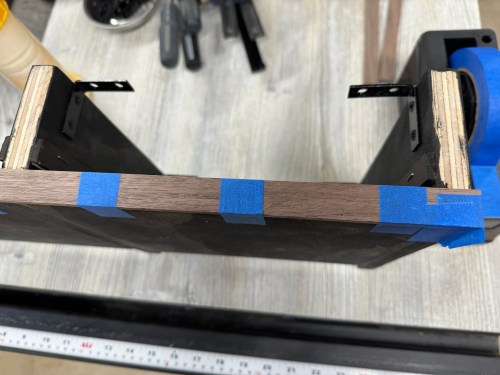
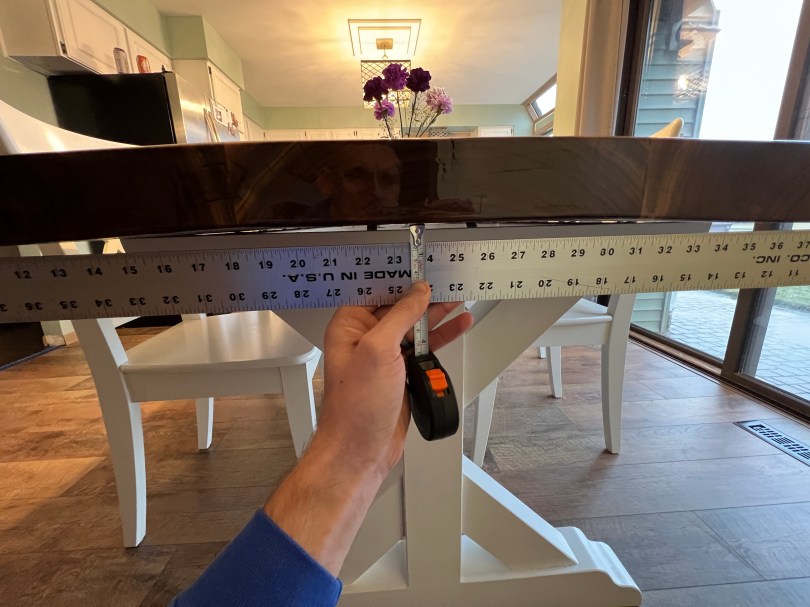
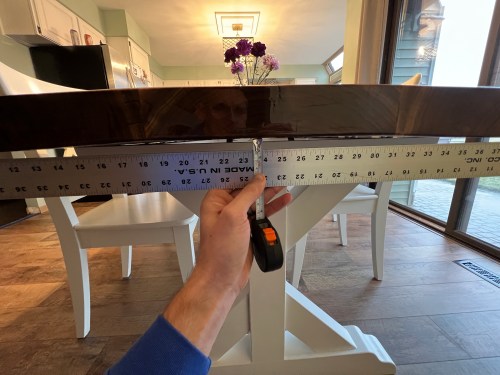
In late February, while we were making dinner, a glass of chocolate milk slid right off the table. What. The. Fuck! The grain of the wood caused the table to become extremely cupped with seasonal changes in humidity. When checking it against a flat edge it’s easy to see how much the wood moved.

I looked back at the original pictures and you can see the wood was already cupping.

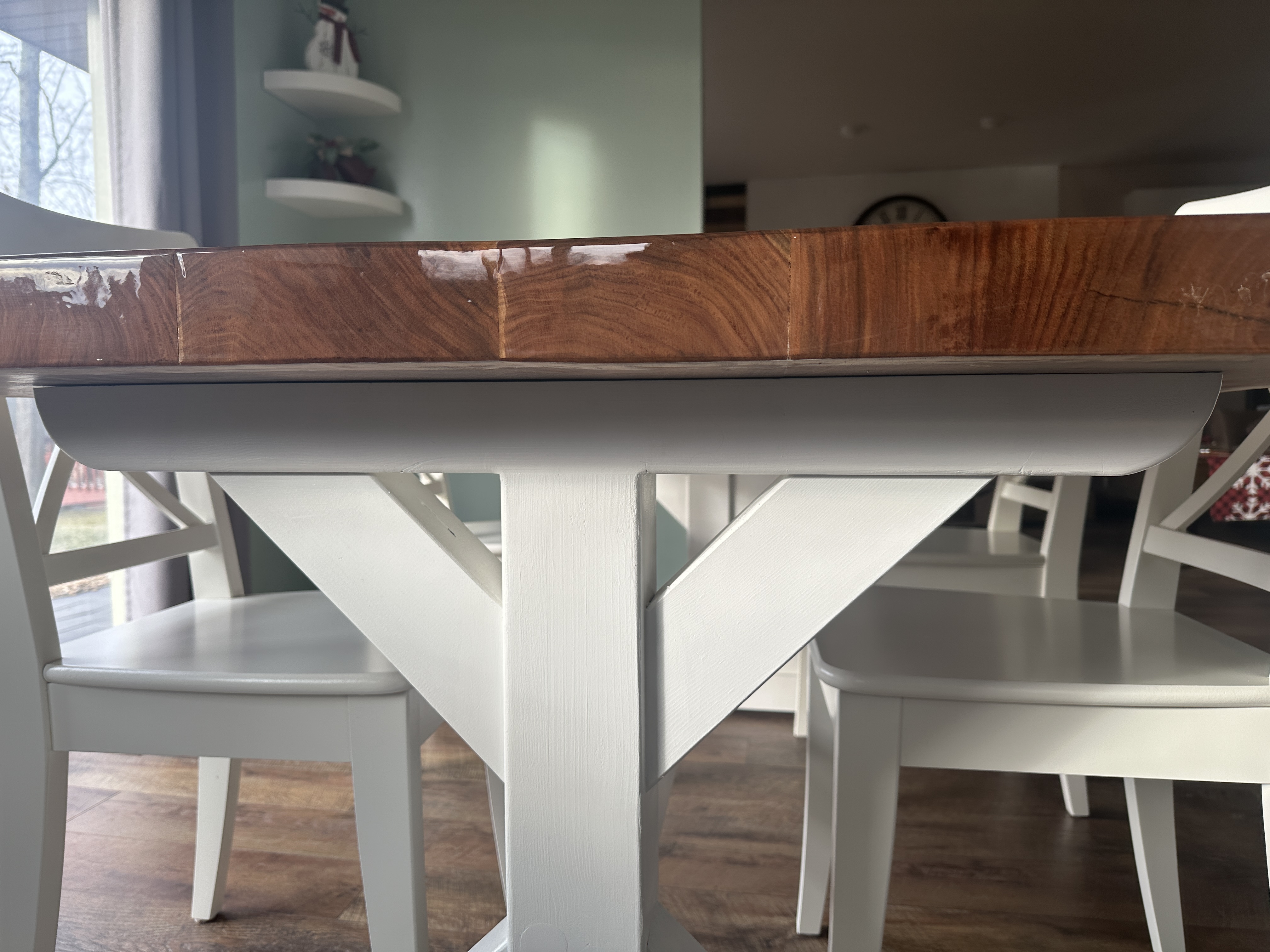
The maker agreed to do a new table top and I’m grateful. It took forever, but it was finally delivered and attached to the base. It’s much flatter than the previous top and still far from perfect. As a maker myself I wouldn’t feel right delivering something with some of the mistakes made here and it was a year between deliveries! I won’t be recommend him to anyone.

Walnut Bandsaw Box

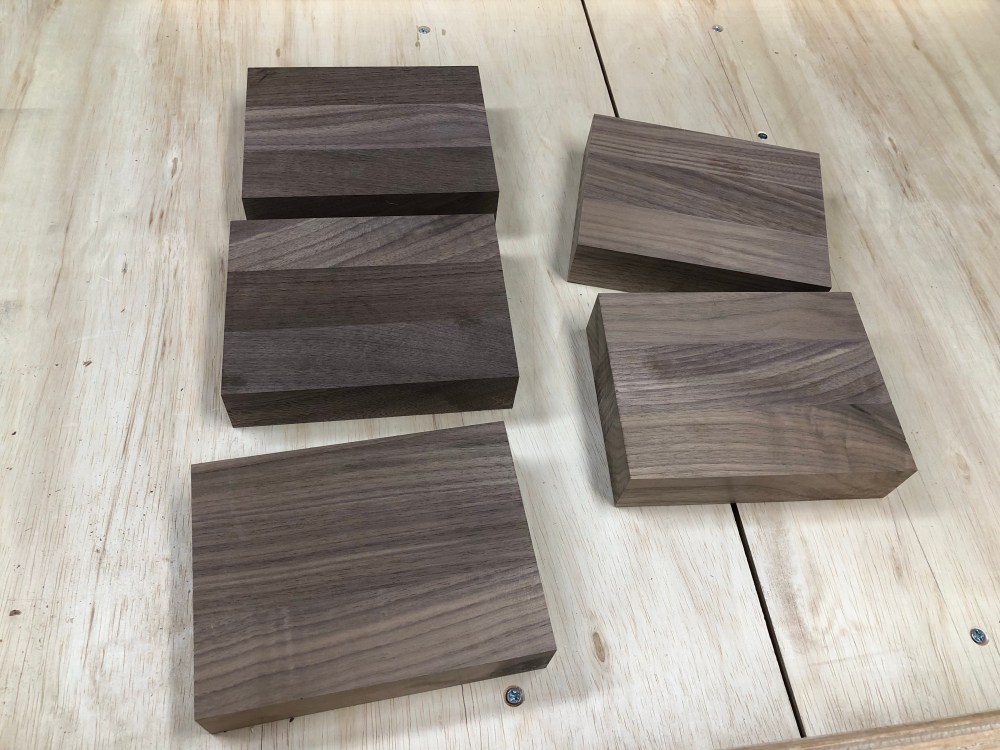
My buddy Kevin told me about a local shop that sells woodworking tools, supplies, and wood so we took a ride out to Barn Door Lumber Company a few weeks ago. While looking through their scrap pile, this butcher block cutoff caught my eye. It was roughly 1.5 x 6 x 23 inches.

img_0496

I had bought a 10″ bandsaw (RIKON 10-305) not too long before and hadn’t used it yet.

img_0640

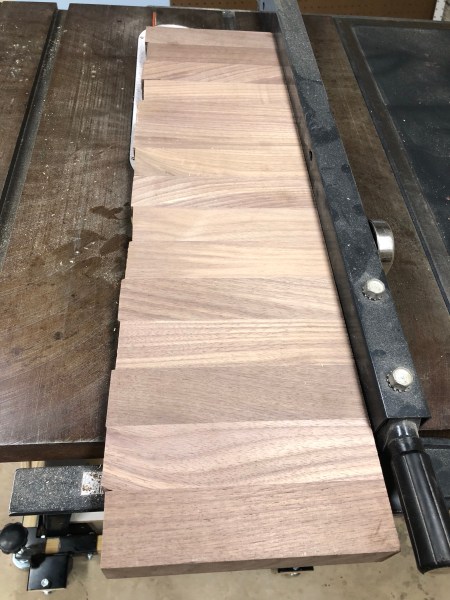
I thought it would be a fun project to chop up this piece on the table saw, glue it into a large block, and then create a bandsaw box. That’s when you create a box out of a block of wood by only making cuts with a bandsaw. Seemed like a good project to get my feet wet. My sister’s birthday was coming up so it would also make a good gift.

The first thing I did was square up the edge.

img_0518

Then I sliced 5 pieces. I’m still learning a lot and forgot to set a stop block on my sled, which would have helped with getting pieces that were exactly the same size. The order of operations and remembering little tricks like that are what I’m struggling with the most on this woodworking adventure.

img_0519

I glued each piece.

img_0521

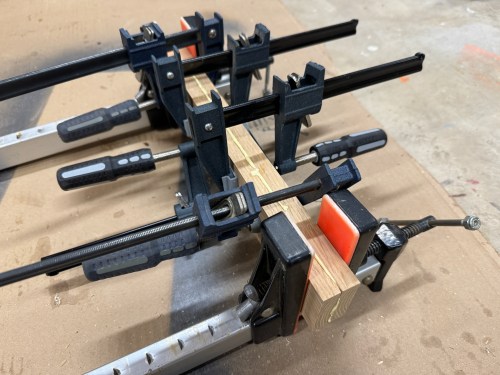
Quickly realized I only needed glue on 4 pieces. I told myself the last two pieces would just get a really good bond. Then I clamped everything together.

img_0522

Of course I forgot to flip that last piece around so that 2 glued sides were facing each other. The glue side ended up facing out and I put 3 clamps in place before remembering. So I backed off the clamps and added a piece of parchment paper.

After squaring up an edge on the table saw I was ready for some work on the bandsaw. Or so I thought…

img_0566

After another trip to the table saw I finally had my block of wood. I was ready for the bandsaw!

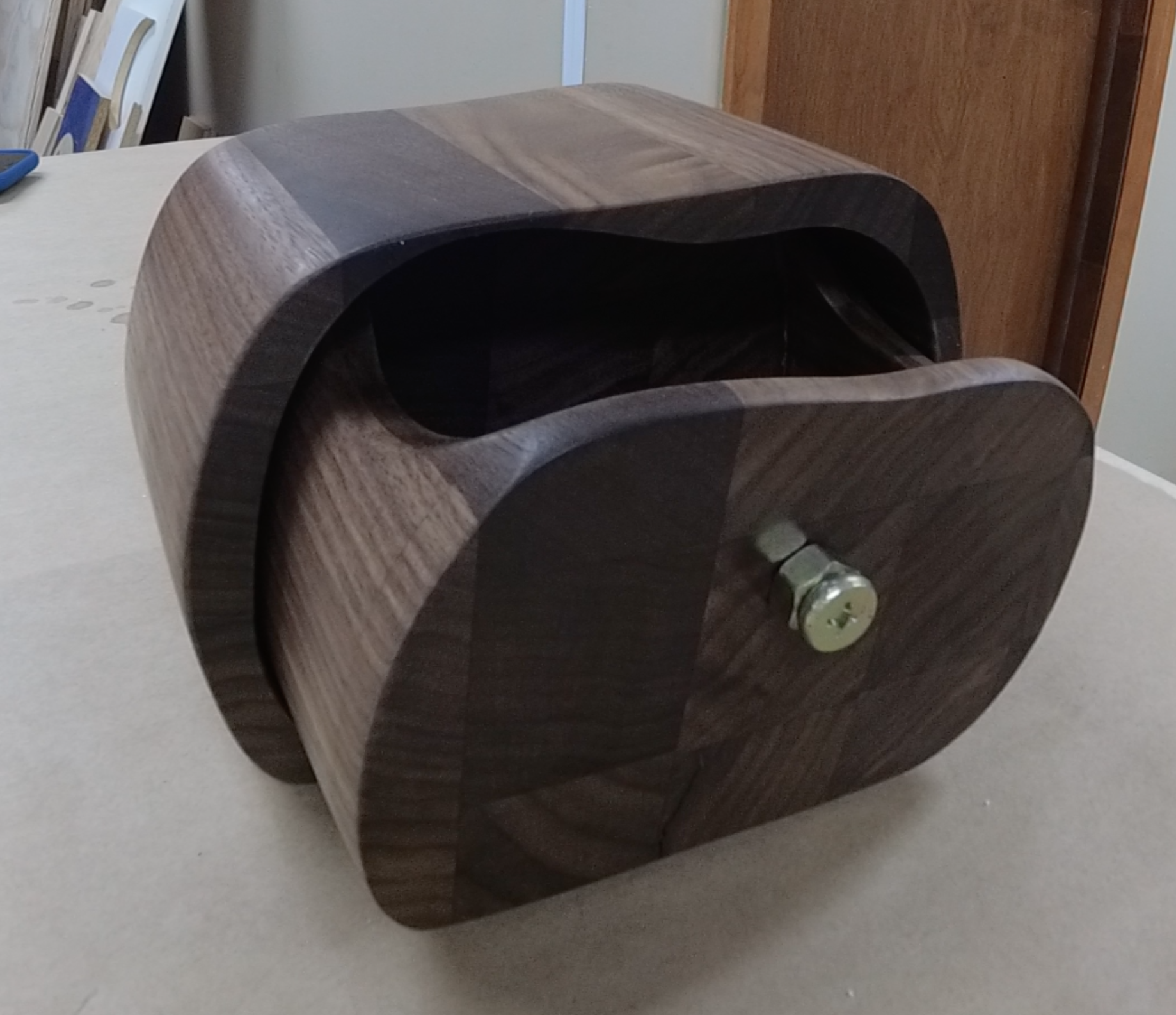
I quickly found out the blade that came with the saw wasn’t up for the job because it couldn’t make the turns I wanted. I got everything cut but there were several mistakes. Learned a lot though and had fun with the project.

finished-bandsaw-box