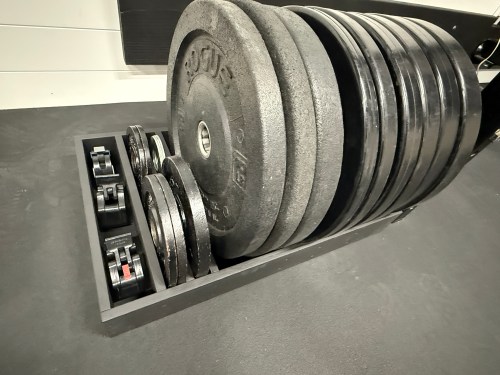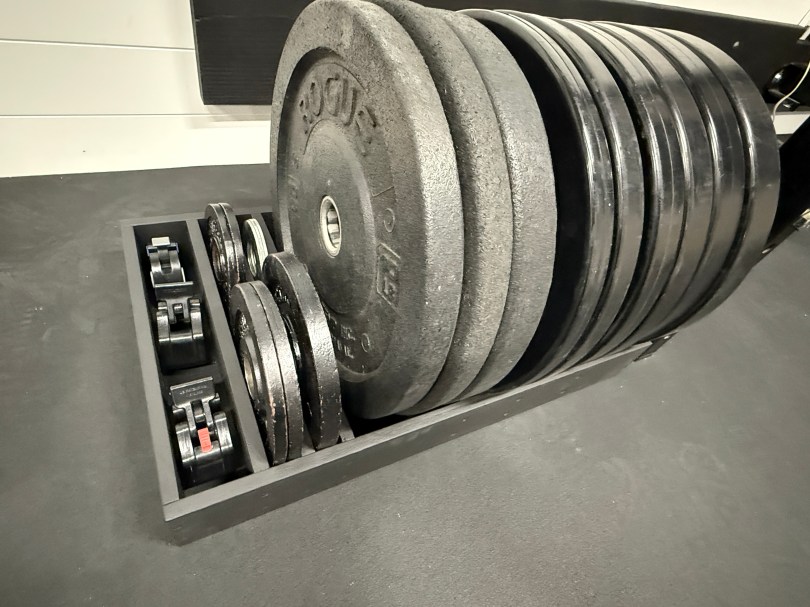
Home Gym Weight Plate Storage v3

During the move, version 2 of our weight plate storage was tossed in the trash because we sold our 55 pound plates and wanted to evenly split the plates on either side of the rack in our new gym.

I took some measurements and did a little math for a general idea of how much wood I’d need.

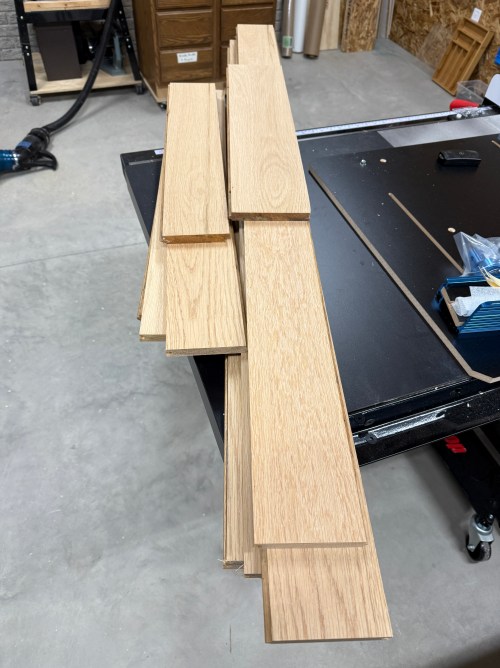
Grabbed some old oak flooring and started processing it on the miter saw, planer, and table saw.

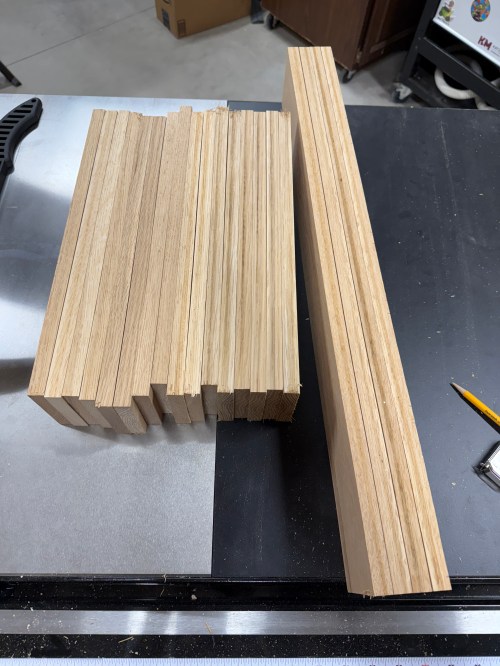
I realized I had measured the full width of the plates, which I don’t need since the storage racks are only at the bottom. After recalculating, I cut a bunch of the dividers and did a mockup, when I realized I could add another slot to hold the barbell collars. The extra spacing on the sides of the plates ended up being less than my original guess as well.

Then I to cut everything to size, and drilled a lot of holes.
The assembly process was complicated, since I had to individually square up and attach eight dividers. Then the other side needed to have glue applied to all eight dividers before getting 16 holes to line up.

The second one is always easier and I was able to use the assembled rack as my 90° to clamp to.

More sanding and then black paint. Brushing on the paint with the oak’s grain pattern was a challenge, especially in some of the small gaps between dividers, so it took many coats.
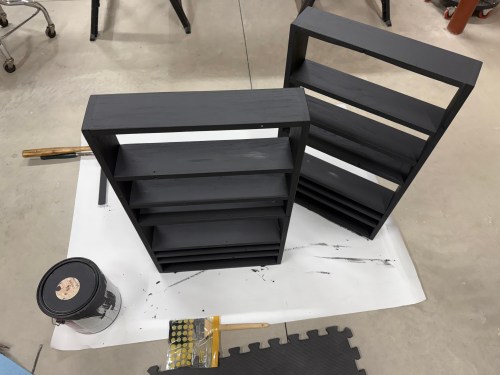
The area looks a lot cleaner and the weights will be a lot easier to use.

Here are the final dimensions for anyone who wants to build their own:

  • All wood: 5/8″ thick and 3-11/16″ tall
  • Front and Back: 27-3/8″ long
  • Dividers: 15-1/4″ long
  • Gaps between dividers:
    • 2×45#: 5″
    • 2×35#: 3-7/8″
    • 2×25#: 2-15/16″
    • 15# + 2×10#: 5-5/8″
    • Metal 10#: 1-1/8″
    • Metal 2×5#: 1-1/4″
    • Collars: 2-5/8″

Everything will depend on the size of your plates though. I measured the thickness of our plates and ended up adding a half inch for the gaps, which feels good for moving the plates in and out.
A Wall and a Home Gym

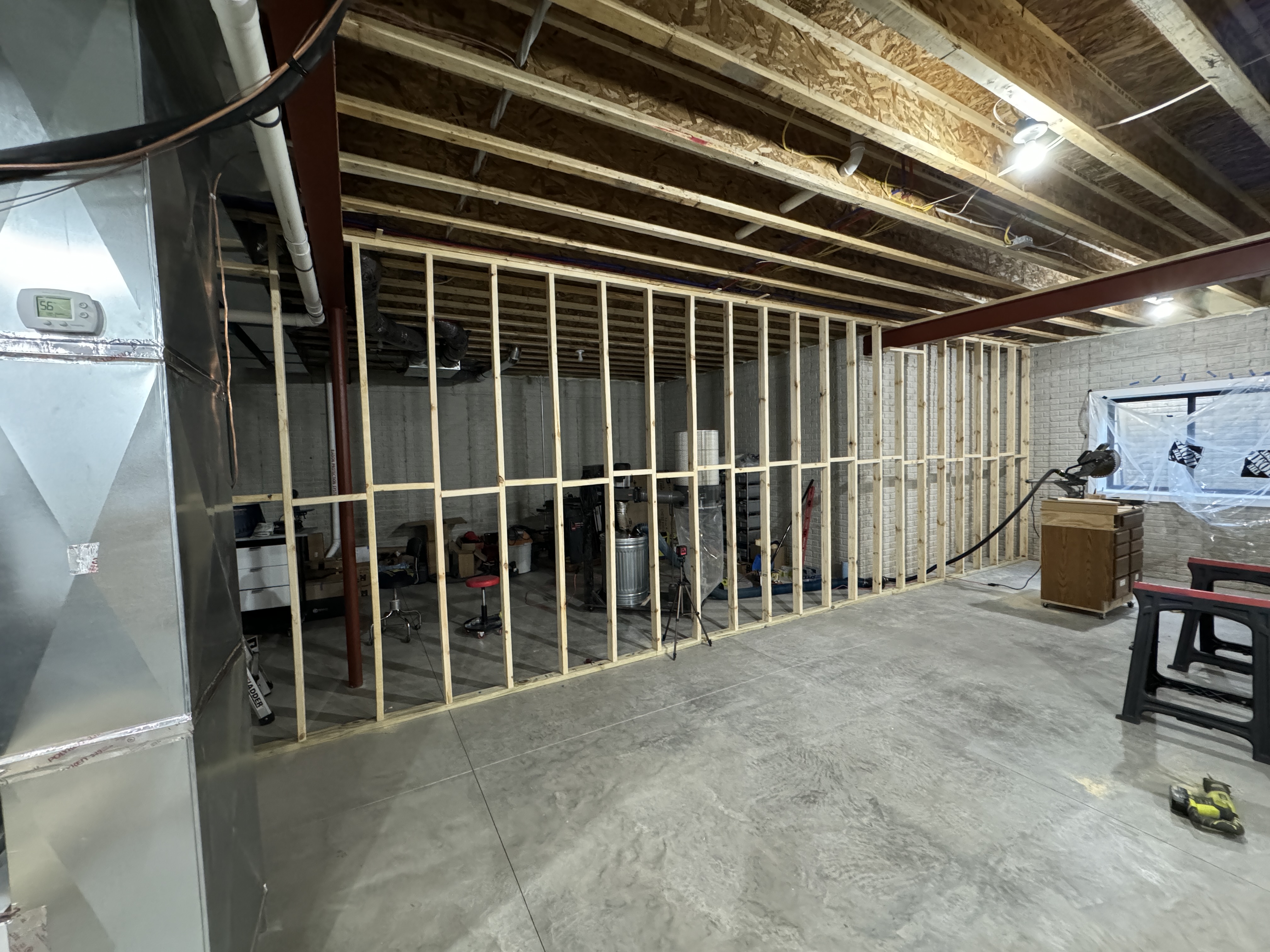
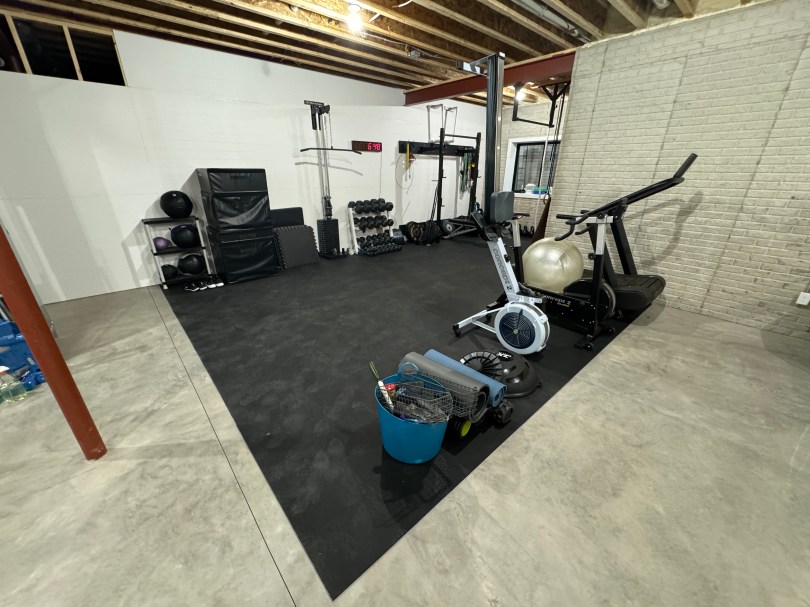
It’s been a busy few weeks packing and moving to the new house. Actually, it’s been a busy year! Building a 40 foot wall before being fully unpacked is a great idea, right? My dad was up for it, so of course I was. I’d never build a wall before, so framing was a fun challenge. This new project meant buying a couple of new tools, which I always love.

We’re very excited about this new gym area inside the house. No more garage gym for us, which was brutal in the Michigan summers and winters. There is still some organizing to do as we figure out how we use space. The wall isn’t actually finished yet either.

After I finish paneling this area I can get started on the other side of the wall. I picked up 1/2″ OSB for the shop’s wall material, to make it easy to screw small items in anywhere I want. You can’t beat $16 a sheet. Check out this cool storage space for sheet goods I gained by having the wall follow the floor joist.

I’m excited to get this mess of a shop organized, especially with all of my wood and large clamps at the other side of the basement for temporary storage. It’s going to be awesome.

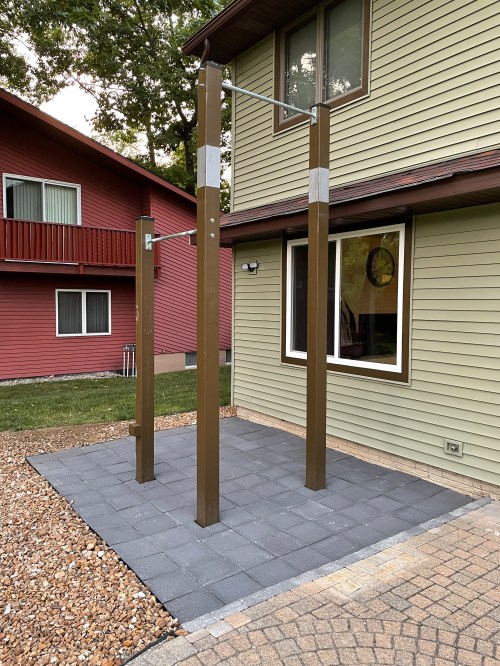
Converting a Sunroom into an Outdoor Gym Area

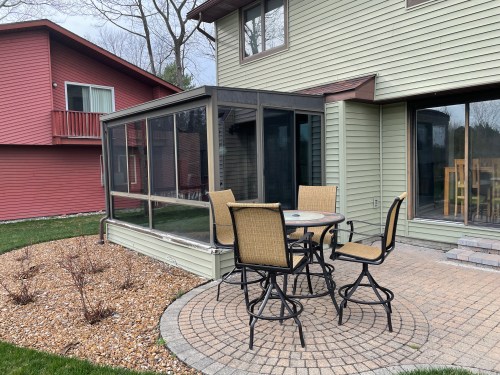
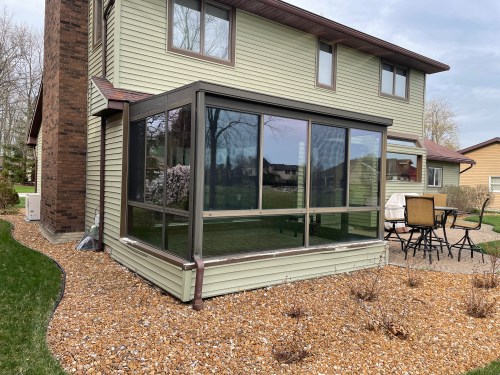
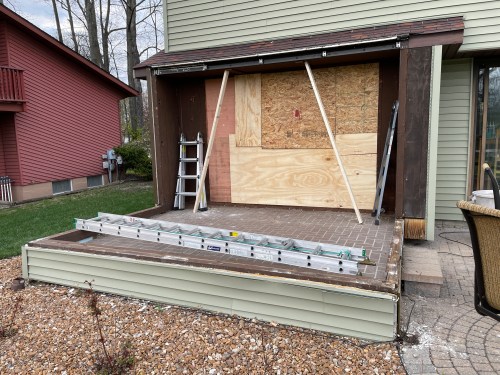
I had a sunroom that was over 20 years old, leaked, and it’s foundation had been shifting for several years. I never used it, so it was time to go. This project started in April and though we’ve been using the area for weeks, we finished up last night by moving rocks back in place.

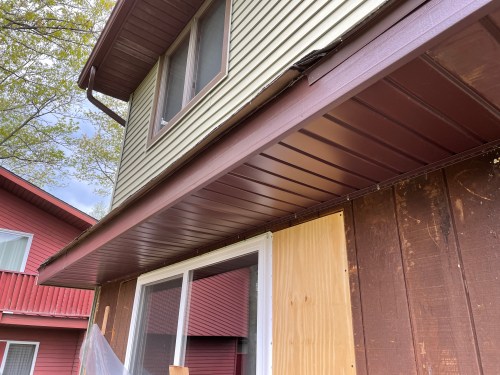
The first step was removing the sliding glass door and putting in a big window.

I hired a company to come in with a Bobcat and hydraulic breaker to remove the 7+ inch concrete slab and posts.

After that was out, I was able to fix up the roof line and put siding on the house.

They did do some damage to my gutter drains, so I made a repair there.

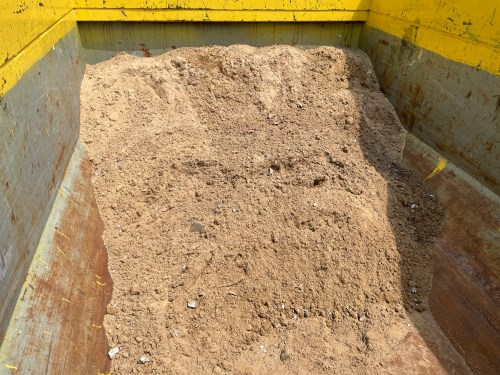
Still had to remove a bunch of sand from the area, so I rented a small dumpster and we hauled a lot of buckets.

My inspiration for the project was this setup I saw online. I mapped out my own layout.

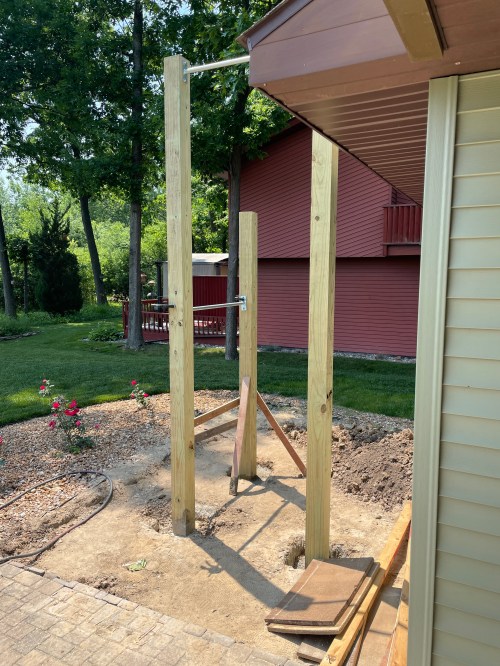
I did a rough sloping job and then we dug three holes four feet deep.

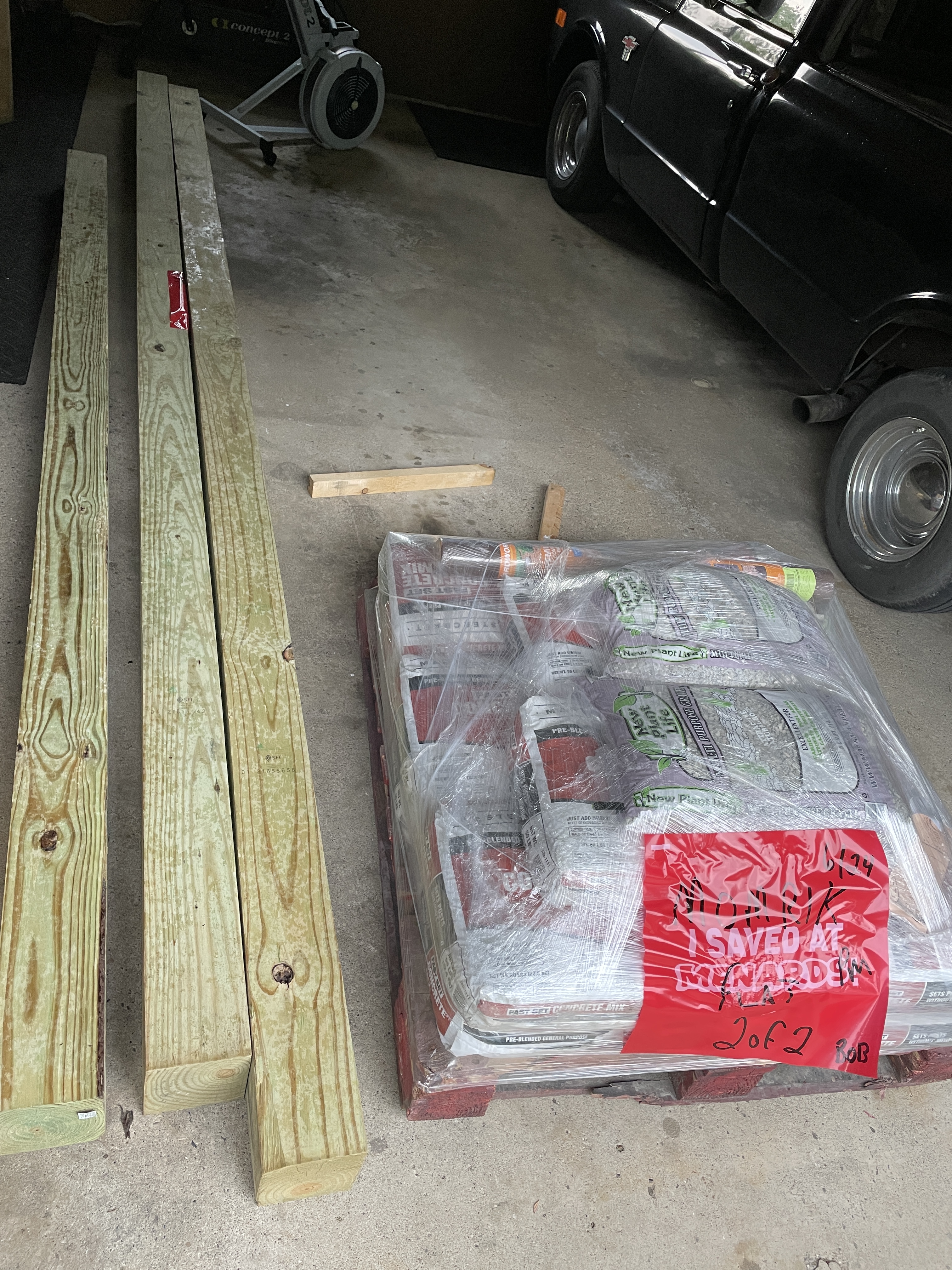
Ordered some materials from Menards, and ended up having to get another 10 bags of cement.

My buddy Kevin was a huge help, getting the two 16 foot 6×6 posts installed. Each one weighed about 190 pounds!

Then Brandi and I were able to install the 12 footer on our own. Between the 3 posts we used 1,500 pounds of concrete!

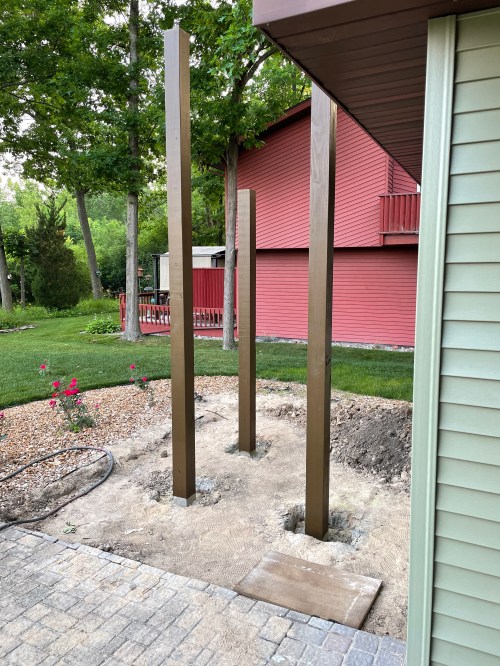
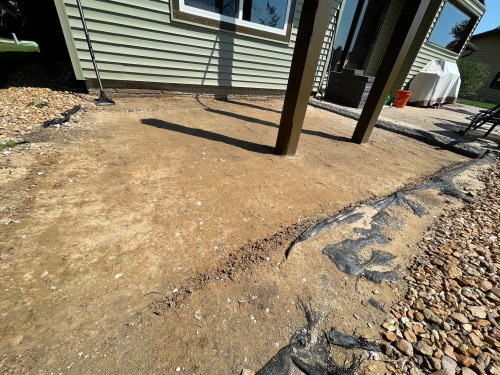
I painted the posts and leveled the ground as best I could.

Put up the bars, top caps, and painted wall ball targets.

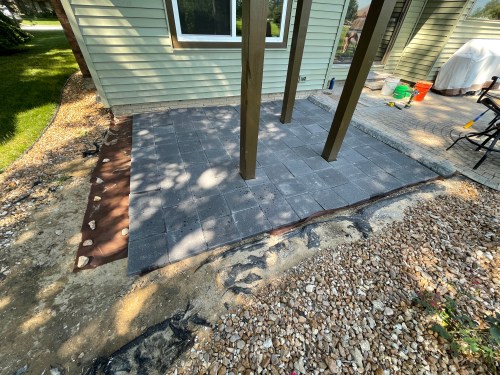
Some of the early plans were to get thick rubber playground flooring tiles, but we eventually decided it wasn’t worth the cost. Used pavers instead.

Turned out great and we’ve been using the outdoor space for one or two workouts a week. It looks good and is a much better use of the space, which wasn’t getting used at all before and had become an eyesore. Now I can finish the inside wall of the house!

DIY Rack/Band Pegs

Titan Fitness hasn’t had their band pegs in stock for months. This is what they look like.

I got sick of waiting, so I bought a four foot length of 5/8″ steel round rod from Home Depot for $15 and made my own.

  1. Cut the rod down to four 12″ pieces with a cutoff wheel on an angle grinder
  2. Taper an end of each piece and clean up the other end on a belt sander
  3. Drill a hole near the non-tapered end, using a drill press and vise
  4. Insert a nail and cut it so about 1/4″ is left sticking out
  5. Flatten and/or bend the piece of nail so it can’t escape
  6. Soften any remaining sharp edges on the sander
  7. Spray one coat of primer, two coats of black, and two coats of matte clear

They turned out great and I really like how the matte clear finish feels. It’s already getting scuffed up from moving the pegs around a few times though, which I figured would happen. In reality they’re too long and buying a three foot rod would have been better.

So what are these used for? Pegs are the proper way to use bands and things like Crossover Symmetry on a rack/rig. People tend to wrap bands around the J-cups, but that ends up cutting through the bands over time. Nobody like taking a snapped band in the groin! Pegs are round, so they play nice with bands.