2019 Calorie Counting: Week 1

If you haven’t been following along, start with my explanation of this calorie counting experiment.

I made it through my first week!

Macros

I noticed the calorie counts in MyFitnessPal didn’t match up with 4/4/9 (cals per gram of carb/protein/fat) calculations, so I started a spreadsheet of daily macro totals and will be using my own calculated calories from now on. Turns out that there are several different methods that can be used by nutrition labels to determine calories.

The averages from my baseline were 259 grams of carbs, 99 grams of fat, and 140 grams of protein for 2,485 calories. During my first week I averaged 212g C, 83g F, and 196g P for 2,379 cals. My goals were 220g C, 70g F, and 200g P for 2,310 cals. I’m really pleased with the shift I was able to make. It could have been even better, but I faced some challenges right off the bat.

Many of the meals I had left from last week’s Factor 75 delivery were very high in fat and eating two of them was already putting me at or over my goal for the highest calorie macro. To make up for it, I decided to cut back on carbs and still try to get as close as I could with protein. It was too late to change my food delivery for this week, so I’m having a similar issue, though not quite as bad because I’m able to plan it out right away.

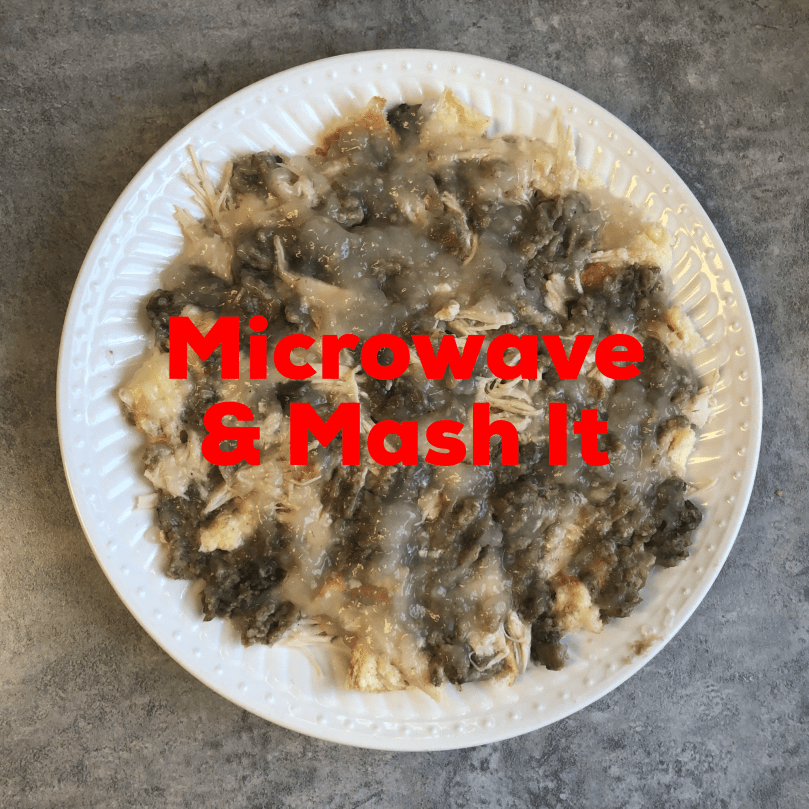
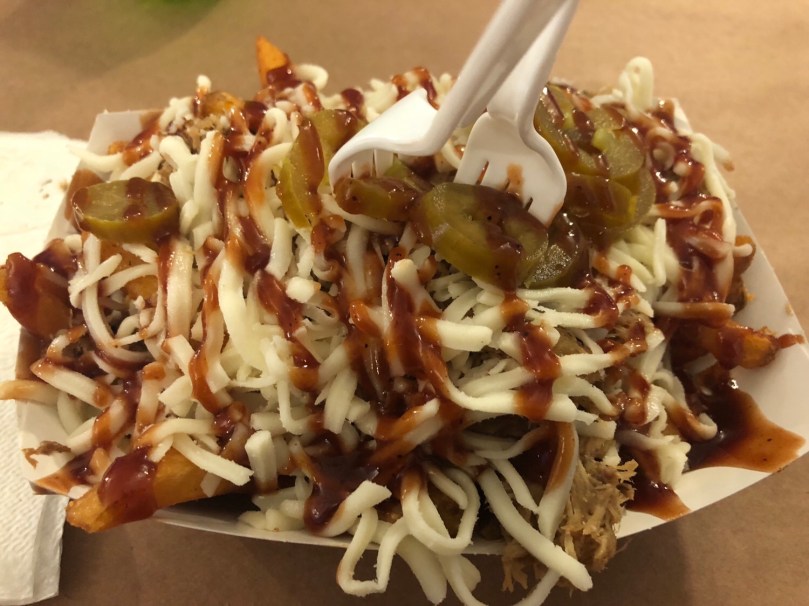
My housekeeper brought me a bunch of food, so I have no idea what the actual macro content was for 4 of my meals. I simply estimated based on items I found in the MFP database. My actual intake for the week could be very different (either high or low) from what I estimated.

On the first day I was realizing how much the volume of food is when you replace fat calories with proteins and carbs.

My usual lunch would be the Factor 75 meal without the sweet potatoes and cottage cheese. I powered through even though I’d already eaten a lot more in the morning than normal. After dinner I was so full I didn’t even think about snacks.

On day two I ate a late lunch right before going to a movie so I wouldn’t get popcorn and Mountain Dew. It was tempting. On day four my body seemed to already be adjusting; after eating a bit for breakfast, my stomach was rumbling at noon. A couple hours after eating some banana pudding I was given, I could feel cravings, which I hadn’t had in the previous three days. I’d been so full I hadn’t thought about treats. That’s what excessive carbs do! On day five shortly after finishing off the pasta and banana pudding I could feel the meal. Too many carbs!

I still don’t like the macro tracking, but having the Factor 75 meals makes it bearable. If I was cooking on my own and had to input recipes and serving sizes I may have quit already. I’ve been planning out everything I’ll eat the night before, which has been huge for me. I just look at the log and eat what I’m supposed to. There isn’t any stress about needing to get 50 more grams of protein at 10pm.

Water

During my baseline I averaged 101 ounces of water, but like I mentioned in the last post i was already increasing my intake. This week I averaged 110 ounces per day, for a nice bump. On days I go to the gym, the average is even higher at 115 due to getting an easy 34 ounces between my intra- and post-workout drinks.

Going in, I thought water would give me the biggest struggle, but it’s been easy. I am waking up 1-2 times a night to pee with the water increase, compared to not getting up or getting up once a night before. Hopefully my body adjusts.

Scale

My averages coming in were 199.3 pounds and 15% fat mass on the scale. Over the last three mornings I averaged 199 and 15.2%. Not much change, which could be due to those macro estimations being off, so I don’t want to jump to any conclusions. Fat percentage is hard to measure, so I don’t like to look at it too closely. I find it better to look at fat trends over longer periods of time.

Thoughts

No plans to quit yet. Due to the high fat F75 meals I still have, I expect week 2 numbers to be similar to week 1. My food delivery on Tuesday will have meals with much lower fat content, which will make everything easier to manage.

It’s too early to make any observations about how I feel, so I’ll wait another week or two.

Beyond the Whiteboard, my favorite app for tracking CrossFit workouts, added a Macros feature and it looked really good. I was going to try their free trial over the next two weeks, but I immediately noticed the database of foods can’t compare with MFP so I cancelled after entering one meal.

Continue on with the update for week 2.

All of these posts will be tagged 2019 calorie counting to make it easy to browse the posts.
2019 Calorie Counting: A Baseline and Determining Macros

If you didn’t read the intro post about my nutrition experiment, go check it out.

So… how long is this experiment going to last? Good question. It could be as short as a week or two if it goes how macro counting usually does for me. Did I mention I hate counting calories? Hopefully it’ll last at least a month or two. By publishing posts, I hope it keeps me accountable and I stick with it.

I jumped on the scale on the 30th, yesterday, and today. The average readings were 199.3 pounds and 15% fat mass. Glad to see I’ve been stable for the last 6 months.

After 3 days of eating I had a decent baseline of my caloric intake, though I pretty much ran out of junk snacks in my house and didn’t eat out at all. On the first day I could feel myself altering habits because I could see the numbers in MyFitnessPal and had already decided what my macros would be to start the experiment. For days two and three I kept notes and logged everything at the end of the day.

My daily averages were:

  • 2,464 calories
  • 140g protein
  • 259g carbs
  • 99g fat
  • 101oz water

I hadn’t been paying attention to the labels before this, so I didn’t realize how high in fat a lot of the Factor 75 meals are. I had already made the switch from 2% milk to fat-free, otherwise my fat numbers would have been even higher. Since milk is 85-95% water, I counted it 100% to make it easy. I know I was already adjusting to drink more water, so this is a lot higher than it normally would be.

Based on reading the Renaissance Diet 2.0, I’m going to shoot for:

  • 2,310 calories
  • 200g protein (800 cal)
  • 220g carbohydrates (880 cal)
  • 70g fat (630 cal)
  • 100oz water

My calorie intake was actually pretty close. I expected to be low on protein, but not that low. I need to replace some carbs and fat with protein and stick with my increased water drinking. The book recommends “1.5 ml of water per calorie eaten,” which would be 116oz. Considering we get 20% of our water intake from the food we eat, I’ll aim for 100 ounces.

I will not be using different macros depending on if it’s a workout day versus a rest day. Makes everything easier. In order to set goals by grams in MyFitnessPal you have to pay for a membership, which I’m not going to do at this point, so it looks a bit different in there.

myfitnesspal-macros.png

If I eat four balanced meals a day they would need to be 50 grams of protein, 55g of carbs, and 17.5g of fat for 578 total calories. Based on the high fat F75 meals, I’ll have to go almost fat-free in two meals per day.

Since the inspiration for this came from CrossFit’s season 2 of Killing the Fat Man, I wanted to see how these numbers compared to the Zone diet recommendations (PDF). I have no idea if I should categorize myself as “Large male” or “Athletic – well muscled male” though. A large male gets 19 blocks per day, which comes out to 133g of protein, 171g of carbs, and 28.5 grams of fat for a total of 1,473 calories. Using the athletic recommendation of 25 blocks would be 175g of protein, 225g of carbs, and 37.5g of fat for 1,938 calories. Both of those plans seem low.

The Zone diet is weird though. You’re only supposed to count the blocks for the most prevalent macro in a food. For example, steaks have a good amount of fat, but it doesn’t get counted because you only use it as a protein source. Maybe this is where they make up for those caloric deficiencies. Another odd thing about the Zone diet is their “blocks.” Is it to try to trick people into thinking they aren’t counting calories? News flash… if you’re keeping track of macros you’re counting calories! Having to convert everything to blocks adds extra math to something that is already confusing for people.

Enough about the Zone. The experiment begins today. Yesterday I had to actually go grocery shopping for something other than milk so I’d have sources of protein and carbs.

Last night I boiled and mashed all five pounds of sweet potatoes (froze half) and I hard-boiled and peeled a dozen eggs. Does that count as meal prepping?

Over the years I’ve tried a lot of supplements. My experience matches up with what the book says… most don’t work and the expensive stuff doesn’t produce enough of a boost in results for the money. Caffeine, protein, creatine, carbs, multivitamins, and Omega 3 are about the only things that have been proven to work. Experiment for yourself because your body might react in a different way.

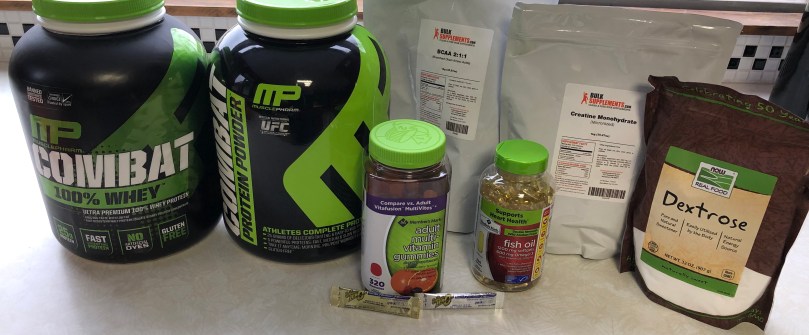
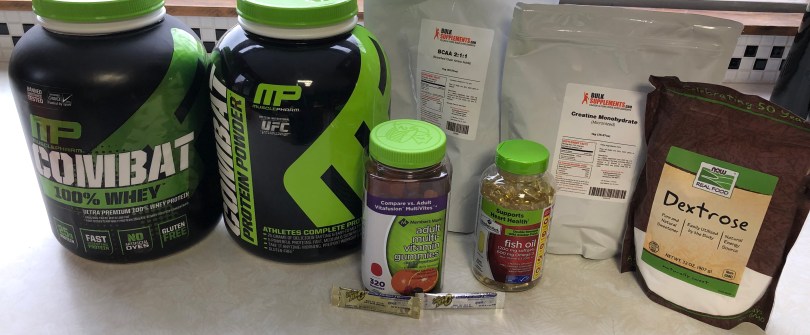
I like MusclePharm protein because some of the flavors are like having dessert, it’s cheap, and you can always find deals somewhere. The 100% Whey is for after a workout. The Hybrid Series is a 5 protein blend, which releases over eight hours, and I use it in the morning or before bed. My intra-workout drink is made with 3 Sqwincher packets of electrolytes (providing flavor), creatine, BCAAs, and dextrose. I’ll take the fish oil and multivitamin with breakfast.

Last night I decided to plan out everything I’d eat today. Takes all decisions out of it and means I don’t have to pack in calories at the end of the day if I’m low on a macro. Feels like it’ll remove some stress from the process.

Wish me luck!

See how week 1 went.

All of these posts will be tagged 2019 calorie counting to make it easy to browse the posts.

A Nutrition Experiment to Start 2019

I like to experiment with my life, health, and fitness. In 2011 I used the 4-Hour Body to lose 17 pounds. Later that year I started CrossFit and tried the Paleo diet. During April-May of 2012 I hit my lowest recorded adult weight at 173.5 pounds after a Paleo challenge at the gym. Since then my diet and weight have gone through many phases. I’ve gained a lot of muscle over the years and hit a high of 217 pounds (@ 17% body fat) in February of 2017. Back in May of this year I started getting meals from Factor 75, which led to losing 16 pounds and correcting some health markers.

Screen Shot 2018-12-29 at 8.21.03 PM.png

Over the years I dabbled a little bit in the quality + quantity of my food. I really hate weighing food and recording macros though, so I never stuck with it for very long. I also really hate New Year’s resolutions, so I thought I would try pairing a couple of hates together for a new experiment. I was sick for several days last week and got the idea and inspiration while watching season 2 of CrossFit’s Killing the Fat Man.

For 3 or 4 days, starting on the 1st, I’ll continue eating as I have been to get a baseline. During a typical week I get 12 meals delivered from Factor 75, which have the macros on the label and will make it easy to record most of my meals. For the rest of my food, I rely on snacks, fast food, and eating out. The F75 meals are usually 500-600 calories, but I snack on a lot of high calorie junk, which probably ends up getting me enough calories by the end of the day. Most days I don’t eat anything until after noon and often not until 2pm. This is a big reason why I want to set that baseline.

I just read through The Renaissance Diet 2.0, which is what I’m going to use as my guide to macros. I had good results when I followed some things from the first book and I really like that the principles are based on science and study results. Depending on what I see from the baseline, I’ll decide what to set for my initial macro goals, because I don’t want to make a lot of huge changes in the first week or two.

I’m also going to look at my water intake, which is something I’ve never been able to successfully monitor for more than a couple of days. Maybe I’ll try timed reminders through the day to make sure I’m hitting certain volumes. If you have any tips I’d love to hear them.

My goal with this experiment is to create healthier eating habits. I made a big shift with 50-80% of what I consume by getting the Factor 75 meals but that has left a lot of room for improvement. This goal isn’t very easy to measure, but the macro tracking with  MyFitnessPal will help with it.

Wish me luck! I’m going to plan for a weekly update post on the process. If you want to join along on your own journey, please do by leaving comments or writing your own blog posts (leave a link so I can follow along).

Continue to read about my baseline and setting macros.

All of these posts will be tagged 2019 calorie counting to make it easy to browse the posts.

The Bluffs at Arcadia Bluffs

After playing The South Course, we checked in to the Lodge and made a 6:45pm reservation for dinner at the restaurant. We sat outside on the patio to eat, which was hot in the direct sun, but worth it for the views and the atmosphere of the place. At 7pm, the bagpiper came out and played for 20 minutes. Then at 8pm (yes, we were still eating), he came out and played until sunset, which was about 40 minutes. It was spectacular.

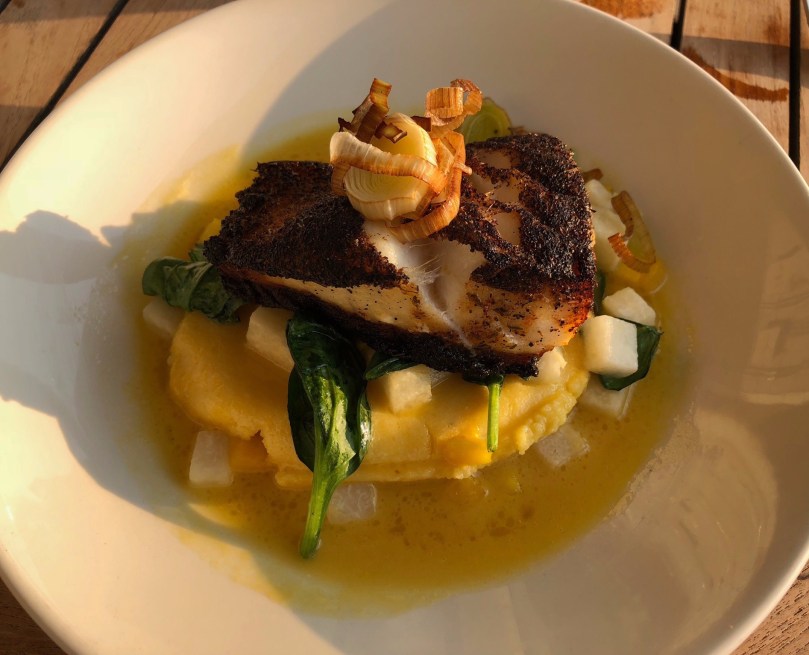
I was drinkng Coconut Coffee Rubenesque made by Starving Artist Brewing Company, which is one of the best beers I’ve ever had. I got Pork Belly for a starter, Chilean Sea Bass for dinner, and a warm chocolate chip cookie with coffee ice cream and fudge for dessert. Amazing meal!

img_1448.jpg

In the morning we fueled up on the breakfast buffet, hit some balls on the range, and tried a few shots out of the practice pot bunker. It was quickly decided that we should do everything possible to stay out of the bunkers on the course. After hitting some putts on the practice green I could tell right away the green was much faster than over at the South, even with it being wet from overnight watering.

The Bluffs, which opened in 1999 has been on my Michigan golf bucket list for a long time. After nearly 20 years it is still ranked #13 in Golf Digest’s list of America’s 100 Greatest Public Courses and #3 in their list of Best Golf Courses in Michigan. That says a lot about the course.

img_1544.jpg

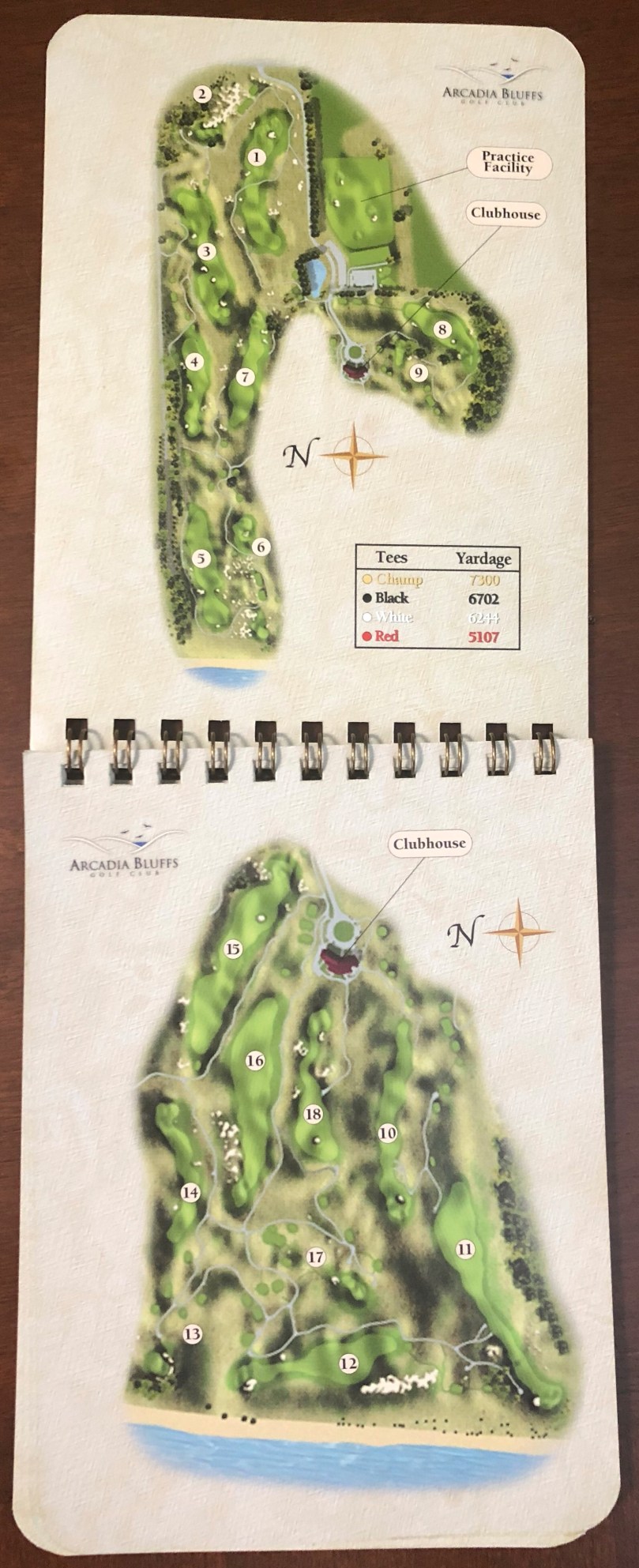
The carts have the nice GPS screens, but we still wanted a yardage book, which cost $6. I don’t understand why they don’t throw these in your cart like the South course, especially when you’re paying almost $200 a round.

img_1545.jpg

The course is absolutely incredible. There is nothing I can say or show that would give you the feelings you get as you drive around the course and experience the view with each hole. It really takes your breath away.

The course starts with a par five and three of the first five holes are par fives. As a long hitter I really liked that and it gets you in to your round. The front nine also has three par threes, making par still come out to 36 for the side. I started out bogey-par-birdie before 3-putting three of the next four holes. Did I mention the greens are fast? I settled in with the putter after that only making one more 3-putt. This is the type of course where I have to play a lot of target golf to score well because I don’t have the game where I can just rip a driver on every hole. Thankfully I love target golf and was playing well this day. I hit 8 fairways (with a few others just rolling into the rough) and 8 greens in regulation. Shot 41-42 with 18-16 putts and wasn’t in a single bunker!

My favorite holes were probably 11, 12, and 13, which are all along Lake Michigan. I was surprised at how little the wind affected us. We had to adjust a lot more the day before when we played the South Course. This place is really something you have to see for yourself. It seemed like every time we turned a corner or come up over a hill we were in awe of the view. The course layout was fun, challenging, and had a good mix of directions and elevation changes. I don’t remember ever feeling like something was a gimmick.

We’re already talking about going back next summer.