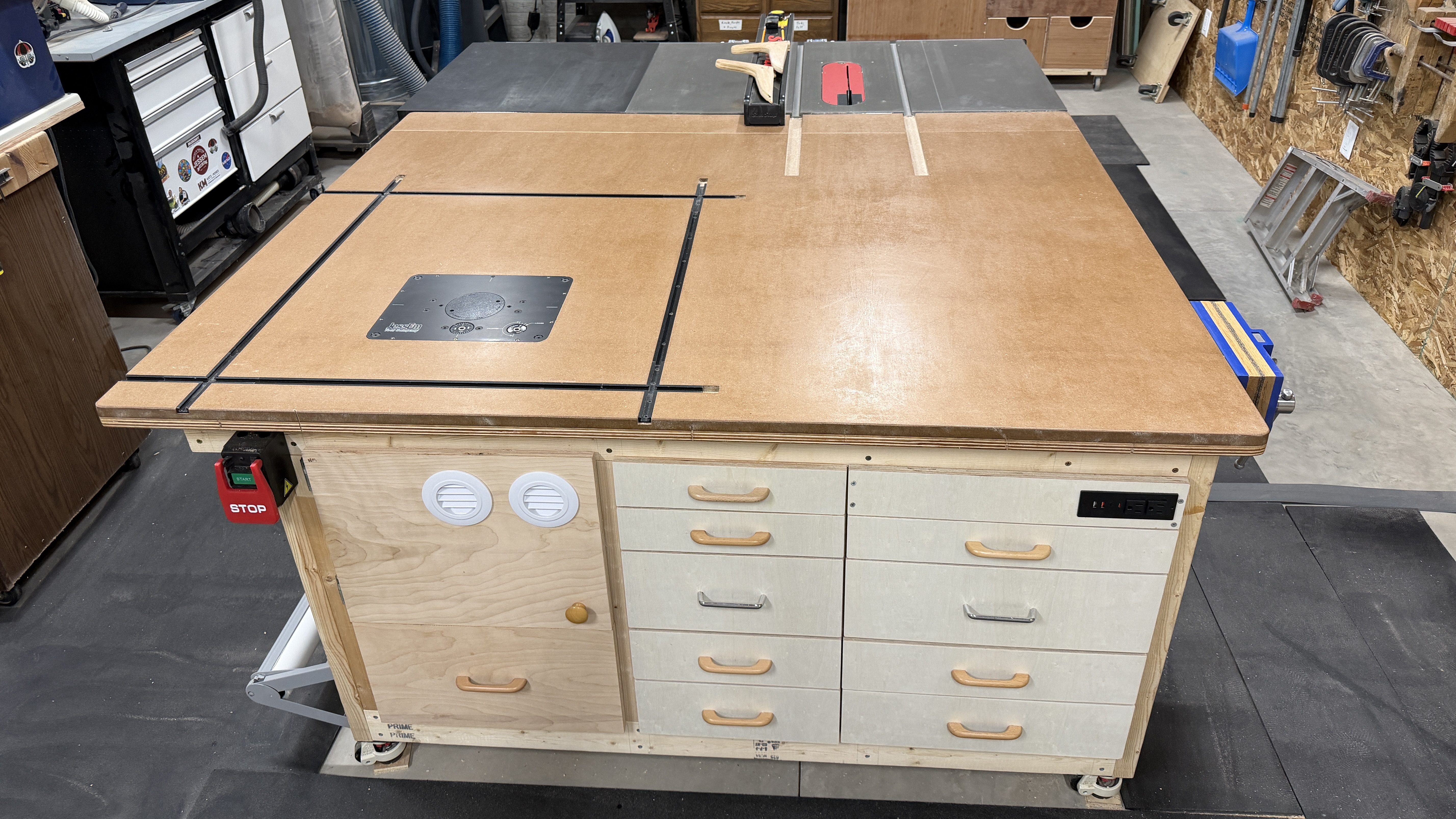
Outfeed Assembly Table – Part 2

To keep the momentum going from part 1, I started the next phase of the build. This phase is the router station. I bought the Bosch 1617EVS router to use in a JessEm Mast-R-Lift II, with a POWERTEC 32″ fence. I also bought 2×48″ of T-track with four hold down clamps and a four pack of intersection kits.
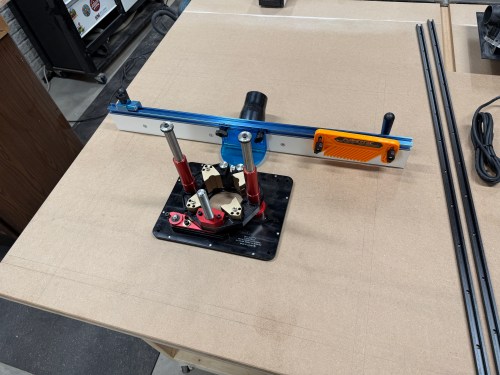
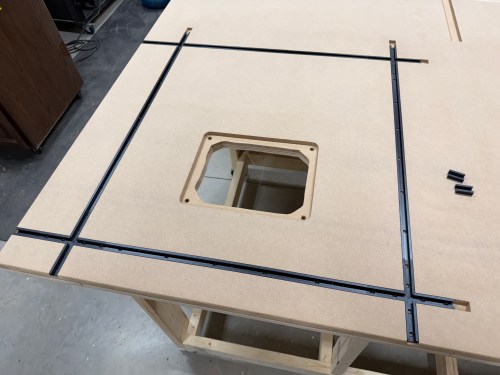
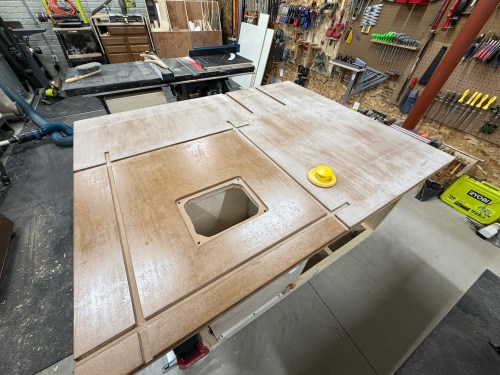
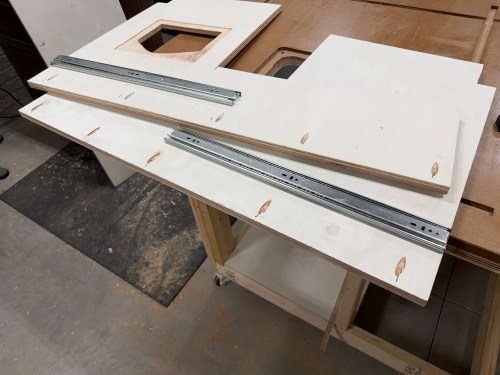
First, I had to figure out exactly where to install everything. I placed the fence and lift (upside down) on the table to get a feel for it. Then I outlined the lift and drew in the T-tracks.

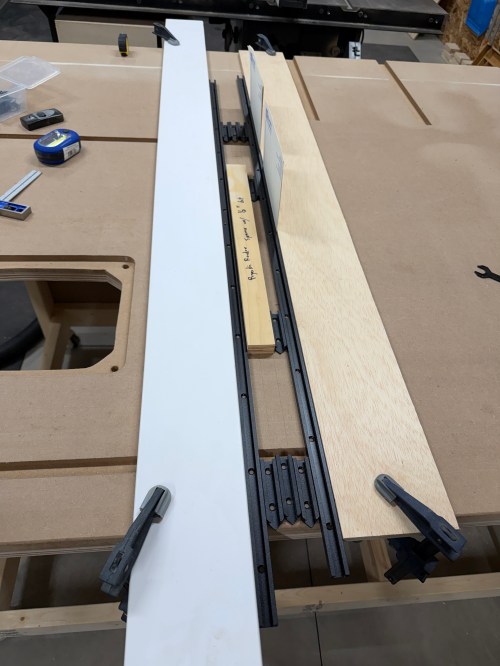
Router station setup with a lift and fence on a work table, showing precision tools and measuring instruments.

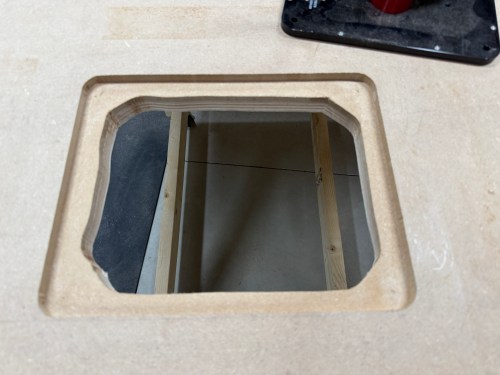
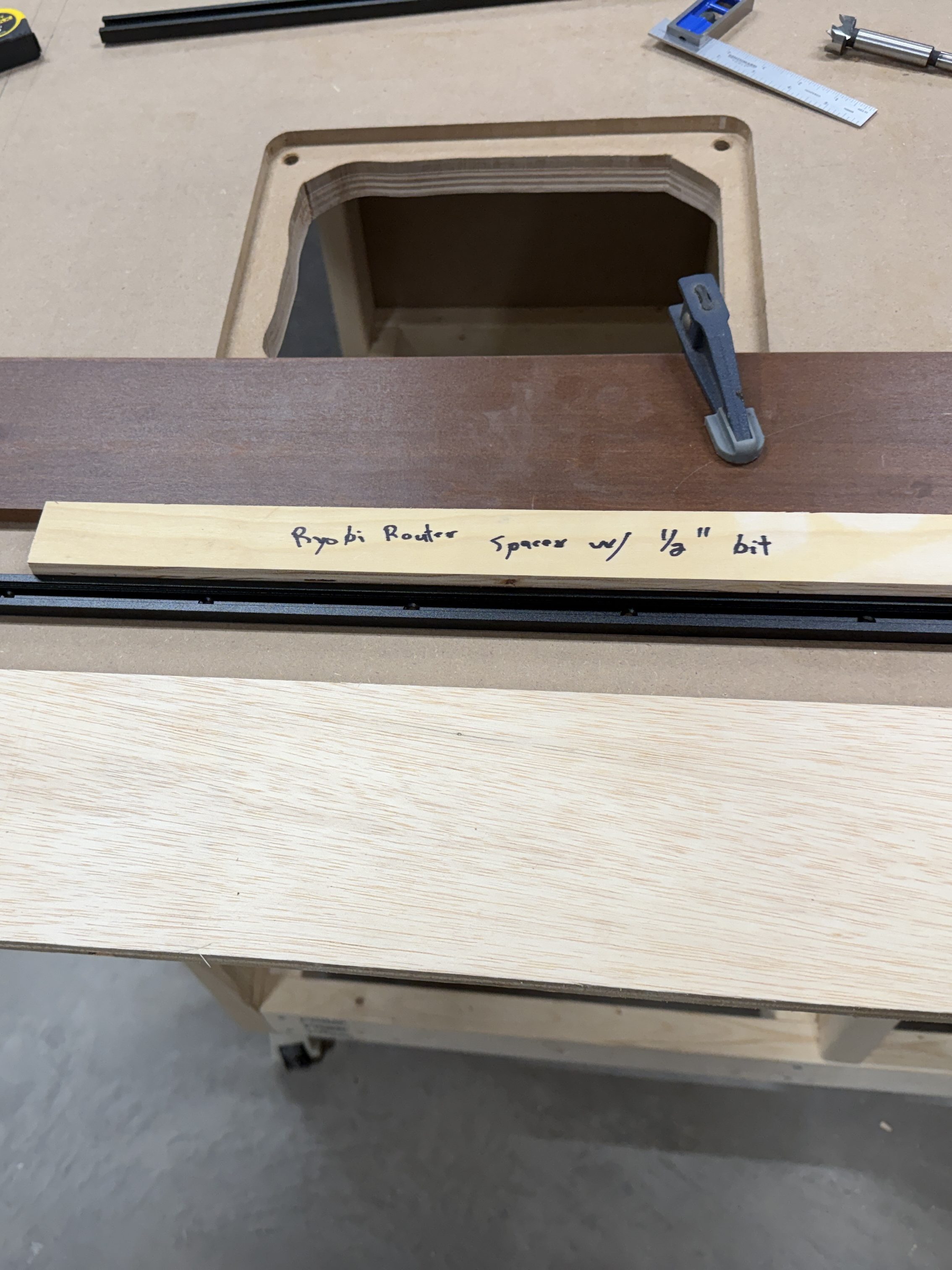
I cut a spacer equal to the distance from my router base to a 3/8″ straight bit. Then I used double-sided tape to secure the border pieces. I removed the material in two passes and cut out the middle with a jig saw. The radius on the corners was much larger than the router bit, so I free-handed those up to the pencil marks.

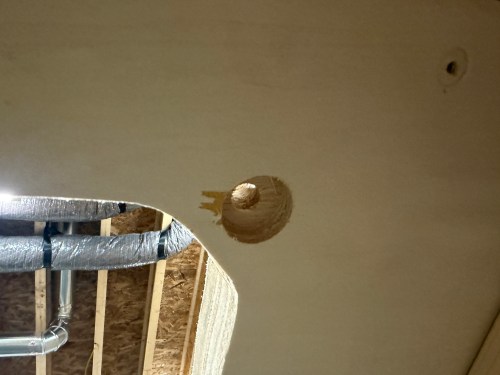
I installed threaded inserts for the four bolts that secure the lift. Yet my centering was off, so it didn’t work out. I removed the inserts and drilled through to use longer bolts with a washer and nut under the table. I had to drill a recess in the bottom because I couldn’t find long enough bolts.

Close-up of a circular hole cut into a wooden surface, showing wood fibers and some markings around the edge.

Setting up to route the first T-track took a long time, like when I did the miter slot extensions. I got faster with each one, as I figured out a process and all of the spacing. That same spacer came in handy, as well as pieces of the T-tracks. I measured and cut all of the T-tracks.

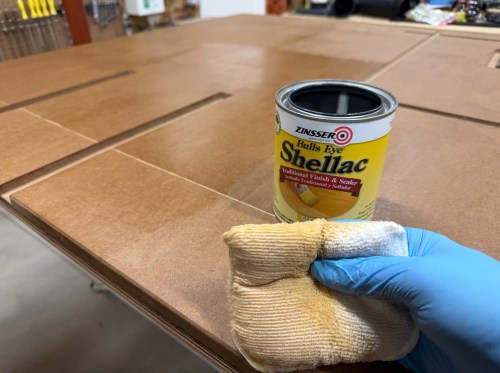
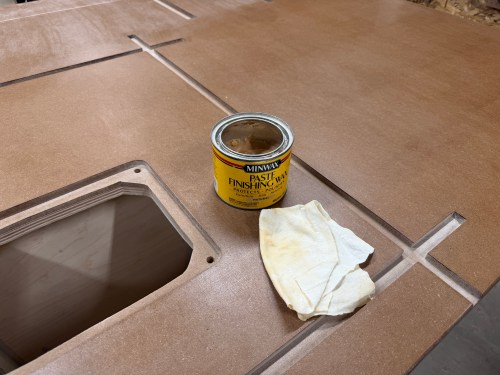
I sanded the top and edges with 80 grit using my random orbital sander .Then I applied four coats of Zinsser Bulls Eye Shellac. A day later I did a light hand sanding with 220 grit and applied paste wax.

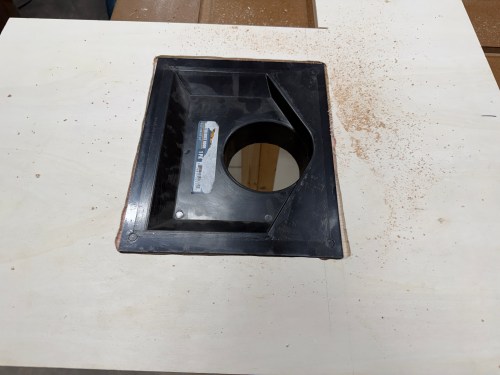
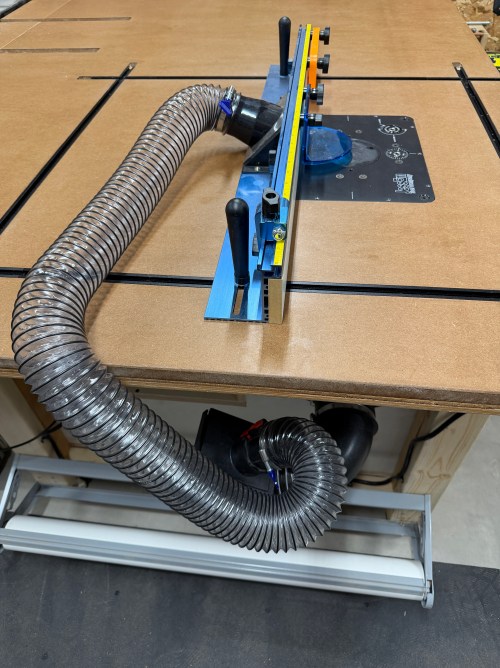
A good router table needs dust collection and here are the parts I used for mine:

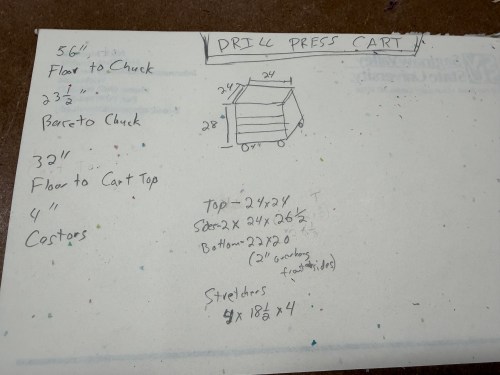
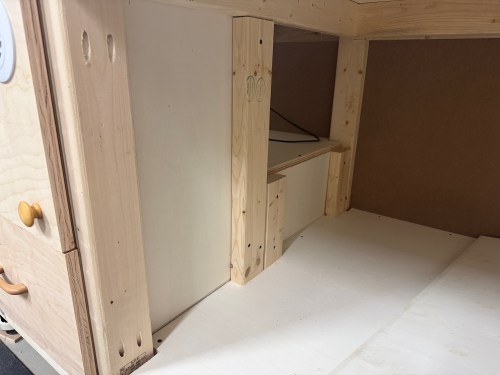
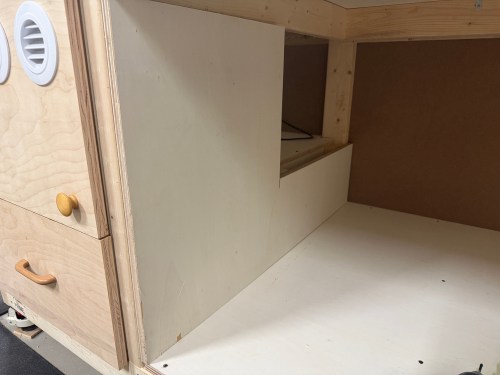
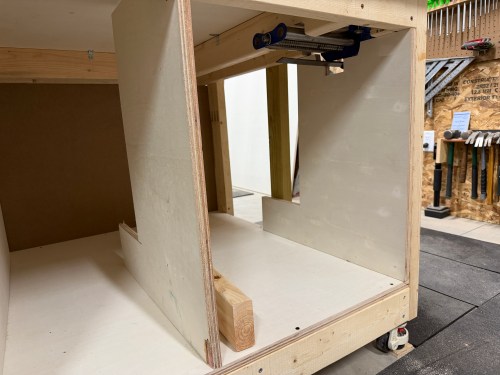
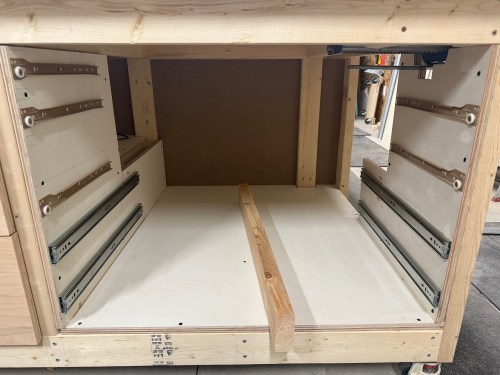
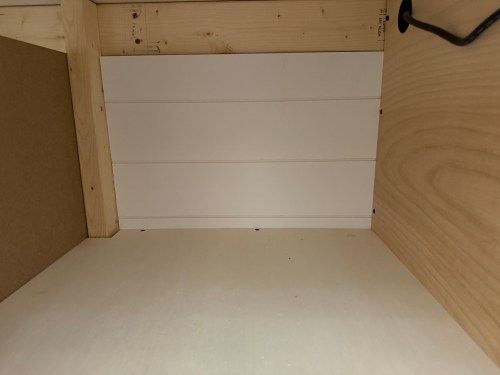
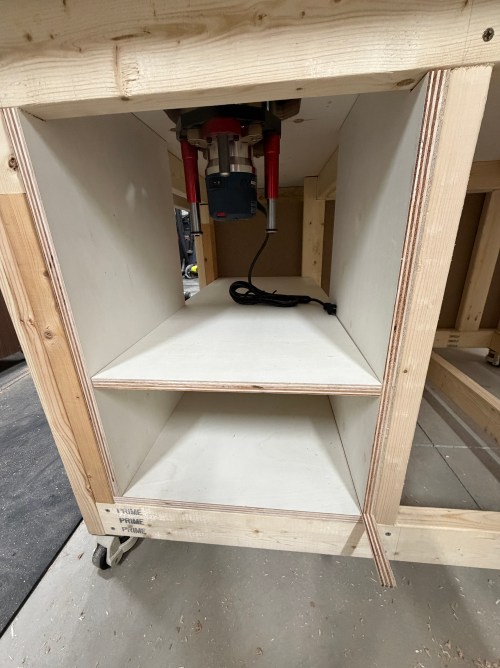
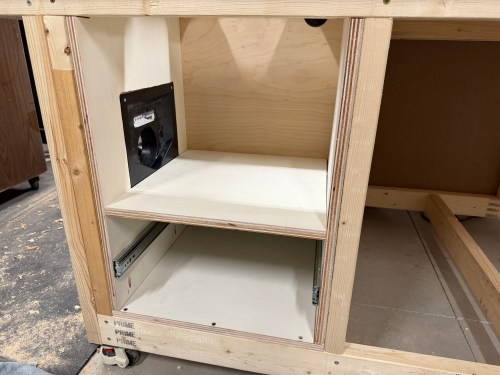
I had to build a cabinet to enclose the router lift, plus a drawer underneath. Due to the table’s frame and a need for the left side, I sketched out a plan. I was making a big version of the L-shaped Tetris piece.

Hand-drawn sketch of a cabinet design with labeled parts and notes, including measurements and assembly details.

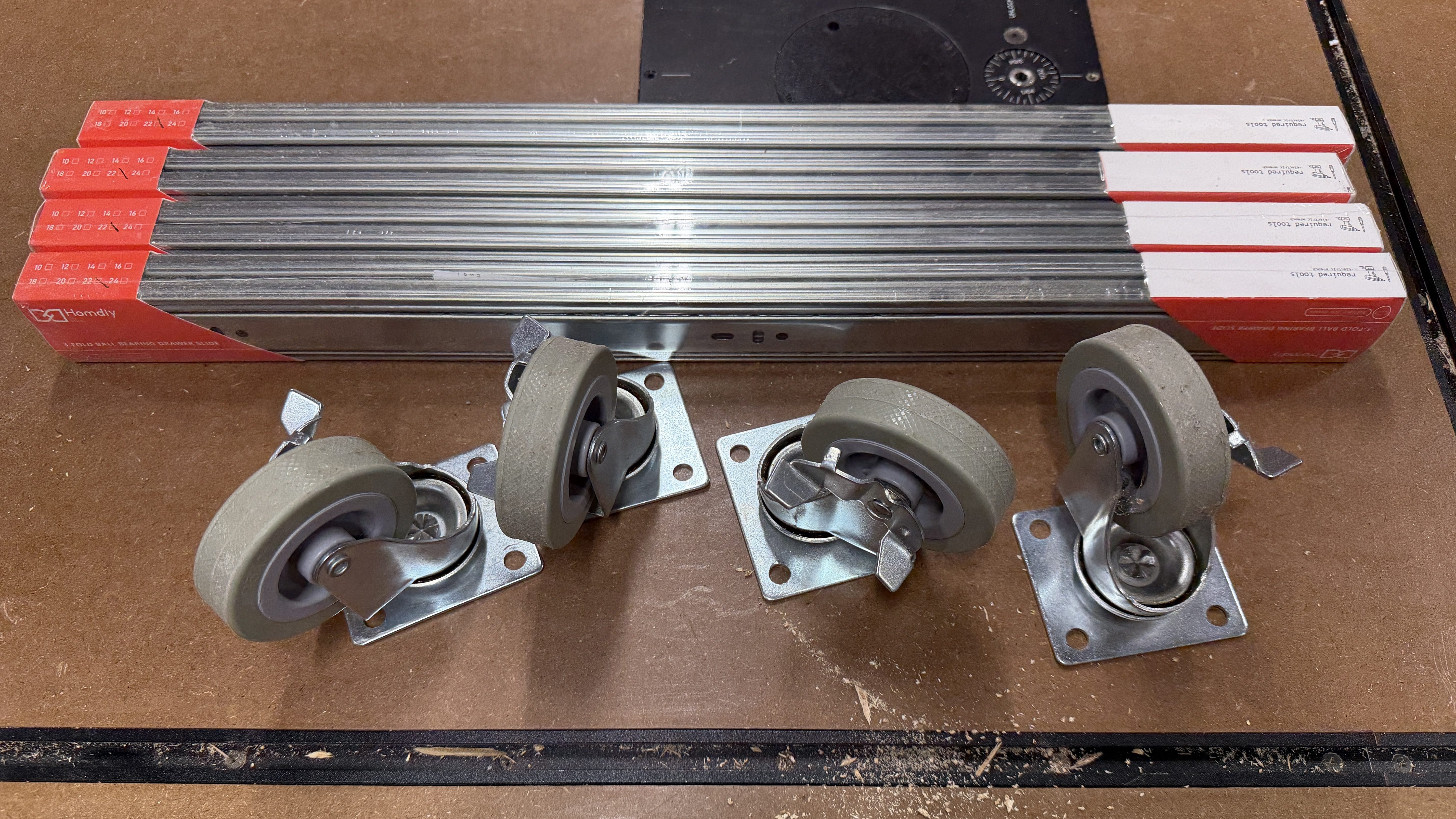
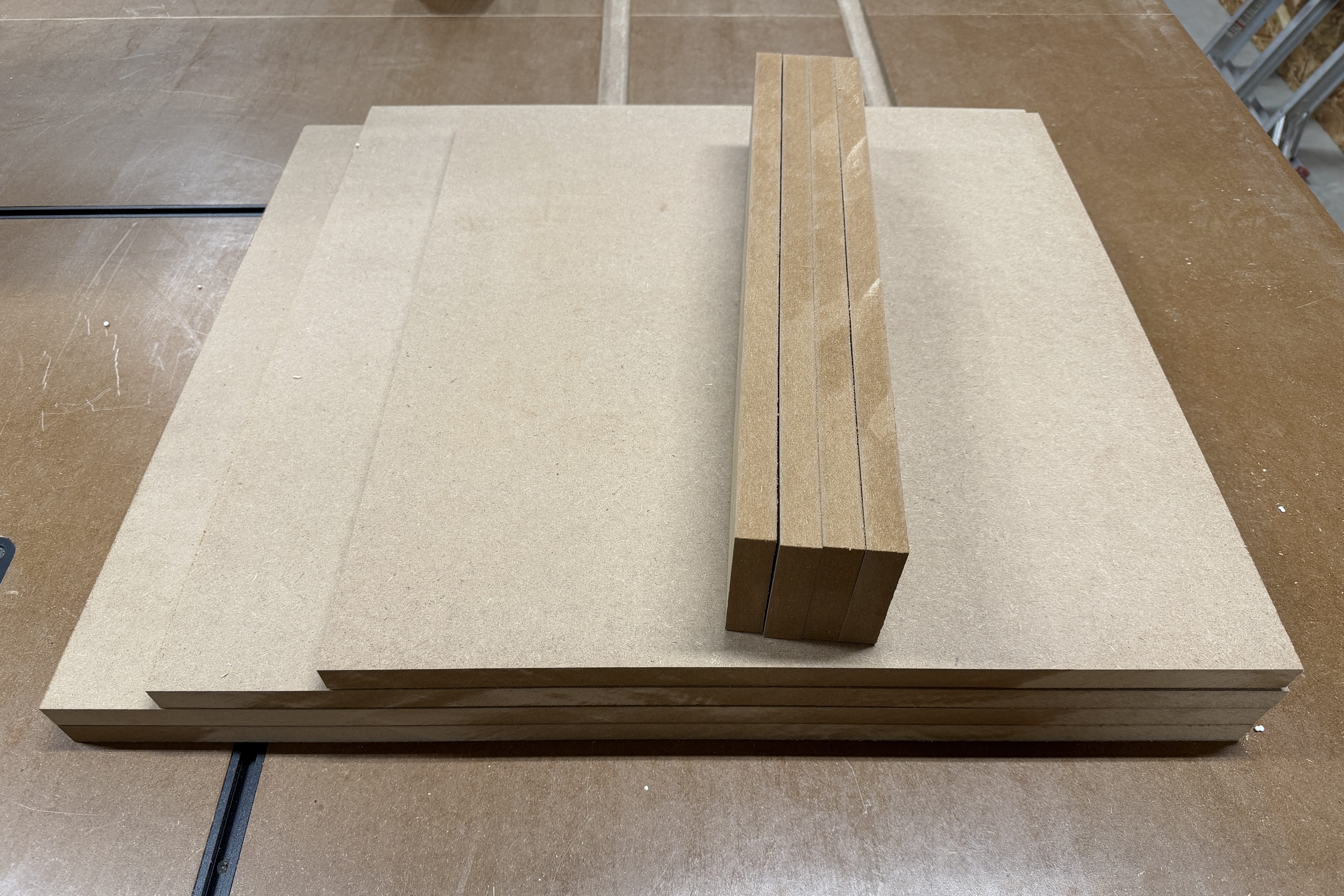
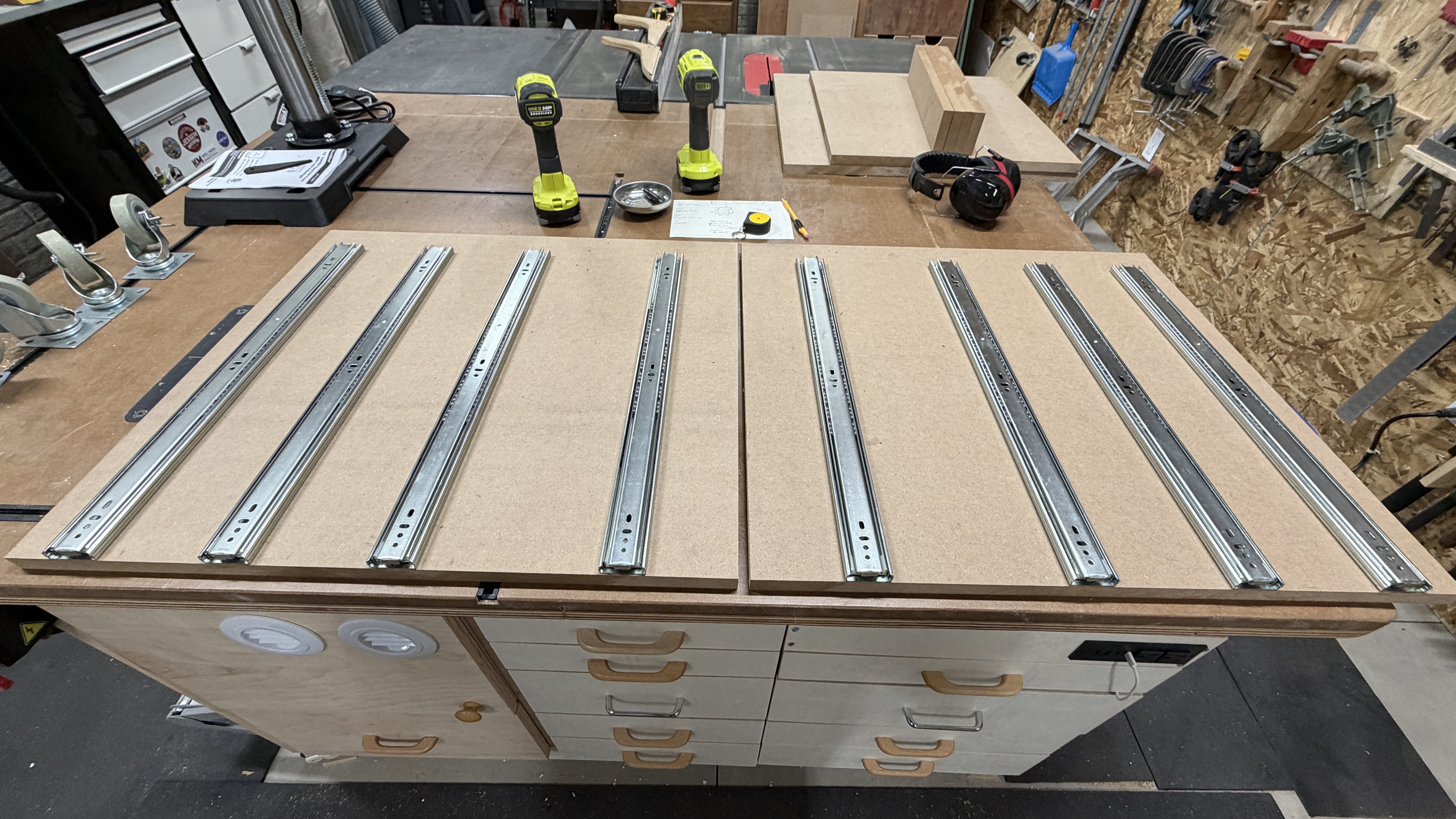
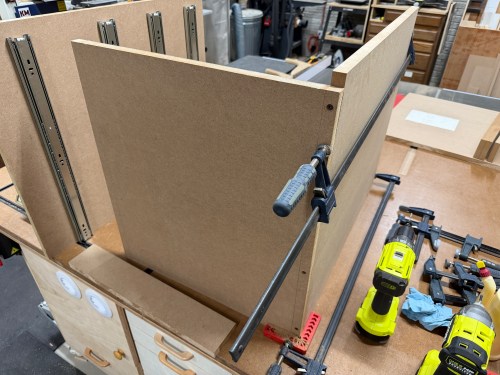
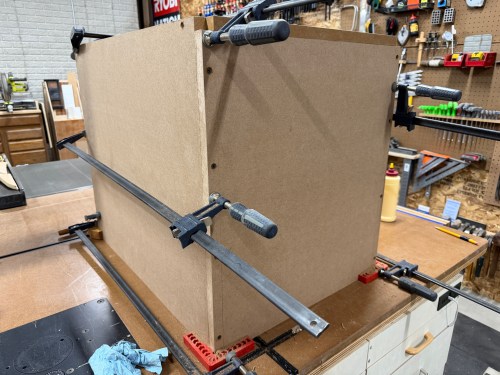
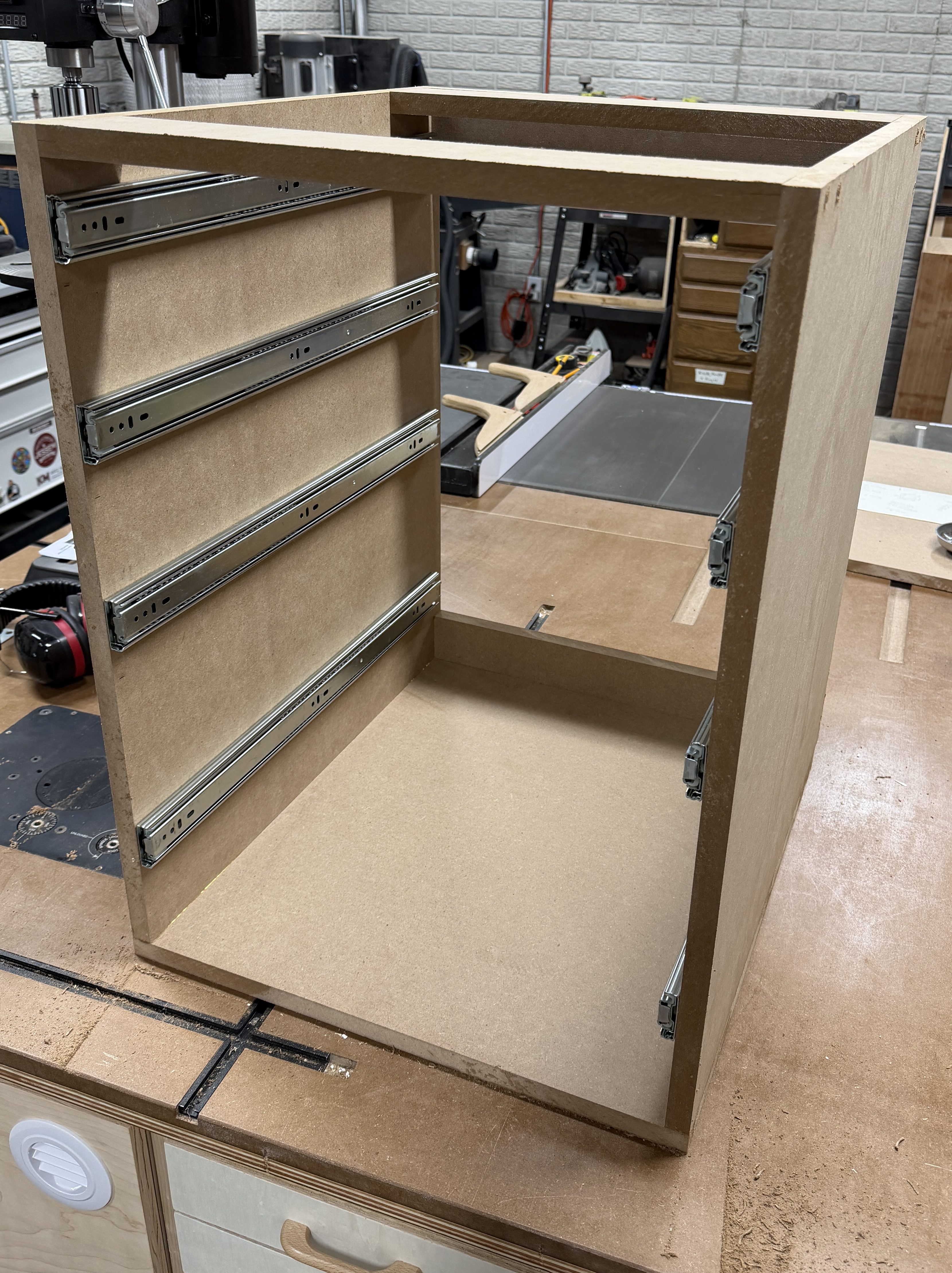
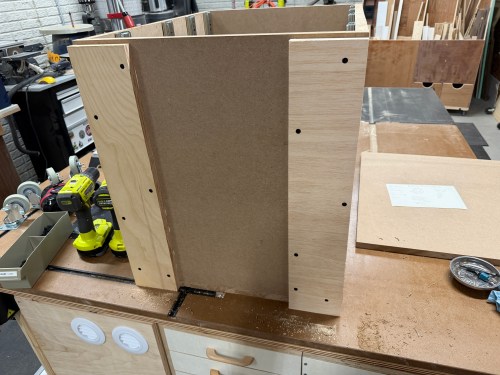
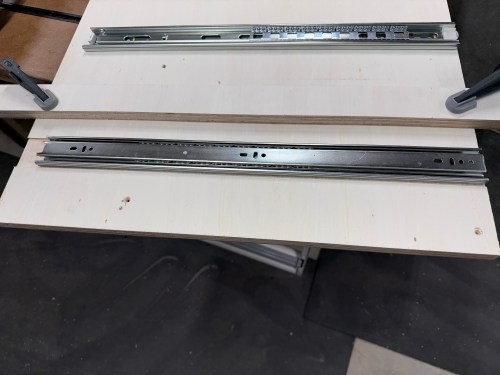
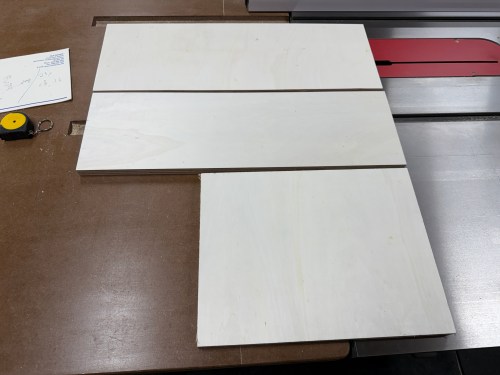
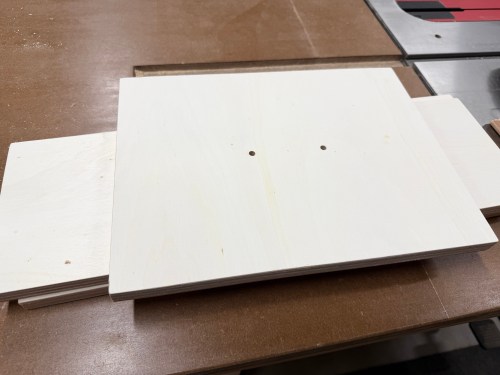
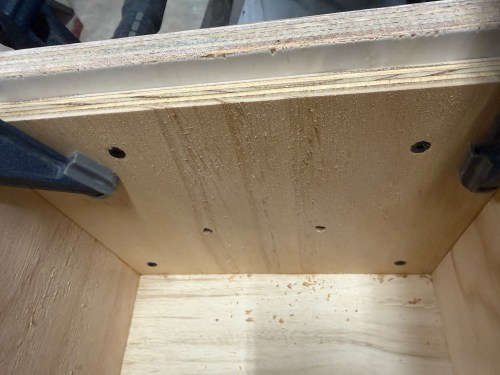
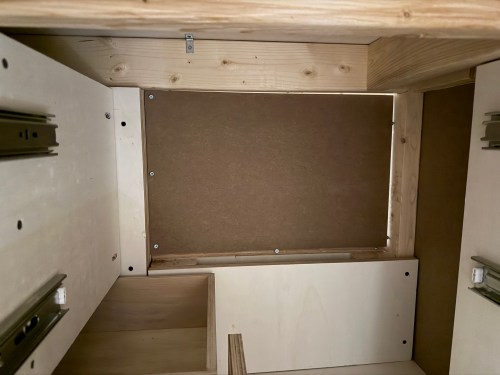
The assembly had to be done inside the frame, due to the cabinet nesting up through the frame. After getting plywood to size, I cut various holes, attached 22″ drawer slides, routed a recess for the dust hood, and drilled pocket holes. It all screwed together quickly.

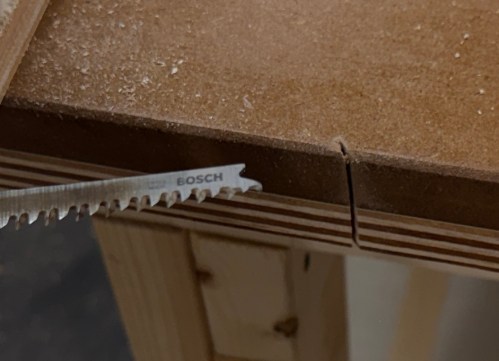
Of course, when using the jig saw, I accidentally cut in to the new table top! I’m the only one who does this, right?

Close-up of a saw cutting through a wooden surface, showing fine wood shavings and a Bosch blade.

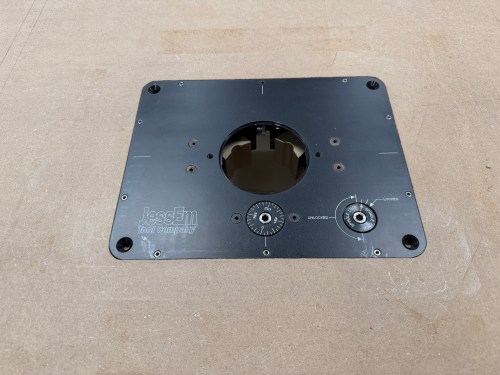
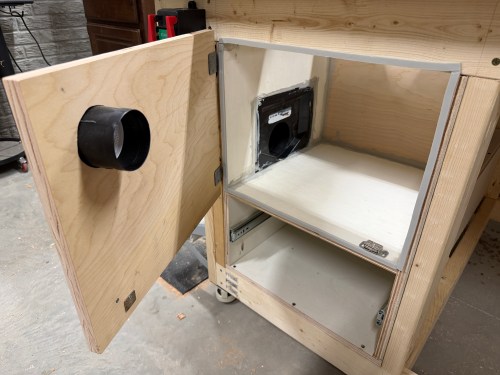
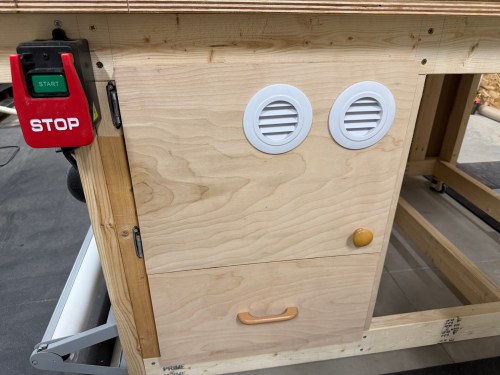
I caulked everywhere inside the dust box. Then I cut a door, mounted hinges, added a magnet close, and used weather stripping to seal it. The door got a hole with a vent cover to supply fresh air to the router and dust collection system. After some use I’ll see if I need to add a second vent. I mounted the lift, leveled it to the table, and bolted it in. The lift doesn’t came with a blank insert, so I bought one from an Etsy store.

Update: I did end up adding a second vent.

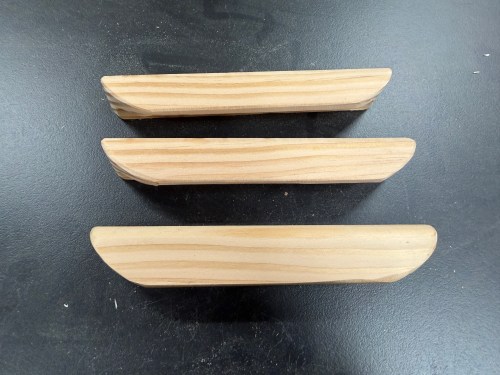
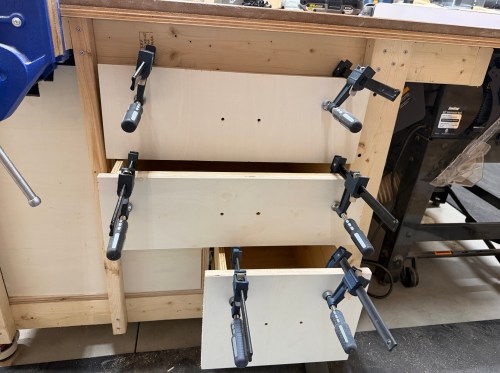
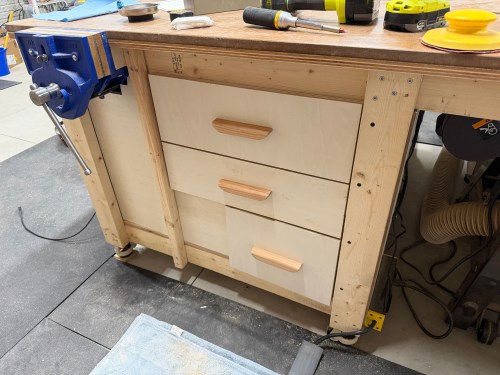
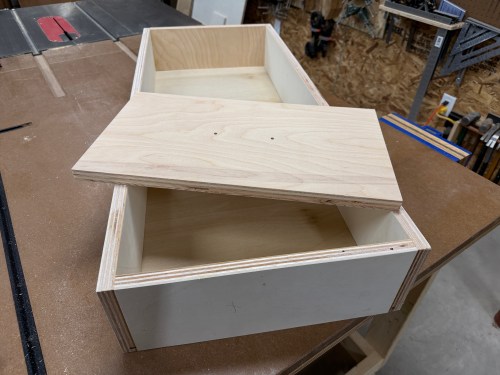
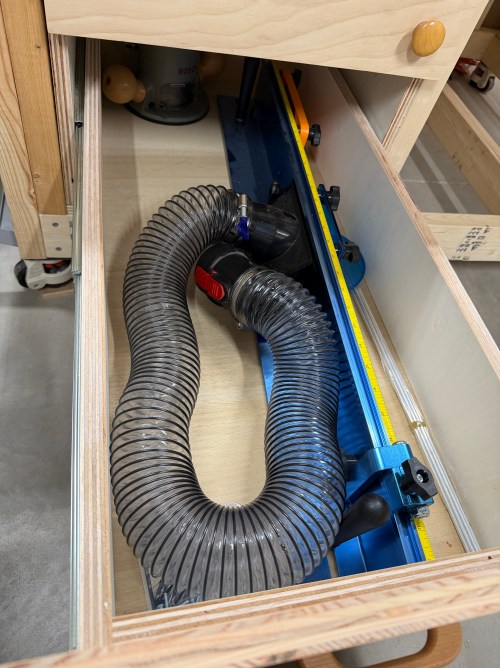
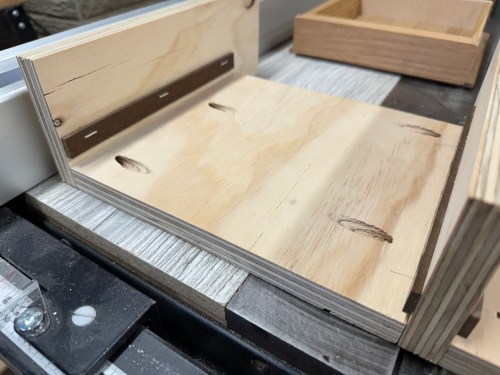
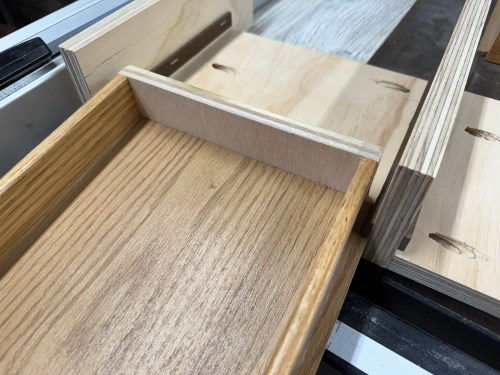
I cut all the pieces for the drawer, cut a rabbet where the bottom would slide in, and drilled pocket holes. Then I glued and screwed it together. Attached a drawer face and mounted a handle.

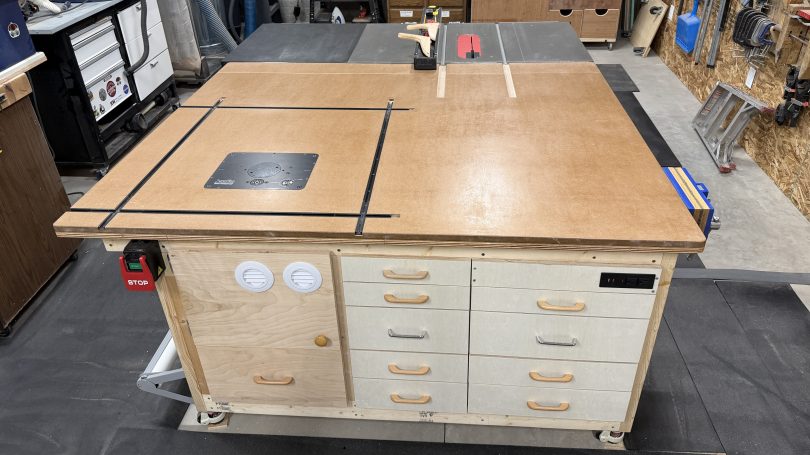
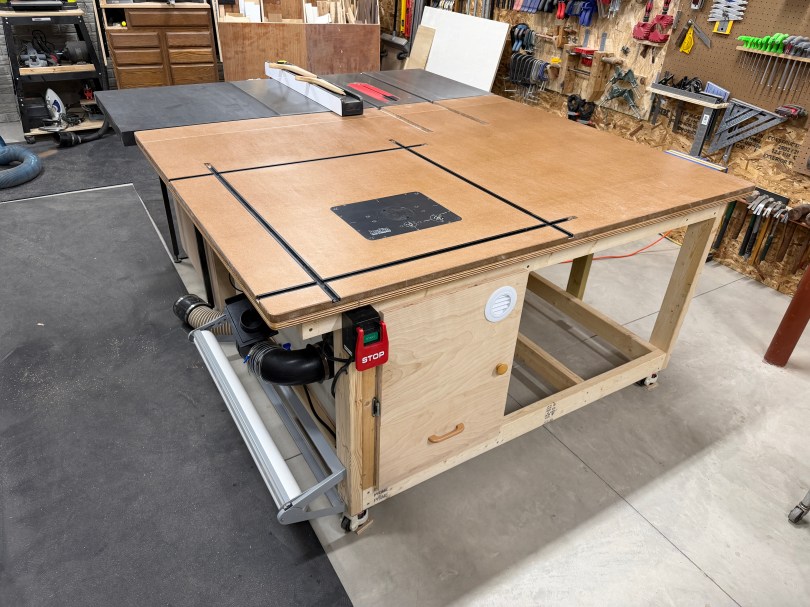
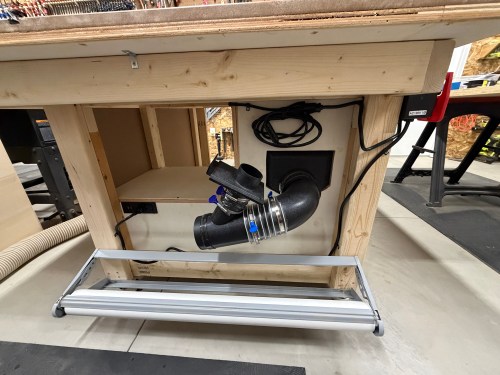
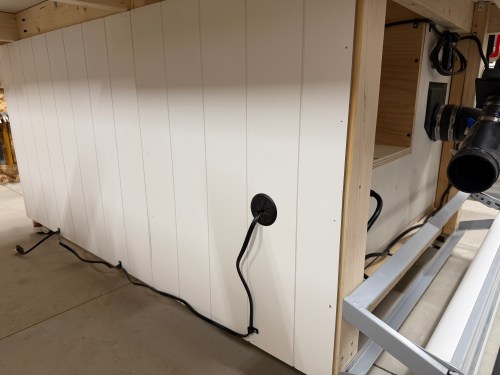
Along the left side of the table, I installed my paper roll dispenser. A 90° and then a Y-fitting connect to the dust hood. A 2.5″ blast gate is attached to the other side of the Y, for a hose up to the fence. The power cord went through a 2″ Desk Grommet on the back side. I screwed a POWERTEC Paddle Switch to the front. These switches makes it quick and easy to turn off the machine with my knee. I put in a recessed power strip with USB ports. Then I clipped in the wires and mounted a heavy duty surge protector power strip. This allows me to plug in the table saw as well.

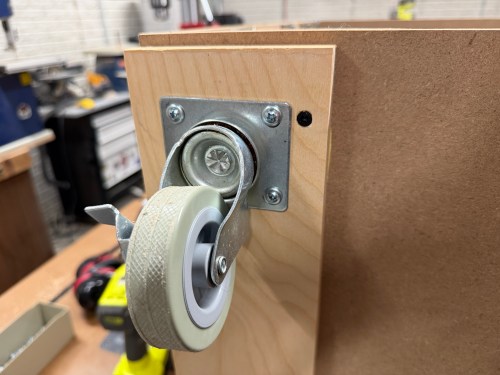
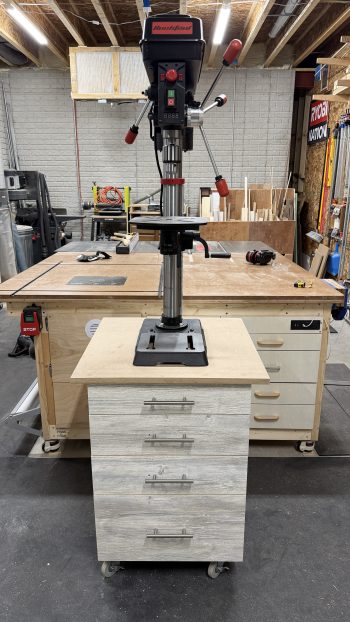
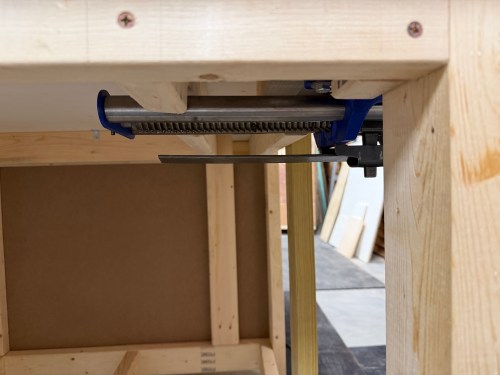
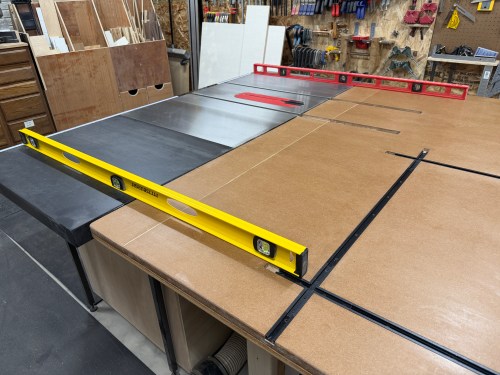
The final thing was to lower the castor feet to raise the table up to the saw.

A woodworking table with a level placed on top, showing the setup for a router station, including a saw and T-track system in a workshop.

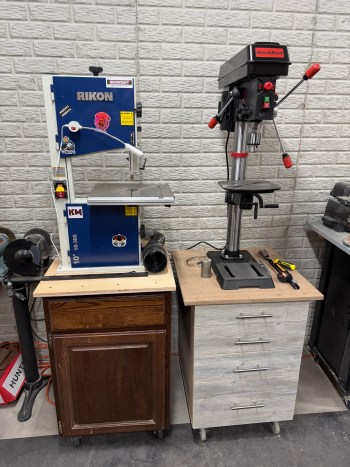
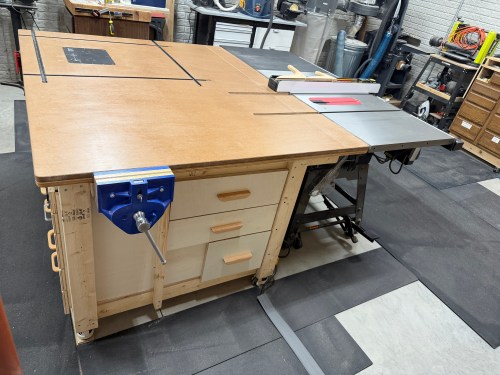
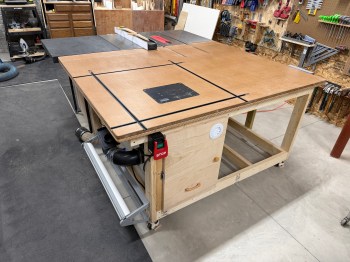
It’s so nice to have a large table table in the shop and I’m excited for the router, where it’s easy to use and always ready. Here are some more pictures.

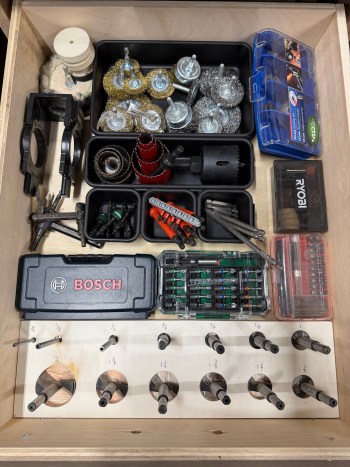
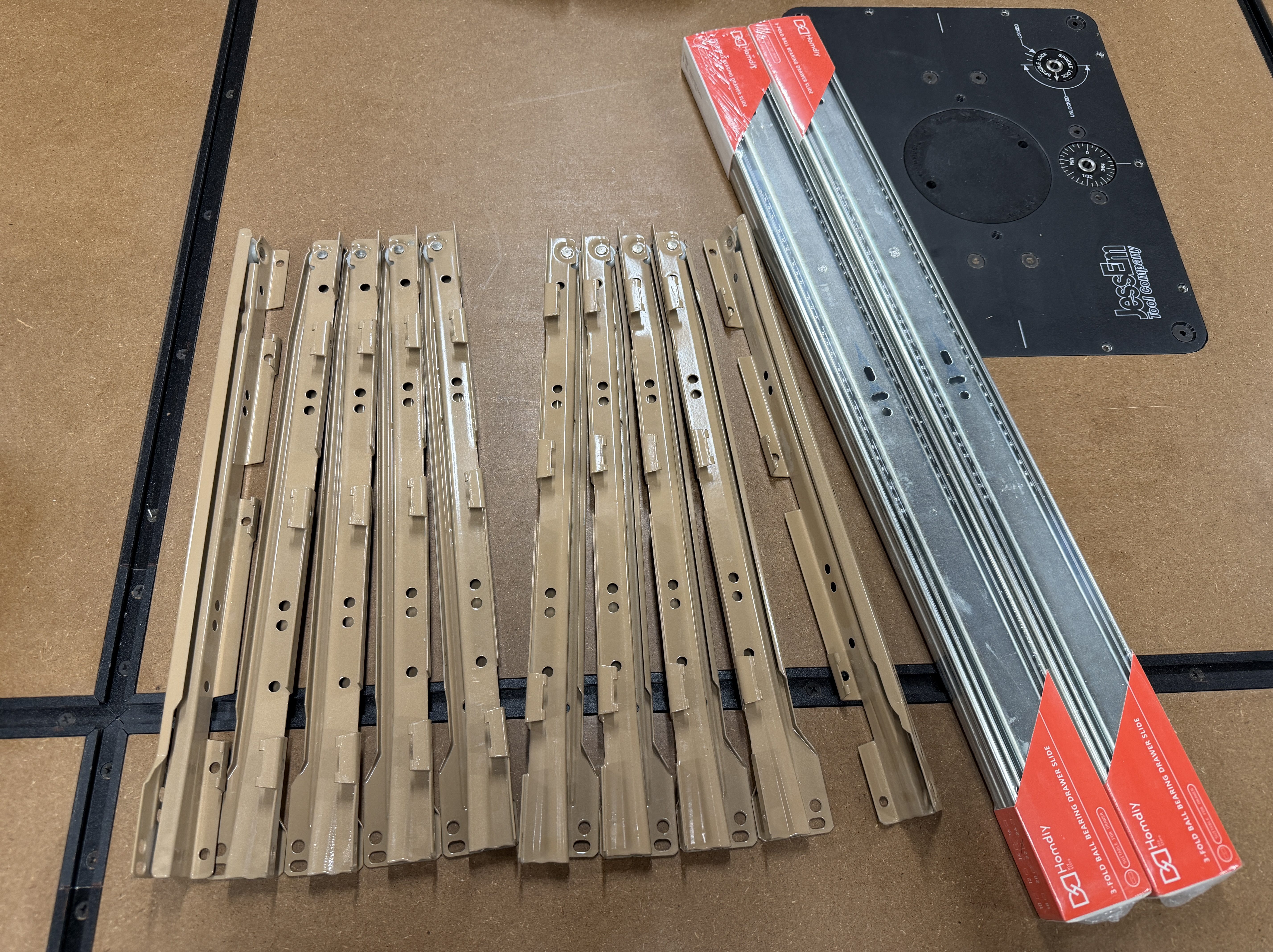
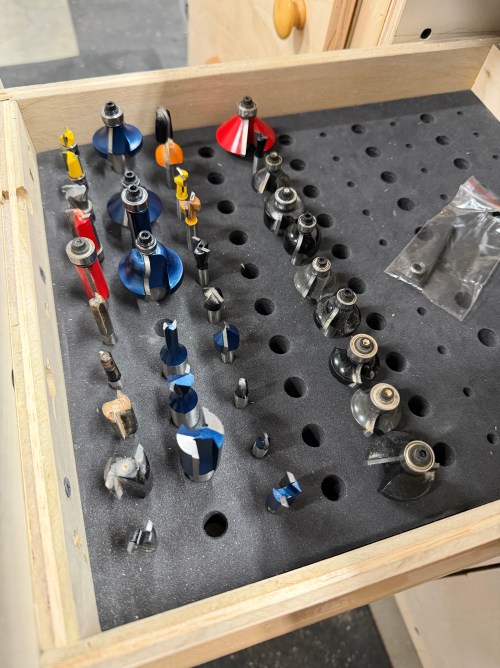
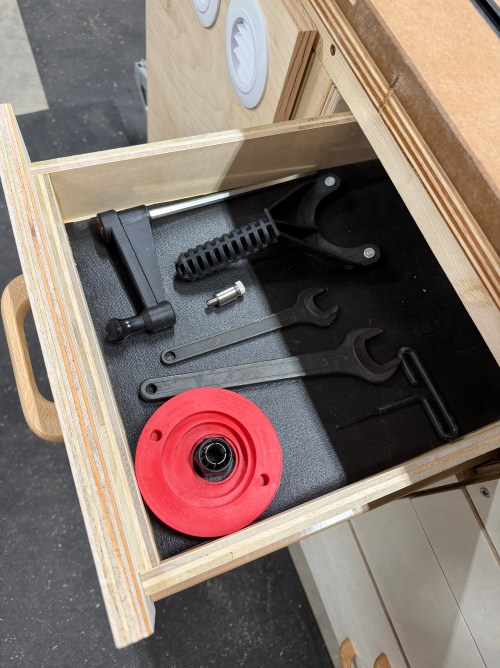
There are the other accessories I bought for the router station, some of which can also be used at the table saw:

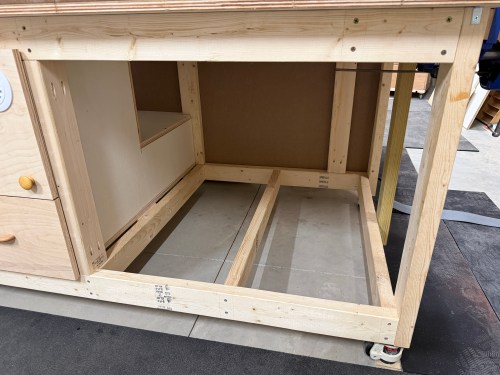
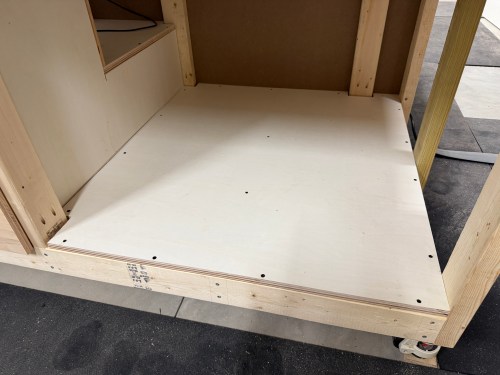
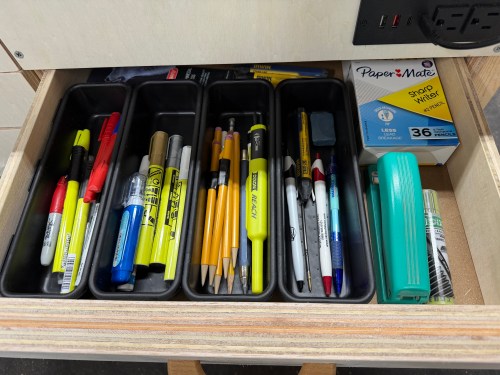
It’s going to be a bit until I finish, since I’m having hernia surgery this Friday. When I get the “go ahead” from the doc I’ll finish the rest of the storage space under the table.

Floating Walnut Nighstands

With our new house having a big walk-in closet we won’t need dressers, so we’ll be selling our bedroom set, which meant it was a good time for new nightstands. Here’s a photo dump of the build.

These will be floating on the wall in the new house, with about five inches of space under them. I did a lot of things in this build I’ve never tried before, so I learned a lot. I love how the decorative grooves turned out on the drawer fronts, which was inspired by something Michael Alm did on his kitchen cupboards. The oak handles were made with inspiration from a couple we liked on Etsy (1 & 2).

I can’t wait to get moved in this summer and mount these on the wall!

DIY Walnut & Oak Desk with Adjustable Base

It was time for a new desk for my home office. I ordered this TOPSKY desk base on Amazon for $220.99.

Over the years, without success, I’ve tried to stand some while working. Hopefully a motorized adjustable base will encourage me to stand for certain tasks and even if I can do a couple of 20-30 minute sessions each day it’ll be a big help.

I got to work processing walnut boards and white oak flooring.

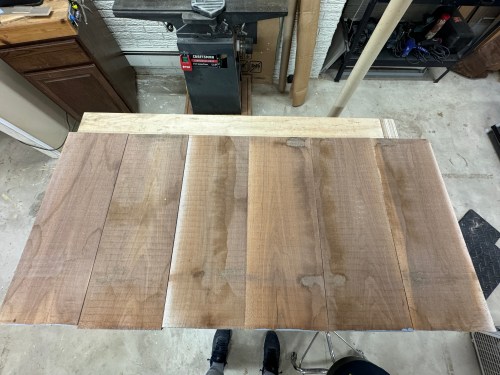
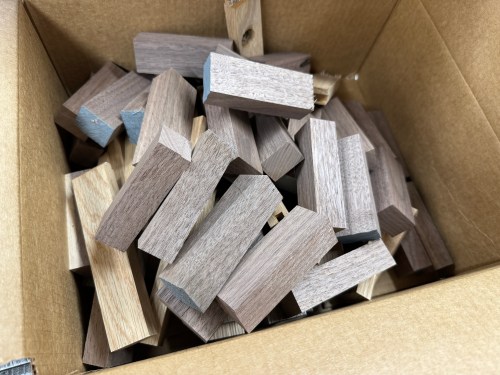
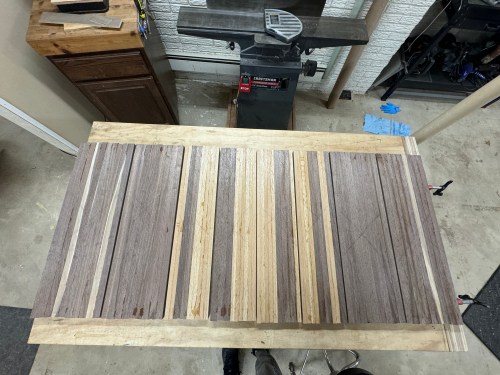
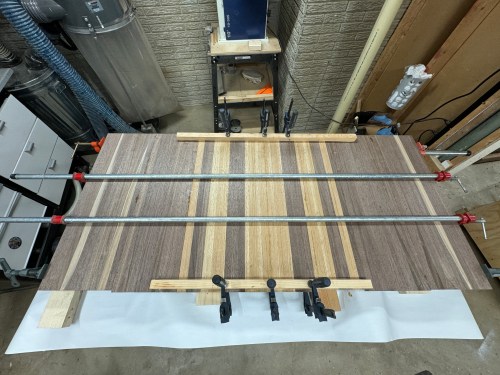
There was a lot of jointing, cross-cutting, ripping, planing, more ripping, and trimming. I’m excited to use that box of off-cuts to make an end grain cutting board or two! I felt like the key to this build was going to be the glue-ups. I started with sections of 9-10 pieces and ended up with eight of those.

I ran each section through the planer, with the help of some shimming for a couple, to flatten them. I made a temporary sled to square up the sides to the faces.

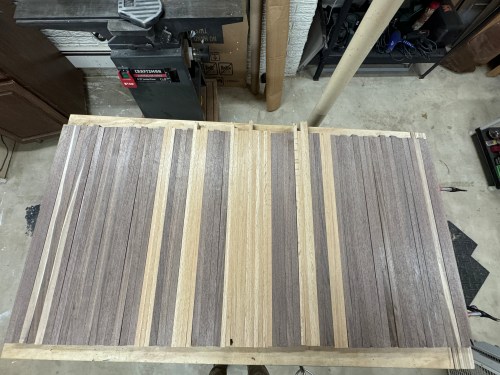
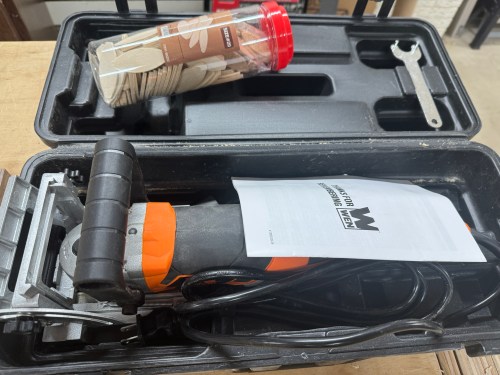
To help assemble the sections, I used a couple of biscuits on each glue joint.

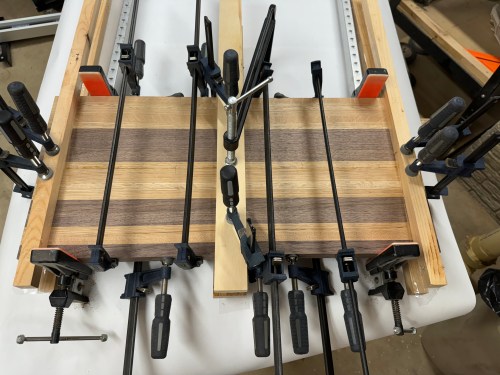
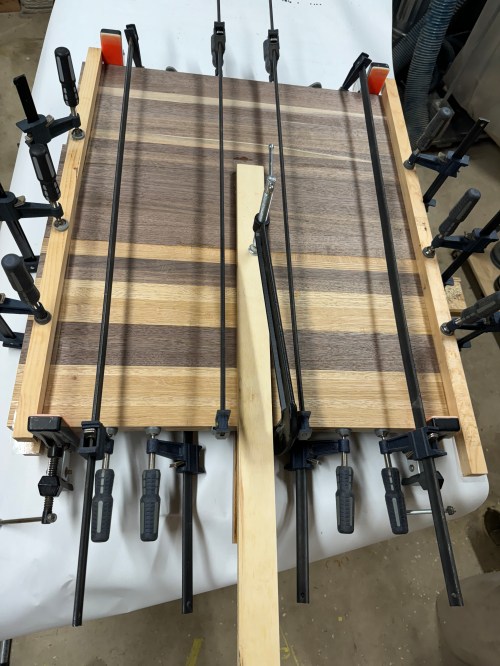
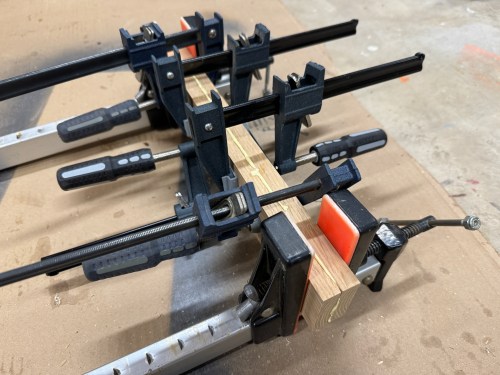
I glued up two sections at a time, which gave me four bigger sections. Then I glued up two of those at a time and one final glue up.

I drilled and put in all of the bolt inserts, which will attach the top to the desk base.

I took three passes with the router to put a big chamfer along the bottom edge.

With a jigsaw, I rough cut out a spot in the back to pass cables through. Then I did some sanding to smooth it out and added a chamfer with the router. Here is it, viewed with the desk bottom facing up.

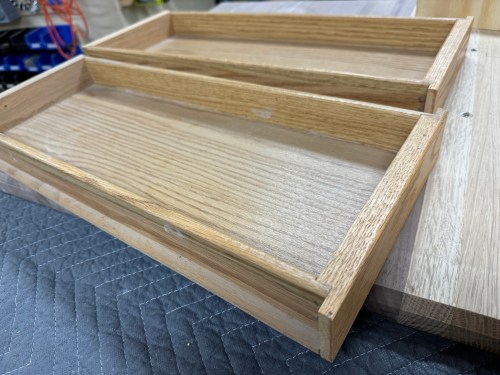
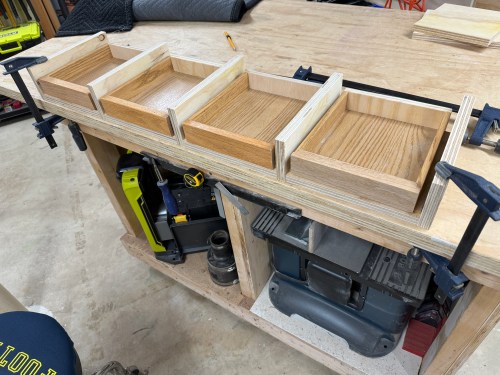
Due to the base’s cross support, there’s was limited depth for drawers, but there was width for them. I took some old kitchen cabinet drawers, chopped them in half, and closed them up with scrap plywood.

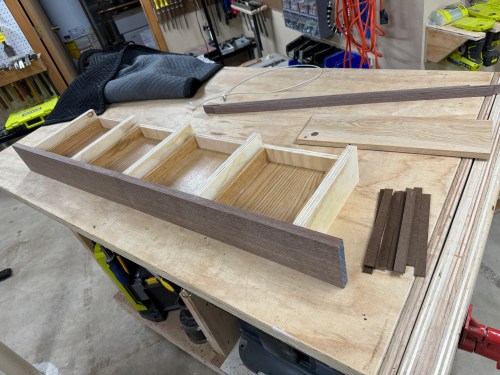
Then I worked on what I’m calling the drawer box even though it’s not a box. I also cut top rails from hardboard and oversized drawer faces from walnut. Grabbed strips of walnut for face-framing and glued together pieces of oak to make drawer pulls.

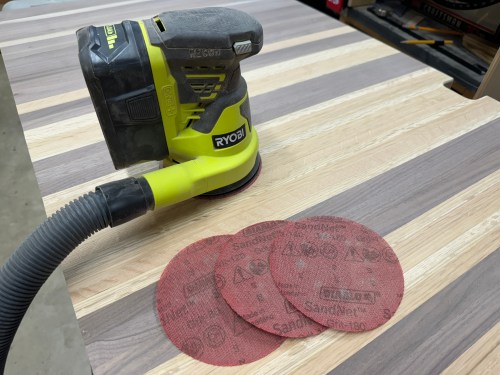
All the sanding! I went through 80, 120, 180, and 220 grits on the top and sides of the desk.

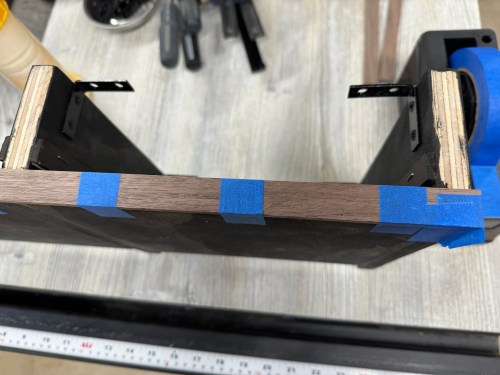
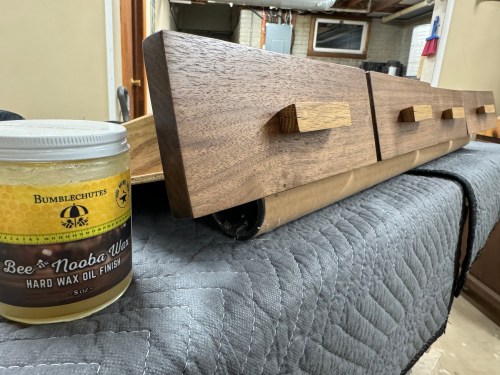
Time to put some finish on, which is always a favorite step to see how it’s really going to look. It was my first time trying out a hard wax oil and I used Bee Nooba Wax from Bumblechutes. It was very easy to apply and I’ll definitely be using it on future projects. I applied one coat to the bottom and three coats to the sides and top.

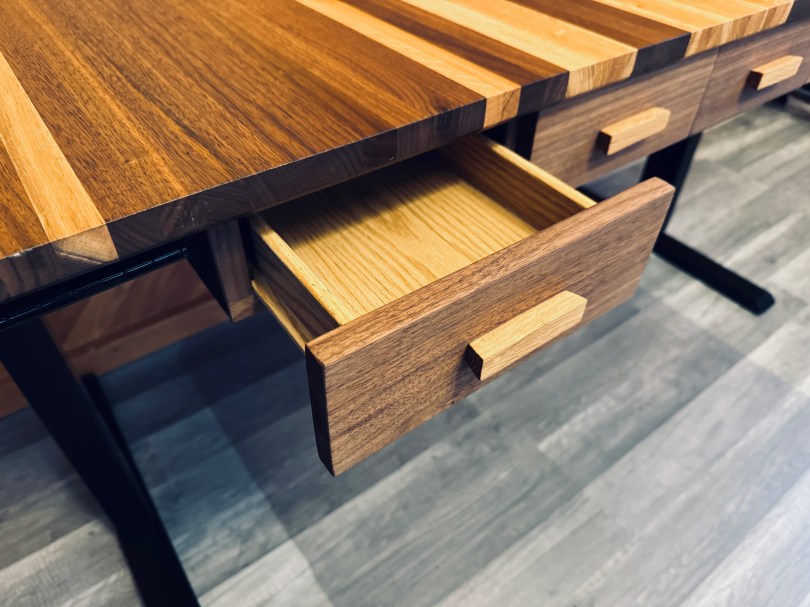
Then it was back to the drawers. I stained the “box” black and ended up having to trim some things to fit better around the rail of the desk base. I sized the drawer faces, made oak handles with 10° angles, assembled everything, and applied finish.

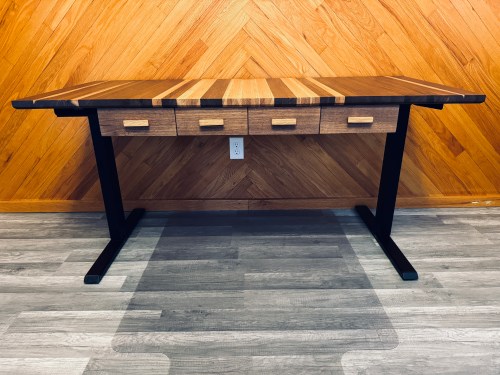
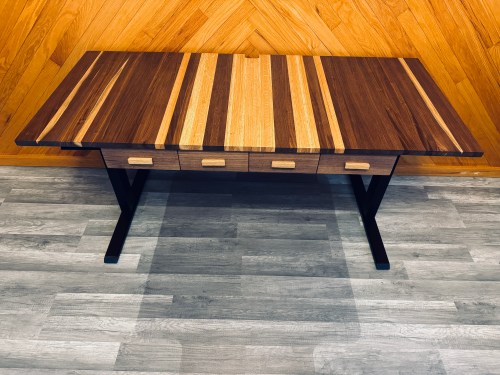
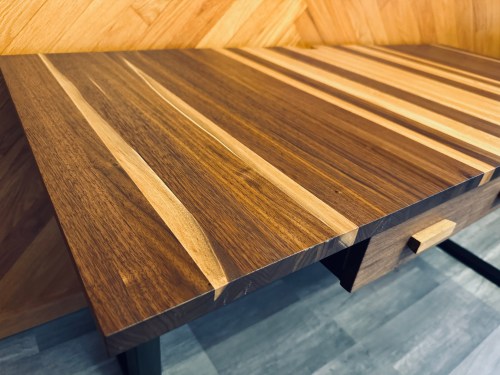
It turned out great! I can’t wait to see it in our new house later this year!

Upcycle: Sanding Station

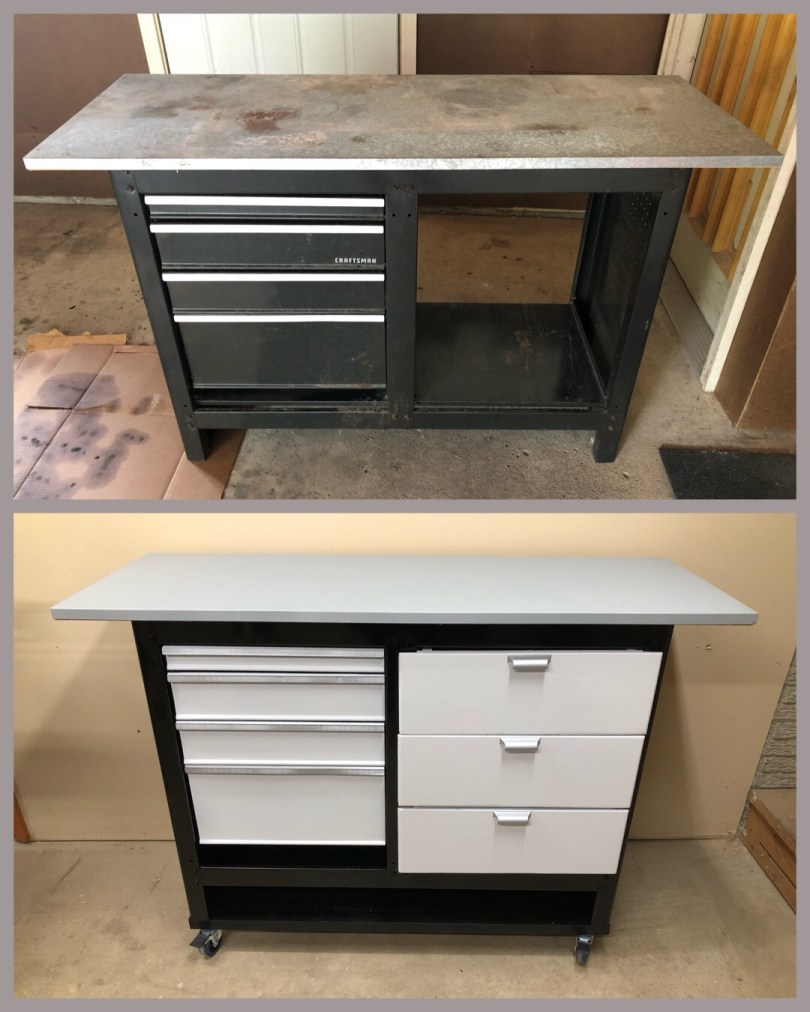
In the summer I snagged an old Craftsman workbench (model 706653800) for $30. I thought it would make a great sanding station for my workshop. Here is a before and after of just the table (near the end is a photo with my sanding machines attached). I’m really happy with how it turned out!

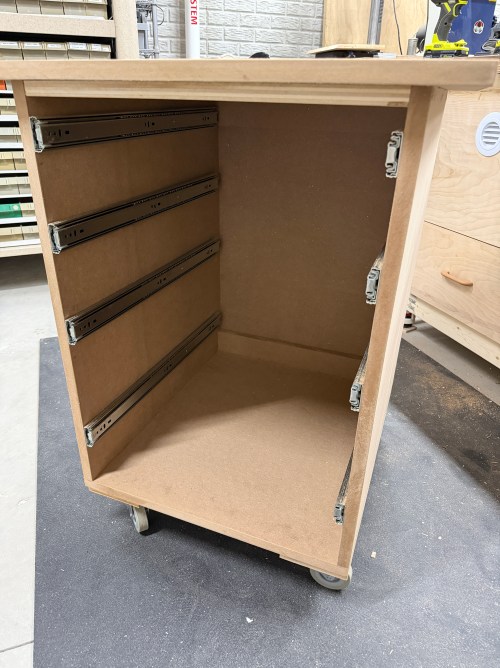
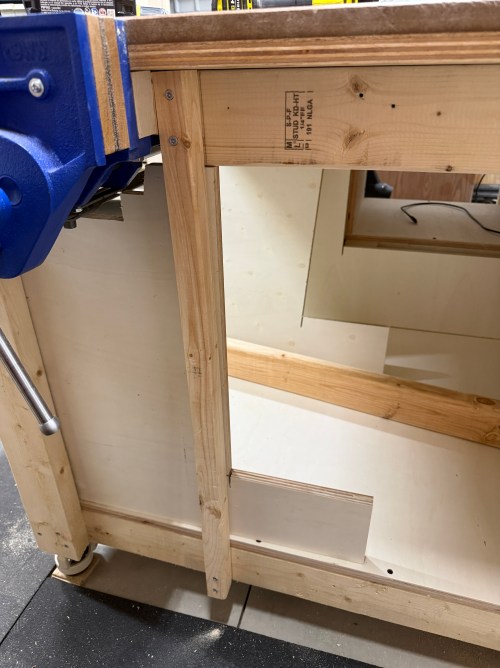
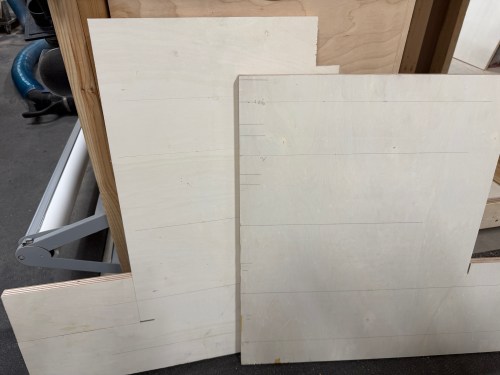
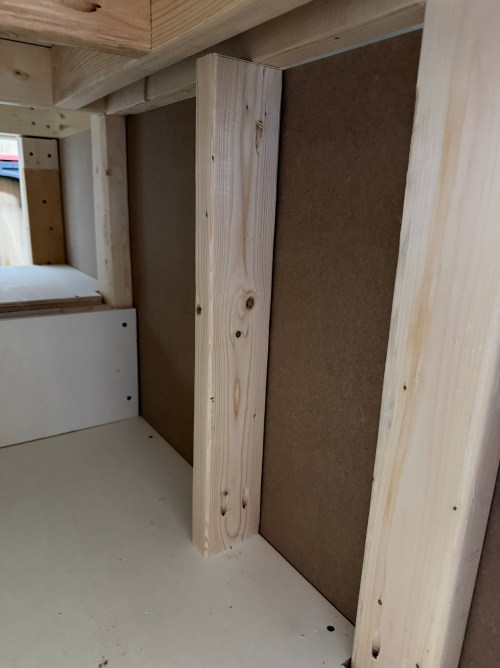
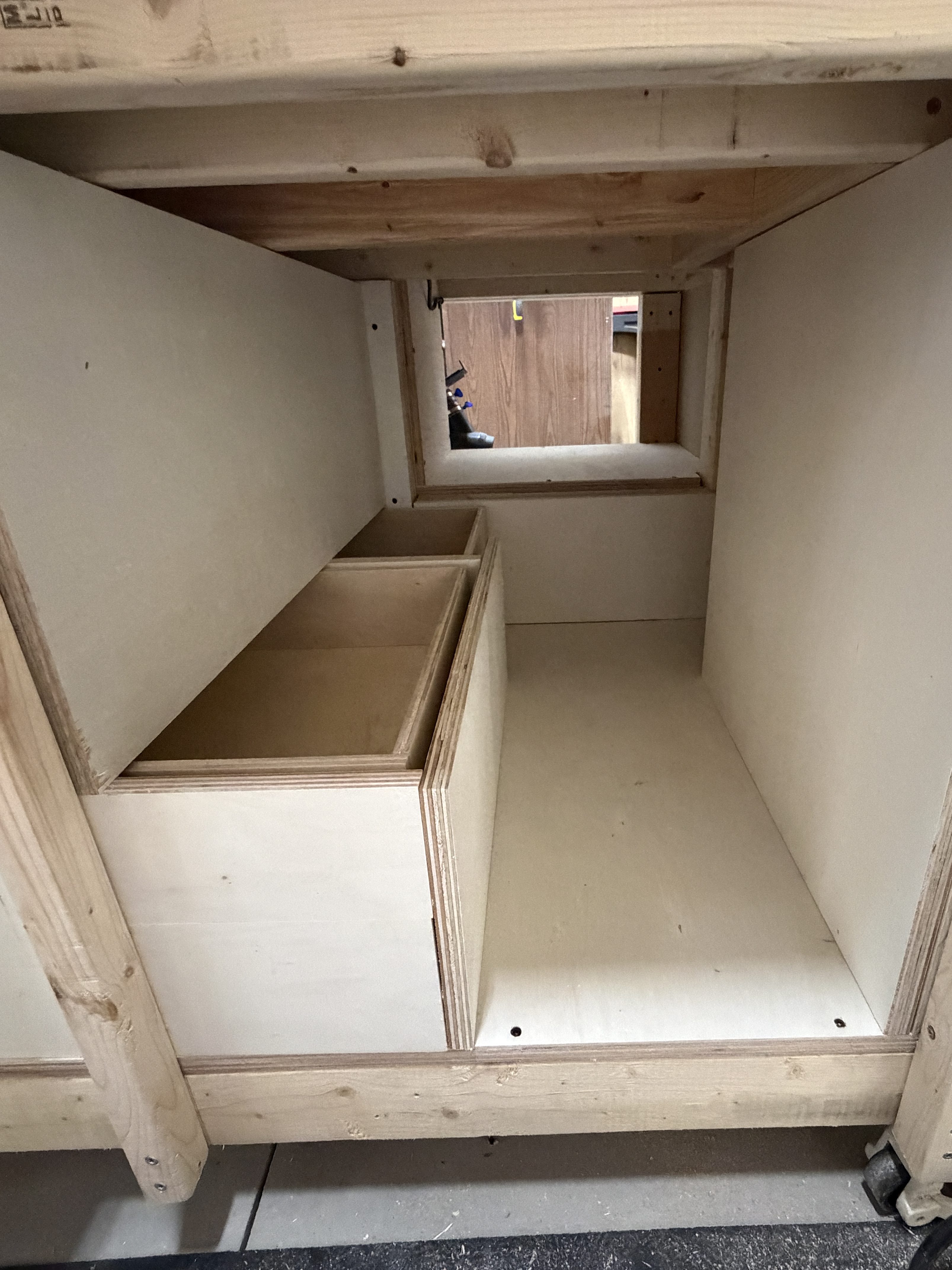
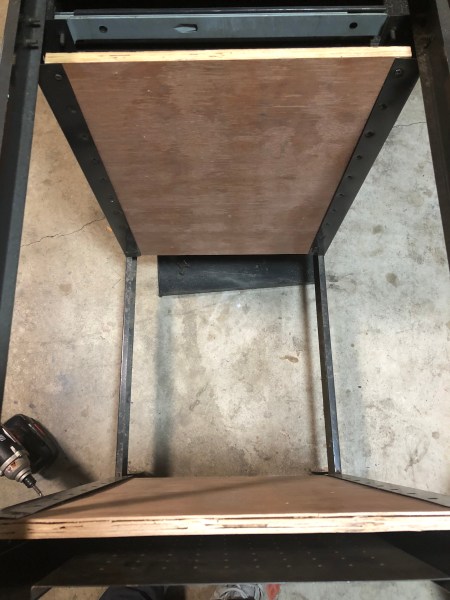
One of the first tasks was to make use of the right side. I started by cutting a couple of plywood panels and screwing them in.

img_1729

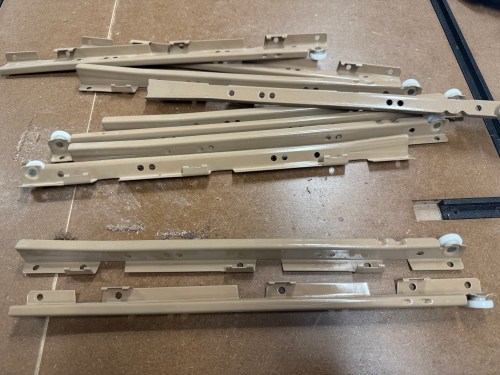
If you look back at the post where I took out a couple of walls to open up my workshop, you can see a unit with five drawers. When I dismantled it, I saved the drawers and slides. This was the perfect project to use a few.

img_1730

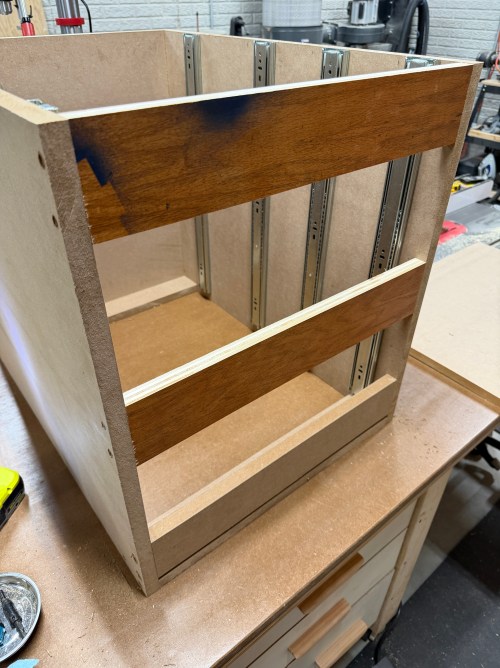
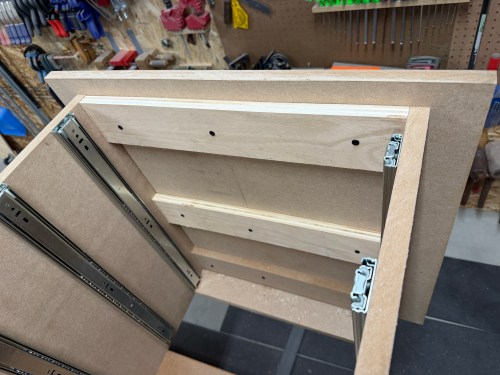
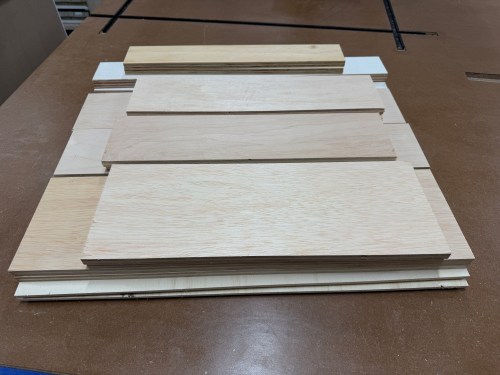
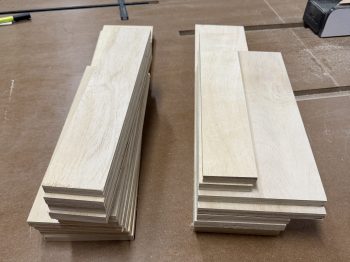
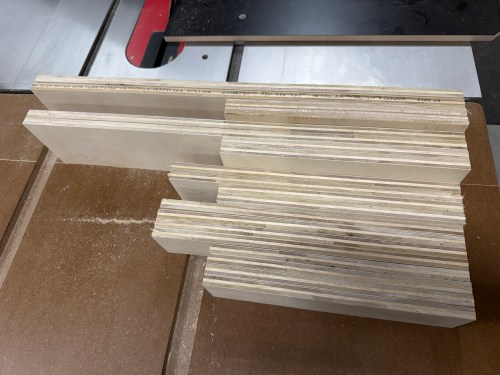
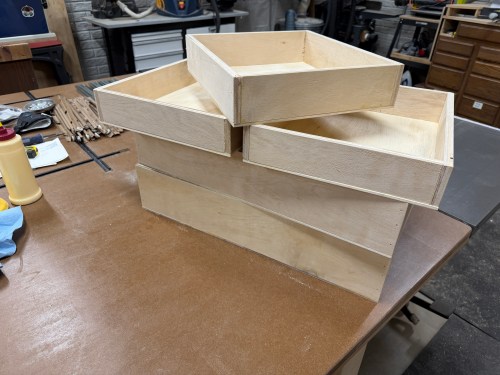
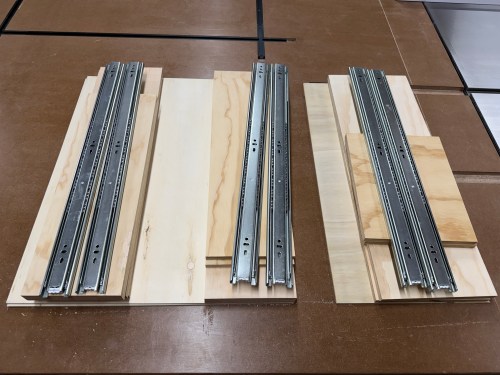
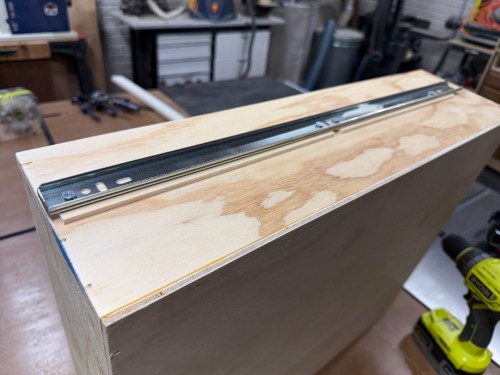
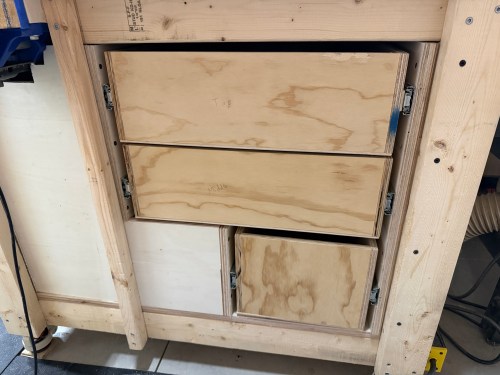
The drawers were too wide, deep, and tall, so I had to resize them in every dimension. Thankfully glue wasn’t used in the original assembly, so they were easy to break down.

img_1762

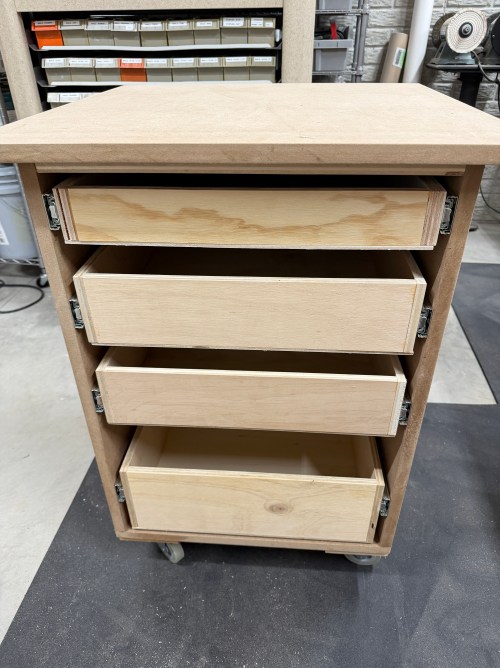
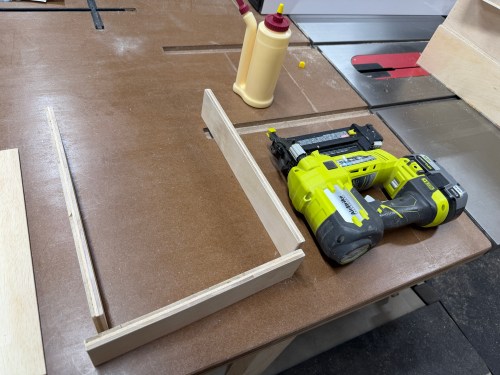
It felt like I measured and checked my calculations 10 times before cutting anything to size. I didn’t want to rush it and cut too much from any pieses, so I ook my time and the assembly went well. Putting the drawer slides in was tricky, but I made everything fit.

IMG_1763

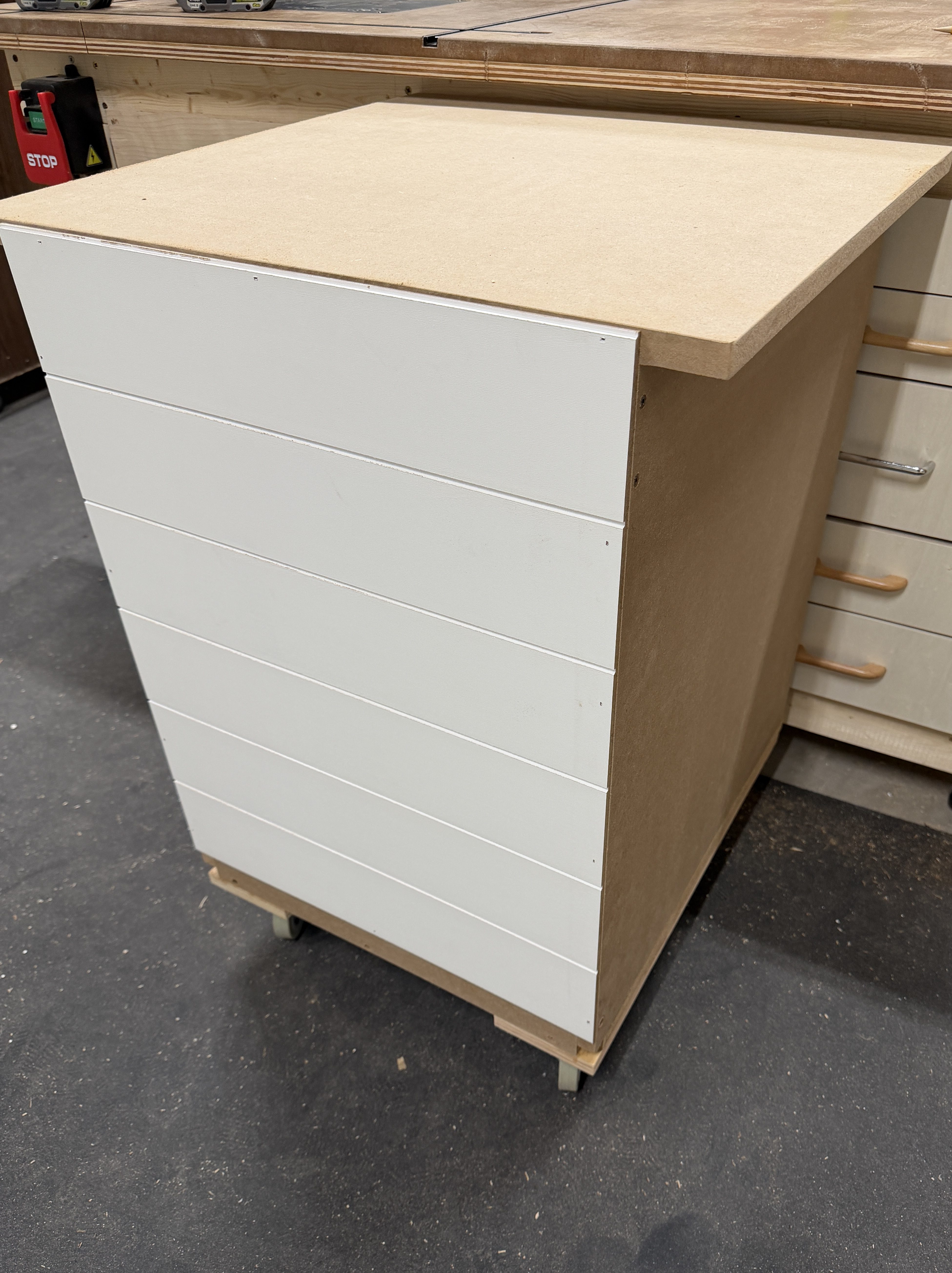
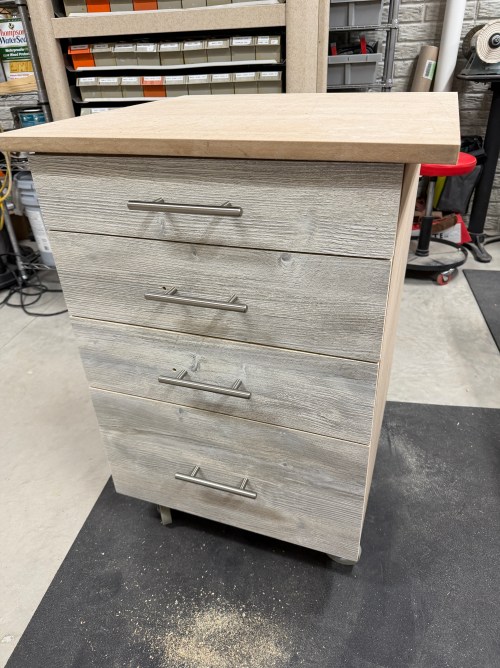
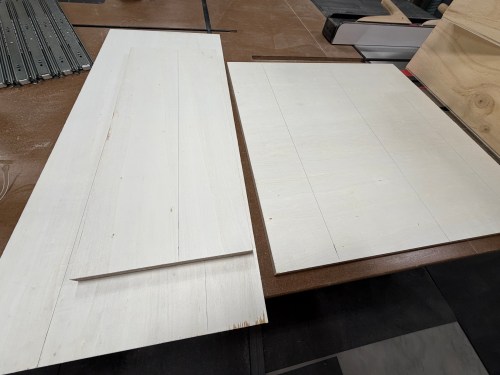
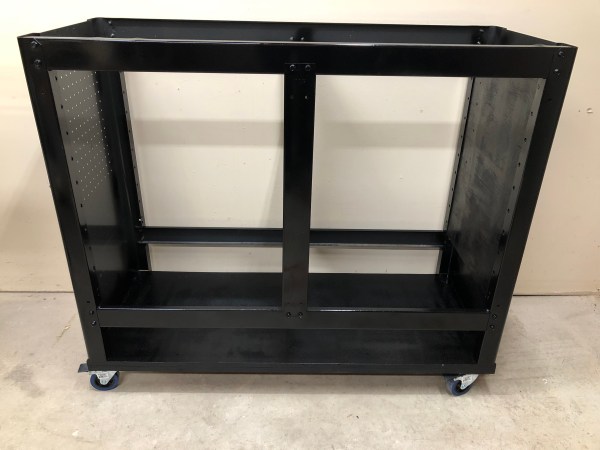
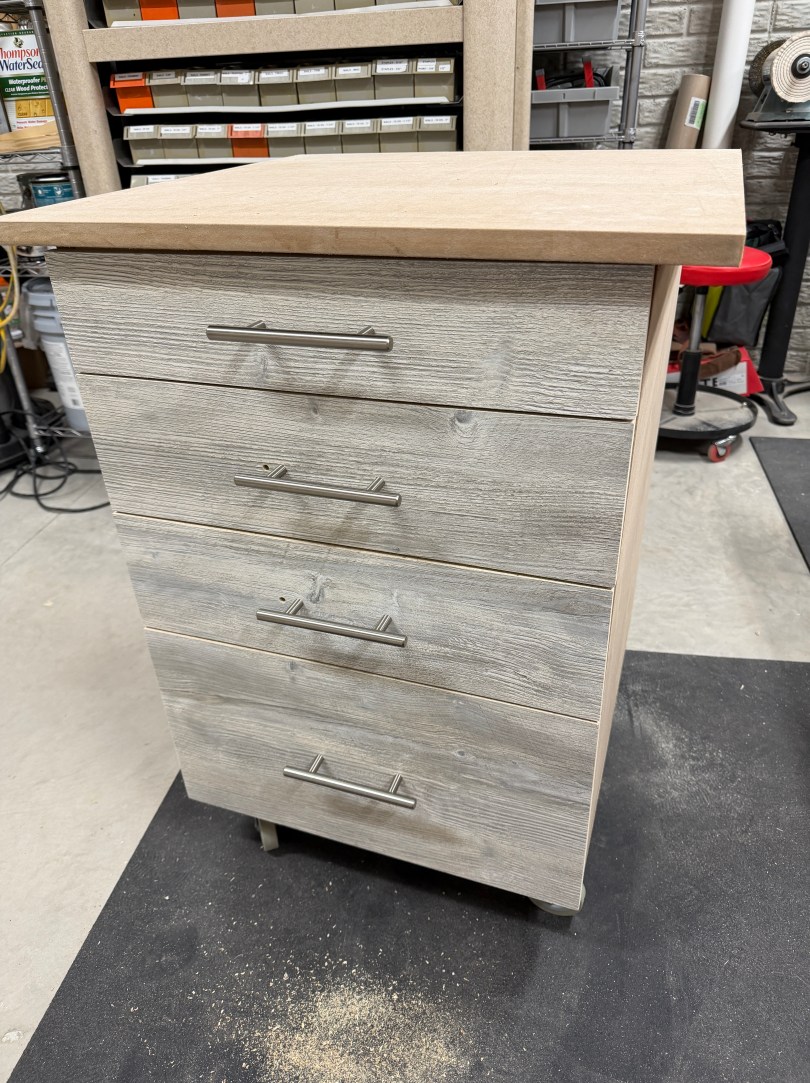
I cut a plywood base and attached it to the frame. Then I screwed in some locking casters ($4/each at Harbor Freight). I drilled holes for the drawer handles before taking both sets of drawers out and removing all of the slides. After two coats of a glossy black on the body and base, I was finally able to move it to the basement and free up the space in my garage.

img_1787

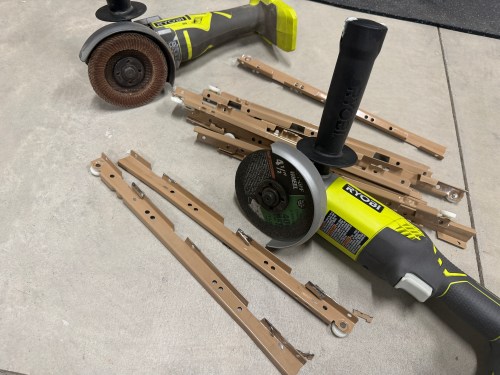
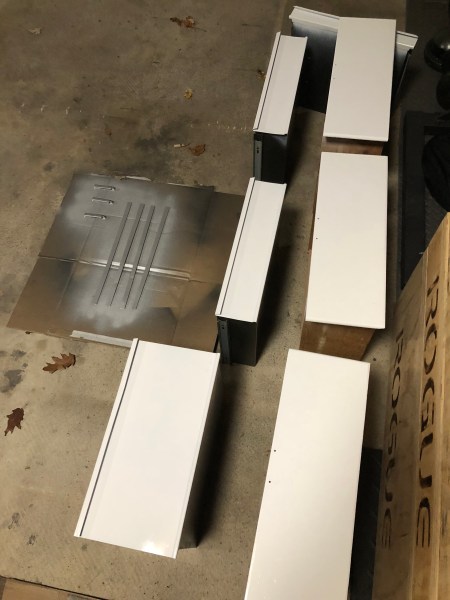
I sanded the wood drawers, wire brushed the original drawers, and cleaned all of the drawer slides with Brakleen. The faces got two coats of glossy white and the handles were sprayed with metallic aluminum.

img_1789

I’m really glad I decided to paint everything. Having this and the lathe stand in more of a finished condition makes the shop feel much nicer. I might have to paint some of my previous shop projects.

img_1792

I gave the galvanized metal top a good scrubbing with a soft brush according to what I’d read and it was still in rough shape. So I used a wire brush and a wire wheel on a drill. It ate up the rust, but went through some of the galvanizing. I found a product made by Rust-oleum to resurface the metal that looked promising for less than $5.

img_1799

I did 3 good coats, screwed the metal back to the MDF, and attached it to the stand. Looked pretty sweet if you ask me!

img_1800.jpg

I gave the galvanizing a full week to cure. I’d read about people having mixed results with it scraping off.

My original plan was to make some kind of hinging platform for the larger belt/disc sander so I could flip it on the side to use the belt for edge sanding. It couldn’t come up with a layout to make it work though, especially making sure I still had access to all of the dust ports. This configuration should work just fine.

img_1837.jpg

From left to right:

  1. Craftsman 4×36″ belt and 6″ disc (Model 137.215360)
  2. Ryobi oscillating spindle (Model OSS500)
  3. Craftsman 1×30″ belt and 5″ disc (Model 137.215150)

I bought all three of these used and paid $25, $50, and $30. The smaller Craftsman sander was still sealed in its original box. If you buy the Harbor Freight versions of these three machines, the new prices are $70, $145, and $85 respectively or $56, $116, and $68 with 20% off coupons if you make separate trips to the store. I love buying used tools!

All of the power cords run along the back and then over to the right side where there is a power strip (free from Harbor Freight) and an extension cord ($9 at Harbor Freight) so I only have to deal with one plug.

img_1838

My shop feels infinitely more organized without the three sanding machines scattered across the floor. All that’s left now is to fill up the drawers with my hand sanders, sand paper, and accessories.