Swapping an AC Adapter Cable

I was given a replacement AC adapter for an Acer laptop, which isn’t compatible with the Dell Optiplex micro PC I wanted to use it with. The output is close enough to work, so I looked for an adapter to convert from the 5.5×1.7mm connector used by the Acer to 4.5x3mm used by the Dell. I couldn’t find an adapter anywhere! I did however find a pigtail adapter on Amazon for about $8 I could wire in. Here’s the original connector and the new cable.

I opened up the power brick.

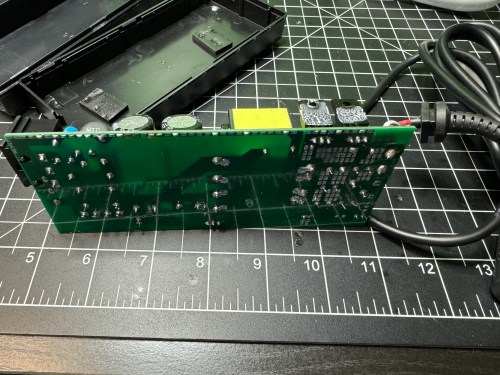
Then I made sure to test the output voltage and the polarity of the wires and connector with a multimeter. I noticed an unused spot for LED1 on the circuit board, so I figured I’d see if connecting a second LED would provide some other status indicator.

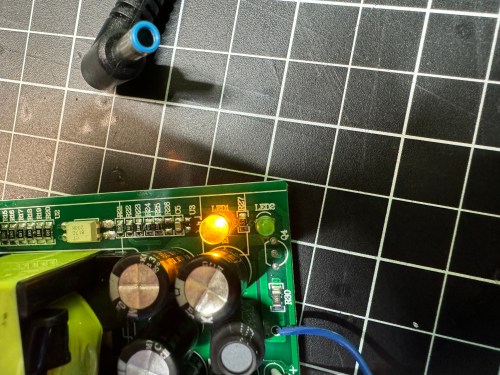
All it seemed to do was take over and disable LED2. So I removed it and left the original green LED. I desoldered the original cable, which only had positive and ground wires. The board had a spot with an S, which I assume means “signal,” so when connecting the pigtail, I soldered the blue wire there.

I checked the voltage on the new connector and it was as expected.
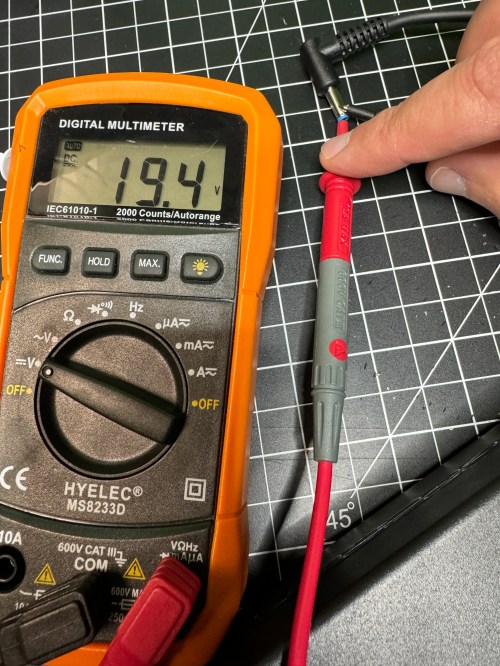
I plugged in the Dell and everything seemed to work. I cleaned the old thermal paste off the 3 components that screwed to a big metal heat sink and put on new paste. When I went to close everything I realized the black wire was too short, preventing the cable from reaching the hole in the power brick. I had to solder on a short extension and cover it with shrink tube.

Tucked everything back in the power brick, snapped it together, and it’s good to go.
Resurrect a “Dead” Power Tool Battery

Ever had a “dead” power tool battery that wouldn’t charge? It may not have been dead-dead. Some chargers have a safety feature that prevents trying to charge a battery completely out of juice. I was able to bring a Craftsman power tool battery back from the dead using a trick I found in the comments on a YouTube video. Sometimes it pays to read the comments.

This battery was part of a used Craftsman cordless tool set I practically stole. The set was a battery charger, small circular saw, reciprocating saw, nice case for those 3, drill/driver, nailer/stapler, and 2 batteries. Everything is in excellent condition and I only paid $30! The original sticker price on the box for the nailer alone was $80.

5v Relay Module – Part 3

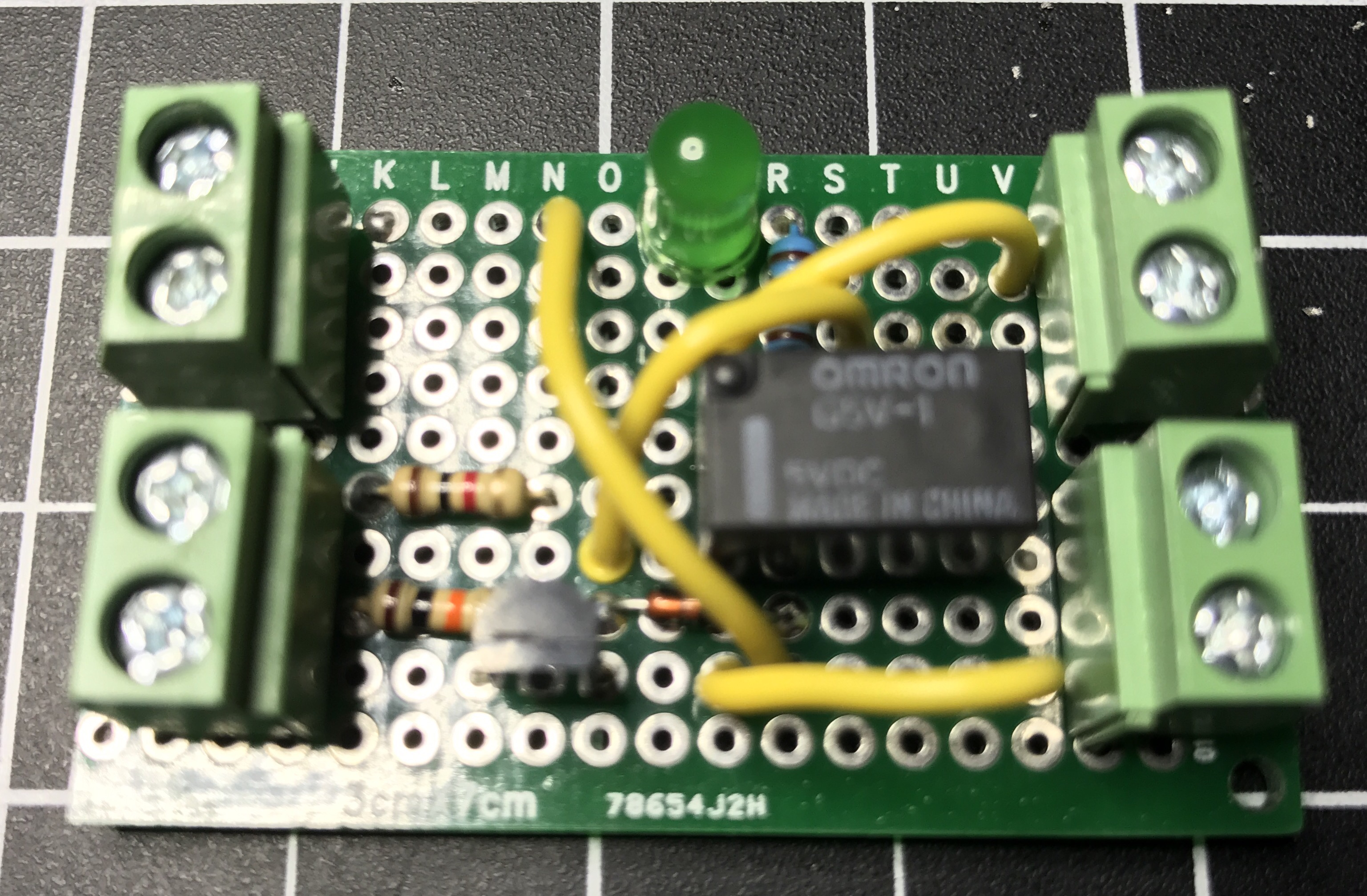
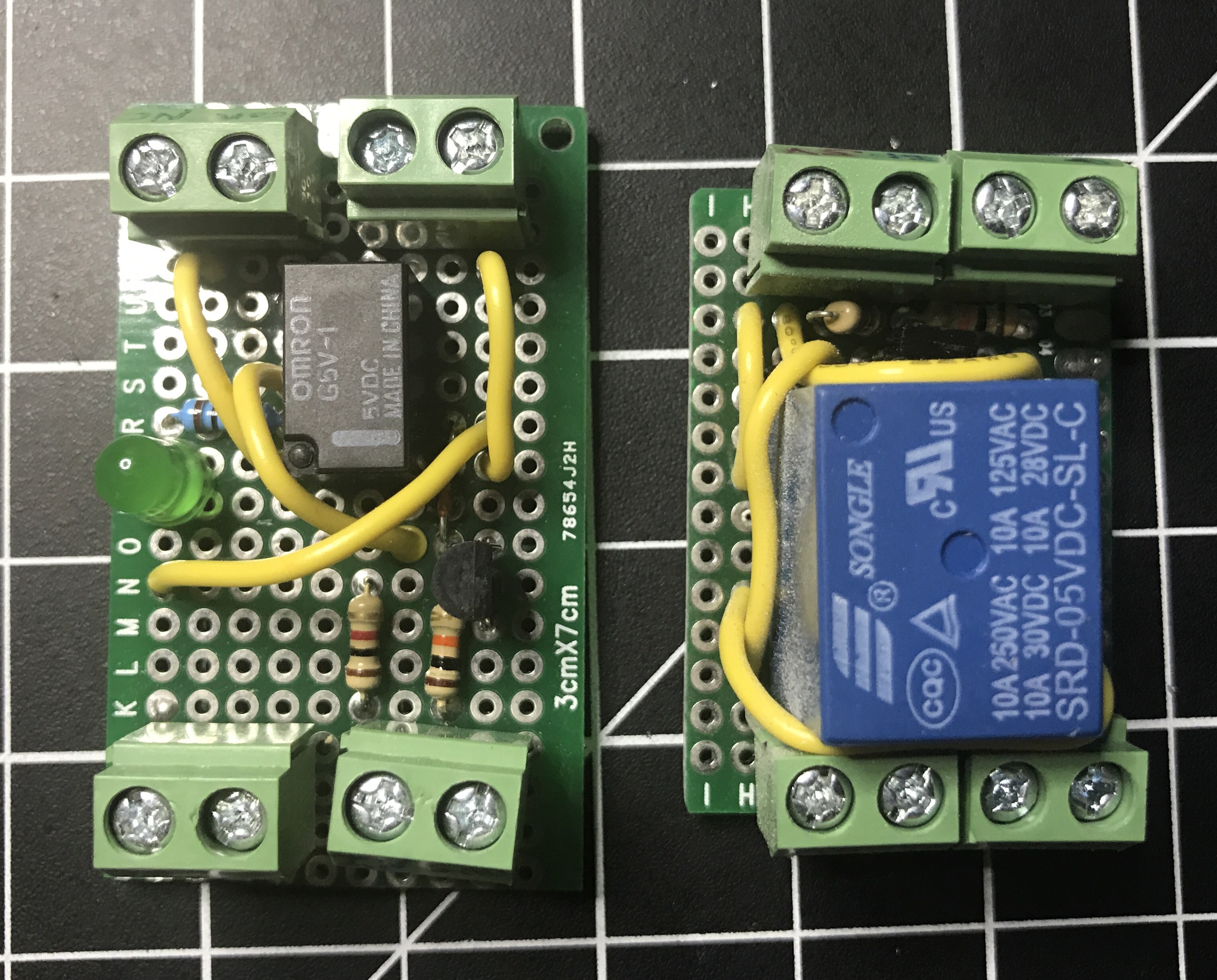
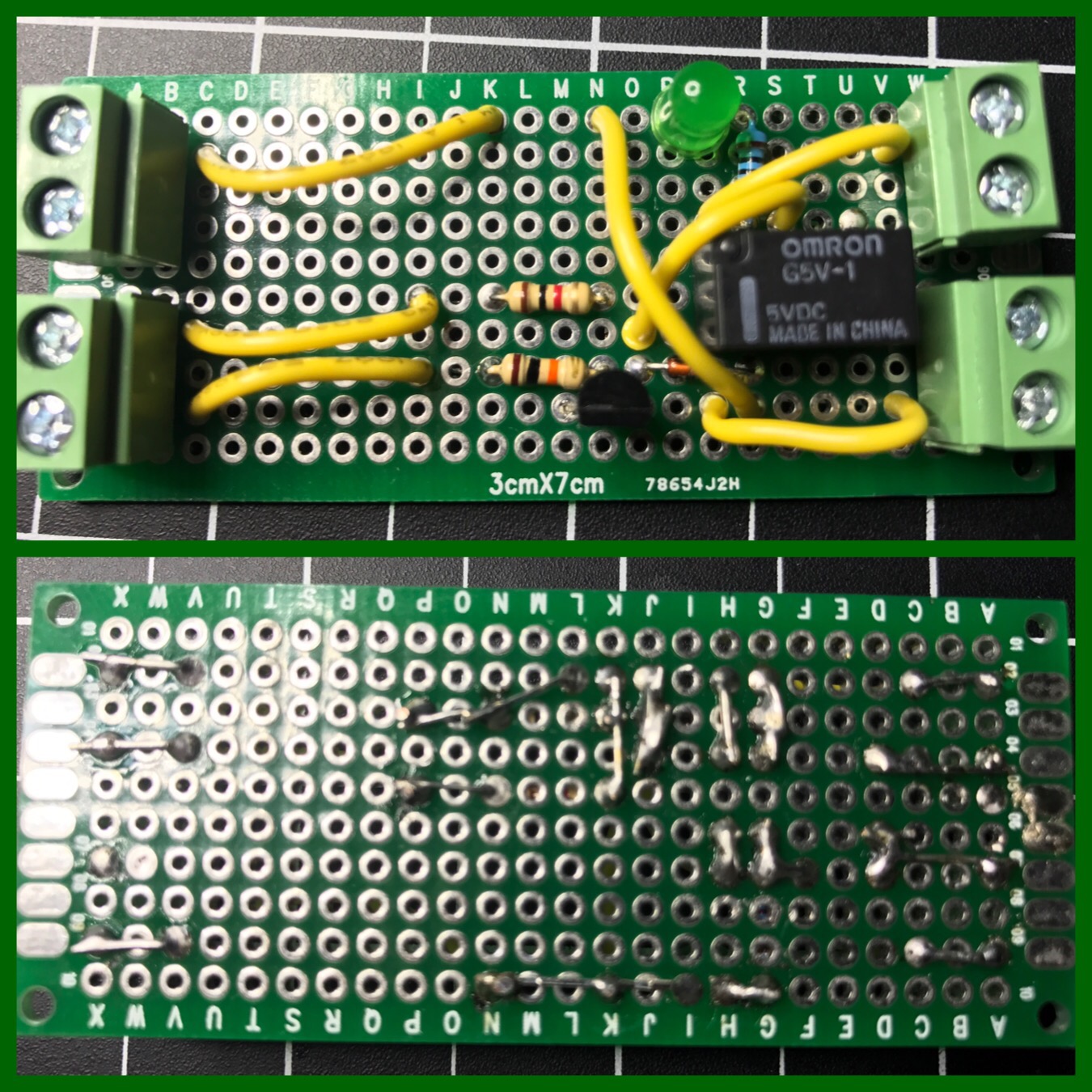
I had no plans for a part 3, but in part 2 of this series, I mentioned how I messed up the wiring several times when I was assembling the module. Instead of fixing it at the time, I started from scratch since I had extra parts. Well, I made some time to disassemble the non-working module and build a new one. I quickly set up a prototype on a breadboard to make sure I didn’t make the same mistakes and then I soldered it all together on a permanent board. Was smooth sailing, even with squeezing everything in as much as I could.

Now I have a two different spare relay modules, depending on power requirements, when I need one for a project.

5V Relay Module – Part 1

You can buy all sorts of 5V relay modules on Amazon for as little as $3-4 (probably even less if you get really cheap). They even sell boards with multiple relays if you need to switch more than one thing. Since I had all of the necessary parts I built my own. Yesterday I finished the board, because I had to do something before National Week of Making ended.

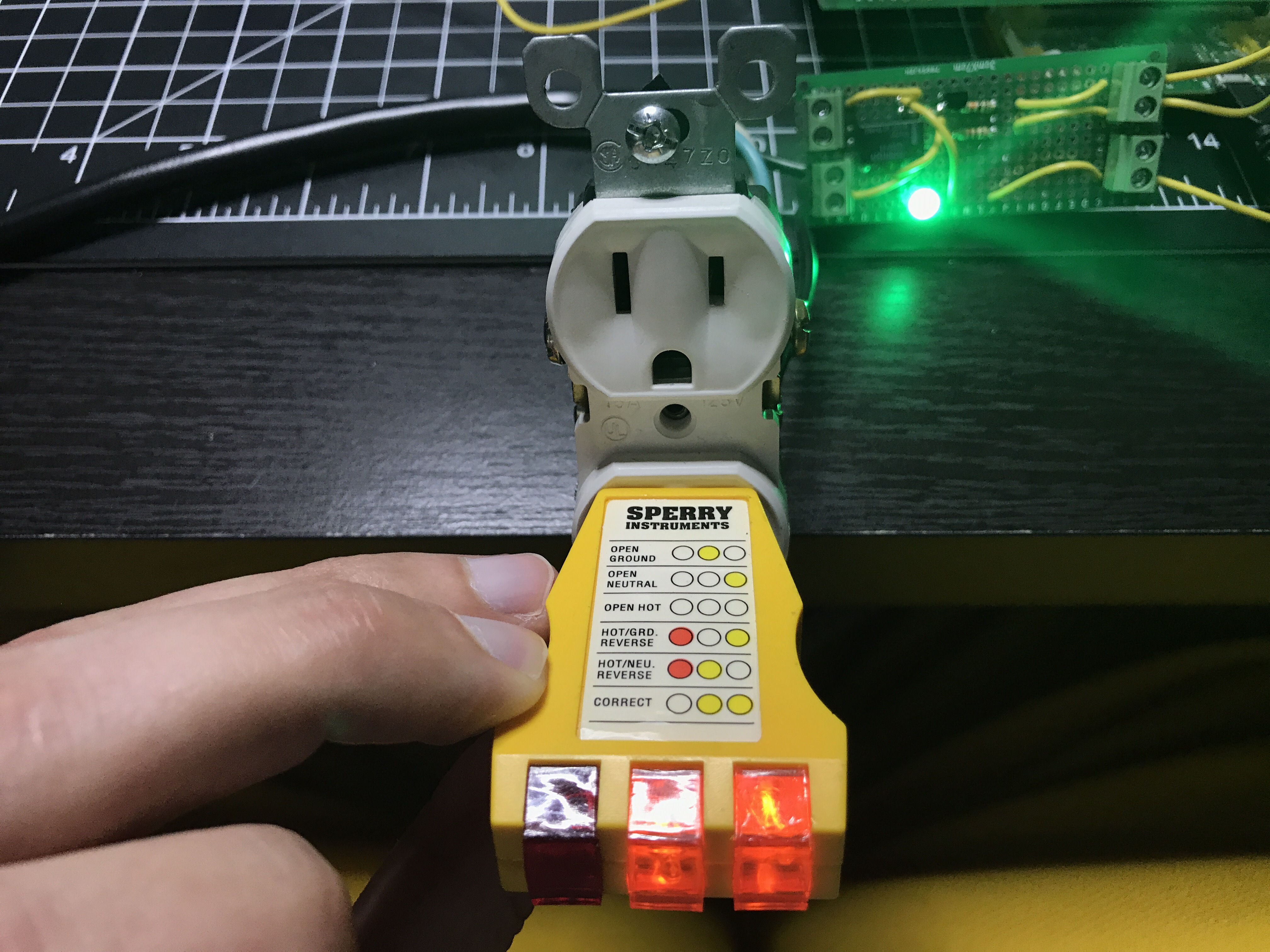
It worked great switching power from a 9V battery, but the real test was hooking it up to mains power. Electricity gets a lot more dangerous at 120V! It was a little scary plugging everything in and flipping the input, especially after reading so many warnings online, but there were no sparks.

Tester shows the wiring is correct.

I need to pick up a plastic outlet box to house everything so it’s safer with the exposed soldered circuit board in there; I don’t know what I was thinking when I bought a metal one. I’ll publish a more detailed post this weekend when it’s complete.

Update: I realized the relay I used in this module can’t handle the amount of current I need, so I ordered a different type of relay and will be making a new module. I’ll take the opportunity to make a more compact design as well. I did shrink this one a bit and cut off some of the board. I’ll save this module in case I ever need it for a project.

Check out Part 2.

MacBook Pro Charger

After years of use, the Magsafe end of the charger for my Early 2013 MacBook Pro became frayed to the point where it would literally spark at times. Not safe. I found this 60W Macbook Pro Charger by Hunda for only $40 and it even has a couple of USB ports. Much cheaper than buying an official Apple replacement charger. […]

Let There Be Light

Last night a 10 minute storm hit Saginaw and I was without power for 10 hours! Unreal. In today’s day of technology, you’d think the power companies would have their grids figured out so that areas aren’t without electricity for such a long period of time. I can’t imagine my life without technology and the […]