Attempting to Revive Knockoff Ryobi Batteries

I have a couple of 5 Ah batteries and both of them stopped charging. They knockoffs from Amazon, with a brand name of Biswaye on them.

One was completely dead and wouldn’t even register on a usual charger. The other showed a defective status. When I put the multimeter on, it read about 15 volts.

This often means some of the individual cells are bad. Before opening it up, I threw it on a Ryobi P119 slow charger, which can sometimes revive cells that are too low for the more complex battery chargers.
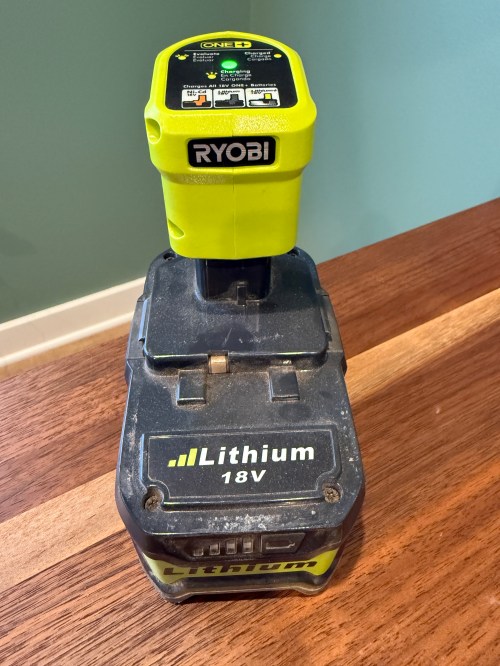
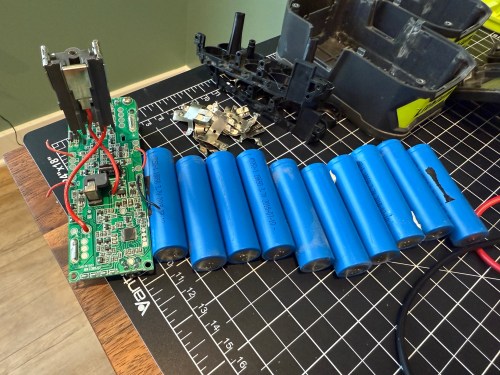
After a couple of hours I tried the battery on a regular charger again, but it still showed as defective. So I tore into both batteries, hoping I might be able to get one working battery out of the two.
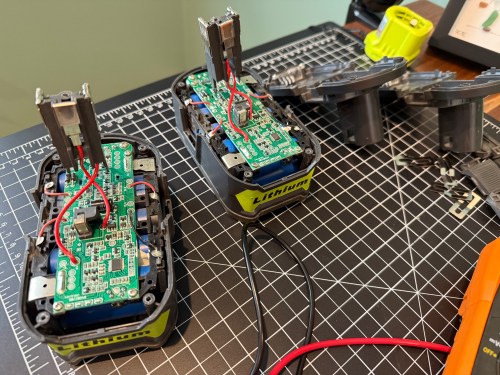
On the dead battery all 10 cells read zero volts on the multimeter. I wouldn’t be swapping any of those in to the other battery. It’s not safe to try pumping anything into cells depleted that much, so I recycled them at Batteries Plus.

Two of the cells on the defective battery read very low voltages. I don’t have any spare 18650 lithium ion cells and it’s not worth it to buy some since I have enough working Ryobi batteries in my rotation. As a last resort, I put the battery on the little charger to see if it would slowly charge the depleted cells. I had nothing to lose.

I let it go over 6 hours and unfortunately the voltage didn’t jump up on those bad cells, so I still can’t use the battery pack.

Attempts like this don’t always end in success, but it’s a fun opportunity to learn. This battery pack has plenty of good cells, so I’ll save it in case another battery needs replacement cells.

Boldport: Juice (FAIL)

I started this build a couple of weeks ago and “finished” it today. It is supposed to be a battery replacement kit for use in prototyping if you run out of batteries. It was project #12 in the Boldport Club.

Mine, did not turn out to be a useable device, because I shorted the connections in the USB connector, which I put on last and should have done first. If there’s one complaint about the Boldport Club kits it’s that the instructions are lacking. I messed around with different desoldering techniques to try and correct the problem, but I might have been fighting a losing battle depending on how deep in there the shorted connections were. I figured something was screwy when the LED never lit up. Then when I connected a 9V battery as the power source instead of USB I knew something was really wrong. With a multimeter I was only getting millivolt readings from the board. I felt the battery and it was really hot, so I disconnected to read the battery it was down to less than 9 volts already, when it had started close to 9.5! That’s when I called it quits.

I’m almost positive I thought this kit was something else when I ordered it with credits I had. I can’t see myself using this during a project if it had been a success, so I’m not too disappointed. Even though it was a failure I figured I’d still post the video. Since it was just over five minutes long at 20x speed with all of the footage I didn’t even bother to do any editing. The camera had filled up somewhere during the desoldering complications and I was too frustrated to bother with getting a new SD card. Enjoy! Or not.

Tesla Model 3 Range

A lot of people ask how far I can go in my car and it’s a hard question to answer. There are a lot of factors like season (the batteries are a lot less efficient in cold weather), type of miles, heat/AC use, etc. I decided to keep track of my trip up to Rogers City this weekend. When I got in the car the battery had been charged to an estimated 292 miles of range.

IMG_2853.jpeg

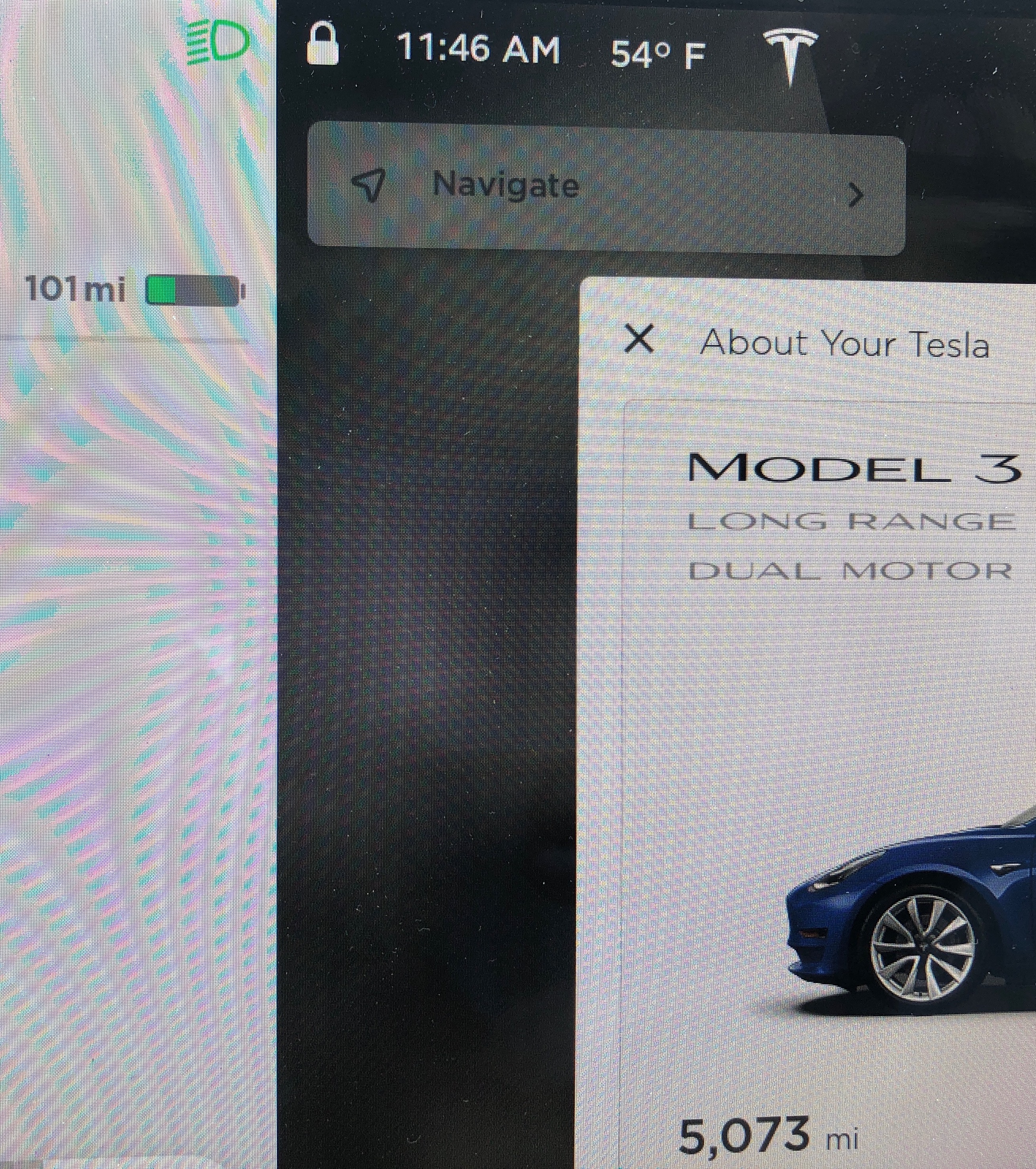
The trip is a total of 156 miles, with 47 of those on the freeway. When I arrived at Mom and Dad’s the battery was down to 101 miles of range.

IMG_2856.jpeg

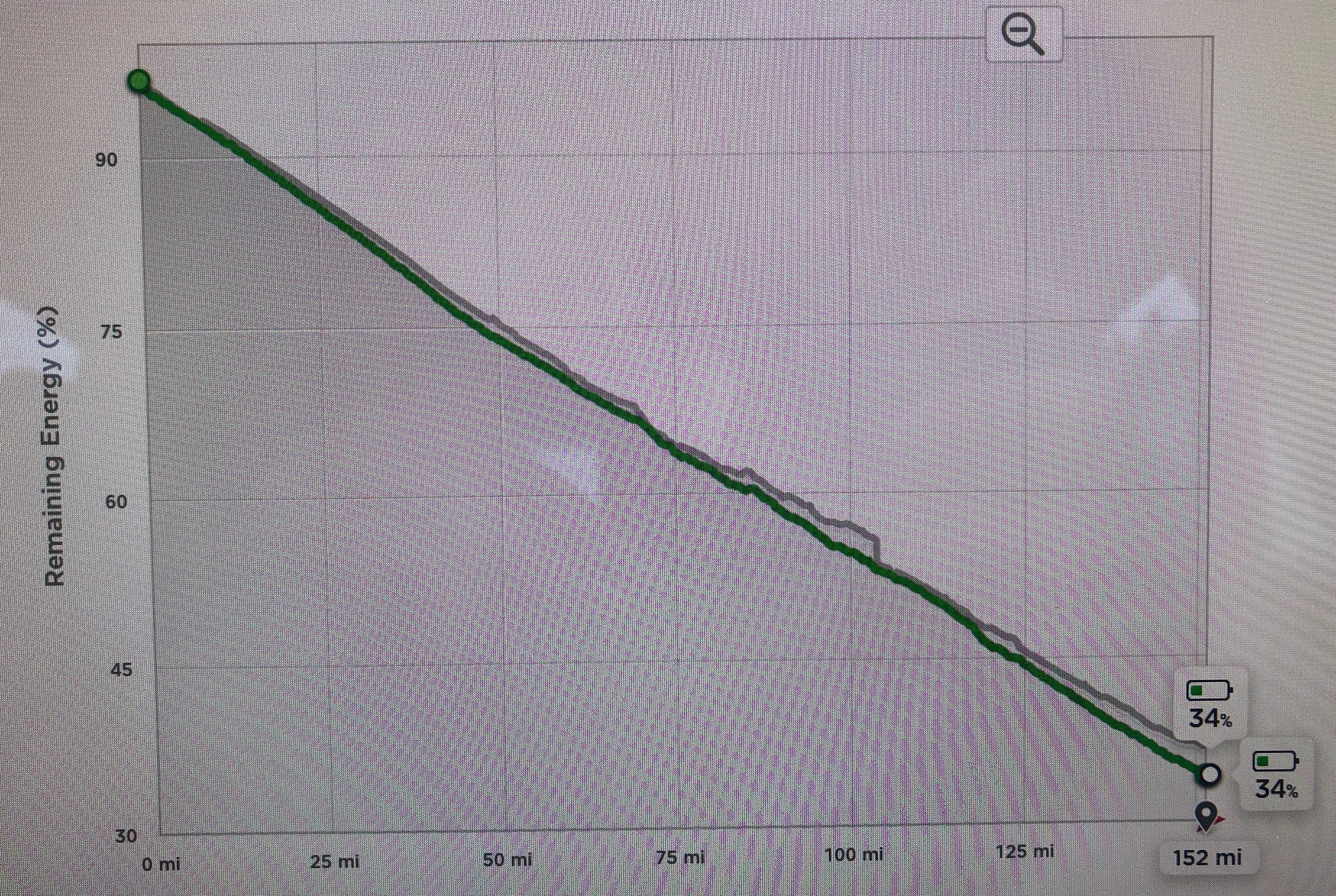
So that’s 156 actual miles for 191 estimated miles of range. I have the bigger wheels which are supposed to use 10% of the range, so I’d say that’s pretty good efficiency. Below is the energy consumption over the trip.

IMG_2855.jpeg