Replacing a Basement Bathroom Floor

The basement toilet developed a water drip at the old house last week, with a bunch of water on the floor and in to the laundry room. The water line was one of the older ones, made from bent pipe and the drip was coming from the connector to the toilet tank. Fun!

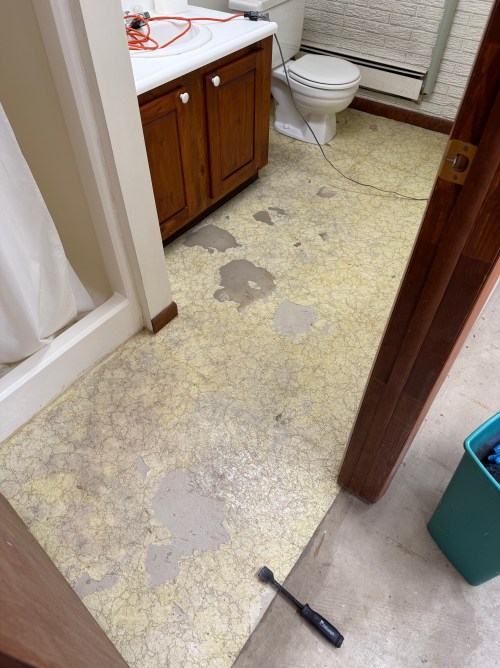
After cleaning up the water with towels, I pulled off the cheap peel and stick floor tiles I had installed in 2017. Then I scraped up the original linoleum, which may have been there for around 40 years.

I guess I didn’t take a picture after I got the linoleum removed. I took the toilet off and left a bunch of fans running overnight in both rooms. I started just after 7am, with several trips back home, and finally got out of there around 8pm. I had picked up a couple boxes of peel and stick tiles at Home Depot as well as all new toilet parts. It cost about $120.

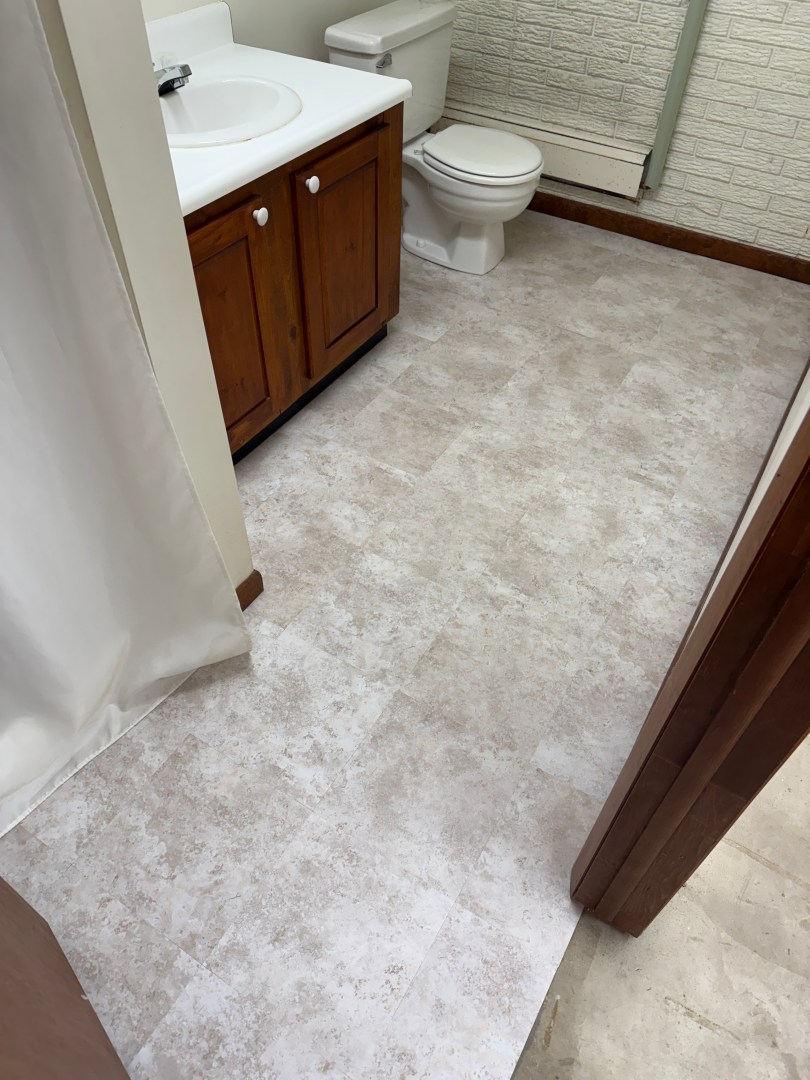
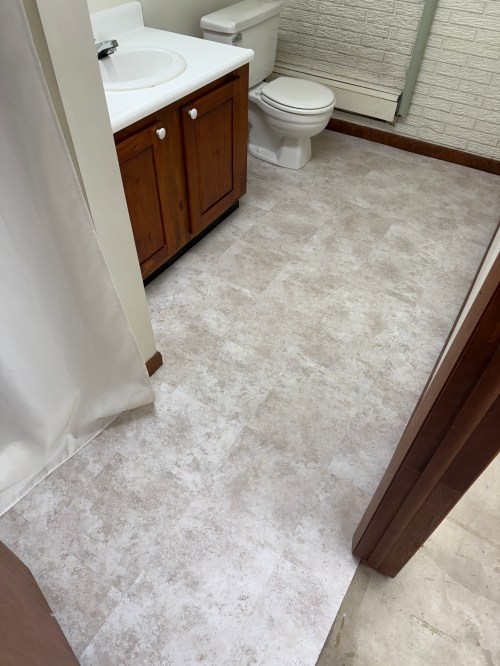
Was back to the house around 7am for day two. Except for a couple quick errands and lunch, I worked nonstop putting in the new floor, reinstalling trim (plus a new toe kick), and putting the toilet back in. I finally left just after 4pm. Thankfully Brandi made several runs to get some tools I needed at our new house and pick up lunch.

The extra cost of the tiles at Home Depot was worth it because they’re much better quality than the ones from Family Dollar. For a rough basement bathroom, the floor is a nice upgrade and looks good.

My entire body was wrecked from crawling around on the cement floor for two days. We need the house to sell before there are any other surprise projects.

Mirror Hanging Brackets

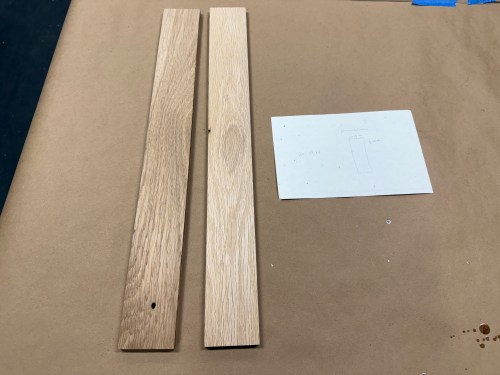
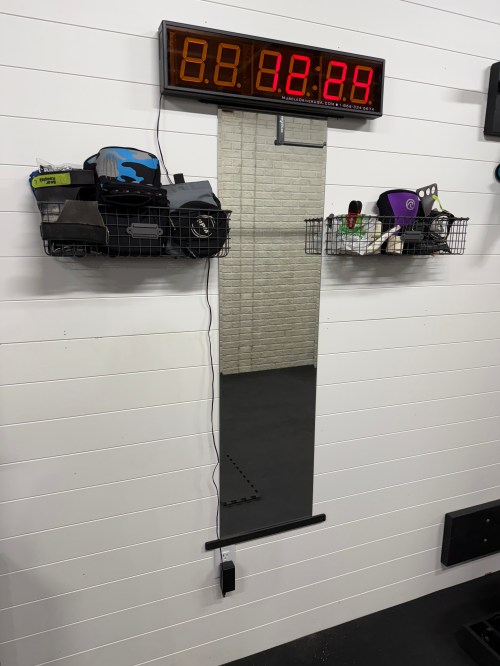
We have this old mirror you’d mount to the back of a bedroom door and it’s been propped up against the wall in our new gym. In order to mount it to the paneled wall, I needed to make brackets to span the studs. I grabbed some oak from my scrap cart.

I only ended up needing one of the pieces. Ripped a couple of 1″ wide strips and trimmed to 18″ long. I marked areas on the back side, and cut out with a router.

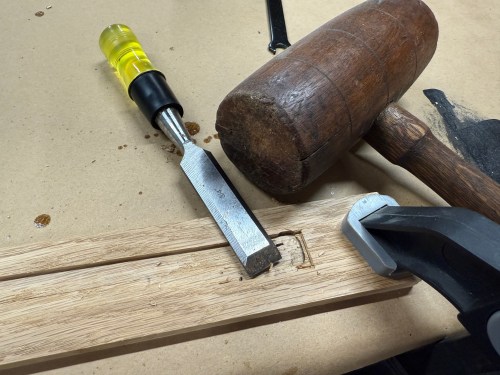
It was quick work to clean up the ends with a chisel.

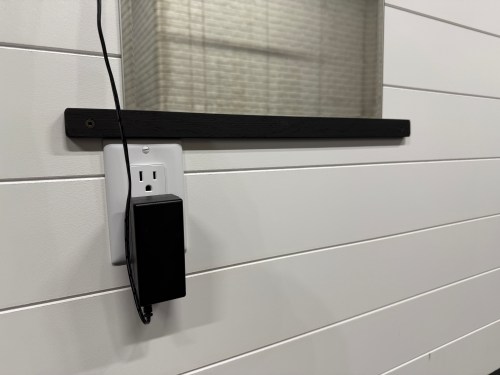
I gave the brackets two coats of black paint.

Really quick project and it cleans up the gym a little more.

2024 Home Screen – iPhone 16 Pro

Here’s the yearly share of my iPhone home screen.

Not much different than last year and I think I’ve deleted more apps than acquired new ones. The Lions app has gotten a spot on the home screen. Is anyone triggered by the battery status?

Check out previous screenshots from 20232022202120202019201820172016, and 2010.

Christmas Tree Collar

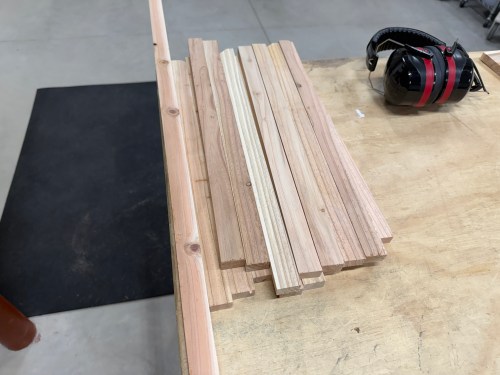
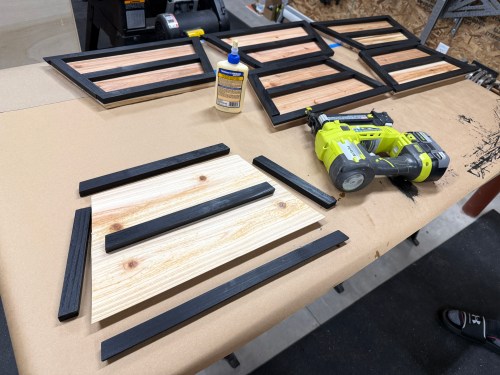
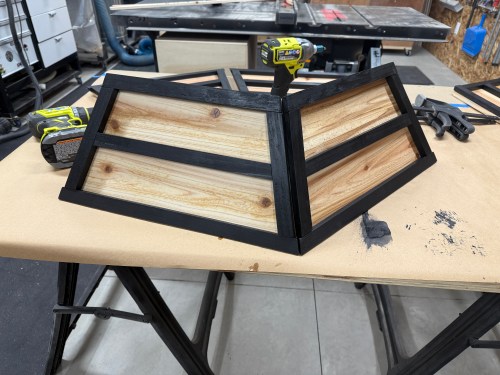
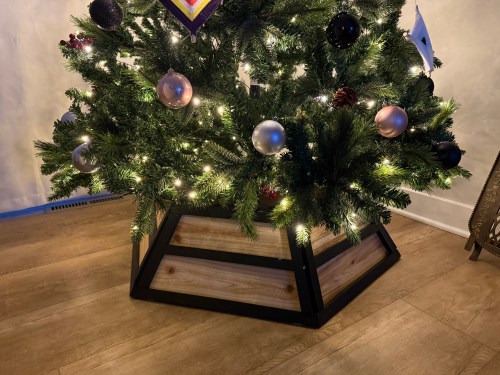
Several weeks ago Brandi mentioned seeing tree collars advertised a lot. I’d never even heard of them and then I saw a YouTube video showing how to make a hexagon one with fence pickets. Brandi thought it was cool and was game to help. I won’t go in to detail on the process because the detailed video is embedded below. Here are photos from our build.

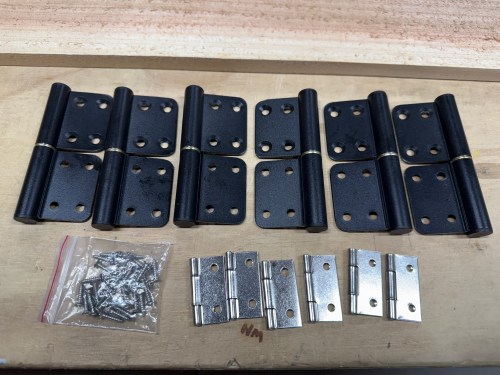
Getting the sizing right took some time and attaching the hinges was tricky because of the angles. I was surprised how well the lift off hinges separated and went back together.

This was a fun build and it’s much better than the store bought collars. Making a tree collar, however, will not be a yearly tradition for us like making an ornament. haha

Here are Amazon links to the hinges I used:

Folding Miter Saw Wings

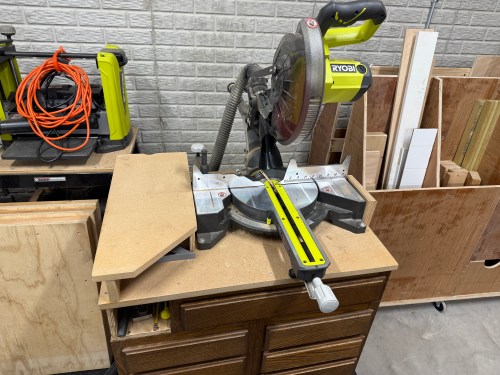
I’ve been wanting wings for my miter station since I got the Ryobi saw and built the cart. If I’m cutting anything with 20″ or so on the right side of the saw, the cutoff crashes to the ground after making my cut.

This weekend we’re building something that’ll require a lot of cuts on the miter saw, so it was a good time to tackle this project. I’ve actually had the brackets since this summer, so I could work on it when I got motivated.

Unfortunately I wasn’t thinking about such an upgrade when I built the cart, because neither side was flat.

I created some flat areas by attaching scraps.

The main objective of this project was to extend the horizontal space on both sides, which this does well.

When I don’t need the surfaces, the wings easily fold out of the way.

The brackets I bought are pretty poor, with a lot of play in them. Maybe it would be better if I used two on each wing. The wings are level with the saw top, which is key, but they move front to back quite a bit. If I want to attach a stop block of some kind I’ll have to stiffen up the wing in some way.

They work for now though. Maybe I’ll improve them down the road. On to the next project!

Table Saw Cabinet

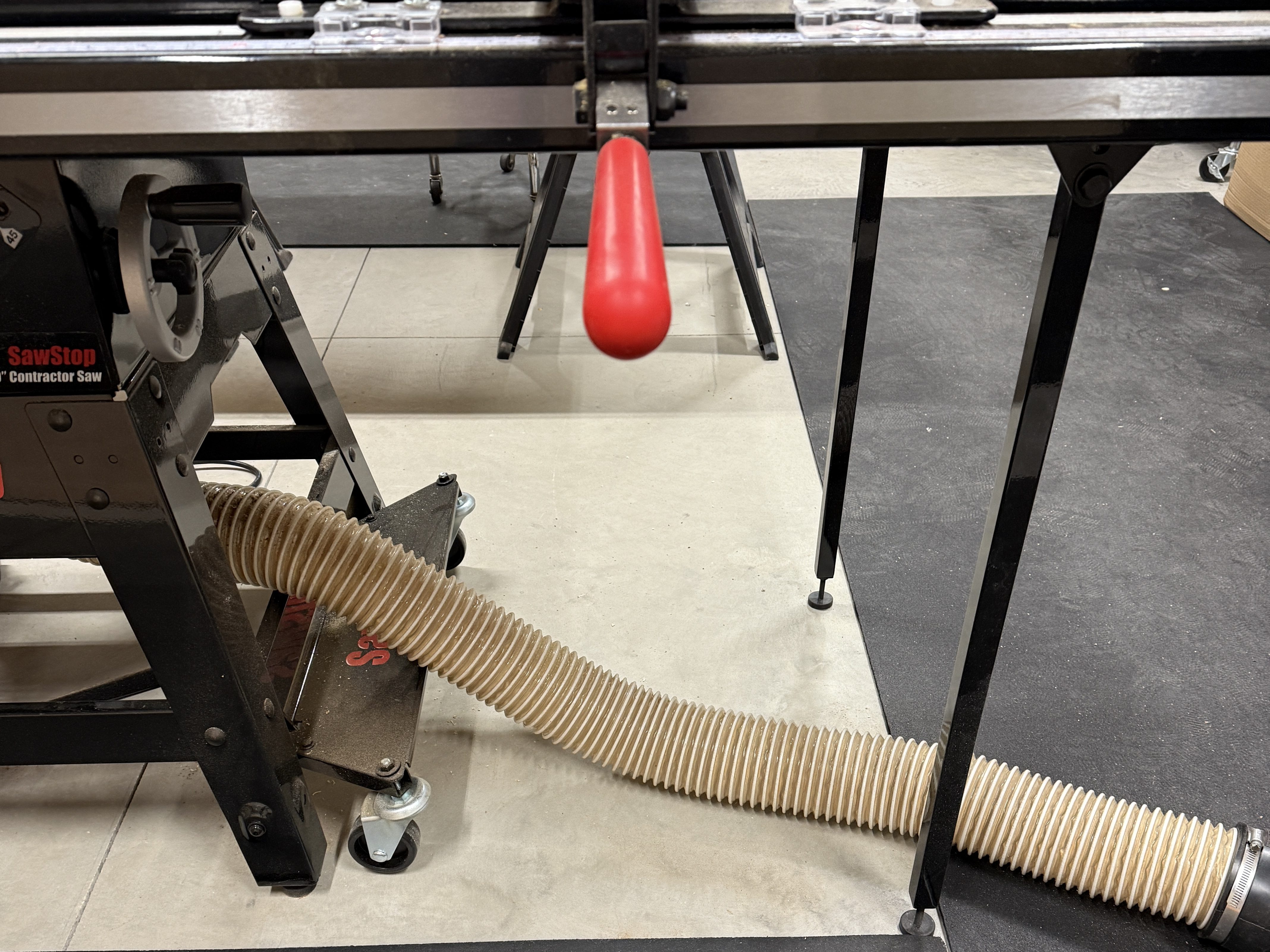
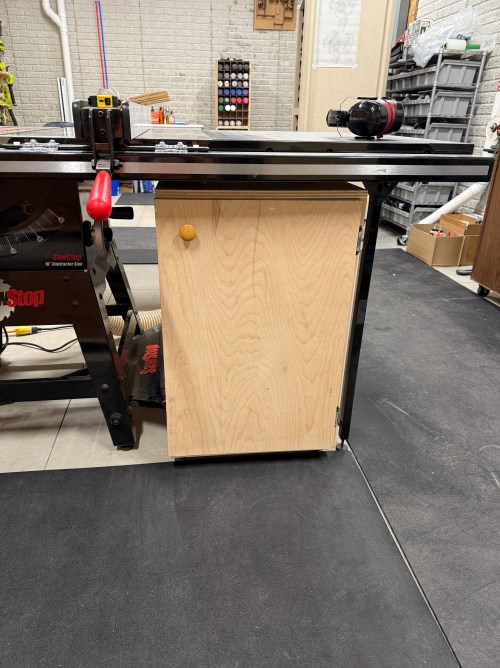
There was a big open space under the right wing of my new SawStop and it was the perfect spot for a cabinet to organize the table saw accessories.

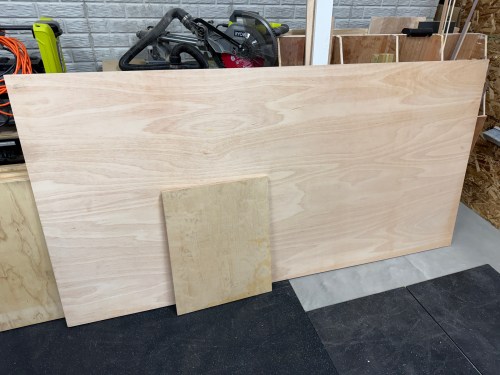
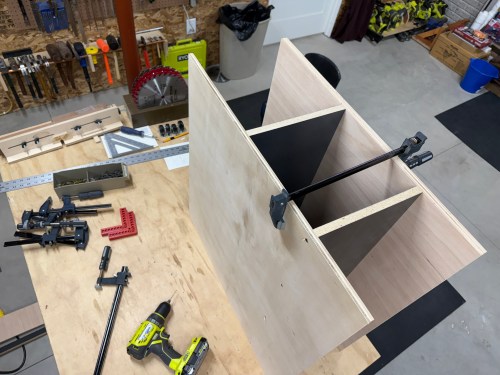
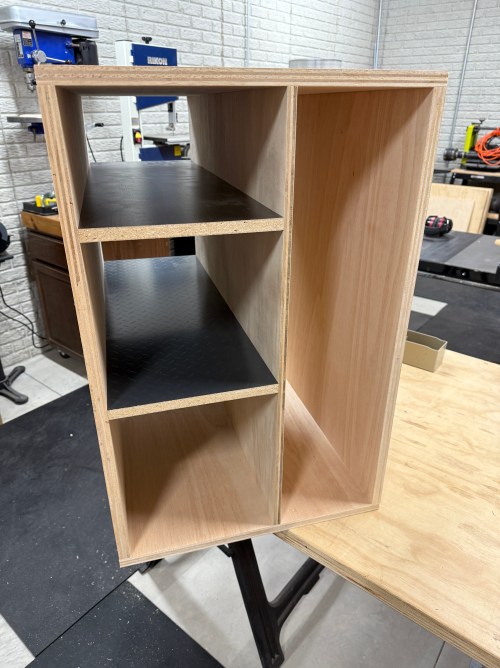
I pulled out a sheet of plywood that got roughed up during the move. Went through a few iterations of how to size the cabinet and where to cut the pieces from.

Assembly went pretty quick, only using screws in case I ever want to make adjustments. It’s not going to hold much weight, so no need for glue.

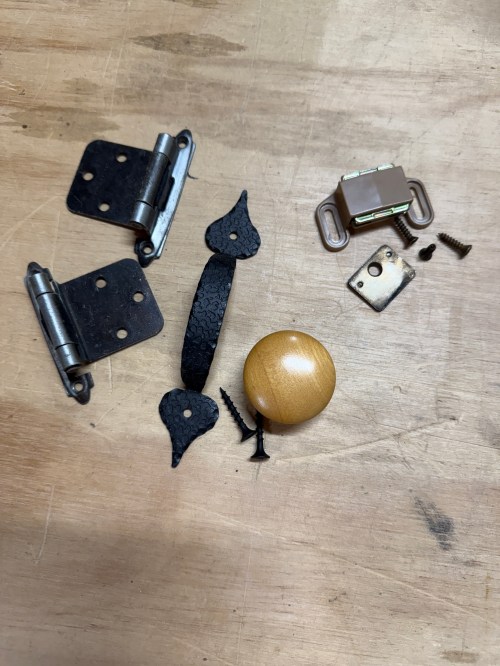
I dug through my hardware to find hinges, handles, and a magnet catch. Since I should rarely move this thing, I attached a set of non-swivel castors, which only added 2″ of height.

When I went to slide it under the saw I had a moment of panic because it didn’t fit! I hadn’t accounted for the triangle-shaped brackets attaching the legs to the saw wing. I ended up removing the castors from the SawStop’s mobile base and the cabinet slid in. If I ever need to move the saw, it only takes a few minutes to put the wheels back on.

In the lower right, you can see the saw blade holder I recently made. I added old handles to make it easier to grab.

This cabinet was quick to make and makes great use of what would be dead space. Time to start building an outfeed table!

Doubling My Spray Can Storage

A little over a year and a half ago I made a box with dividers for storing spray paint.

It was built to slide in a shelf at the old house. I was able to get it out and moved to the new house. The 16″ depth was wasted space though. Look at how deep the cans were when laying with the back on the ground (those higher ones are actually a tall can on top of a standard can).

It turns out, a great size for spray cans is about eight inches, so I split it down the middle and wrestled out all of the dividers, which were partially glued in place.

Stack ’em, screw ’em together, and nail a back on the new half.

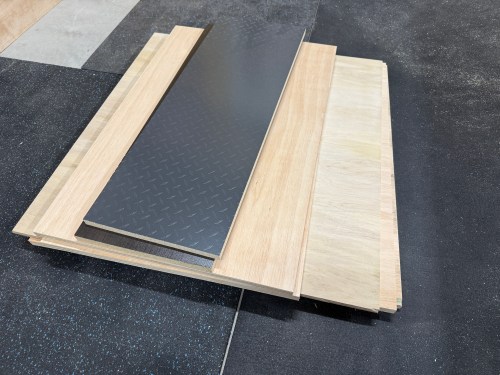
It was very tippy, so I rounded the corners on a larger piece of plywood to make a more stable base and pulled out office chair casters. The casters wouldn’t be great for any heavy shop furniture, so this was the perfect project to use them.

Cutting more dividers and then redoing all of the slots was the worst part of this project. It took well over 250 cuts on the table saw.

A handful of the new hardboard pieces were too long and needed to be trimmed. Other than that, the assembly went much smoother than I expected, with a little persuasion from a dead blow hammer. I have no idea why I used glue on that first iteration. Maybe it was needed with the deeper box, but this one is very stable without a drop of glue.

This is another great upgrade to the shop. After adding all of my spray paint, lubricants, spray adhesives, and other oddball cans there is plenty of room for more.