How fitting that I picked up tamales for lunch today with the photo challenge focusing on lines.

How fitting that I picked up tamales for lunch today with the photo challenge focusing on lines.

My second month of Boldport Club is #24 The Conehead. It’s a custom PCB design of a cricket and it chirps based on how much light the “eye” can see. According to video timestamps it took about an hour to assemble the kit and it was a lot of fun using the electronics components in different ways.
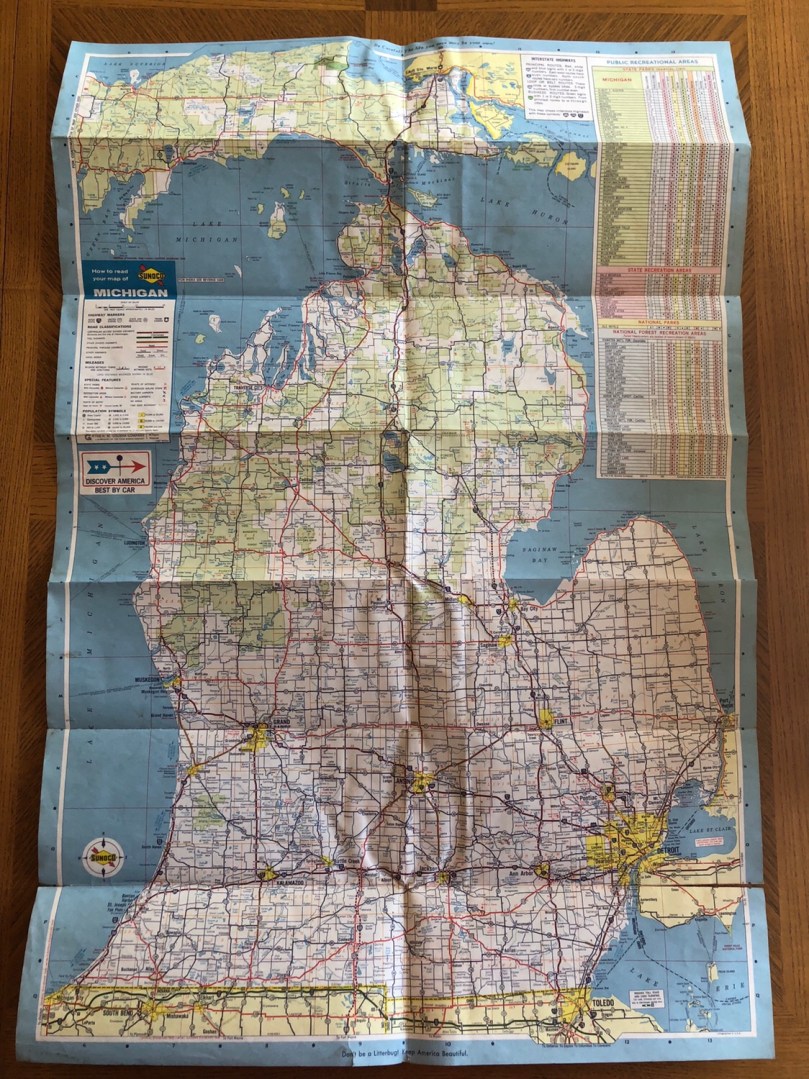
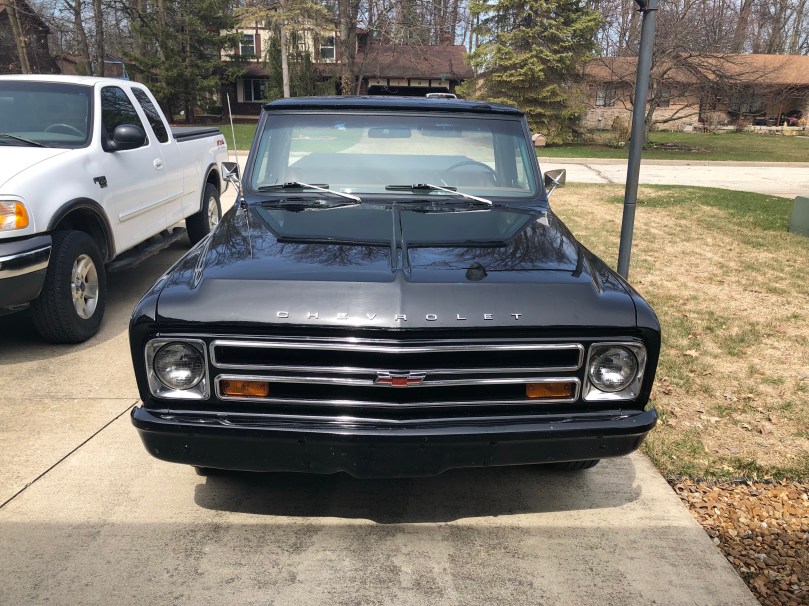
Remember when everyone kept a map in their glovebox? This old Michigan map was in a stack of documentation the seller gave me when I bought the ’68 truck.


The 1960 Census info on this map had Rogers City with a population of 4,722 and 98,265 for Saginaw. Quite a difference from 2,827 and 51,508 in 2010.


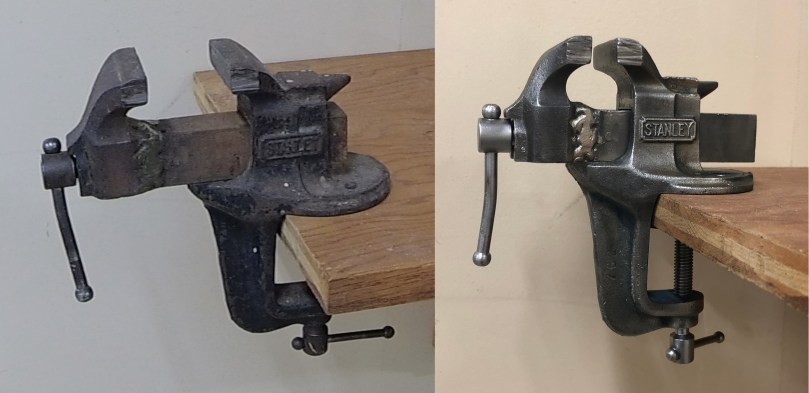
This Stanley vise caught my eye at an estate sale last year. I think I paid $3 for it. The jaw snapped at some point and someone did a rough weld job to put it back together. The other side reads 743 – 2 IN.
I finally got around to cleaning it up. Most of the work was done with brass wire wheels on the bench grinder and drill. Then a little hand wire brushing and sandpaper to get the corners.

Do you think I should paint it? I kind of like the bare metal look.
At our gym a couple sets of weights on the lifting platforms are in kilograms, which can be confusing in America. It doesn’t have to be confusing though; the math is actually quite simple.
In order to make the conversion you need to know that 1 kg is roughly 2.2 pounds. If you go out a few more decimal places it’s actually 2.20462, but that extra only ever makes a difference of a pound unless you’re setting world record deadlifts, so you can pretty much throw it out and call it close enough.
So…
1 kg = 2.2 pounds
10 kg = 22 pounds
100 kg = 220 pounds
You shouldn’t even need to think about those, but rarely do our weightlifting numbers fall on powers of ten. What about 53 or 97 kilos?
First double the number.
53 x 2 = 106
Then take care of the 0.2 part. Multiplying by 2 is already done, so take 106 and move the decimal place over.
10.6
Round up to 11.
106 + 11 = 117
Easy! How close does that come out? 53 x 2.20462 = 116.84486. Spot on. How about 97?
97 x 2 = 194
19.4
194 + 19 = 213
Here’s one where the extra 0.005 would have made a difference because 97 x 2.20462 = 213.84814 or 214 when rounded up. Close enough though. 😉


All of these air tool “bullets” need some type of organizer. Maybe boxes on small French cleats near the actual tools.

We are having an evening Automattic Town Hall this month, so I had to watch with a beer.
I’ve customized the items in the HackerBox Field Kit and explained everything in this video.
You can find the example code I put together for all of the modules in my hackerbox-29-field-kit GitHub repo.

I plan to keep the kit in my backpack, especially for trips up north when I visit family. Maybe I shouldn’t take this with me on flights though. Have you ever travelled with a bunch of wiring and electronics parts?
If you’re interested in an electronics community, join us on reddit and Discord.